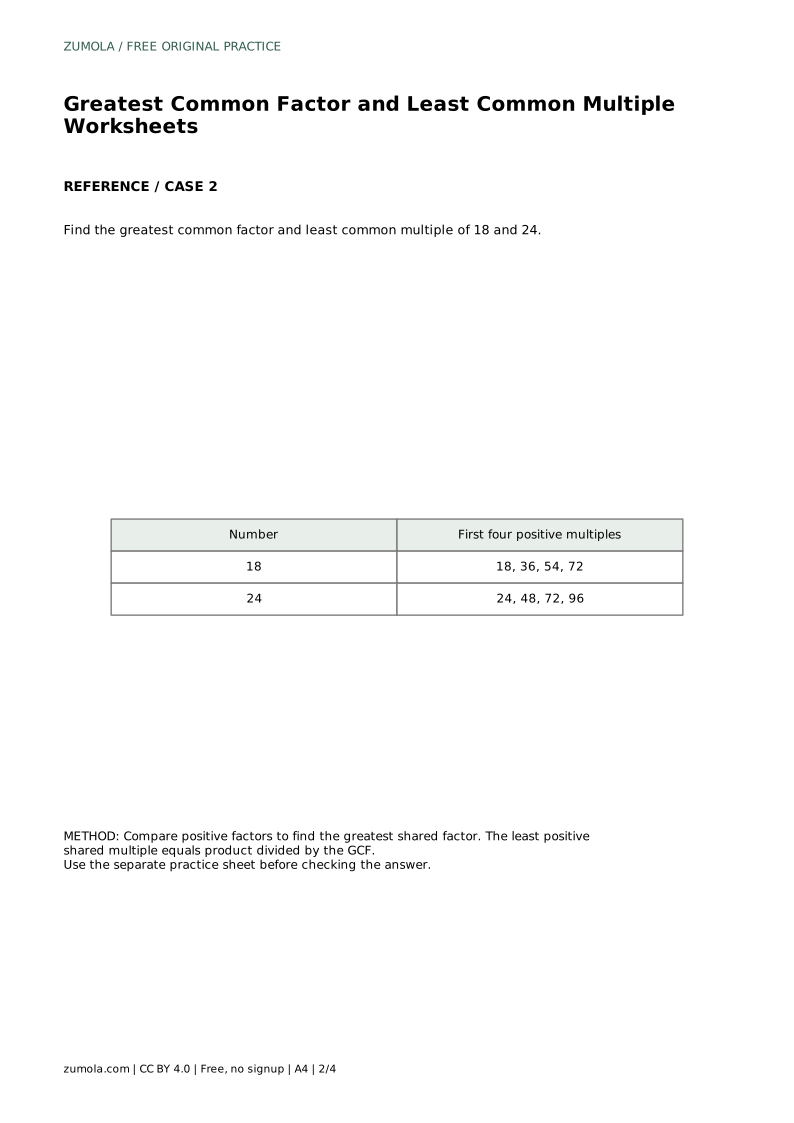
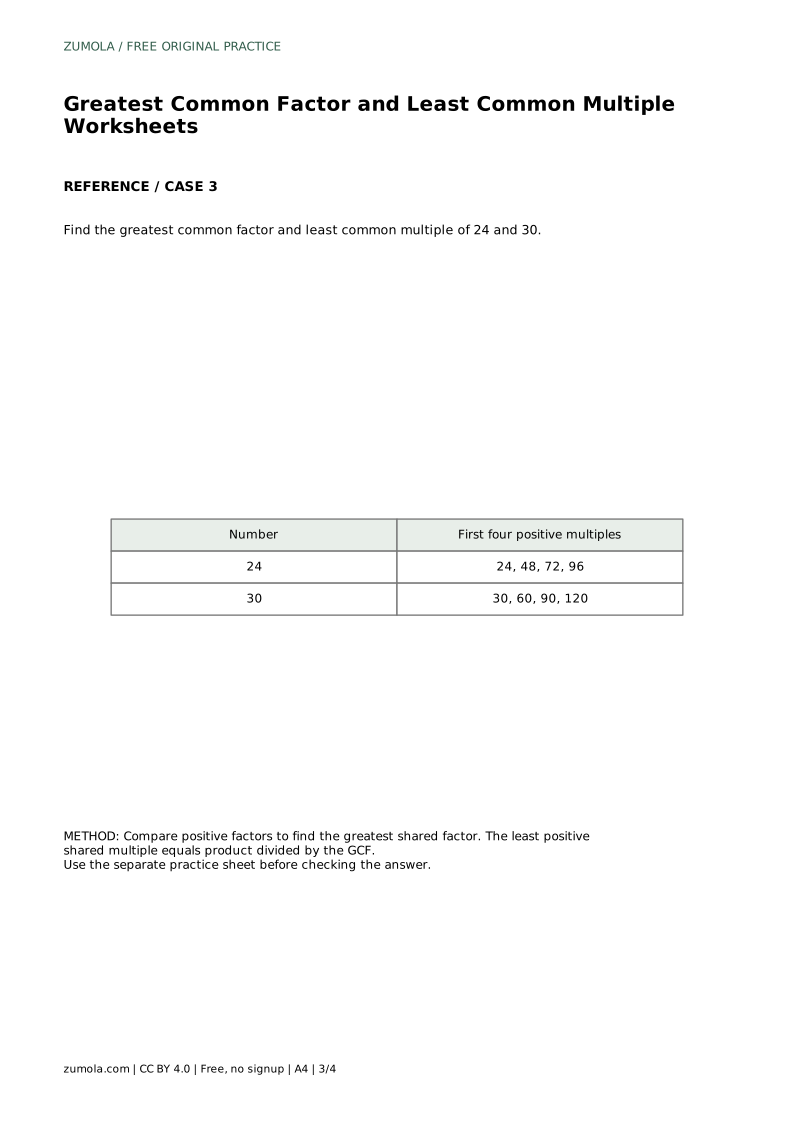
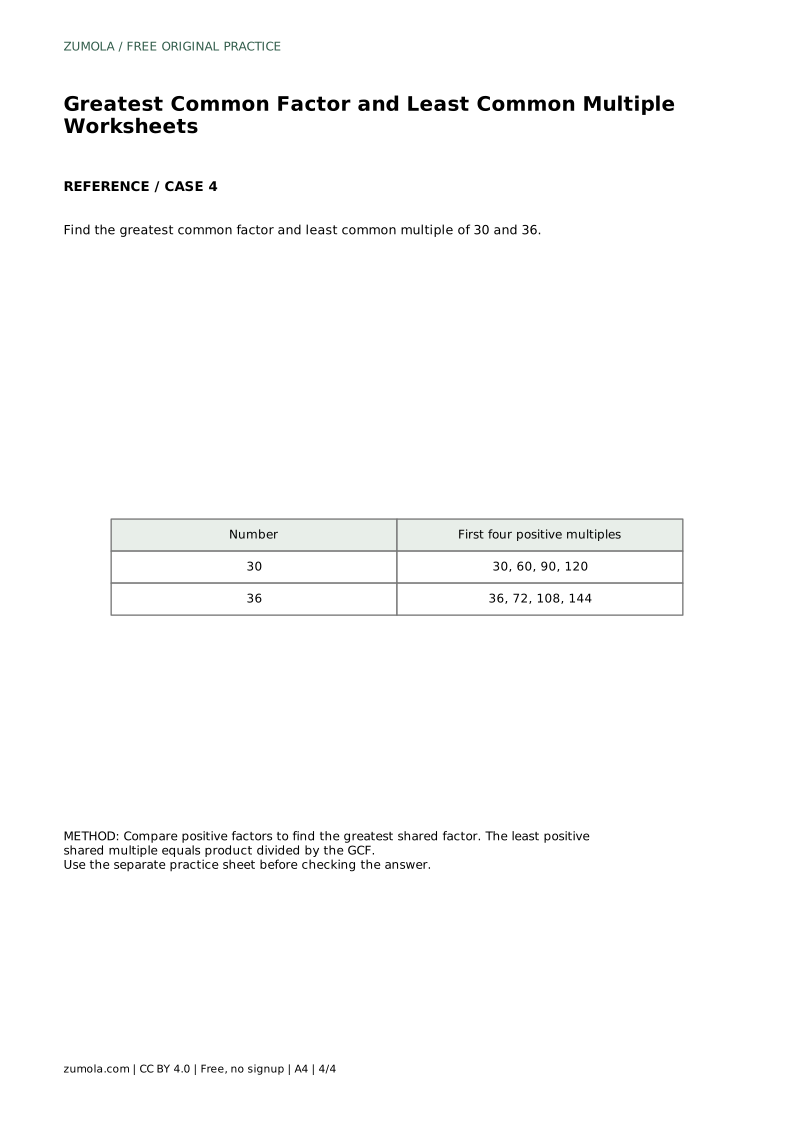
Reference diagrams
LETTER · Download PDF
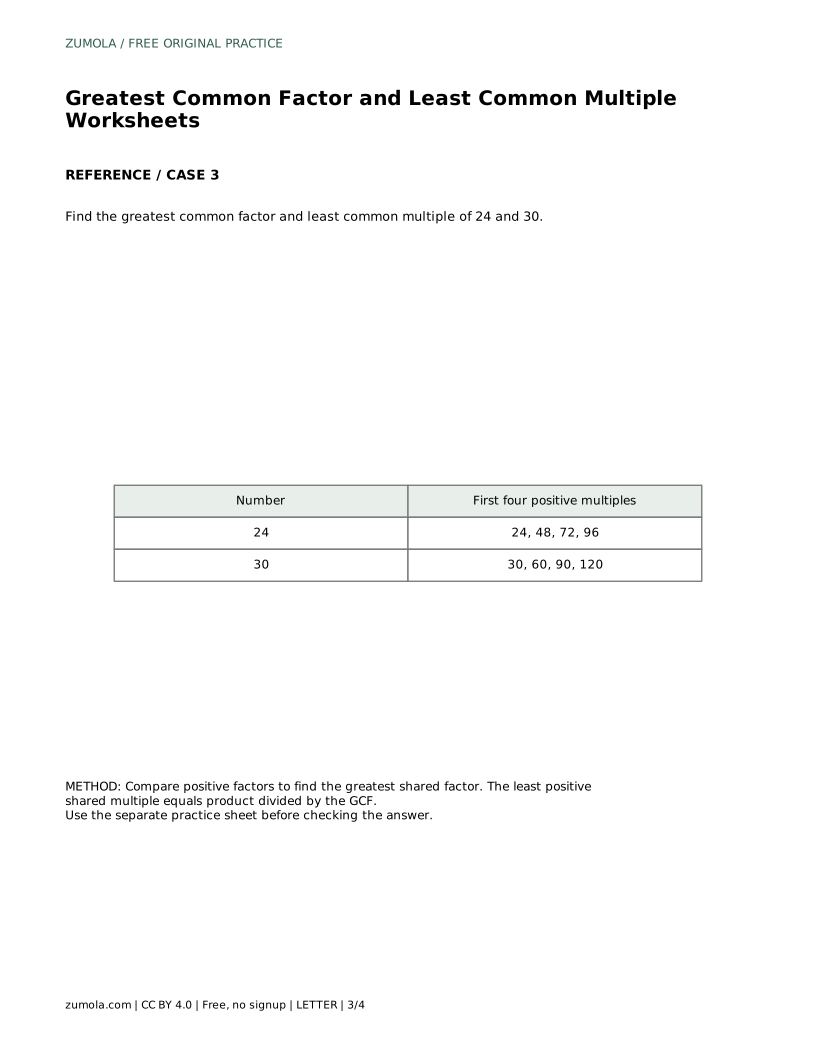
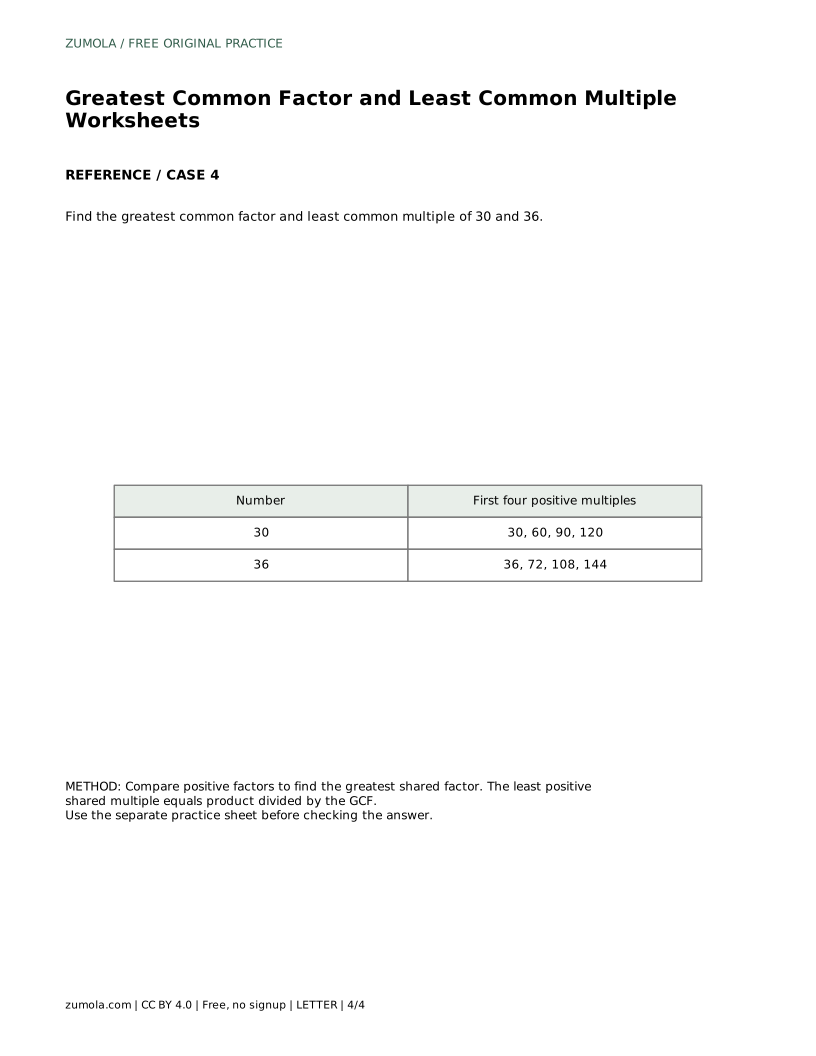
A4 · Download PDF
Free original resources
Teach greatest common factor and least common multiple with factor lists, multiple tables, and the product-divided-by-GCF check. Includes worked example and rubric.
Four original cases, with reference diagrams, practice sheets and worked answers. Everything is free; no signup required.
LETTER · Download PDF
A4 · Download PDF
LETTER · Download PDF
A4 · Download PDF
LETTER · Download PDF
A4 · Download PDF
Use A4 or US Letter to match your printer. Use the stated values and conditions to solve each exercise; diagrams are not physical measuring rulers.

Greatest common factor (GCF) and least common multiple (LCM) are two different questions about the same pair of whole numbers. GCF asks for the largest positive number that divides both; LCM asks for the smallest positive number that both divide into. These worksheets build both ideas side by side so students see the contrast, then connect them with the rule that the product of two numbers equals their GCF times their LCM.
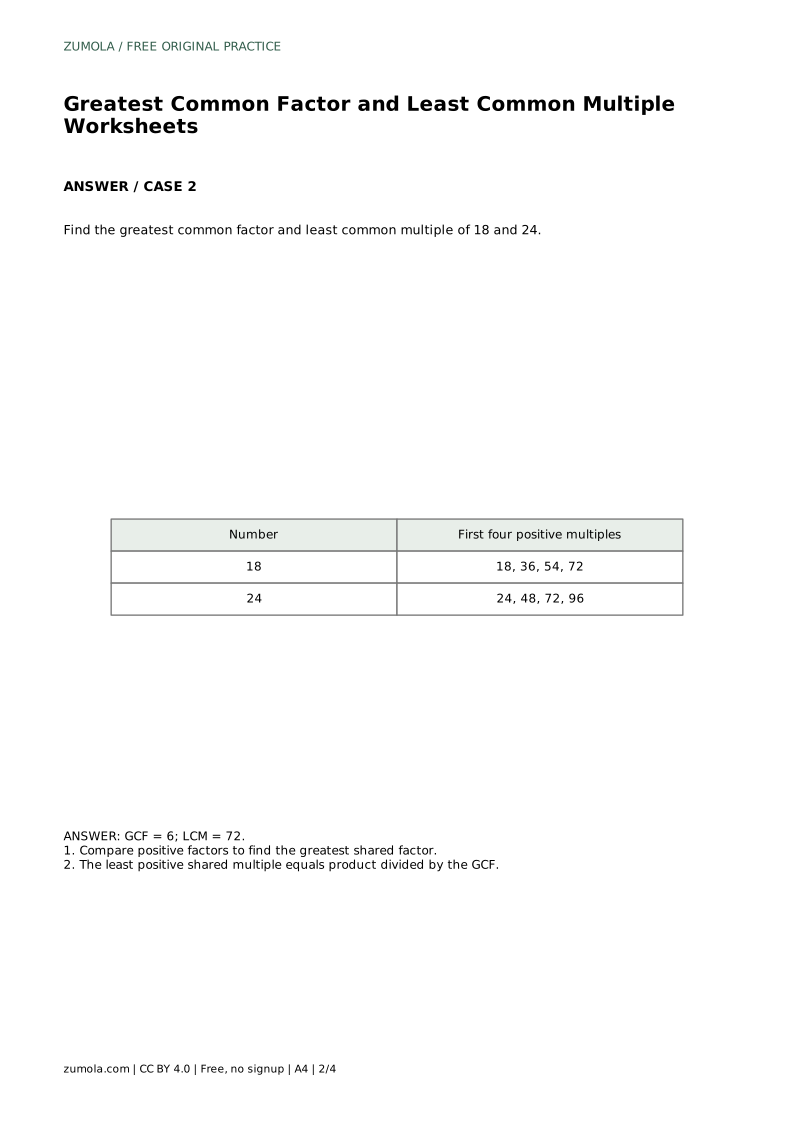
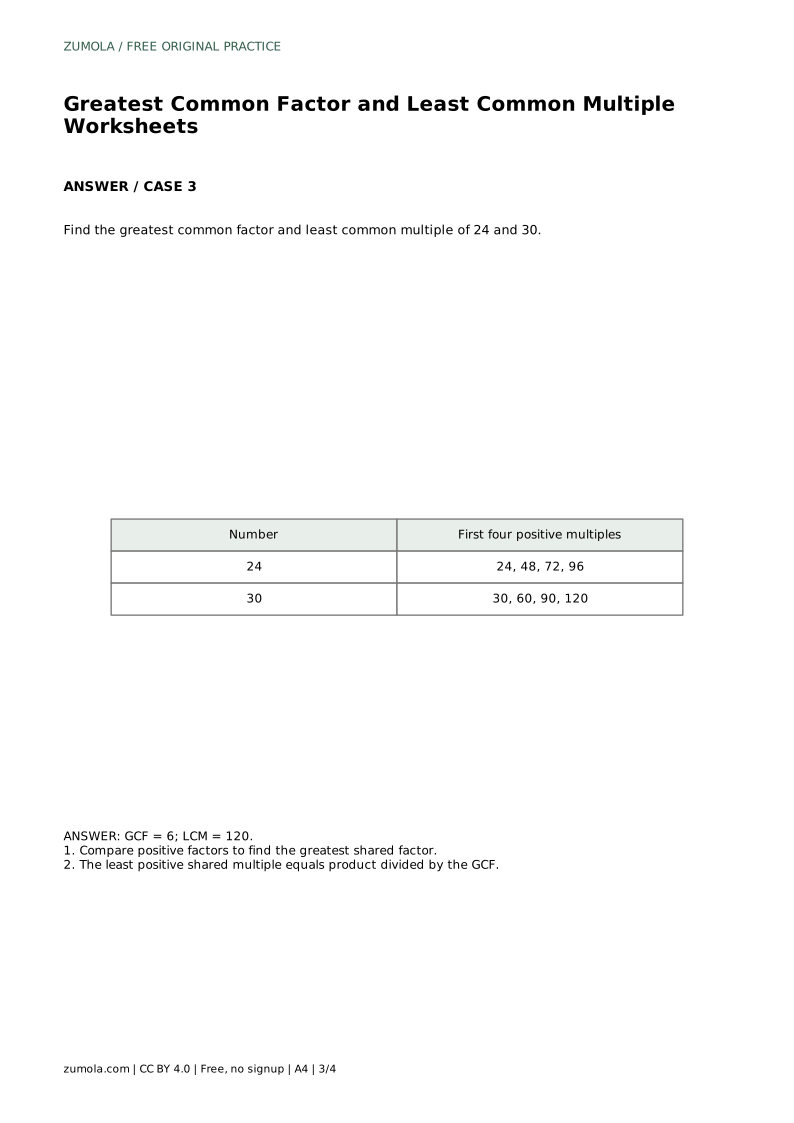
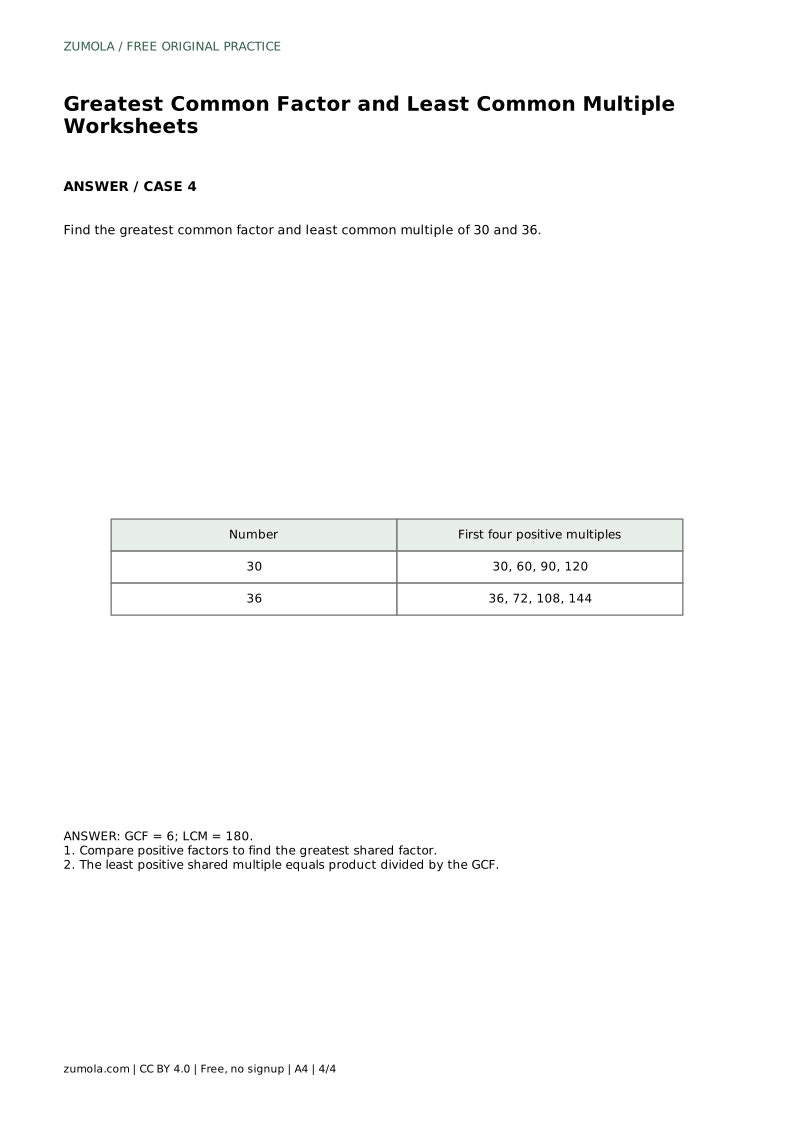
Start every problem by naming the operation. For GCF, list positive factors of each number and circle the shared ones; the greatest circled value is the answer. For LCM, list positive multiples of each number until a value appears in both lists; the first shared value is the answer. Keep lists in ascending order so the greatest factor and least multiple are easy to spot.
Use small pairs first, such as 12 and 18, so lists stay short. A factor is always less than or equal to its number; a multiple is always greater than or equal to its number. That single fact helps students avoid mixing the two lists.
For two positive whole numbers a and b, the product a times b equals GCF(a,b) times LCM(a,b). So LCM equals the product divided by the GCF. This is a check, not a replacement for understanding the lists. If the lists give GCF 6 and LCM 36 for 12 and 18, then 6 times 36 equals 216, and 12 times 18 also equals 216.
The rule applies to pairs of positive whole numbers. It does not extend automatically to three numbers, where the relationship is different. Keep pair problems separate from any three-number work.
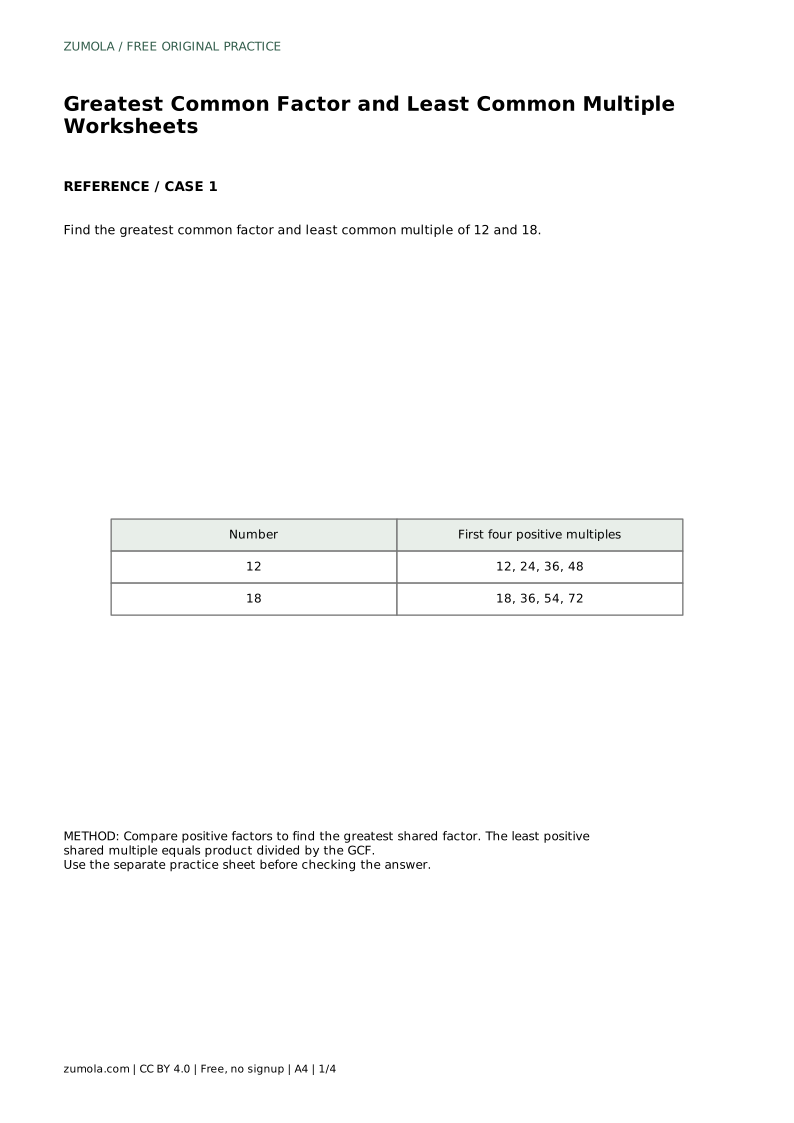
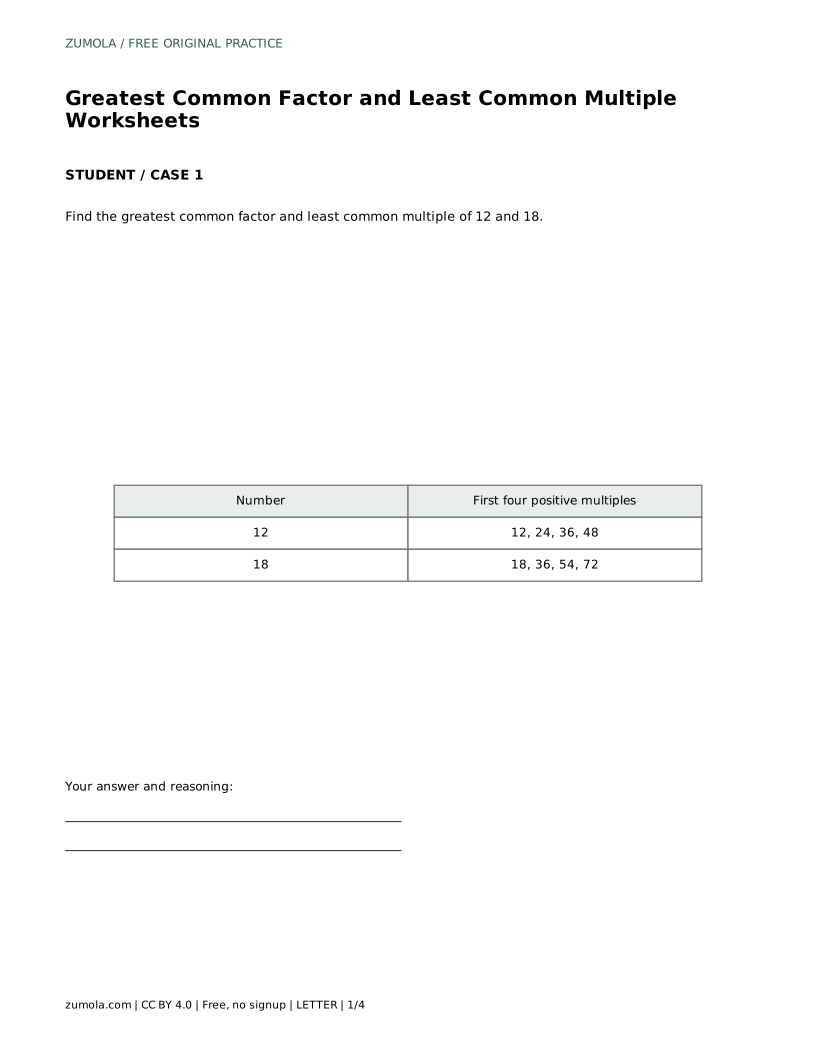
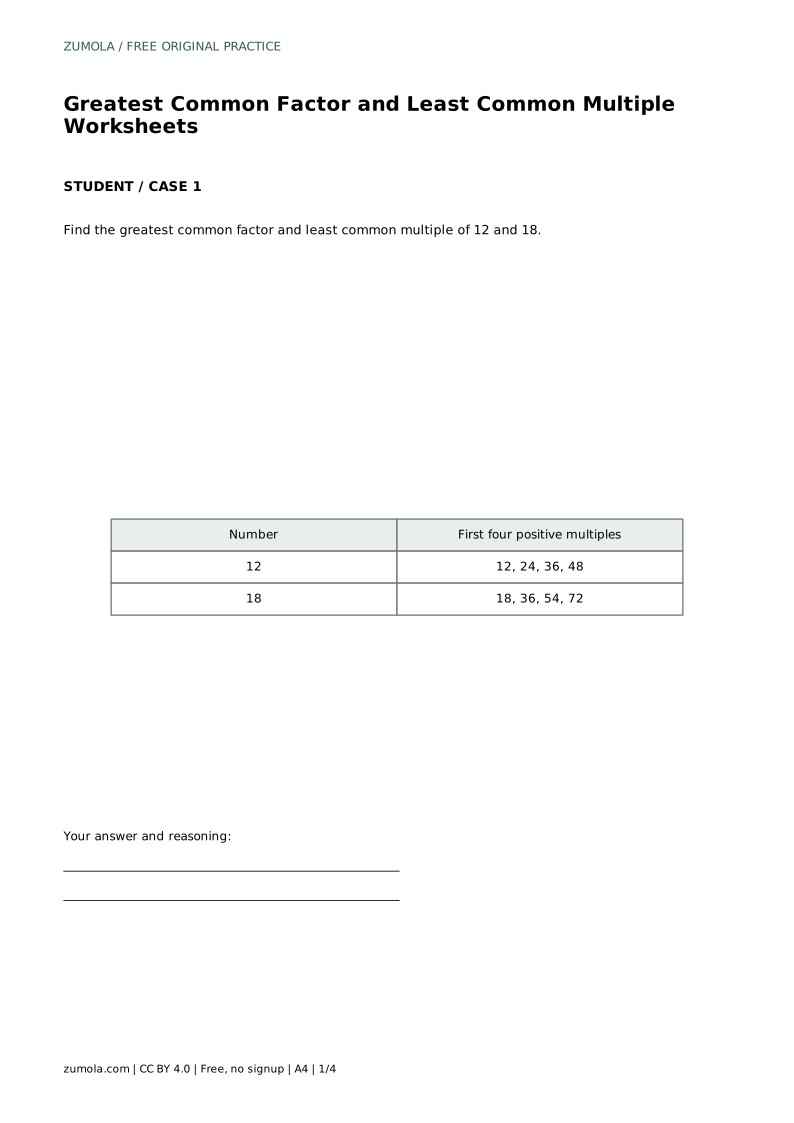
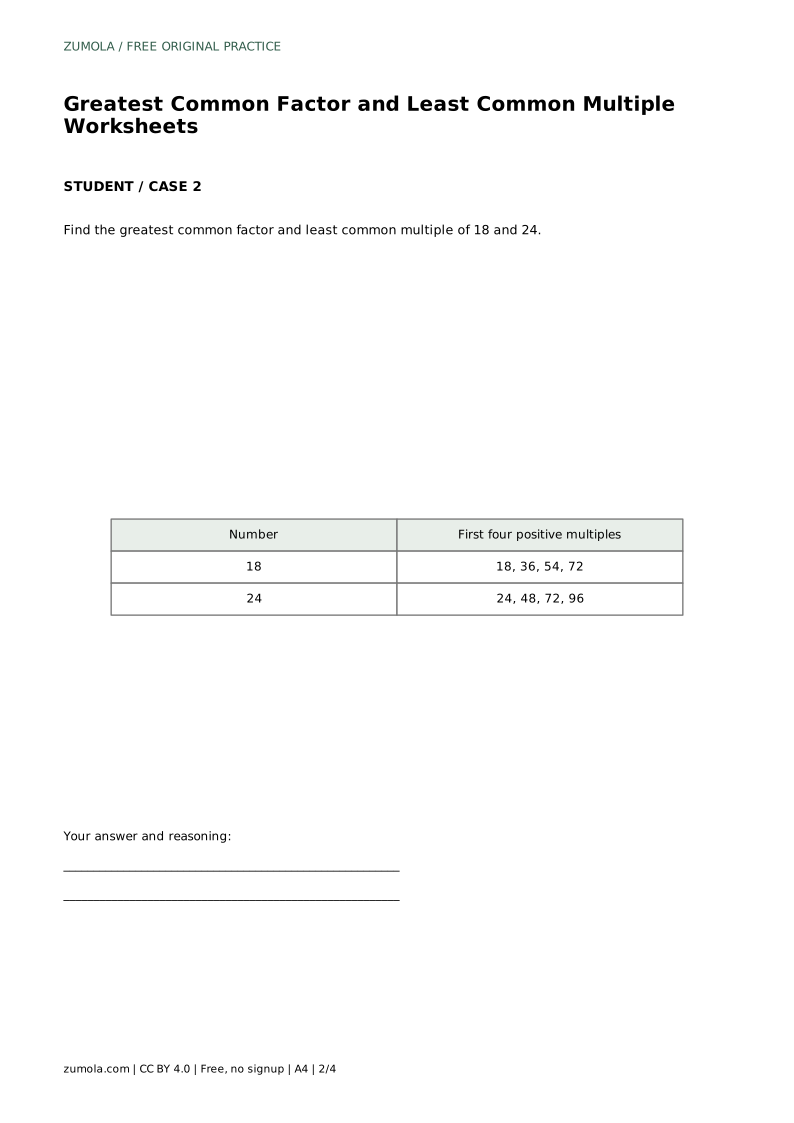
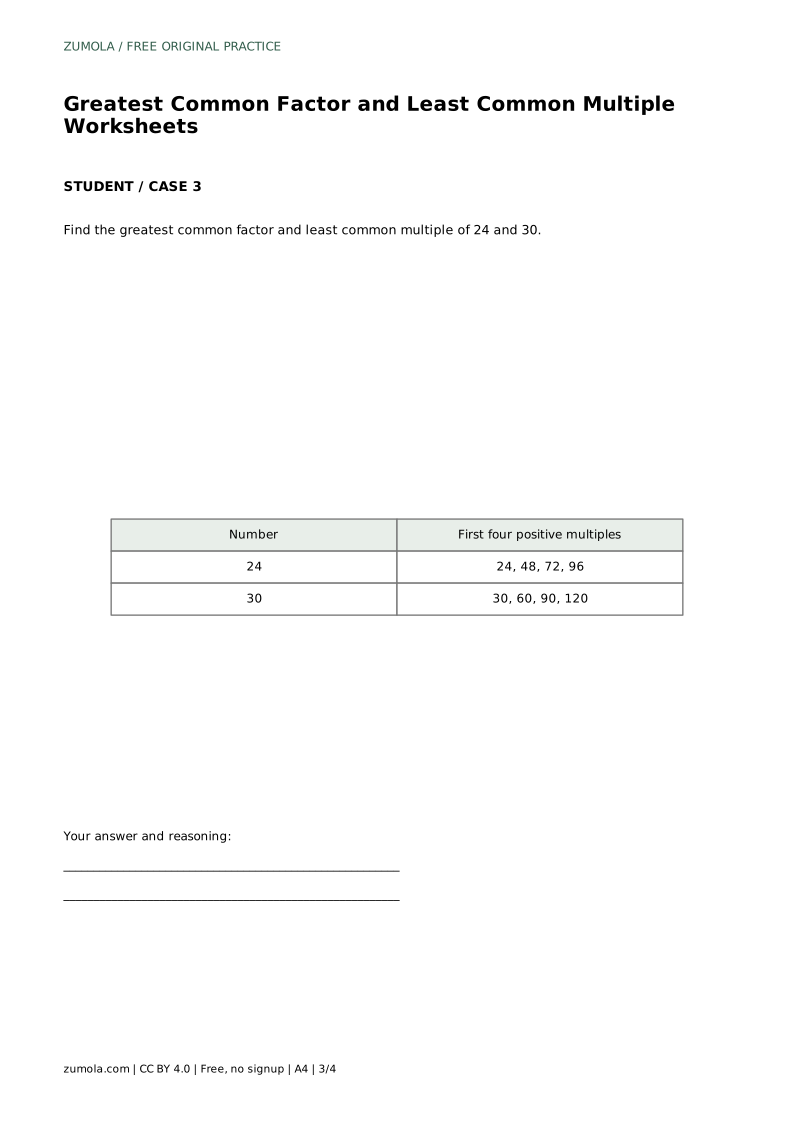
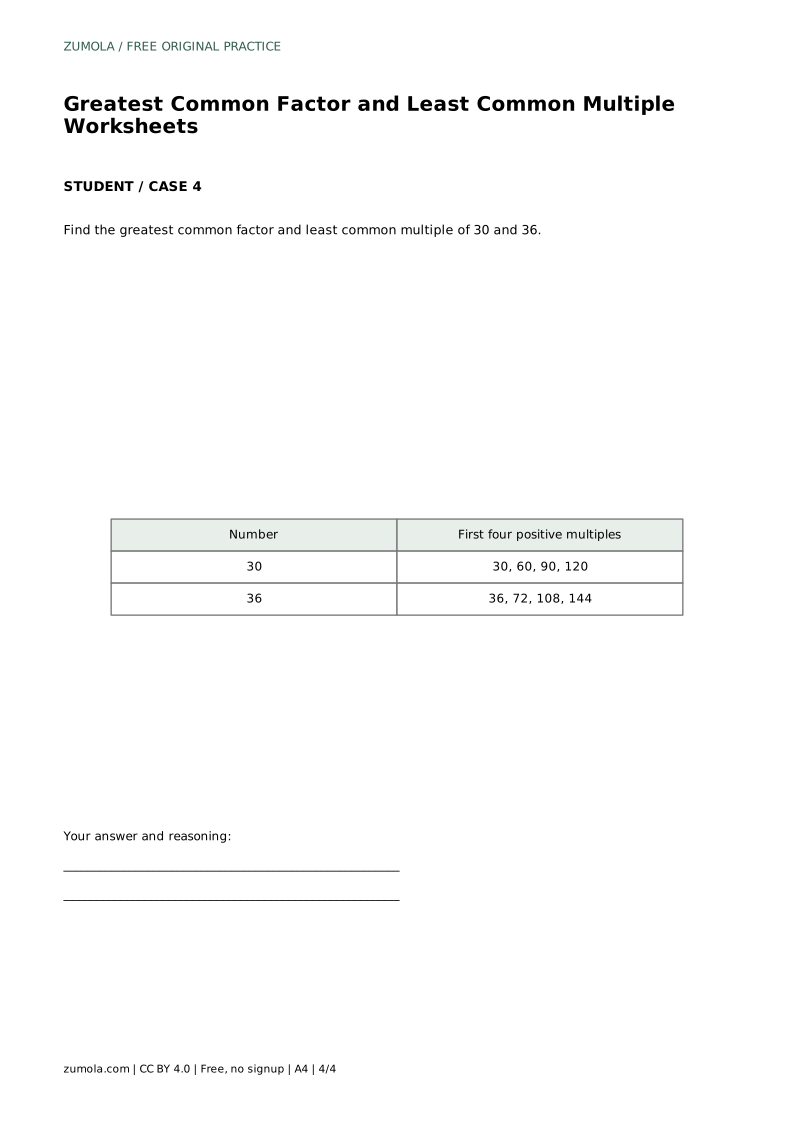
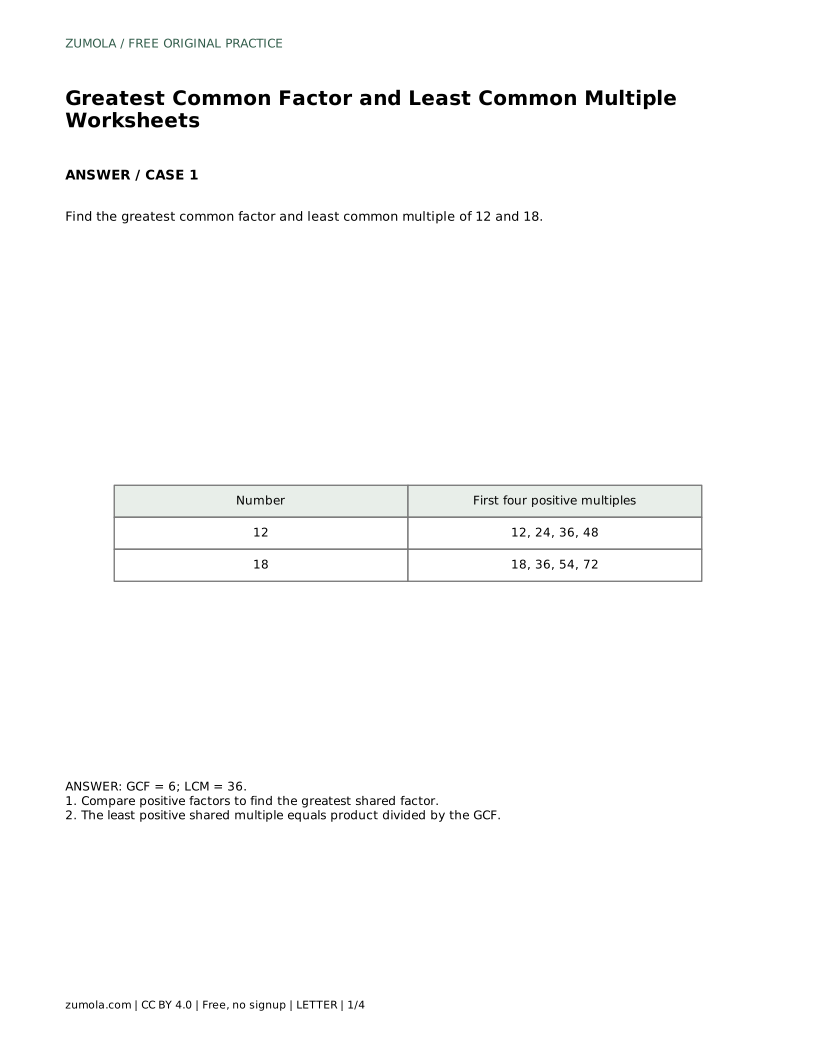
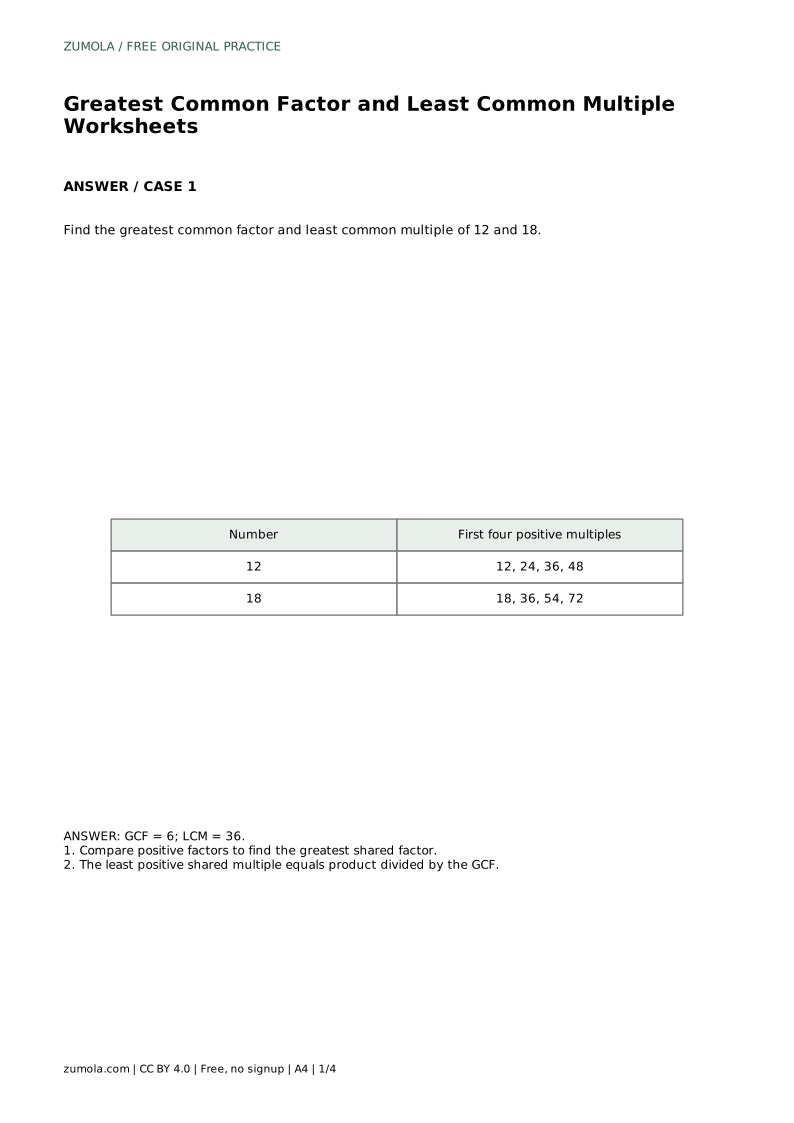
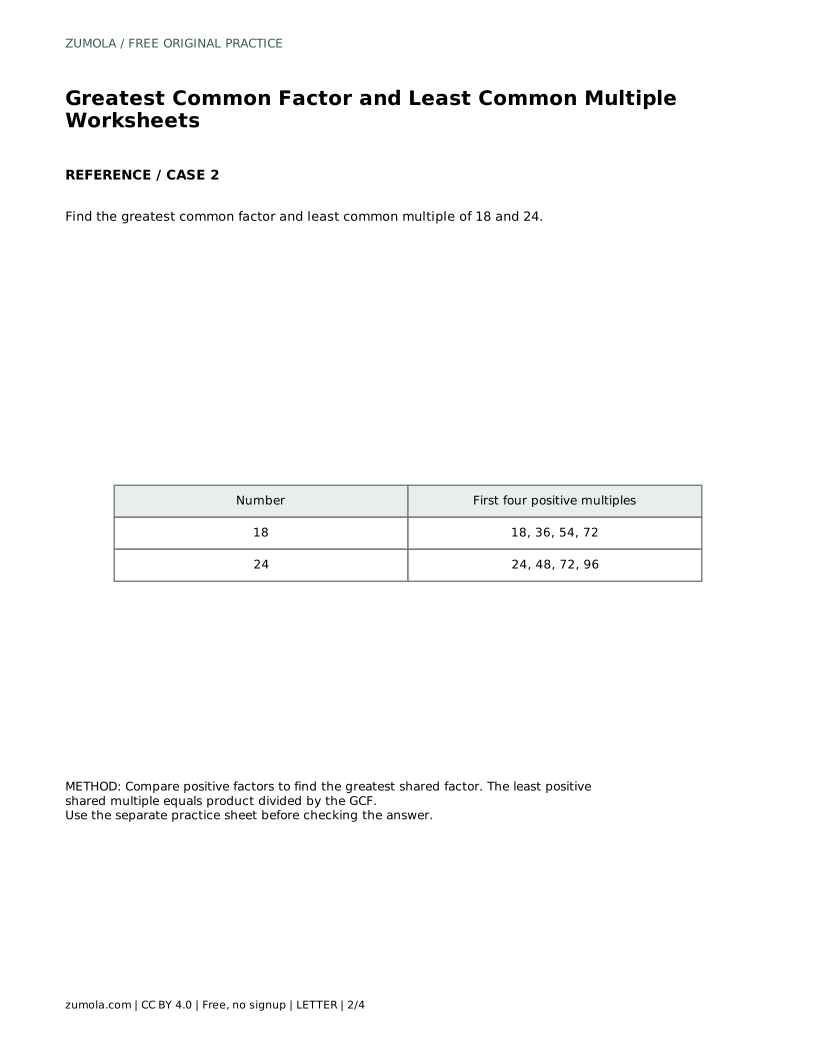
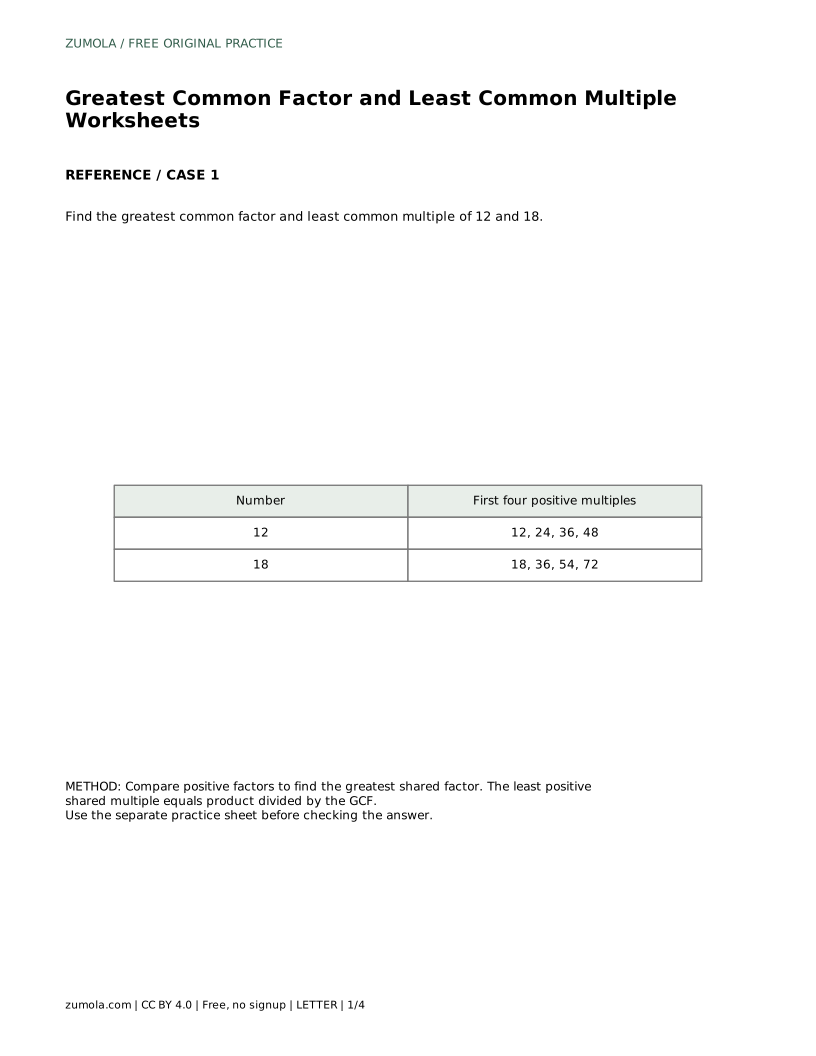
A multiple table shows the first few positive multiples of each number. For 12 and 18, the rows read 12, 24, 36, 48 and 18, 36, 54, 72. The first shared entry is 36, so the LCM is 36. The table is a scaffold: students should still write the lists themselves on paper.
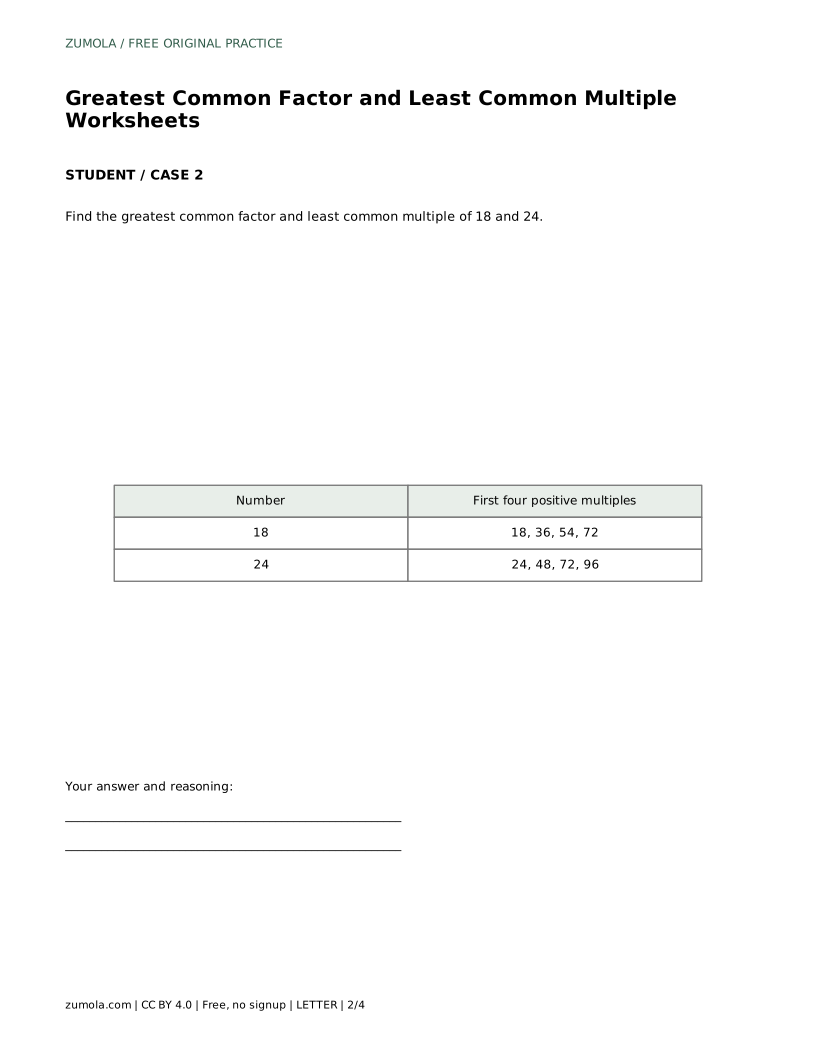
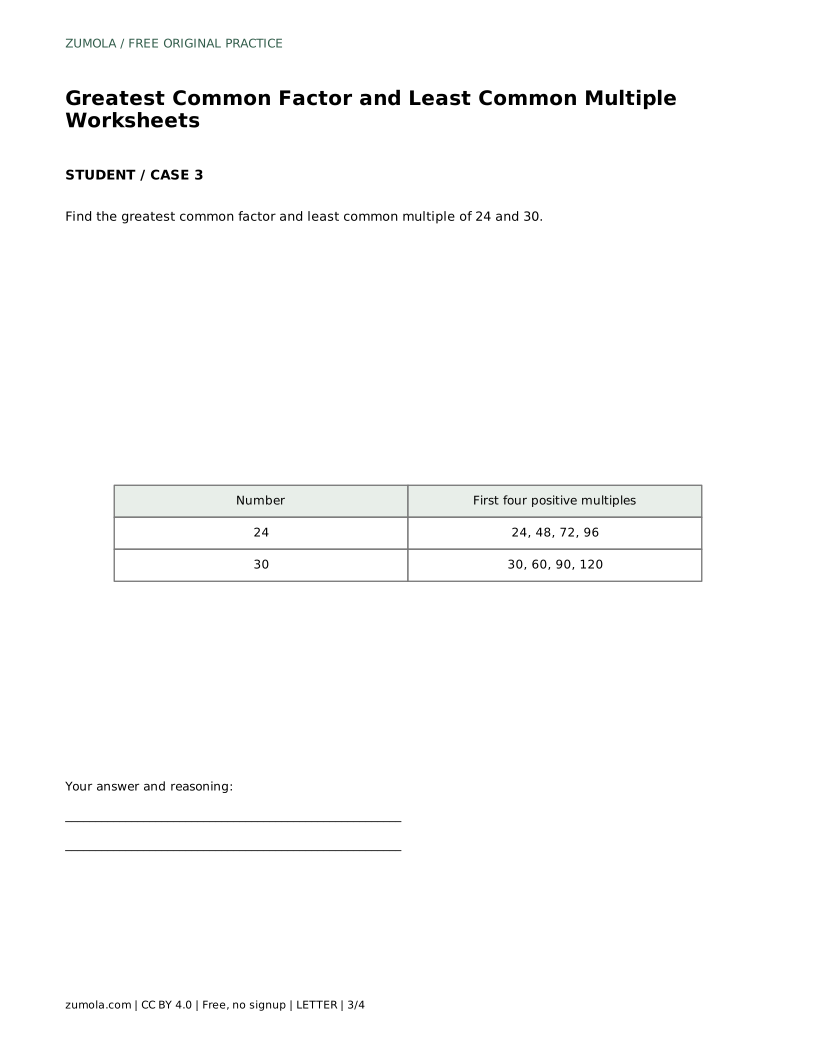
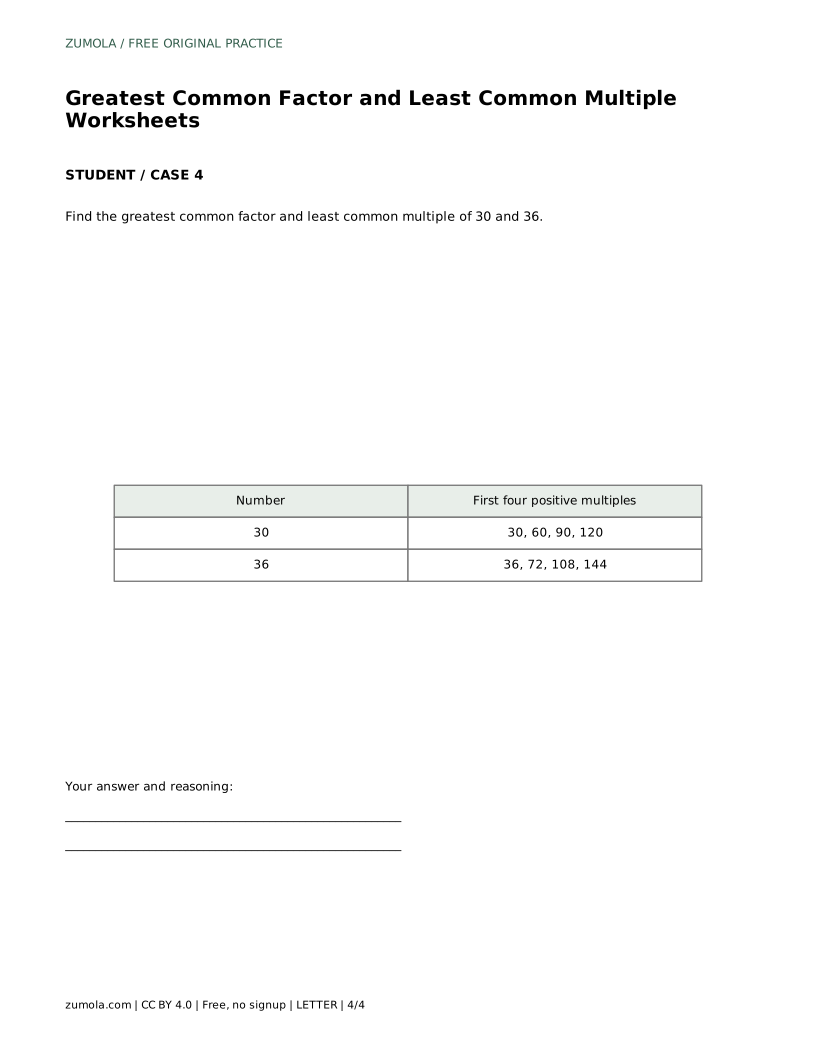
Watch for pairs where the first shared multiple appears beyond the fourth entry. Encourage students to extend both rows rather than stop early. Also note that 1 is always a factor of every positive whole number, so the GCF is at least 1.
Find the greatest common factor and least common multiple of 12 and 18.
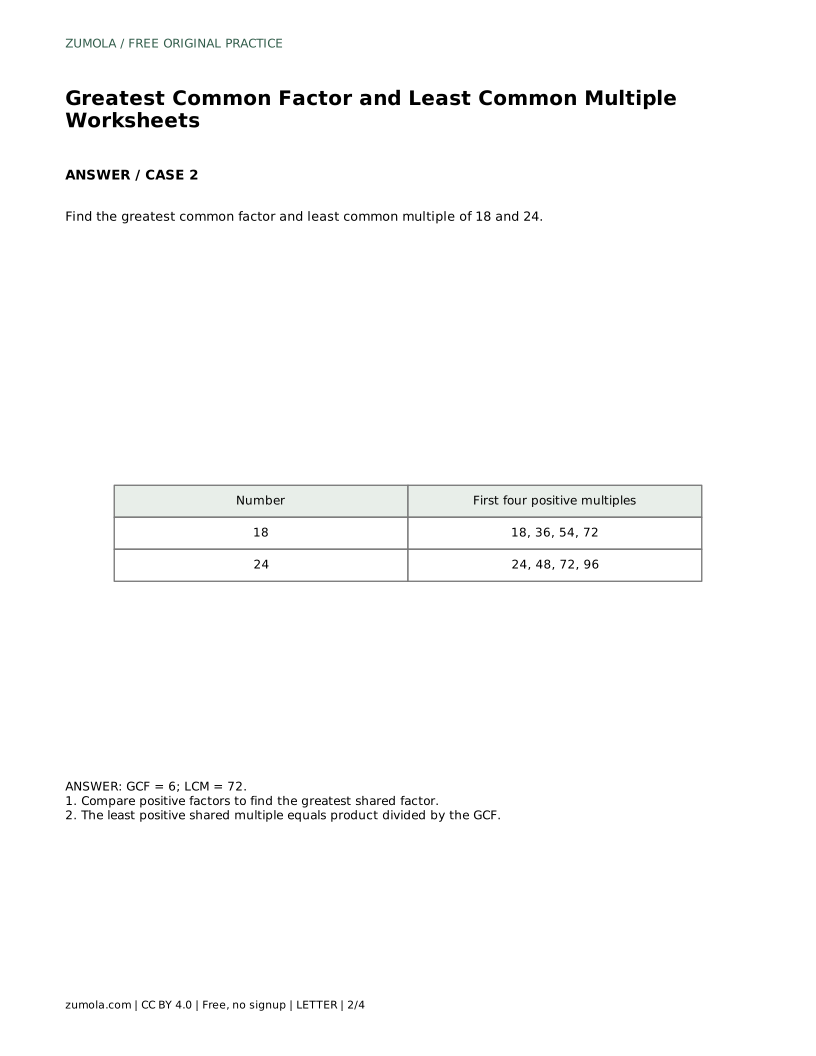
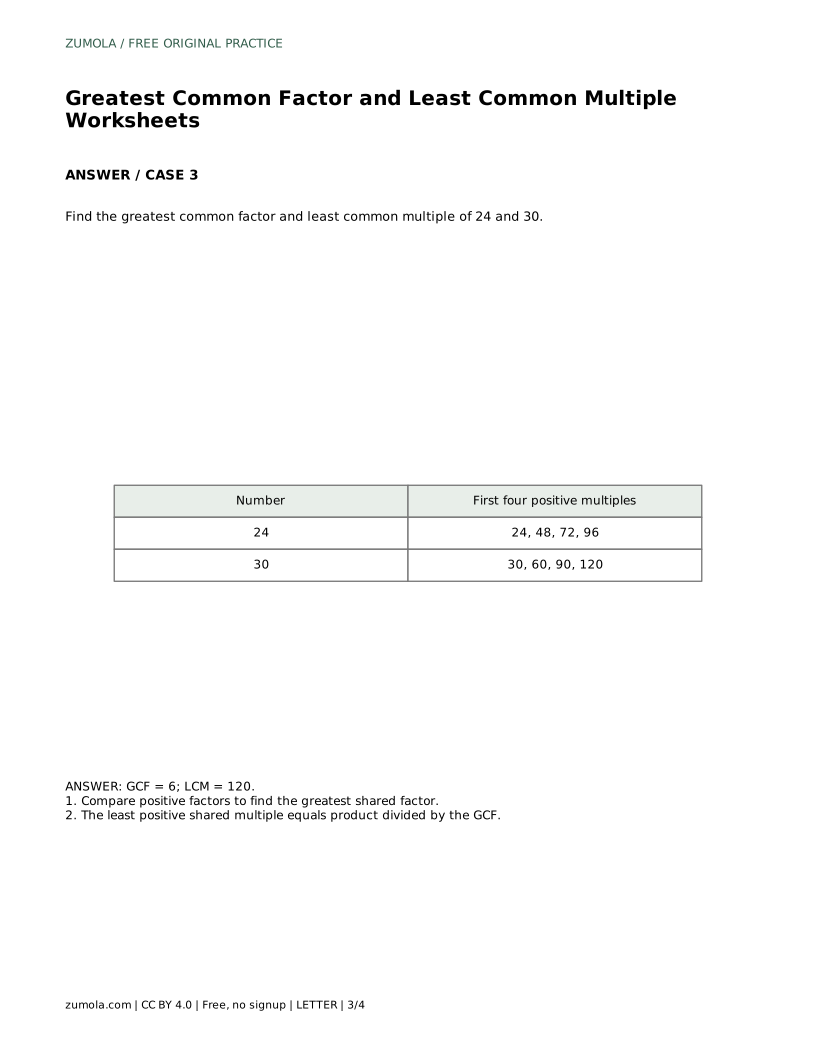
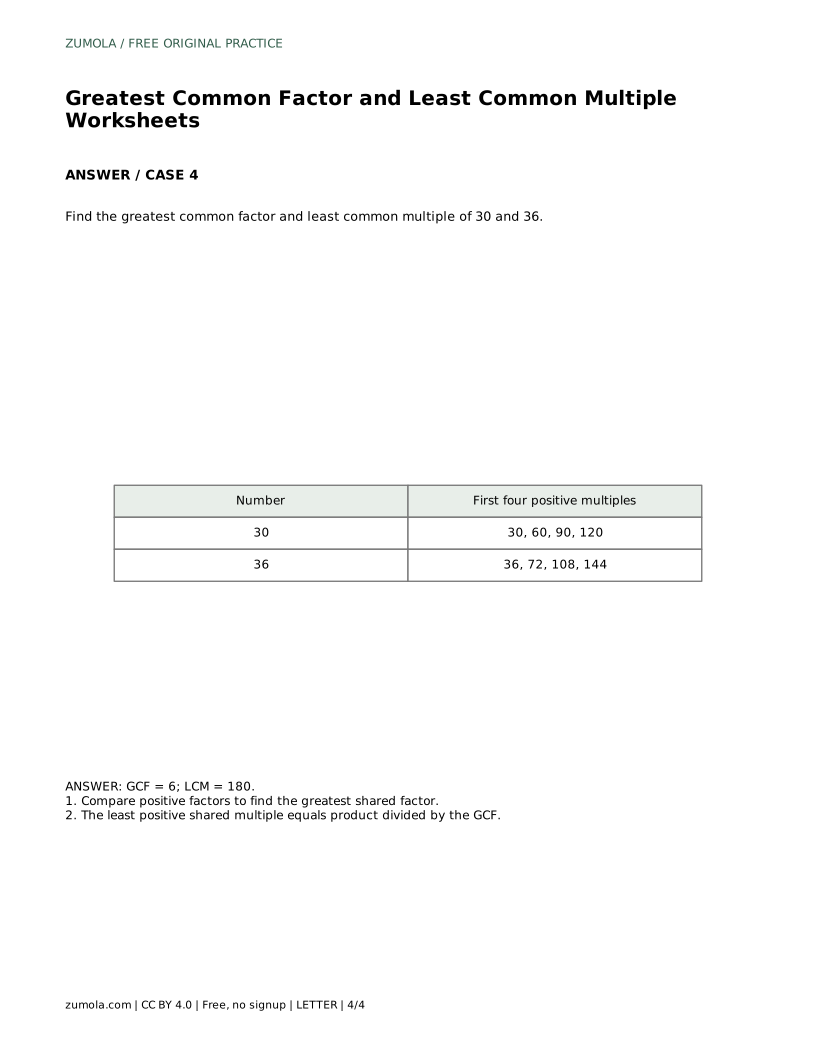
GCF = 6; LCM = 36. Compare positive factors to find the greatest shared factor. The least positive shared multiple equals product divided by the GCF.
GCF is the largest positive number dividing both values; LCM is the smallest positive number both values divide into.
No. For positive whole numbers, the LCM is at least as large as each number, and the GCF is at most as large as each number.
Because for two positive whole numbers, the product equals GCF times LCM, so dividing the product by the GCF leaves the LCM.
All math worksheets · Free coordinate paper
Original resources · CC BY 4.0 · Free for personal and classroom use with attribution.