Reference diagrams
LETTER · Download PDF
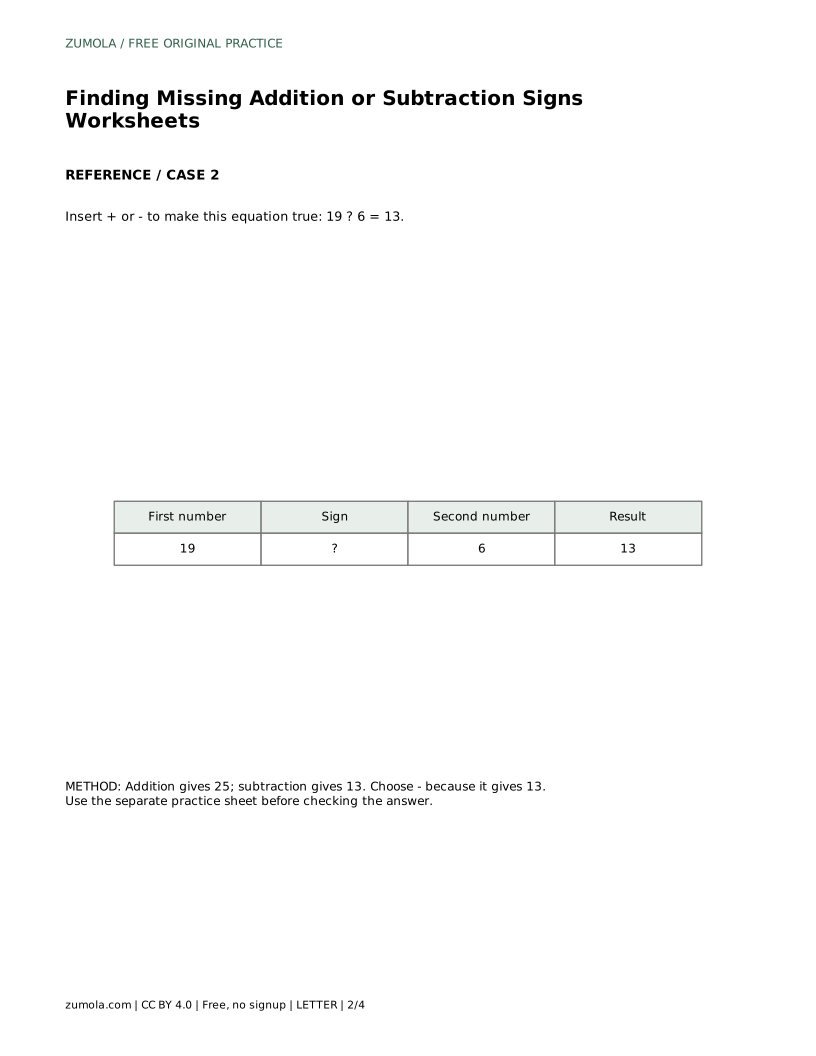
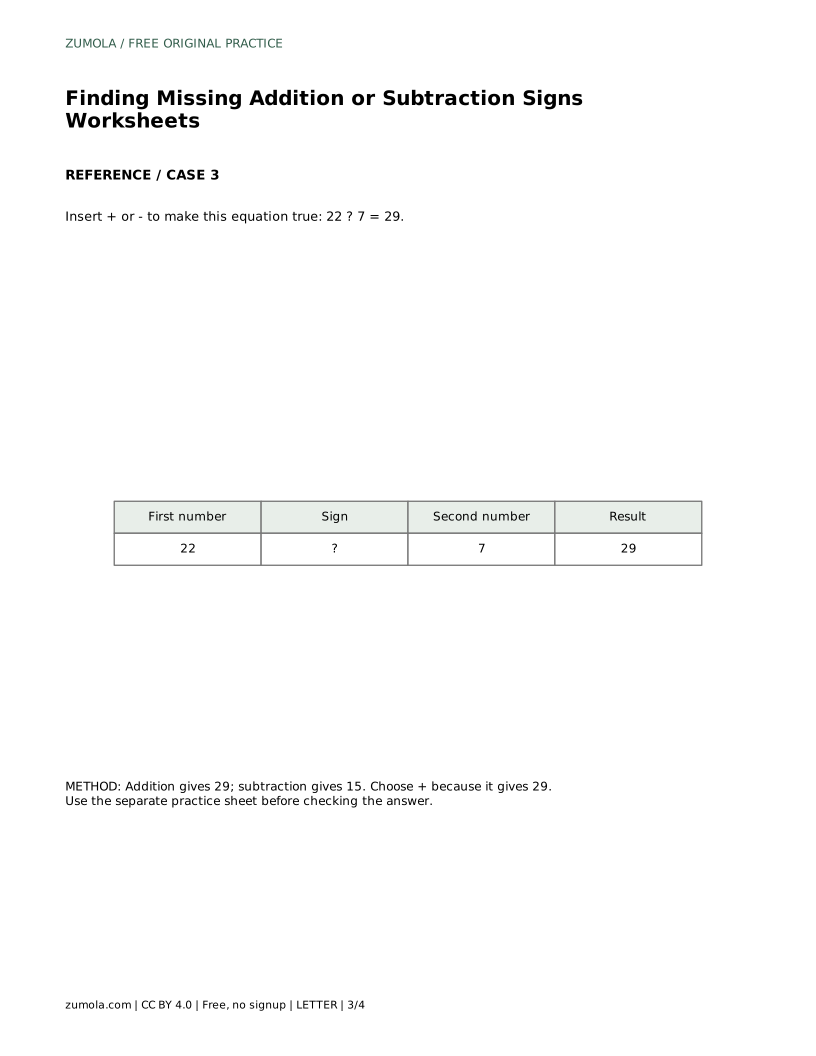
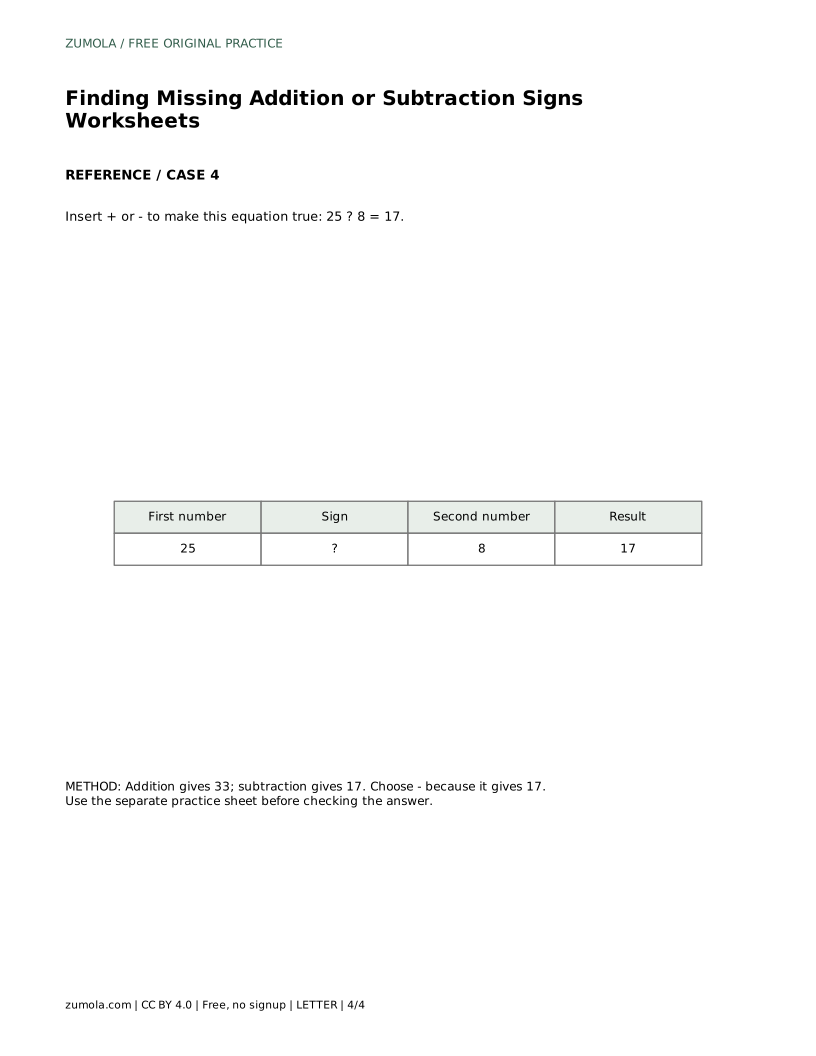
A4 · Download PDF
Free original resources
Teach learners to choose + or - so a two-number equation is true. Includes a worked example, checking method, common mistakes, and a marking rubric.
Four original cases, with reference diagrams, practice sheets and worked answers. Everything is free; no signup required.
LETTER · Download PDF
A4 · Download PDF
LETTER · Download PDF
A4 · Download PDF
LETTER · Download PDF
A4 · Download PDF
Use A4 or US Letter to match your printer. Use the stated values and conditions to solve each exercise; diagrams are not physical measuring rulers.

Some equations leave the operation hidden. The task is to decide whether the plus sign or the minus sign makes the number sentence true. With two whole numbers and a stated result, there are only two possibilities to test, so learners can compare both outcomes and select the sign that matches. This page explains a reliable checking routine, shows one complete example, and gives guidance for marking the work fairly.
A missing-sign equation looks like this: a first number, a blank where the sign belongs, a second number, an equals sign, and a result. Only addition and subtraction are allowed. The learner writes + or - in the blank so that the left side equals the right side.
The key idea is that the result is already given. Learners are not asked to calculate freely and then invent an answer; they are asked to test which operation produces the printed result. That makes the task a comparison task, not a guessing task.
Keep the domain explicit: both numbers are whole numbers, and subtraction is read as first number minus second number in that order. Order matters. Reversing the numbers changes the subtraction result, so learners should not swap them.
After choosing a sign, learners should read the completed equation aloud or rewrite it with the sign in place. This turns a choice into a checkable statement. If the two sides do not match, the sign is wrong or an arithmetic slip has occurred.
A second useful check is to compare the result with the first number. In addition, the result is larger than both starting numbers when both are positive. In subtraction, the result is smaller than the first number. This is a quick sanity check, not a substitute for calculating.
Accuracy matters more than speed here. Two short calculations per item is enough; learners do not need long written methods for numbers of this size.
Because each item has one correct sign, marking is straightforward, but the reasoning still deserves attention. A learner who writes the right sign without any working may have guessed. A learner who shows both trial calculations demonstrates the intended method.
Use the rubric below to separate accuracy from method. A correct sign with a clear check is the strongest response. A correct sign with no working is acceptable but weaker evidence of understanding.
Artistic or open-ended work is not part of this task; there is a single correct operator for each equation, so mark against the equation rather than against personal preference.
Keep the blank for the sign wide enough to write clearly. Learners should write the sign between the numbers, not above or below them, so the equation reads correctly from left to right.
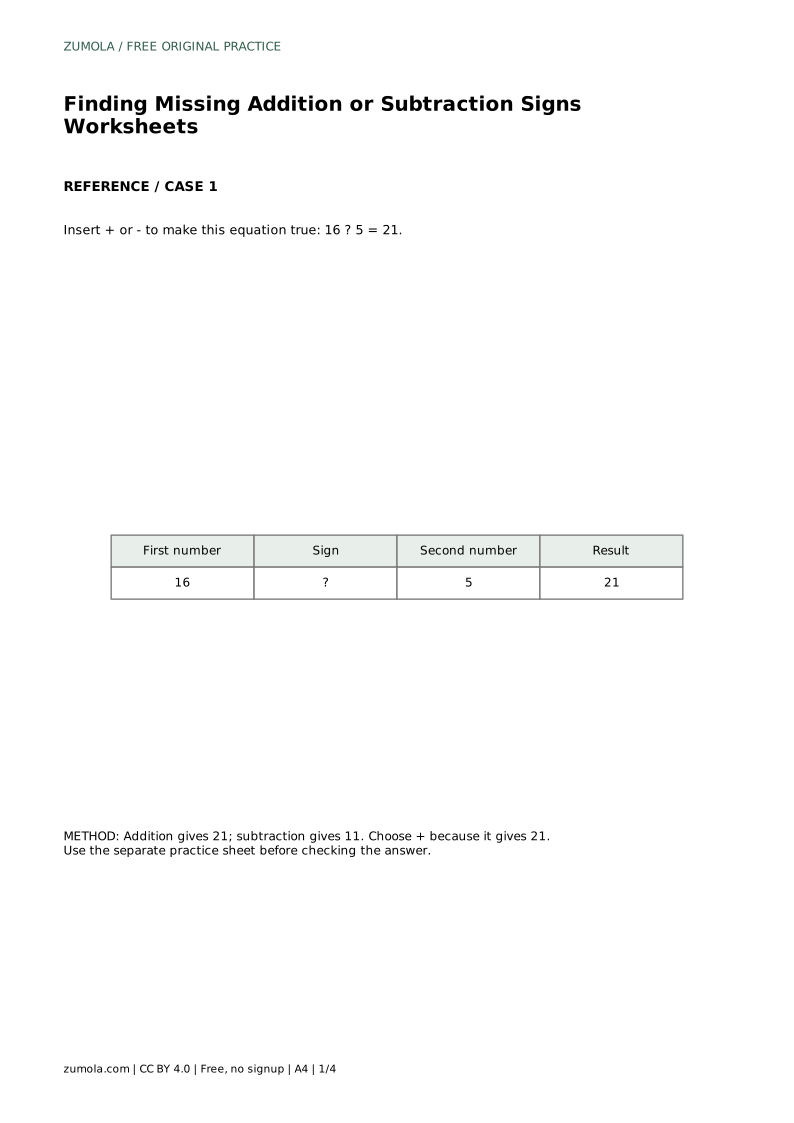
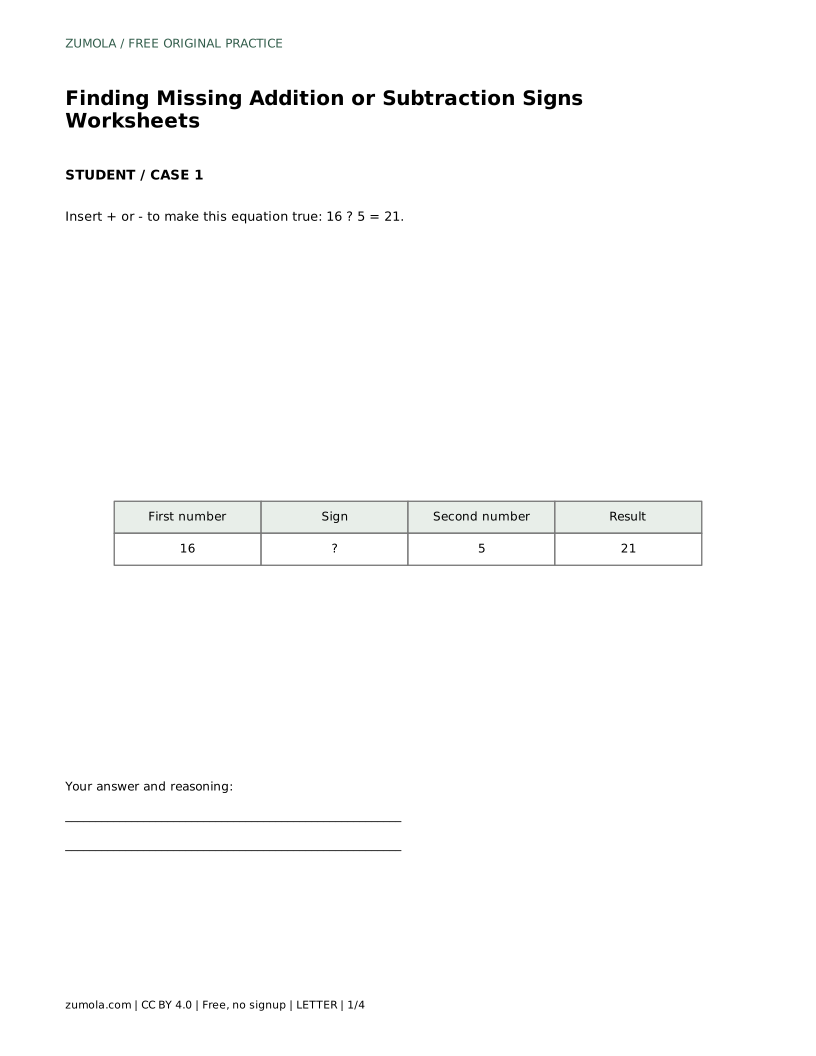
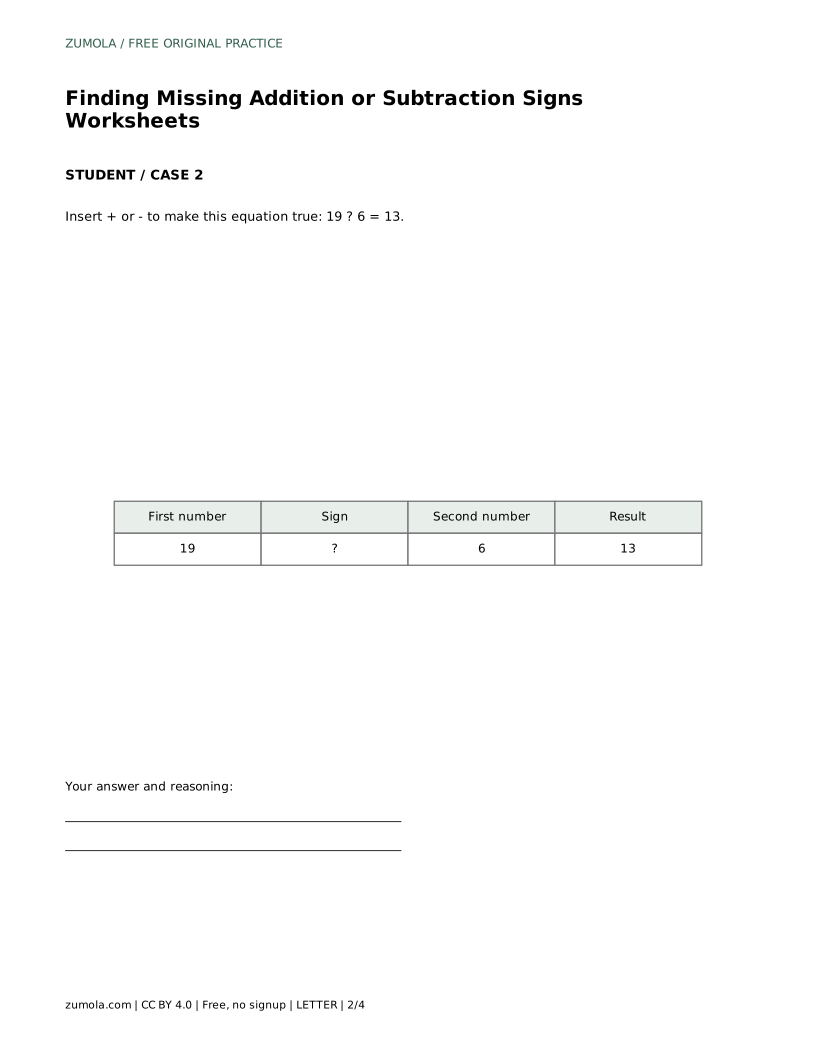
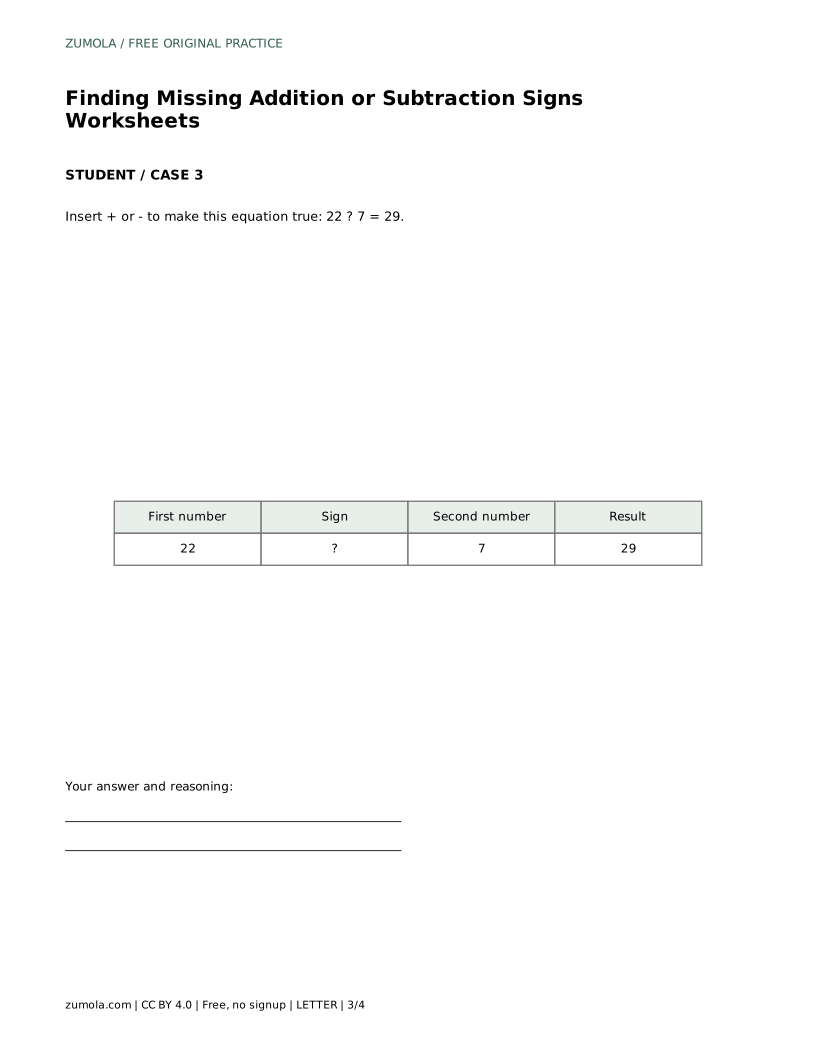
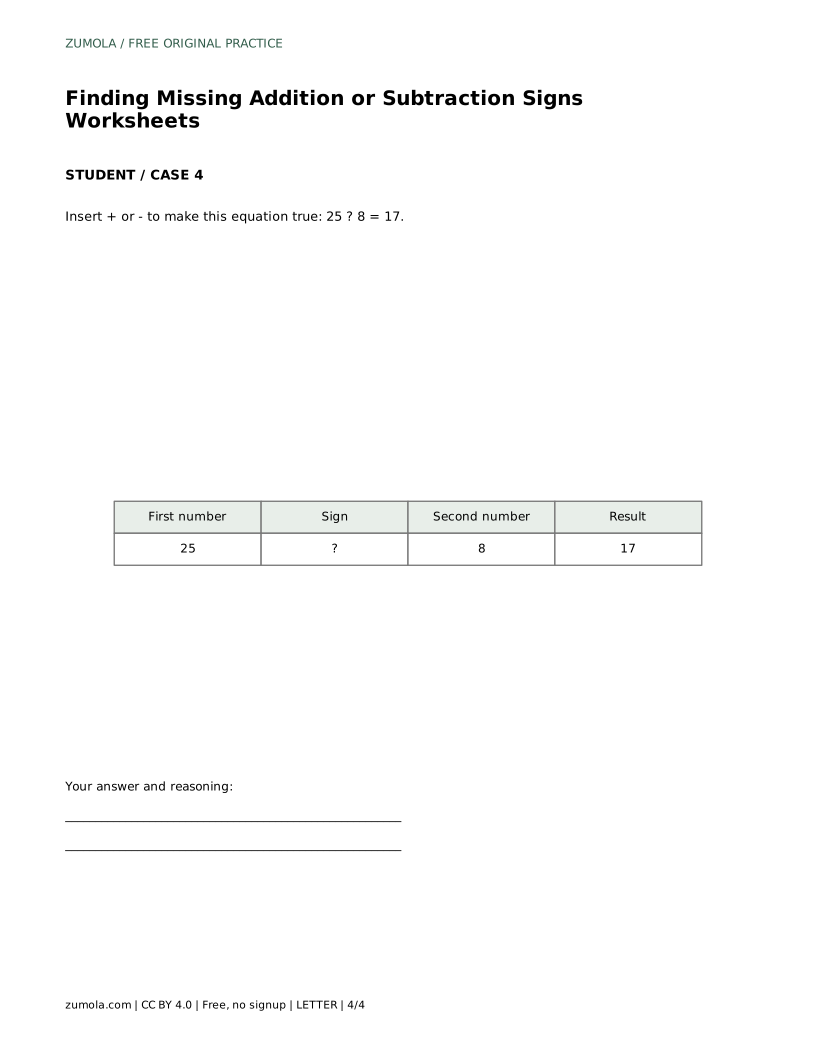
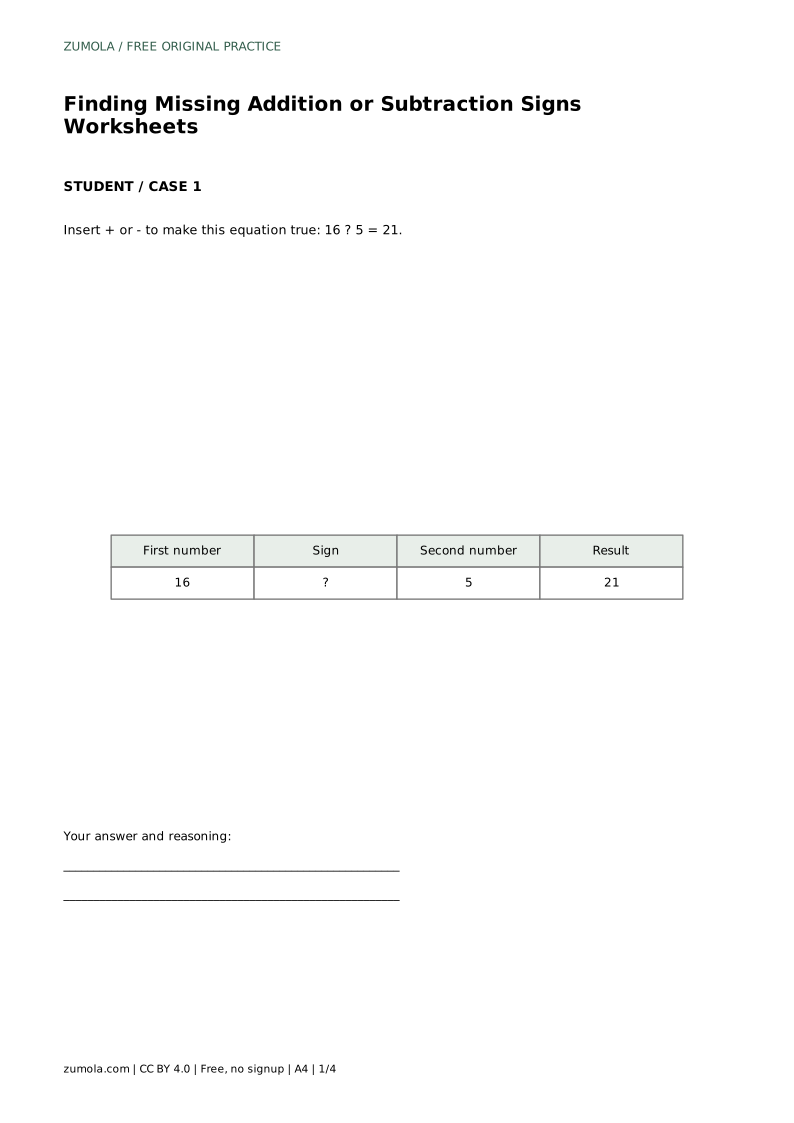
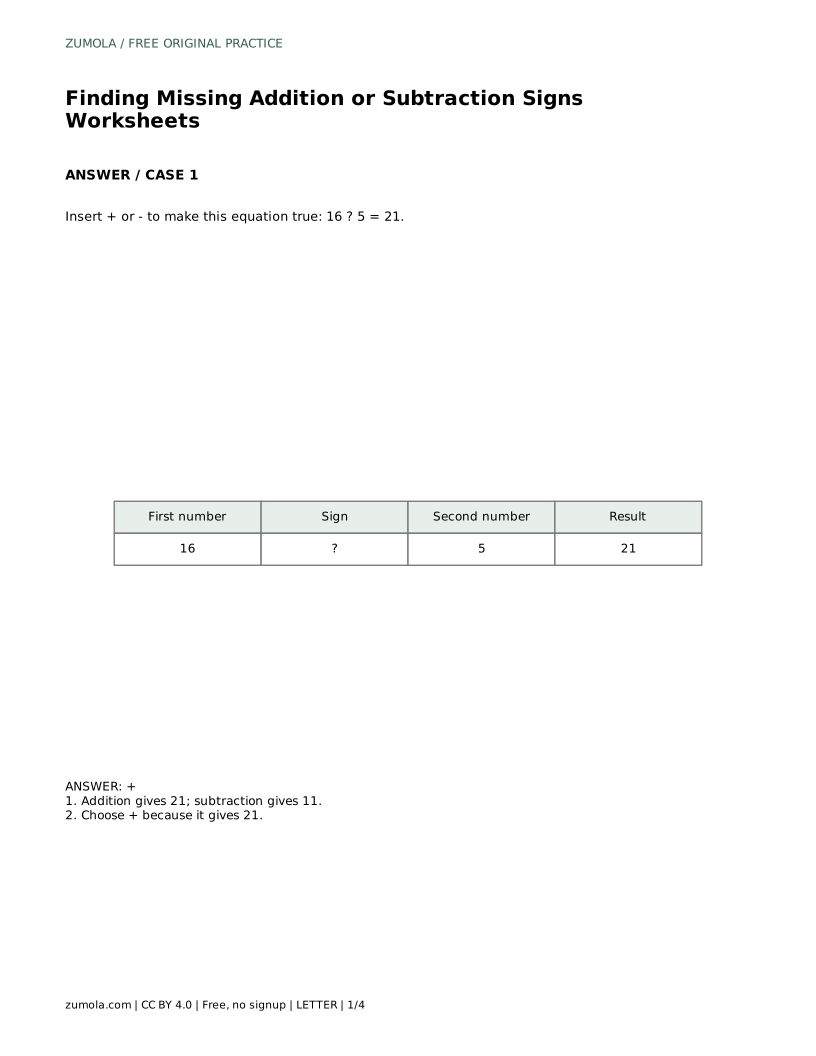
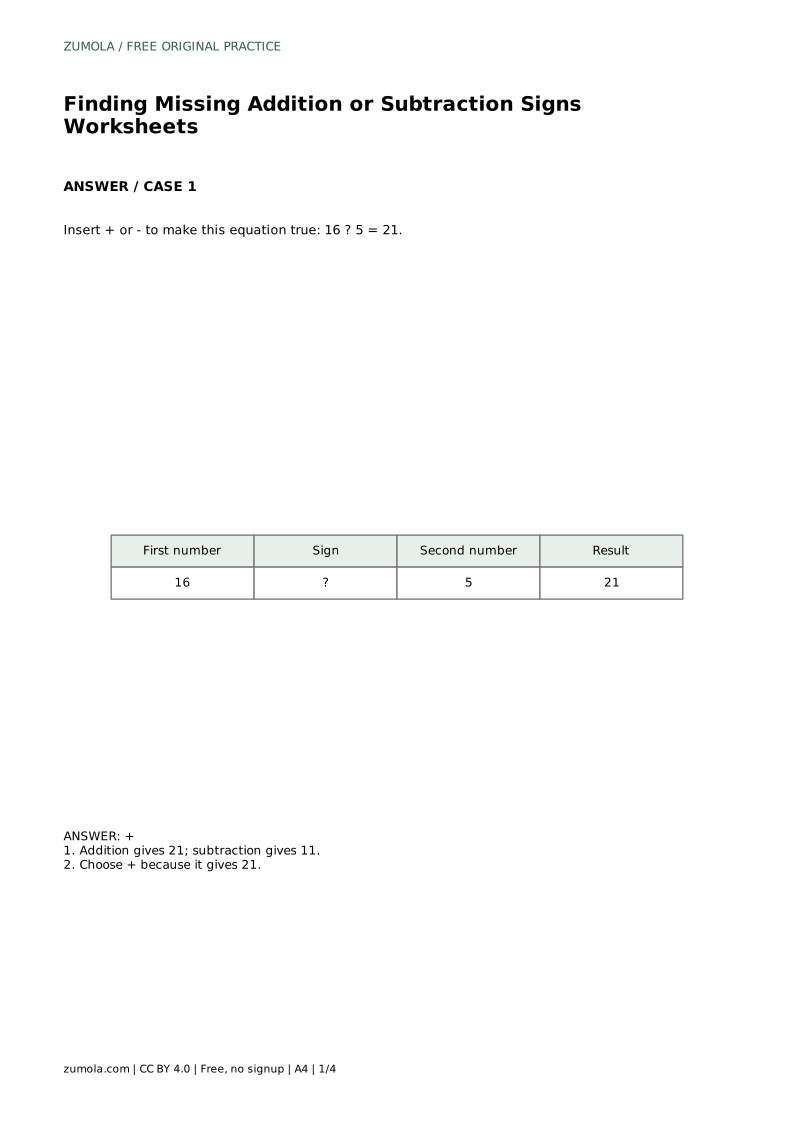
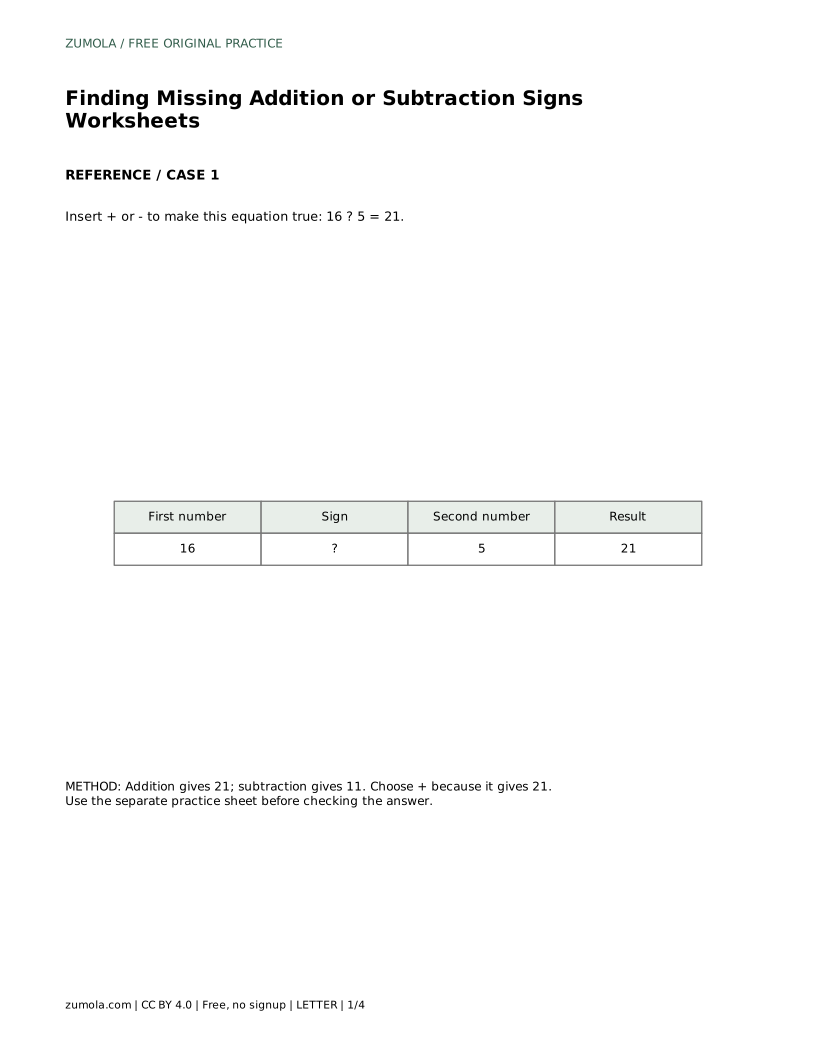
Insert + or - to make this equation true: 16 ? 5 = 21.
+ Addition gives 21; subtraction gives 11. Choose + because it gives 21.
No. For two different whole numbers, addition and subtraction give different results, so only one sign matches the printed result.
That points toward addition, since subtracting a positive whole number makes the result smaller than the first number. Still calculate to confirm.
Yes. Showing both outcomes makes the reasoning visible and gives the marker evidence that the sign was chosen, not guessed.
All math worksheets · Free coordinate paper
Original resources · CC BY 4.0 · Free for personal and classroom use with attribution.