Reference diagrams
LETTER · Download PDF
A4 · Download PDF
Free original resources
Teach equal groups, repeated addition, and multiplication with drawing tasks. Includes a worked example, common mistakes, FAQs, and a practical rubric.
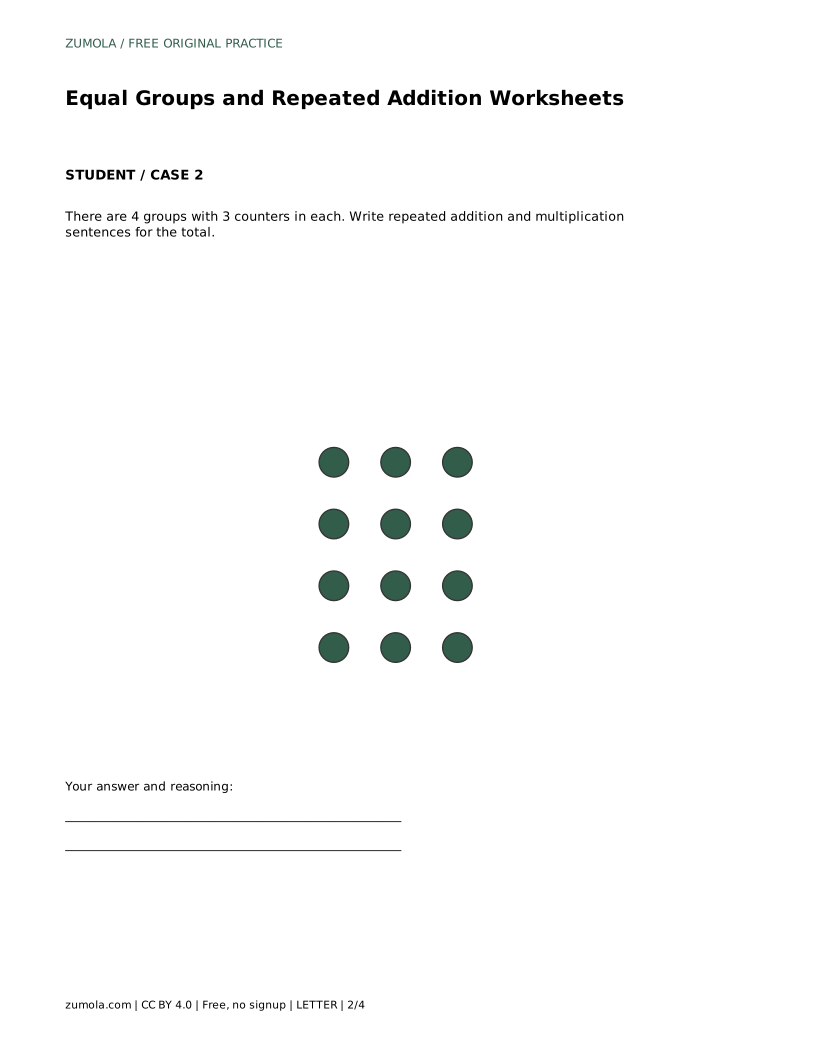
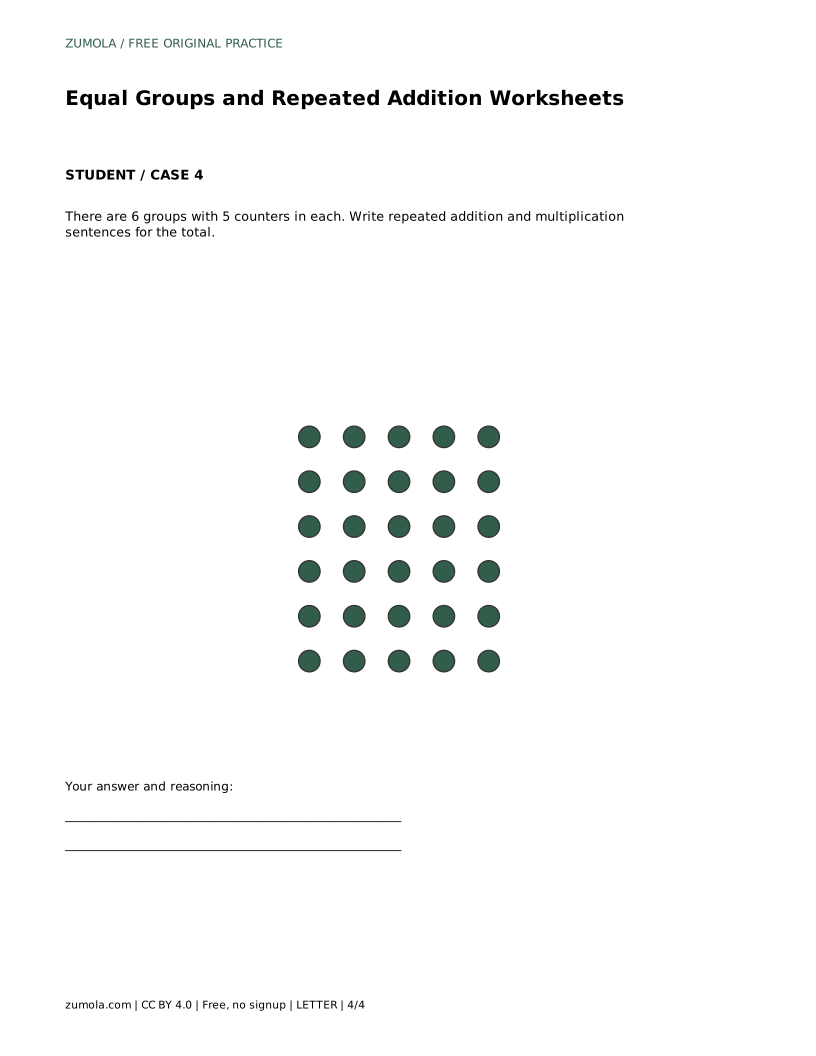
Four original cases, with reference diagrams, practice sheets and worked answers. Everything is free; no signup required.
LETTER · Download PDF
A4 · Download PDF
LETTER · Download PDF
A4 · Download PDF
LETTER · Download PDF
A4 · Download PDF
Use A4 or US Letter to match your printer. Use the stated values and conditions to solve each exercise; diagrams are not physical measuring rulers.
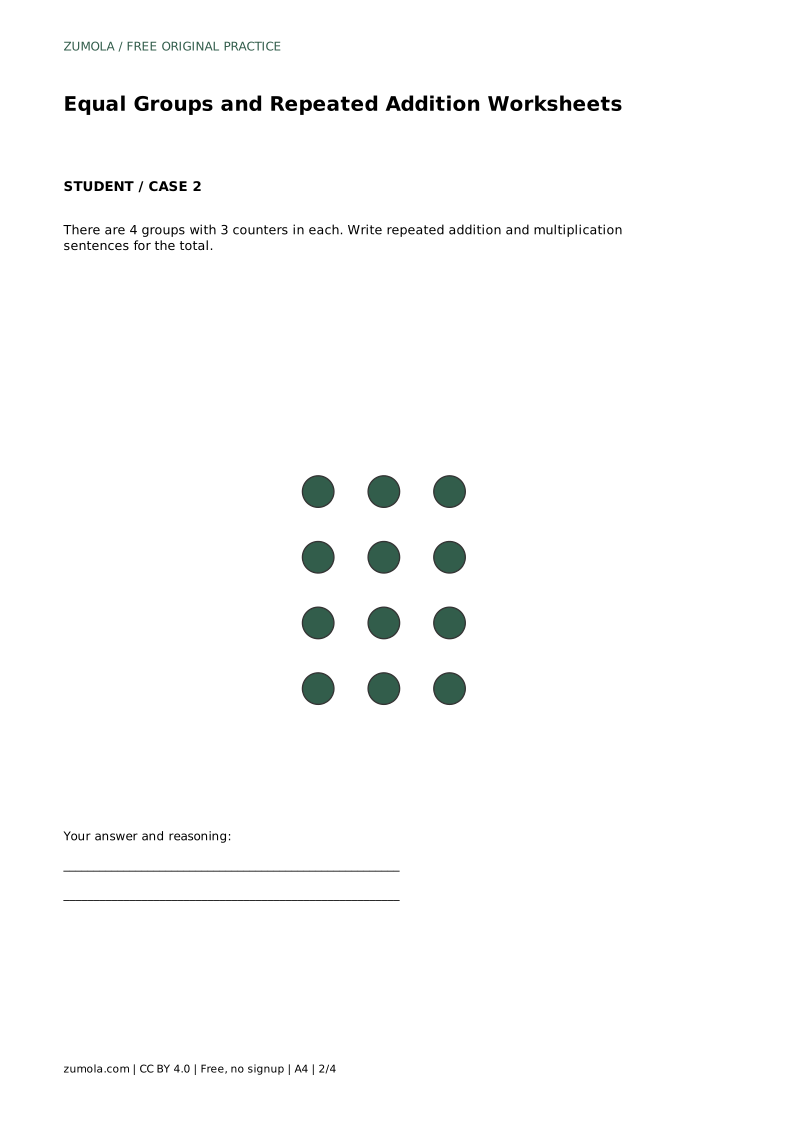
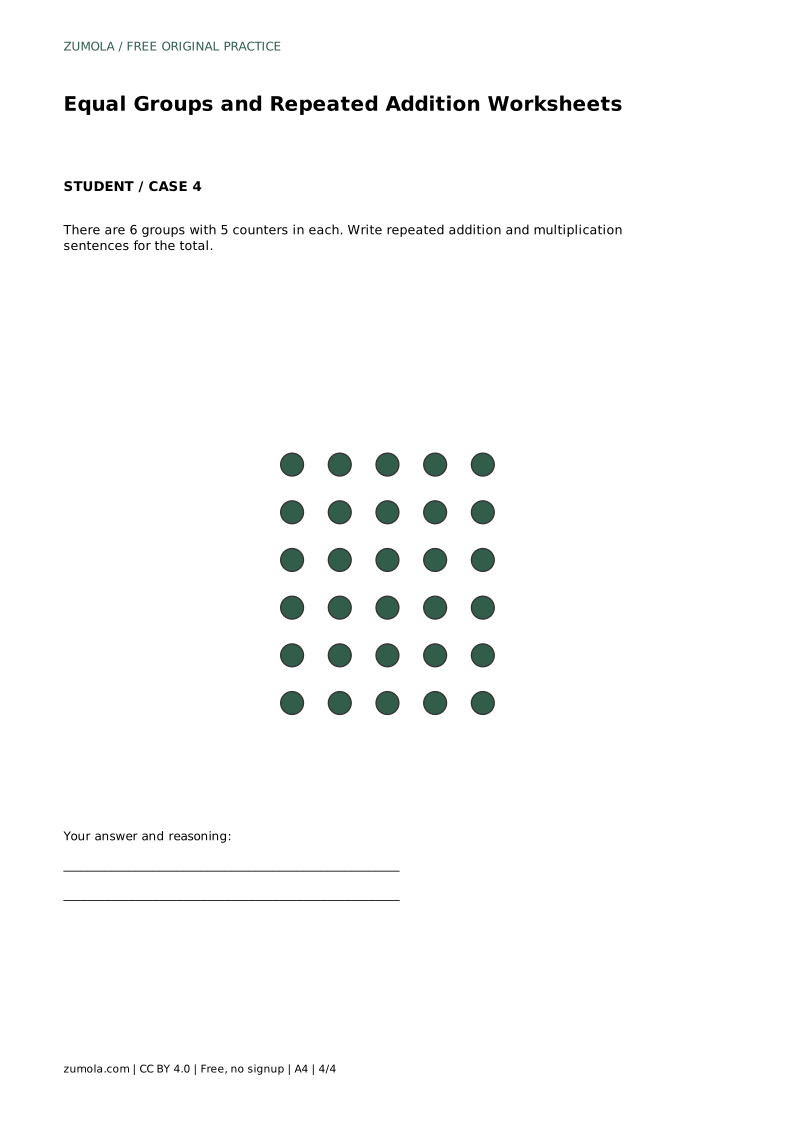
Equal groups connect counting to multiplication. When every group has the same number of objects, you can record the total as repeated addition or as a multiplication sentence. Drawing the groups first makes that structure visible: children decide how many groups, how many in each group, then count or add to check. These worksheets focus on that single skill, using small totals that are easy to verify by hand.
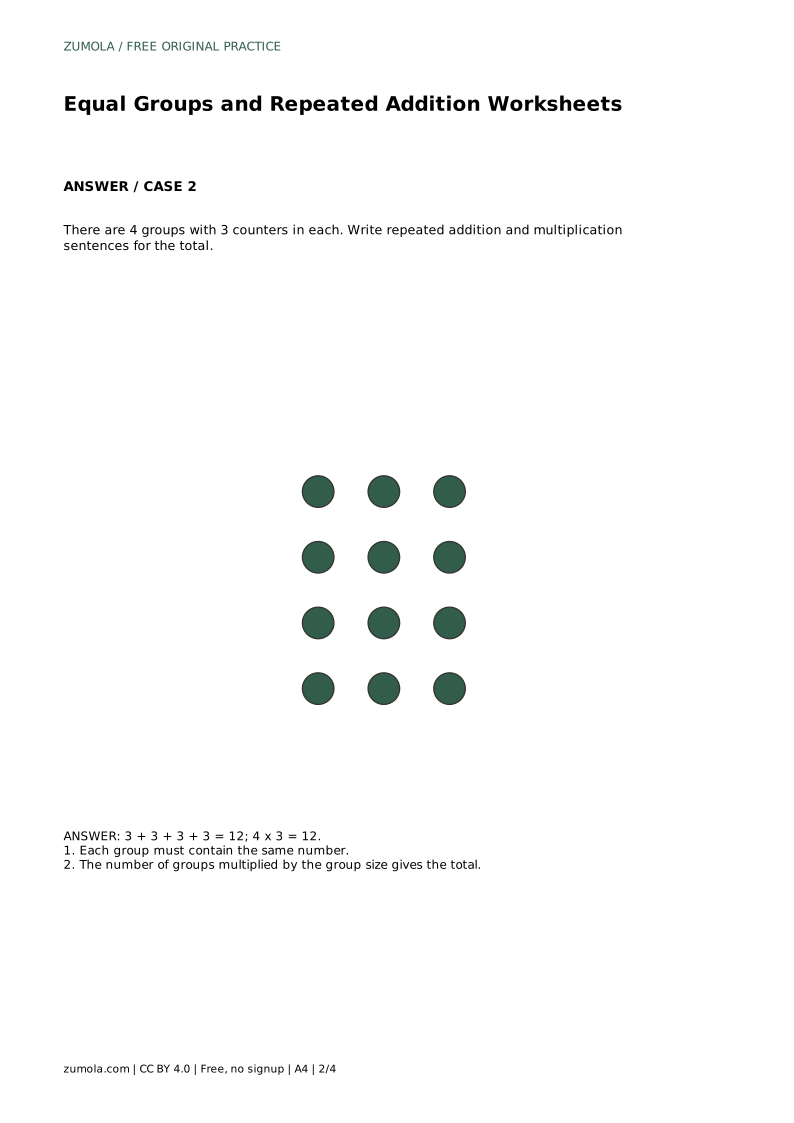
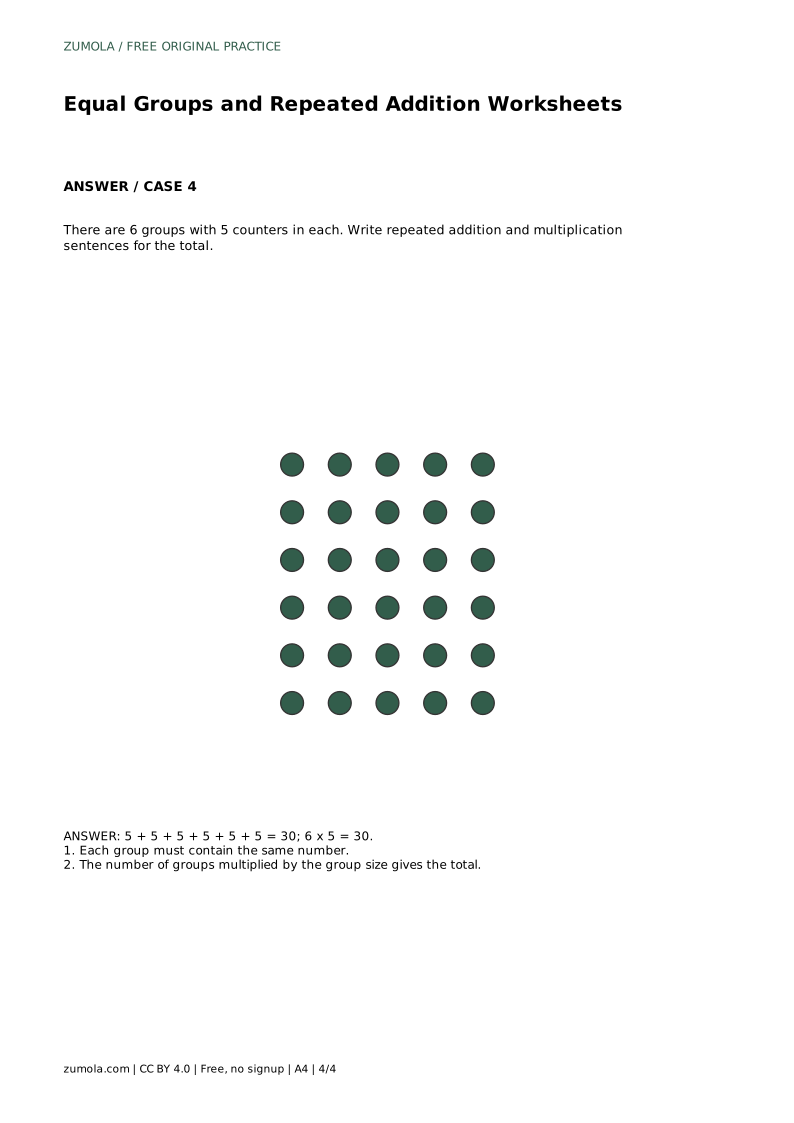
An equal-groups drawing has two quantities: the number of groups and the size of each group. The group size must be identical in every group. If one group has a different number, the drawing no longer shows equal groups, and a single multiplication sentence does not describe it.
Label the drawing clearly. Write the number of groups, then the group size, then the total. A useful order is: draw, count one group, add repeatedly, then write multiplication. The multiplication sentence multiplies the number of groups by the group size.
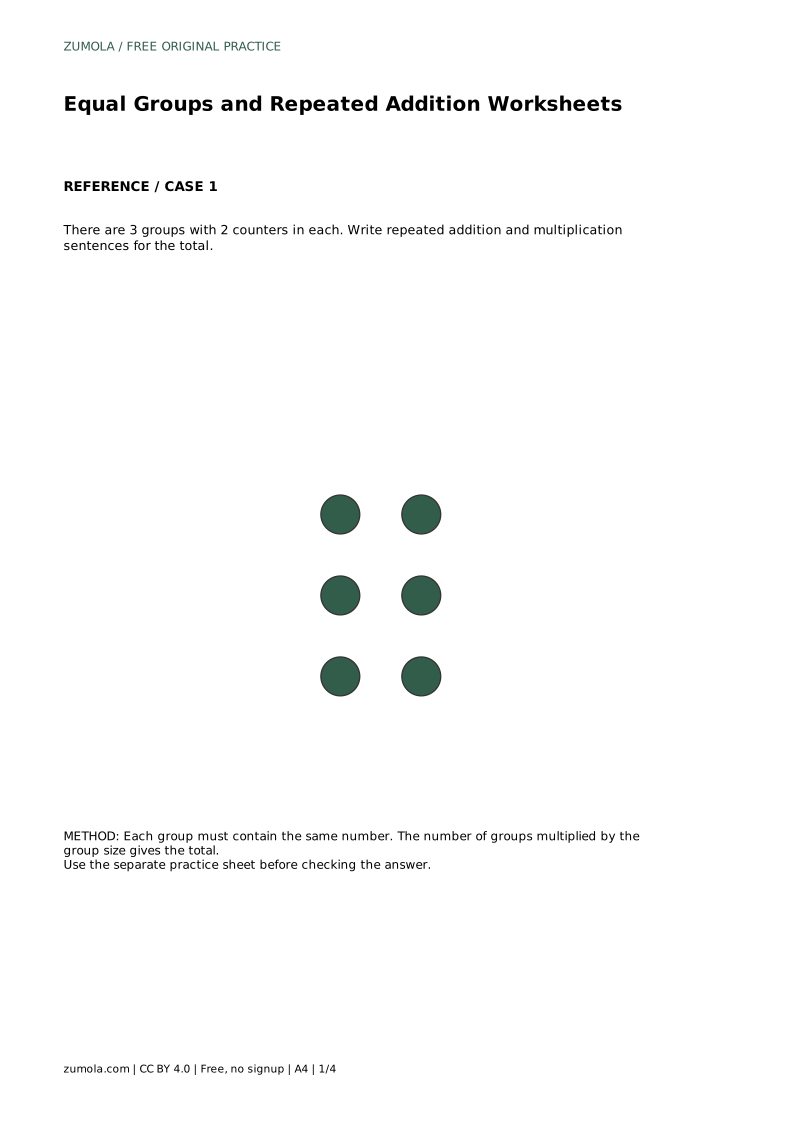
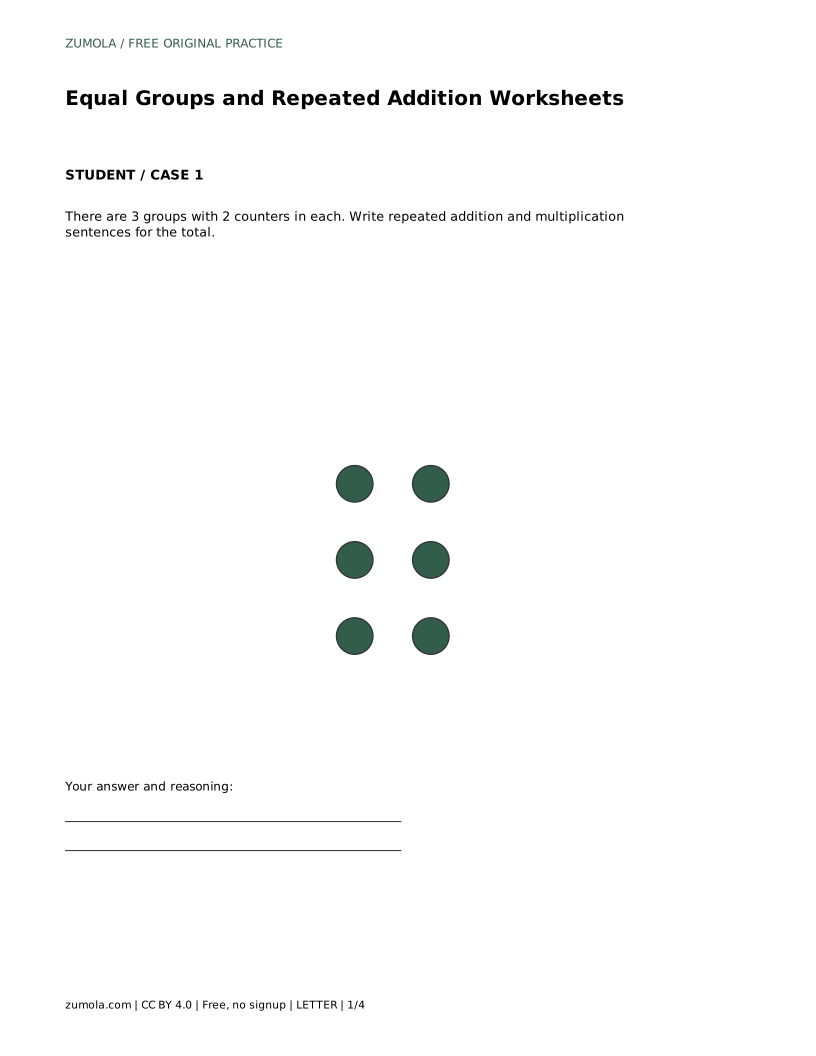
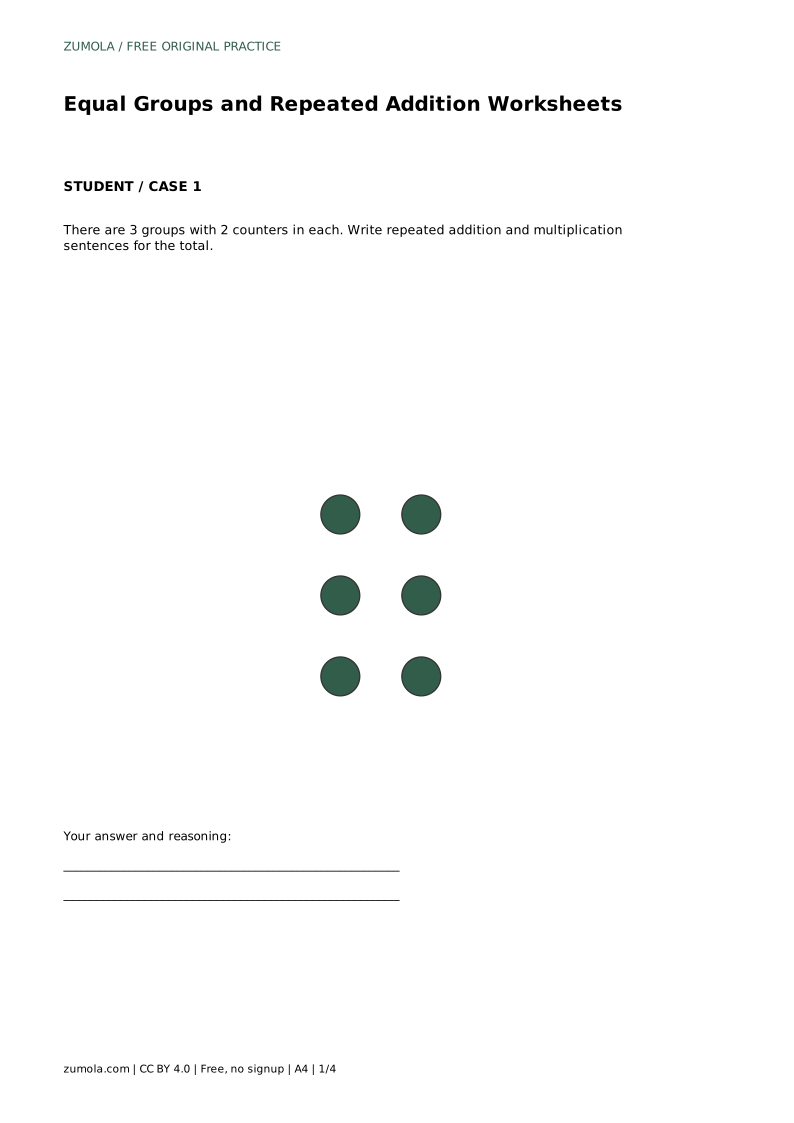
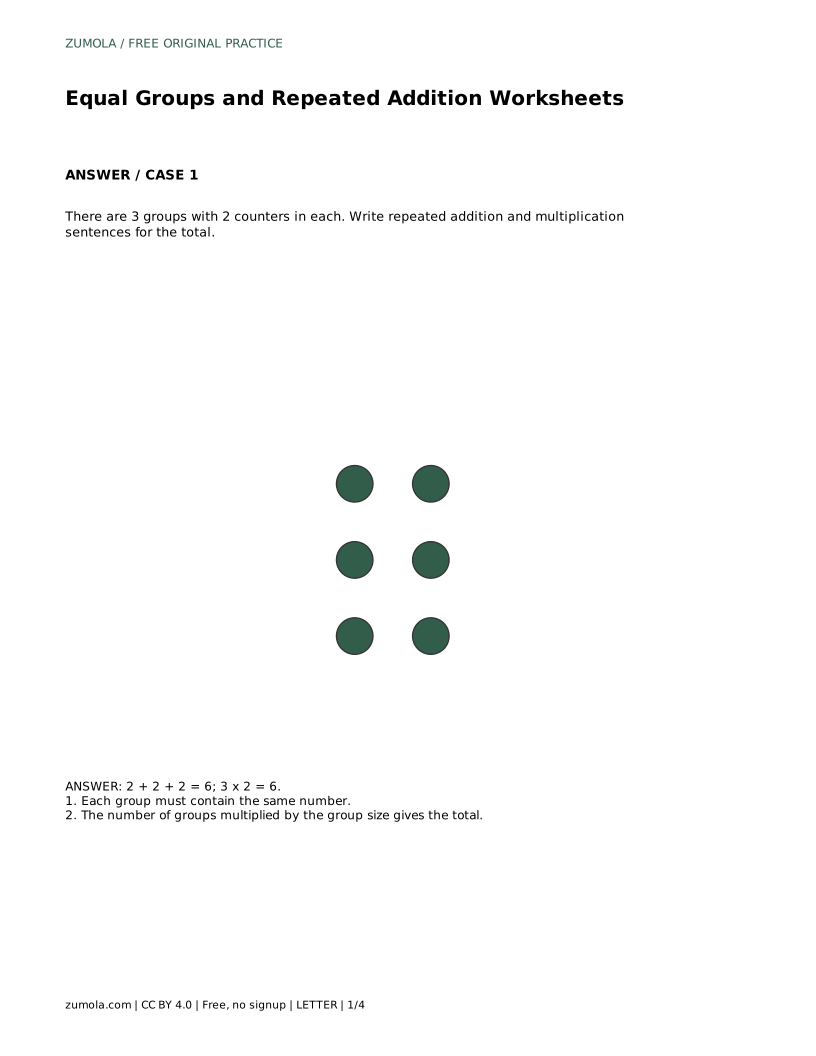
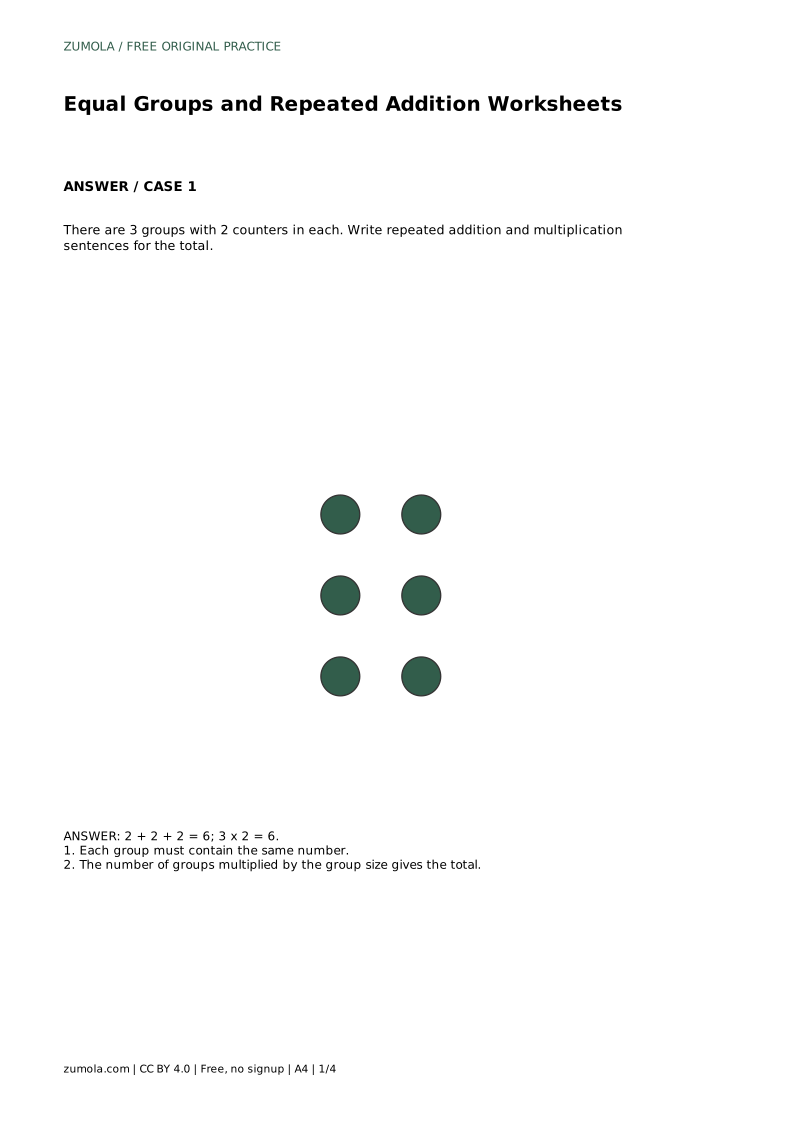
Repeated addition records the total as a sum of equal addends. If there are three groups of two, the addition sentence is 2 + 2 + 2 = 6. The addend 2 is the group size, and it appears three times because there are three groups.
Multiplication compresses that sum. The same situation is written 3 x 2 = 6: three groups, two in each. Keep the meaning attached to each number while writing, because swapping the order gives the same total but changes which quantity is described first. Both readings are valid for the total, but the drawing should match the sentence you write.
Counting every object is reliable but slow. A second check uses the structure: multiply the group size by the number of groups, or add the group size repeatedly. If the two results disagree, the drawing or the sentence has an error.
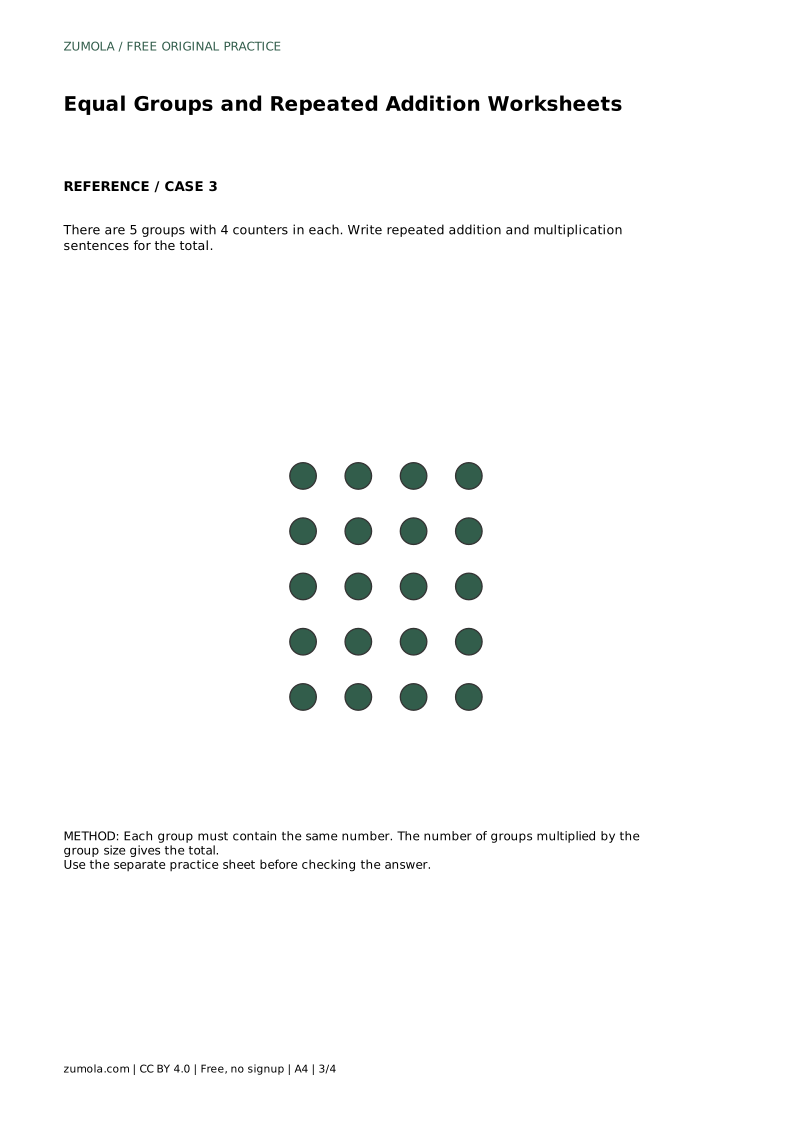
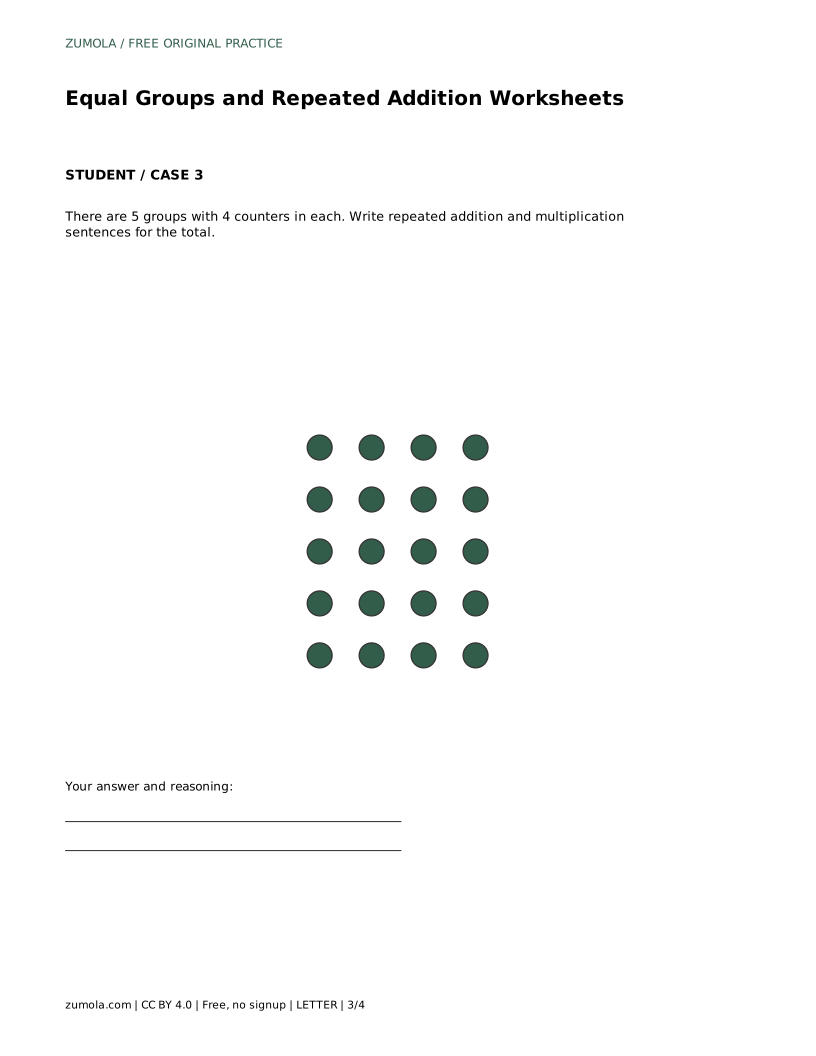
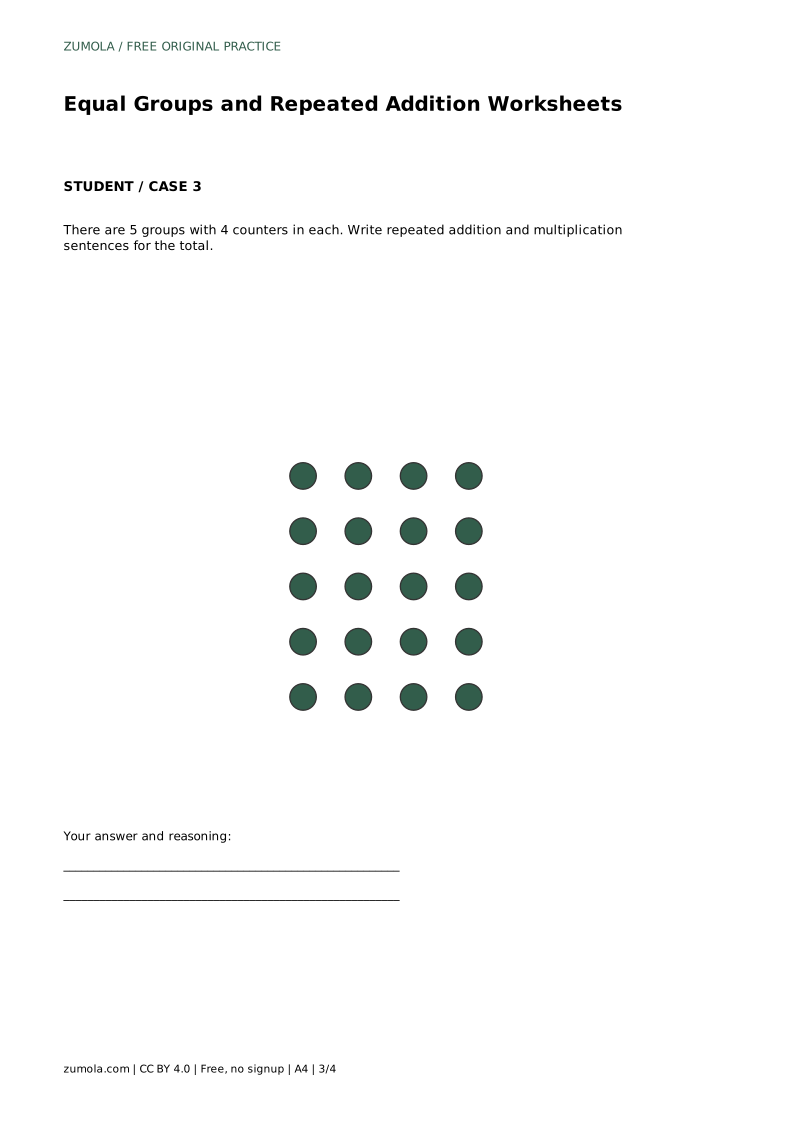
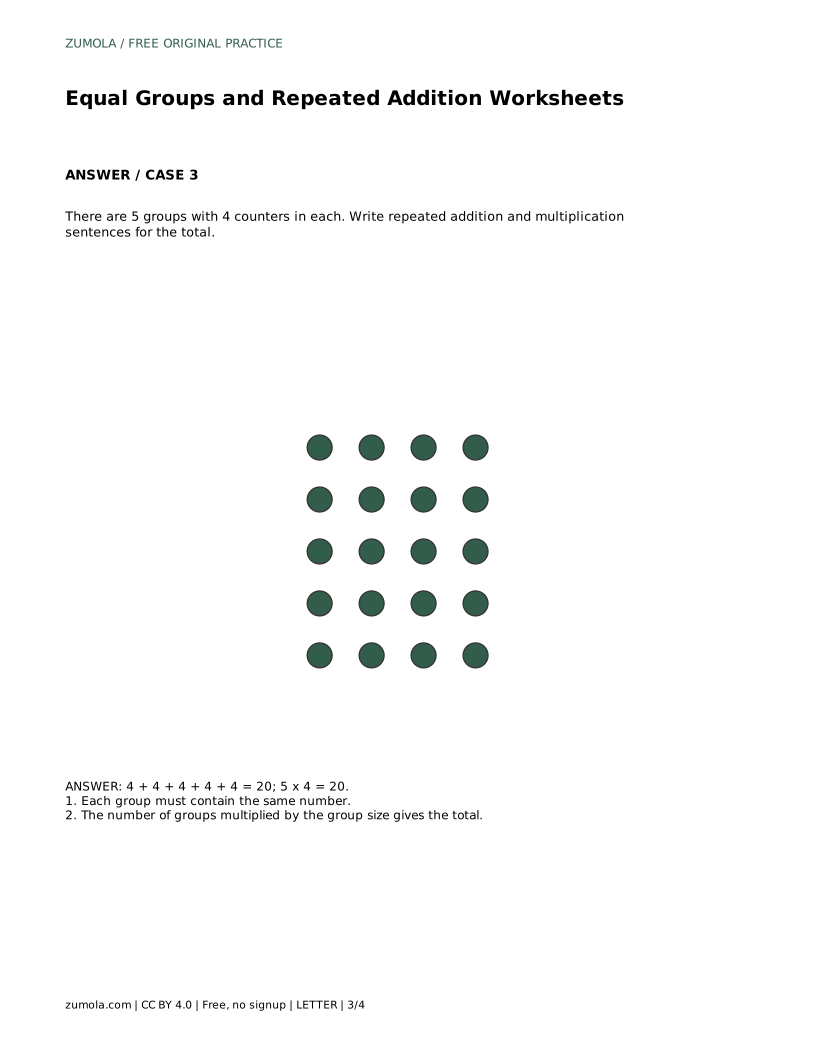
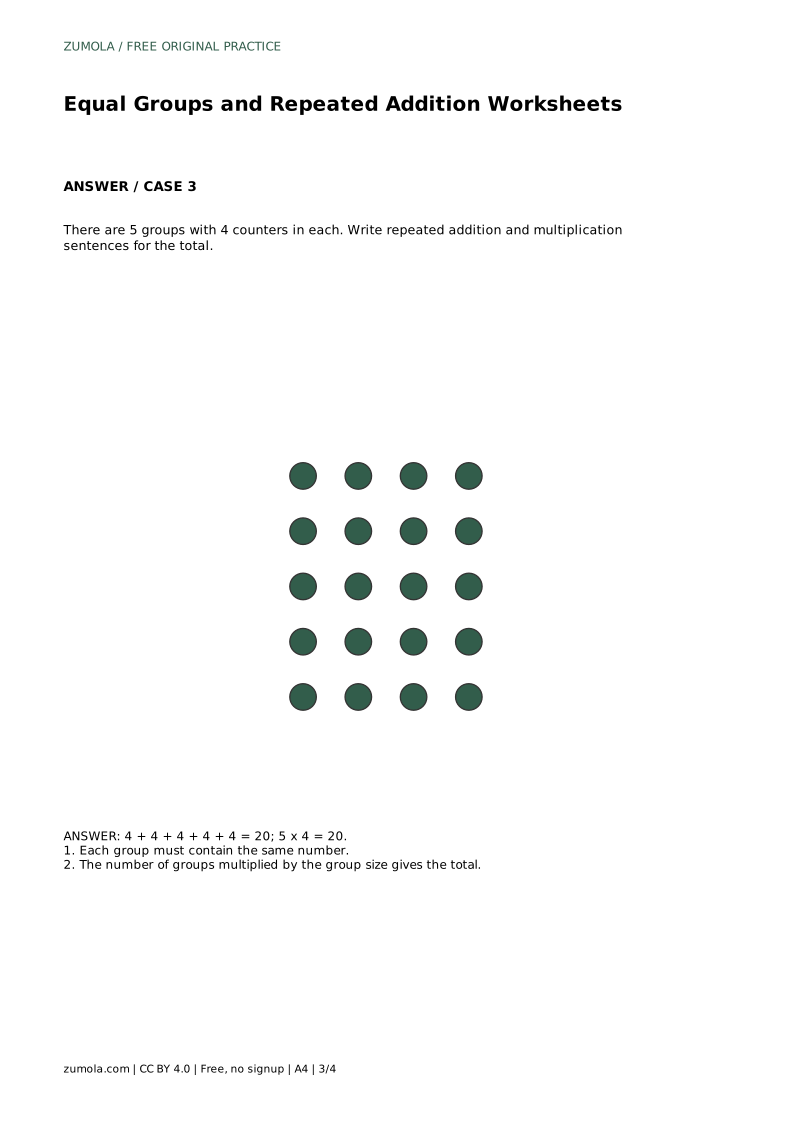
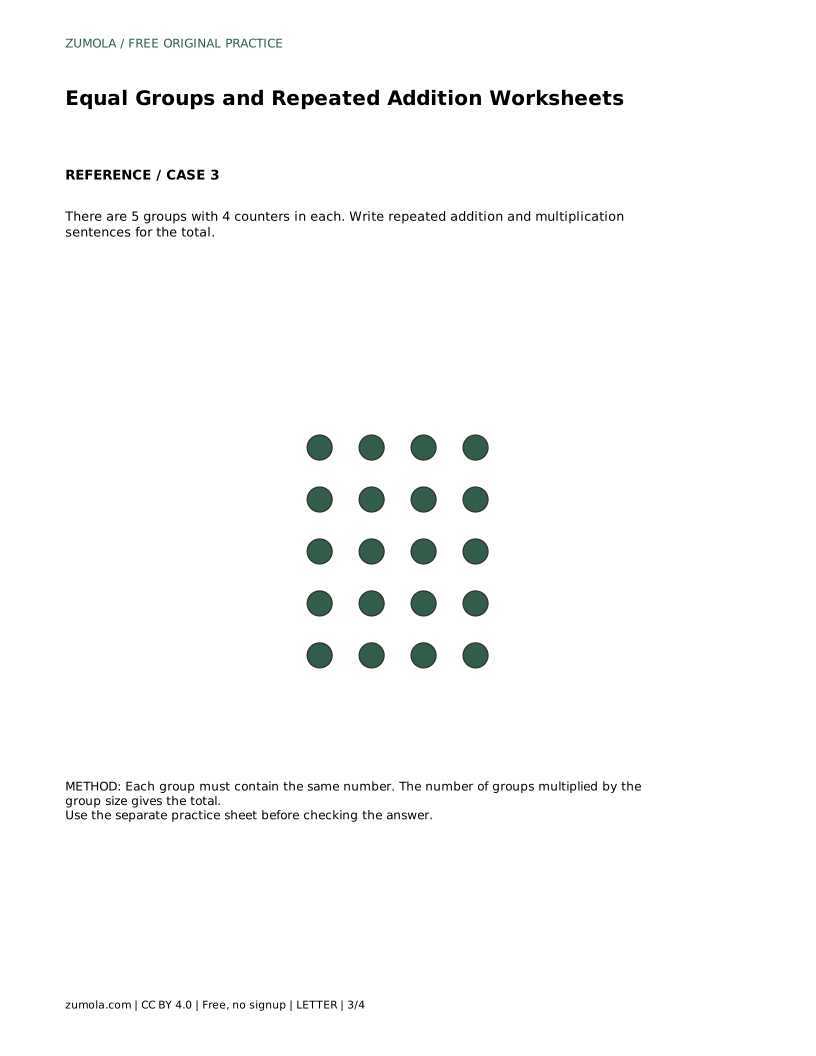
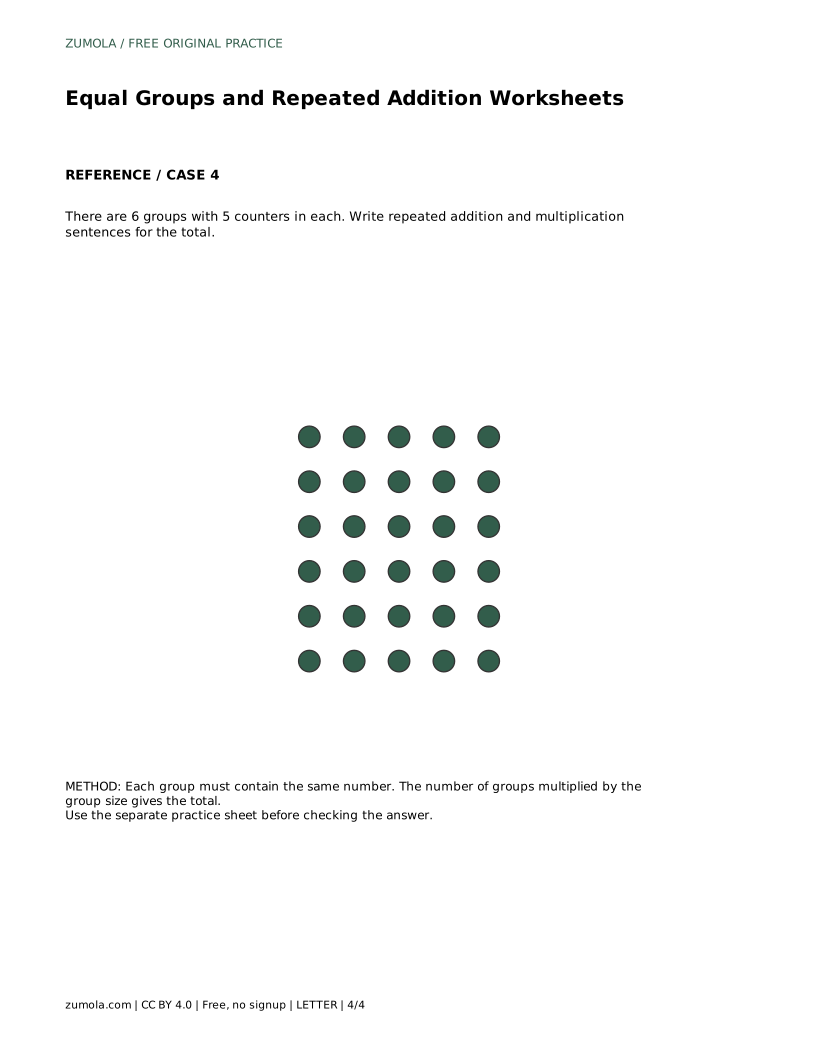
For larger totals, skip-count by the group size. For five groups of four, count 4, 8, 12, 16, 20. Each spoken number is a completed group, so the fifth number is the total. This also reveals whether a group was missed or duplicated.
Artwork has many valid arrangements: rows, clusters, or scattered counters all work if the groups are distinct and equal. Judge the mathematical structure, not the neatness of the drawing. A rubric supports consistent feedback across varied layouts.
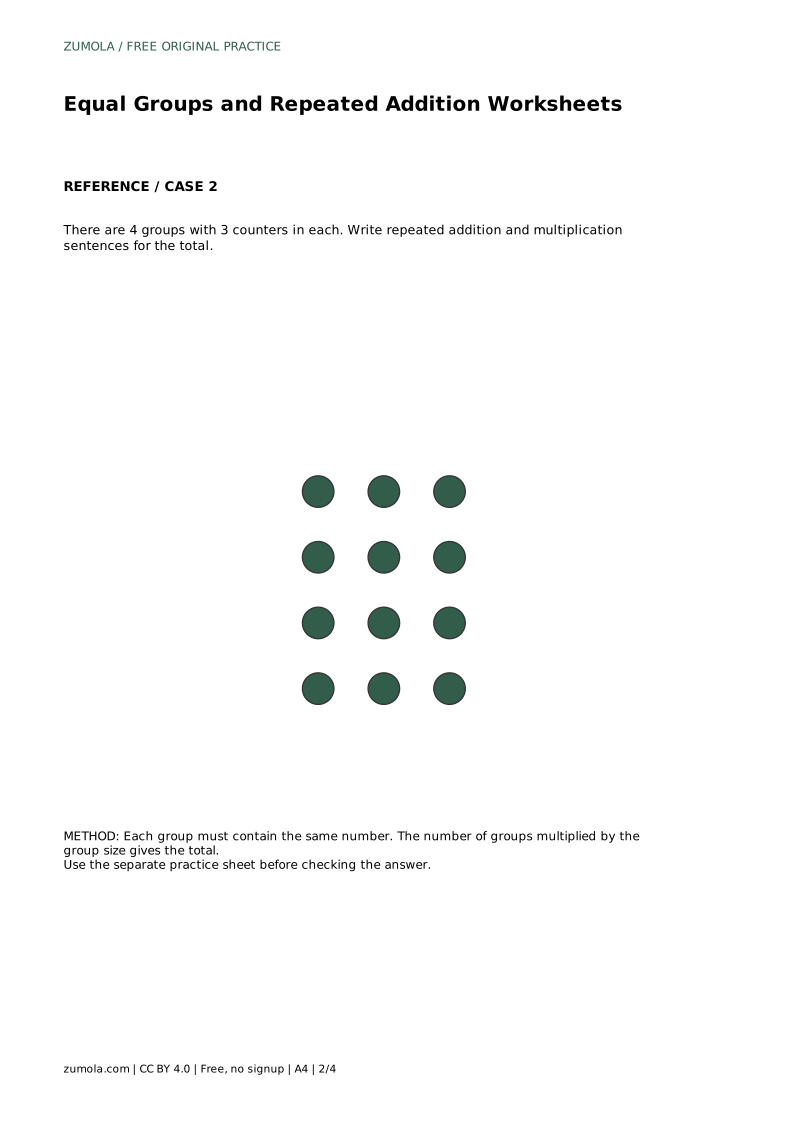
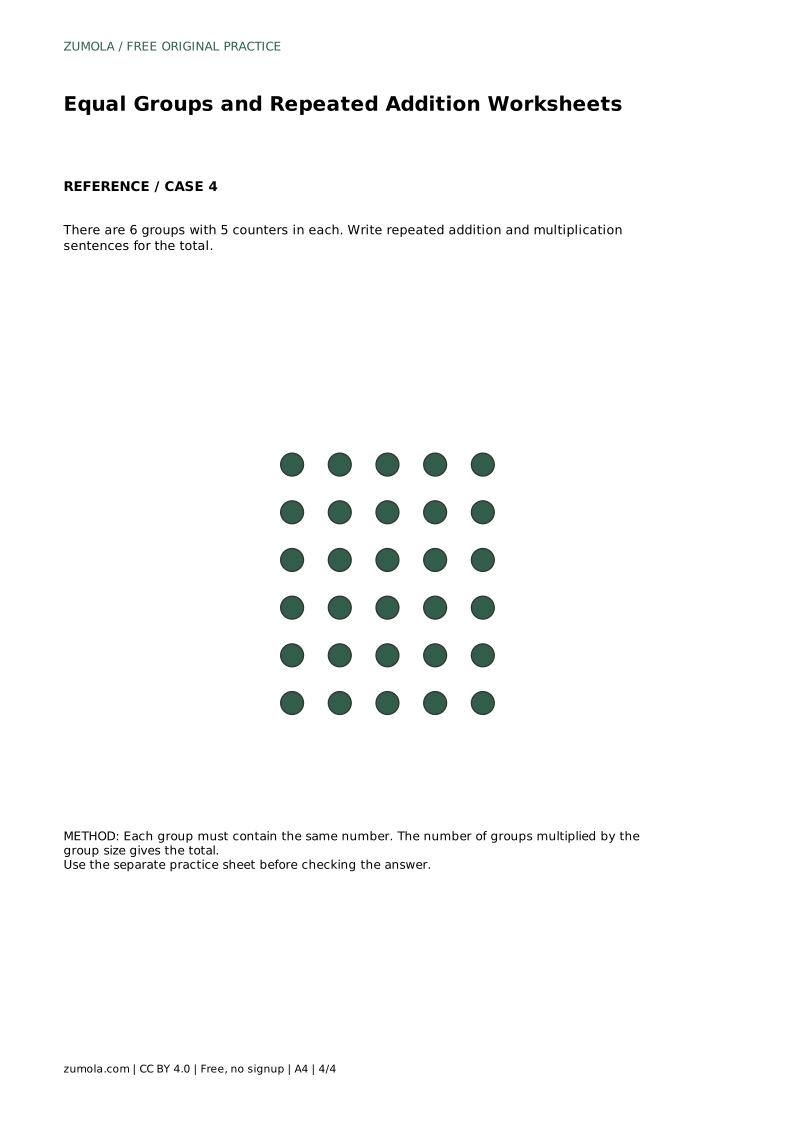
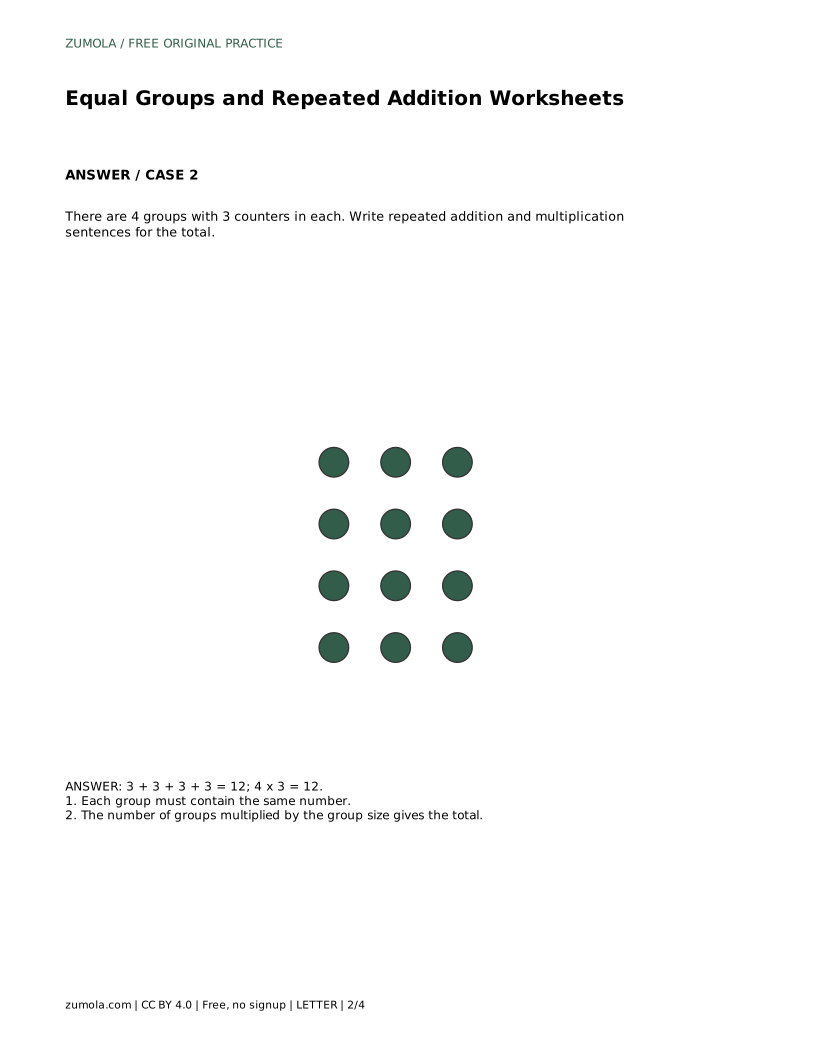
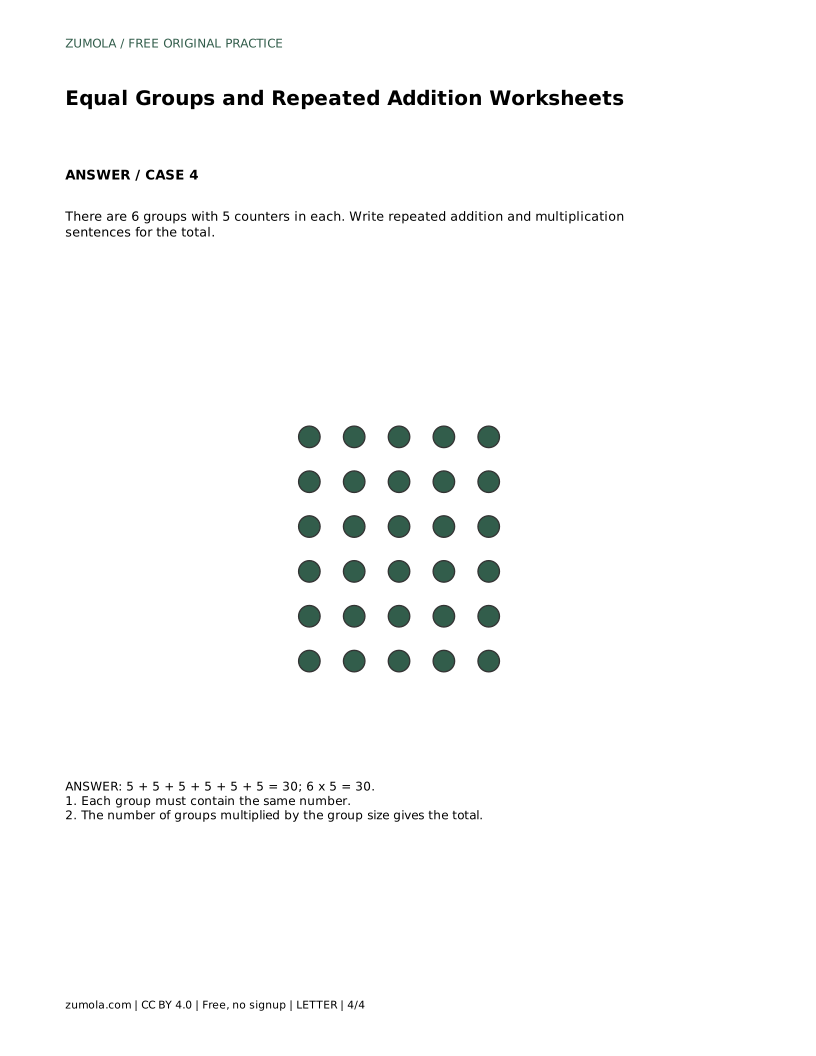
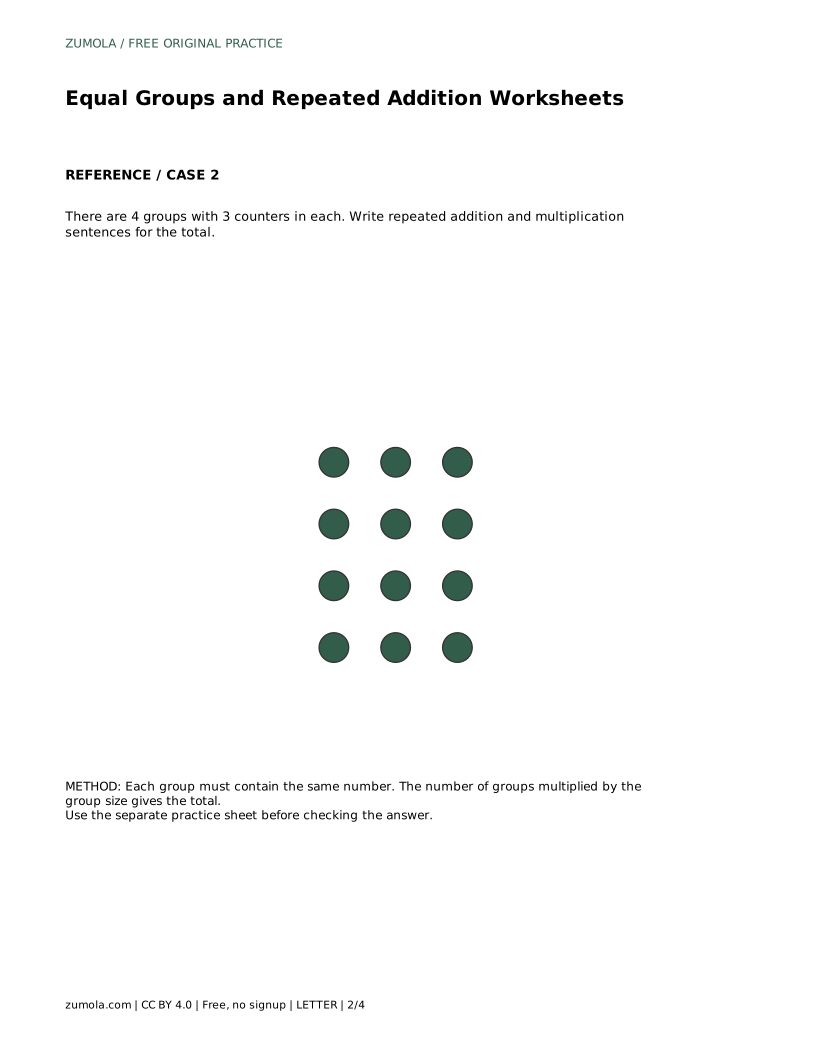
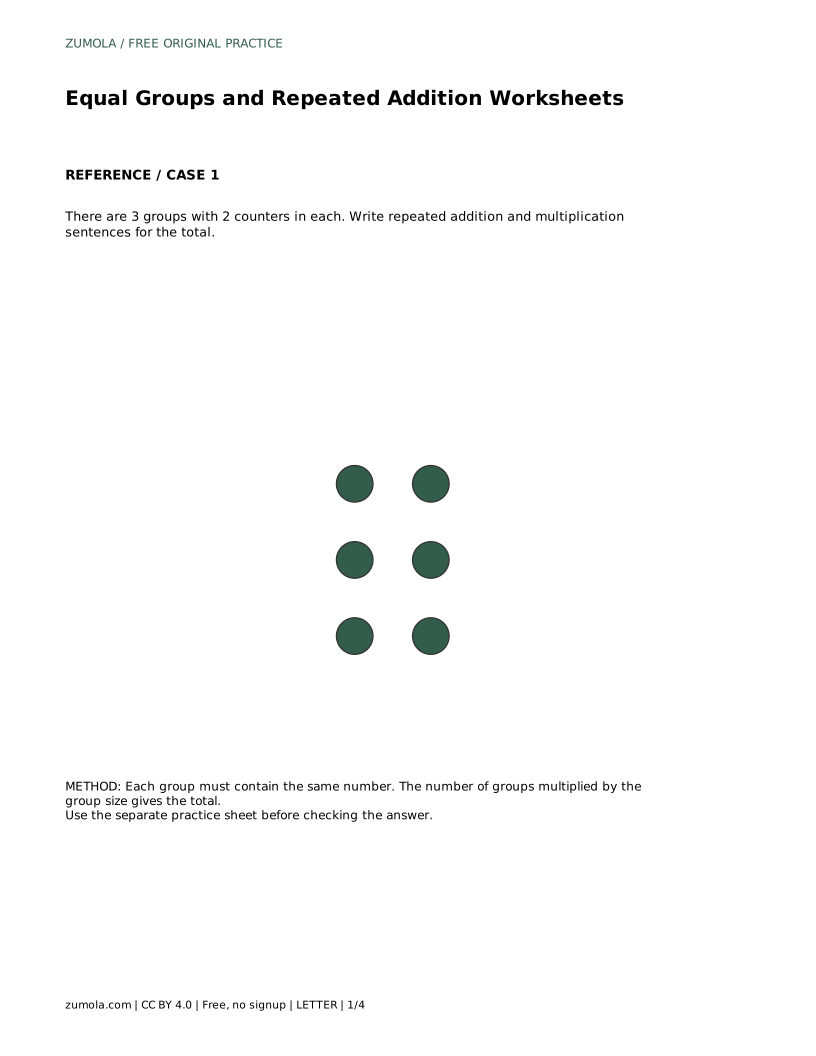
There are 3 groups with 2 counters in each. Write repeated addition and multiplication sentences for the total.
2 + 2 + 2 = 6; 3 x 2 = 6. Each group must contain the same number. The number of groups multiplied by the group size gives the total.
The total is the same either way, but the meaning changes. Number of groups times group size matches the usual reading of an equal-groups drawing, so keep that order unless your task specifies otherwise.
Then the situation is not an equal-groups multiplication task. Record the total and note that equal grouping is not possible with that number of groups.
Counting is a fine first check. Follow it with repeated addition or skip-counting so the total comes from the group structure rather than from one-by-one counting alone.
All math worksheets · Free coordinate paper
Original resources · CC BY 4.0 · Free for personal and classroom use with attribution.