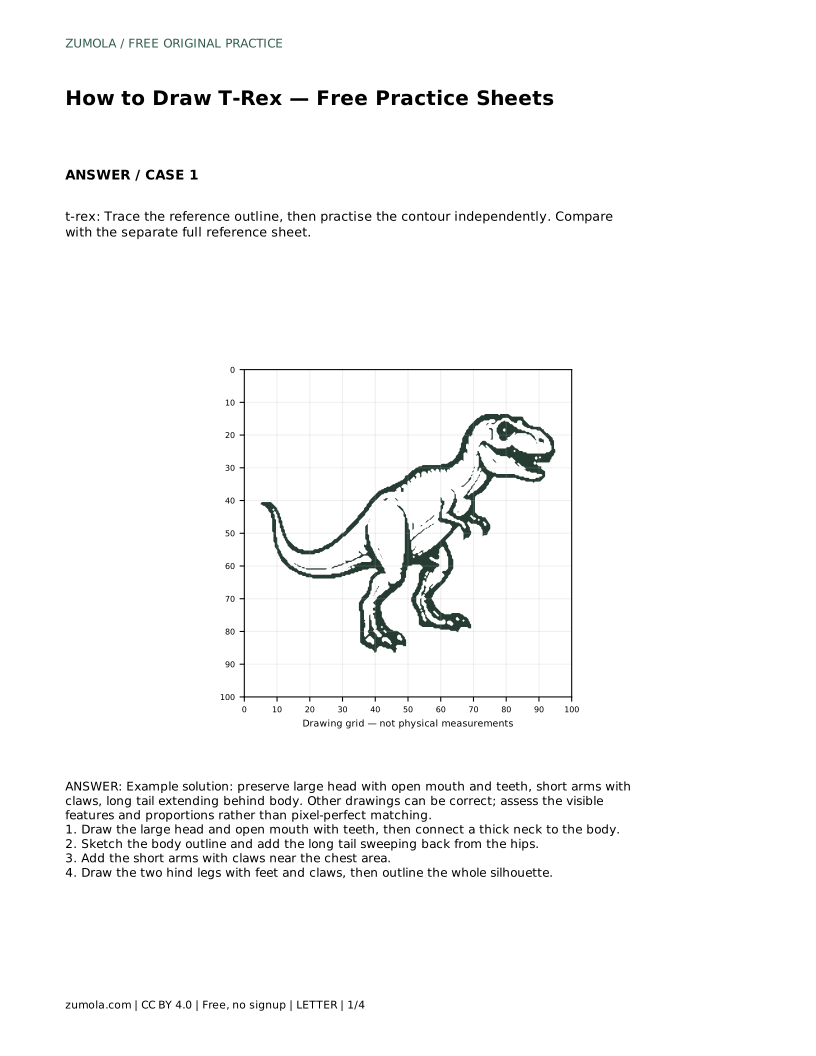
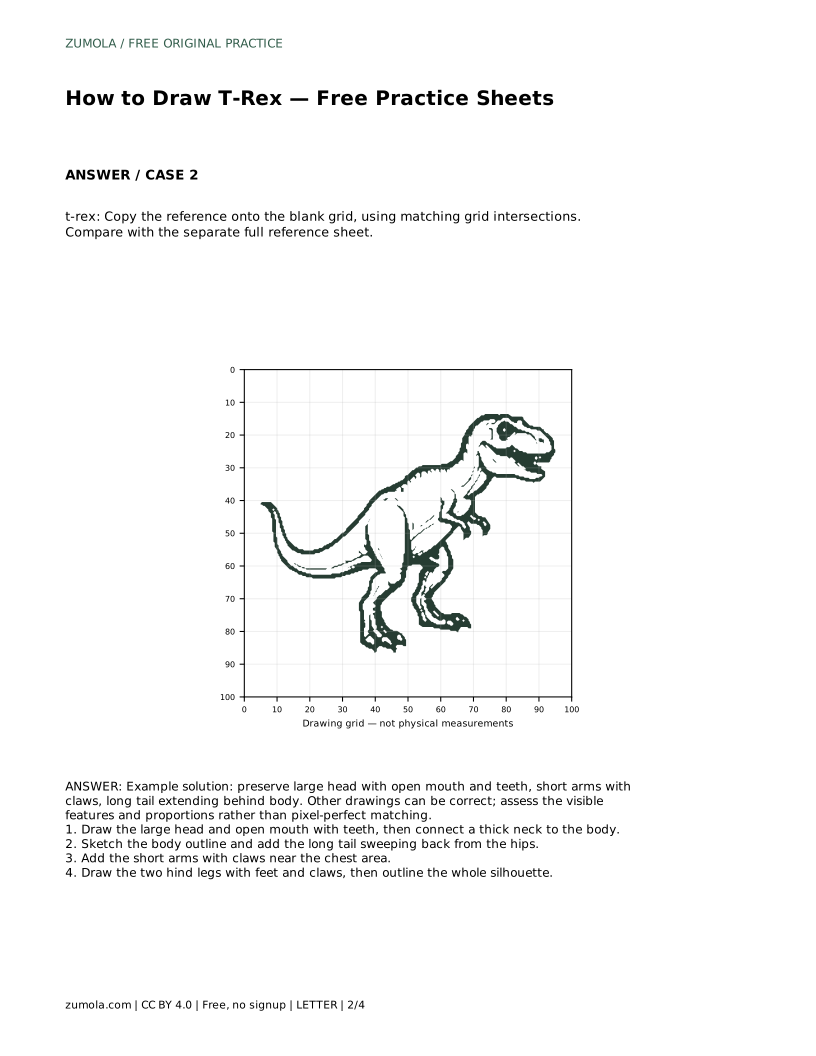
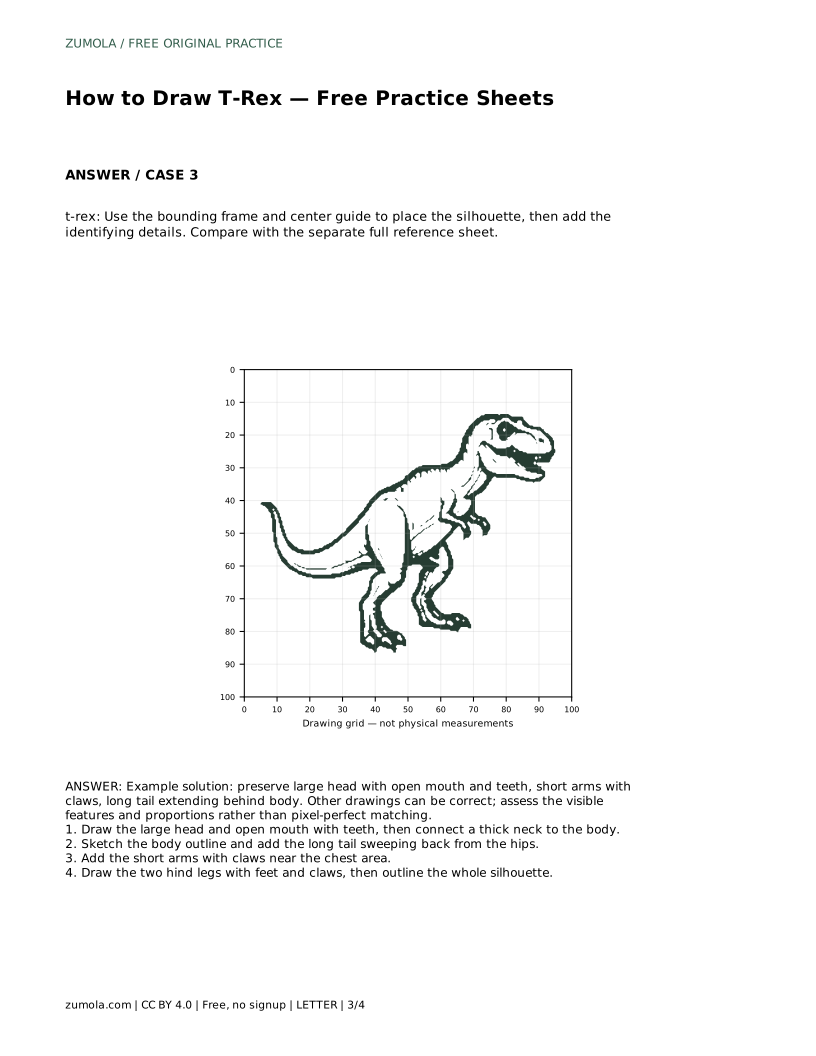
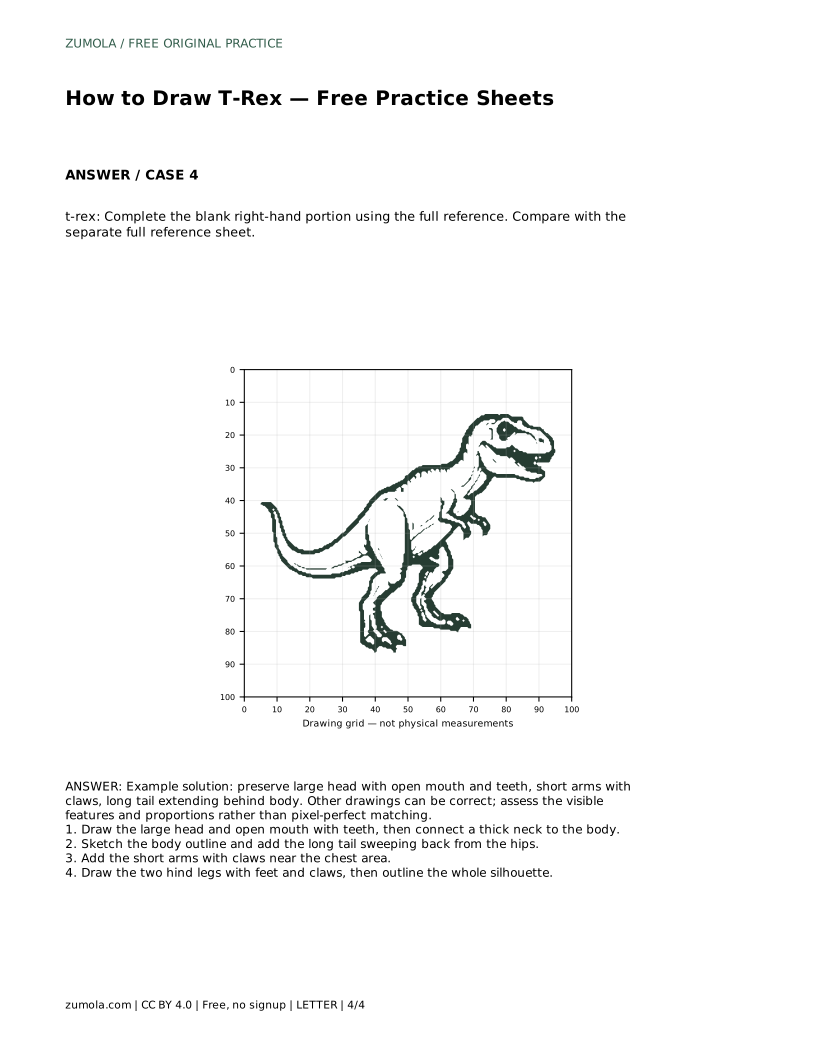
Reference diagrams
LETTER · Download PDF
A4 · Download PDF
Free original resources
Learn to draw a realistic T-Rex by tracing, copying a grid, and completing a partial outline. Build accurate proportions for the head, arms, tail, and legs.
Four original cases, with reference diagrams, practice sheets and worked answers. Everything is free; no signup required.
LETTER · Download PDF
A4 · Download PDF
LETTER · Download PDF
A4 · Download PDF
LETTER · Download PDF
A4 · Download PDF
Use A4 or US Letter to match your printer. Use the stated values and conditions to solve each exercise; diagrams are not physical measuring rulers.
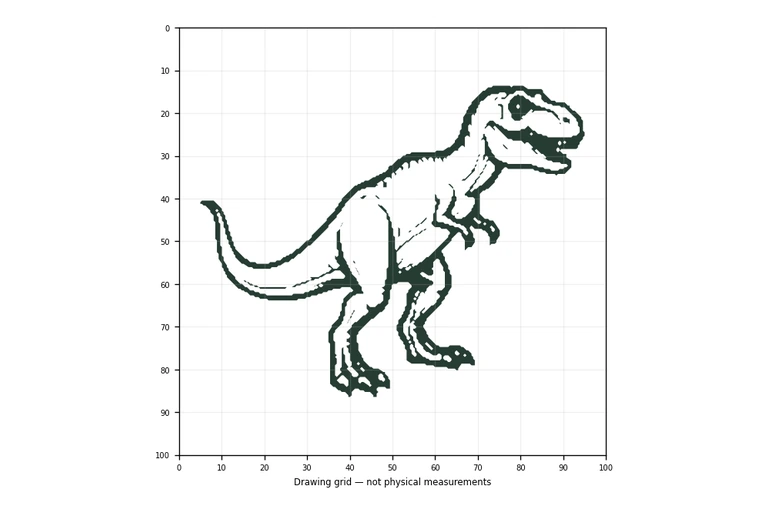
A realistic T-Rex drawing depends on proportion and silhouette more than on fine detail. This page explains how to use practice sheets that guide you through tracing a reference outline, copying it onto a blank grid, placing the body with a bounding frame and center guide, and completing a partially drawn figure. Each method trains a different skill, and each ends with a comparison against the separate full reference sheet so you can judge your own work fairly.
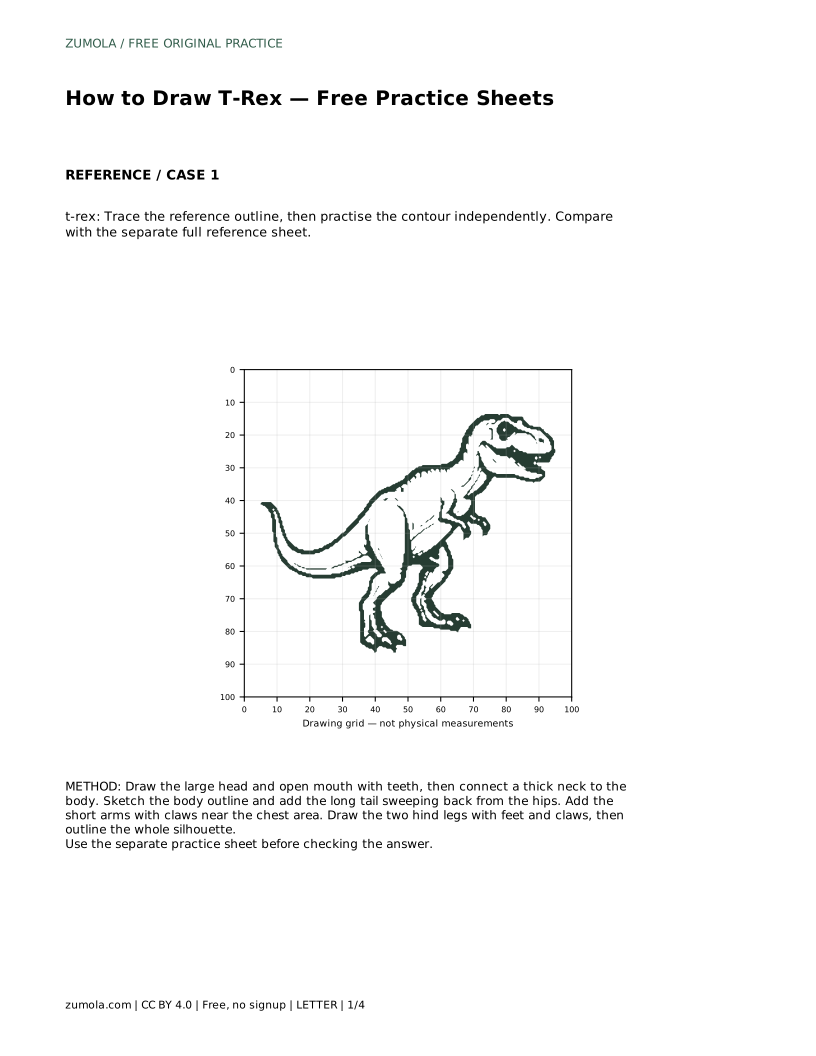
Before any detail, establish the overall shape. A T-Rex reads clearly when the large head with an open mouth and teeth sits at the front, a thick neck connects to the body, a long tail sweeps back from the hips, and two strong hind legs support the mass. The short arms with claws sit near the chest and are easy to draw too long, which immediately weakens the look.
Work lightly at first. Outline the whole figure before committing to any single part, because a change to the head size or tail length affects everything else. Detail such as teeth, claws, and skin texture comes last, once the proportions feel right.
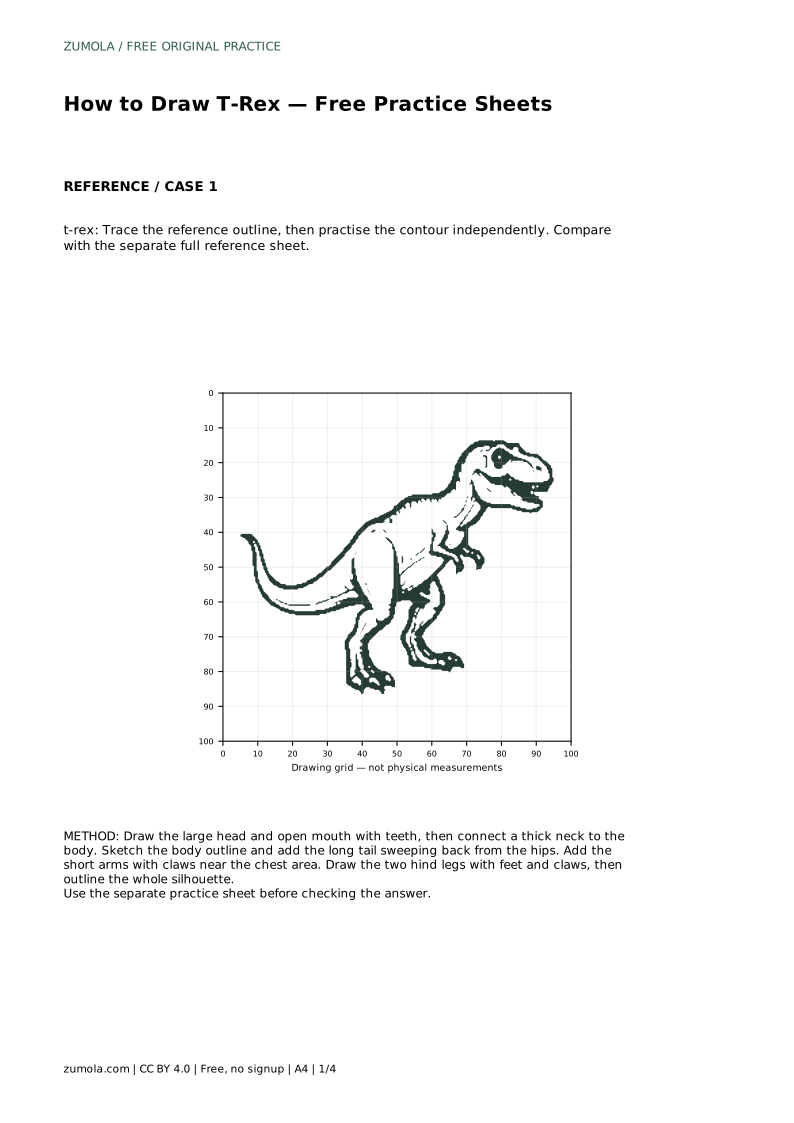
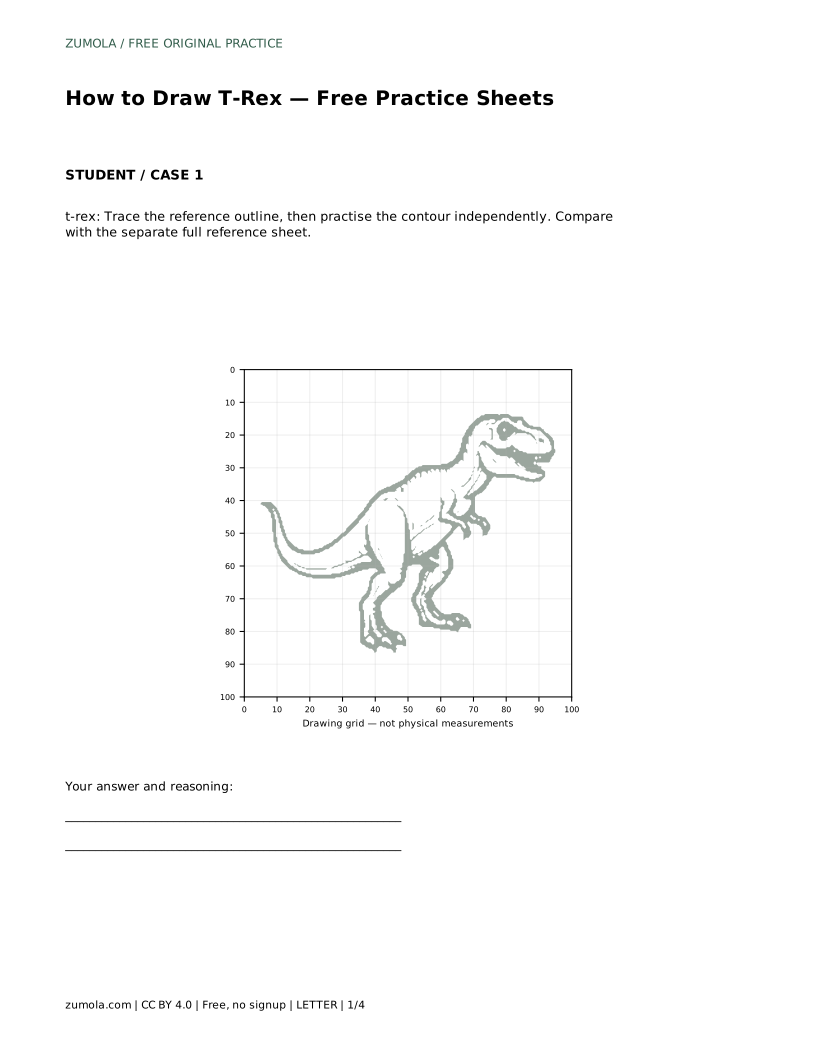
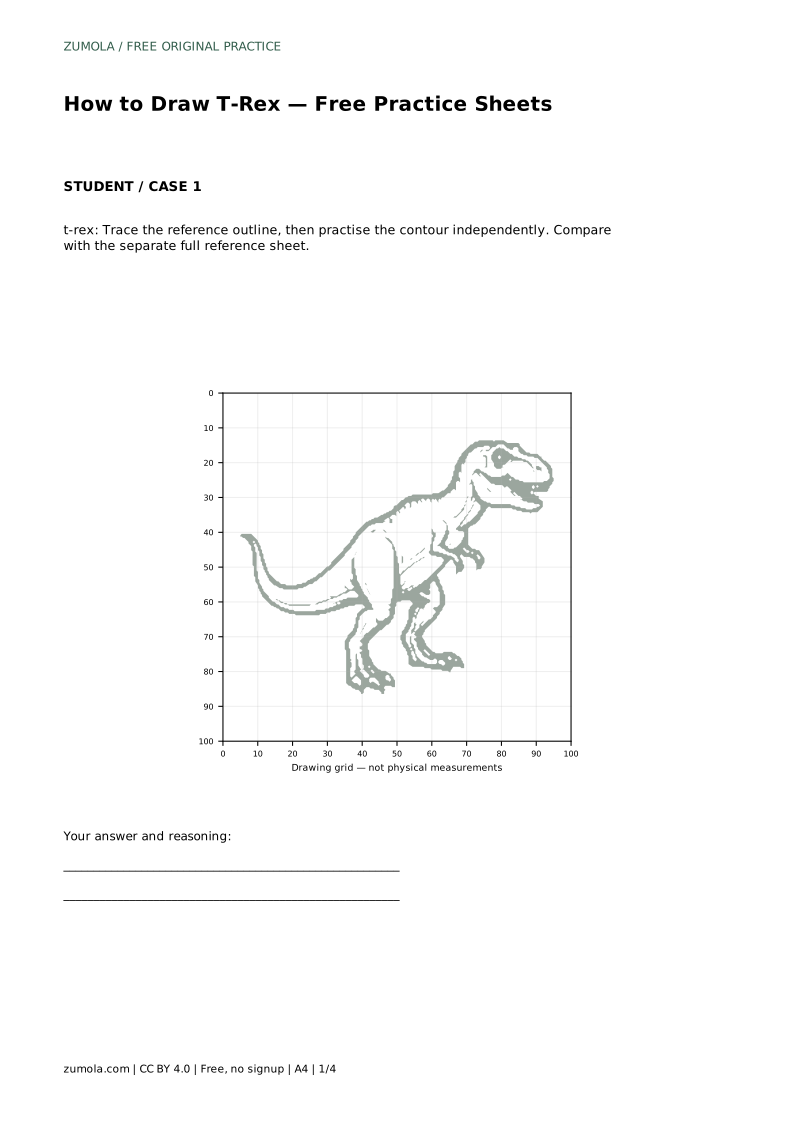
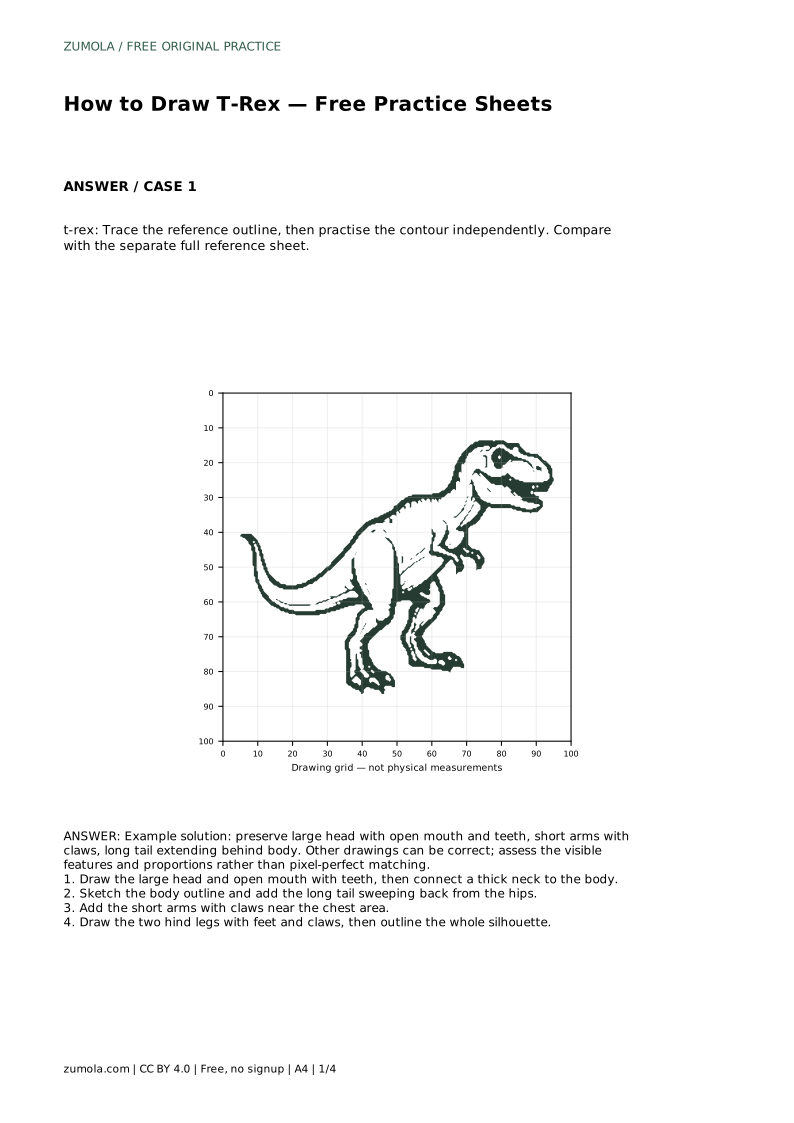
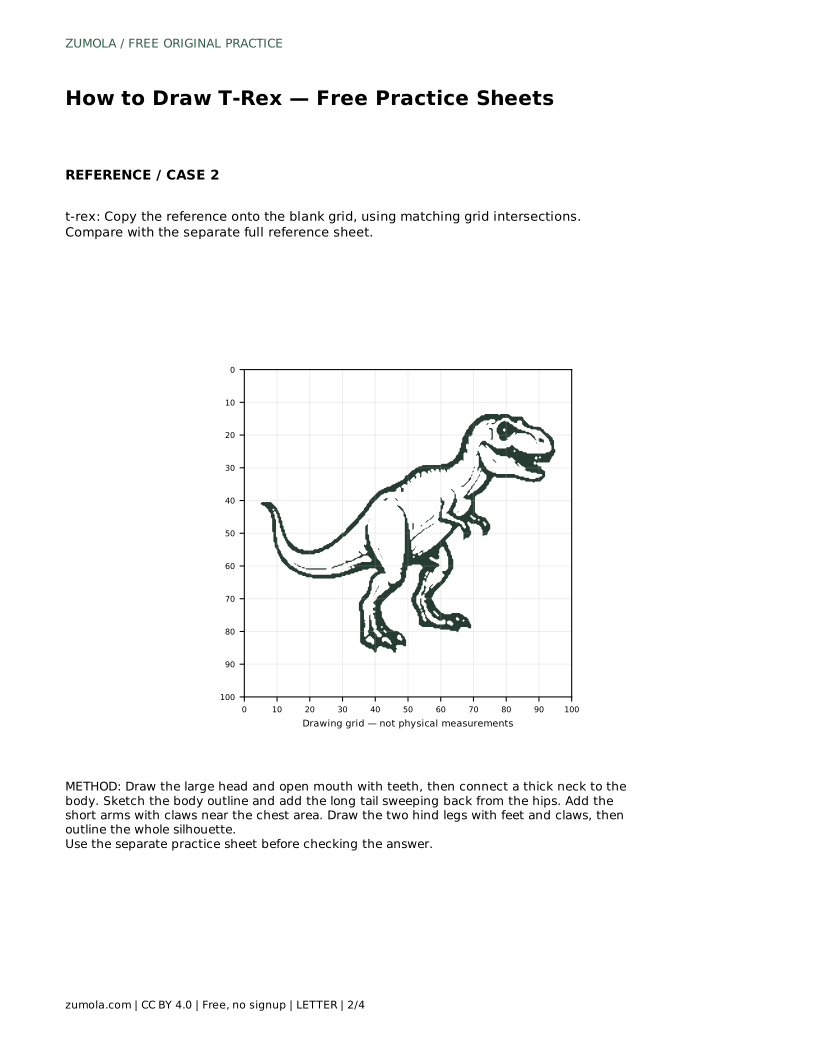
Tracing the reference outline builds familiarity with the shape, but tracing alone does not teach you to draw it. After one traced pass, set the reference aside and redraw the contour from memory. Then compare your independent attempt with the separate full reference sheet and note where the proportions drifted.
This compare-and-correct cycle is the core of the method. Keep your traced version and your freehand version side by side so the differences are visible rather than guessed.
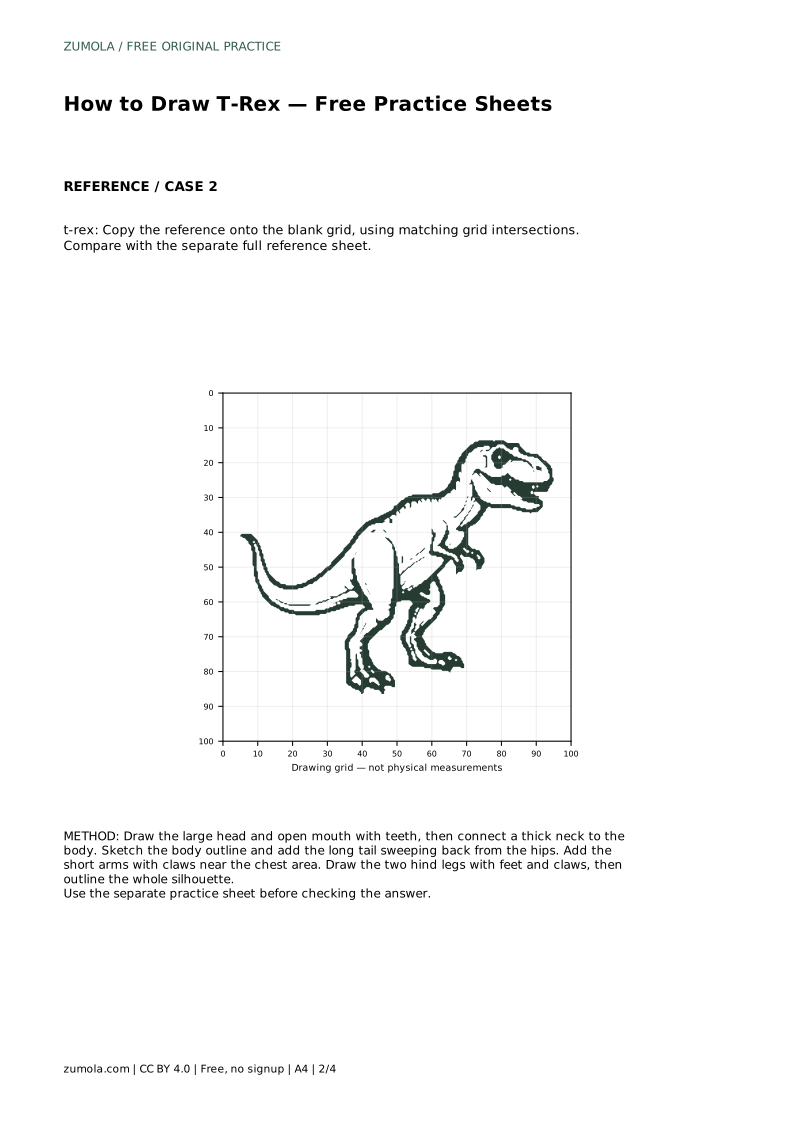
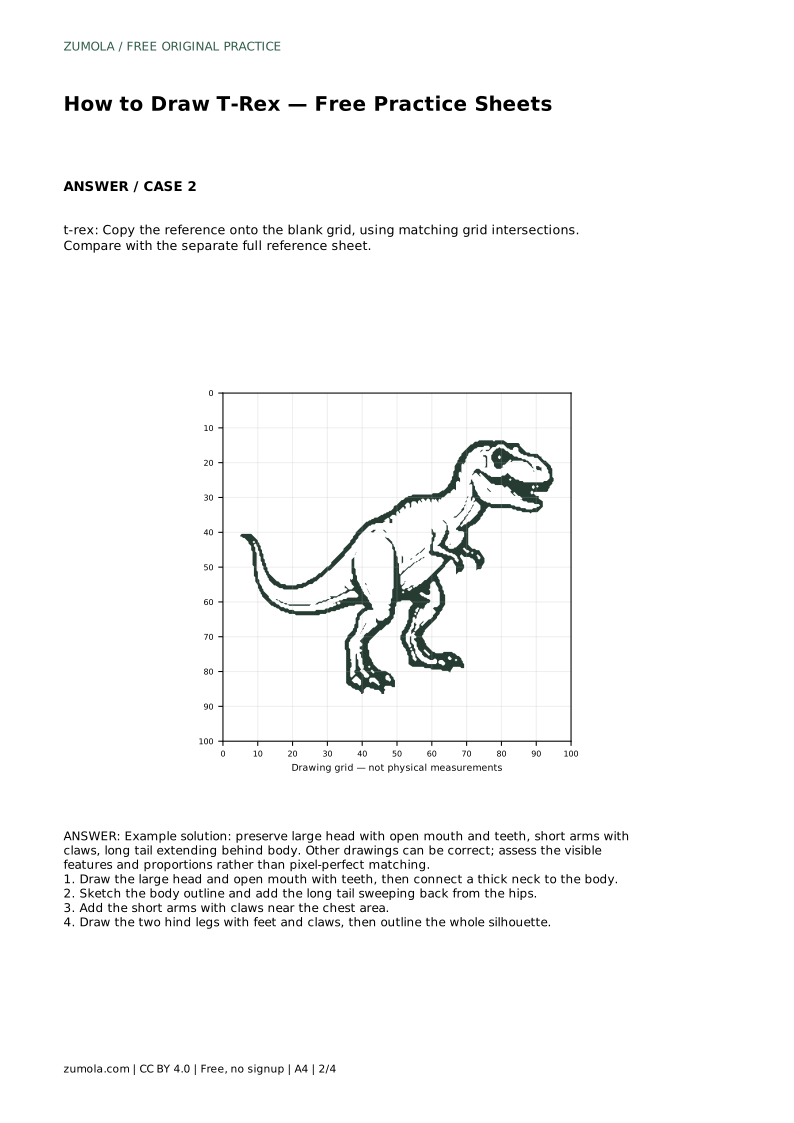
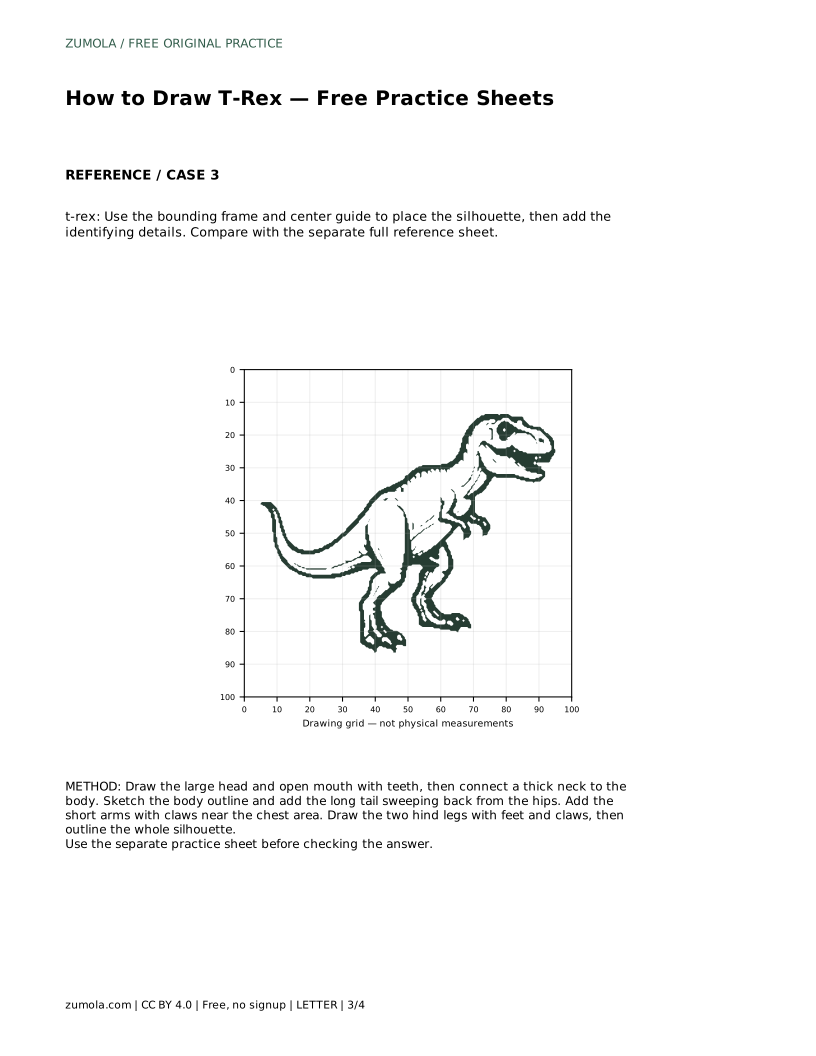
A blank grid turns proportion into a measurable task. Copy the reference onto the blank grid by matching grid intersections: if the snout tip falls near one intersection and the hip near another, place your marks at the same relative positions. This method is slower but exposes proportion errors clearly.
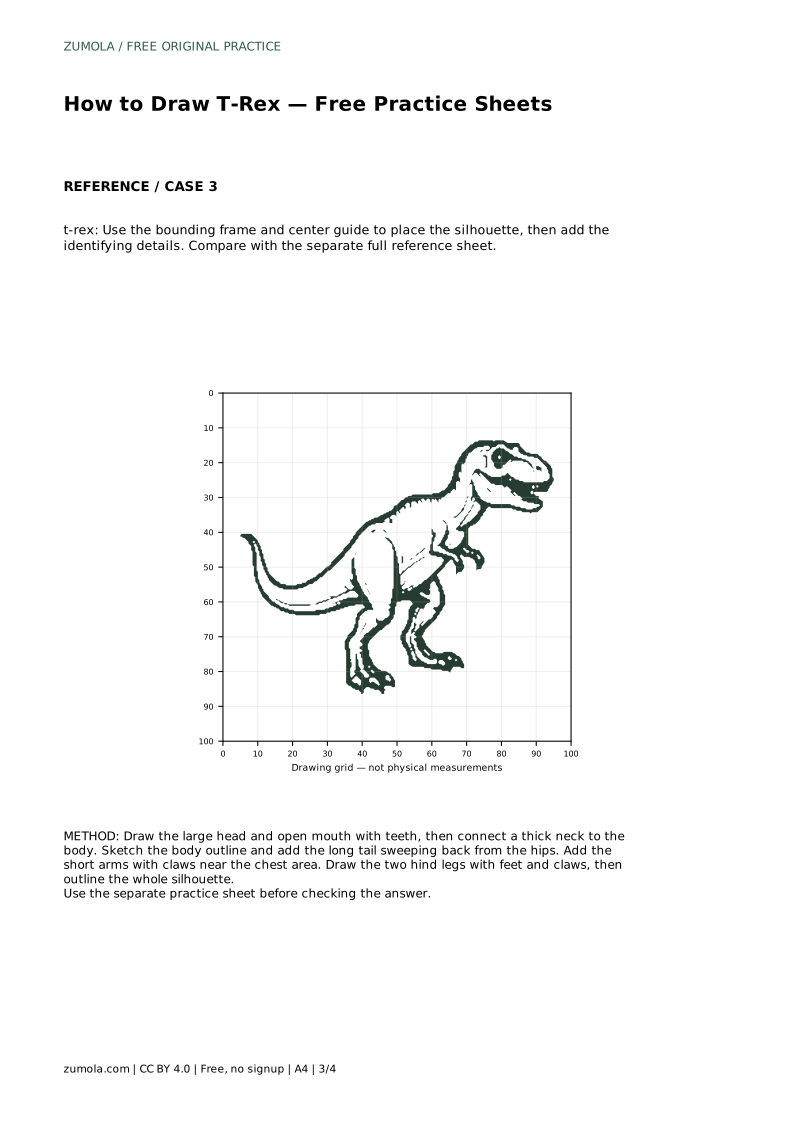
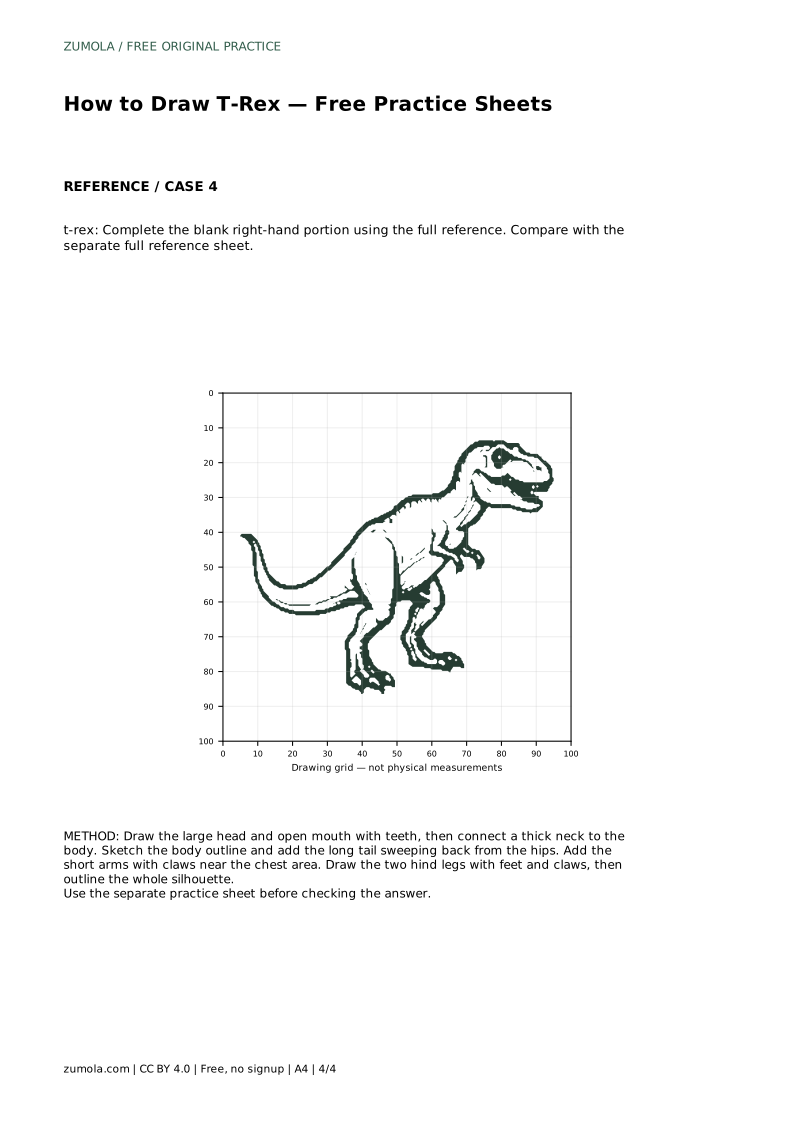
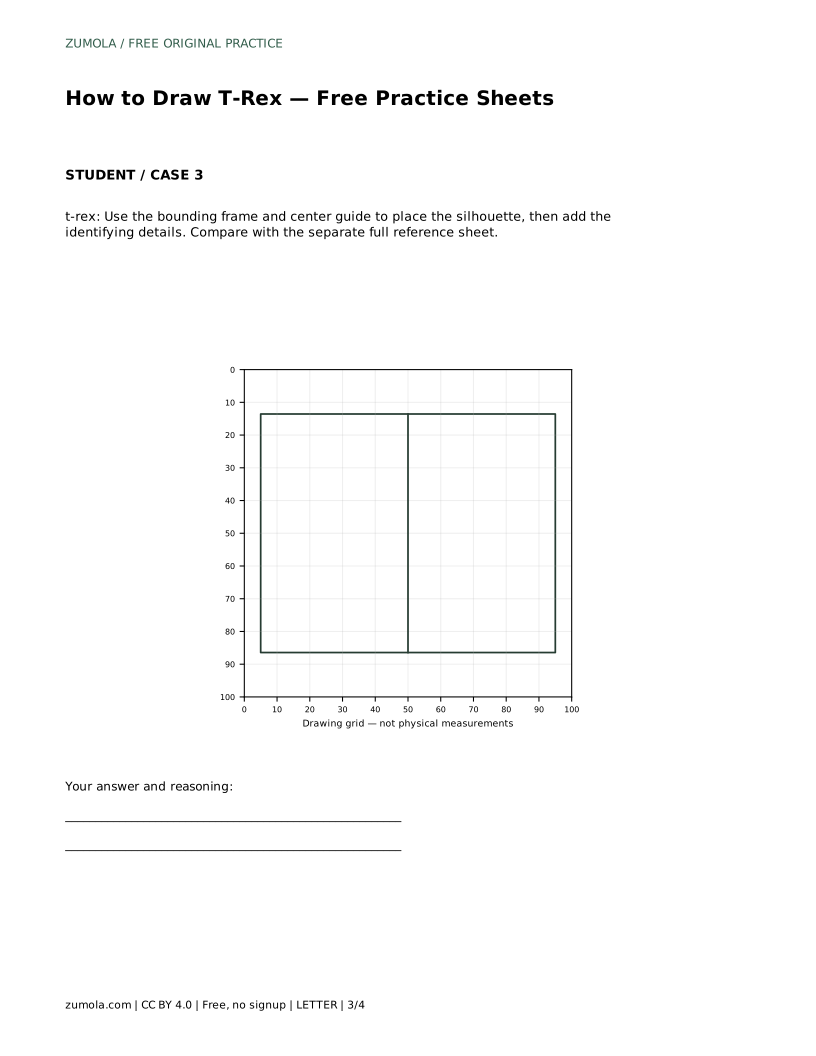
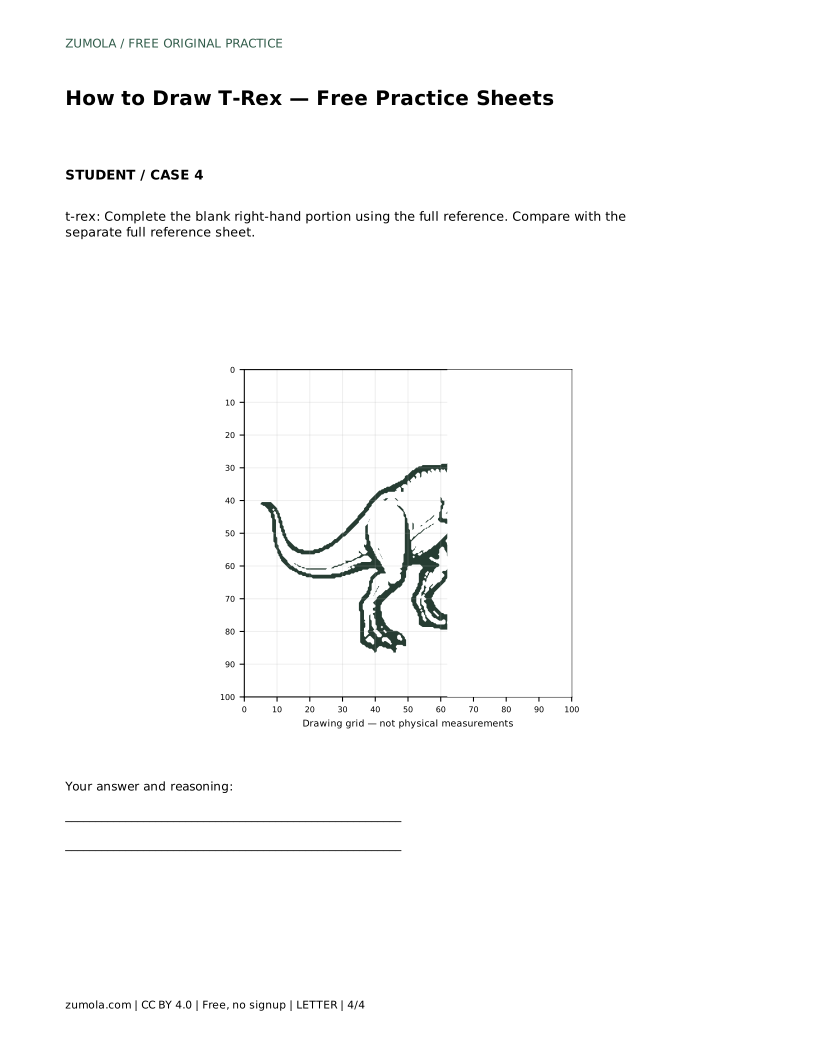
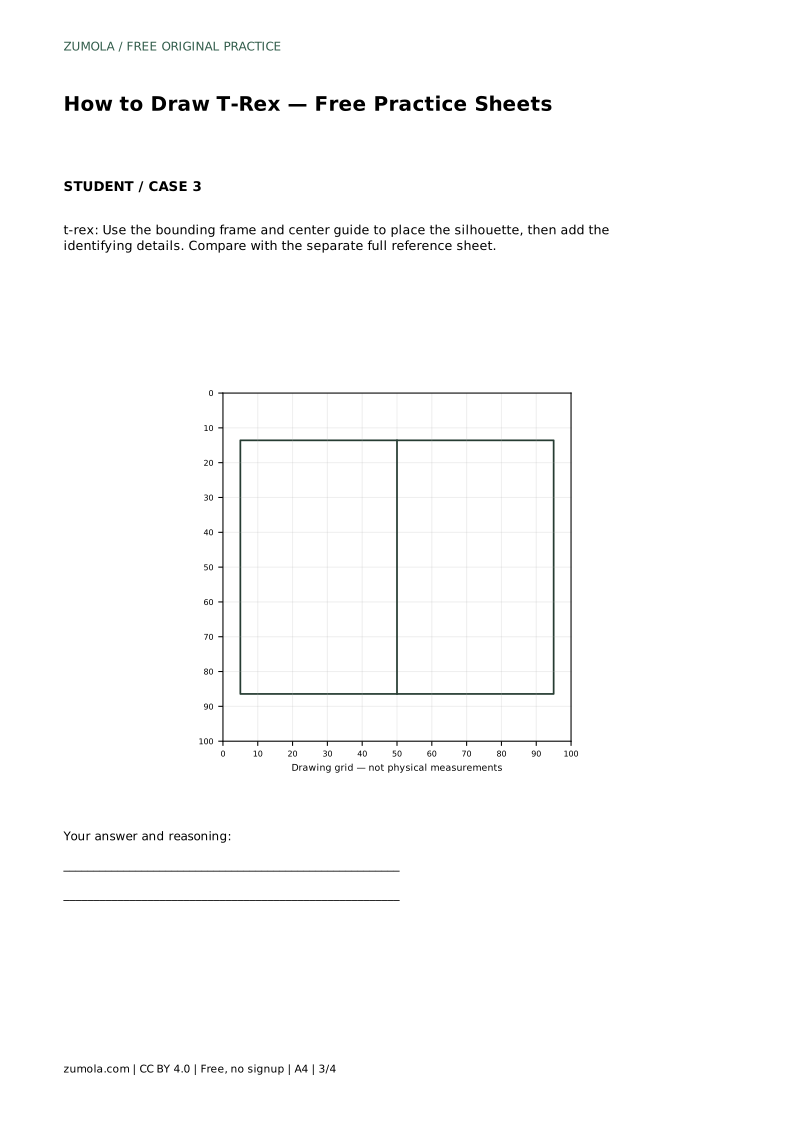
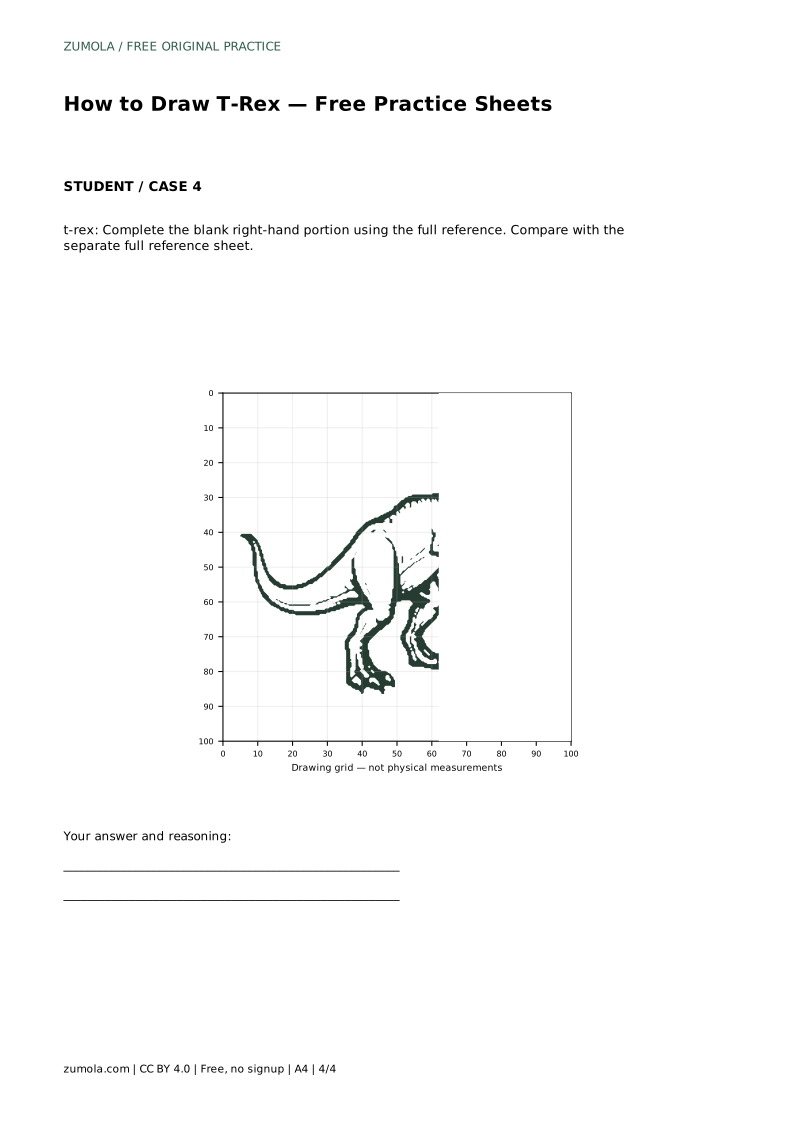
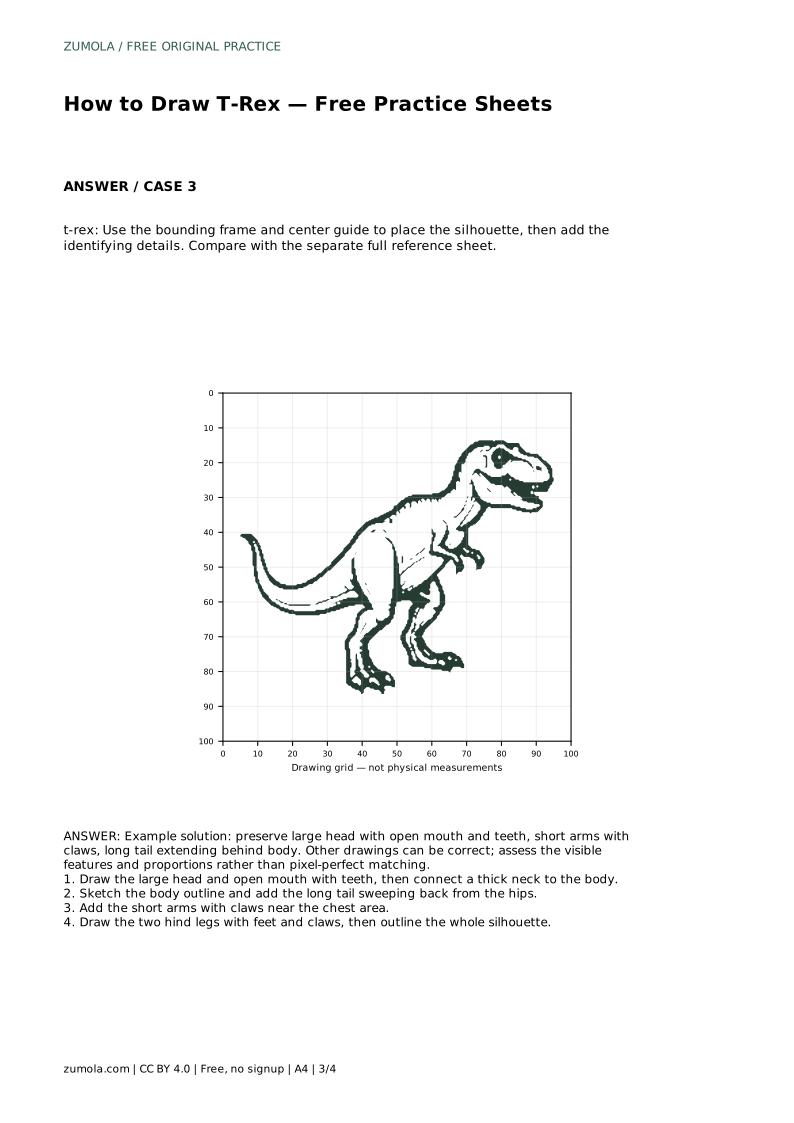
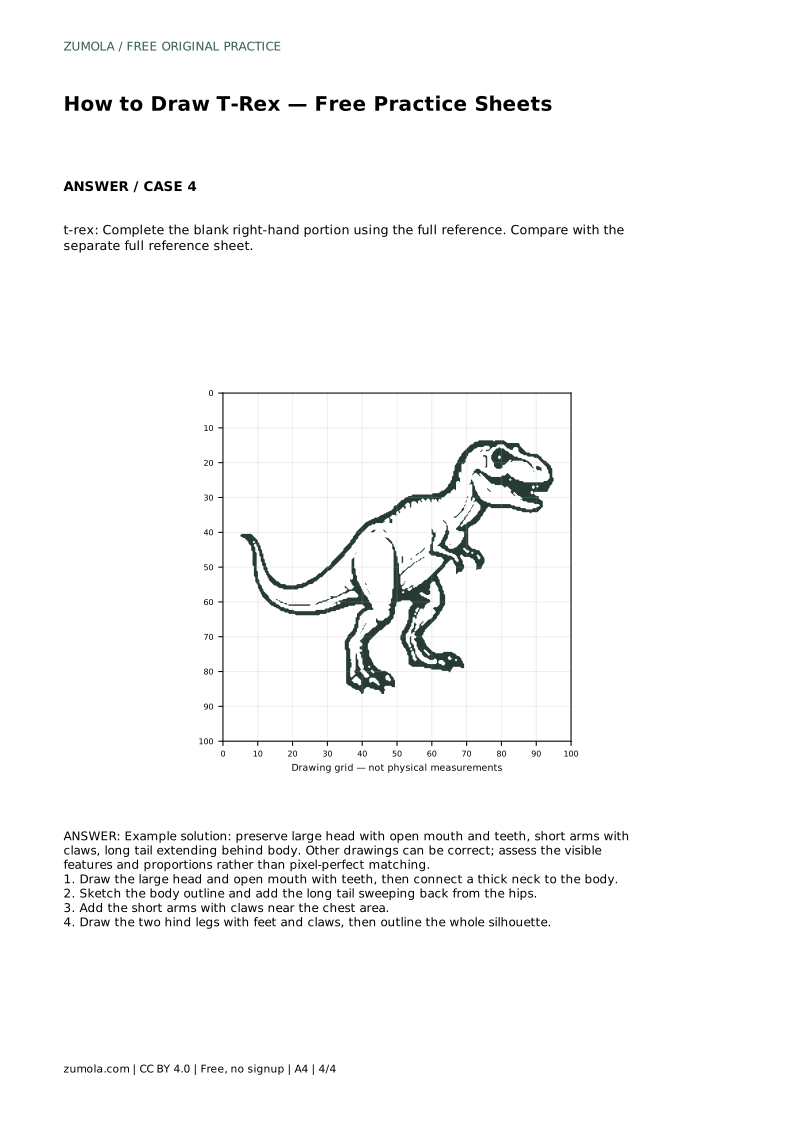
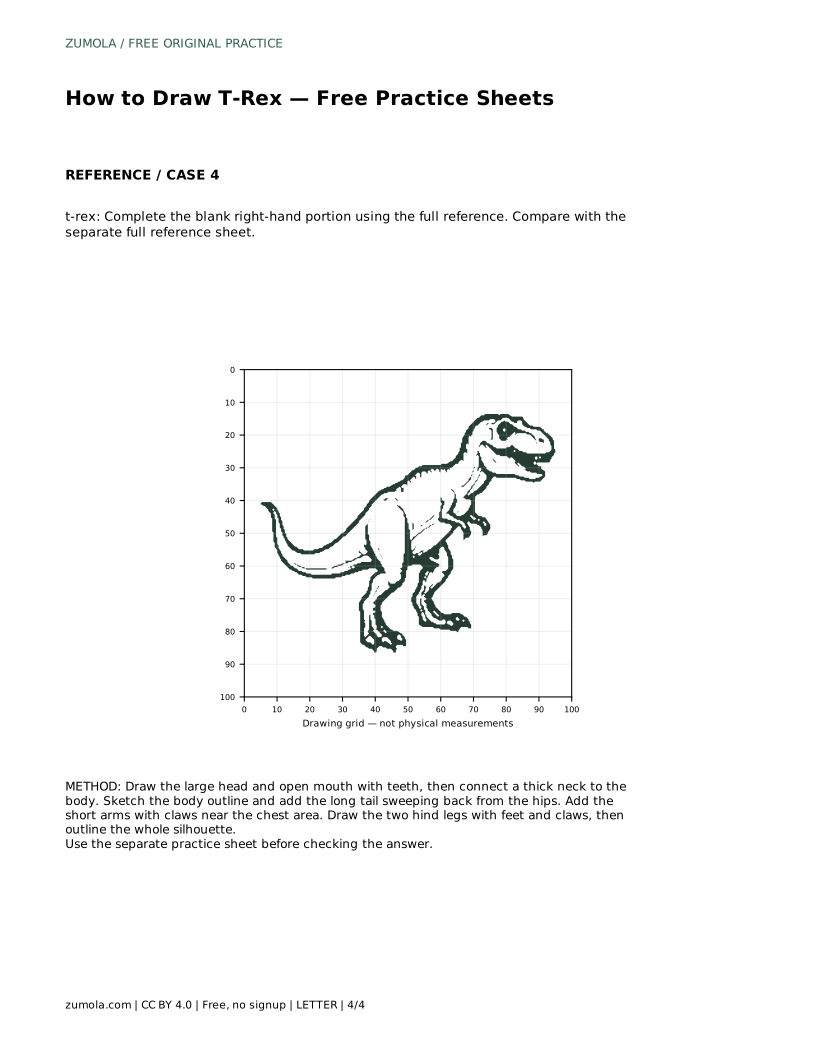
The bounding frame and center guide work differently. Use the frame to set the outer limits of the silhouette and the center guide to balance the head, body, and tail around a vertical axis. Place the silhouette first, then add the identifying details. A partial-outline sheet, where the right-hand portion is blank, tests whether you can continue an existing drawing consistently.
A realistic T-Rex drawing has many valid outcomes. Two drawings can both be correct while differing in stance, tail curve, or head angle. Judge the visible features and proportions rather than pixel-perfect matching. Ask whether the head is large, the arms are short, the tail is long, and the legs support the body convincingly.
Use the rubric below to review your work. It focuses on the features that make the animal recognizable, so you can improve specific areas instead of redrawing everything.
t-rex: Trace the reference outline, then practise the contour independently. Compare with the separate full reference sheet.
Example solution: preserve large head with open mouth and teeth, short arms with claws, long tail extending behind body. Other drawings can be correct; assess the visible features and proportions rather than pixel-perfect matching. Draw the large head and open mouth with teeth, then connect a thick neck to the body. Sketch the body outline and add the long tail sweeping back from the hips. Add the short arms with claws near the chest area. Draw the two hind legs with feet and claws, then outline the whole silhouette.
Tracing first builds familiarity with the outline, but follow it with an independent redraw and compare both against the full reference sheet.
Check the large head, open mouth with teeth, short clawed arms, long tail, and two supporting hind legs. If those read clearly, the drawing is working.
Yes. Stance, tail curve, and head angle can vary. Assess the visible features and proportions rather than exact matching.
All drawing practice · Free coordinate paper
Original resources · CC BY 4.0 · Free for personal and classroom use with attribution.