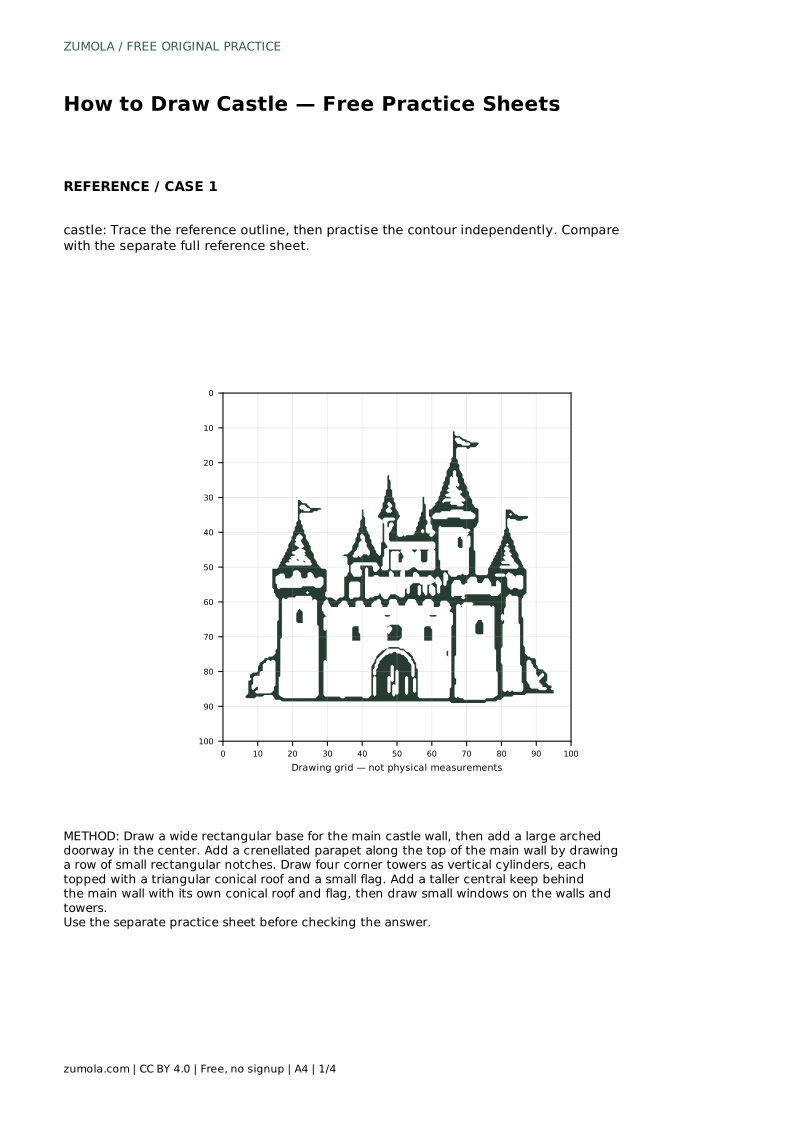
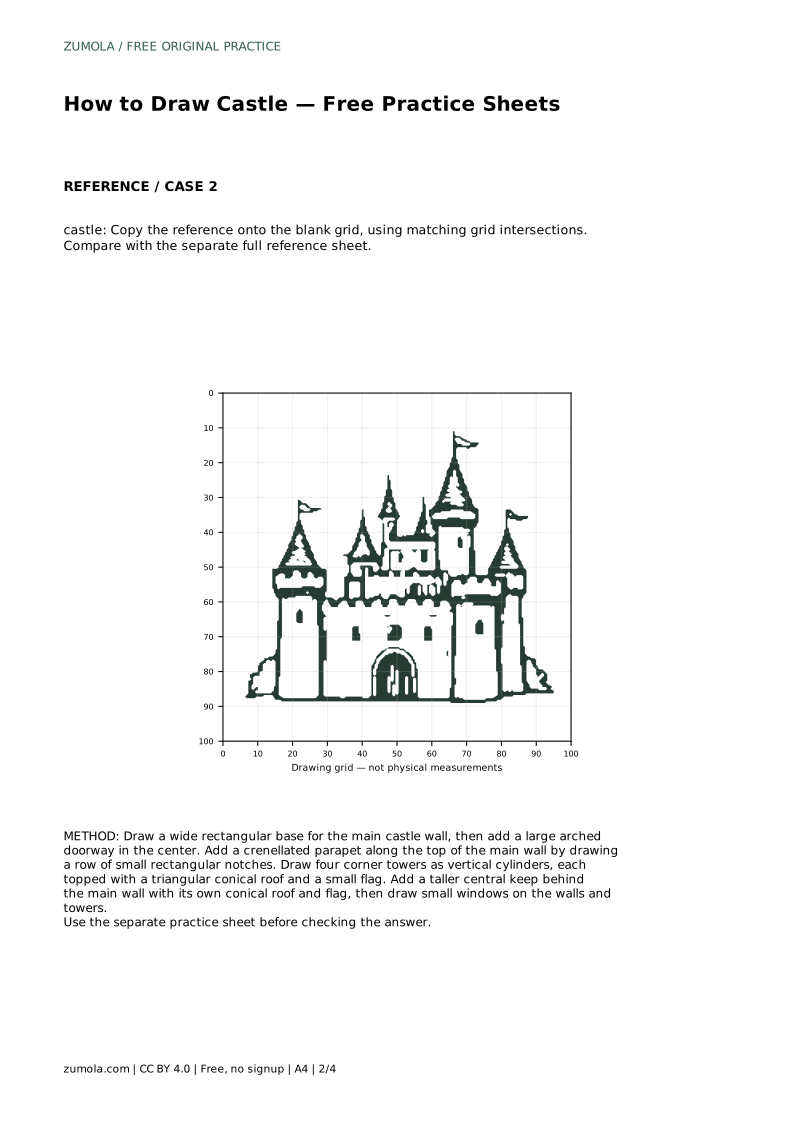
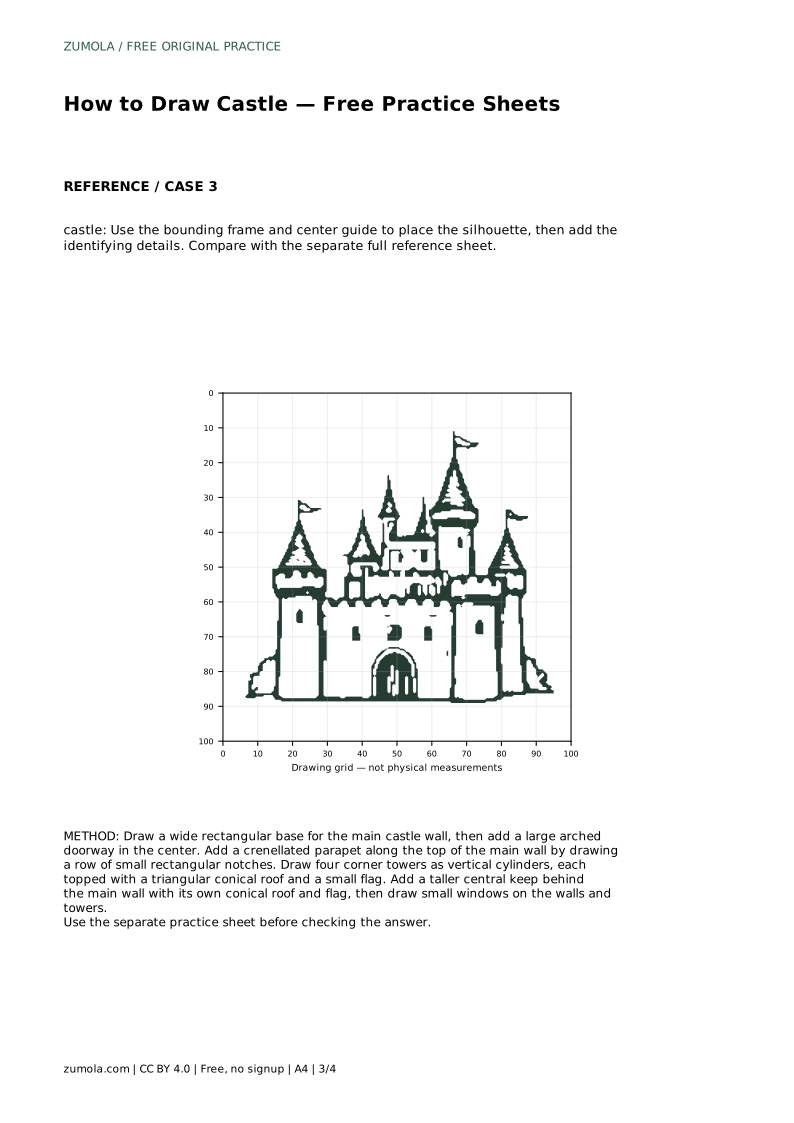
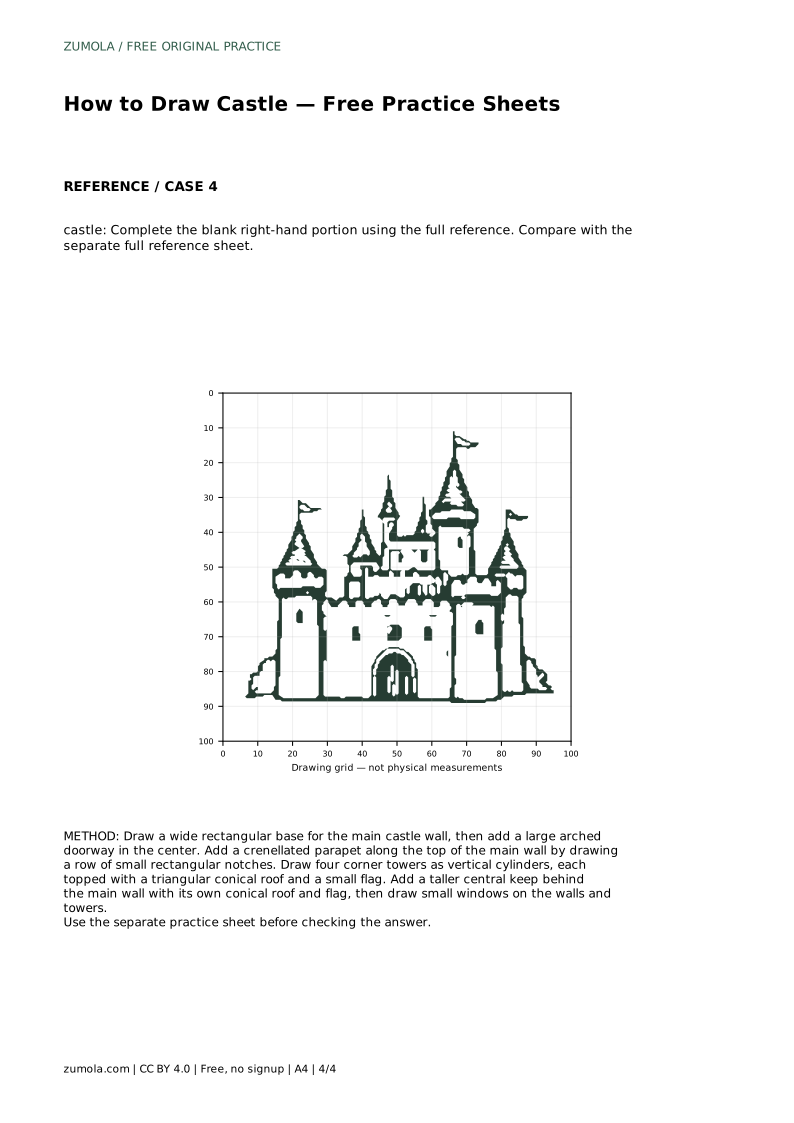
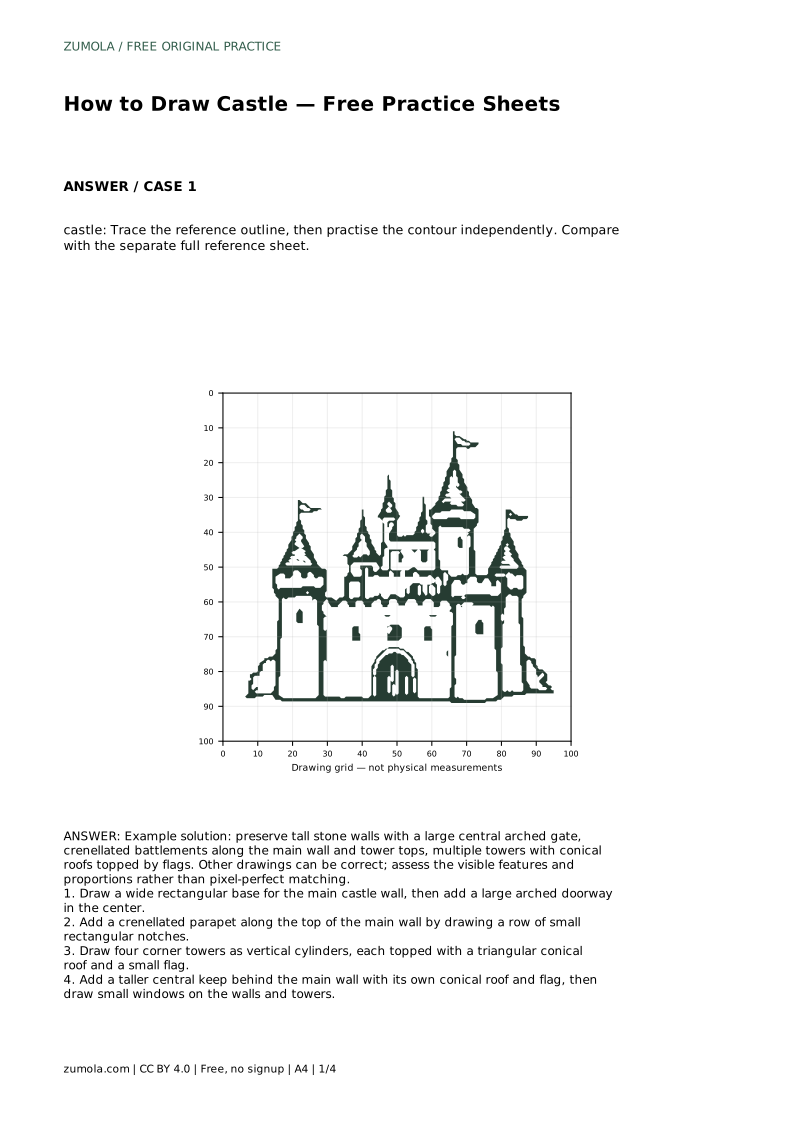
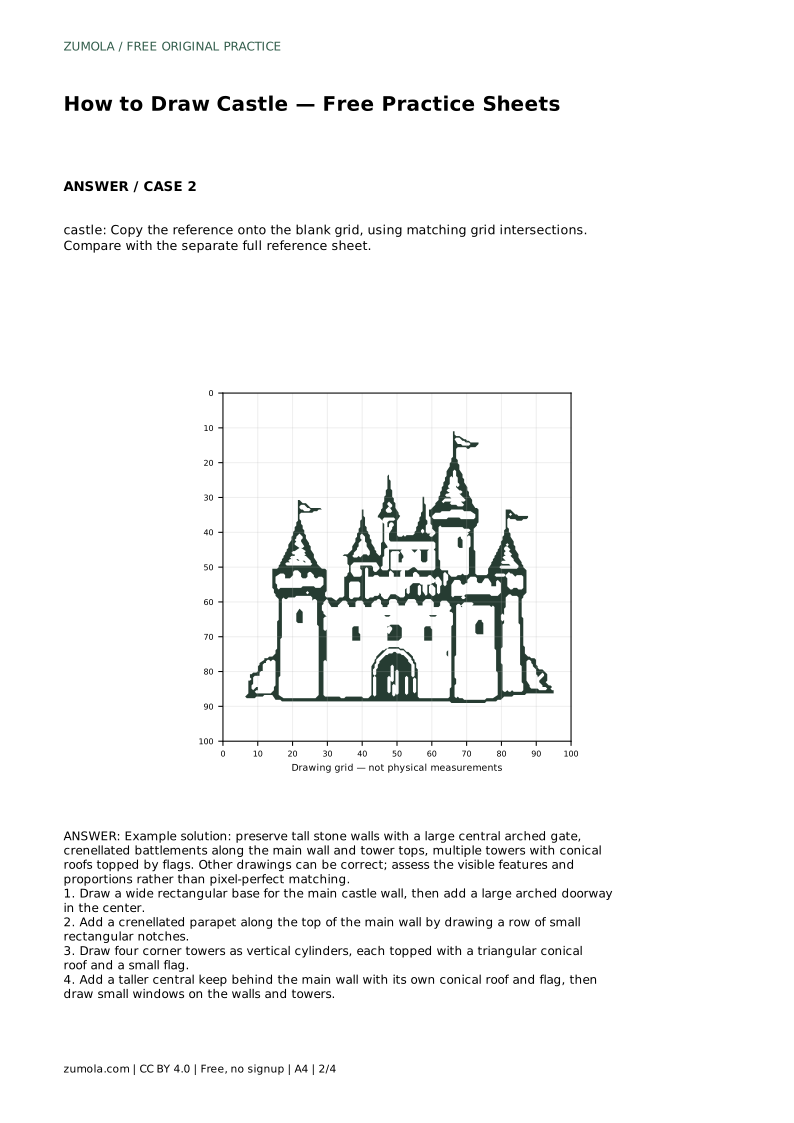
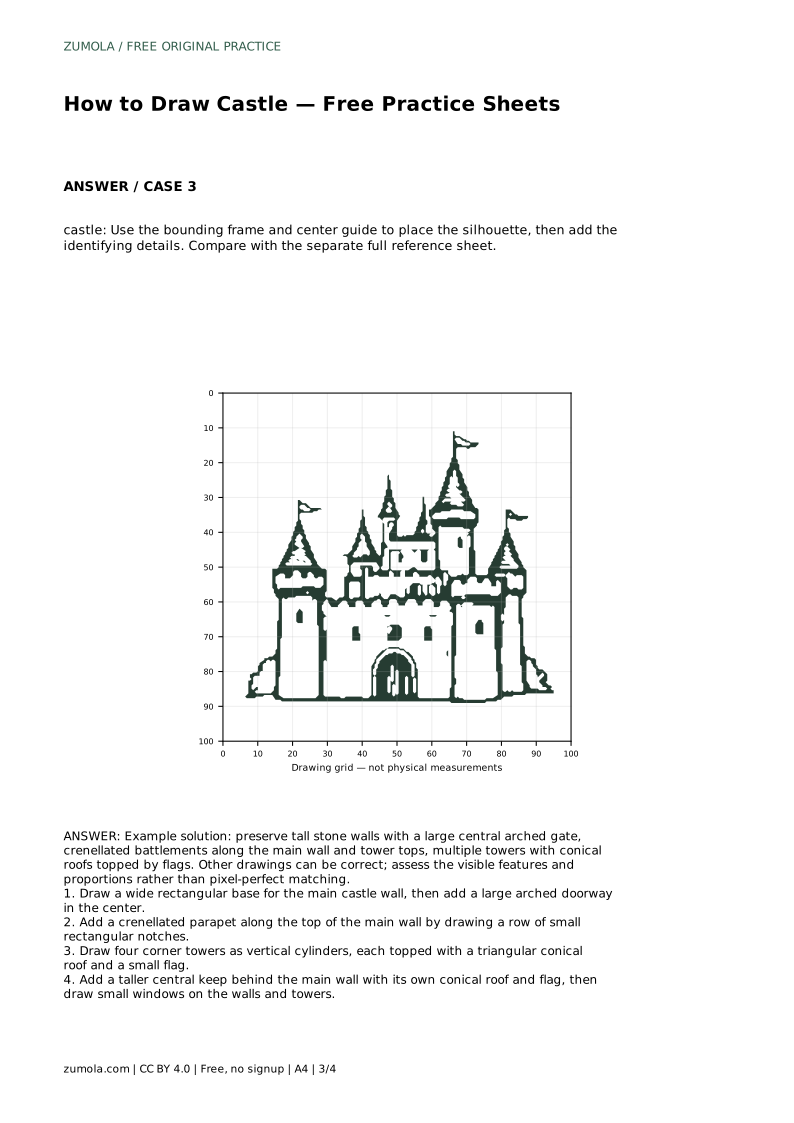
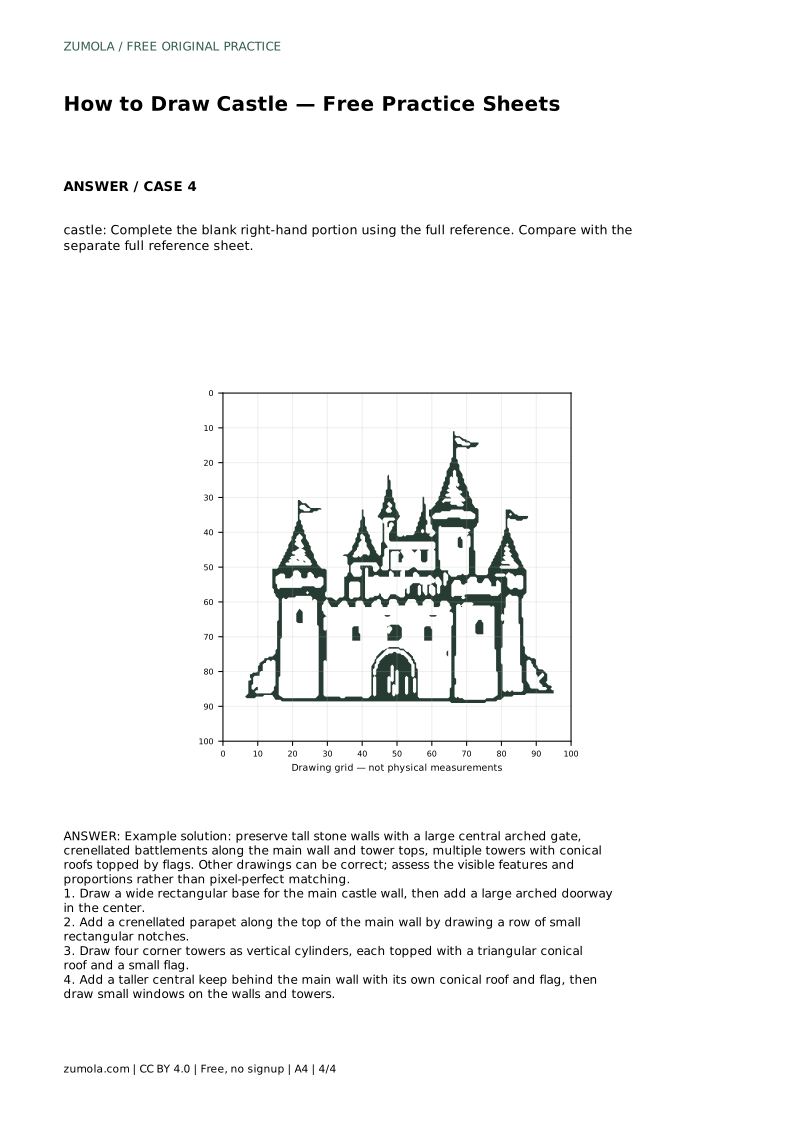
Reference diagrams
LETTER · Download PDF
A4 · Download PDF
Free original resources
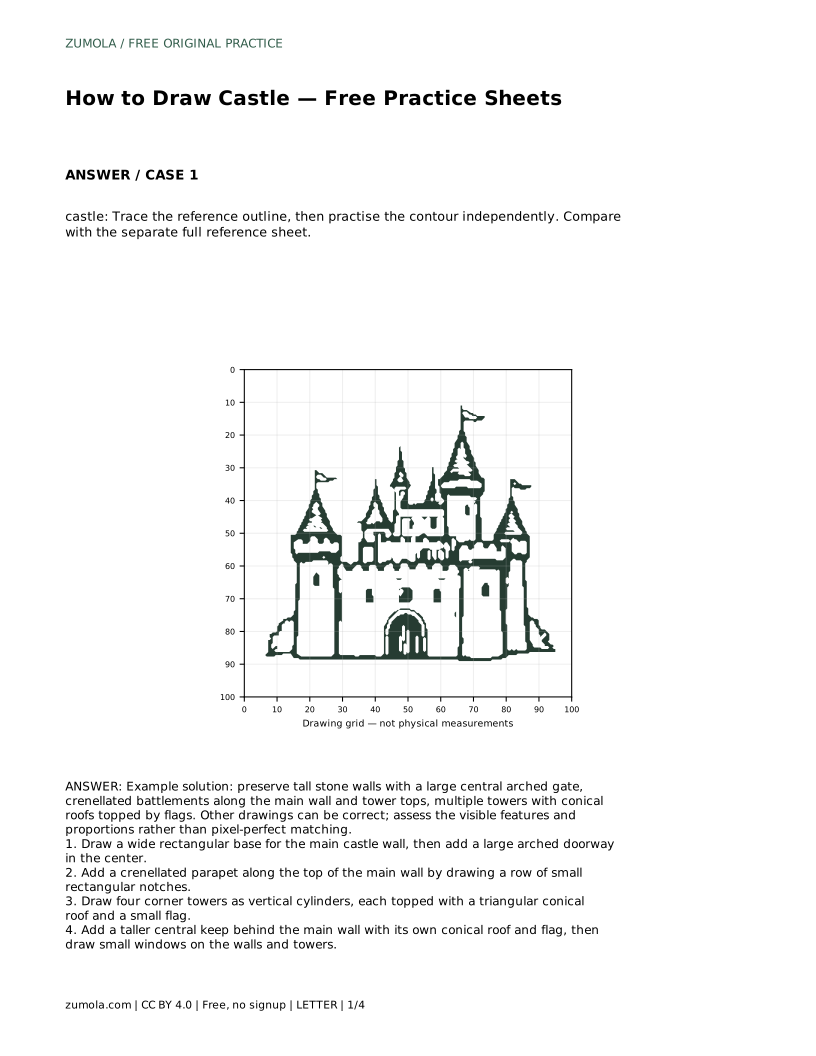
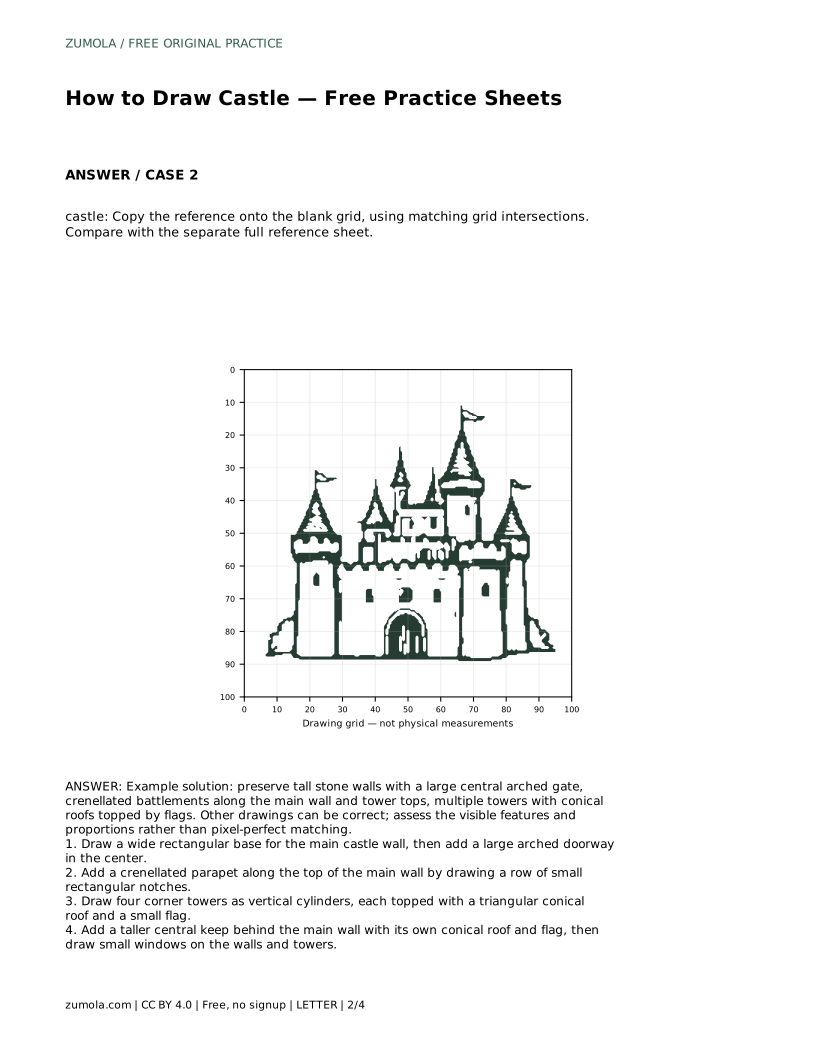
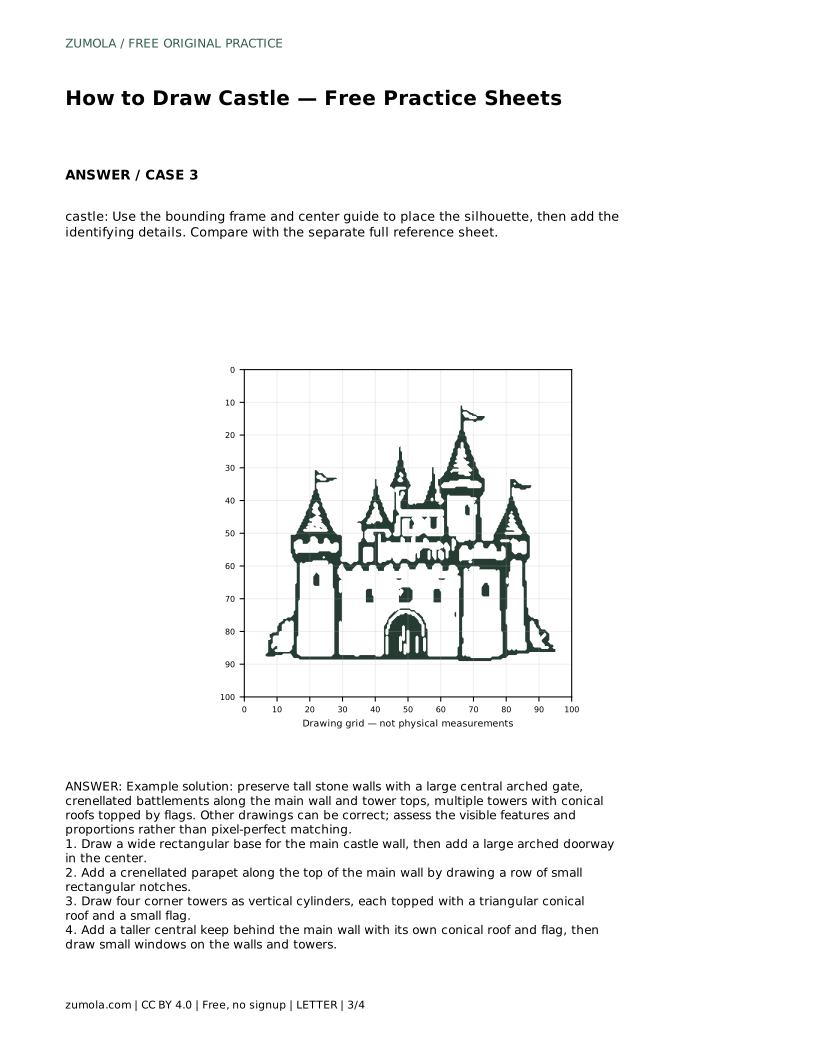
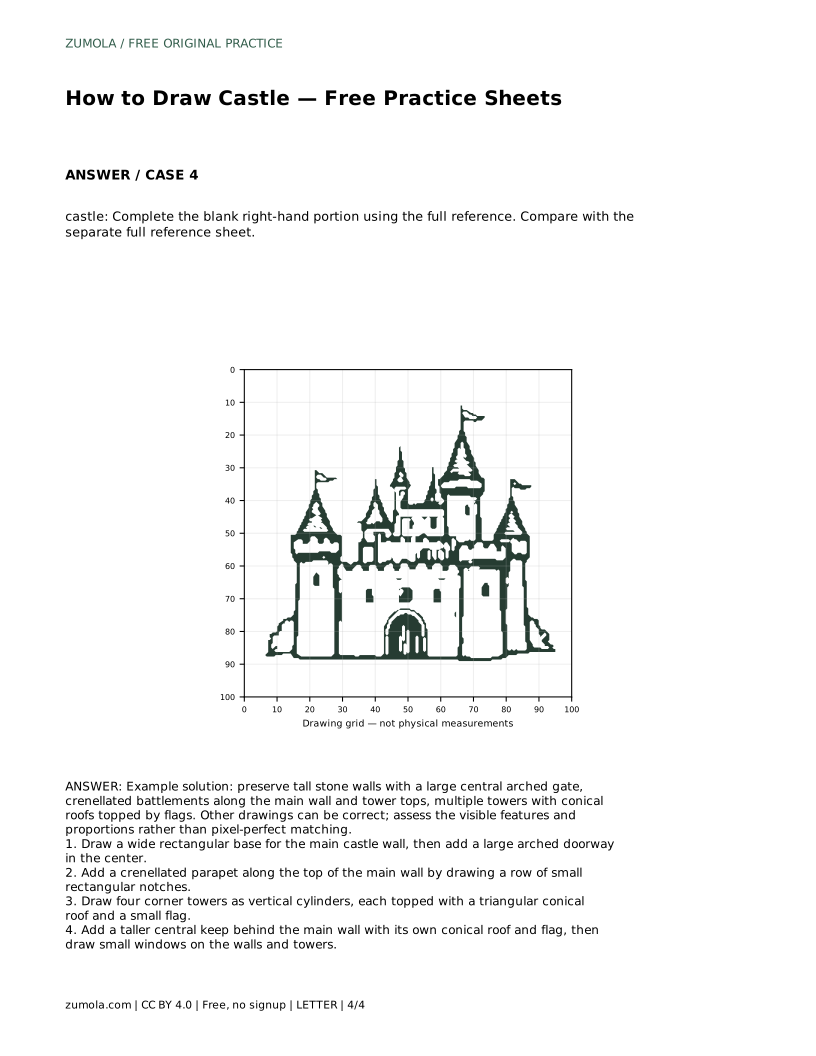
Learn to draw an old castle with tall stone walls, a central arched gate, crenellated battlements, corner towers with conical roofs, and a taller central keep.
Four original cases, with reference diagrams, practice sheets and worked answers. Everything is free; no signup required.
LETTER · Download PDF
A4 · Download PDF
LETTER · Download PDF
A4 · Download PDF
LETTER · Download PDF
A4 · Download PDF
Use A4 or US Letter to match your printer. Use the stated values and conditions to solve each exercise; diagrams are not physical measuring rulers.
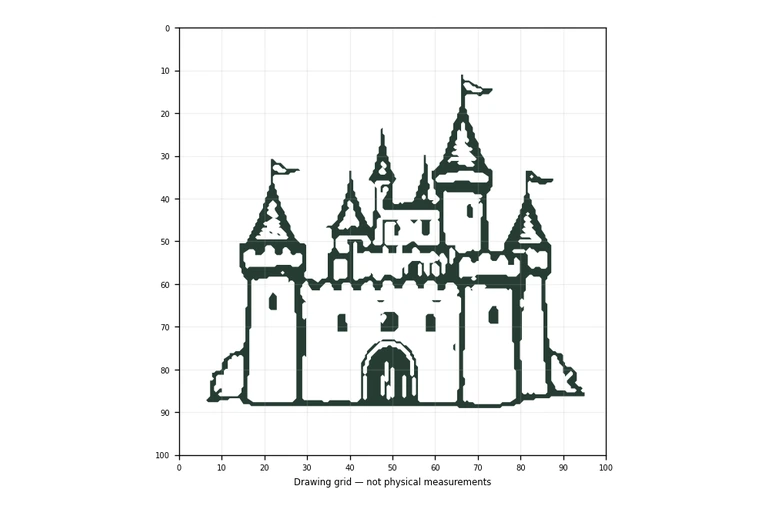
An old castle drawing depends on a few clear features: a wide stone wall, a large central arched gate, notched battlements along the top, corner towers with conical roofs and flags, and a taller keep rising behind the wall. This page explains how to build those features in order, then how to practise them with tracing, grid, frame-and-center, and partial-completion sheets.
Start with the main wall as a wide rectangle. Keep it wider than it is tall so the castle reads as a fortified structure rather than a single tower. Place a large arched doorway in the center of that wall; the arch should be clearly rounded at the top and wide enough to be the visual focus.
Next, add a crenellated parapet along the top of the main wall. Draw a row of small rectangular notches so the wall top looks like a series of raised blocks with gaps between them. Keep the notches evenly spaced and similar in size; uneven spacing makes the wall look accidental rather than built.
Then draw four corner towers as vertical cylinders. Each tower should sit at a corner of the main wall and rise above it. Top each tower with a triangular conical roof and add a small flag. Finally, add a taller central keep behind the main wall, with its own conical roof and flag, and draw small windows on the walls and towers.
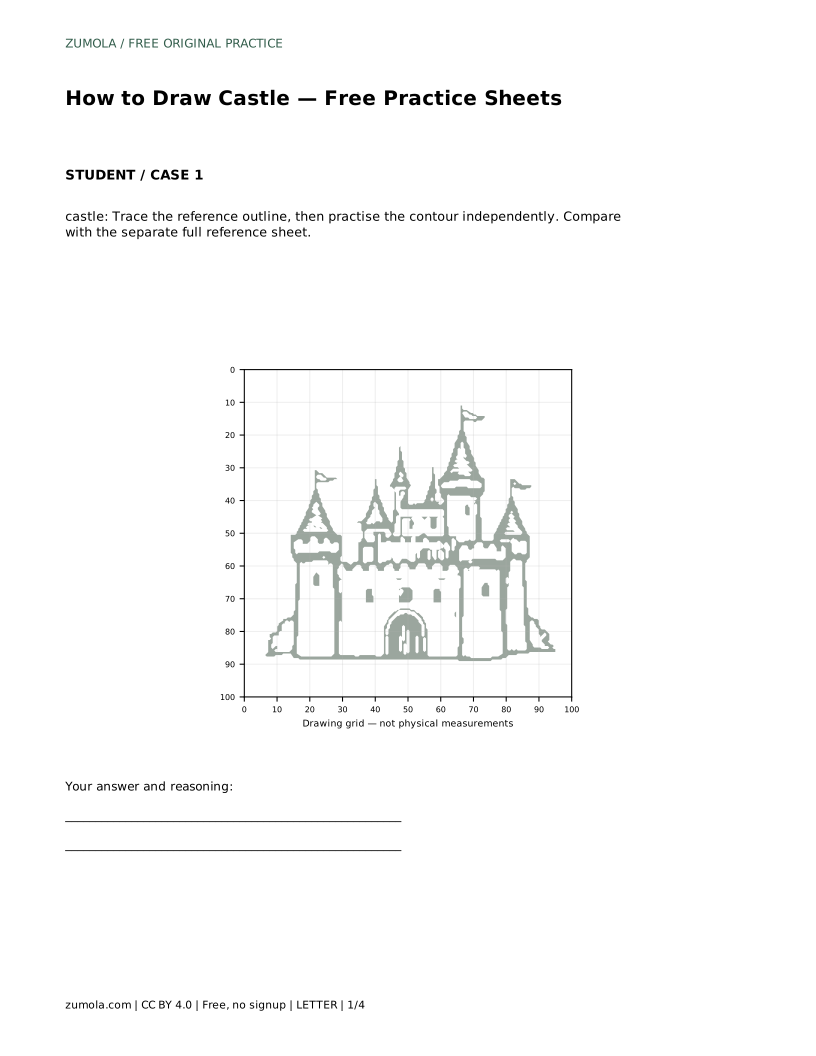
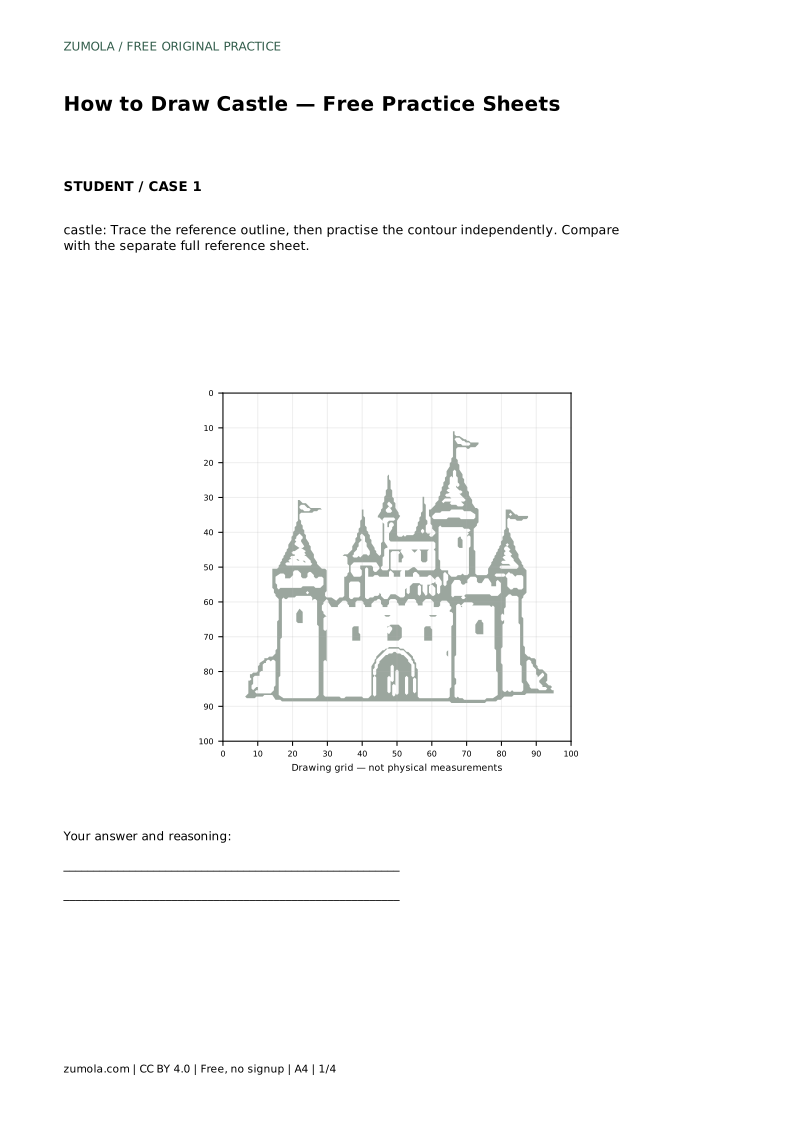
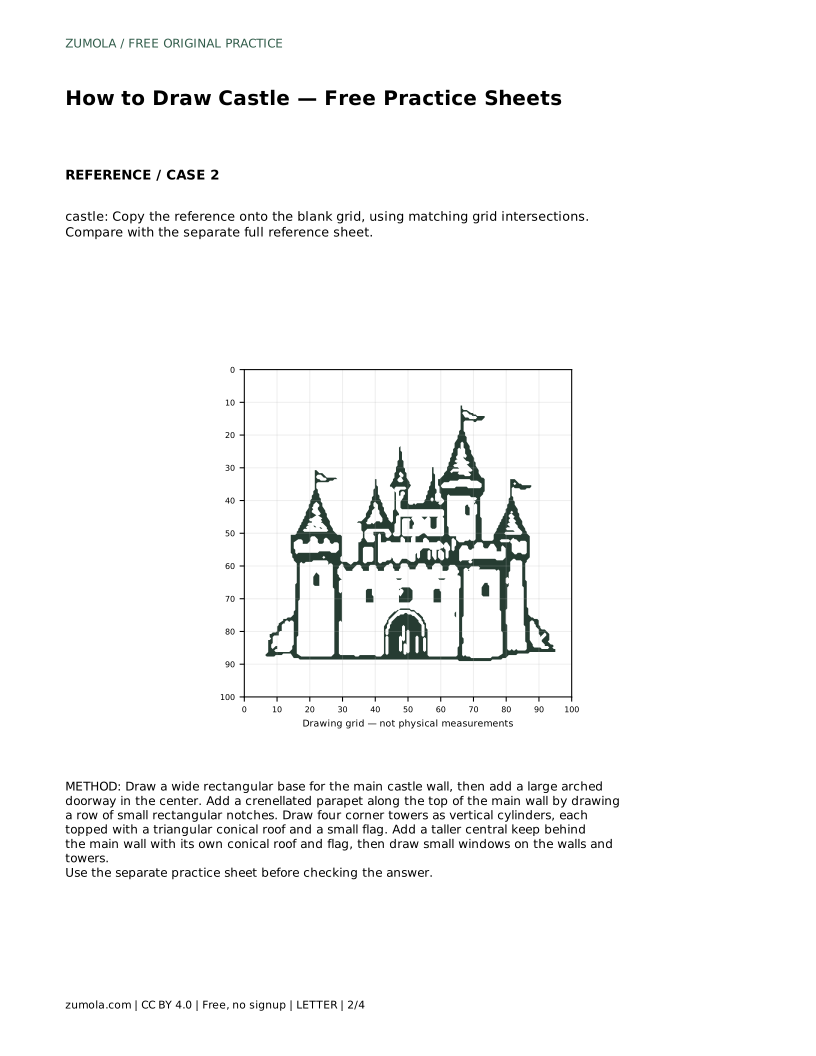
The tracing sheet asks you to follow the reference outline first, then repeat the contour without tracing. Compare your freehand attempt with the separate full reference sheet, not with your traced line. This separates hand-following from independent control.
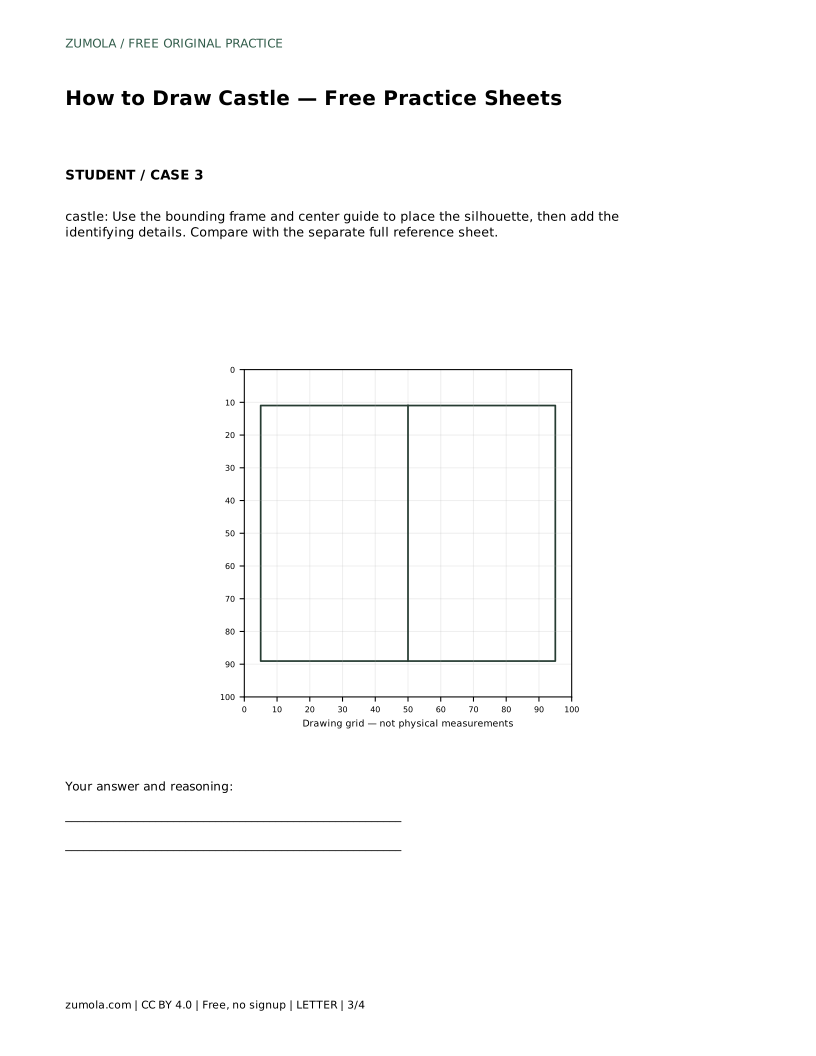
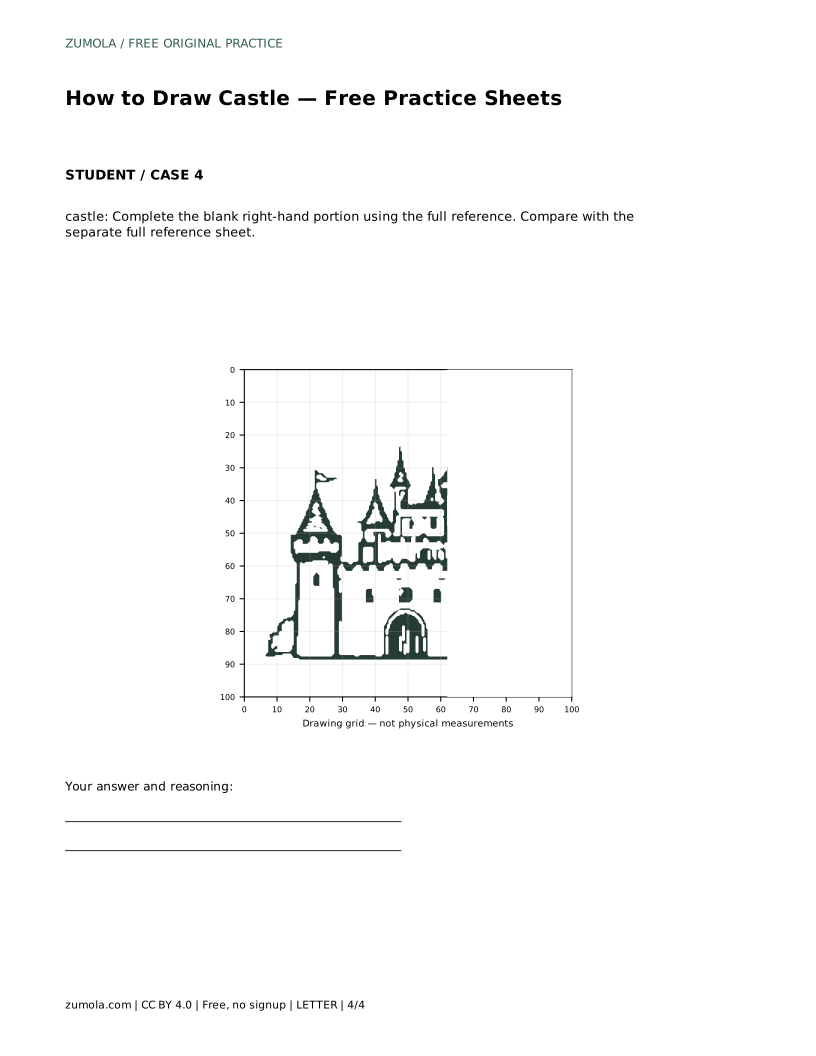
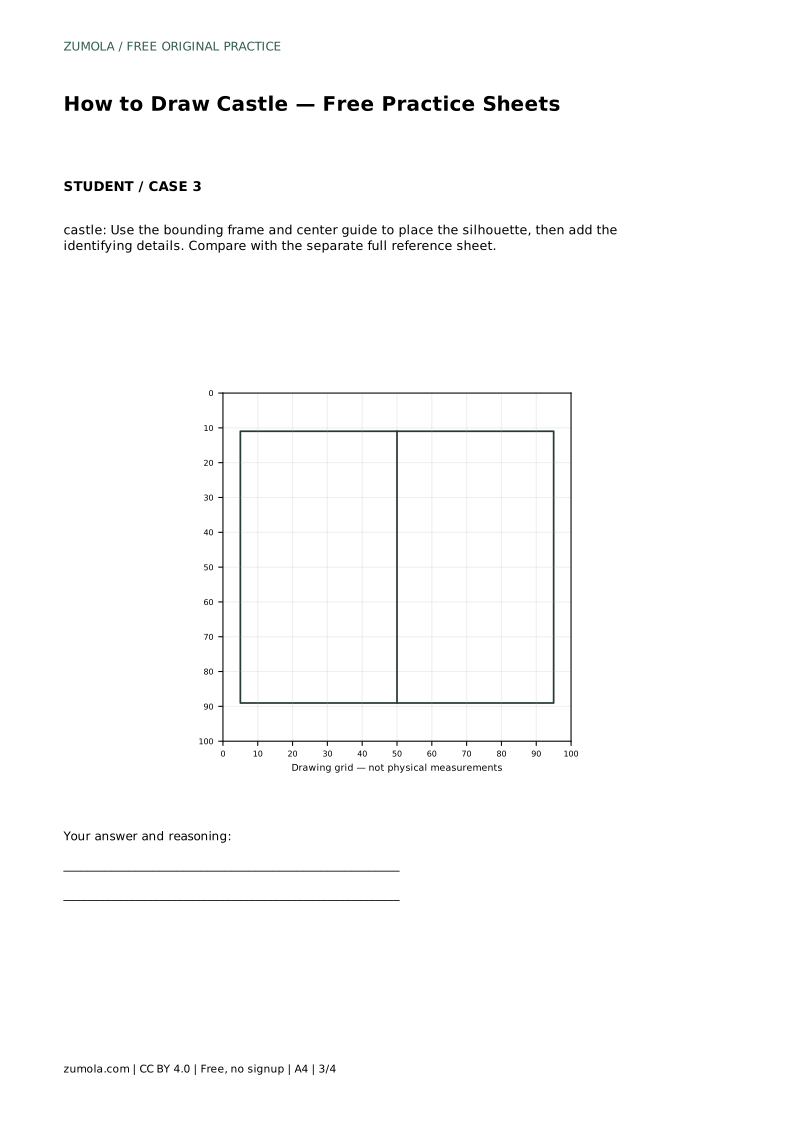
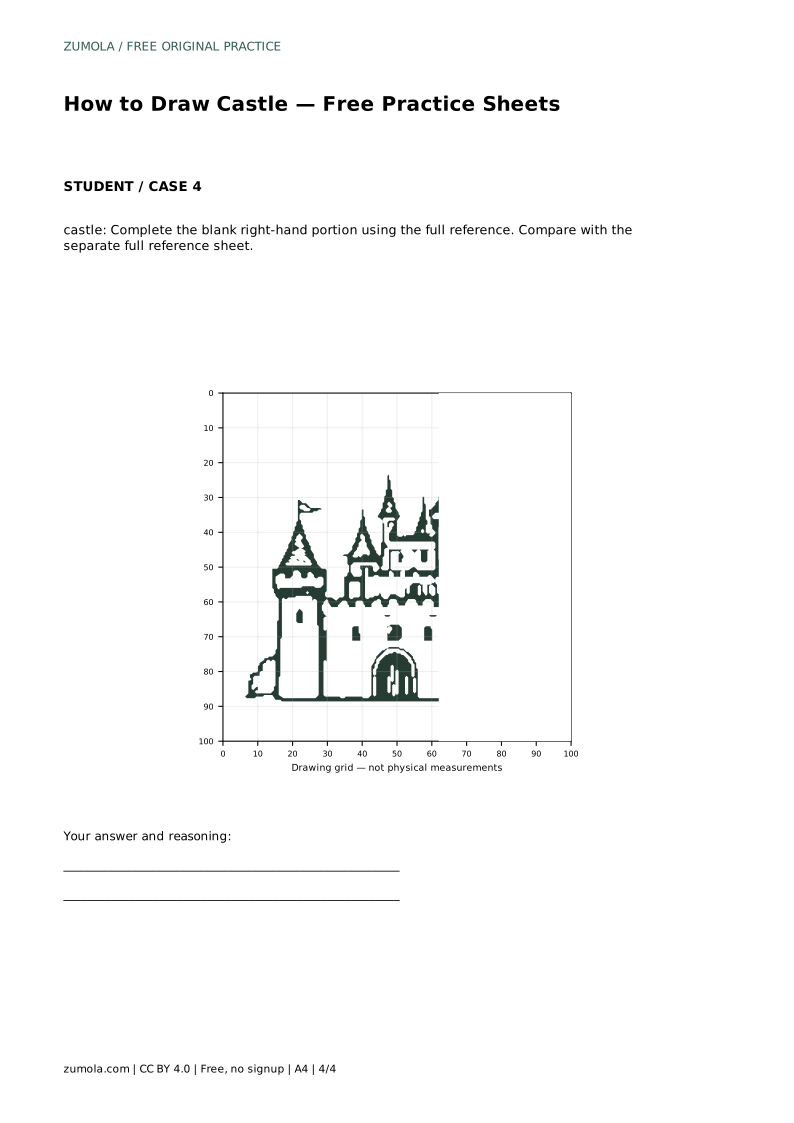
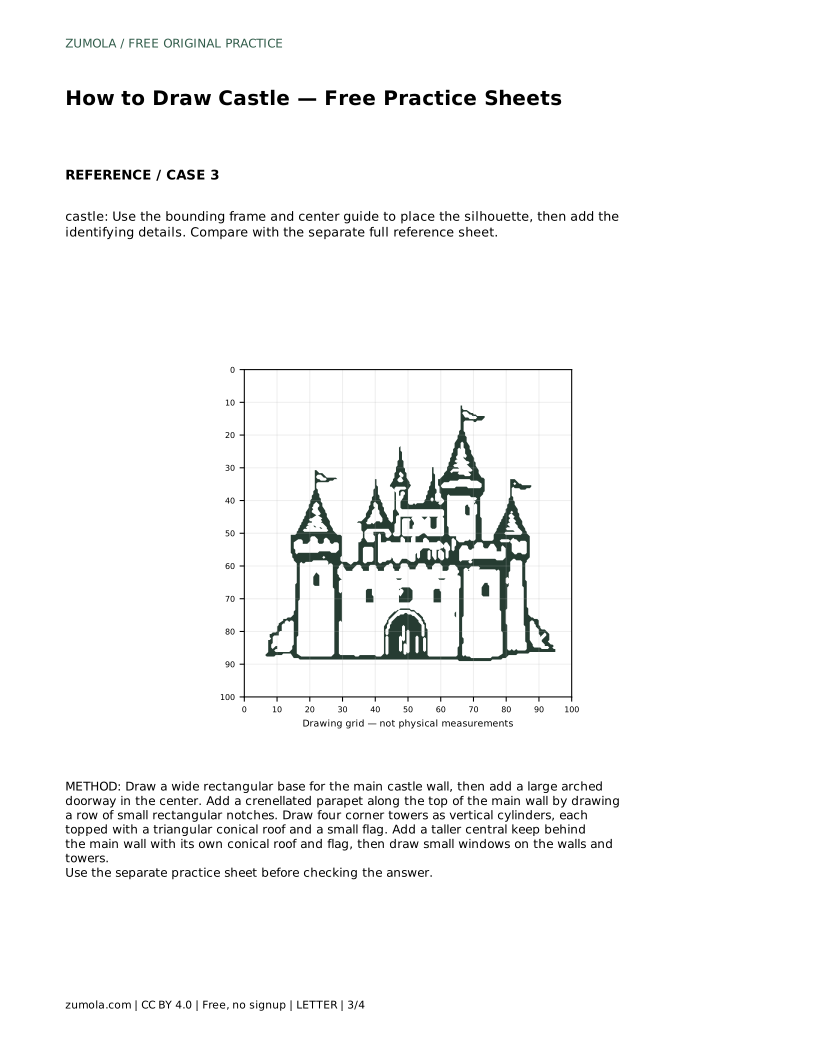
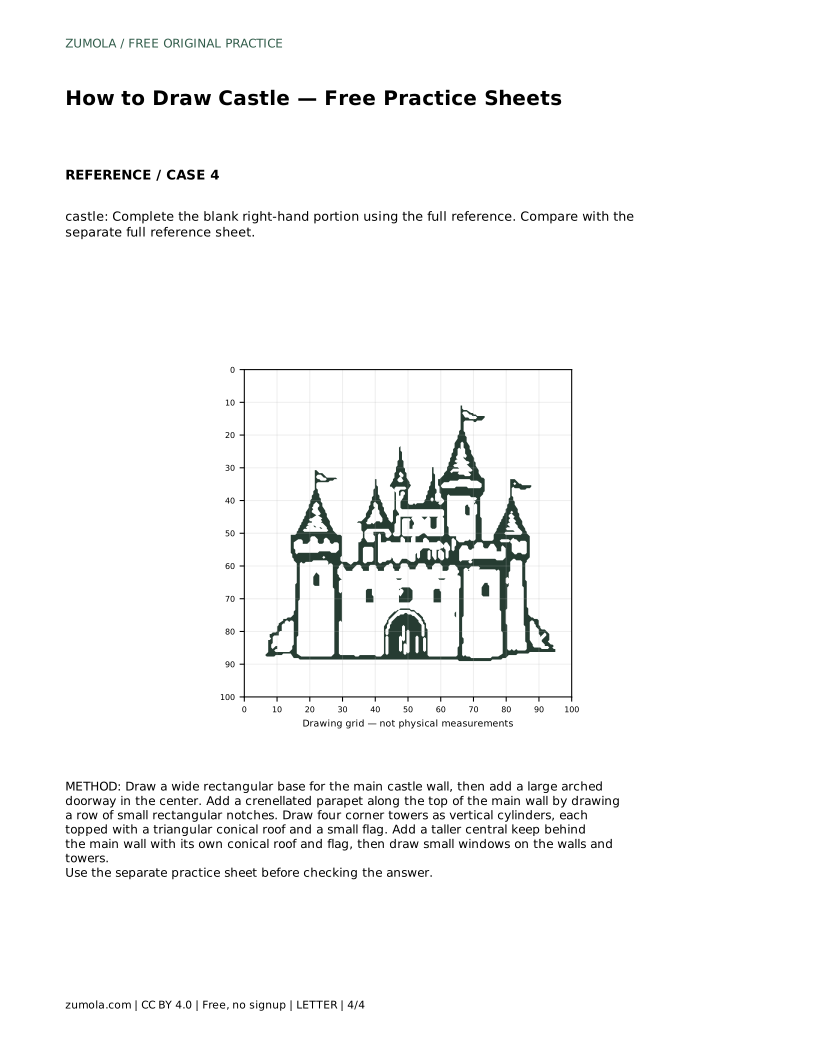
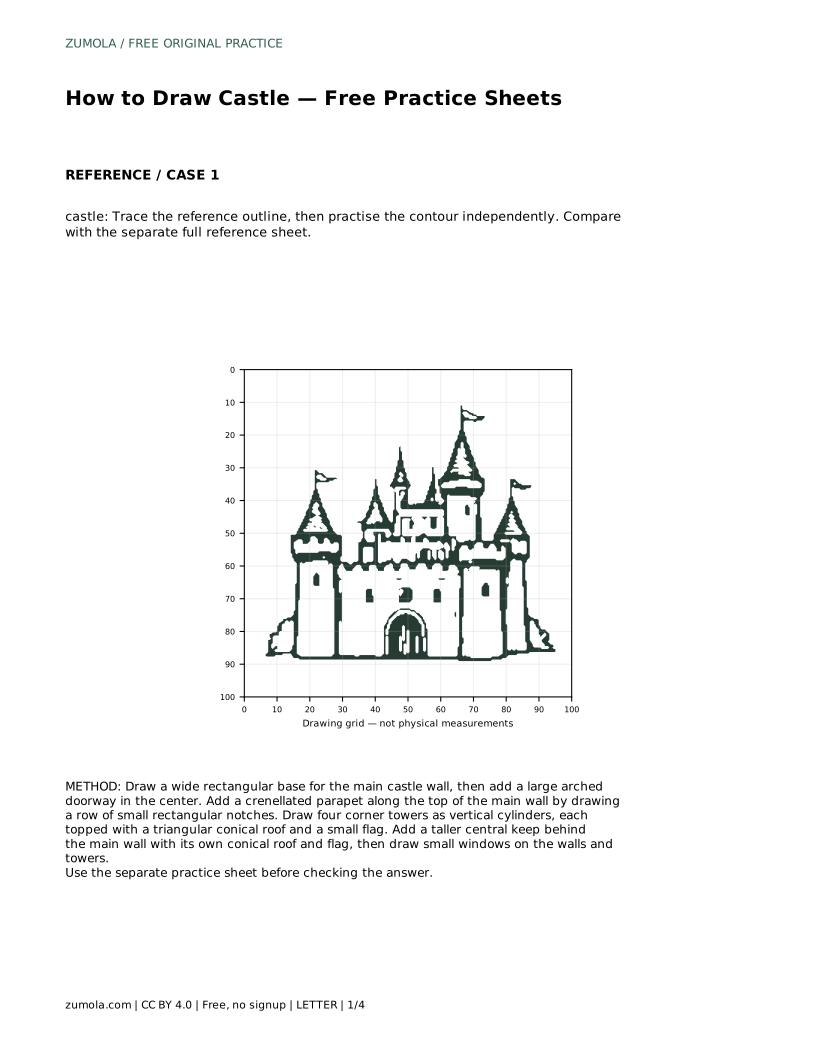
The grid sheet asks you to copy the reference onto a blank grid using matching grid intersections. Use the intersections to judge where the gate, wall top, tower bases, and roof peaks sit relative to one another. The frame-and-center sheet asks you to place the silhouette using the bounding frame and center guide before adding identifying details. The partial-completion sheet gives you the left portion and asks you to finish the blank right-hand portion from the full reference.
A correct old castle drawing preserves the tall stone walls, the large central arched gate, crenellated battlements along the main wall and tower tops, multiple towers with conical roofs topped by flags, and the taller central keep. Proportions matter more than exact line placement: the keep should read as taller than the corner towers, and the gate should read as the largest opening.
Other drawings can be correct. Assess the visible features and proportions rather than pixel-perfect matching. A drawing with slightly different window counts or flag shapes can still meet the task if the castle structure is clear.
If the castle looks flat, the wall rectangle is probably too tall or the towers too short. Widen the wall and raise the towers slightly. If the gate looks small, enlarge the arch before adding windows. If the battlements look messy, redraw the notches as a repeated rectangle pattern rather than freehand zigzags.
castle: Trace the reference outline, then practise the contour independently. Compare with the separate full reference sheet.
Example solution: preserve tall stone walls with a large central arched gate, crenellated battlements along the main wall and tower tops, multiple towers with conical roofs topped by flags. Other drawings can be correct; assess the visible features and proportions rather than pixel-perfect matching. Draw a wide rectangular base for the main castle wall, then add a large arched doorway in the center. Add a crenellated parapet along the top of the main wall by drawing a row of small rectangular notches. Draw four corner towers as vertical cylinders, each topped with a triangular conical roof and a small flag. Add a taller central keep behind the main wall with its own conical roof and flag, then draw small windows on the walls and towers.
No. Other drawings can be correct. Check that the tall walls, central arched gate, crenellated battlements, towers with conical roofs and flags, and taller central keep are all visible and reasonably proportioned.
Draw the wide wall rectangle, then the central arched gate, then the battlement notches, then the four corner towers with conical roofs and flags, and finally the taller central keep with its roof, flag, and windows.
Complete the blank right-hand portion using the full reference. Match the height and spacing of the finished left side before adding right-side towers, roofs, and windows.
All drawing practice · Free coordinate paper
Original resources · CC BY 4.0 · Free for personal and classroom use with attribution.