Reference diagrams
LETTER · Download PDF
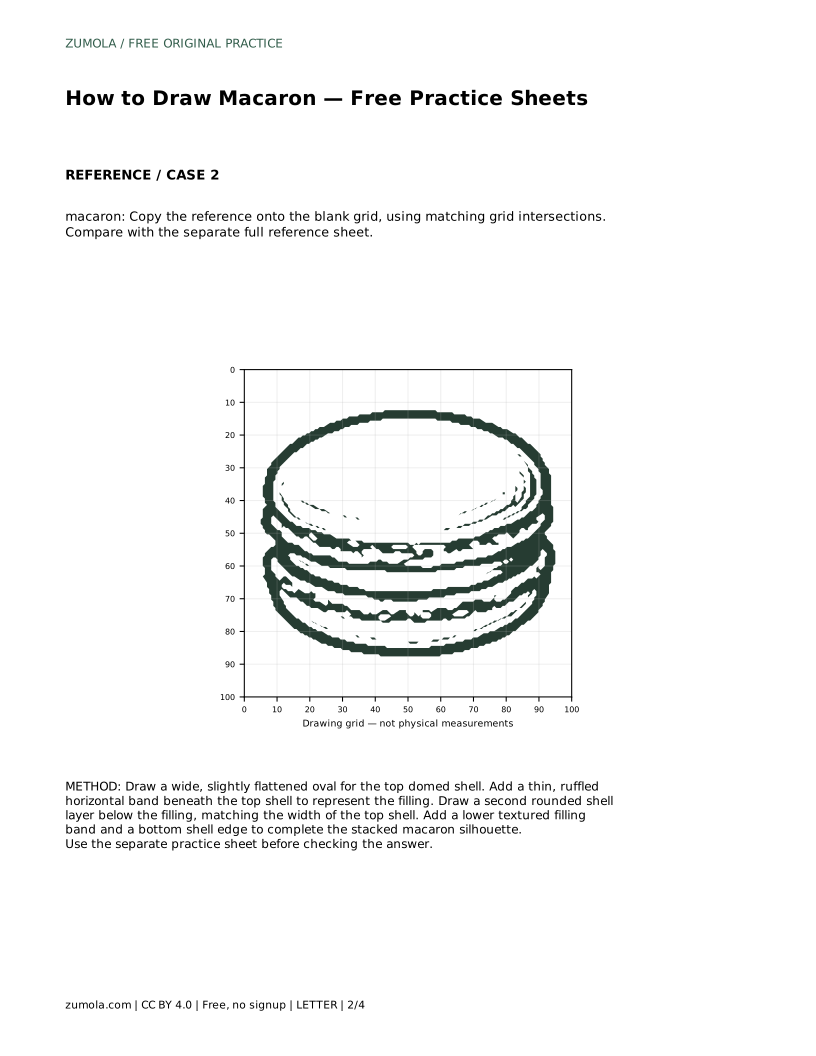
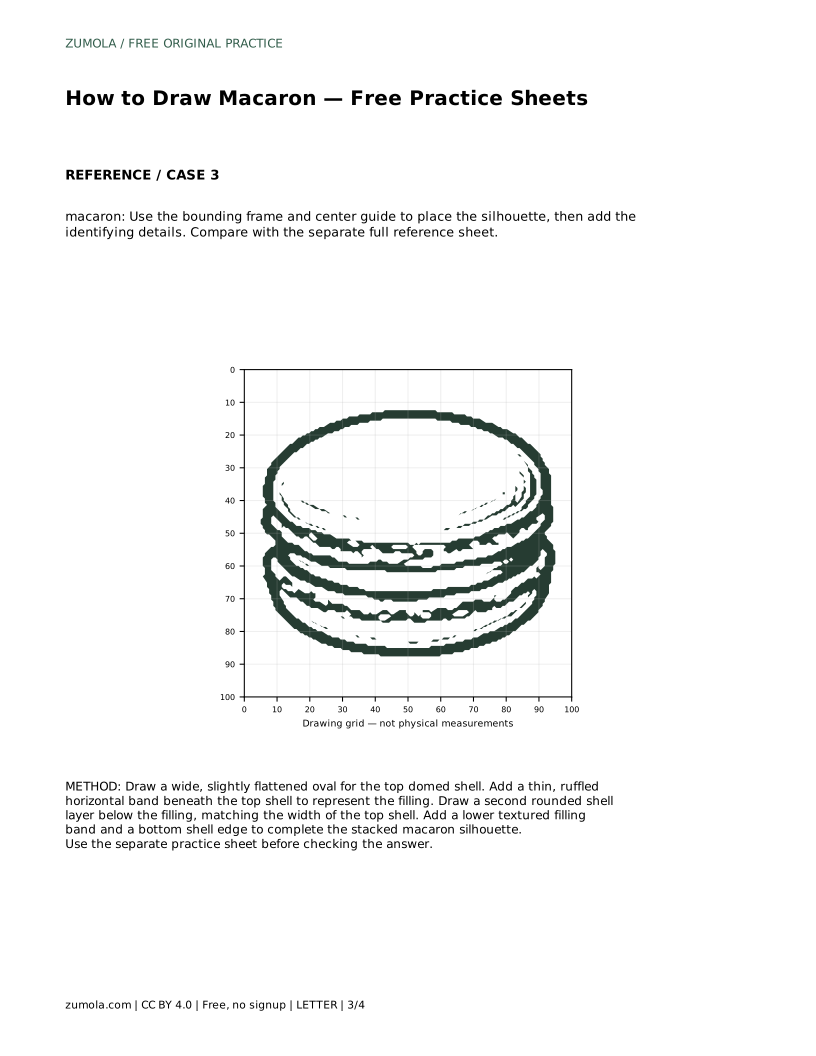
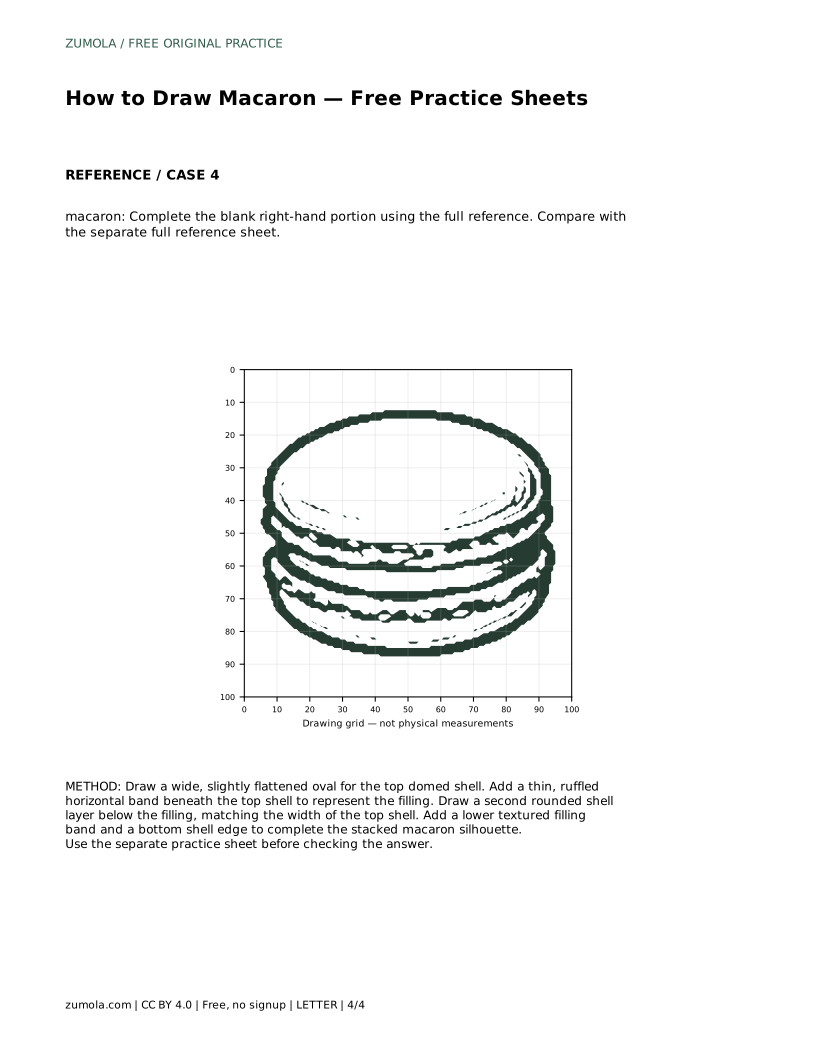
A4 · Download PDF
Free original resources
Learn to draw a macaron with two domed shells, ruffled filling bands, and clear proportions. Trace, grid-copy, and complete the outline on free practice sheets.
Four original cases, with reference diagrams, practice sheets and worked answers. Everything is free; no signup required.
LETTER · Download PDF
A4 · Download PDF
LETTER · Download PDF
A4 · Download PDF
LETTER · Download PDF
A4 · Download PDF
Use A4 or US Letter to match your printer. Use the stated values and conditions to solve each exercise; diagrams are not physical measuring rulers.
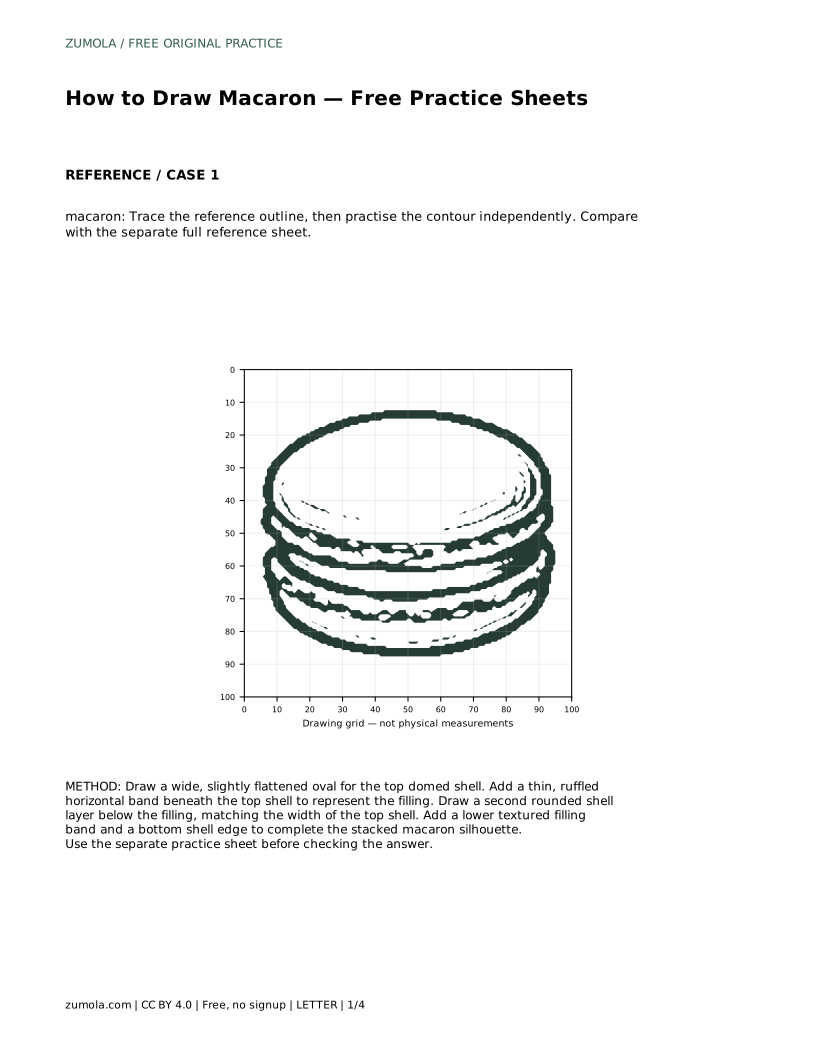
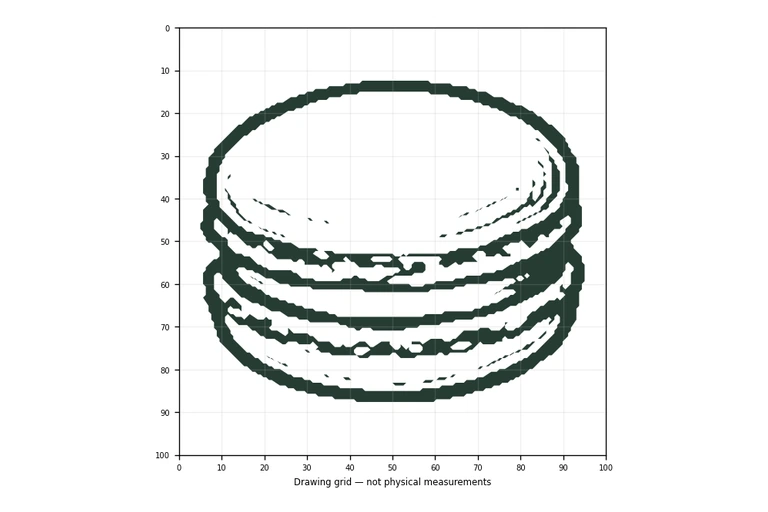
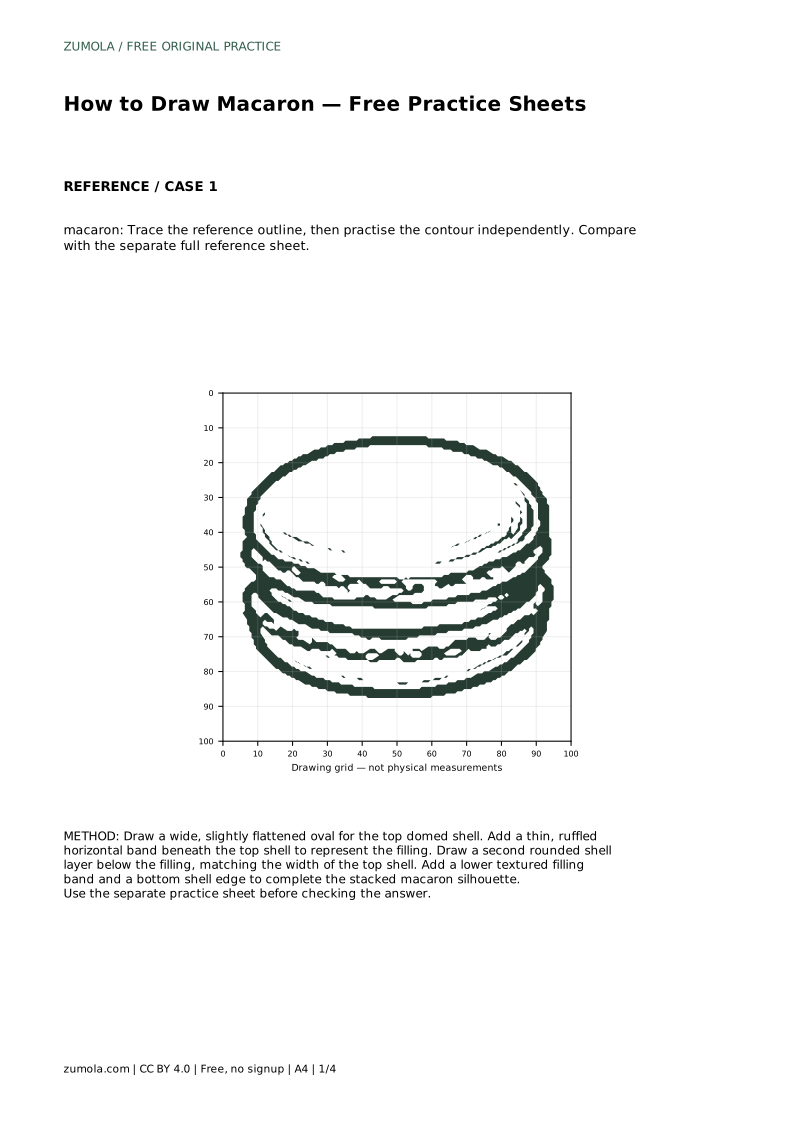
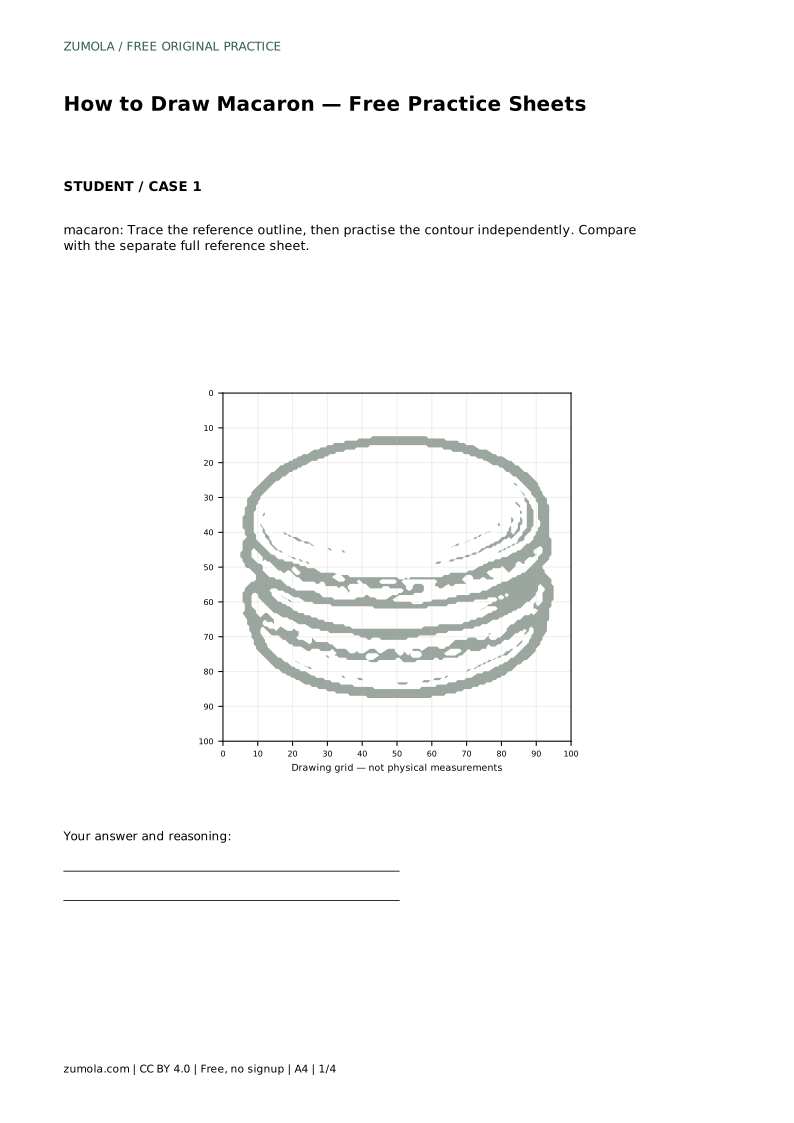
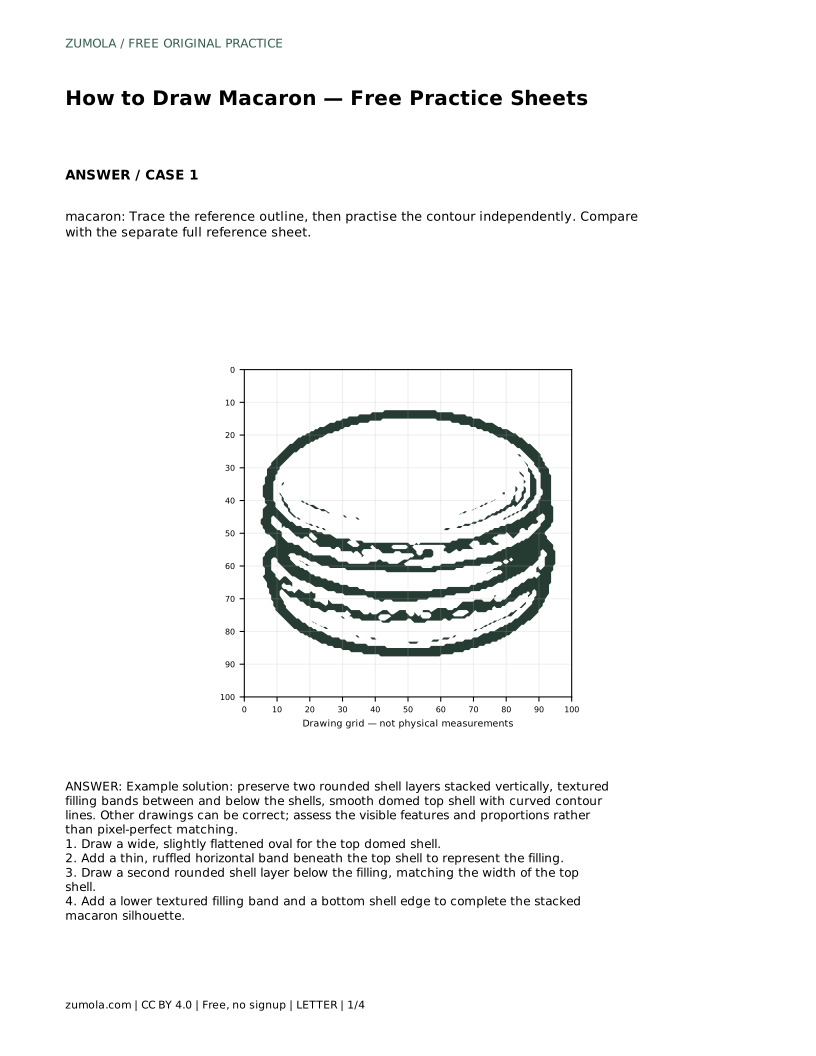
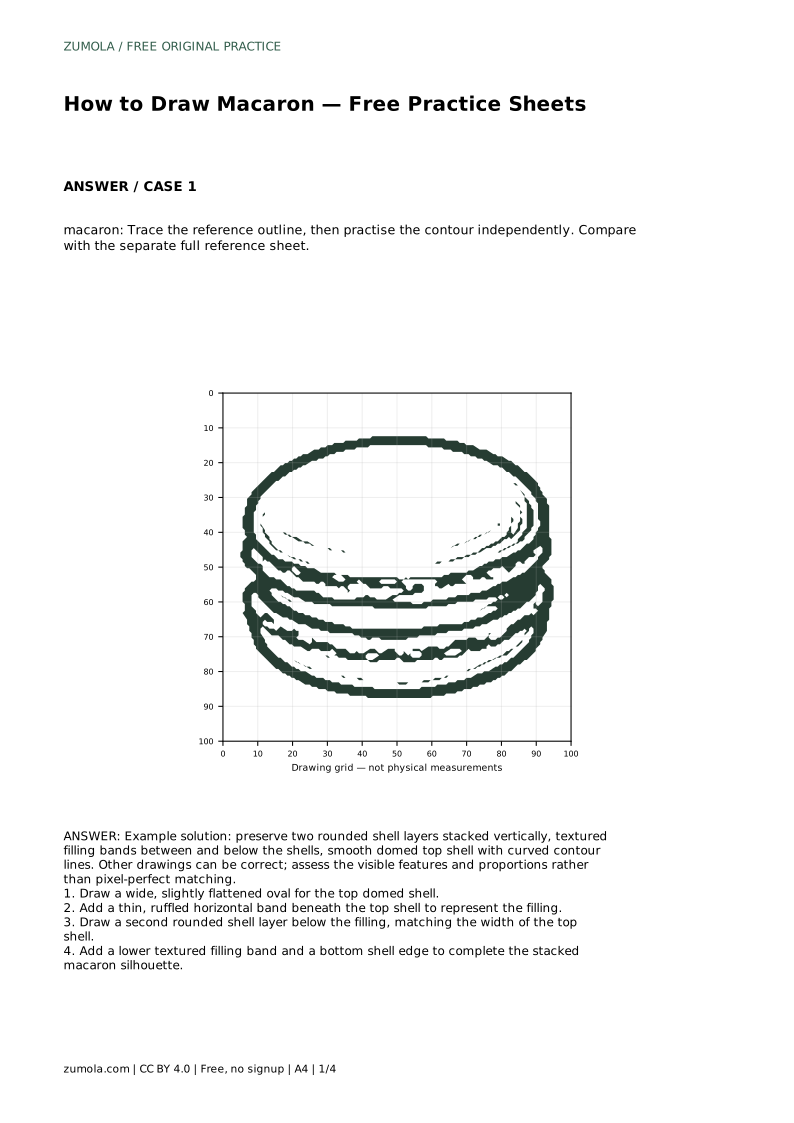
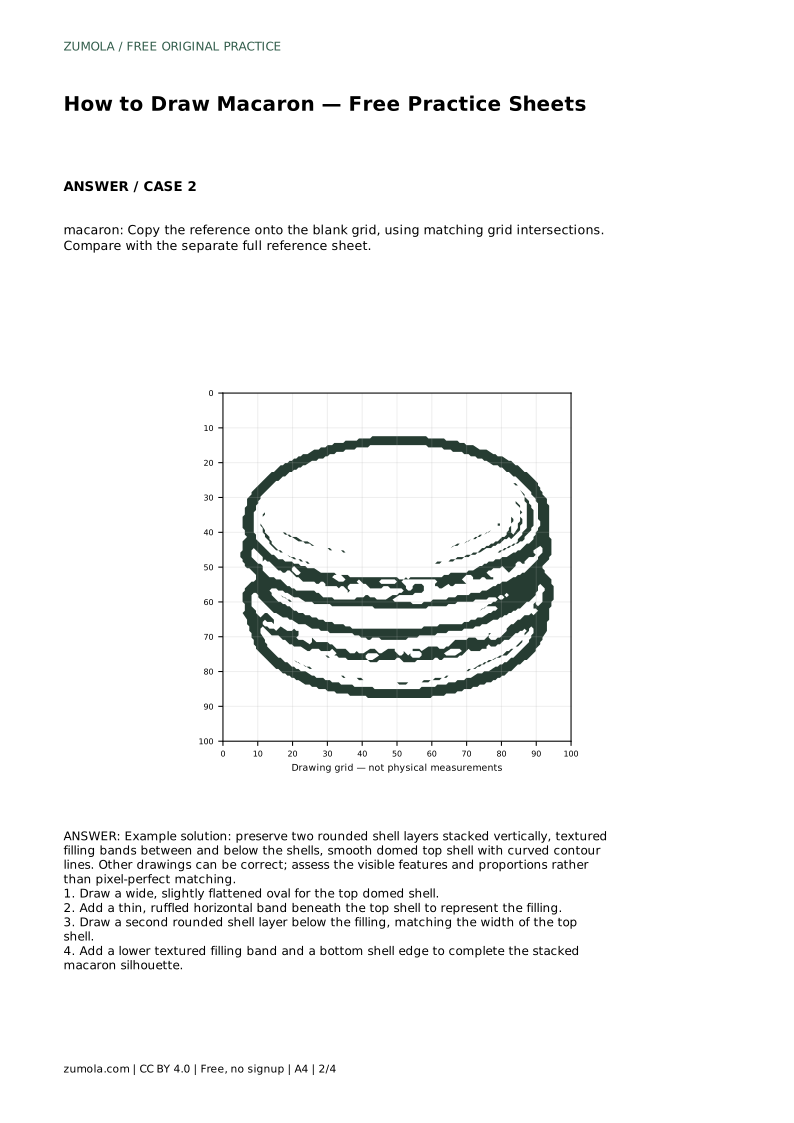
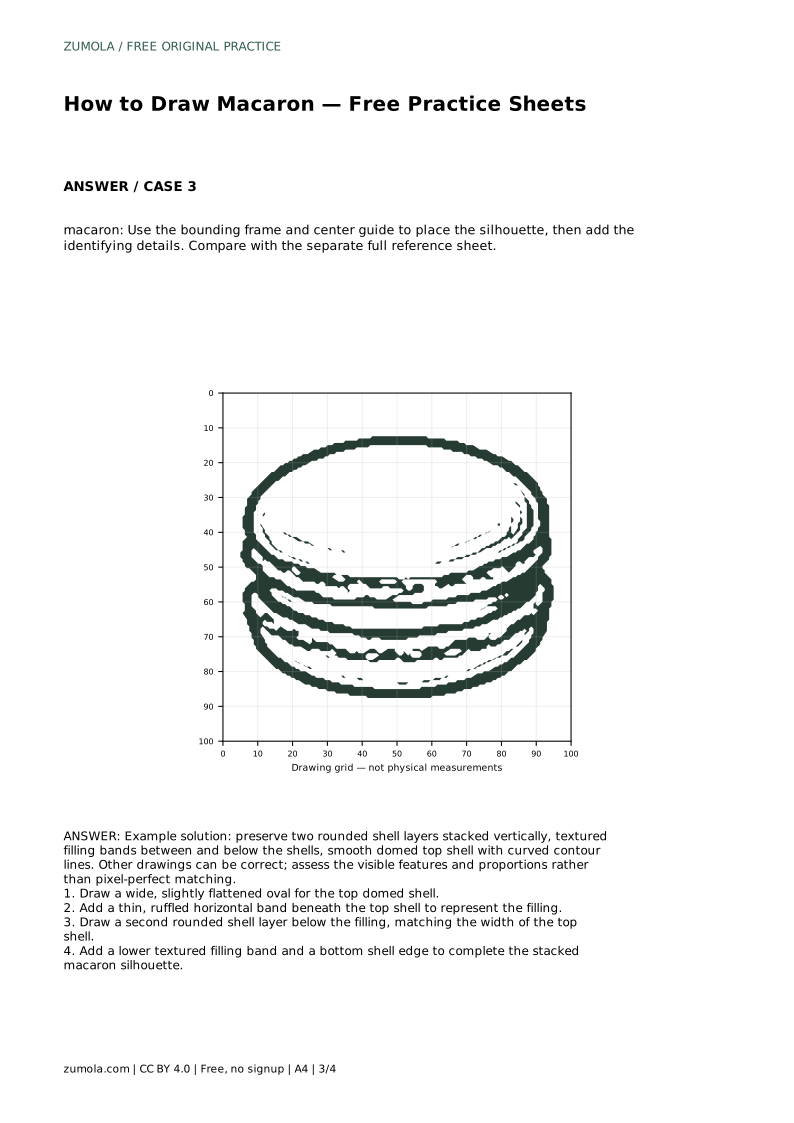
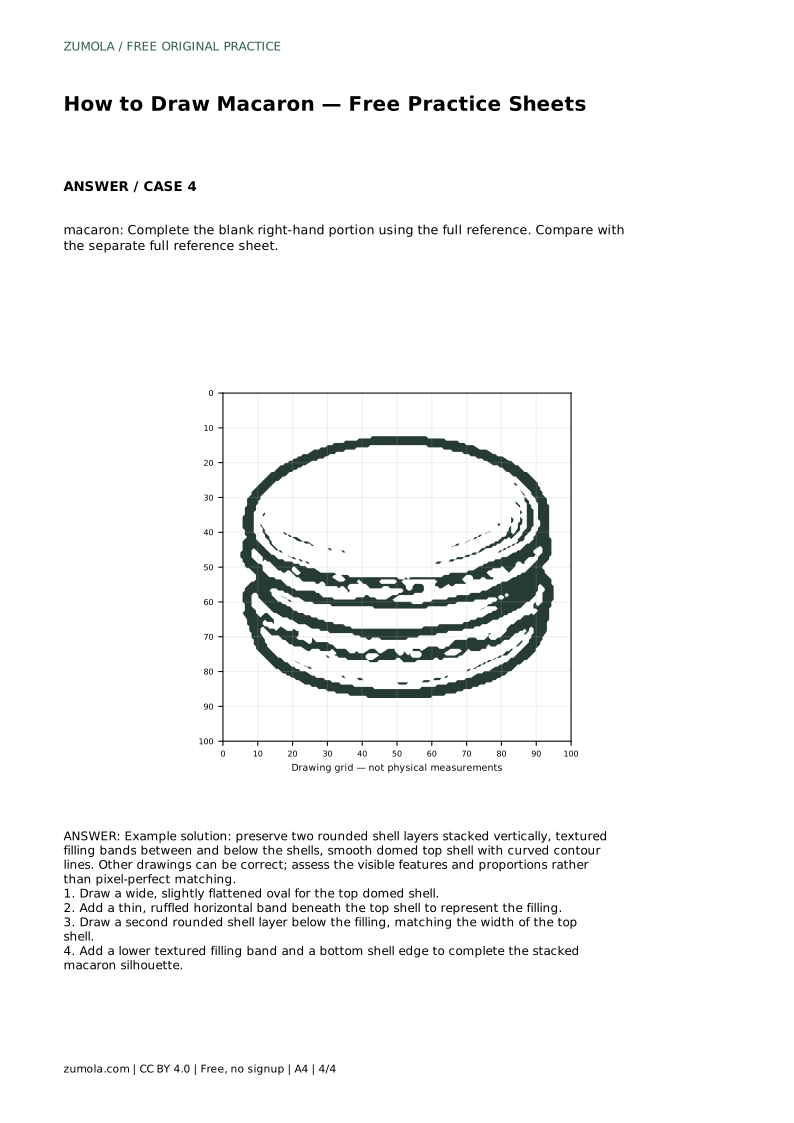
A macaron is easy to recognize but surprisingly easy to draw lopsided. The shape depends on a few clear features: a wide, slightly flattened top shell, a thin ruffled filling band, a matching lower shell, and a second filling edge beneath it. This page explains how to build that stacked silhouette step by step, then how to use tracing, grid-copy, and partial-outline practice sheets to strengthen your control. Drawings can vary and still be correct, so judge your work by visible features and proportions rather than an exact match.
Before adding texture or shading, treat the macaron as a vertical stack of wide, rounded layers. The overall shape is broader than it is tall, and the top and bottom shells should share roughly the same width. Sketching the whole stack lightly first keeps the layers aligned and prevents one shell from drifting sideways.
Work from the top down. The top shell is a wide, slightly flattened oval with a smooth dome. Beneath it sits a thin horizontal band for the filling, often drawn with a gently ruffled edge. The lower shell mirrors the top shell's width, and a second filling band and bottom shell edge finish the silhouette.
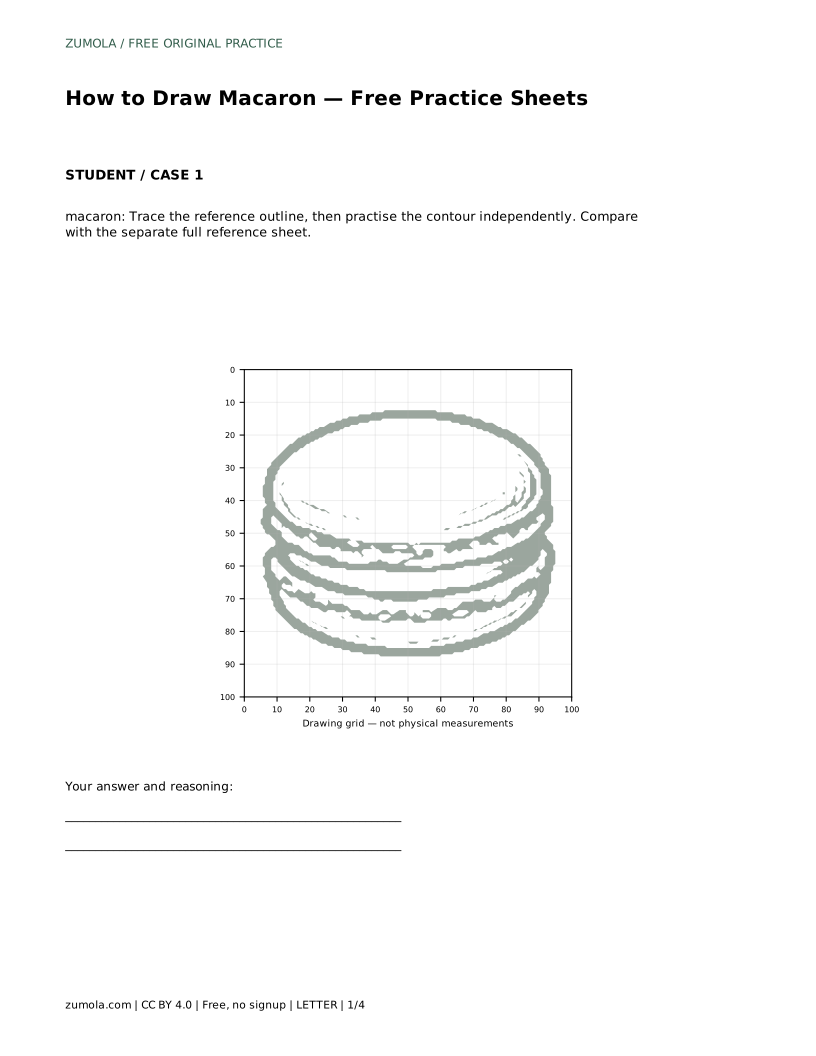
The tracing sheet asks you to follow the reference outline first, then repeat the contour on your own. Tracing builds familiarity with the layer order; the independent attempt shows whether you can reproduce it without guidance. Compare your free drawing with the separate full reference sheet rather than with your traced line.
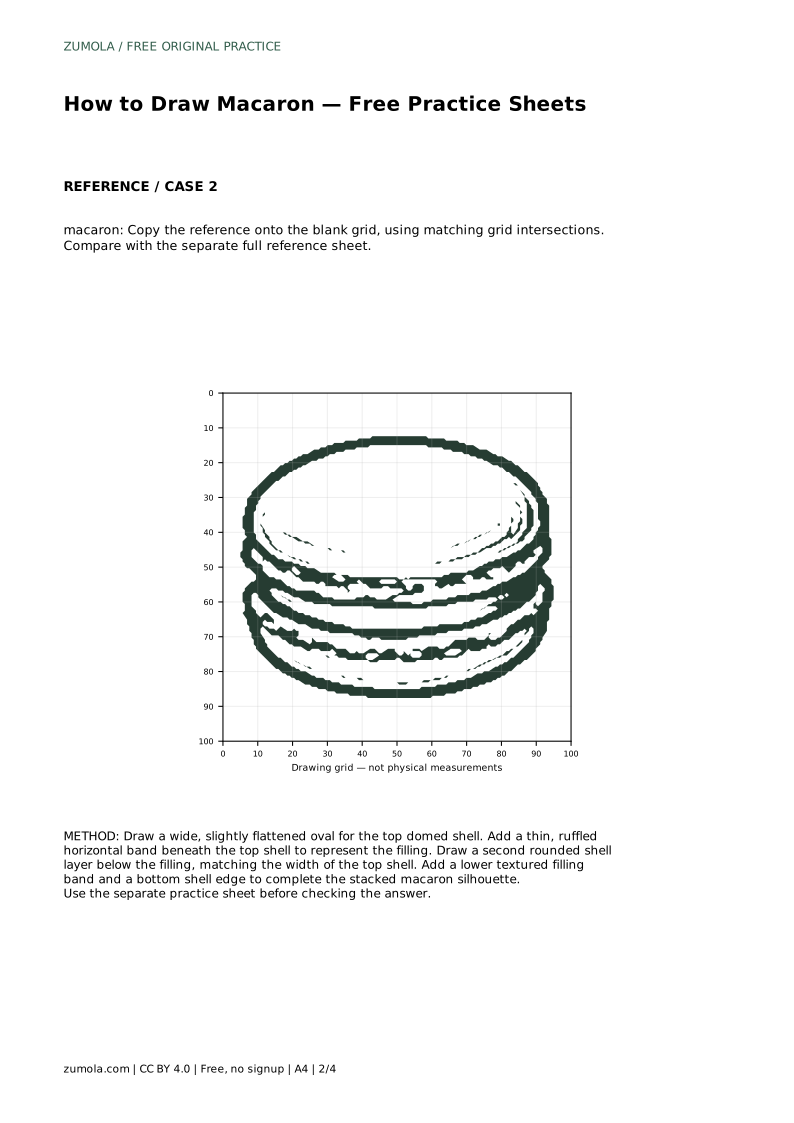
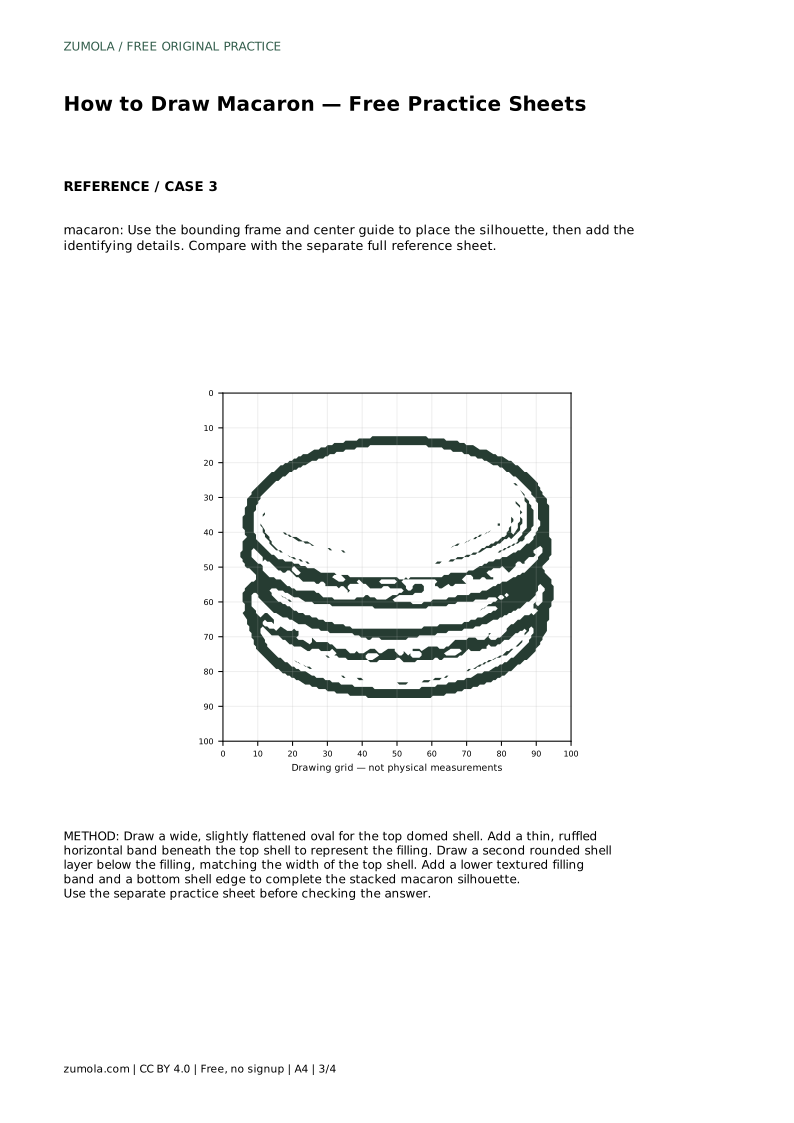
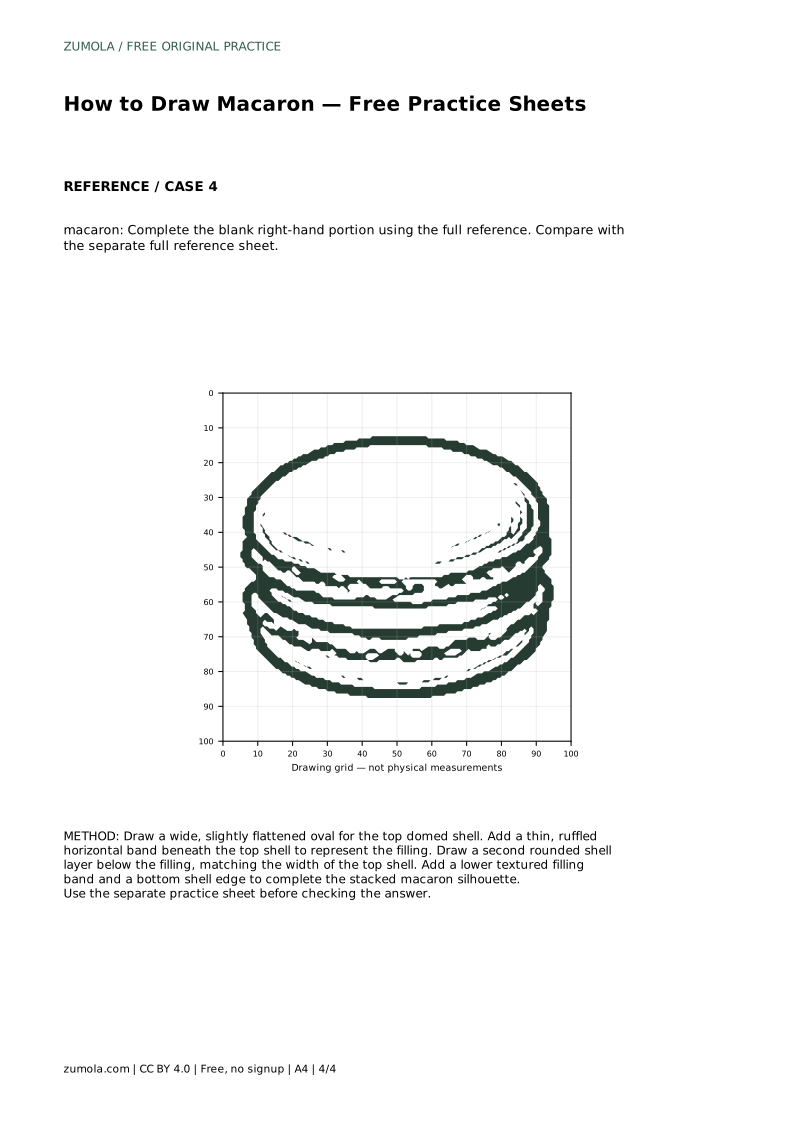
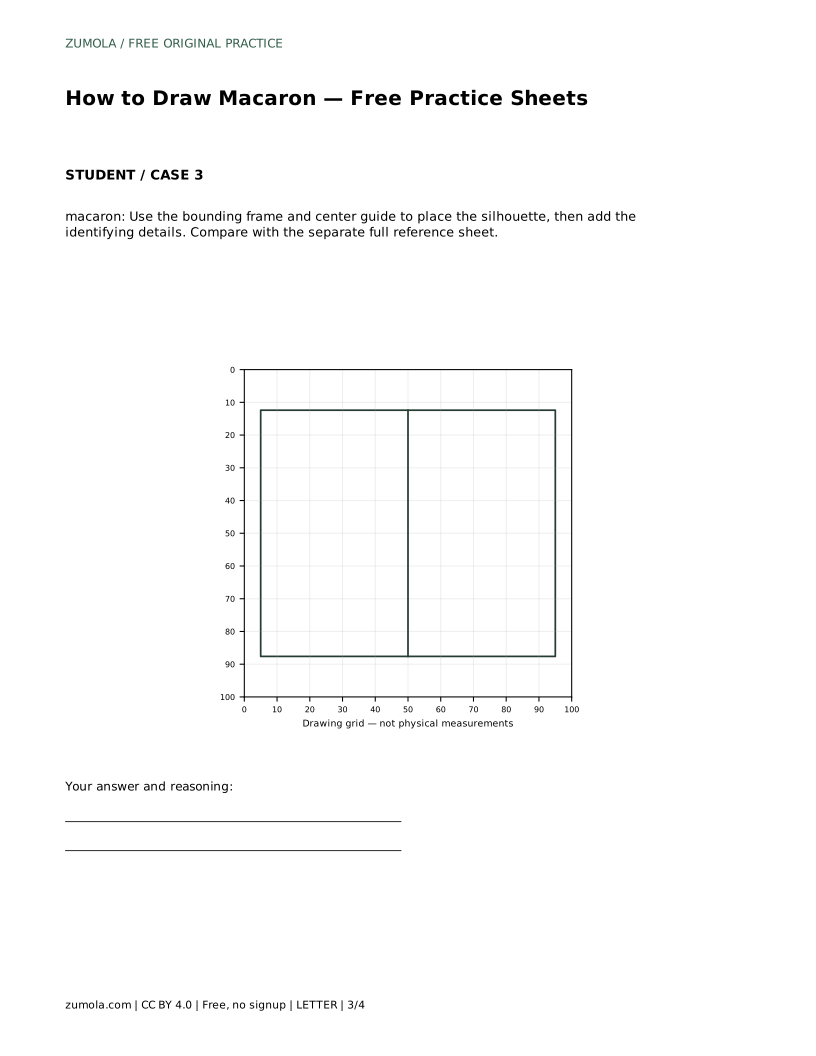
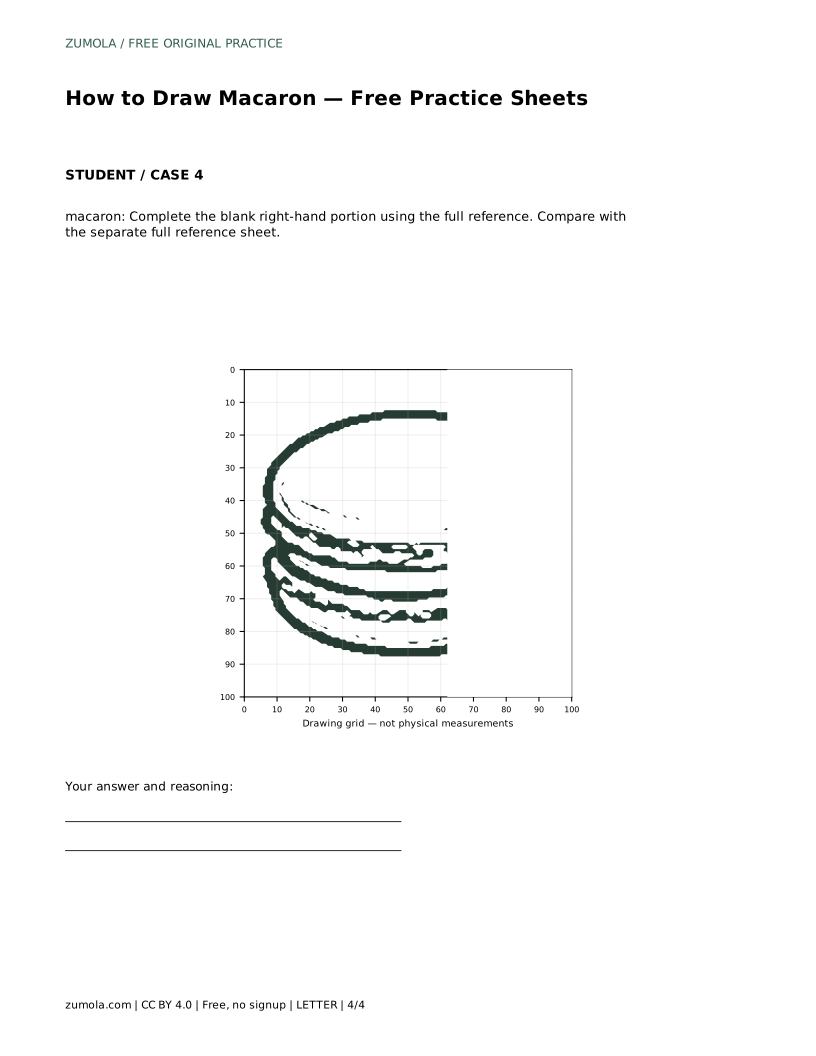
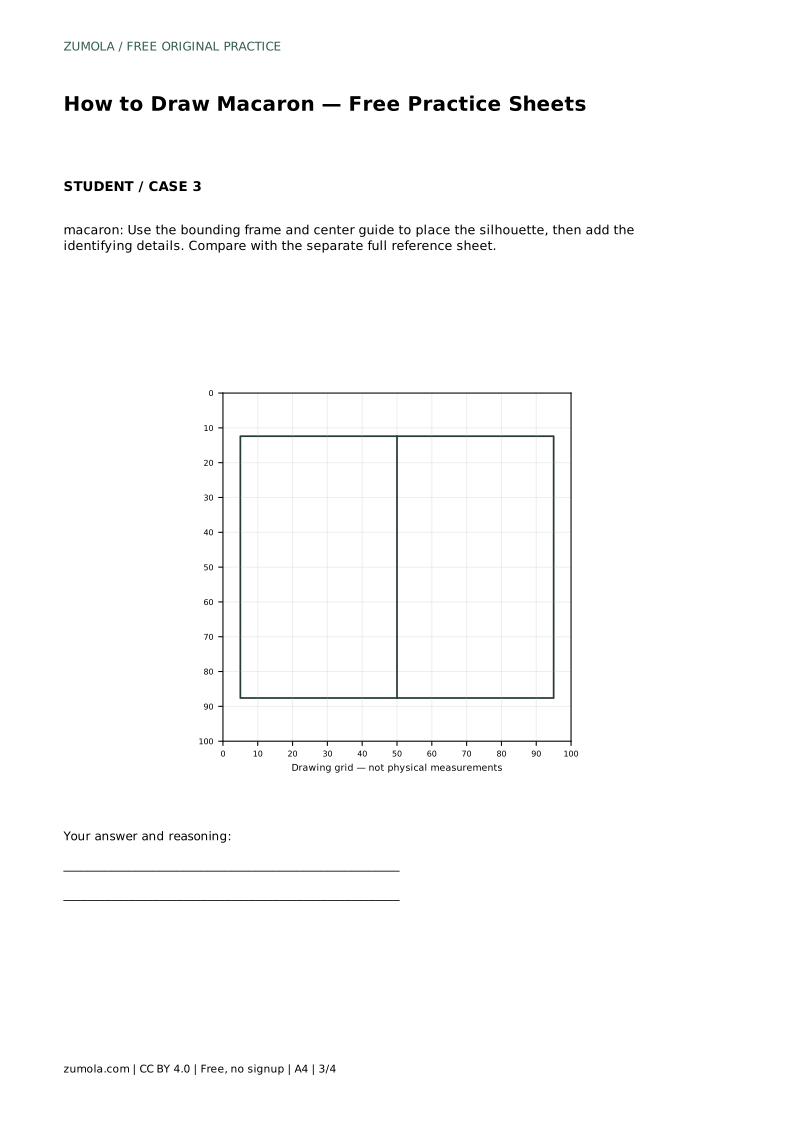
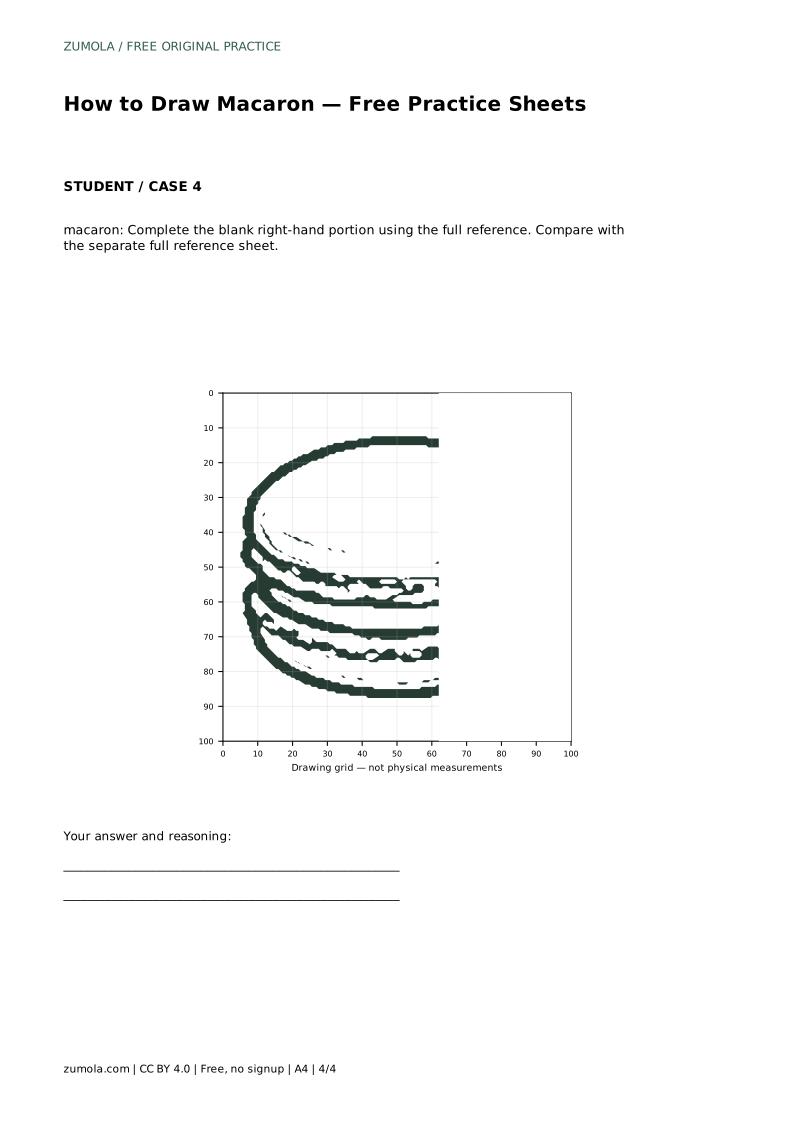
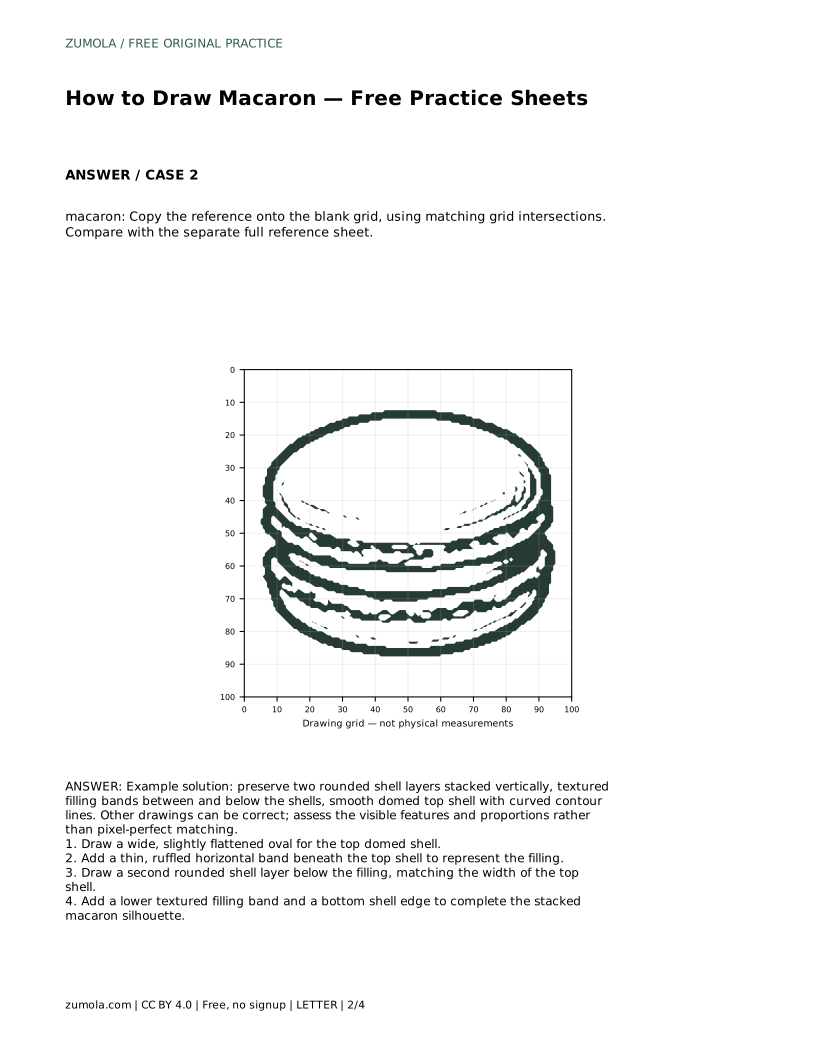
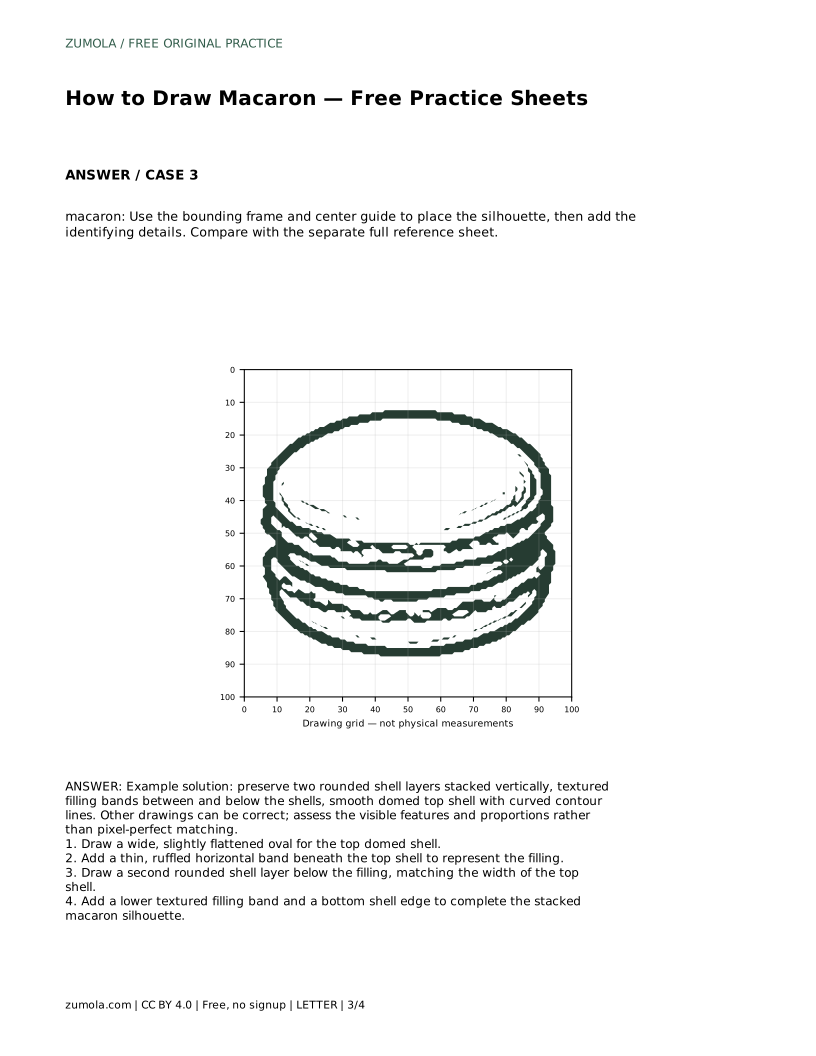
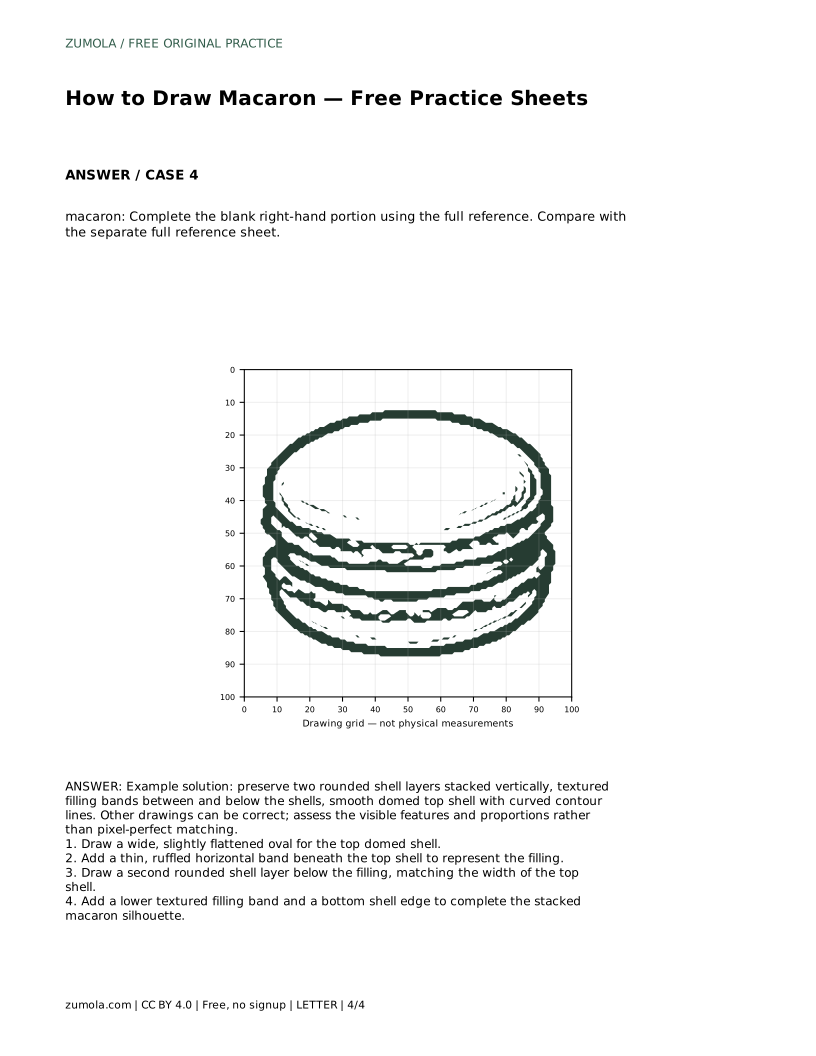
The grid-copy sheet places the reference on a grid so you can transfer it intersection by intersection. Match where the outline crosses grid lines, especially at the widest point of each shell and at the filling bands. The bounding-frame sheet gives you a center guide for placing the silhouette before you add identifying details. The partial-outline sheet leaves the right-hand portion blank so you complete the shape from the full reference.
Keep the two shells close in width; a much wider top shell makes the drawing read as a different dessert. The filling bands should be noticeably thinner than the shells. A slight outward ruffle on the filling edge suggests the soft texture without turning into a jagged line.
Curved contour lines on the domed top shell can suggest a smooth surface. Keep them sparse and follow the dome's curve rather than drawing straight lines across it. Because art has multiple valid outcomes, small differences in ruffle shape or dome height are acceptable.
macaron: Trace the reference outline, then practise the contour independently. Compare with the separate full reference sheet.
Example solution: preserve two rounded shell layers stacked vertically, textured filling bands between and below the shells, smooth domed top shell with curved contour lines. Other drawings can be correct; assess the visible features and proportions rather than pixel-perfect matching. Draw a wide, slightly flattened oval for the top domed shell. Add a thin, ruffled horizontal band beneath the top shell to represent the filling. Draw a second rounded shell layer below the filling, matching the width of the top shell. Add a lower textured filling band and a bottom shell edge to complete the stacked macaron silhouette.
No. Keep them close in width and shape, but small differences are fine. Assess the visible features and proportions rather than pixel-perfect matching.
Two rounded shell layers stacked vertically, thin textured filling bands between and below the shells, and a smooth domed top shell with curved contour lines.
Trace once to learn the layer order, then draw the contour independently and compare with the full reference sheet.
All drawing practice · Free coordinate paper
Original resources · CC BY 4.0 · Free for personal and classroom use with attribution.