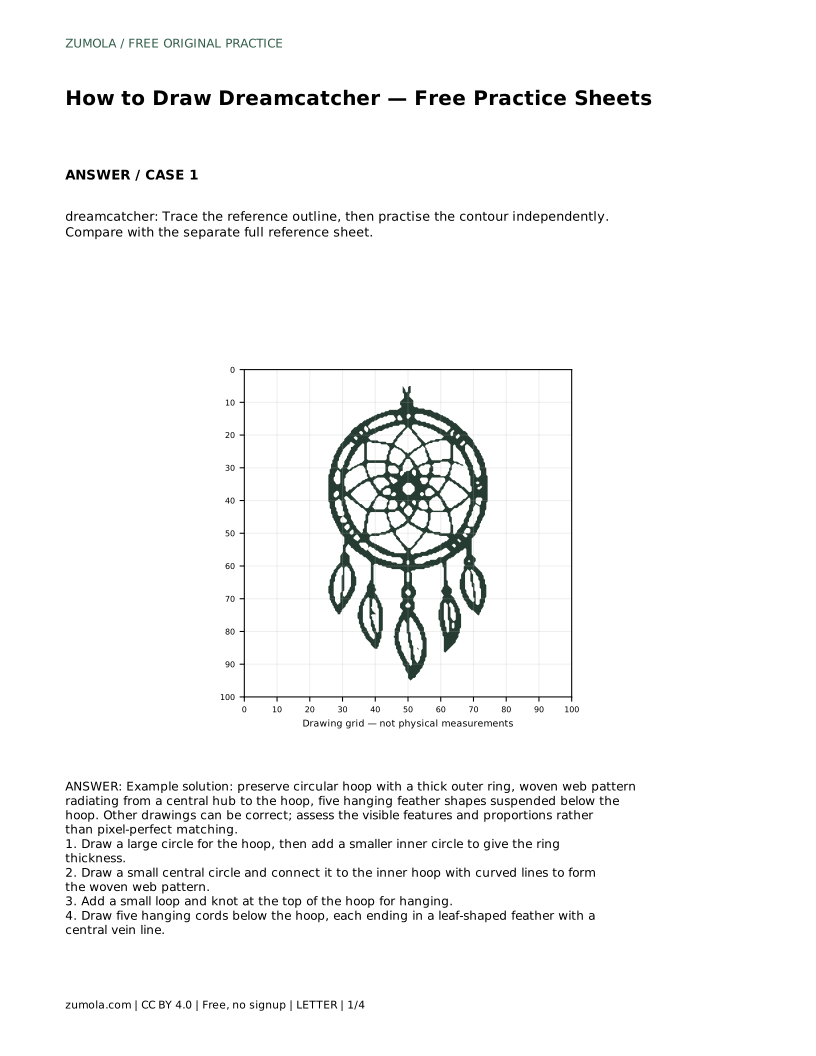
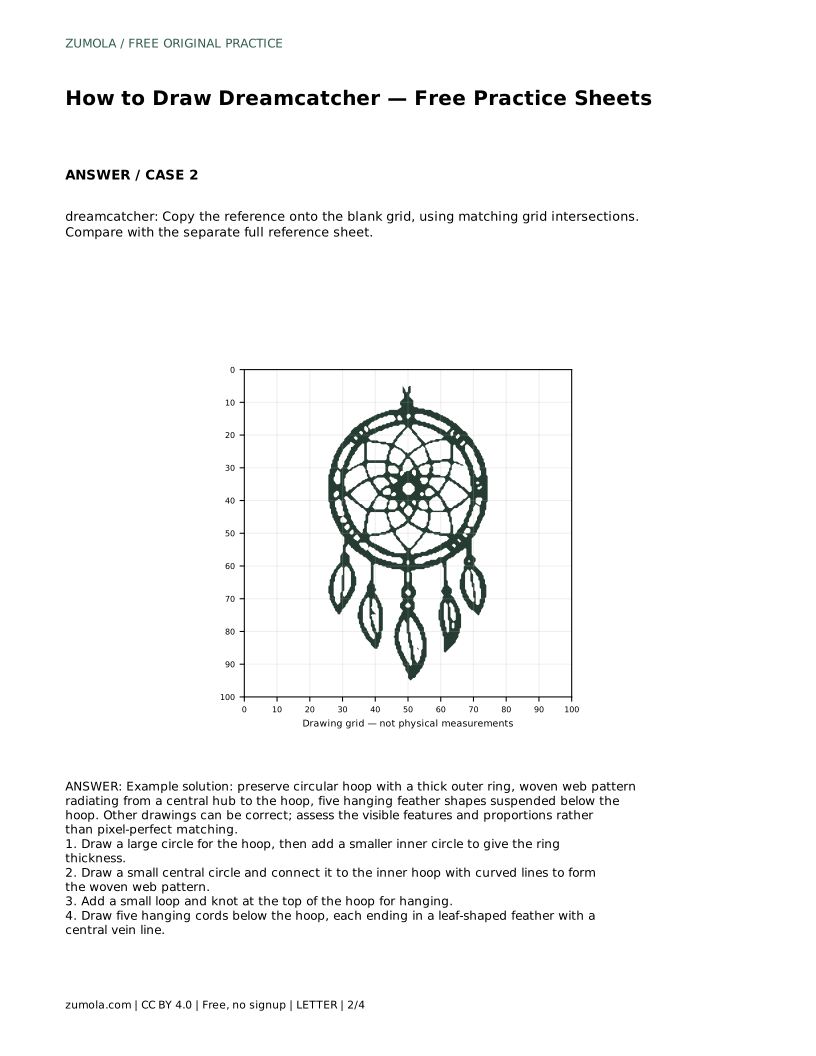
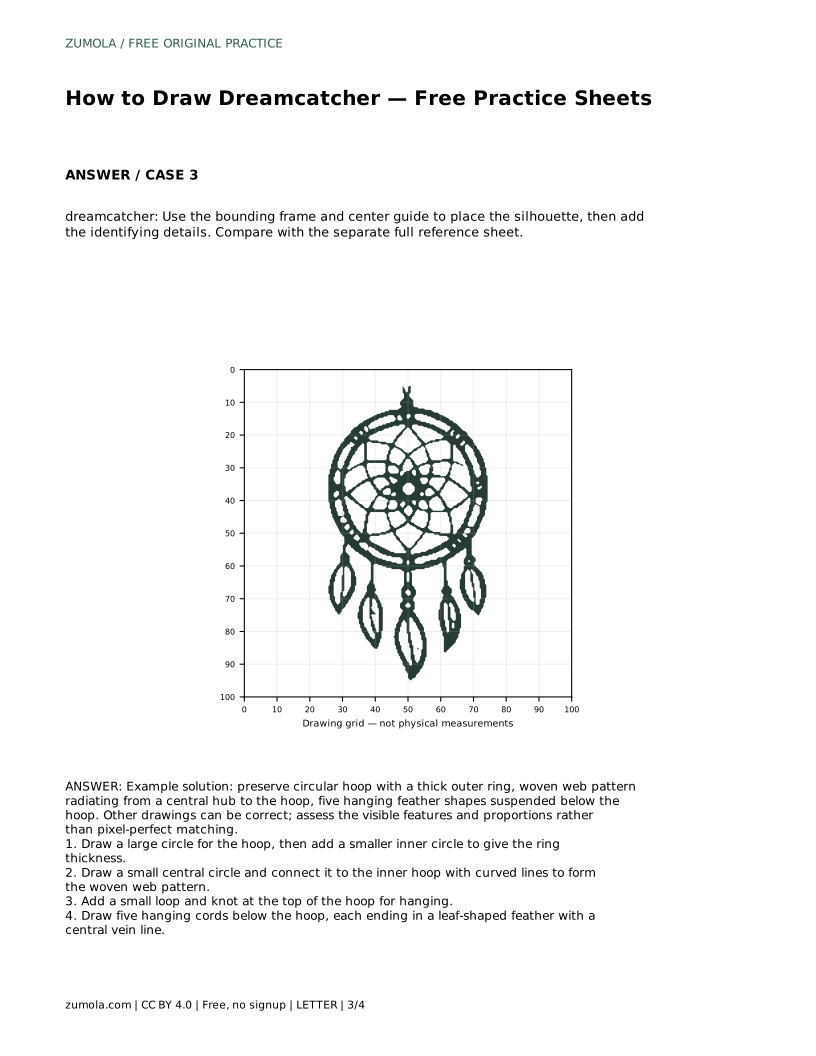
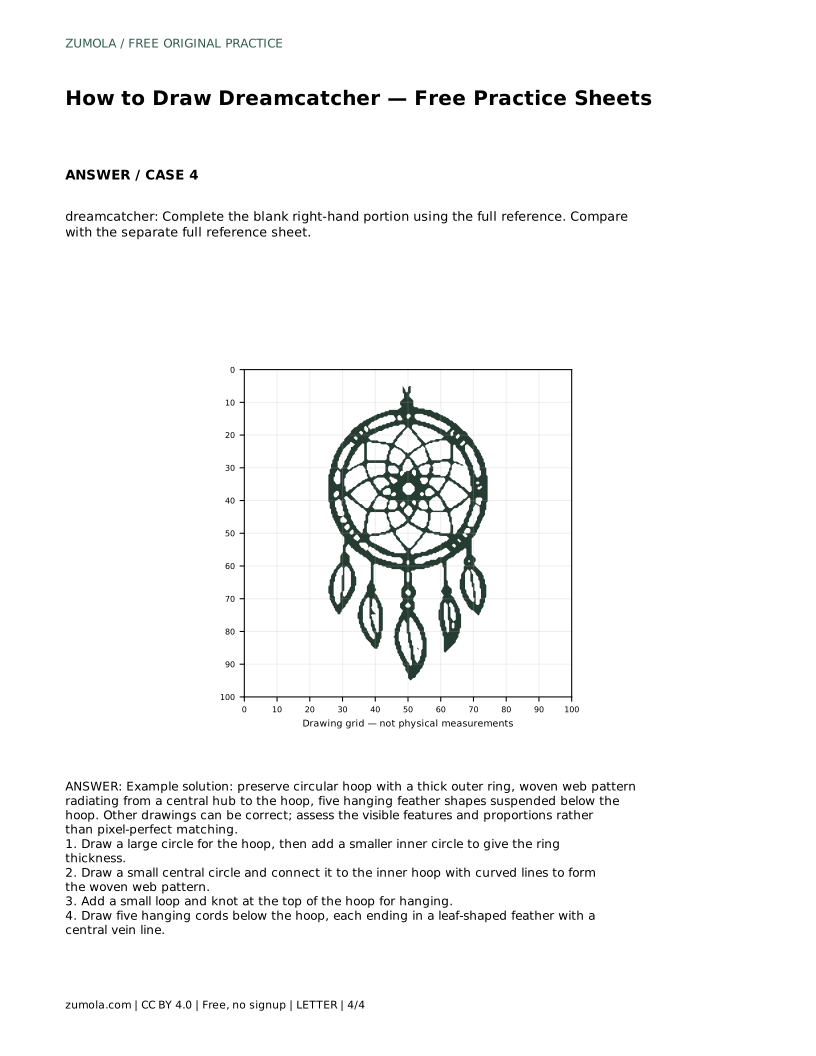
Reference diagrams
LETTER · Download PDF
A4 · Download PDF
Free original resources
Learn to draw a dreamcatcher with a thick hoop, woven web, hanging loop, and five feathers. Trace, grid, or complete the outline, then check the visible features.
Four original cases, with reference diagrams, practice sheets and worked answers. Everything is free; no signup required.
LETTER · Download PDF
A4 · Download PDF
LETTER · Download PDF
A4 · Download PDF
LETTER · Download PDF
A4 · Download PDF
Use A4 or US Letter to match your printer. Use the stated values and conditions to solve each exercise; diagrams are not physical measuring rulers.
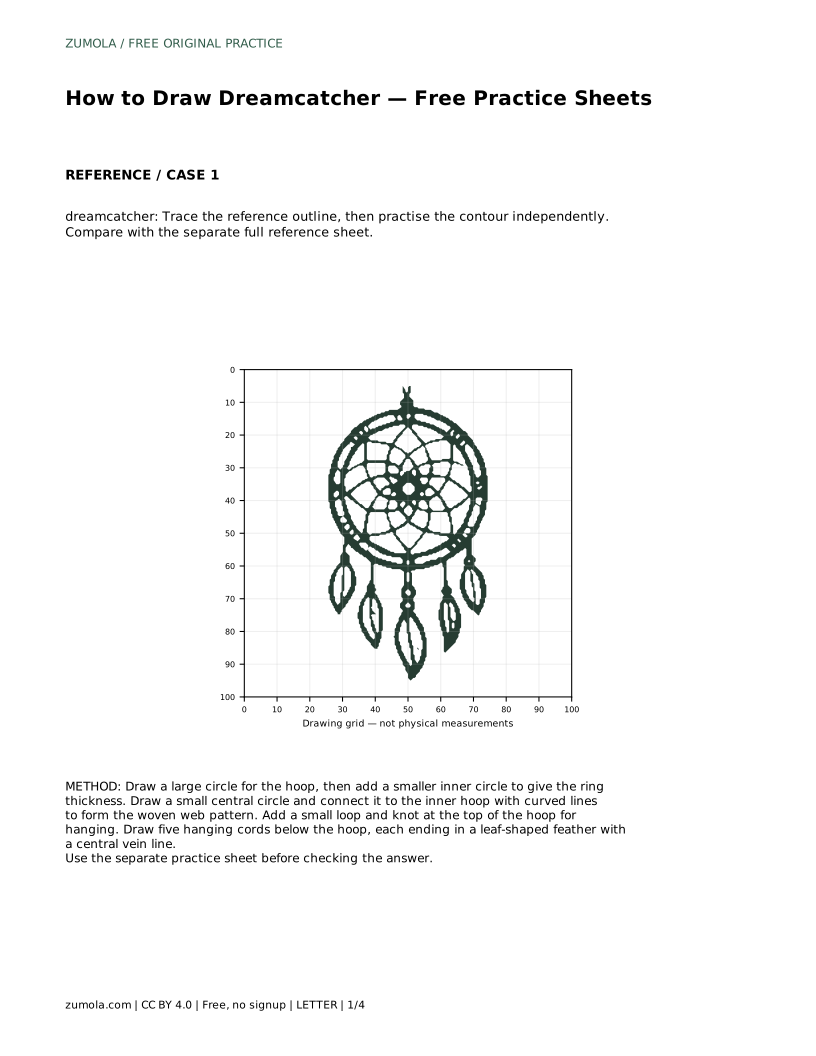
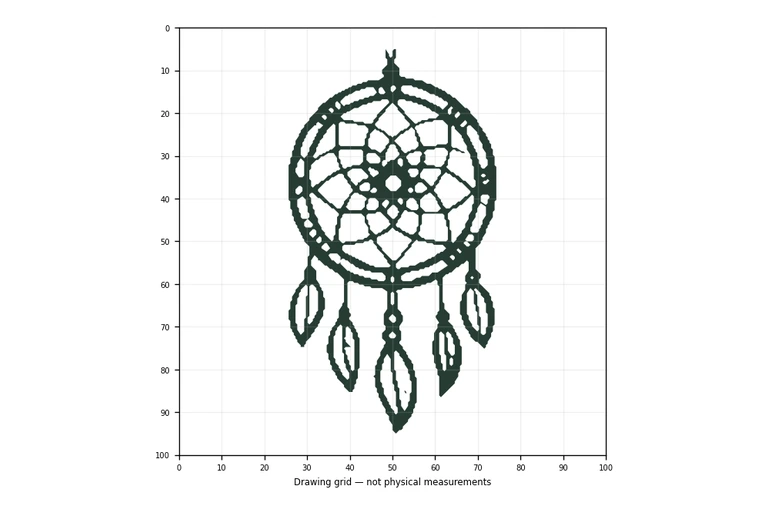
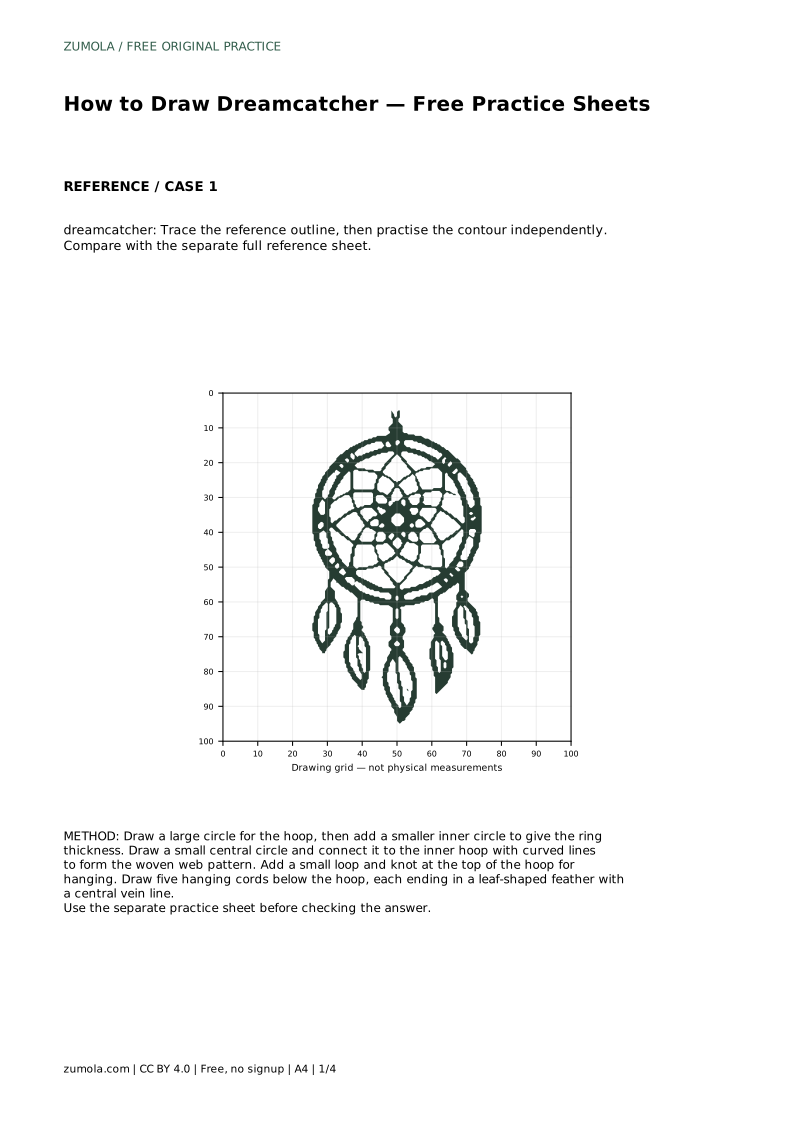
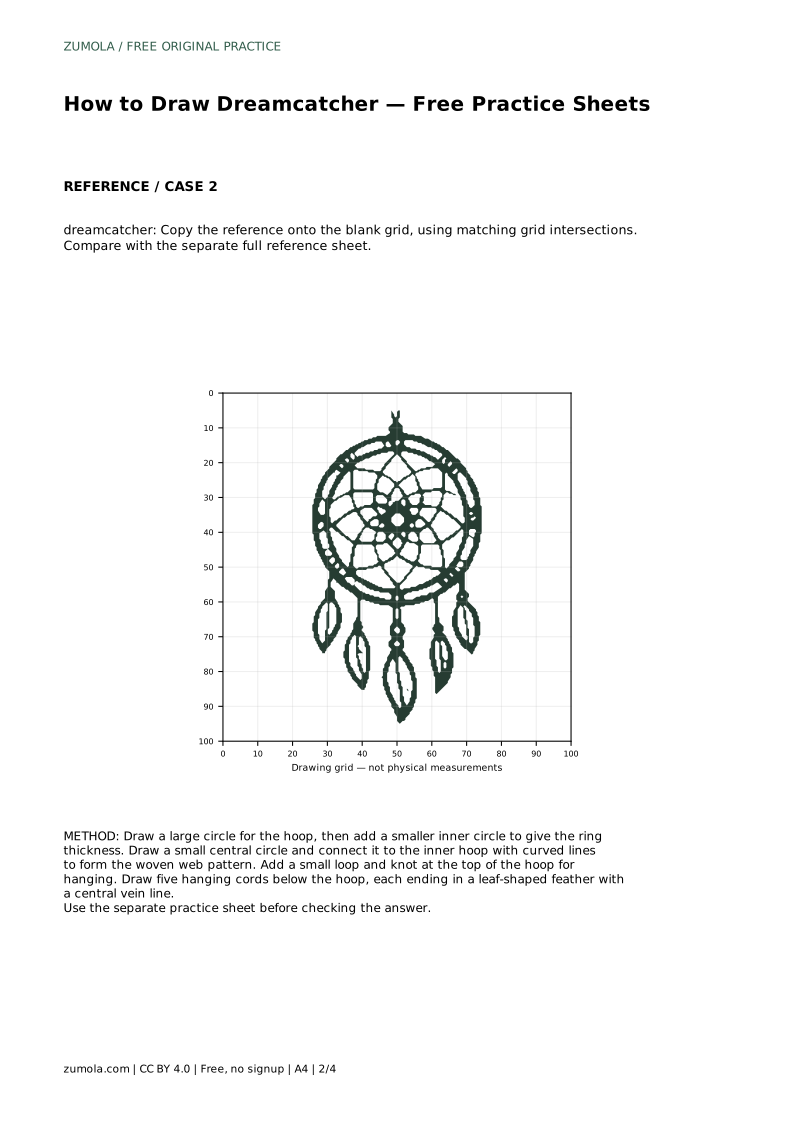
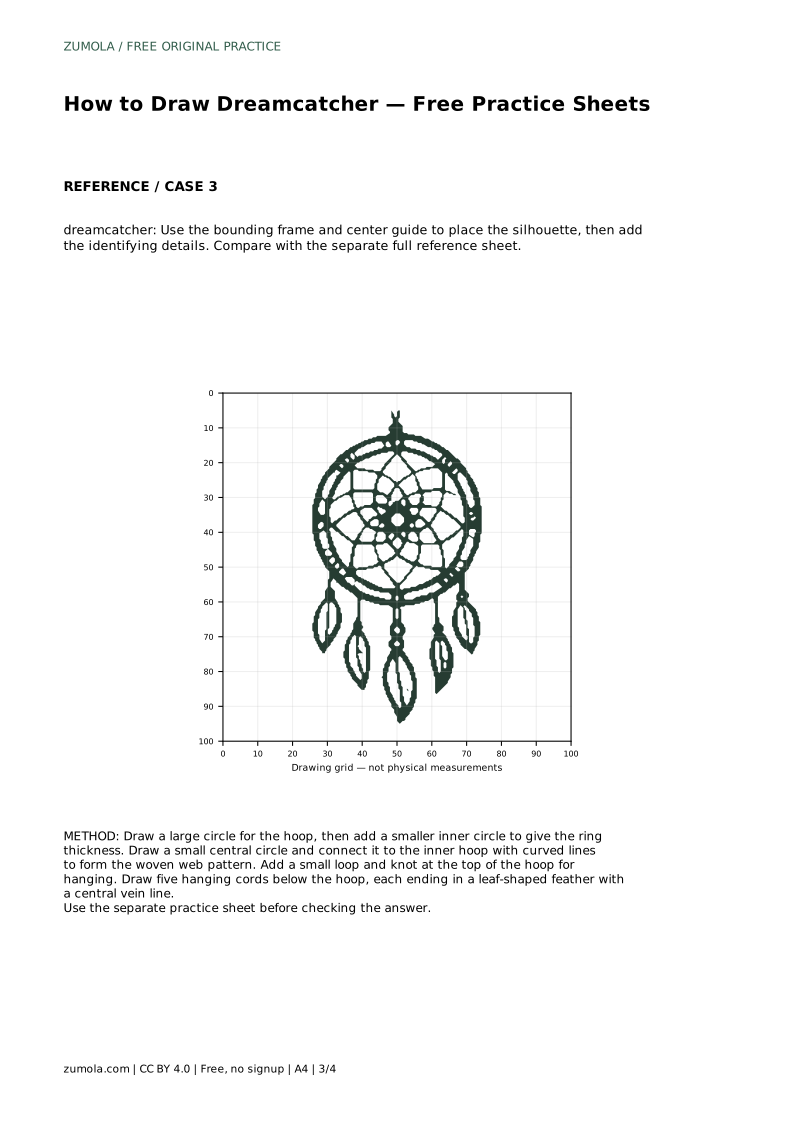
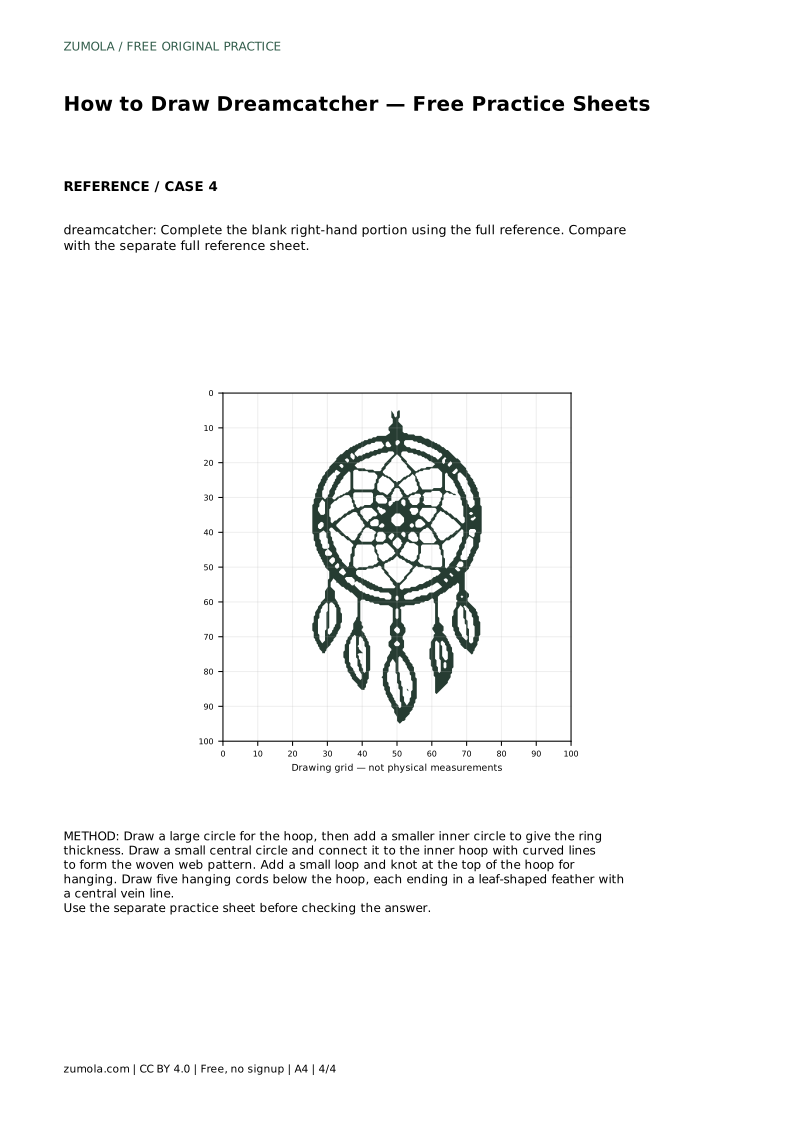
A dreamcatcher drawing is built from a few clear parts: a circular hoop with visible thickness, a web that radiates from a small center to the inner ring, a hanging loop at the top, and cords below ending in feather shapes. This page shows how to place those parts in order, then how to judge your drawing by proportions and visible features rather than by an exact match.
Start with the largest shape so everything else has a home. Draw a large circle for the outer edge of the hoop, then a smaller circle inside it to show the ring's thickness. Keep the two circles roughly concentric; if the gap between them looks uneven, redraw the inner circle before adding details.
Next, draw a small circle at the center. Connect it to the inner hoop with curved lines that spread outward like spokes. Space the lines around the circle so the web looks balanced. The lines should meet the inner ring, not cross the outer edge. A web with a few clear, evenly spaced curves reads better than many crowded ones.
Place a small loop and knot at the top of the hoop. The loop should sit outside the ring, centered above it, so the dreamcatcher looks as if it could hang. Keep the knot small; it marks where the loop meets the hoop.
Below the hoop, draw five hanging cords. Give each cord a little length, then end it in a leaf-shaped feather. Add a central vein line inside each feather to make the shape read clearly. Spread the cords so the feathers do not overlap unless you intend them to. Check that all five feathers hang below the hoop rather than beside it.
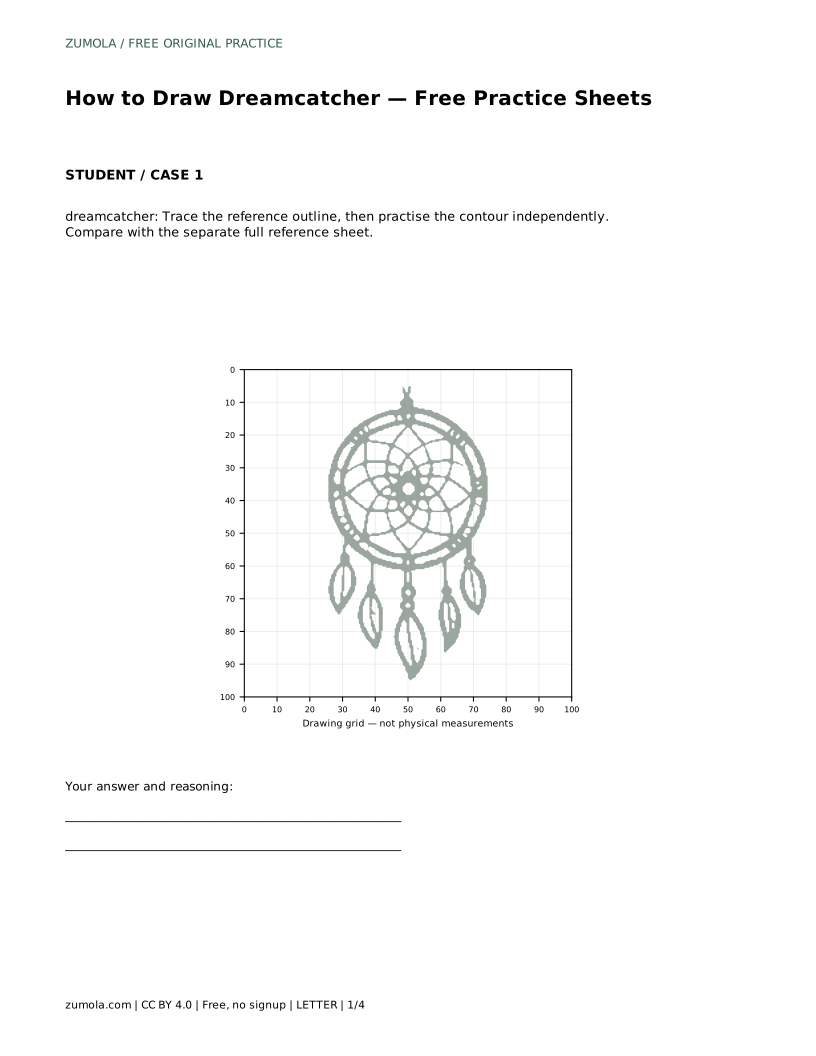
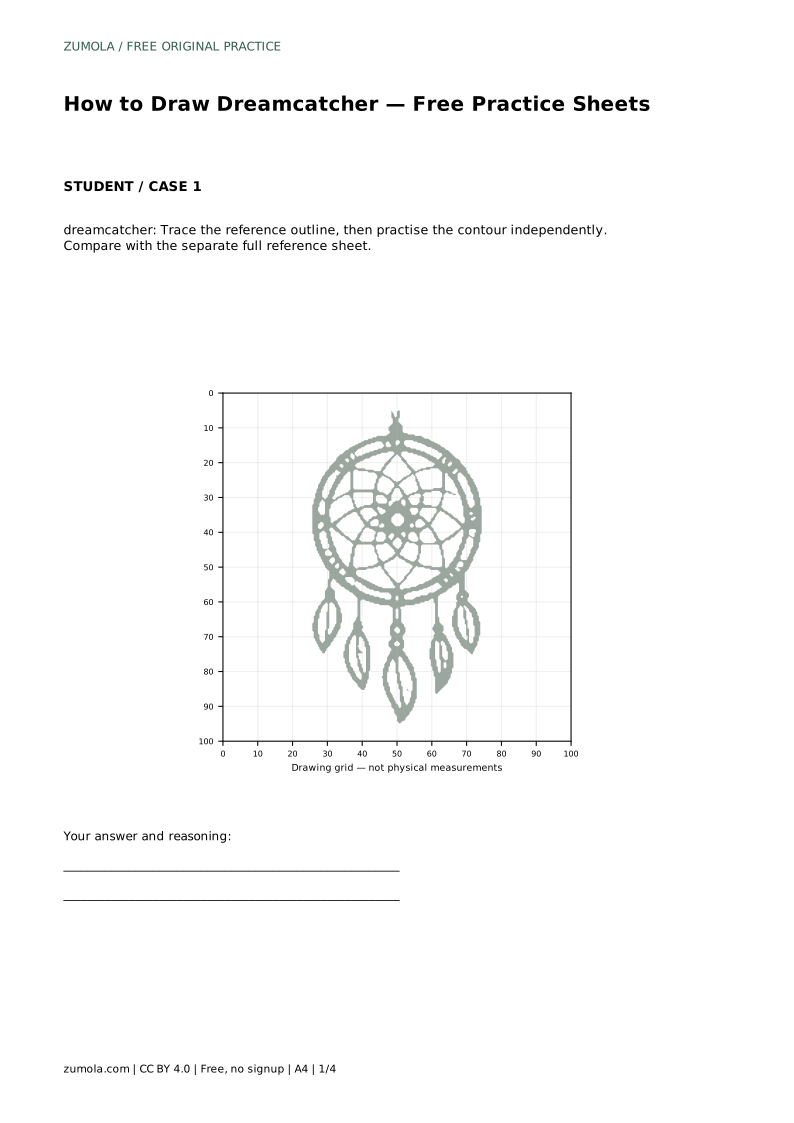
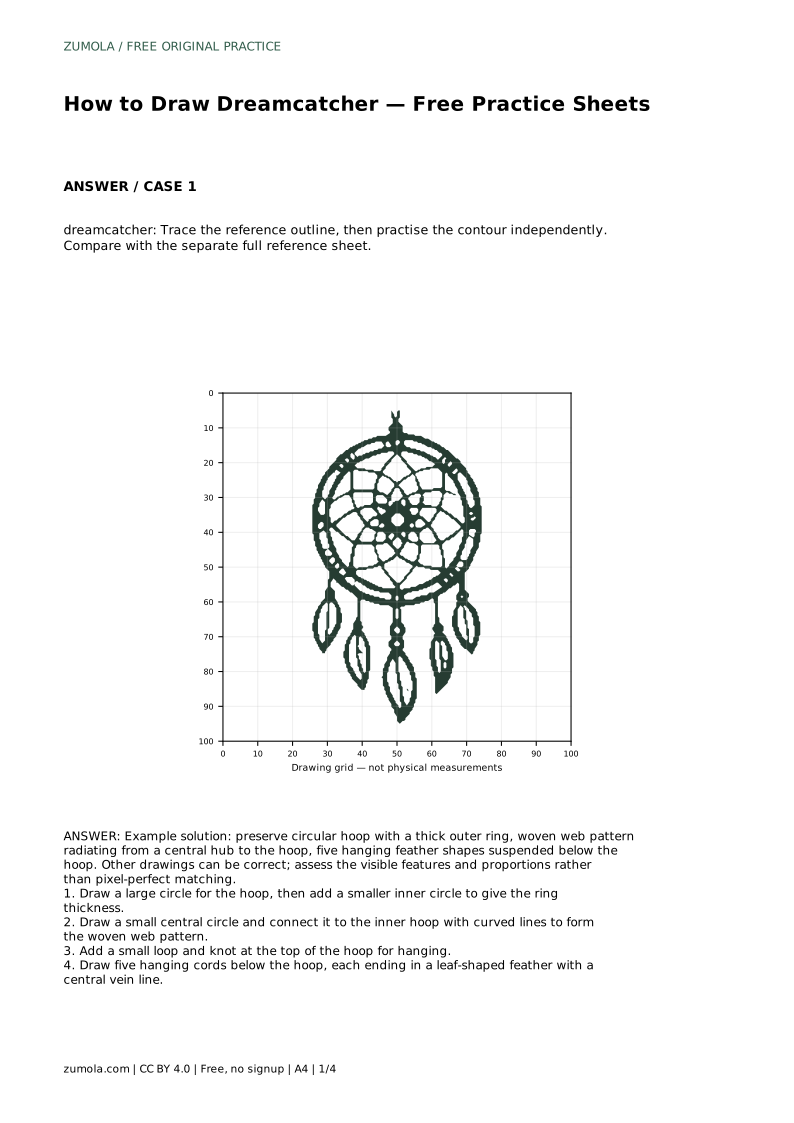
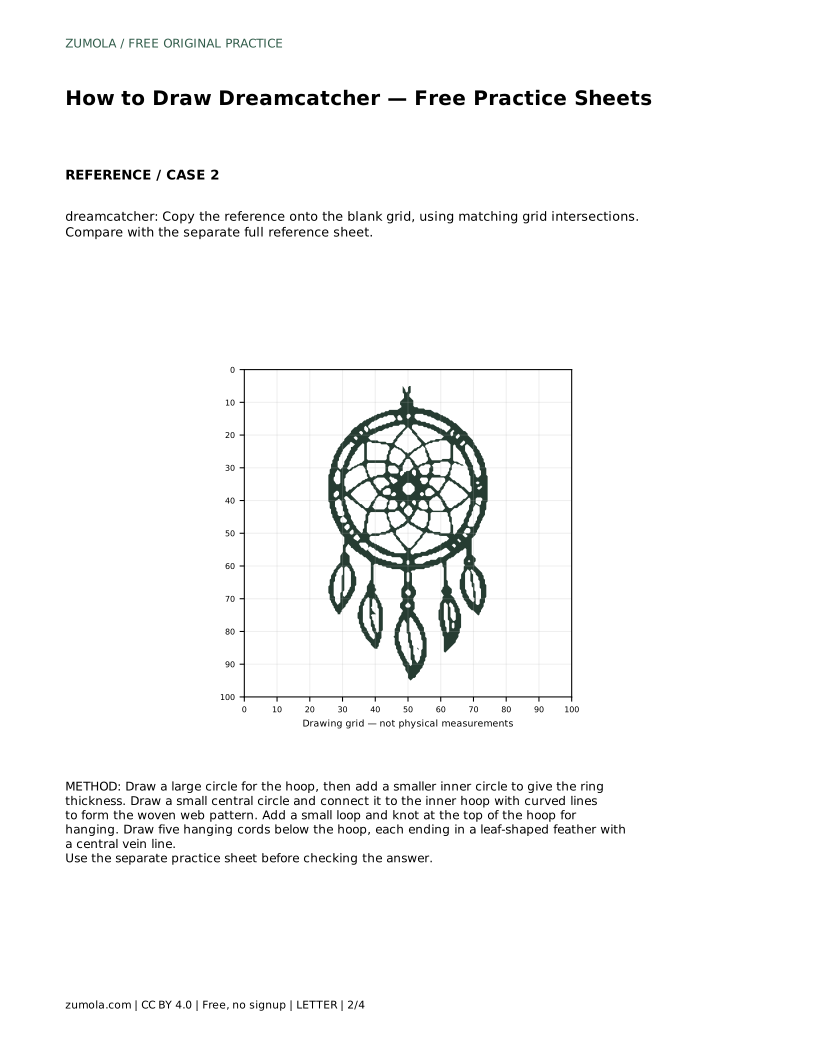
Tracing the reference outline helps you learn the order of the parts. After one traced pass, put the reference aside and draw the contour independently, then compare your drawing with the full reference sheet.
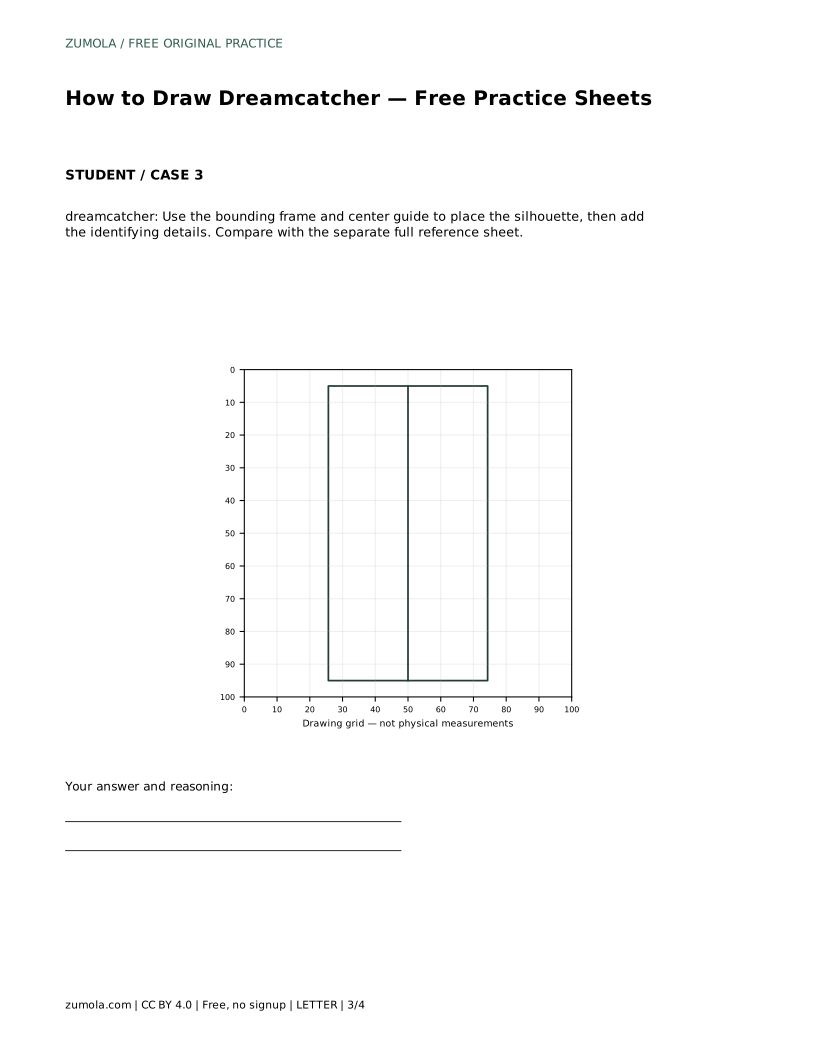
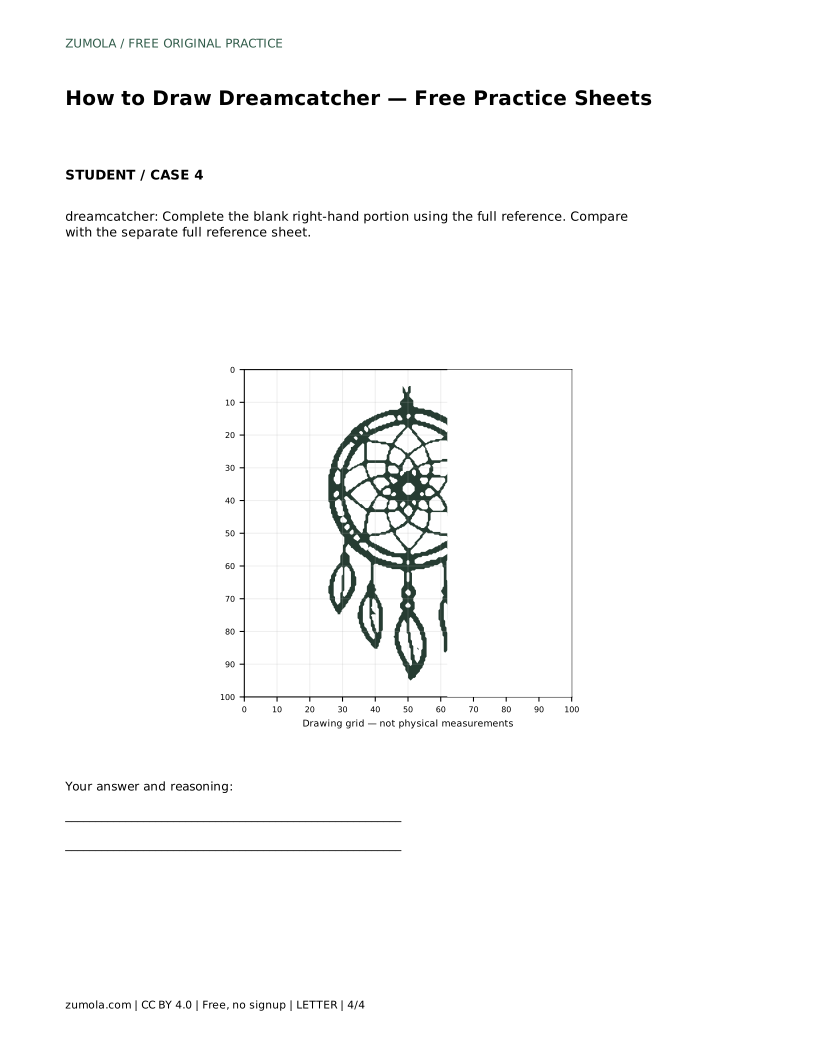
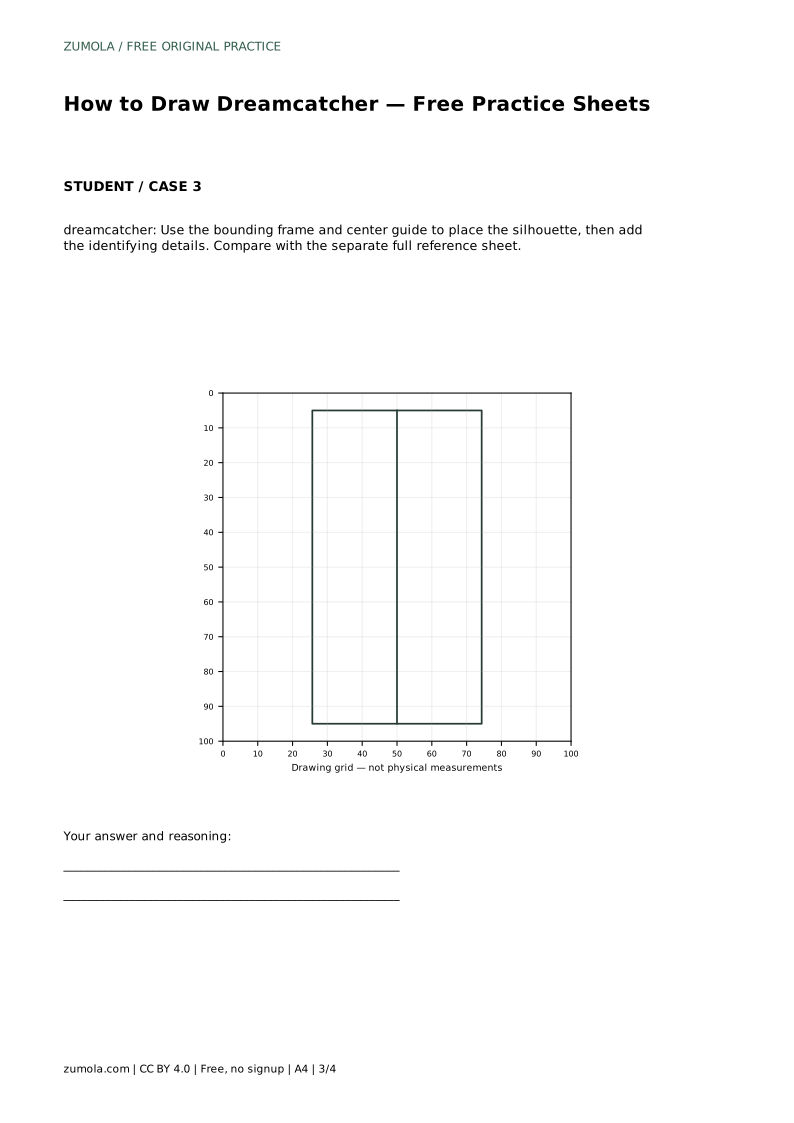
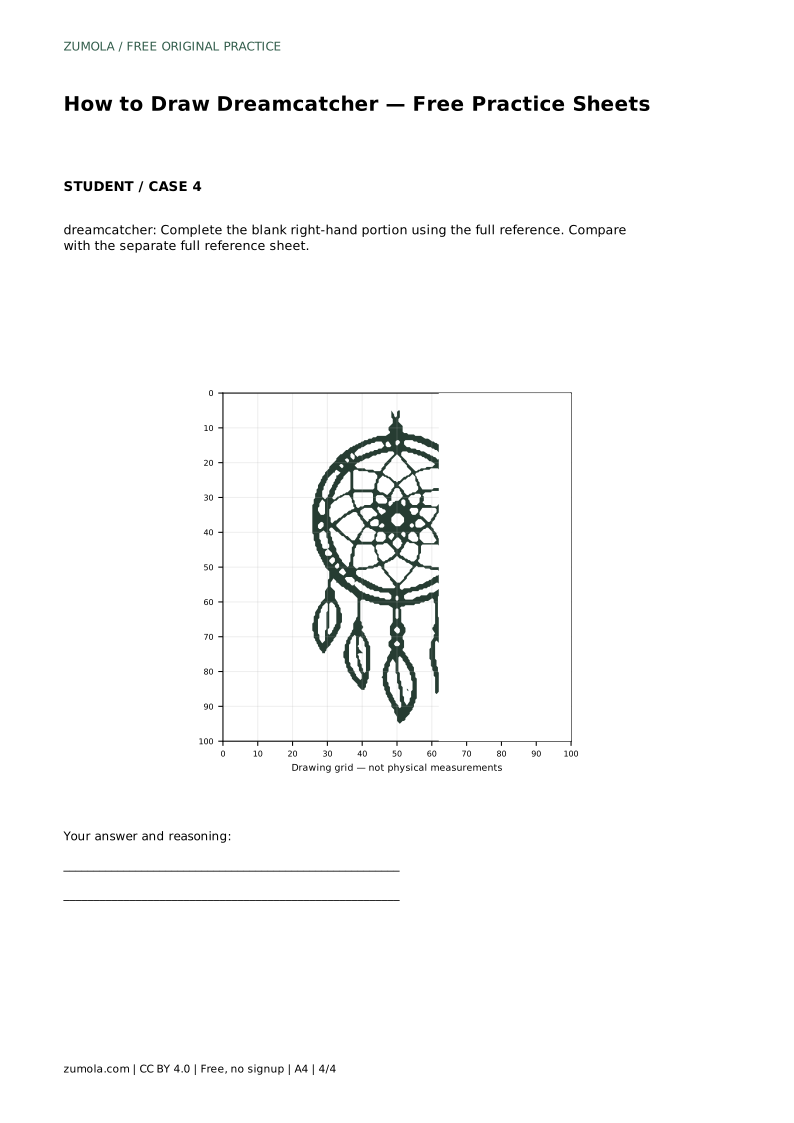
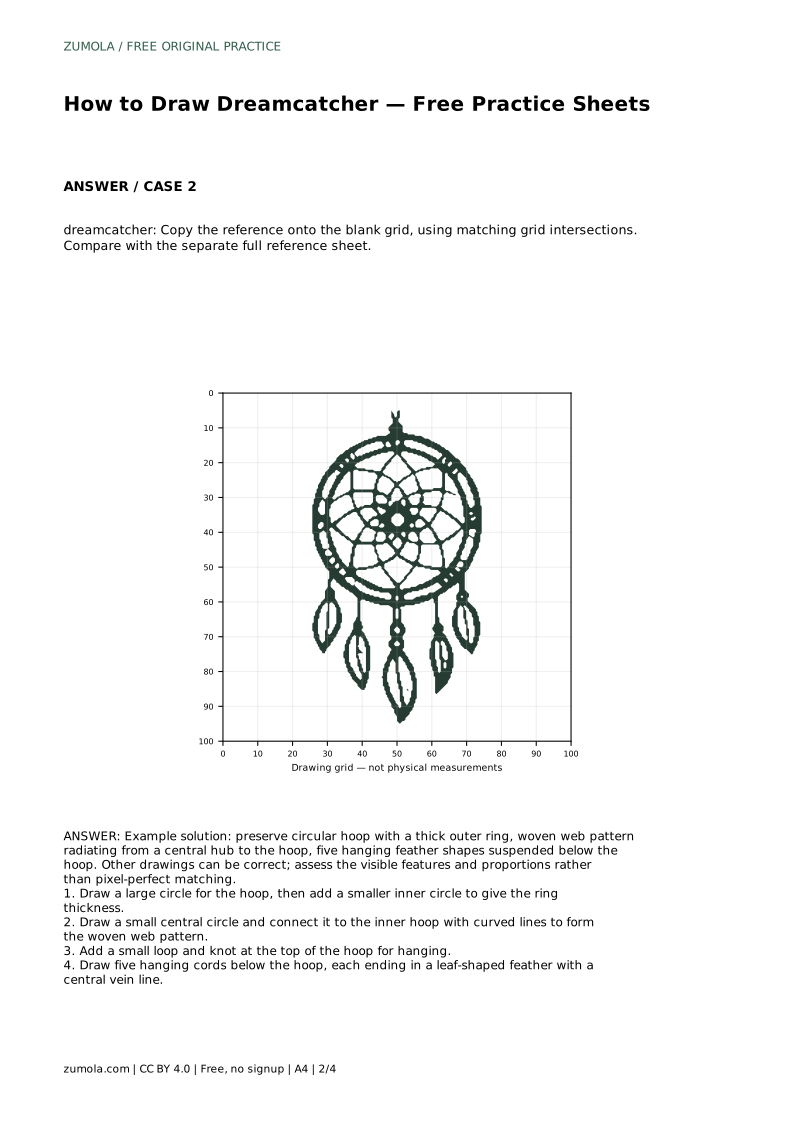
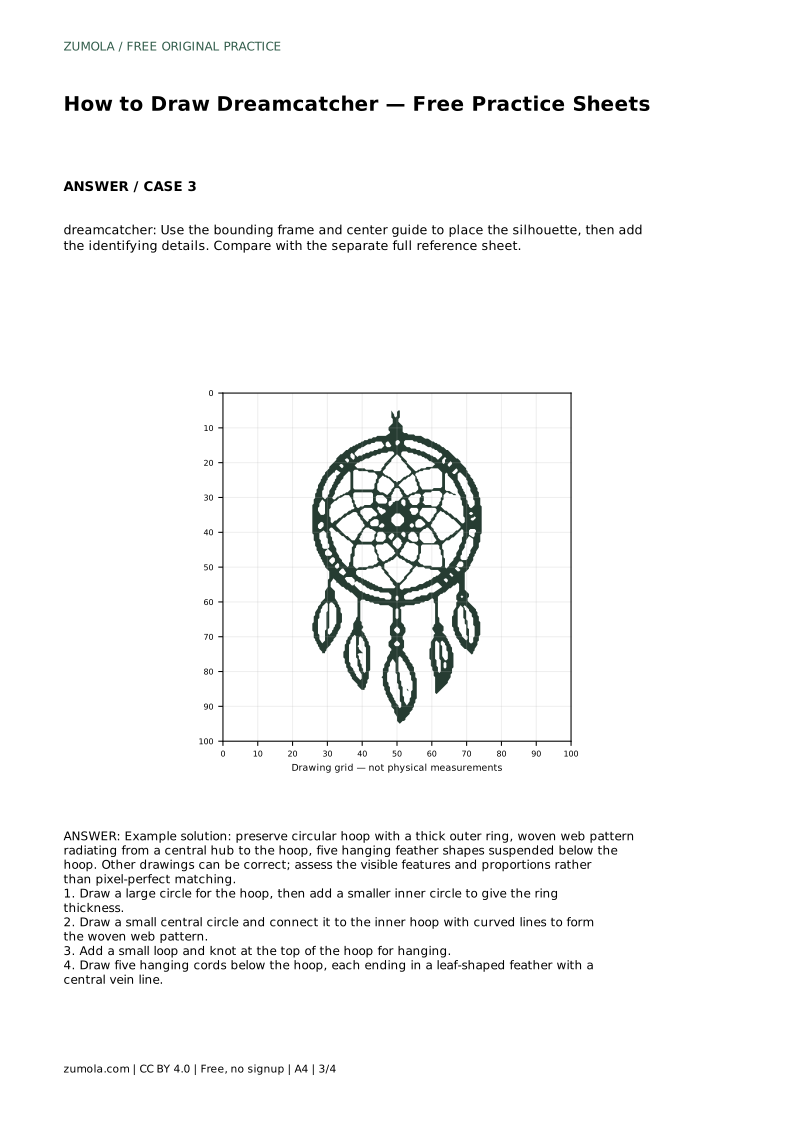
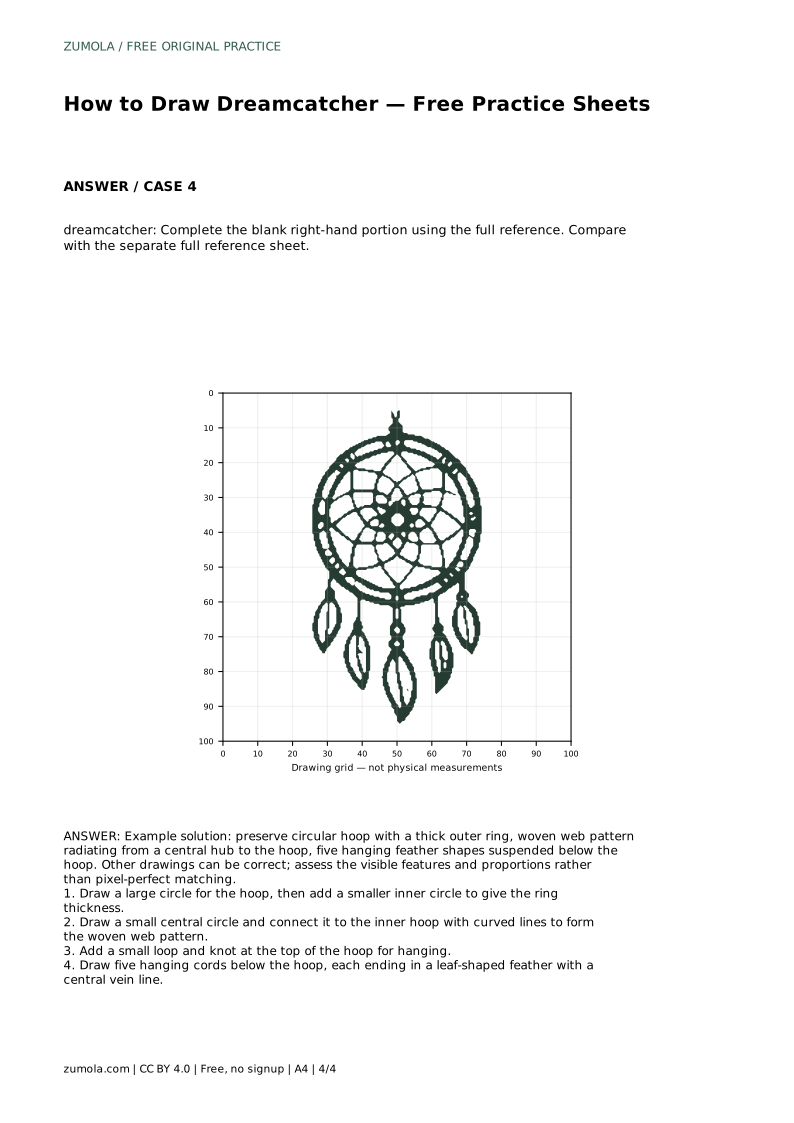
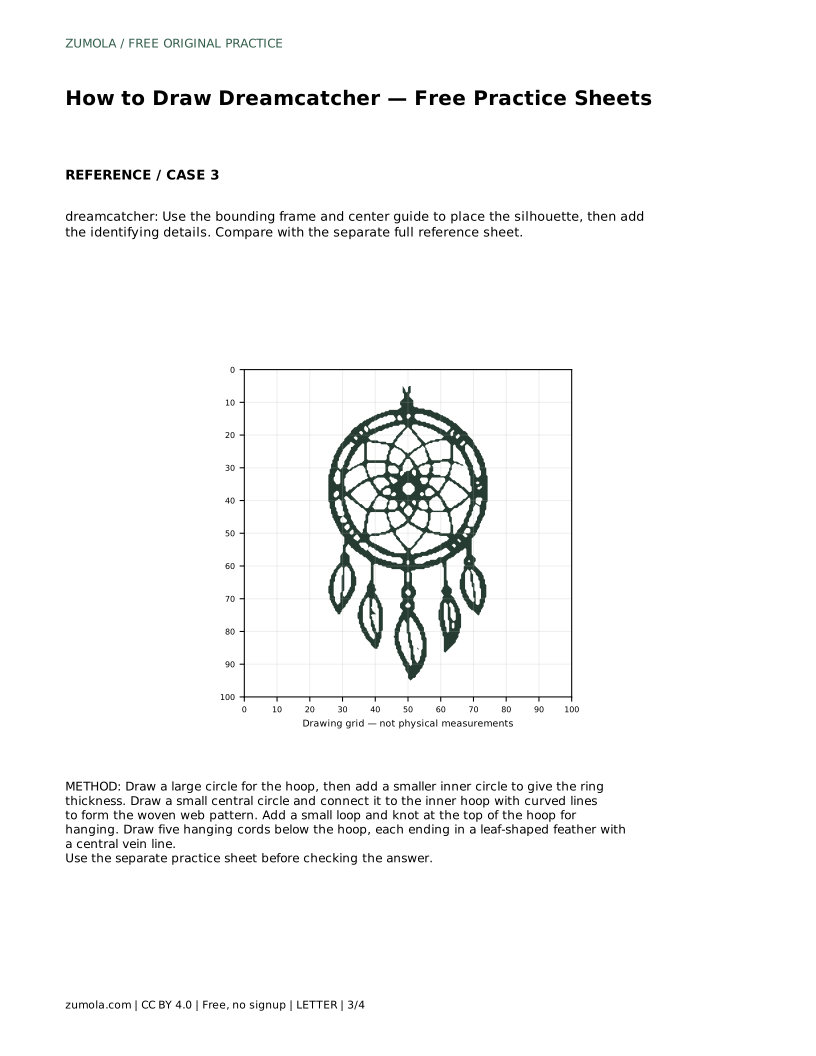
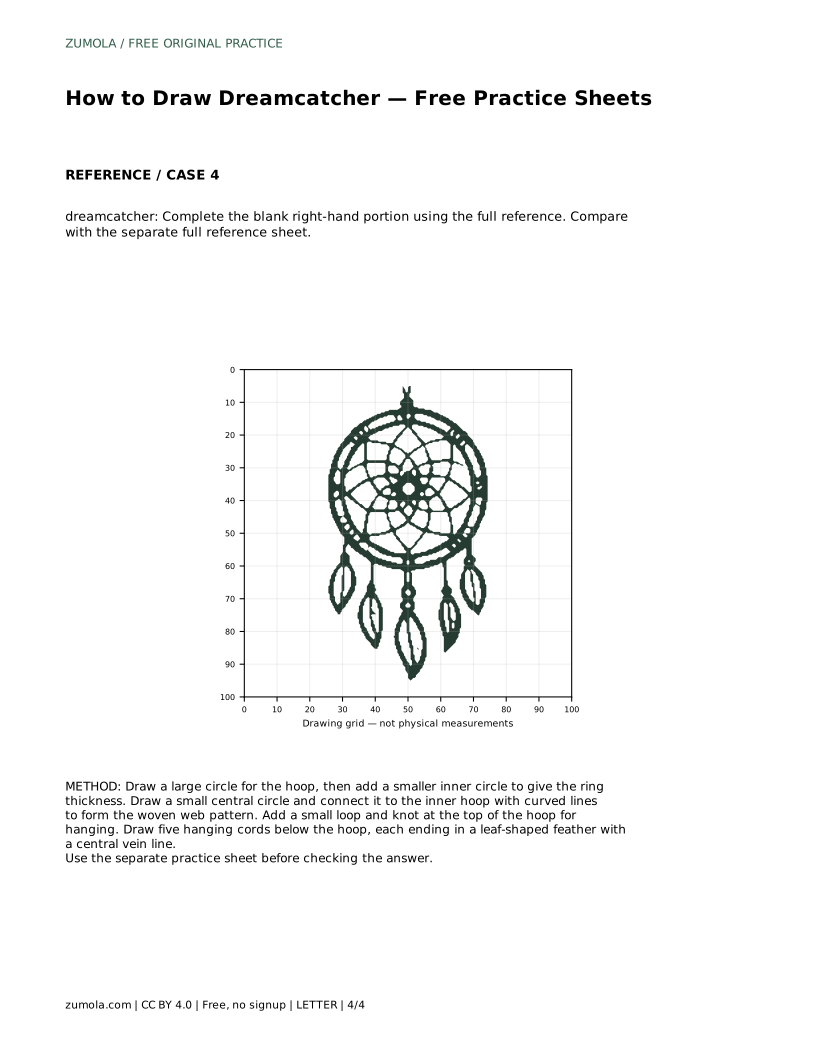
A grid version asks you to copy the reference onto a blank grid using matching intersections. This trains placement: note where the hoop's edge, the center, and the feather tips fall relative to grid lines. A bounding frame and center guide version asks you to place the silhouette first, then add the identifying details. A partial-outline version gives you the left side and asks you to complete the right side using the full reference. In every version, compare the finished drawing with the separate full reference sheet.
Because drawings can vary, judge your work by visible features rather than pixel-perfect matching. Ask whether the hoop is circular with a thick outer ring, whether the web radiates from a central hub to the hoop, whether a hanging loop sits at the top, and whether five feather shapes hang below. Then check proportions: the hoop should dominate, the web should stay inside it, and the feathers should be smaller than the hoop.
If something looks off, fix the largest shape first. A lopsided hoop makes every detail look wrong, while a small feather can be adjusted last. Keep your lines light until the layout is settled.
dreamcatcher: Trace the reference outline, then practise the contour independently. Compare with the separate full reference sheet.
Example solution: preserve circular hoop with a thick outer ring, woven web pattern radiating from a central hub to the hoop, five hanging feather shapes suspended below the hoop. Other drawings can be correct; assess the visible features and proportions rather than pixel-perfect matching. Draw a large circle for the hoop, then add a smaller inner circle to give the ring thickness. Draw a small central circle and connect it to the inner hoop with curved lines to form the woven web pattern. Add a small loop and knot at the top of the hoop for hanging. Draw five hanging cords below the hoop, each ending in a leaf-shaped feather with a central vein line.
No. Several drawings can be correct. Assess the visible features and proportions, such as the thick hoop, radiating web, top loop, and five hanging feathers.
Draw the hoop and its thickness, then the central hub and web lines, then the top loop, and finally the hanging cords and feathers.
Compare the hoop's roundness, the even spacing of the web lines, the centered top loop, and the count and placement of the five feathers against the full reference sheet.
All drawing practice · Free coordinate paper
Original resources · CC BY 4.0 · Free for personal and classroom use with attribution.