Reference diagrams
LETTER · Download PDF
A4 · Download PDF
Free original resources
Learn to draw a cargo ship with a long hull, stacked containers, and a stern bridge tower. Trace, grid, and complete-the-drawing practice sheets support each step.
Four original cases, with reference diagrams, practice sheets and worked answers. Everything is free; no signup required.
LETTER · Download PDF
A4 · Download PDF
LETTER · Download PDF
A4 · Download PDF
LETTER · Download PDF
A4 · Download PDF
Use A4 or US Letter to match your printer. Use the stated values and conditions to solve each exercise; diagrams are not physical measuring rulers.
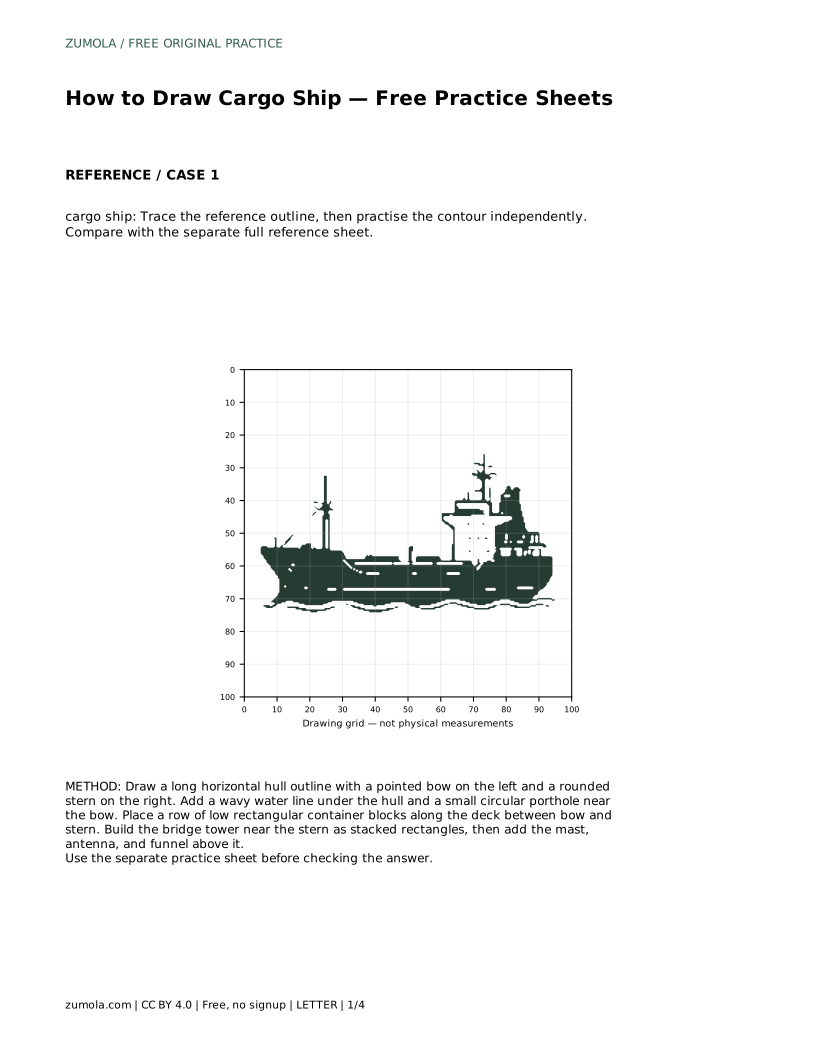
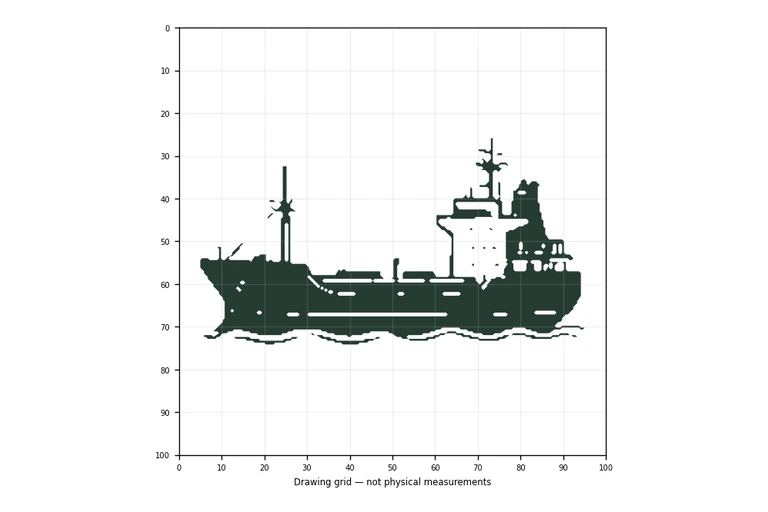
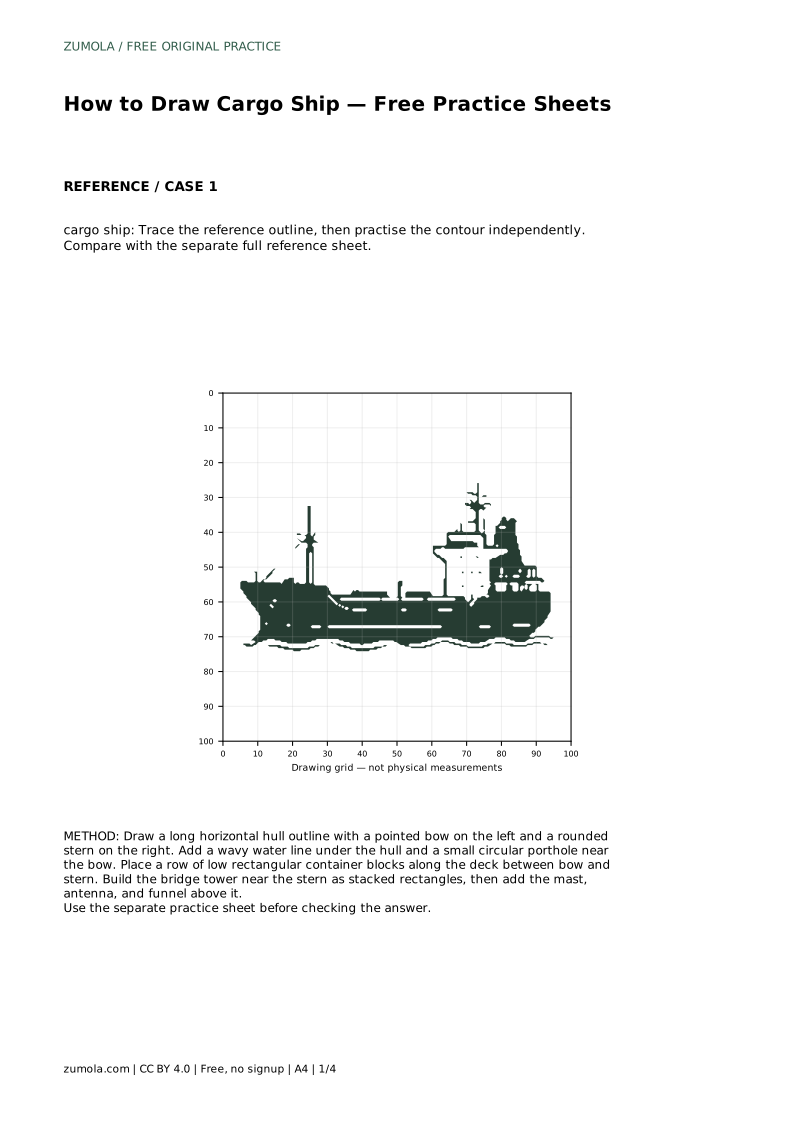
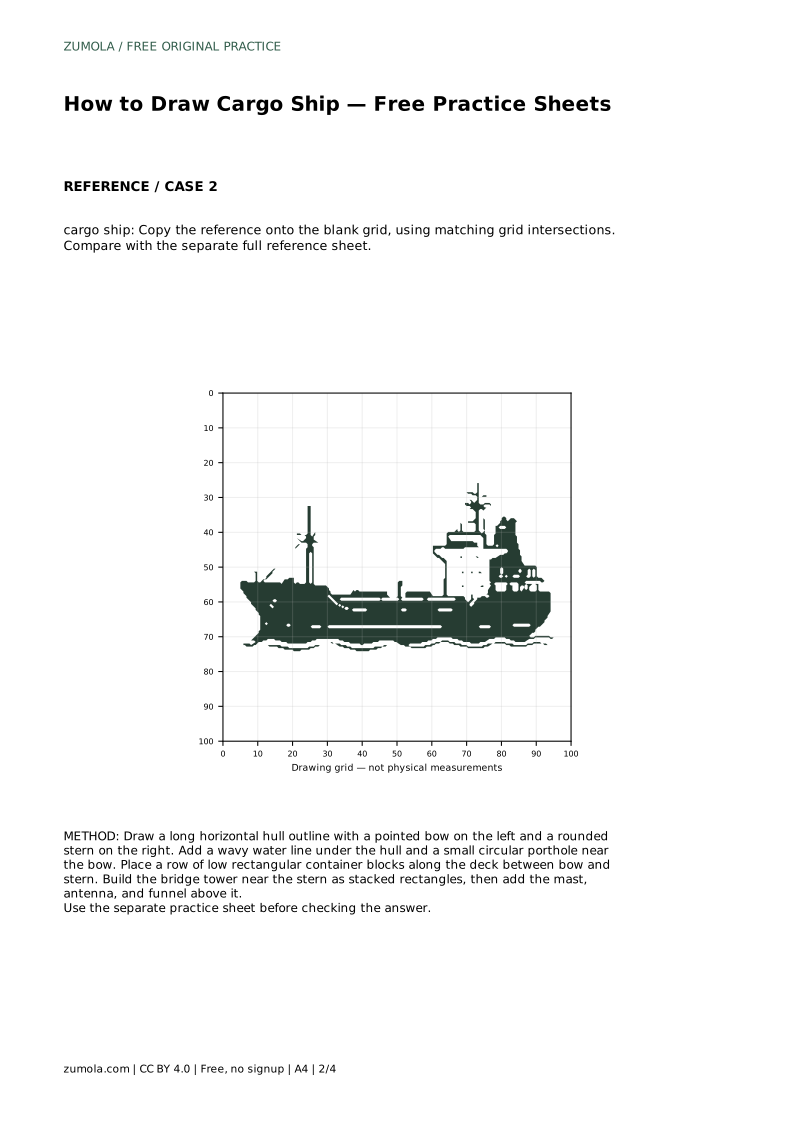
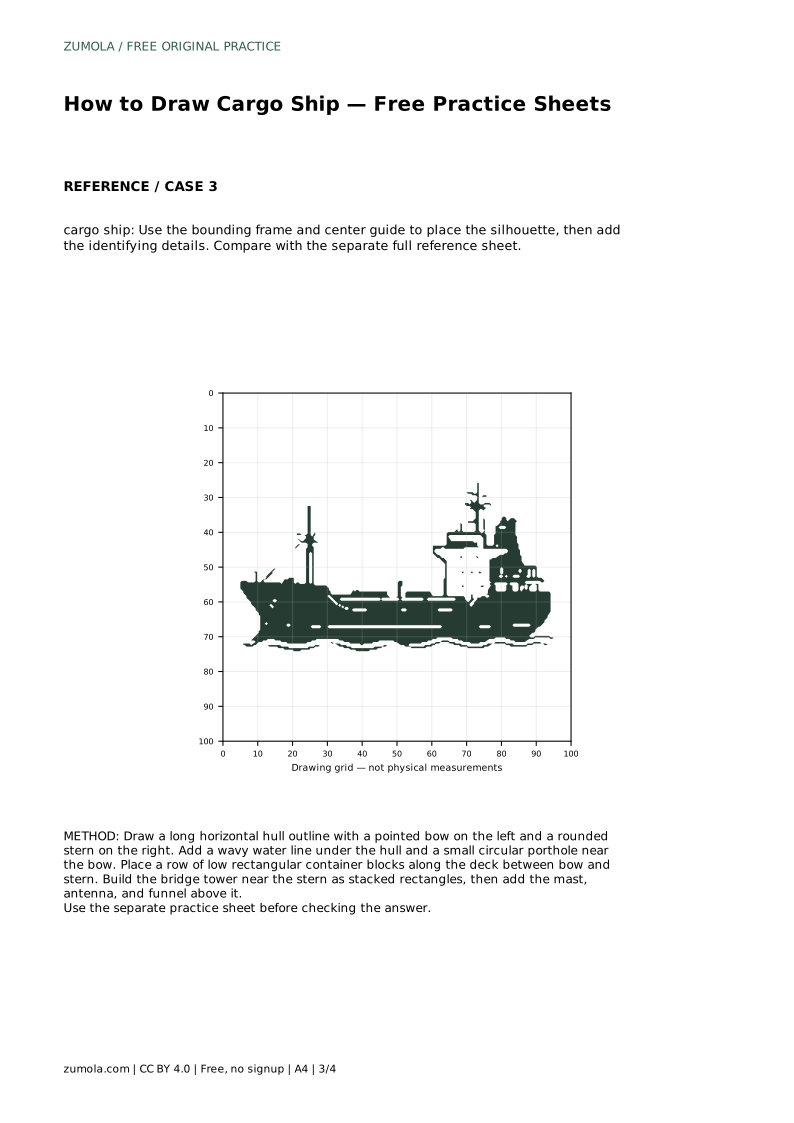
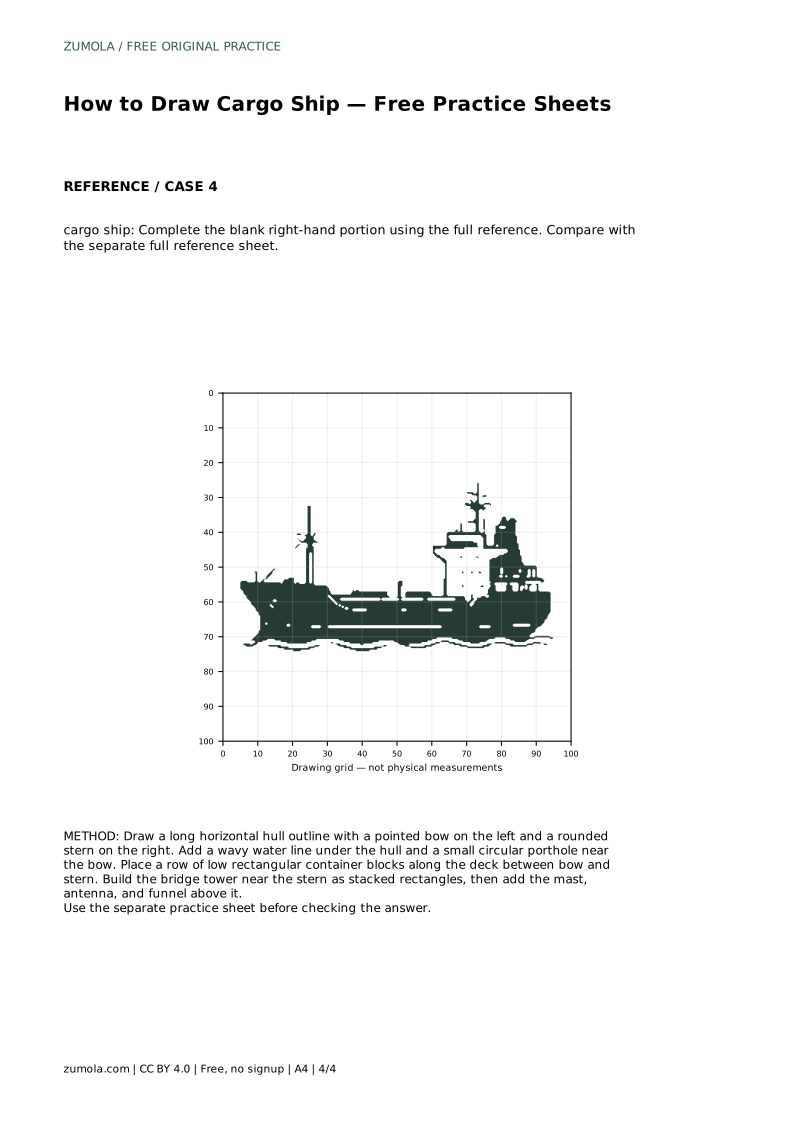
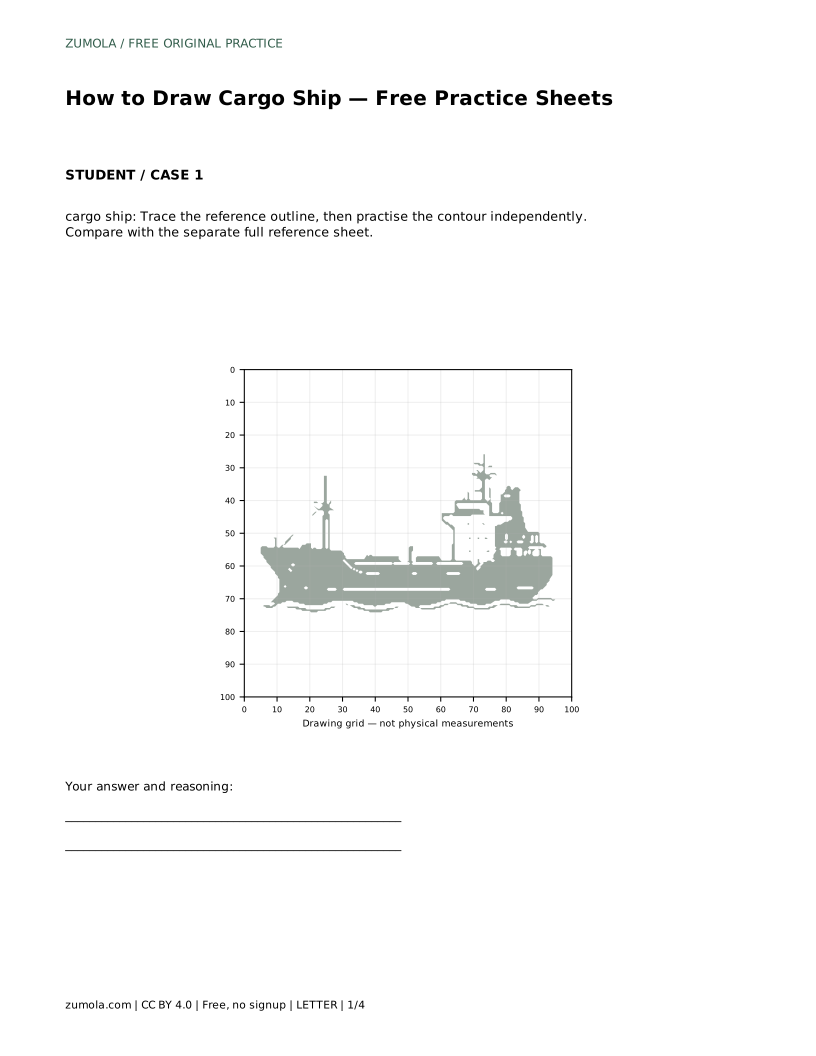
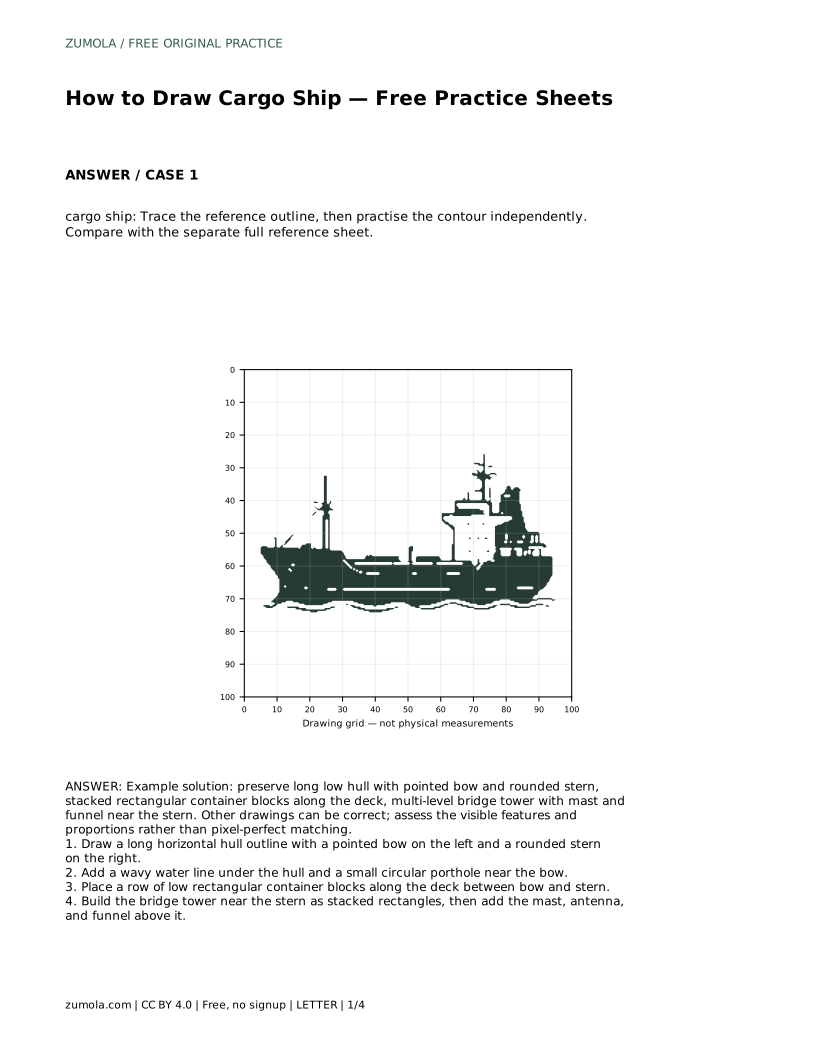
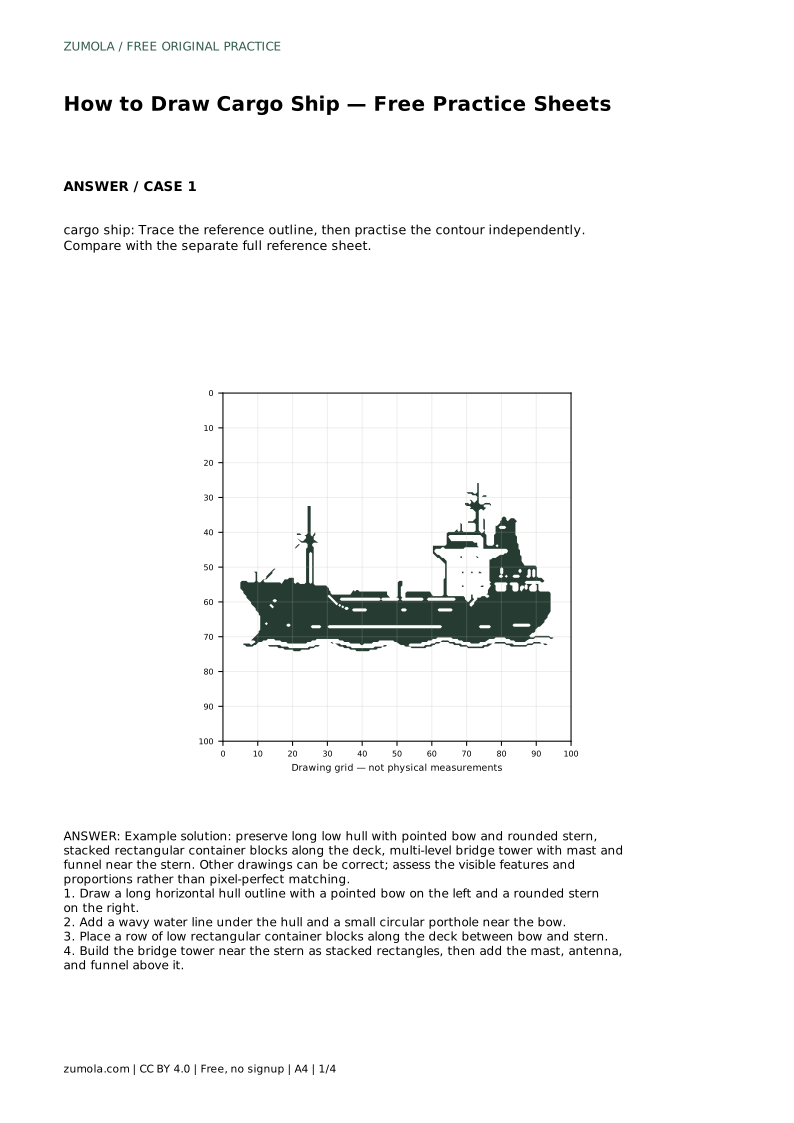
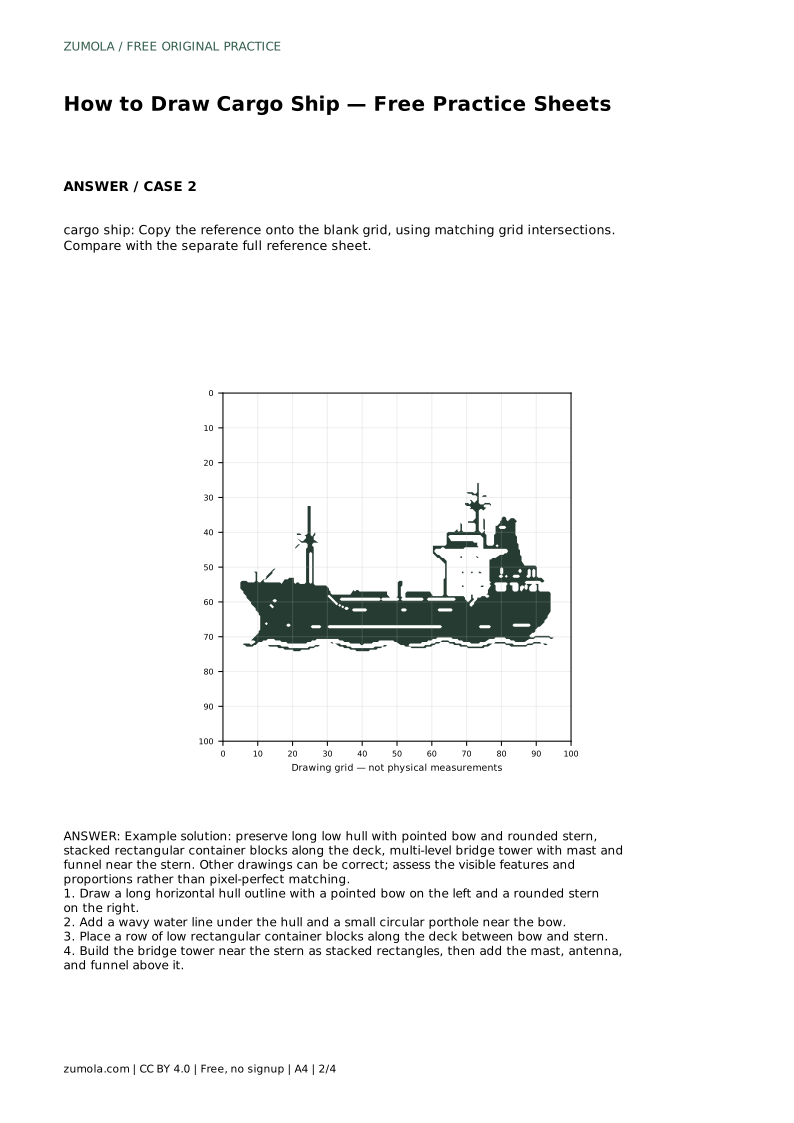
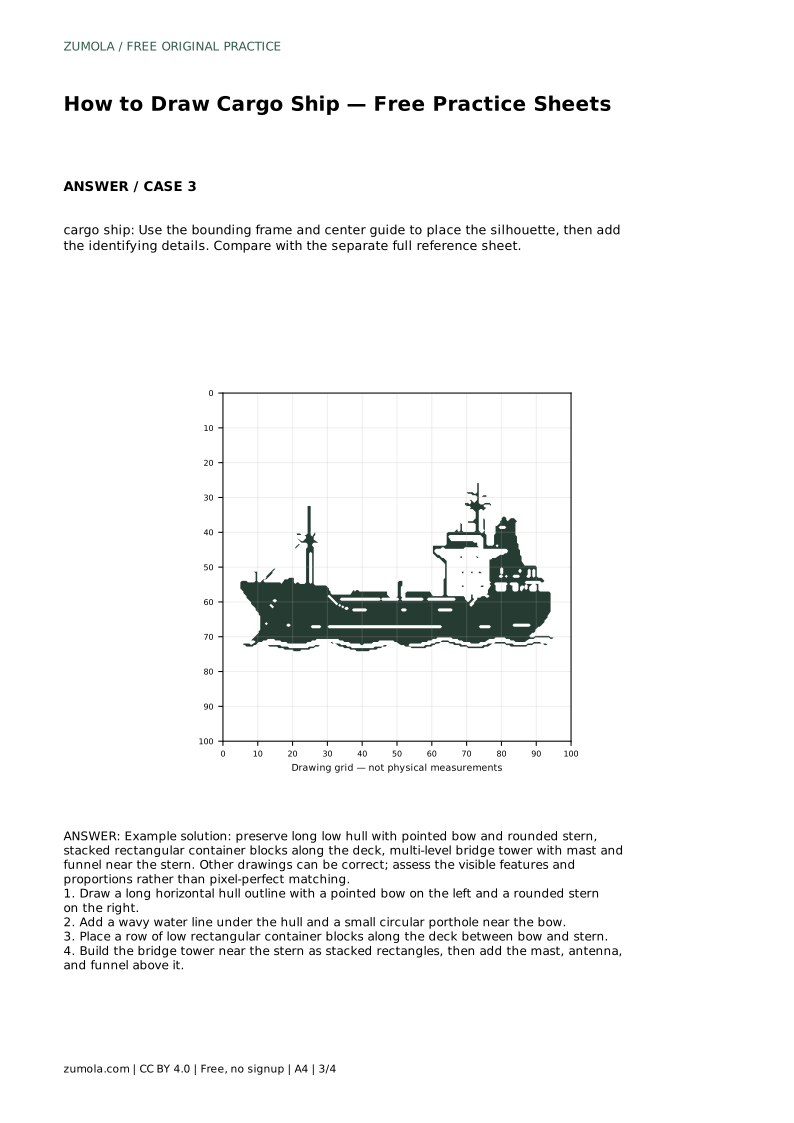
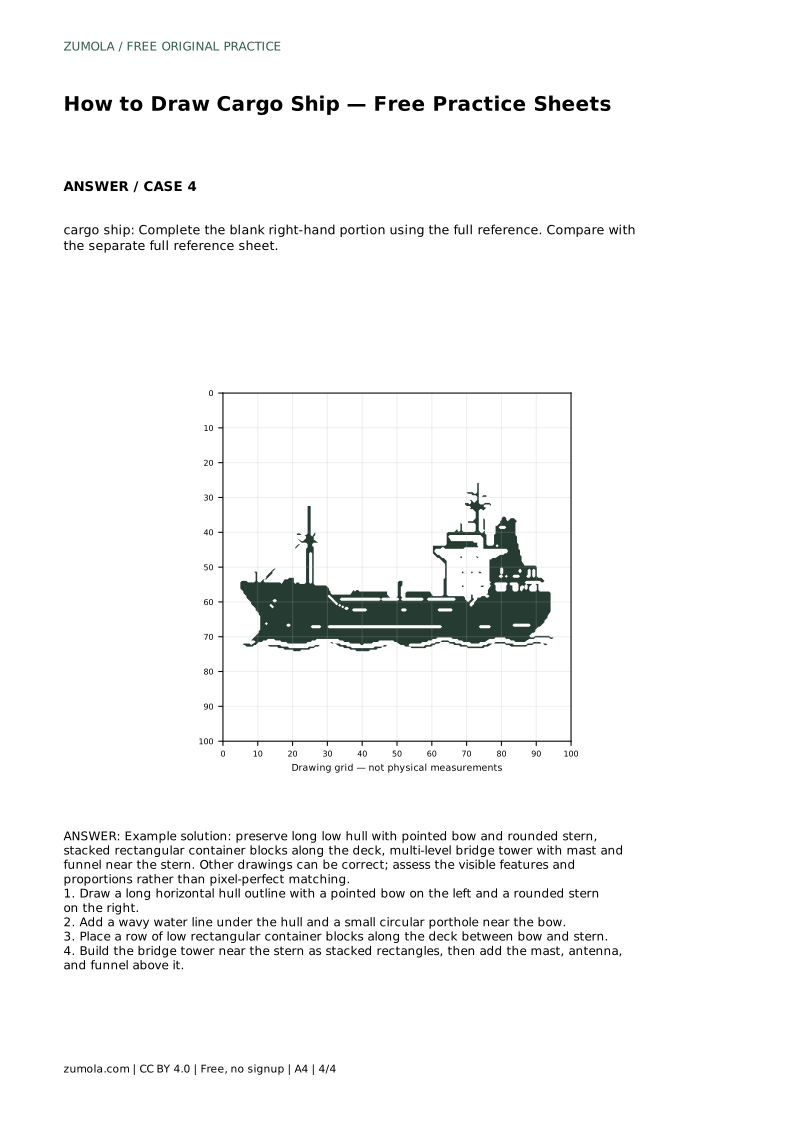
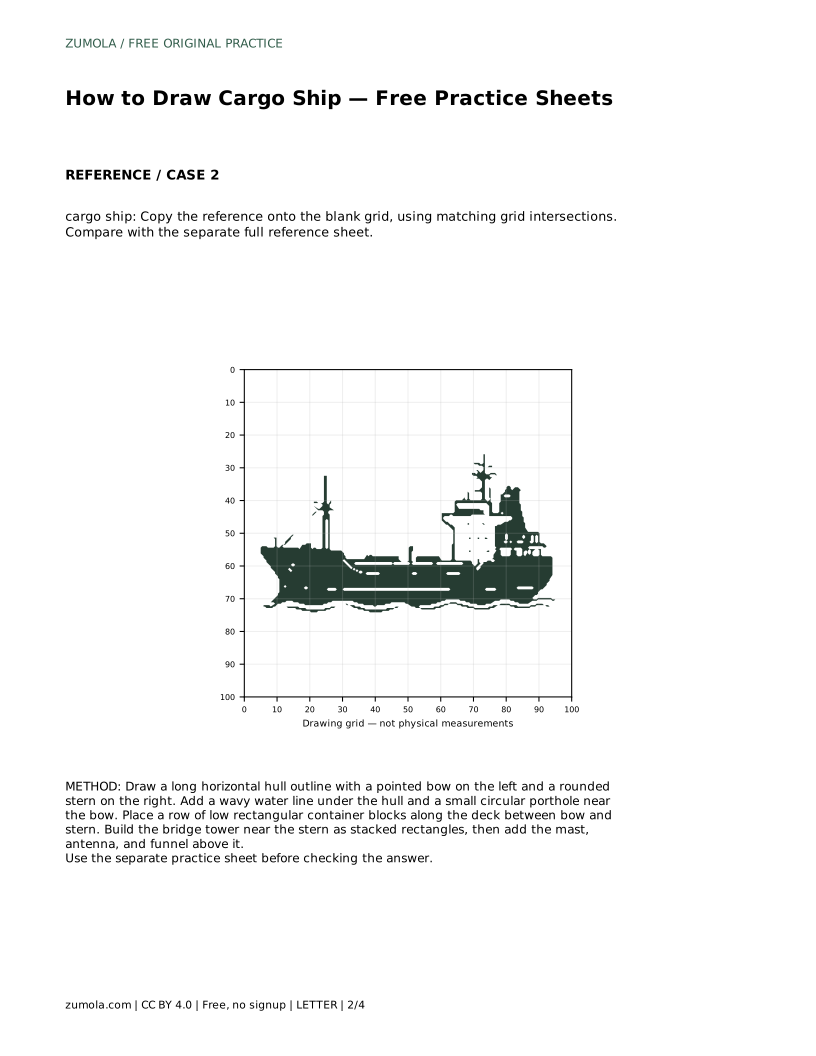
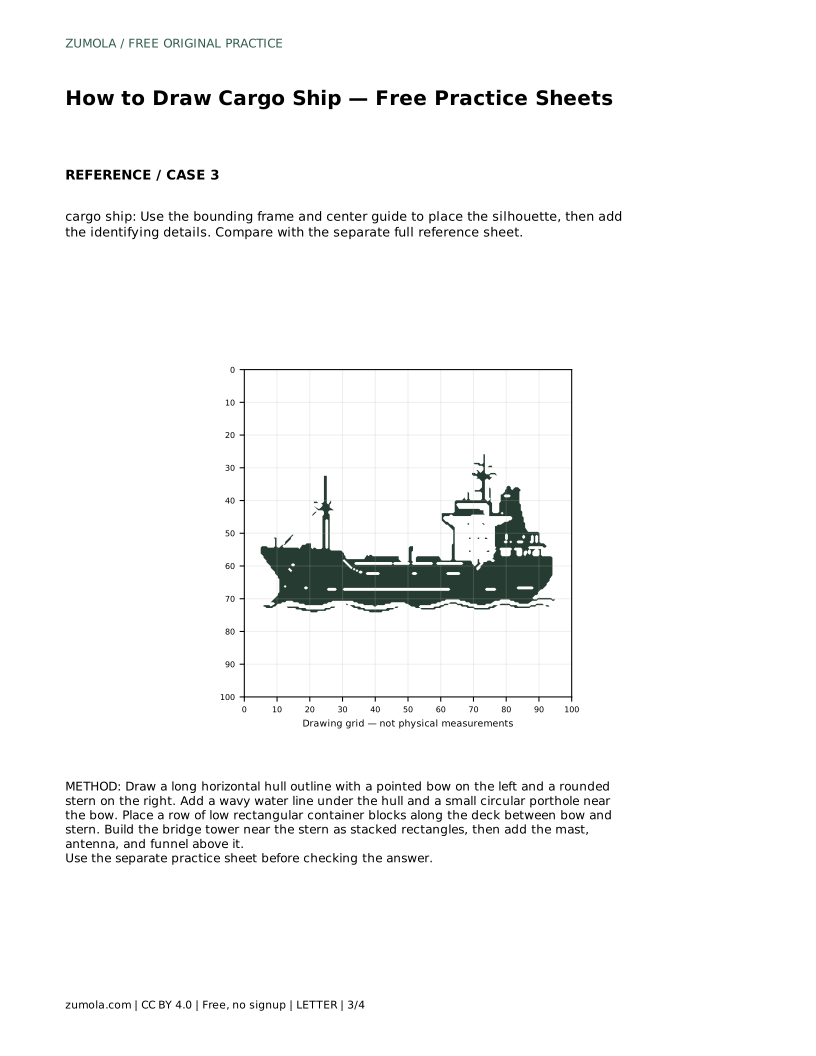
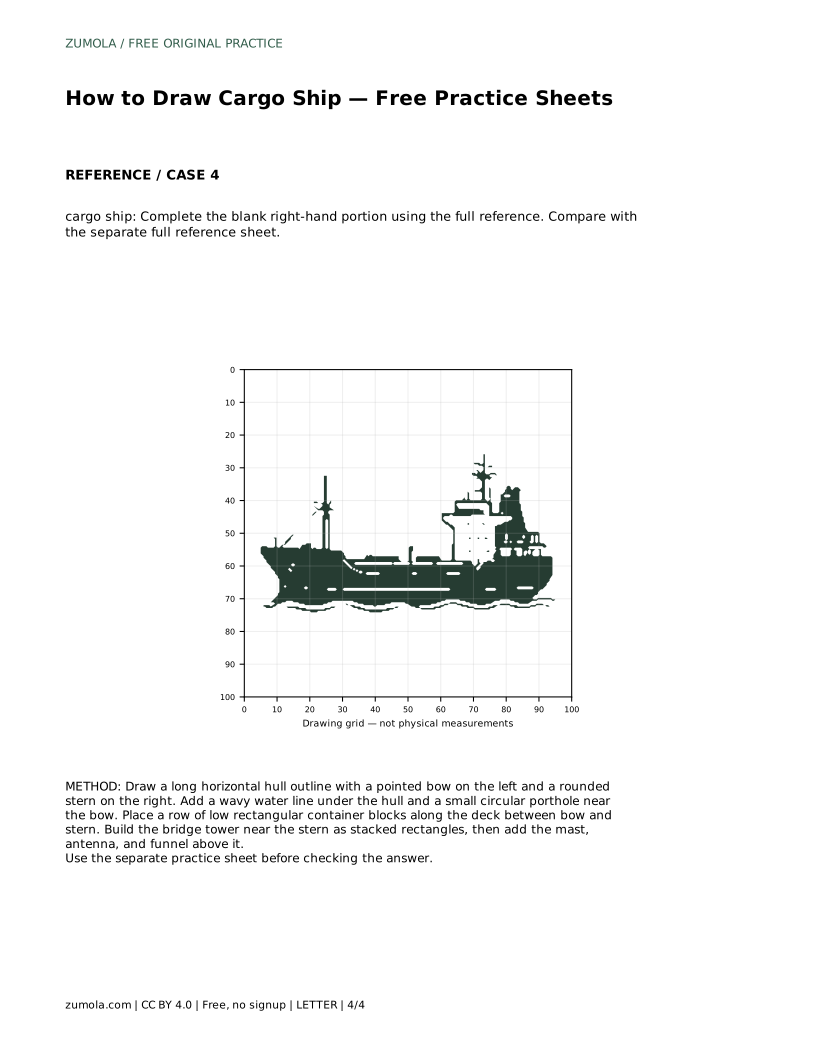
A cargo ship is easy to recognize once you notice its main shapes: a long, low hull, a pointed bow, a rounded stern, rows of rectangular containers, and a bridge tower near the back. This guide breaks the drawing into four clear stages so you can trace the outline first, then practise the contour independently. The goal is not a pixel-perfect copy but a drawing that keeps the ship's visible features and proportions readable.
The hull sets the whole drawing. Draw a long horizontal outline, keeping the deck line fairly flat. Put the pointed bow on the left and the rounded stern on the right. Keep the hull low compared with its length; a cargo ship looks stretched rather than tall.
Add a wavy water line under the hull so the ship sits in the water rather than floating in empty space. A small circular porthole near the bow gives the hull a sense of scale. Check that the bow point and stern curve stay on the same horizontal level before moving on.
Containers are the cargo ship's most distinctive feature. Place a row of low rectangular blocks along the deck between the bow and the stern. Keep the blocks roughly the same height and align their bases with the deck line.
Vary the widths slightly so the row looks like separate containers rather than one long box. Leave a little space between blocks where you want visible gaps. Avoid stacking containers too high; the deck should still read as long and low.
The bridge tower sits near the stern. Build it as stacked rectangles, each one a little narrower or wider than the one below, so it reads as a multi-level structure. Keep the tower's base on the deck and its sides roughly vertical.
Above the tower, add a mast, a small antenna, and a funnel. These thin vertical shapes balance the long horizontal hull. Check that the tower does not drift toward the middle of the ship; on this reference it belongs near the stern.
Compare your drawing with the separate full reference sheet. Look first at the overall silhouette: long hull, pointed bow, rounded stern. Then check the container row and the bridge tower position.
Other drawings can be correct. Assess the visible features and proportions rather than pixel-perfect matching. If the hull looks too tall or the tower sits too far forward, adjust those proportions before adding small details.
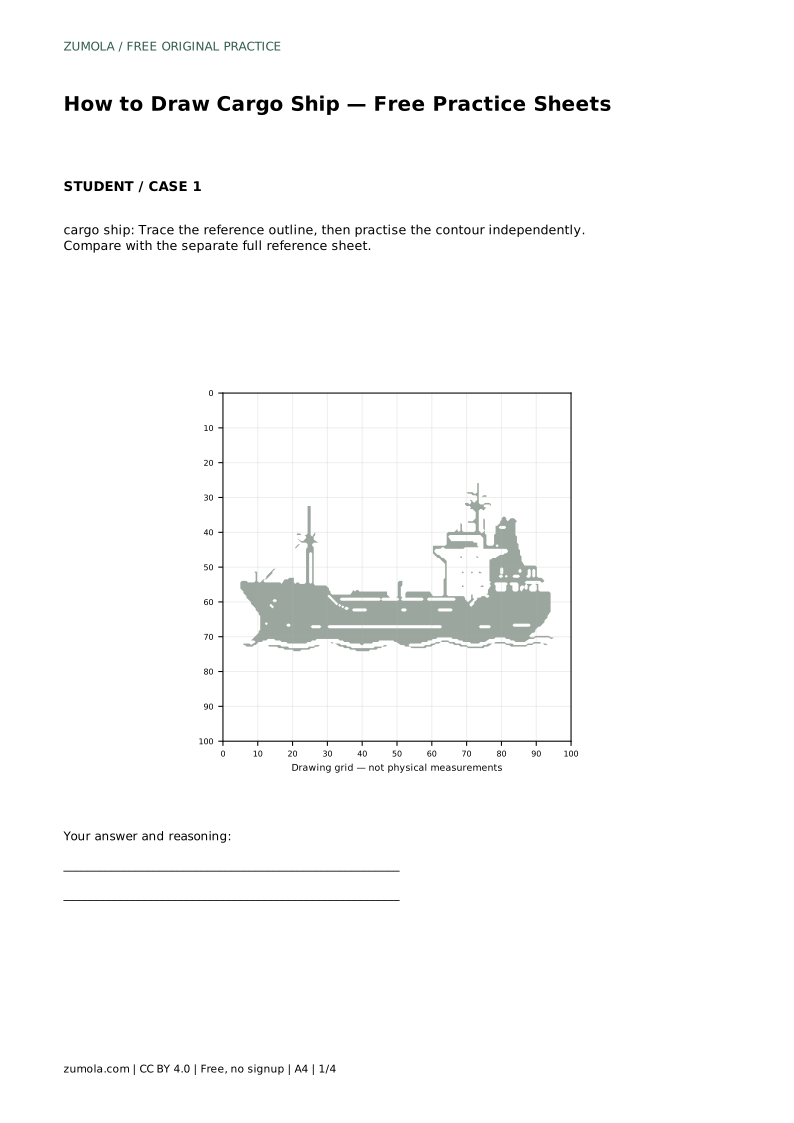
cargo ship: Trace the reference outline, then practise the contour independently. Compare with the separate full reference sheet.
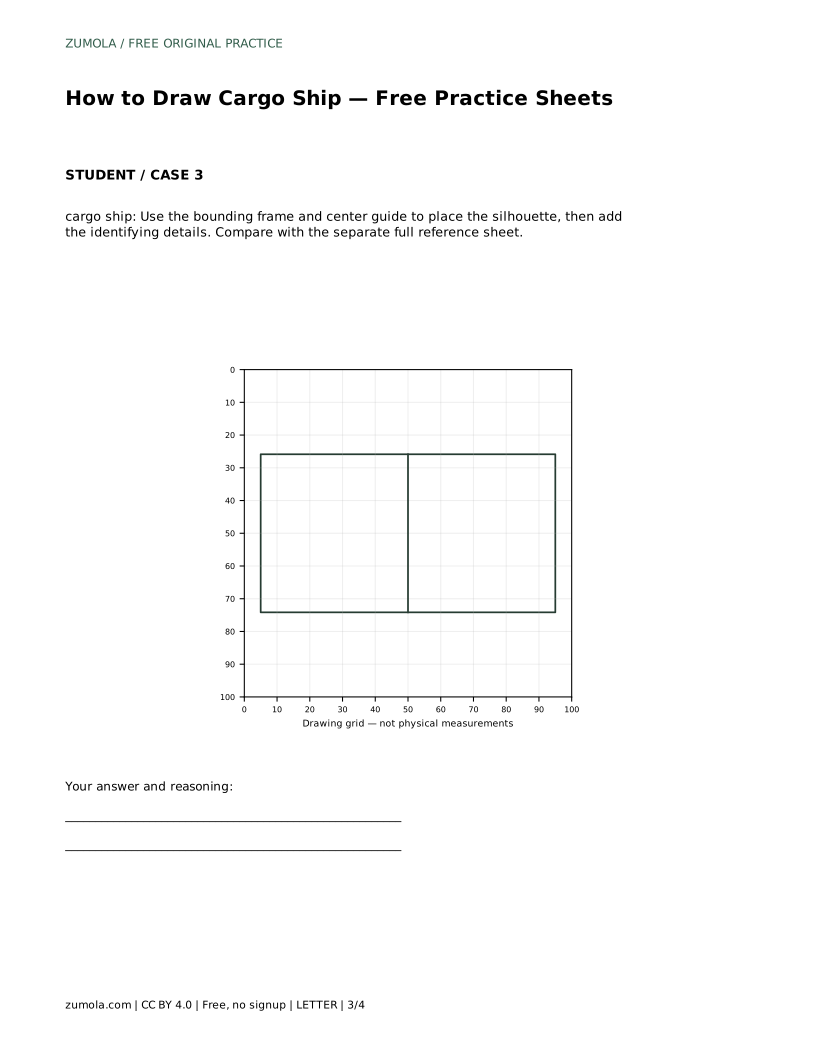
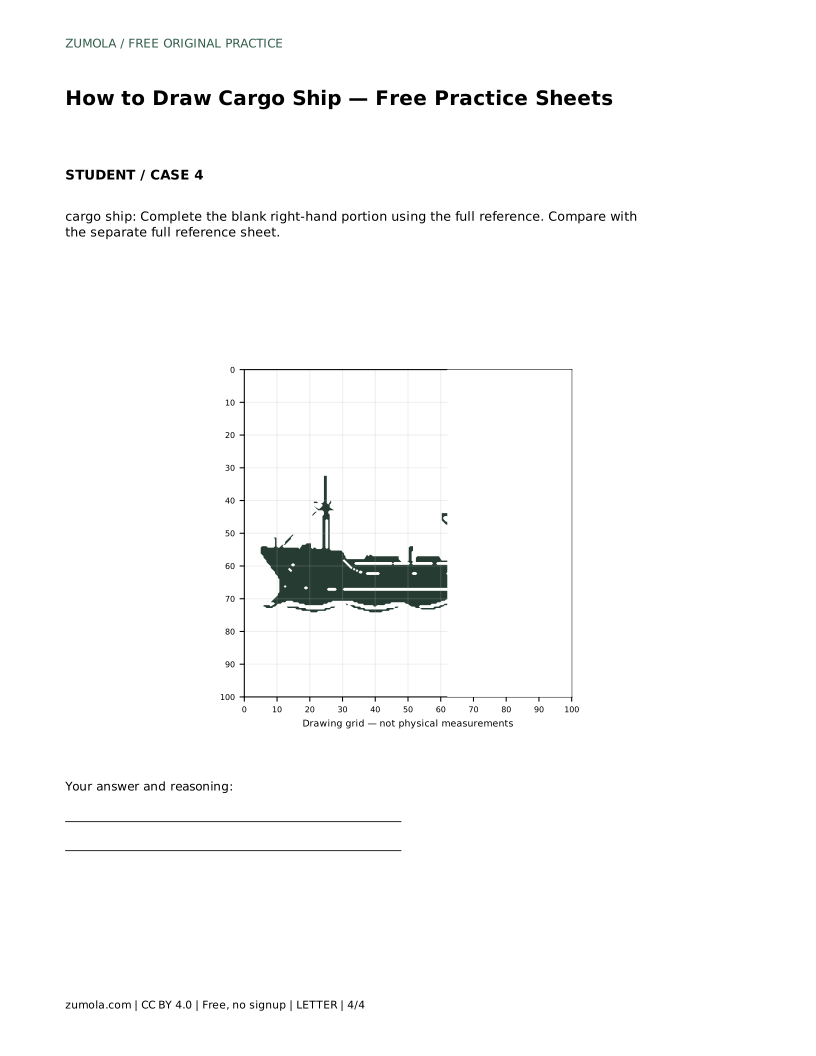
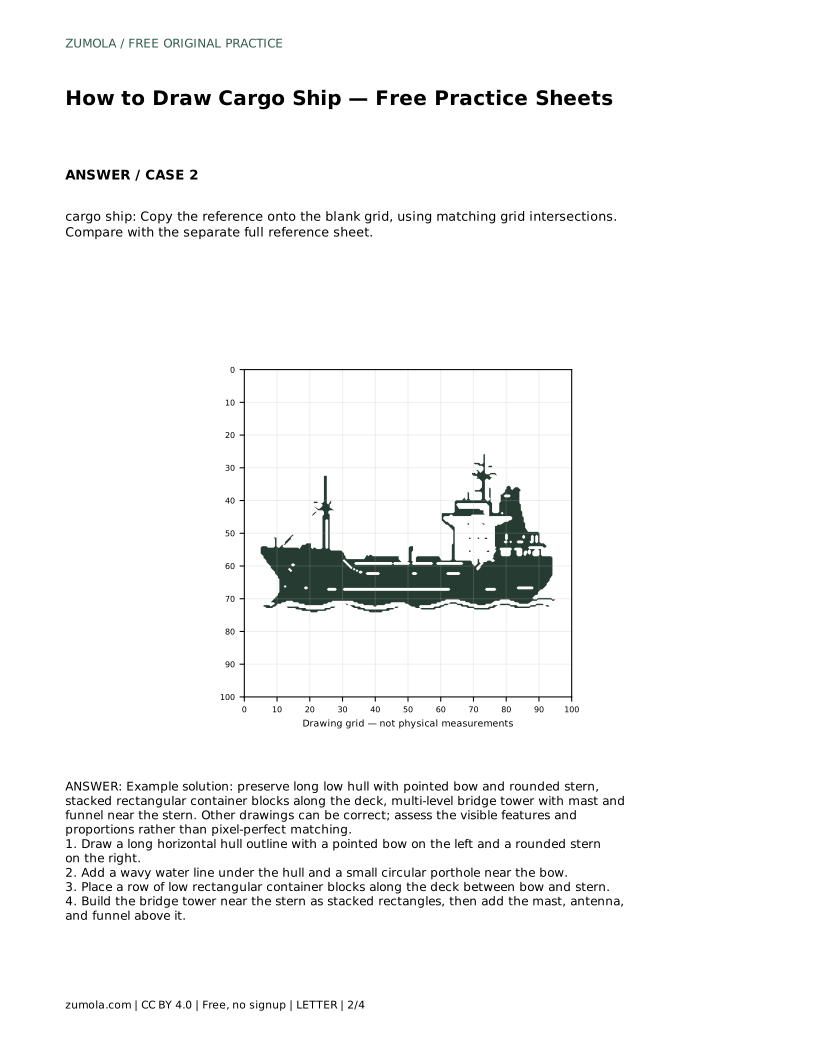
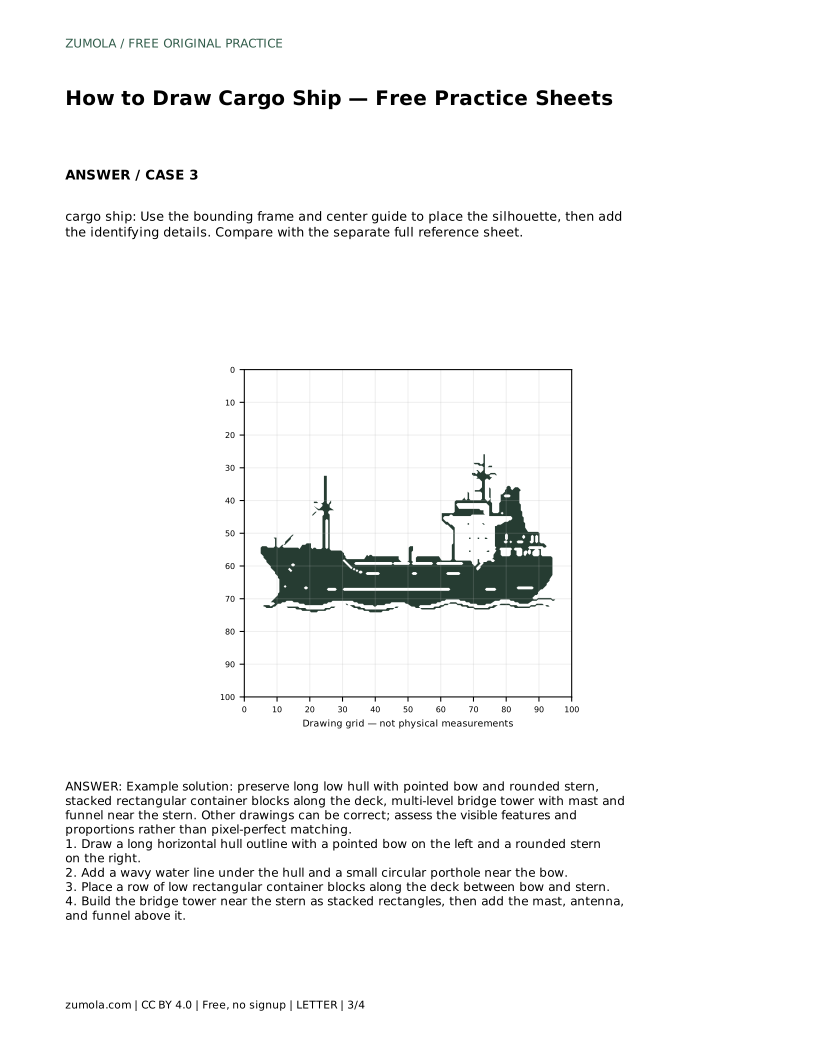
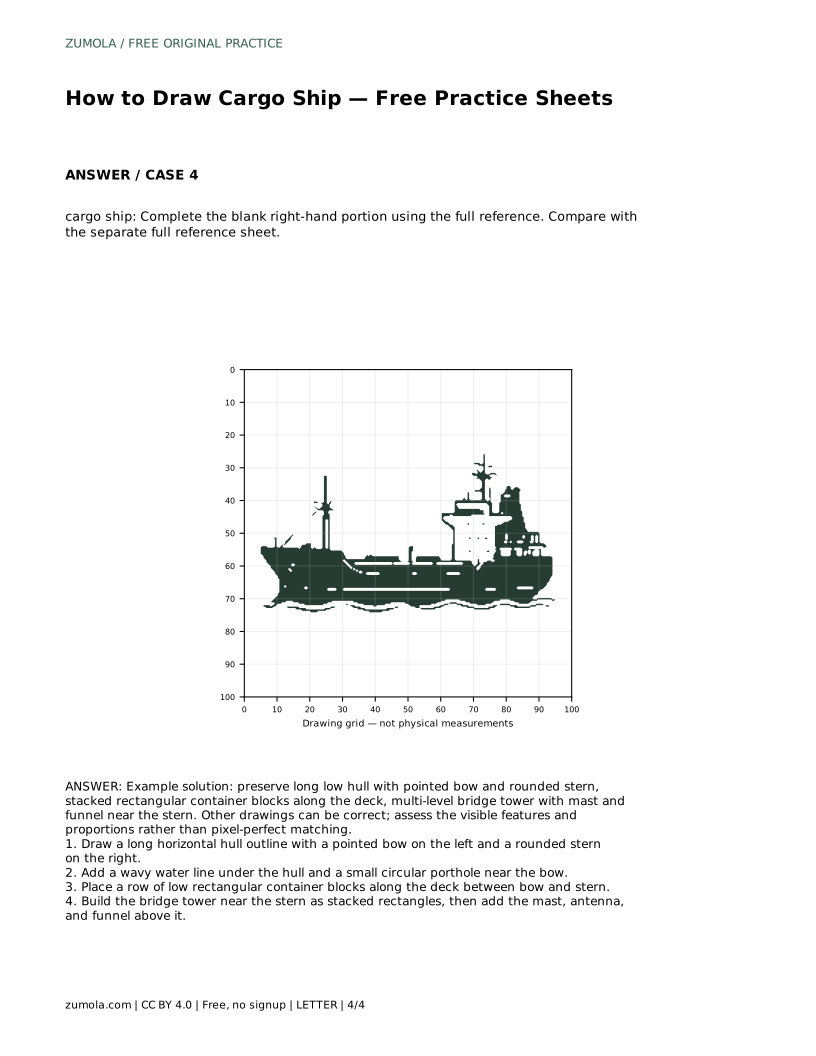
Example solution: preserve long low hull with pointed bow and rounded stern, stacked rectangular container blocks along the deck, multi-level bridge tower with mast and funnel near the stern. Other drawings can be correct; assess the visible features and proportions rather than pixel-perfect matching. Draw a long horizontal hull outline with a pointed bow on the left and a rounded stern on the right. Add a wavy water line under the hull and a small circular porthole near the bow. Place a row of low rectangular container blocks along the deck between bow and stern. Build the bridge tower near the stern as stacked rectangles, then add the mast, antenna, and funnel above it.
No. Other drawings can be correct. Assess the visible features and proportions rather than pixel-perfect matching.
On this reference the pointed bow is on the left and the rounded stern is on the right.
Near the stern, built as stacked rectangles with a mast, antenna, and funnel above.
All drawing practice · Free coordinate paper
Original resources · CC BY 4.0 · Free for personal and classroom use with attribution.