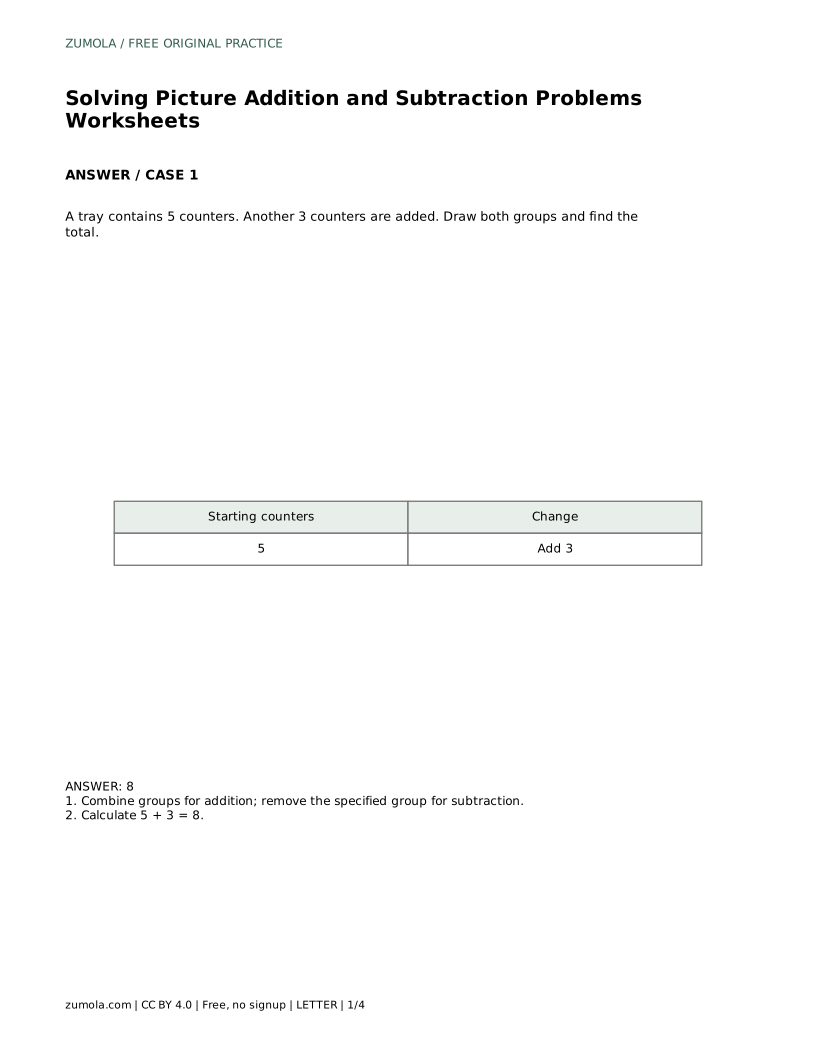
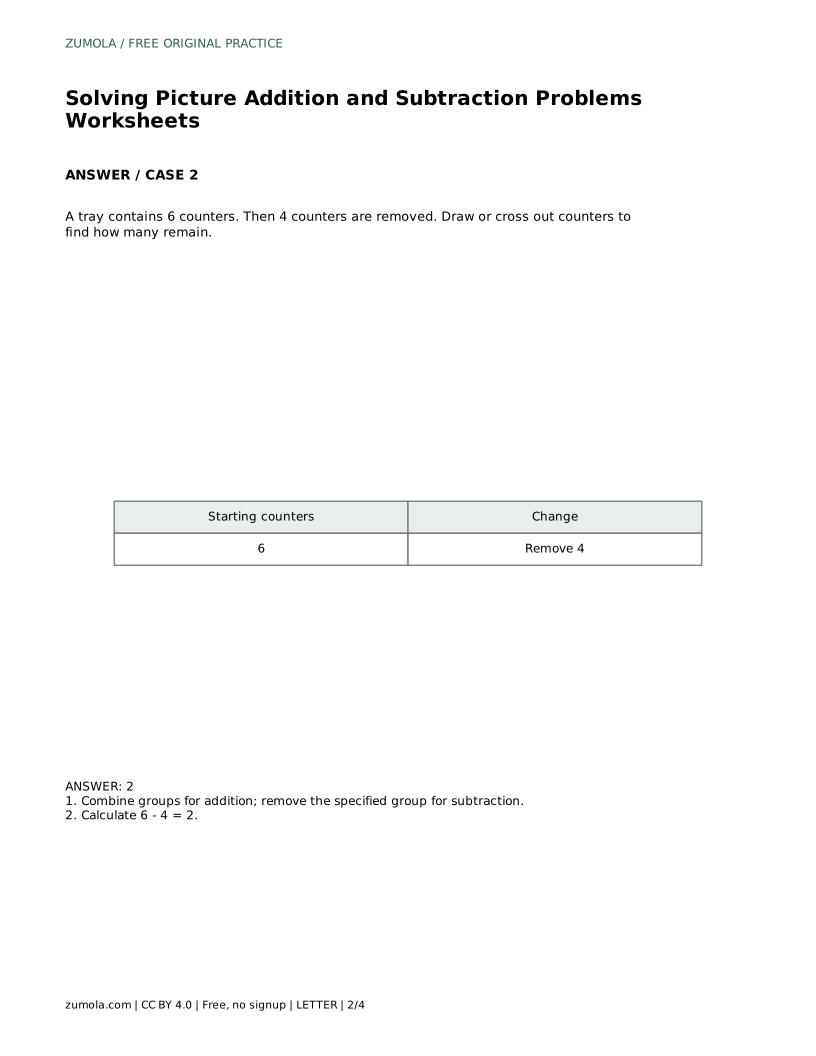
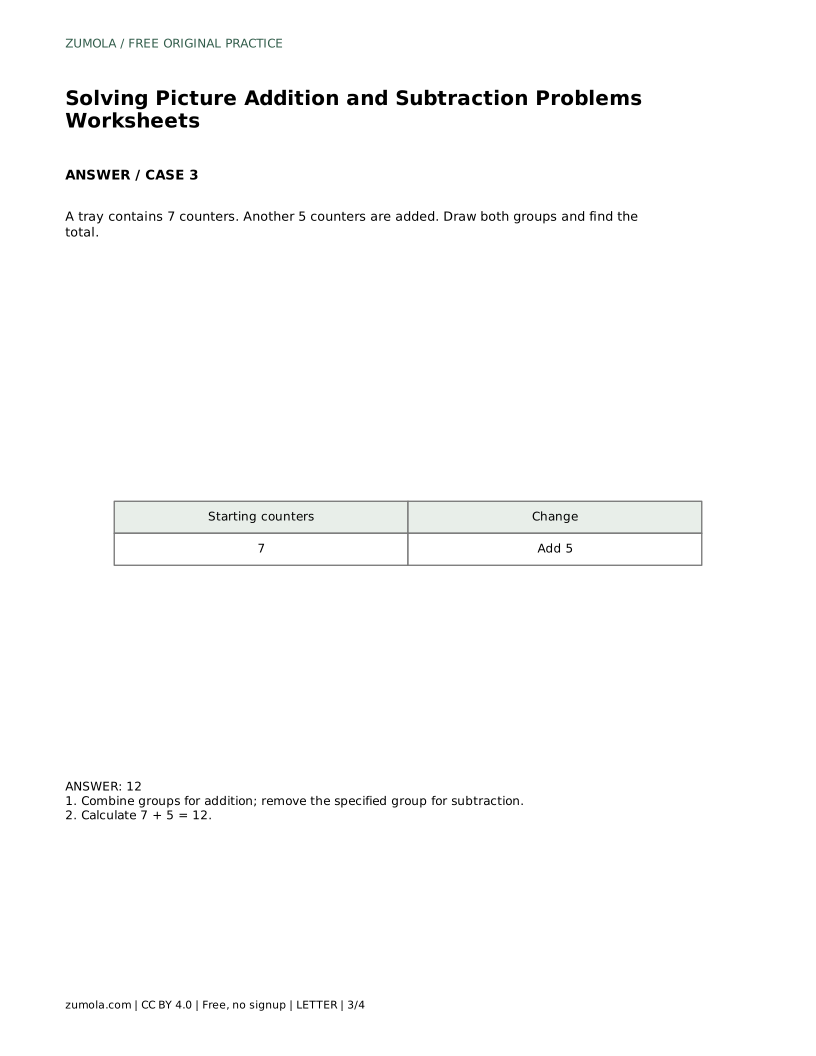
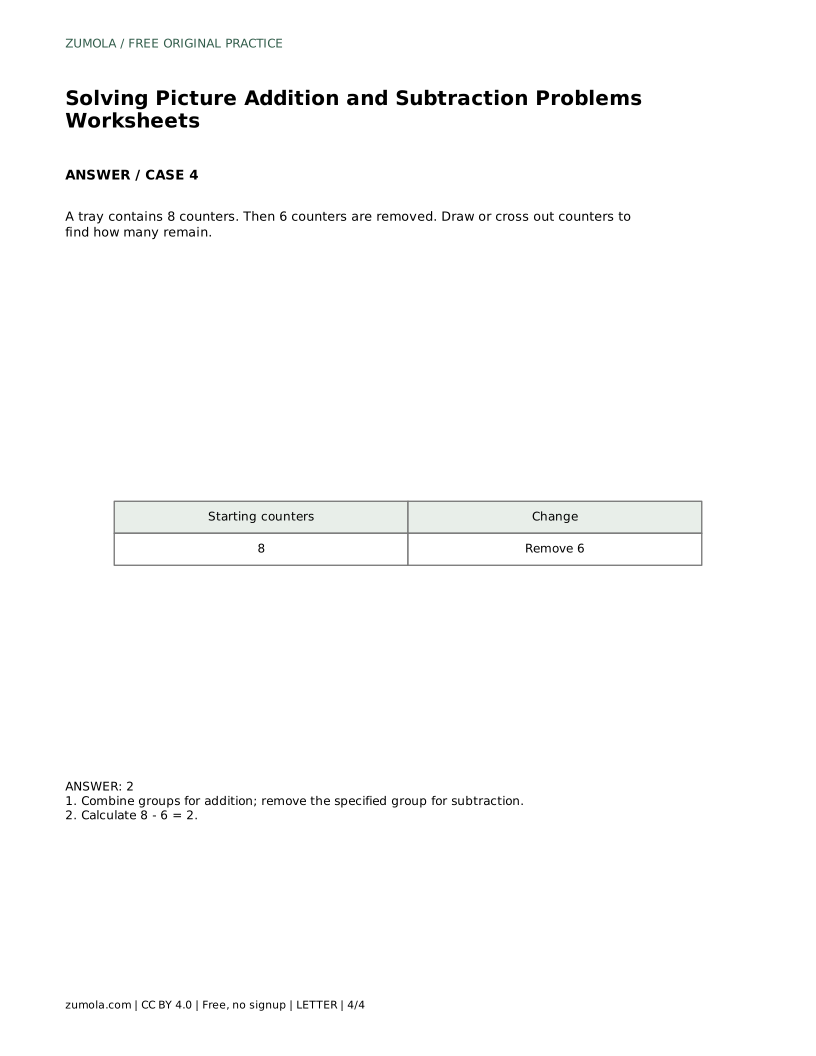
Reference diagrams
LETTER · Download PDF
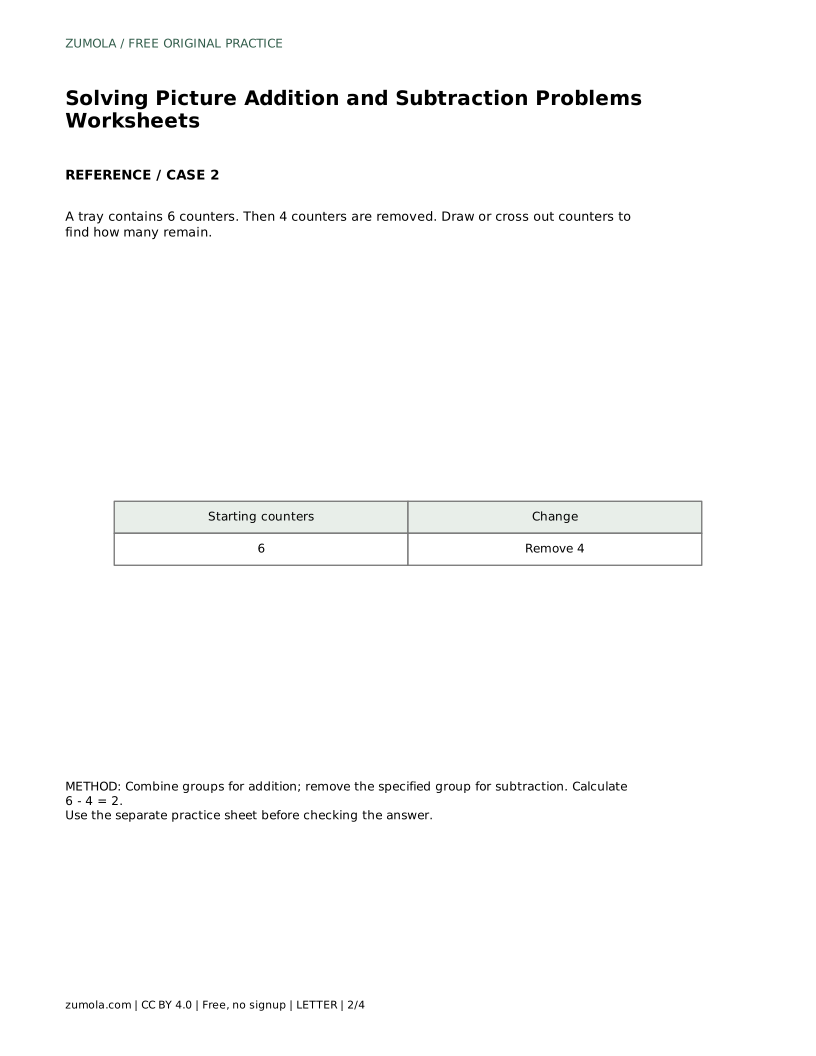
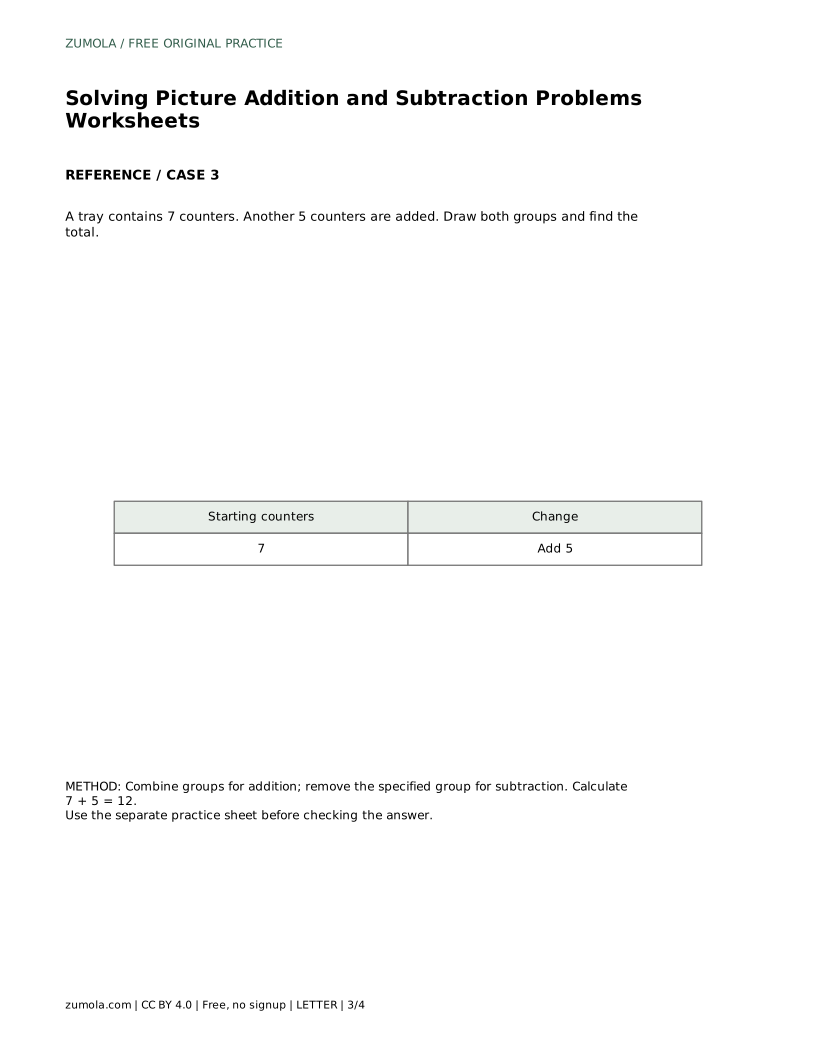
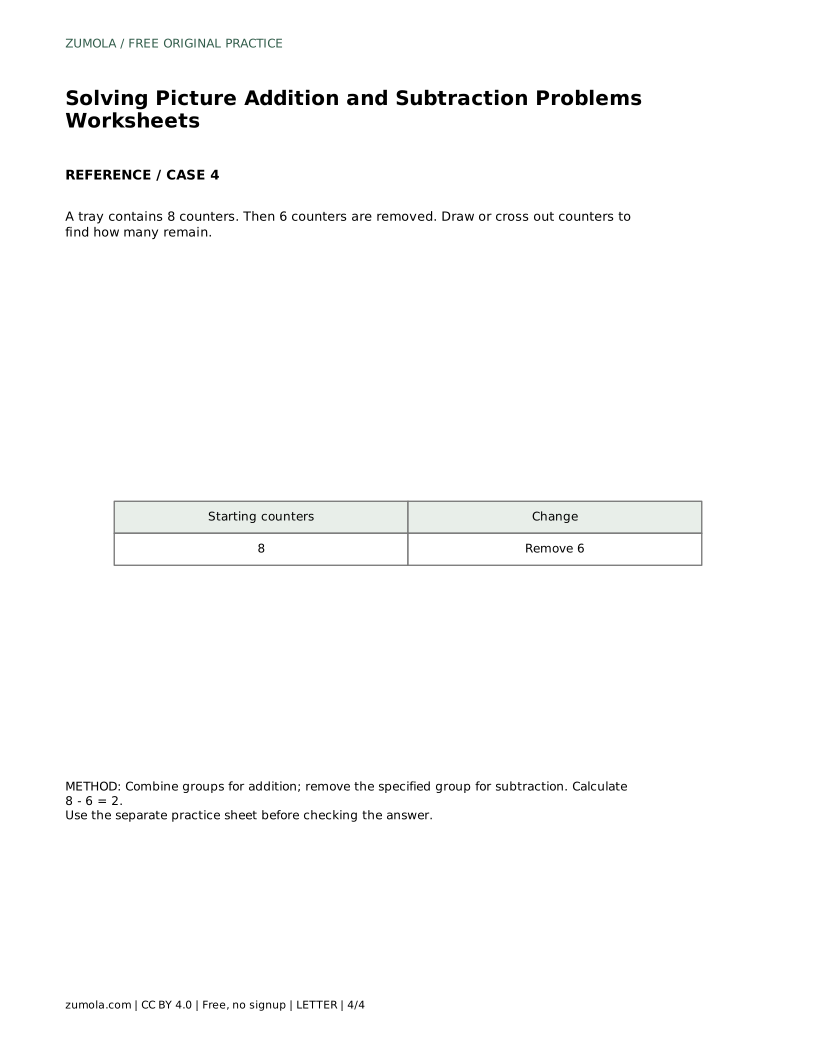
A4 · Download PDF
Free original resources
Teach picture word problems with counters: draw both groups to add, cross out to subtract, and check each answer against the story.
Four original cases, with reference diagrams, practice sheets and worked answers. Everything is free; no signup required.
LETTER · Download PDF
A4 · Download PDF
LETTER · Download PDF
A4 · Download PDF
LETTER · Download PDF
A4 · Download PDF
Use A4 or US Letter to match your printer. Use the stated values and conditions to solve each exercise; diagrams are not physical measuring rulers.
Picture word problems ask children to turn a short story into a drawing, then use that drawing to find an answer. The drawing is not decoration; it is the working. In these worksheets, counters sit on a tray, and a change is described: some are added or some are removed. Children draw the starting group, show the change, and count the result. This page explains how to read the story, choose the operation, and check the answer.
Begin by reading the whole problem aloud. Identify two things: how many counters start on the tray, and what happens next. Words such as added, more, or total signal addition. Words such as removed, taken away, or remain signal subtraction.
Only after naming the starting number and the change should children pick up a pencil. Drawing first without reading often produces a picture that does not match the story, and the count then answers a different question.
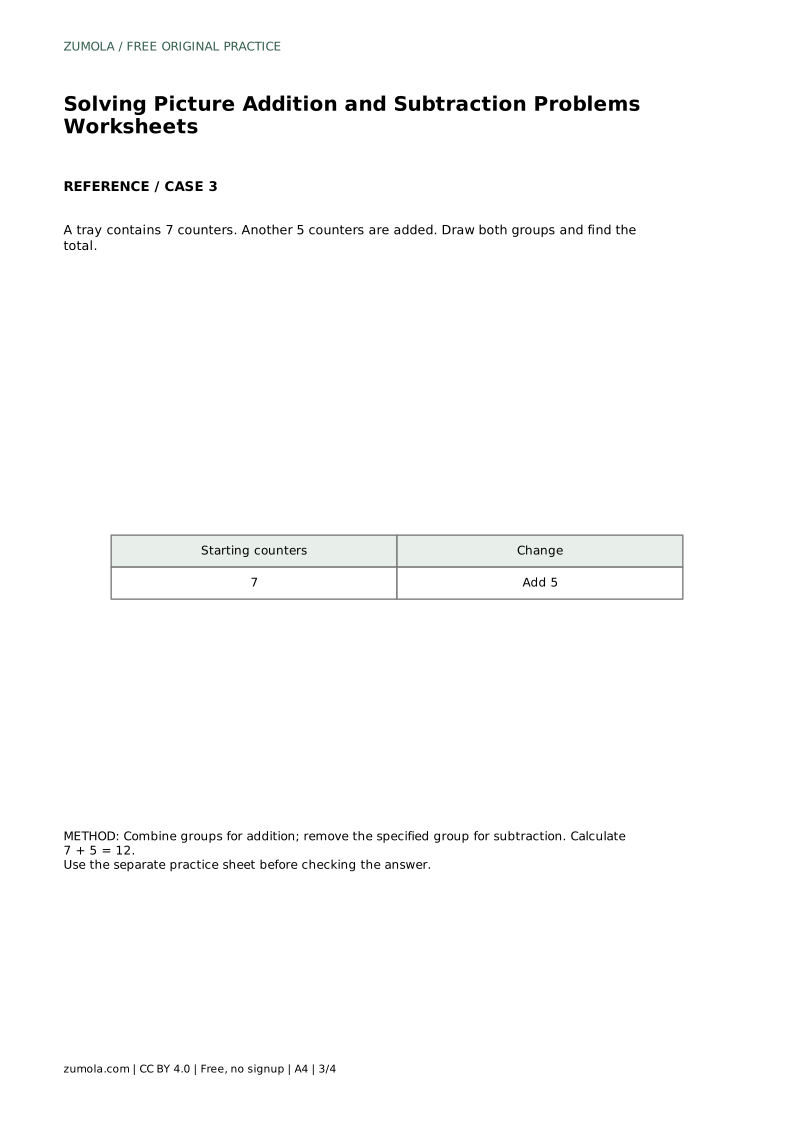
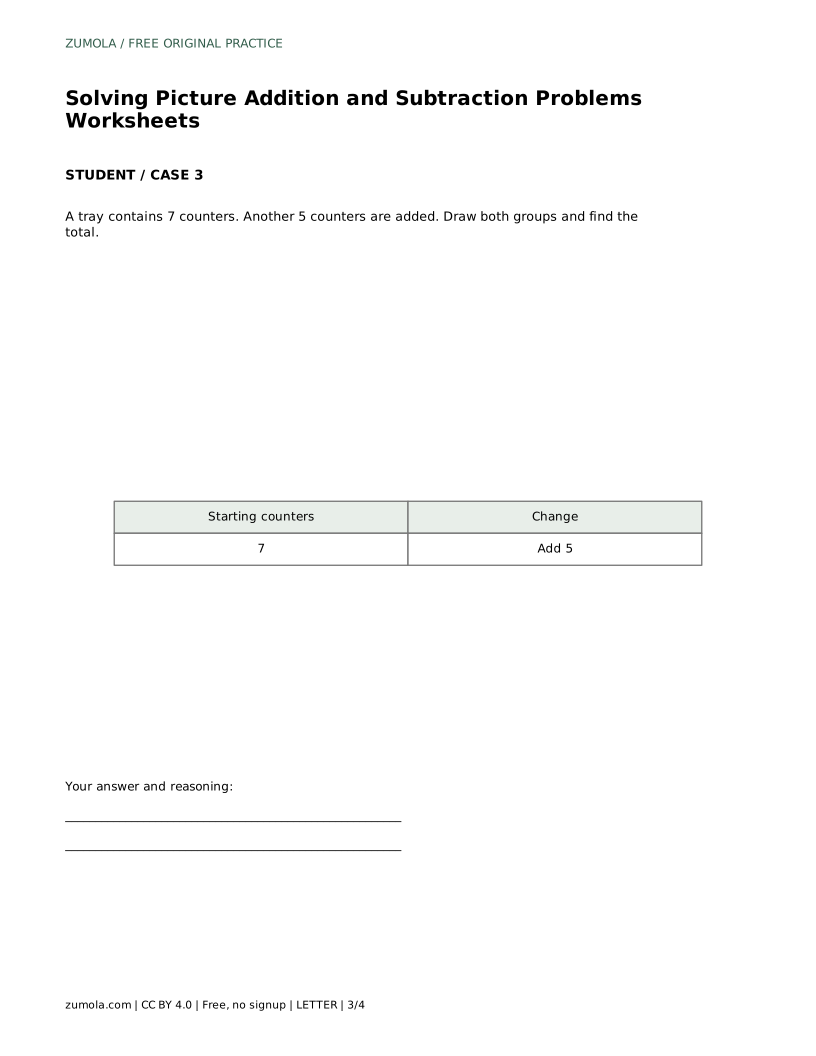
For addition, draw the starting counters in one row or cluster, then draw the added counters as a second visible group. Keep a small gap between the groups so the two parts stay clear. Count all counters together to find the total.
The gap matters. If the added counters are mixed into the first group, the child can no longer see the two parts, and the picture stops explaining the sum. A clear picture lets someone else check the total without rereading the story.
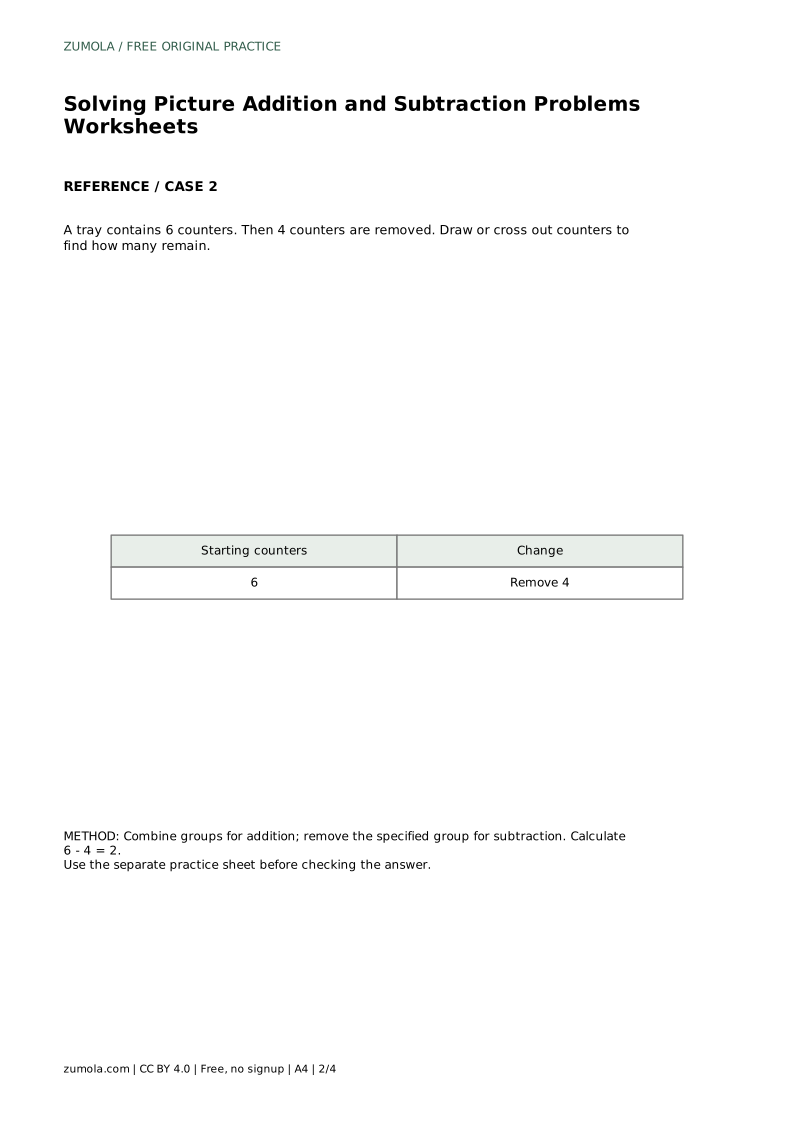
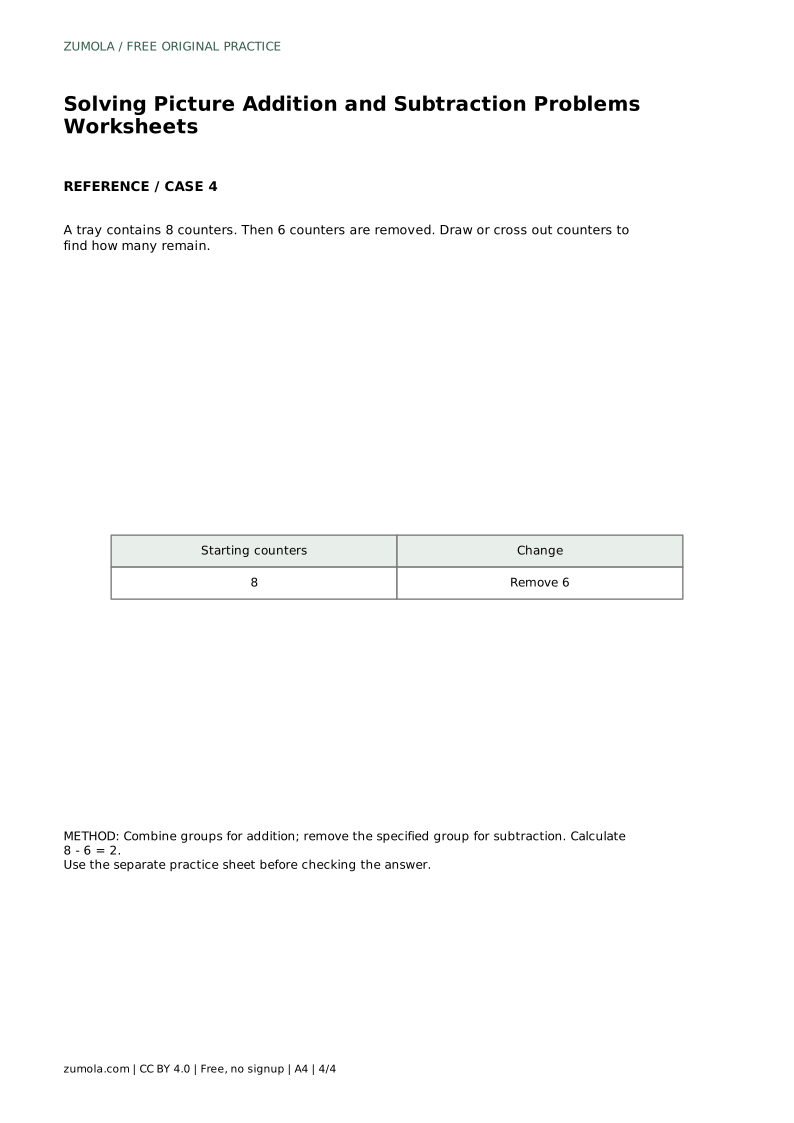
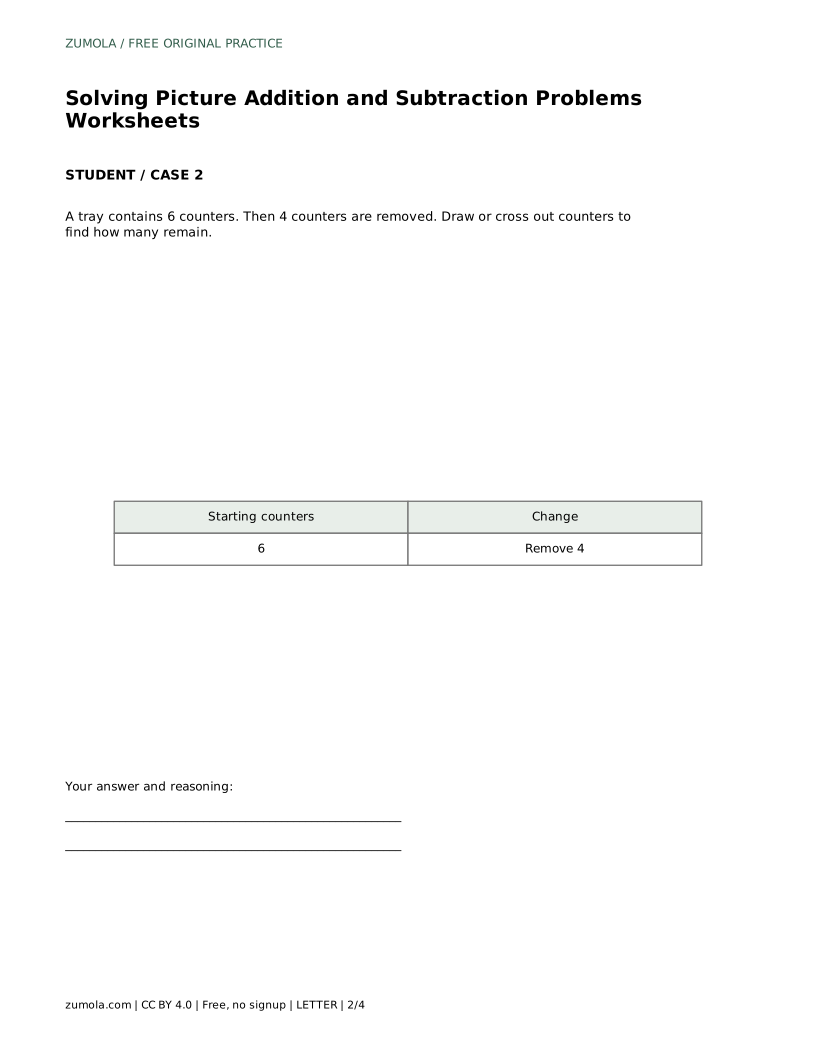
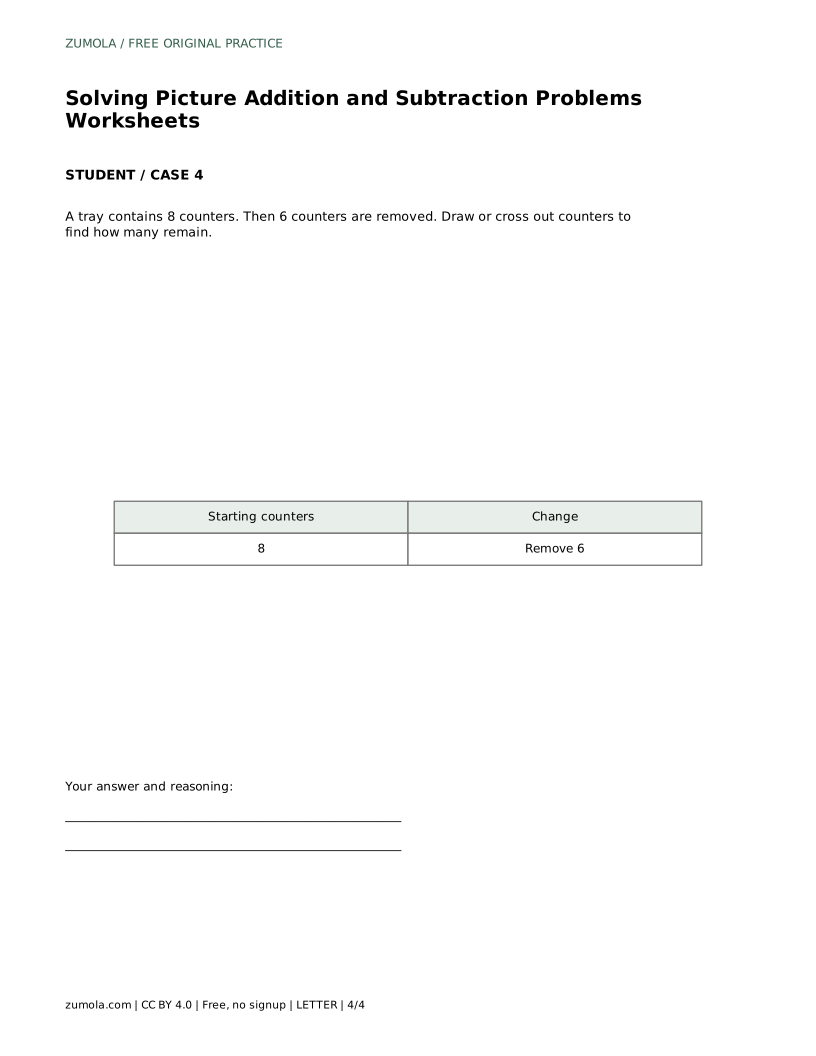
For subtraction, draw the starting counters first. Then cross out exactly the number removed, one mark per counter. The counters left uncrossed are the answer. Crossing out keeps the original total visible, which is why subtraction pictures differ from addition pictures.
Count the crossed-out marks to confirm they match the number removed. If the marks and the story disagree, fix the drawing before counting what remains.
A finished picture should answer three questions: does the starting group match the story, does the change match the story, and does the final count match the drawing? Checking in that order catches most errors, including drawing too many counters or crossing out the wrong number.
Because drawings vary in layout, judge the picture by whether the groups and marks are countable and match the story, not by whether it looks tidy or identical to a sample.
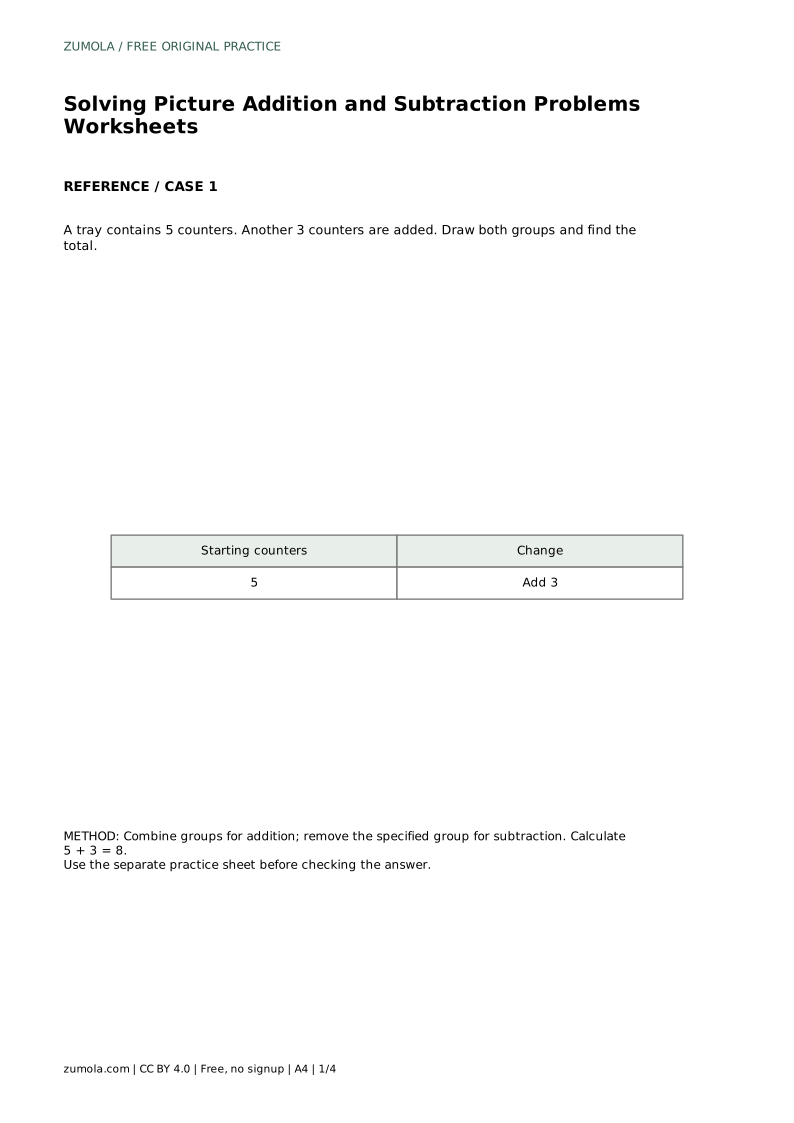
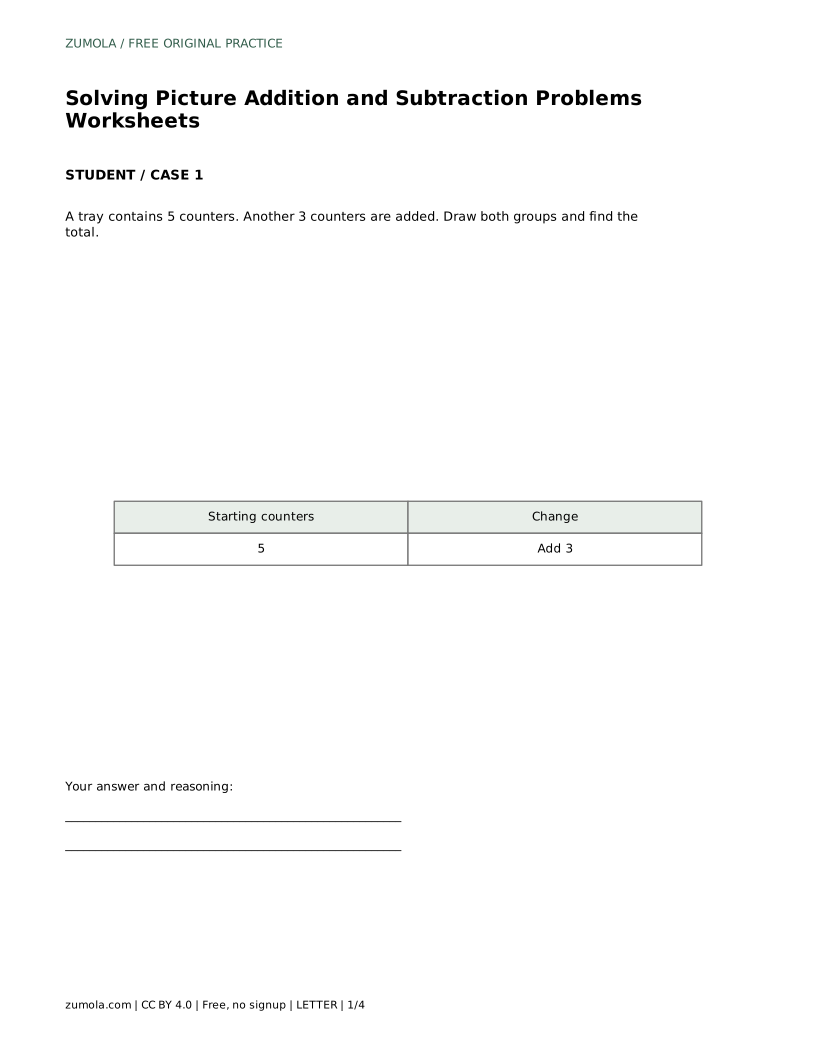
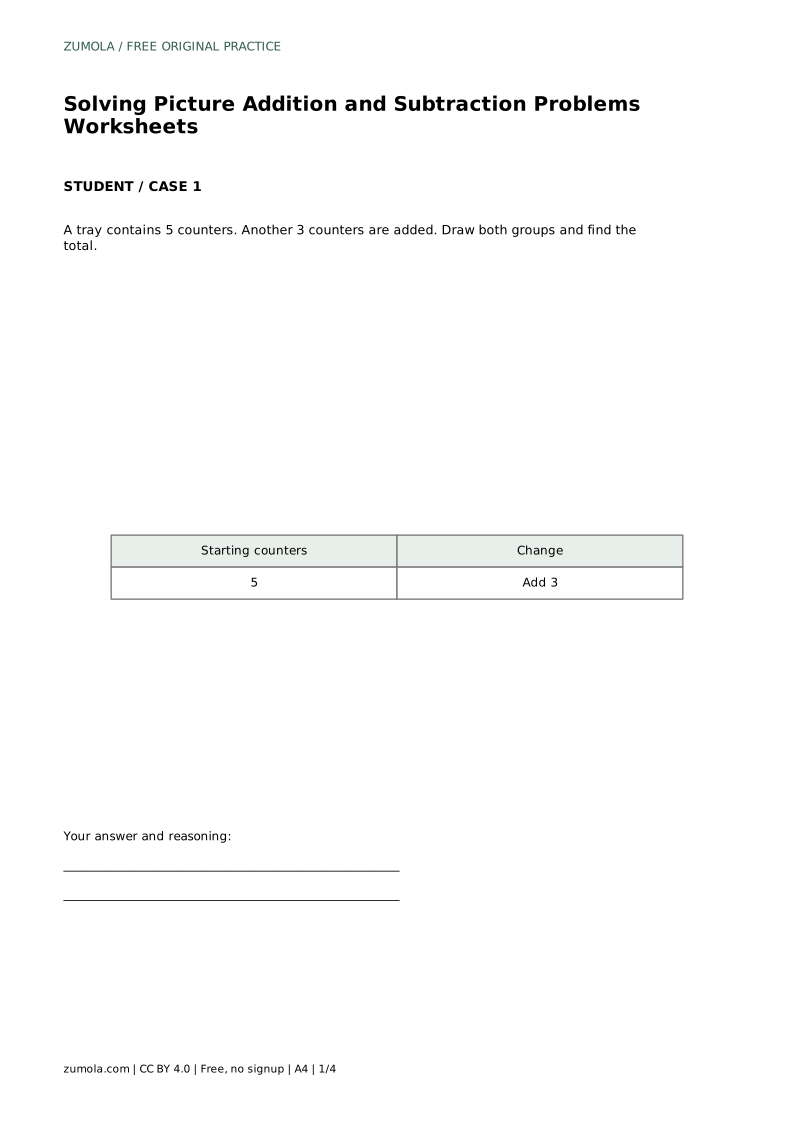
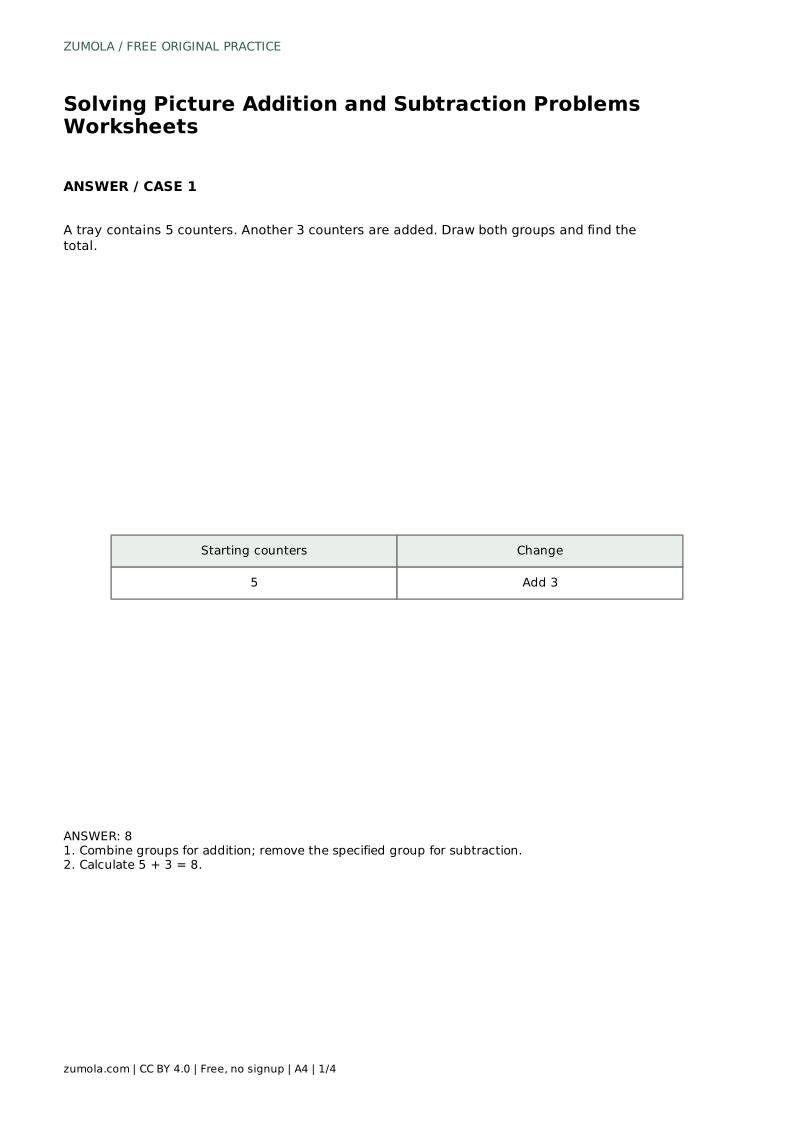
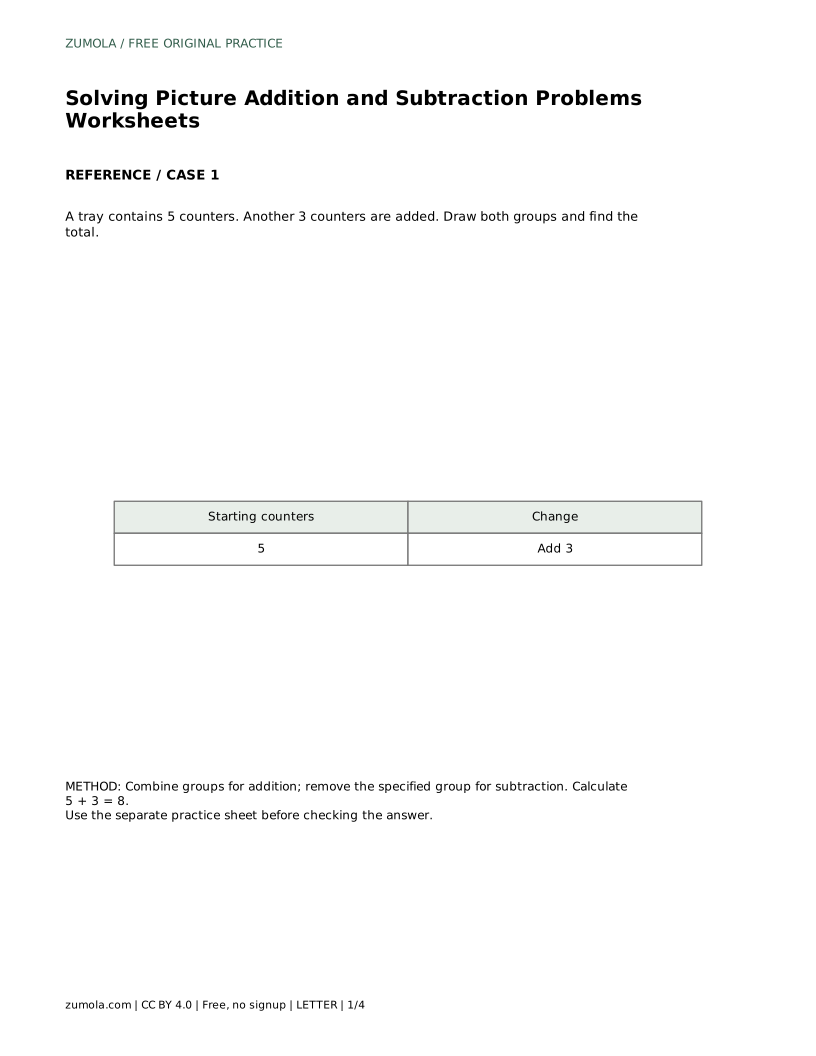
A tray contains 5 counters. Another 3 counters are added. Draw both groups and find the total.
8 Combine groups for addition; remove the specified group for subtraction. Calculate 5 + 3 = 8.
Look for the change words. Added, more, and total point to addition. Removed, taken away, and remain point to subtraction.
Neatness helps counting, but the real test is whether the starting group, the change, and the result can each be counted and matched to the story.
Trust the picture only after checking it against the story. Recount the starting group and the change, then recount the result.
All math worksheets · Free coordinate paper
Original resources · CC BY 4.0 · Free for personal and classroom use with attribution.