Reference diagrams
LETTER · Download PDF
A4 · Download PDF
Free original resources
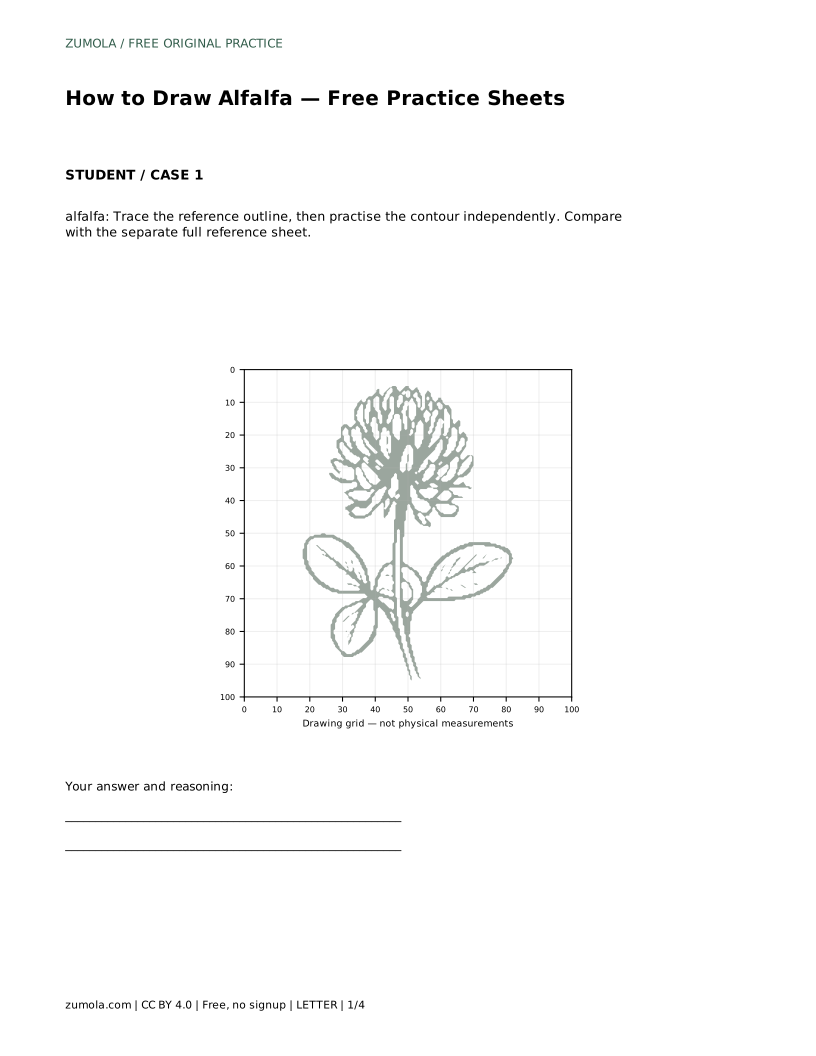
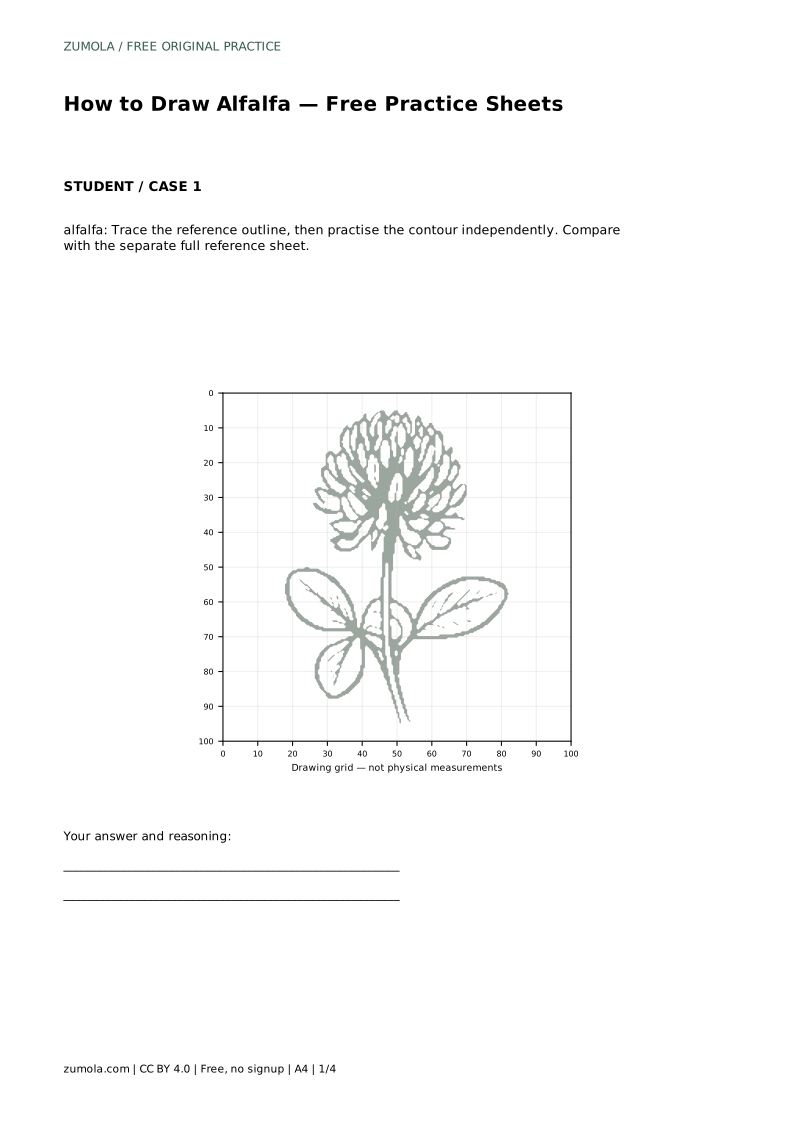
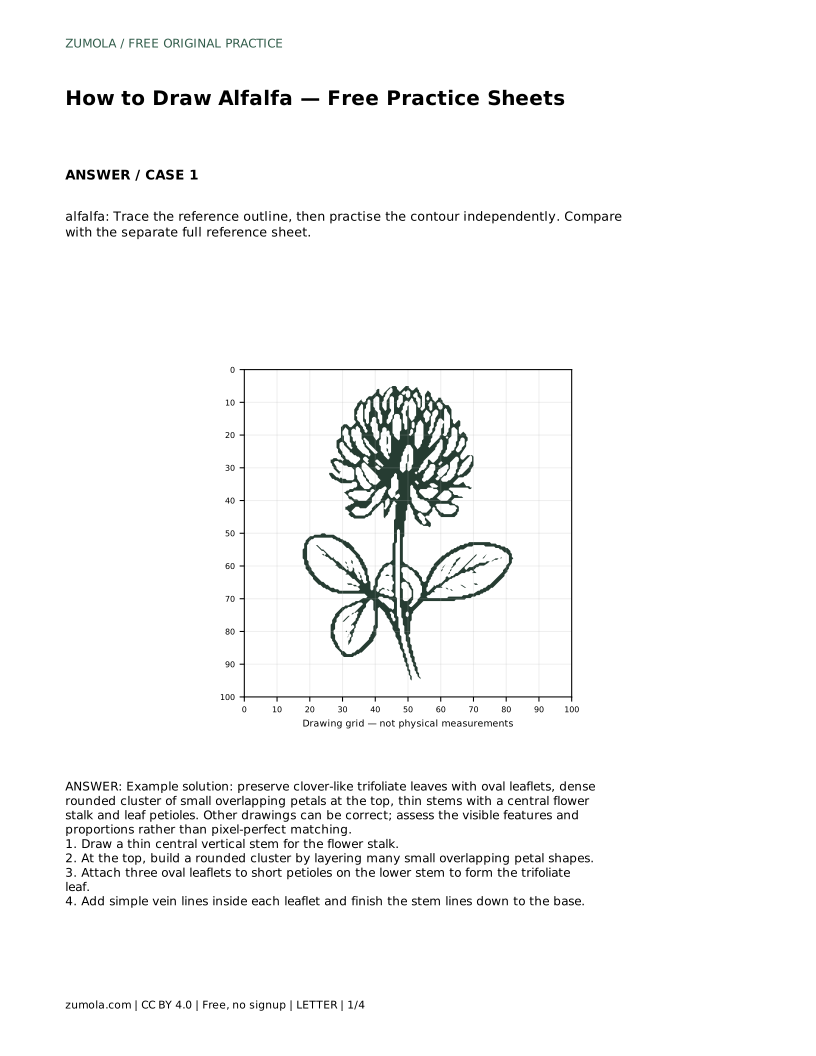
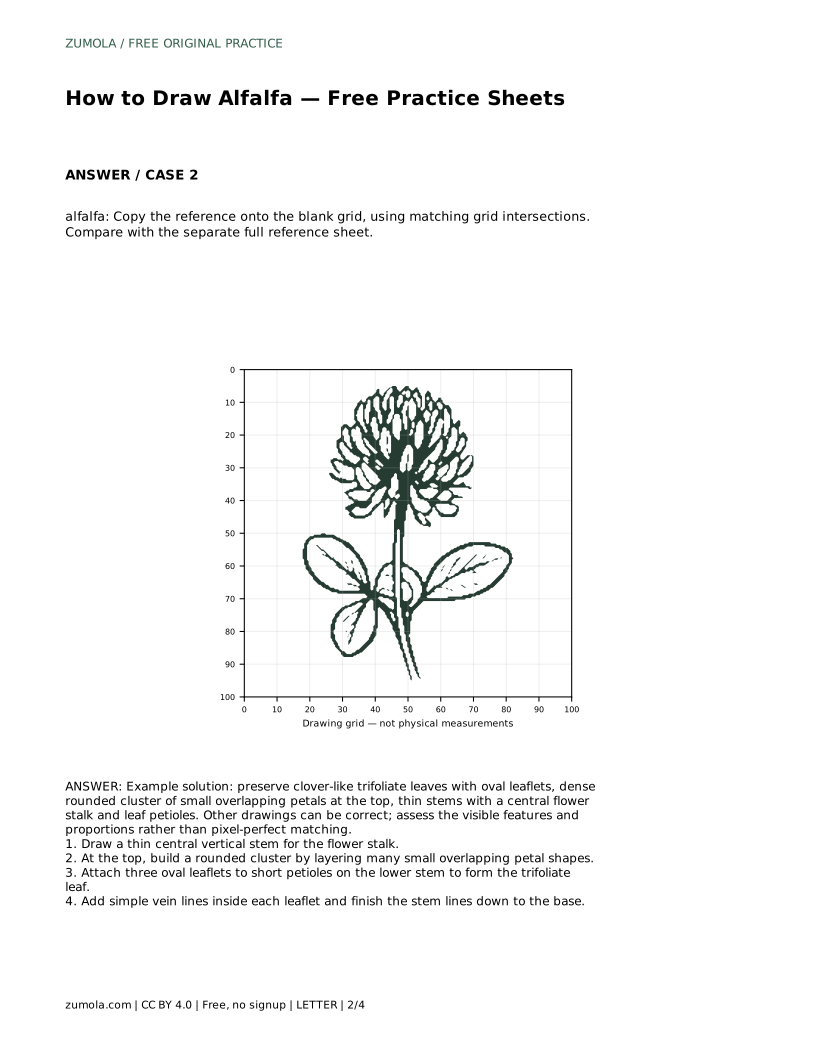
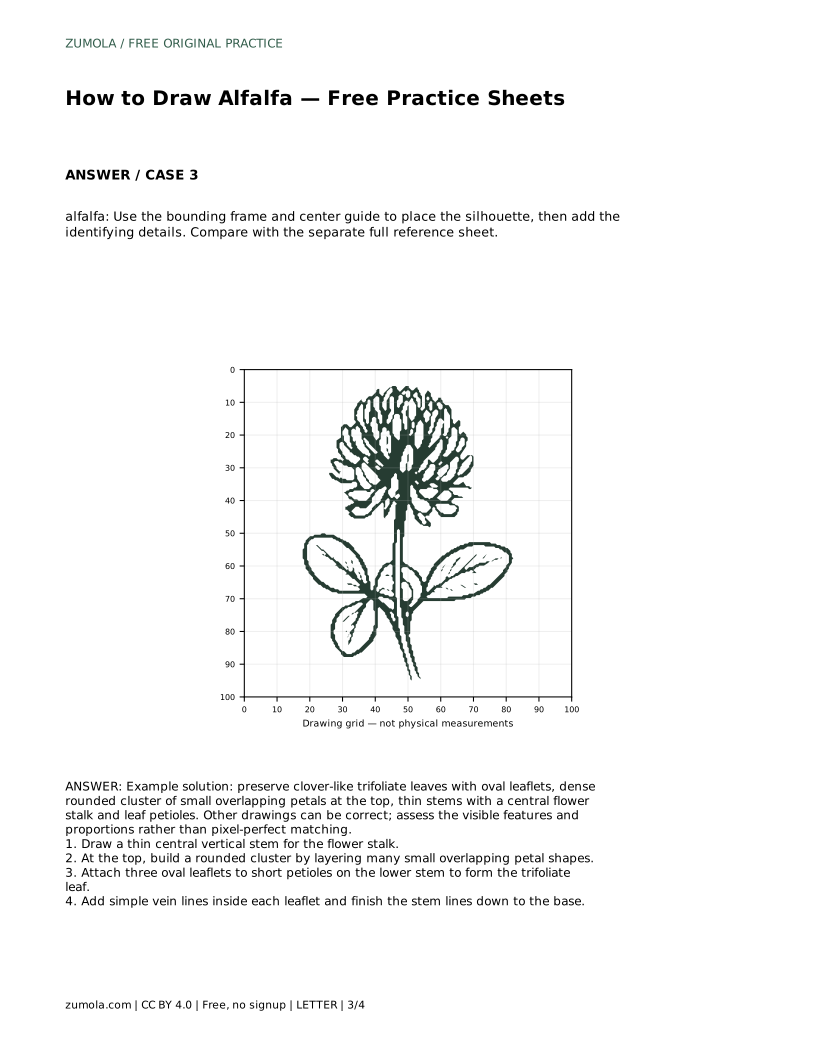
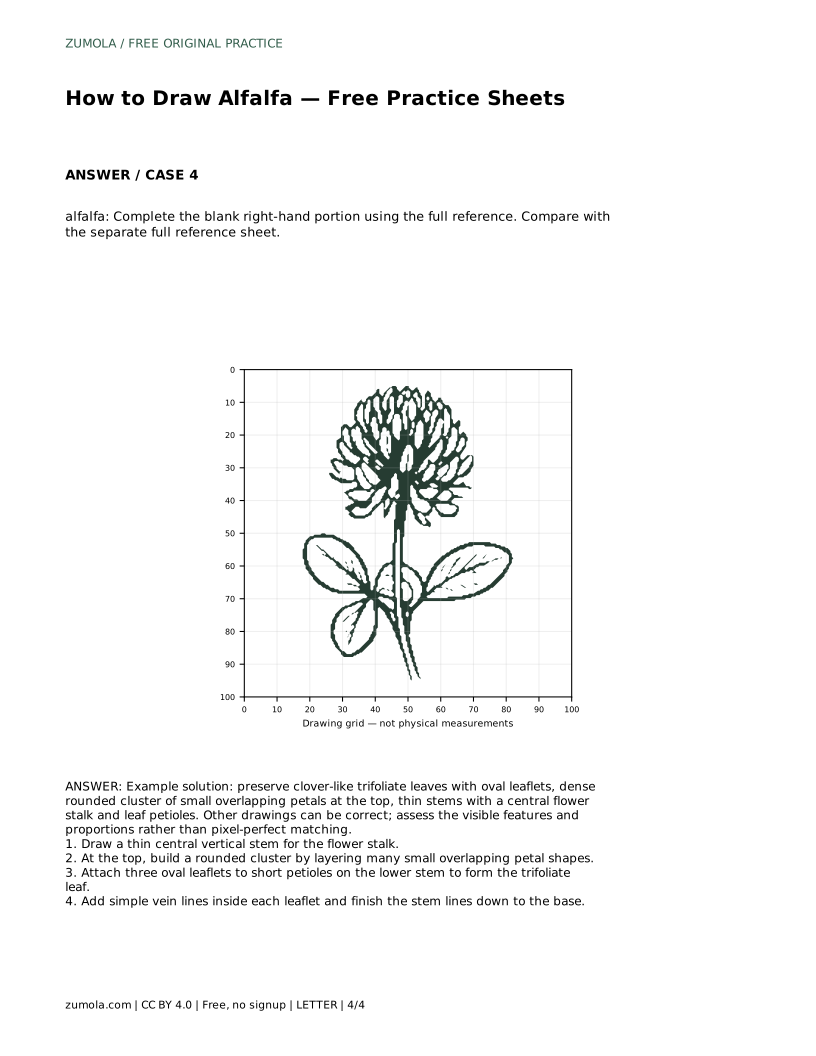
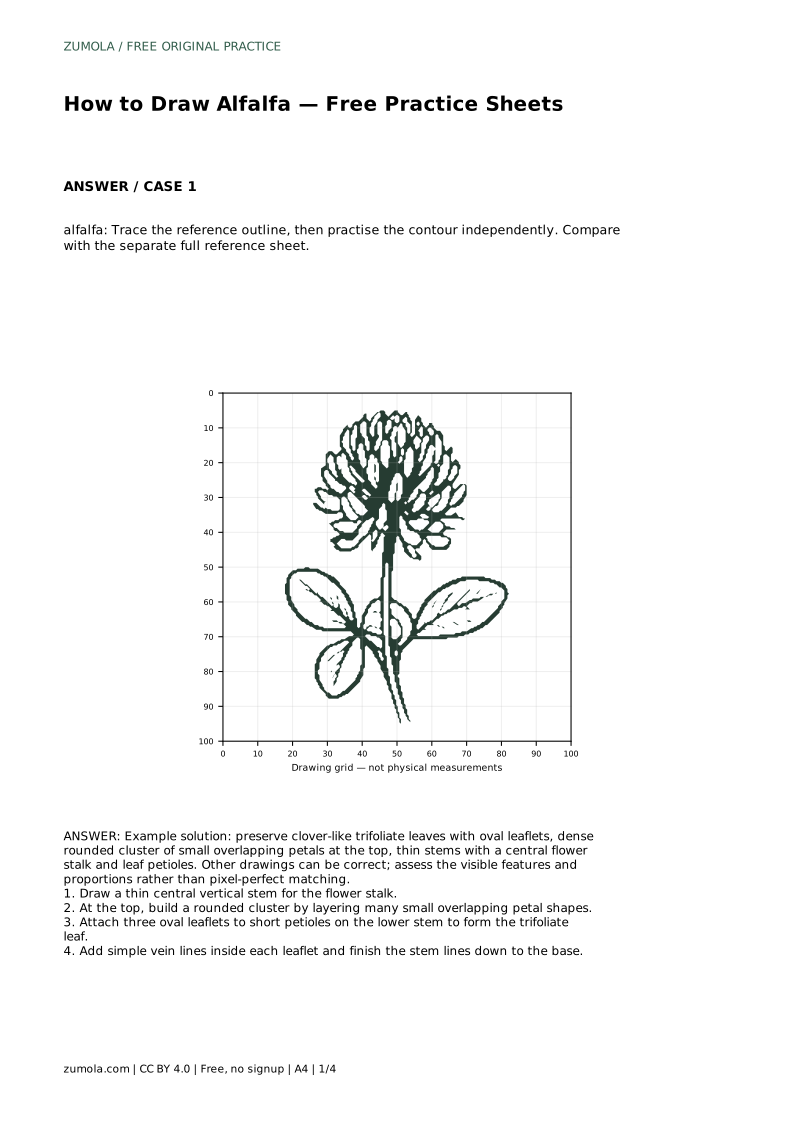
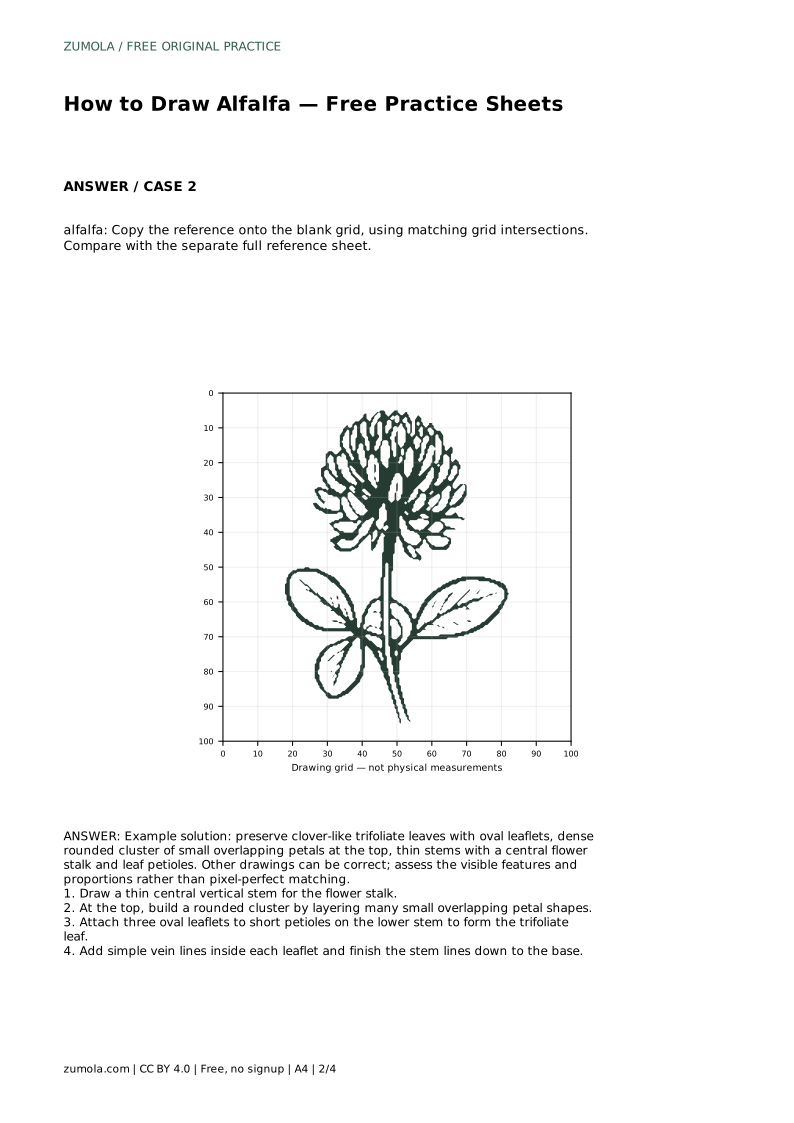
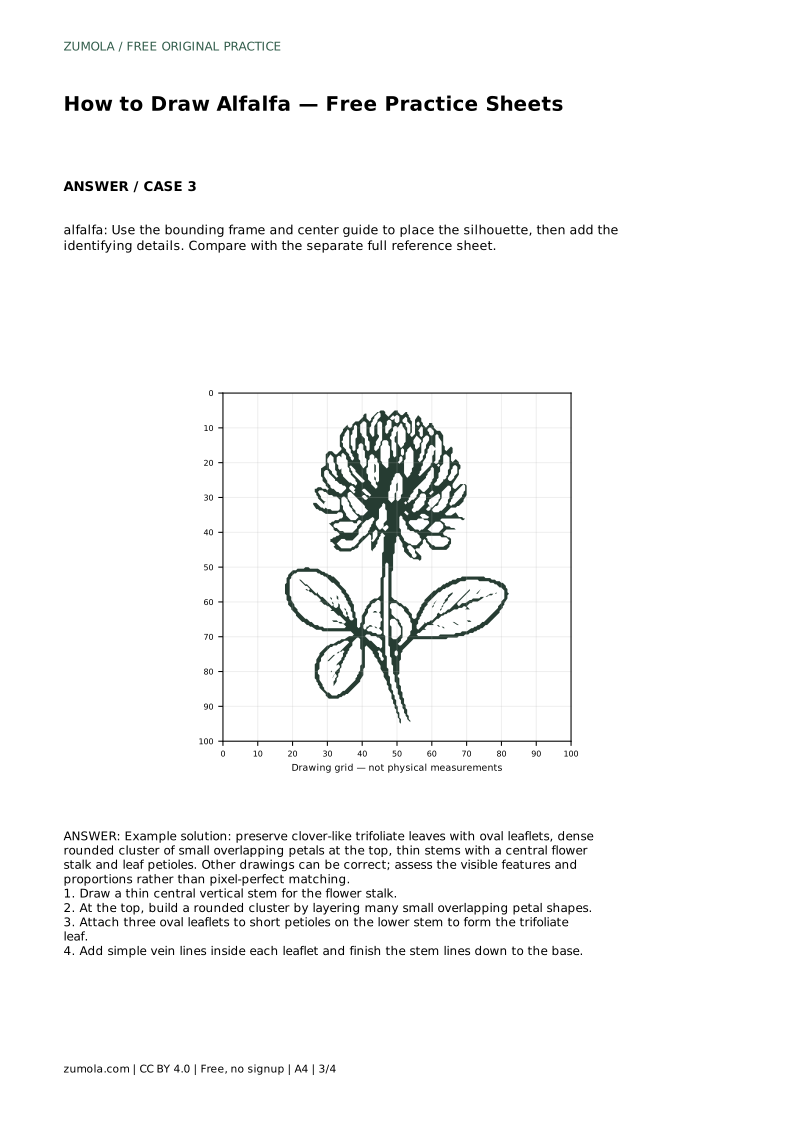
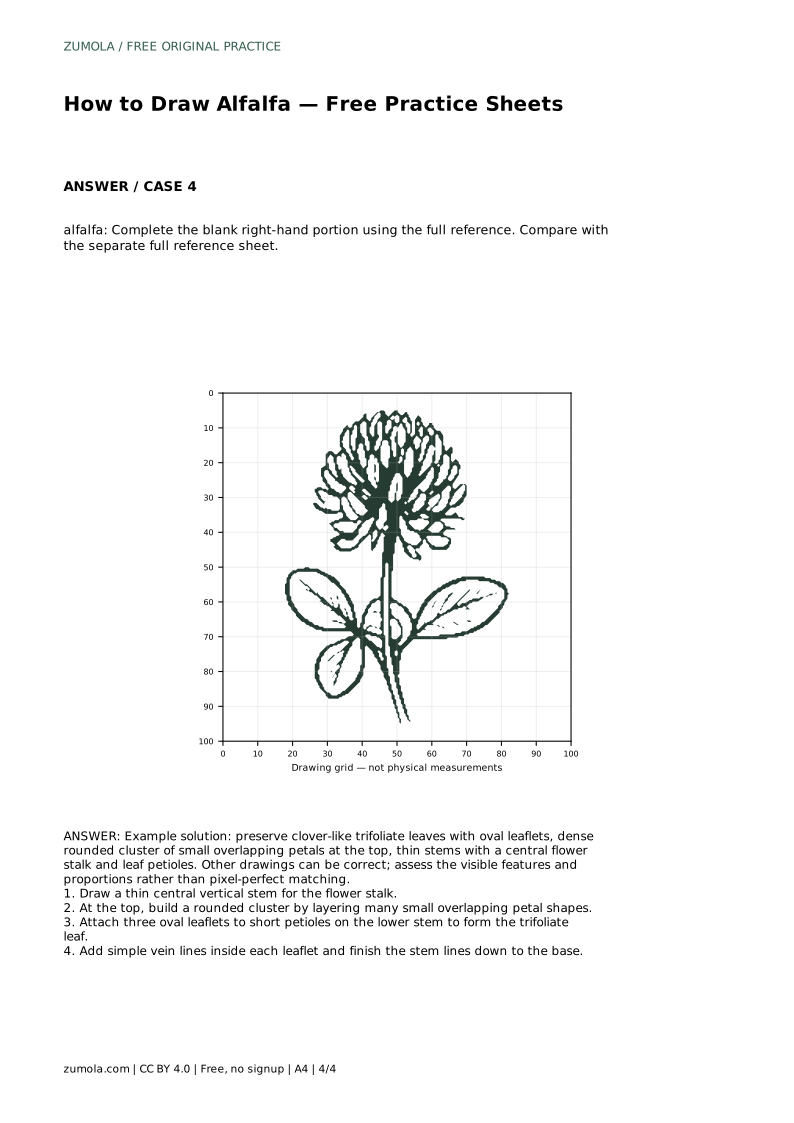
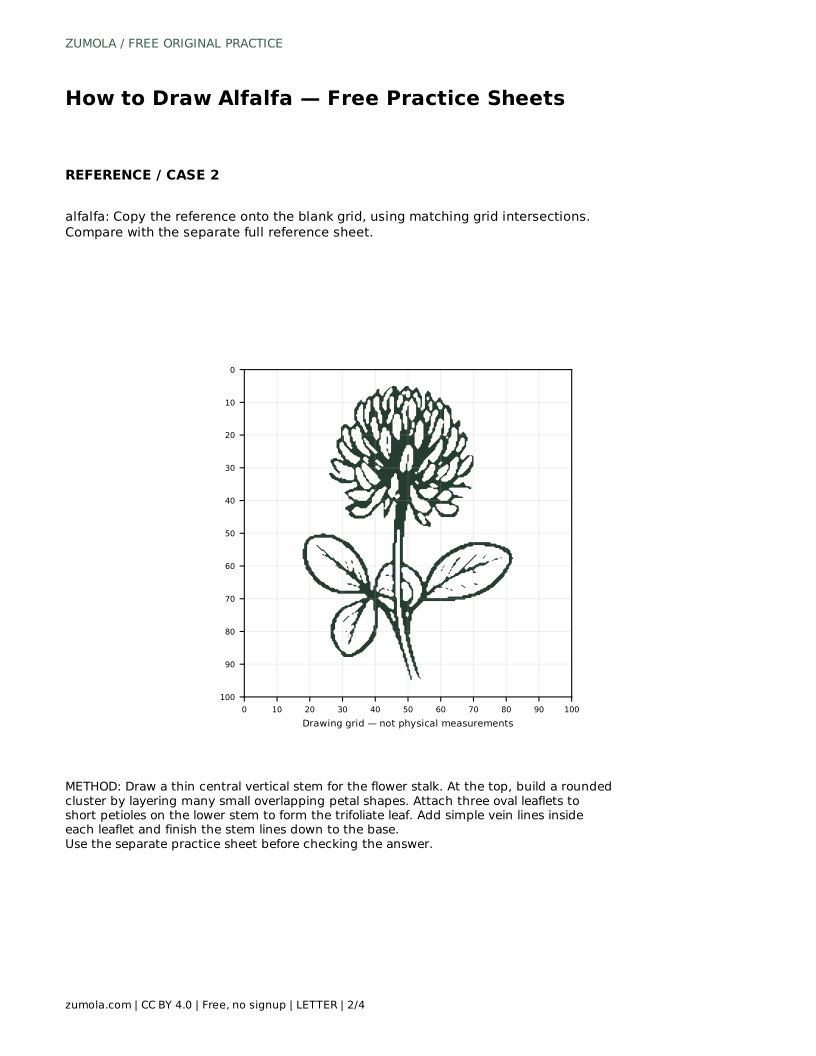
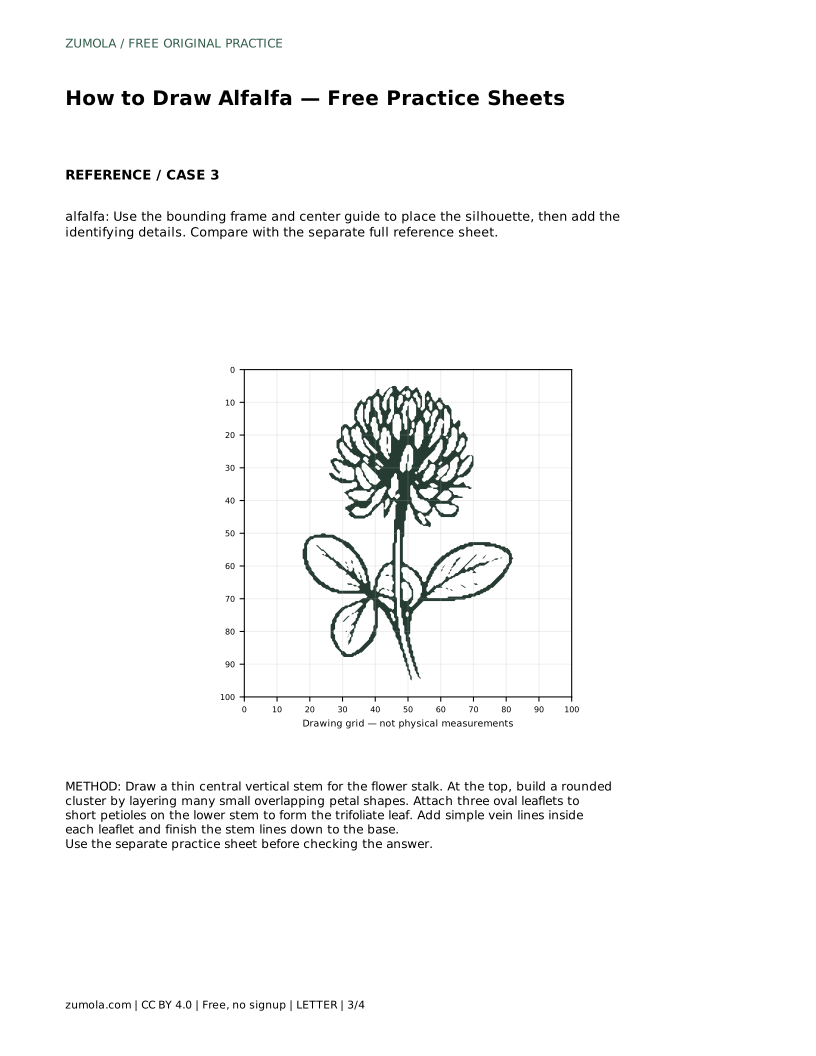
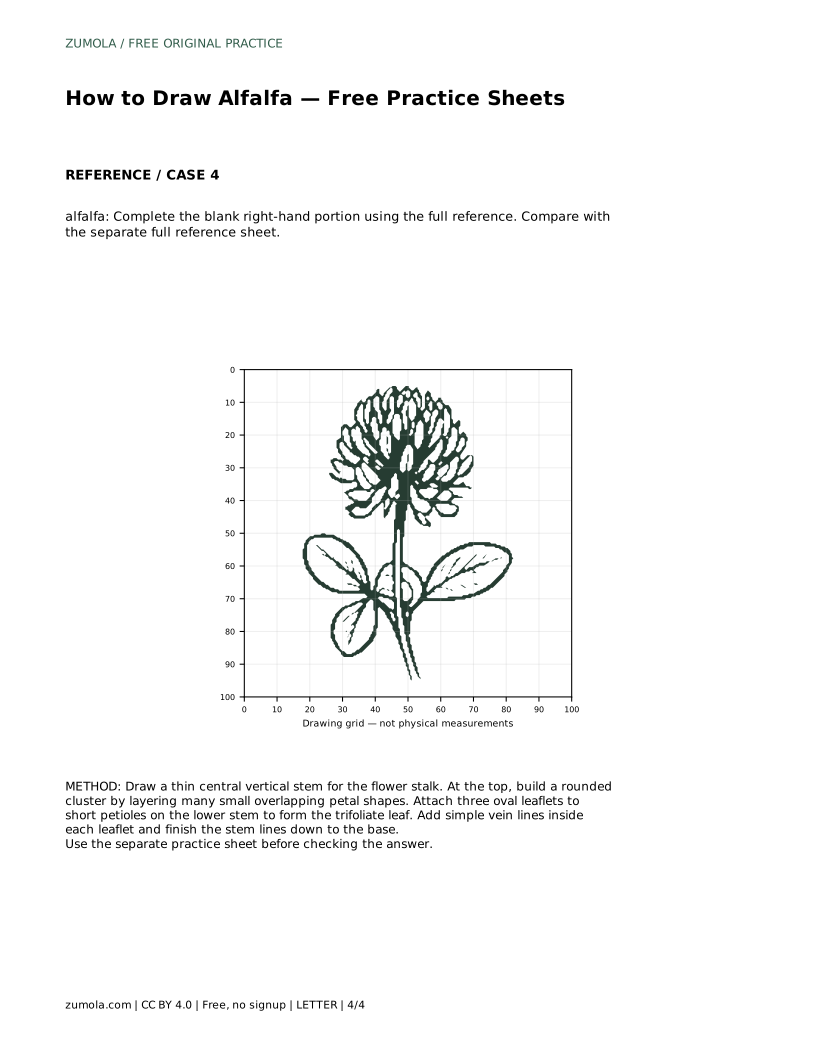
Learn to draw alfalfa by building a thin flower stalk, a rounded cluster of small overlapping petals, and clover-like trifoliate leaves with oval leaflets.
Four original cases, with reference diagrams, practice sheets and worked answers. Everything is free; no signup required.
LETTER · Download PDF
A4 · Download PDF
LETTER · Download PDF
A4 · Download PDF
LETTER · Download PDF
A4 · Download PDF
Use A4 or US Letter to match your printer. Use the stated values and conditions to solve each exercise; diagrams are not physical measuring rulers.
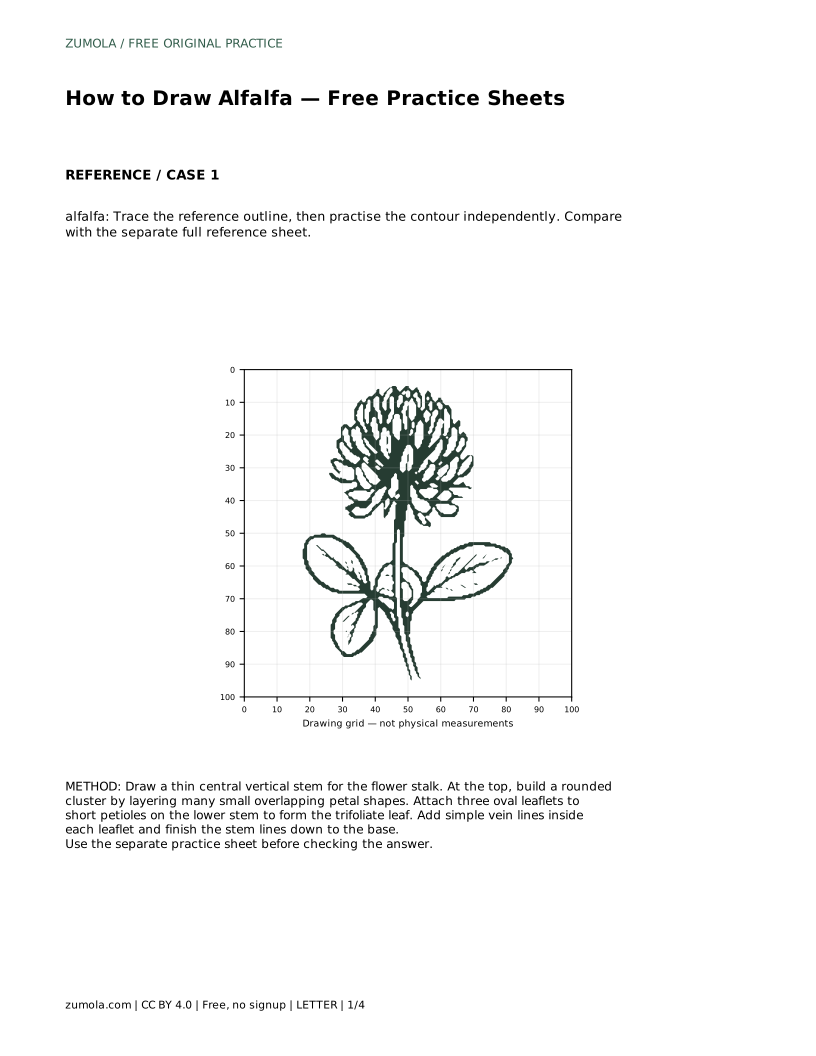
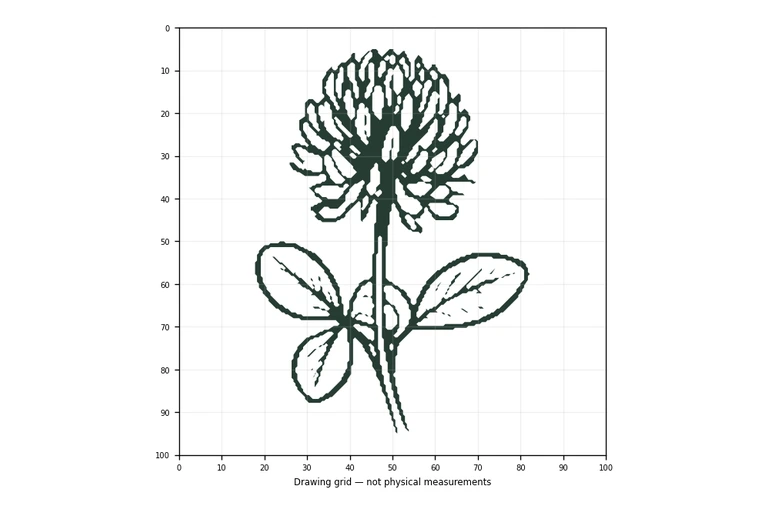
Drawing alfalfa is mostly a matter of arranging a few clear plant features in the right order. Alfalfa has a thin central flower stalk, a dense rounded cluster of small overlapping petals at the top, and leaves made of three oval leaflets on short leaf stalks. This page explains a practical sequence you can use on the free practice sheets, from the first stem line to the final leaf veins. The goal is a recognizable alfalfa drawing, not a pixel-perfect copy, because several valid arrangements can still show the same identifying features.
Begin with a thin central vertical stem for the flower stalk. Keep it light so you can adjust the height later. At the top, build a rounded cluster by layering many small overlapping petal shapes. The cluster should read as a dense, rounded mass rather than a single large bloom. Work from the outer edge inward, adding small petals that overlap slightly. Leave a little space between some petal edges so the cluster does not become a solid blob. The flower head sits at the top of the central stalk, so check that the cluster is centered over the stem before you commit to darker lines.
Alfalfa leaves are trifoliate: each leaf has three oval leaflets. Attach the leaflets to short petioles on the lower stem, not directly to the flower stalk. Place one leaf group partway down the stem and another lower down, alternating sides so the plant looks balanced. Each leaflet should be an oval with a rounded tip. Keep the three leaflets similar in size, with the center leaflet on a slightly longer stalk if you want a natural look. The leaf groups should be clearly separate from the flower head so the drawing does not merge the two features.
Add simple vein lines inside each leaflet. A single central vein with a few short side veins is enough; you do not need a detailed network. Finish the stem lines down to the base, keeping the central flower stalk distinct from the leaf petioles. If you are using a grid or bounding frame, compare the position of the flower head and leaf groups against the reference before adding final details. The drawing is successful when the rounded flower cluster, the thin central stalk, and the three-leaflet leaves are all visible and in proportion.
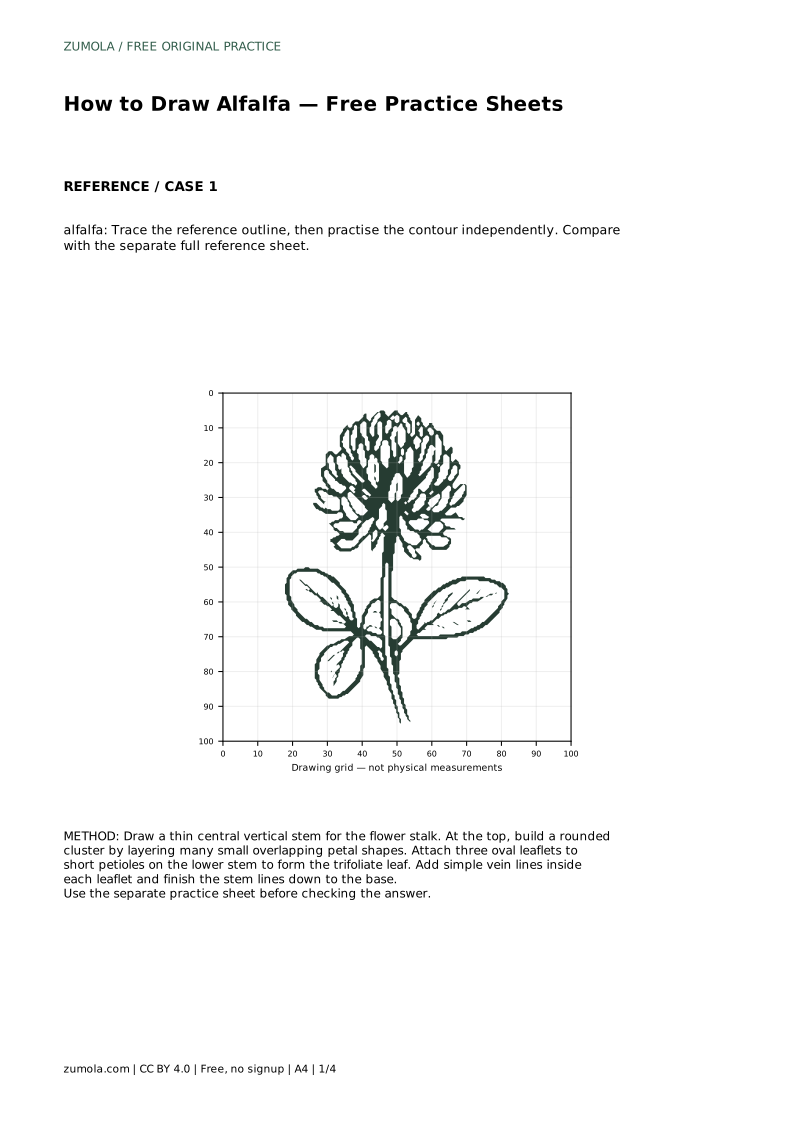
alfalfa: Trace the reference outline, then practise the contour independently. Compare with the separate full reference sheet.
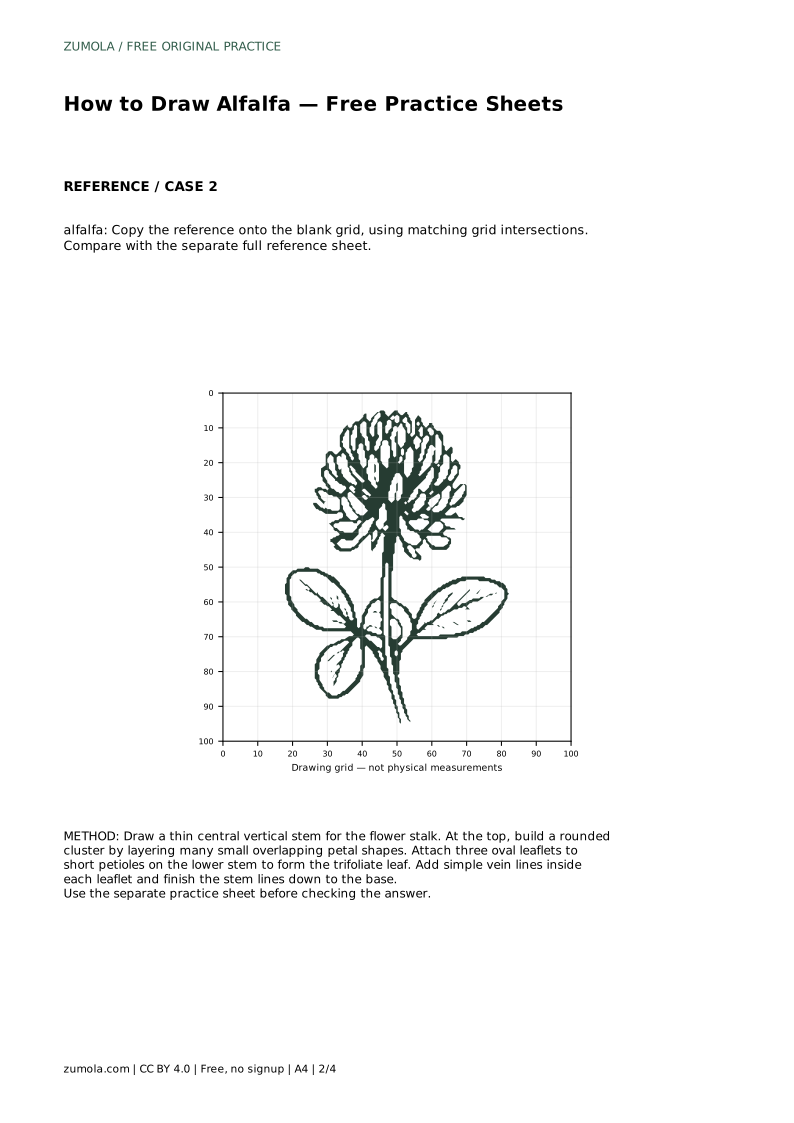
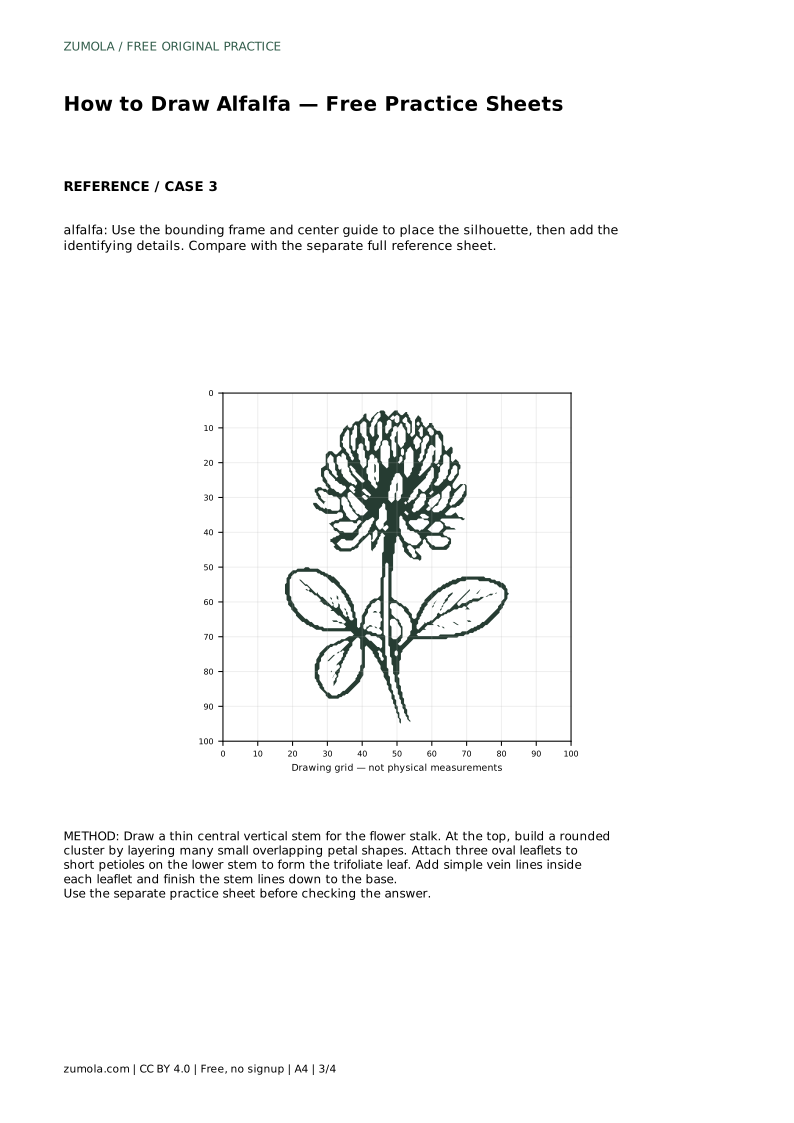
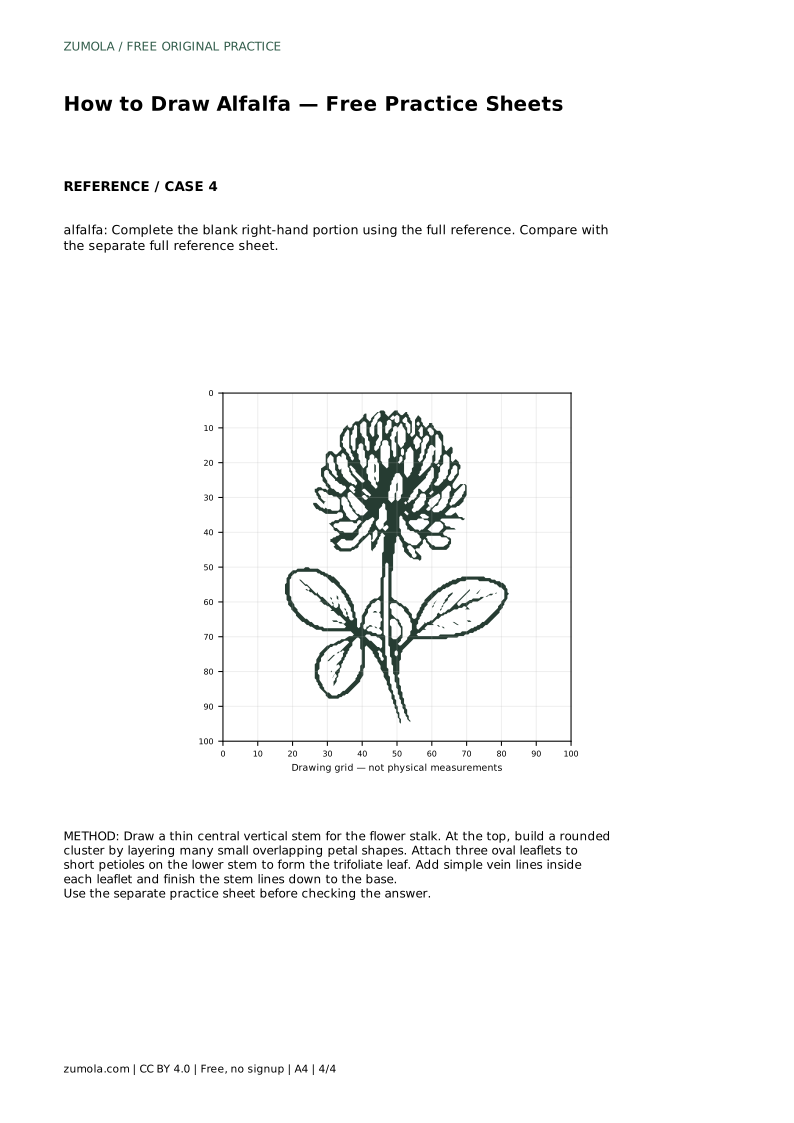
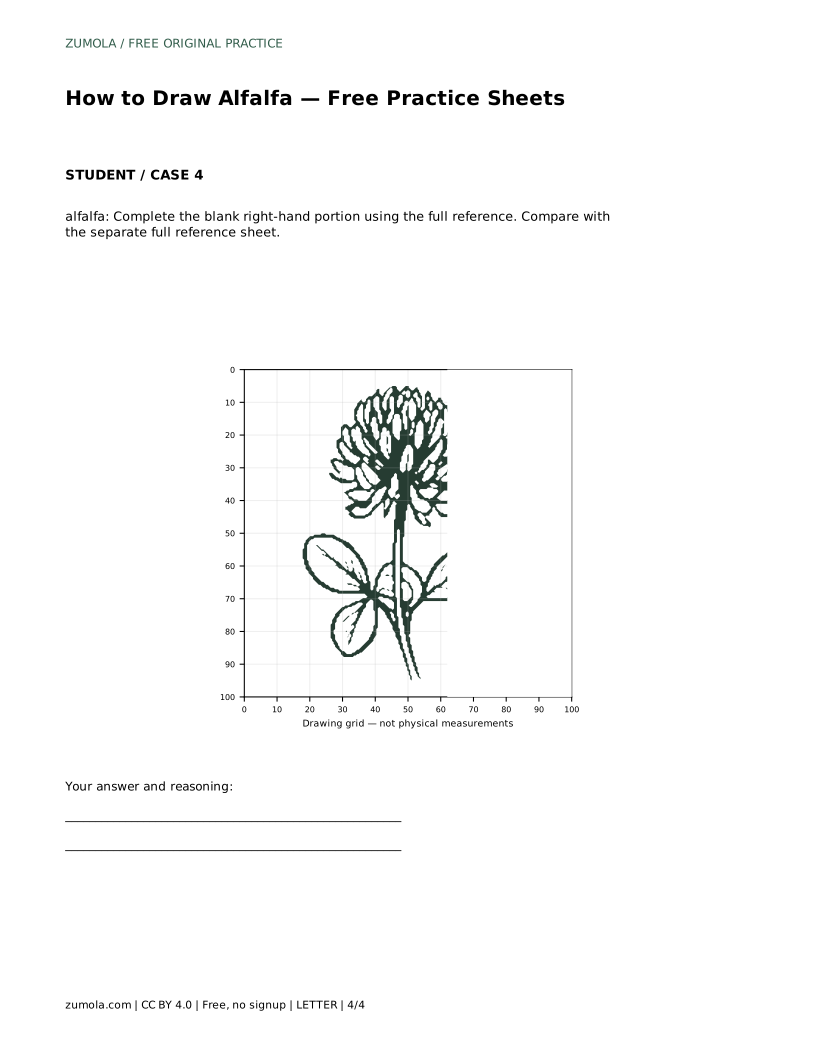
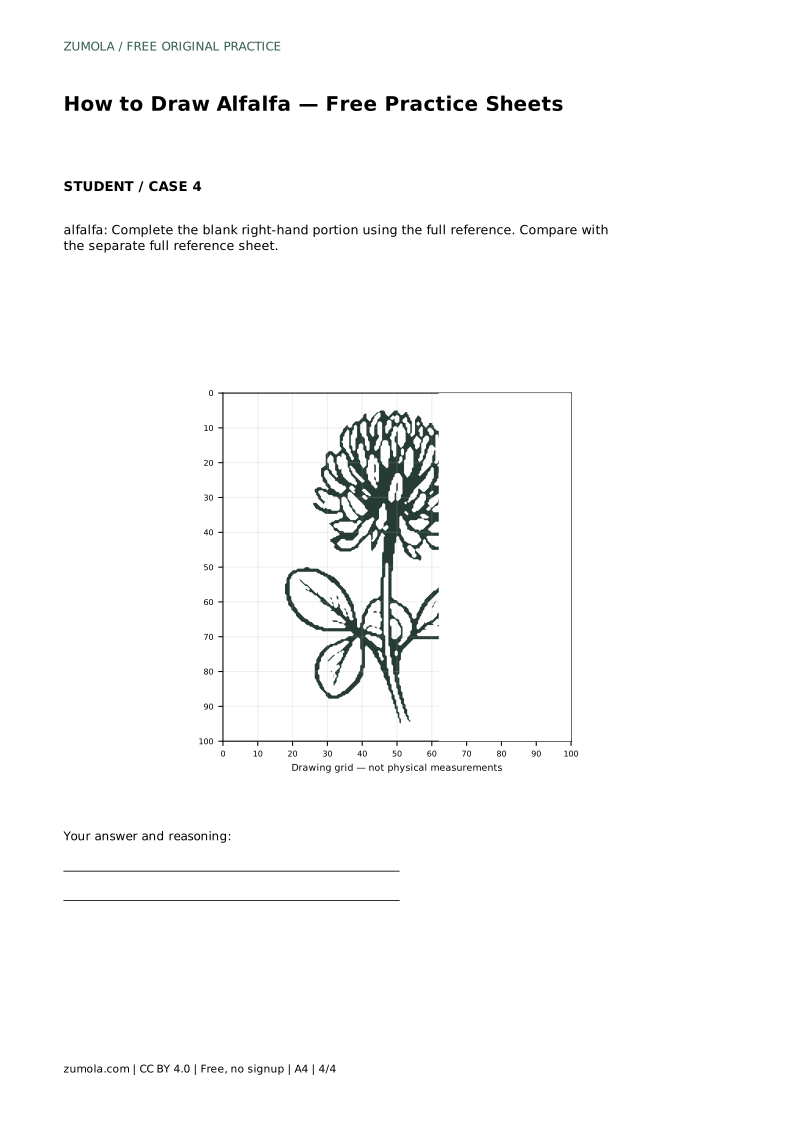
Example solution: preserve clover-like trifoliate leaves with oval leaflets, dense rounded cluster of small overlapping petals at the top, thin stems with a central flower stalk and leaf petioles. Other drawings can be correct; assess the visible features and proportions rather than pixel-perfect matching. Draw a thin central vertical stem for the flower stalk. At the top, build a rounded cluster by layering many small overlapping petal shapes. Attach three oval leaflets to short petioles on the lower stem to form the trifoliate leaf. Add simple vein lines inside each leaflet and finish the stem lines down to the base.
Each leaf is trifoliate, so it has three oval leaflets attached to short petioles on the lower stem.
No. It should read as a dense rounded cluster of small overlapping petals. Slight irregularity is fine as long as the cluster is centered over the thin flower stalk.
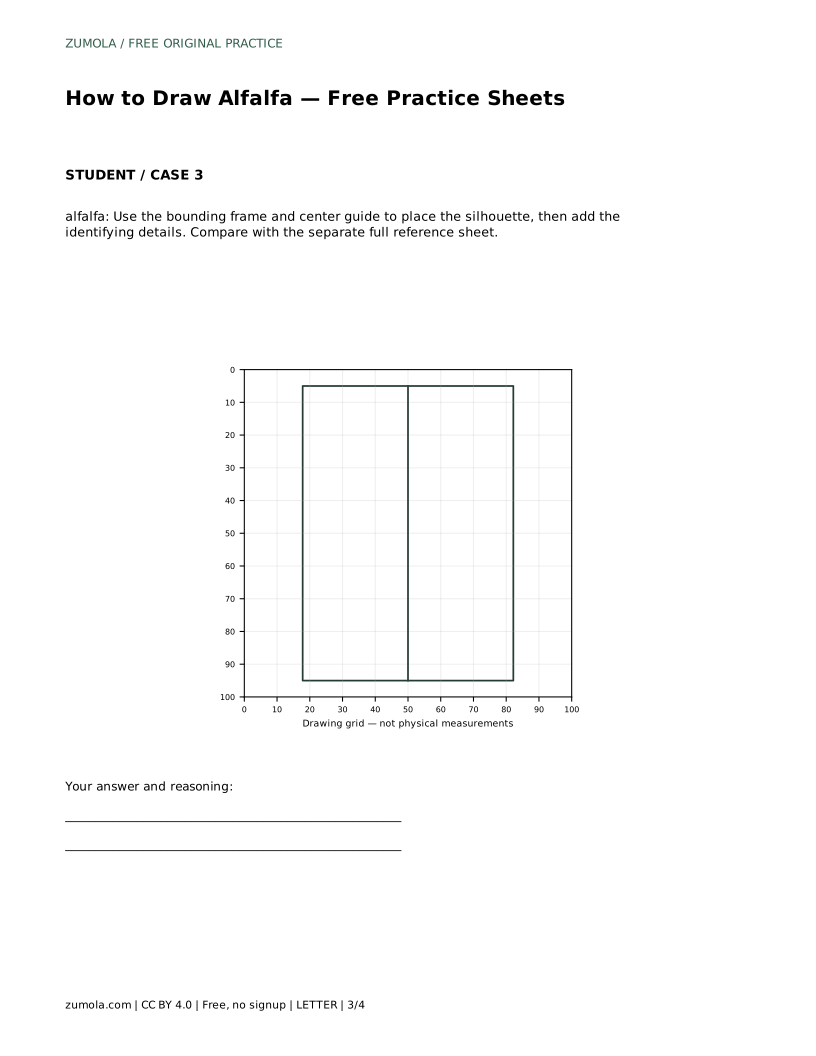
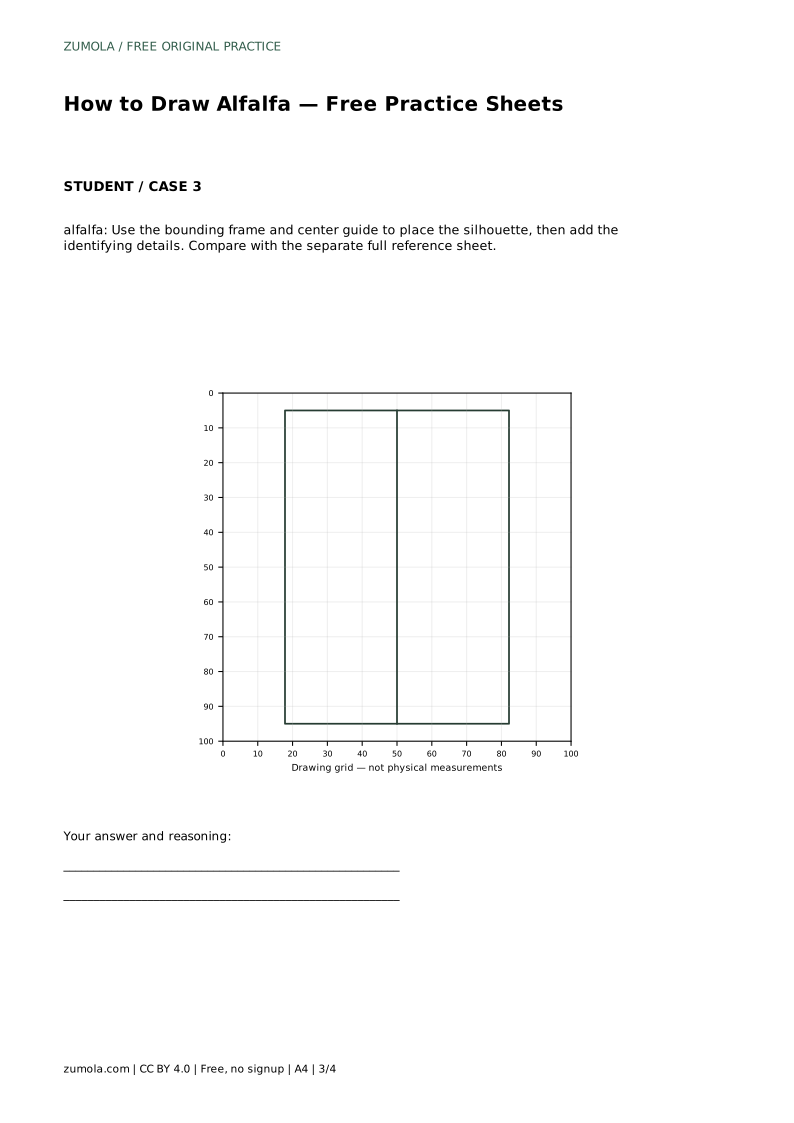
Yes. Use matching grid intersections or the center guide to place the silhouette, then compare the flower head and leaf group positions with the reference before adding veins and final stem lines.
All drawing practice · Free coordinate paper
Original resources · CC BY 4.0 · Free for personal and classroom use with attribution.