Reference diagrams
LETTER · Download PDF
A4 · Download PDF
Free original resources
Learn to draw a yucca by building a compact central base, radiating stiff pointed blades, and a low spreading base of shorter leaves. Free practice sheets included.
Four original cases, with reference diagrams, practice sheets and worked answers. Everything is free; no signup required.
LETTER · Download PDF
A4 · Download PDF
LETTER · Download PDF
A4 · Download PDF
LETTER · Download PDF
A4 · Download PDF
Use A4 or US Letter to match your printer. Use the stated values and conditions to solve each exercise; diagrams are not physical measuring rulers.
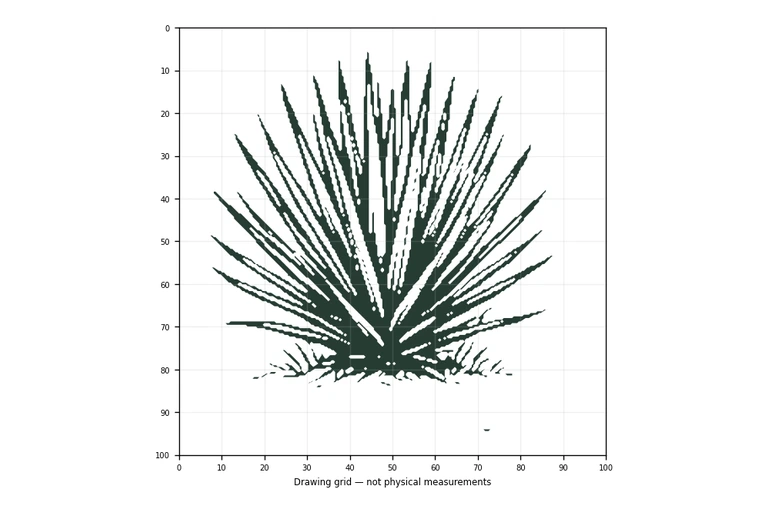
A yucca drawing is mostly a study in straight lines and careful angles. The plant reads clearly when stiff, pointed blades radiate from one compact base and the shorter leaves spread low around the bottom. This page explains the order of construction, how to keep the rosette connected, and how to judge your own result fairly. The practice sheets let you trace, copy onto a grid, place the silhouette with a bounding frame and center guide, or complete a blank portion from the full reference.
Every yucca rosette grows from a single compact center. Place a small base point near the bottom center of the page before drawing any leaf. This point is the anchor for every blade, so keep it small and fixed rather than letting it drift as the drawing grows.
Working outward from one point prevents the scattered look that appears when leaves are drawn separately and joined later. If the base spreads too wide, the rosette stops reading as one plant.
From the base point, draw long straight tapering blades fanning upward and outward at varied angles. Yucca leaves are stiff, so the outlines should stay mostly straight rather than curving loosely. Each blade narrows steadily toward a sharp tip.
Vary the angles so the rosette looks natural. If every blade points at the same height or spreads evenly like spokes, the drawing looks mechanical. Some blades should rise steeply, others lean outward, and a few may angle lower toward the sides.
The lower part of the plant carries shorter, narrower blades that spread outward near the ground. These offshoots give the yucca its low, grassy base and stop the rosette from looking like a floating fan.
Add these shorter blades near the bottom sides, angling them outward and slightly downward. Keep them narrower than the main blades and connect them to the same central area so the whole plant stays one structure.
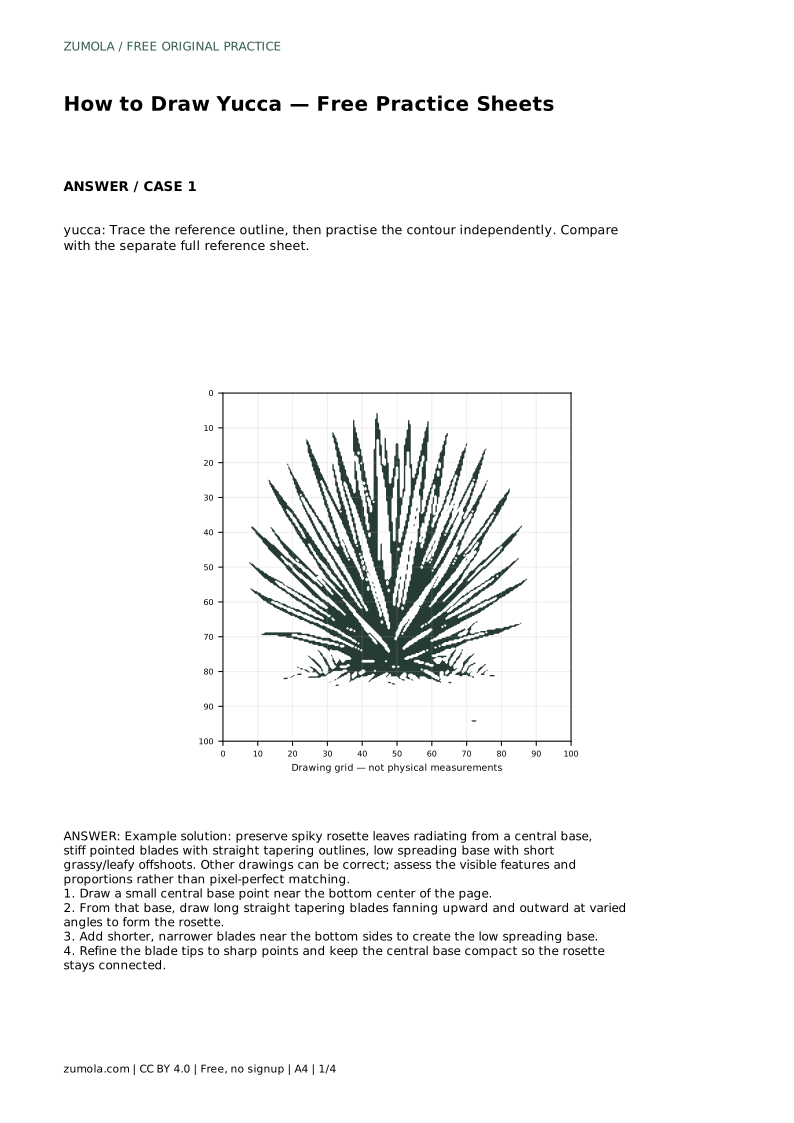
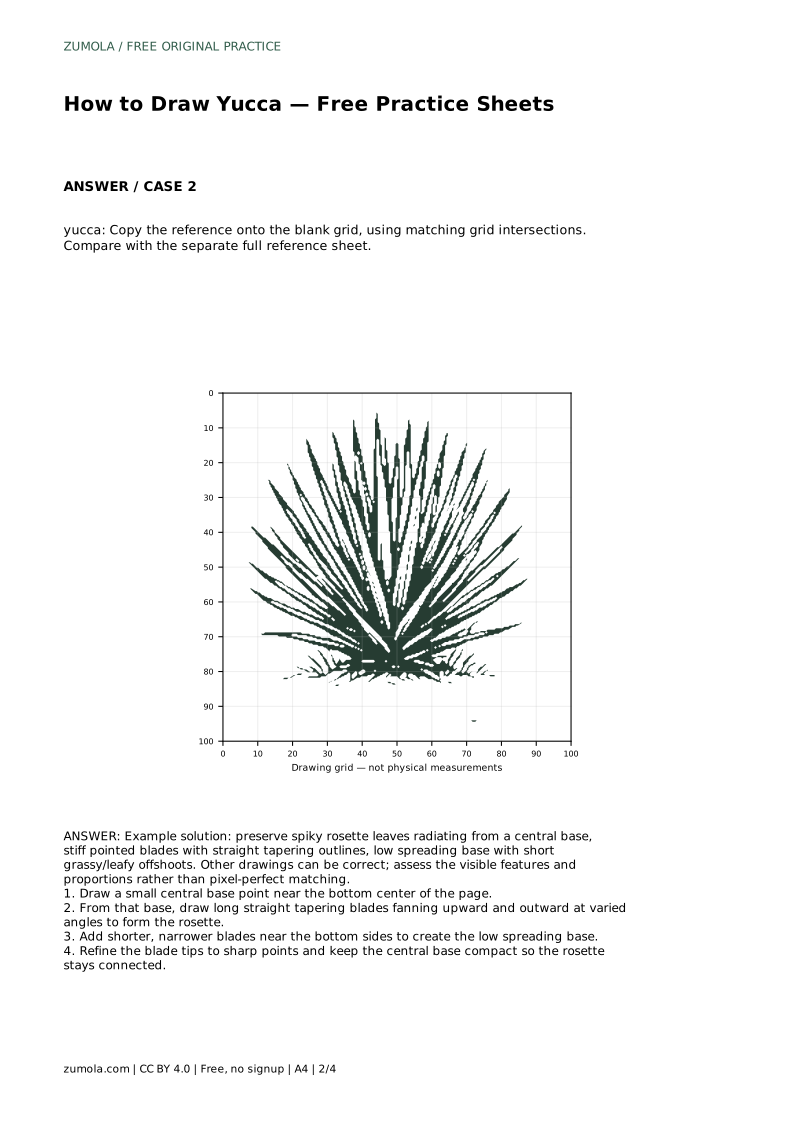
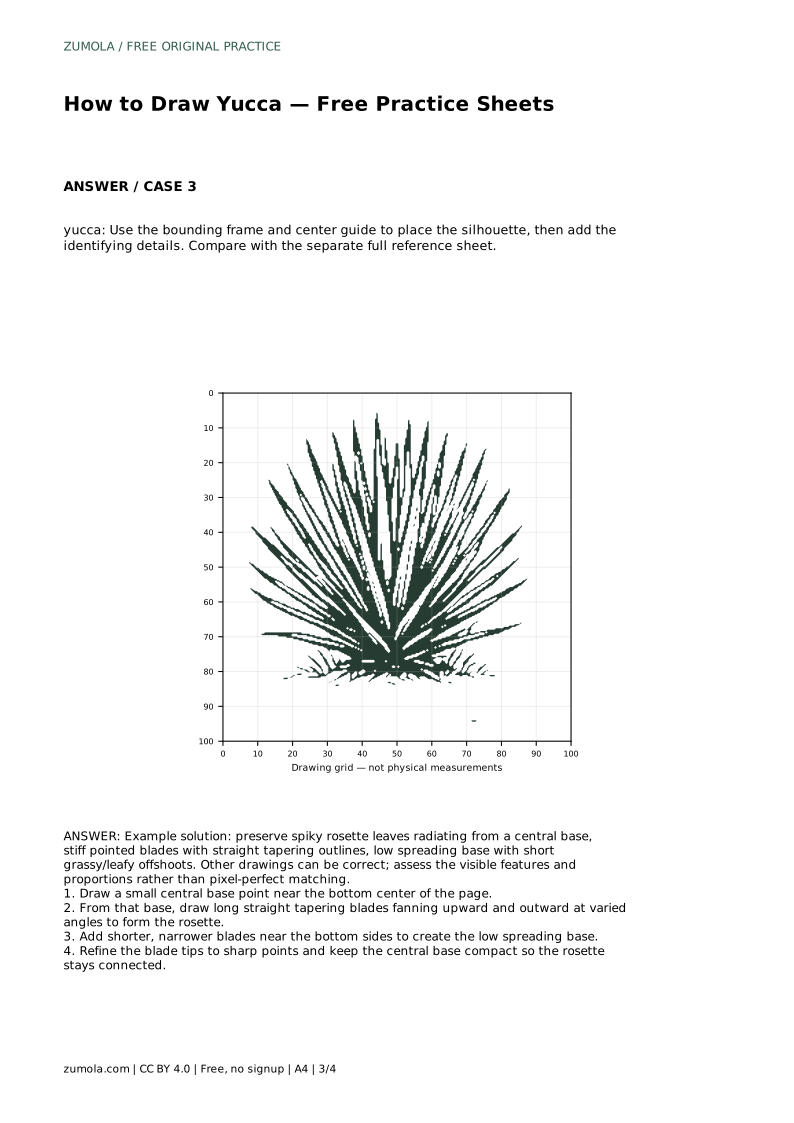
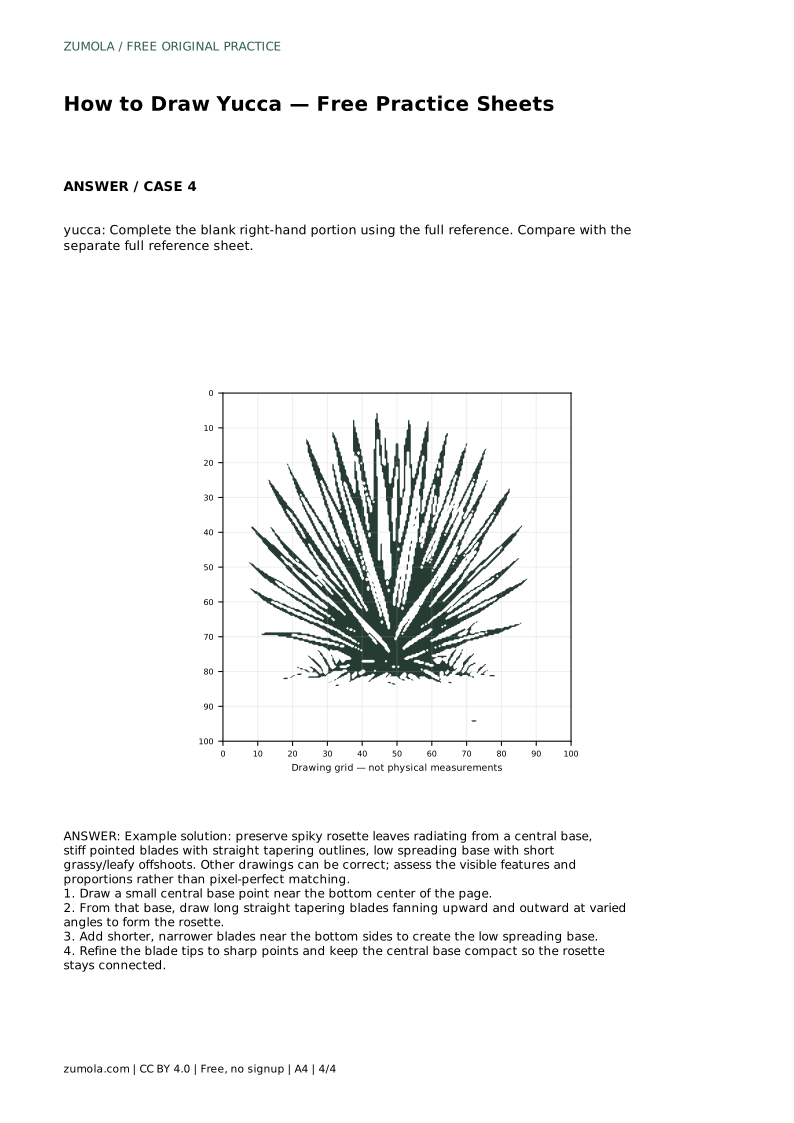
Before sharpening tips or adjusting outlines, compare your drawing with the reference sheet. Look at the overall silhouette: is the rosette wider than it is tall, or taller than wide? Are the longest blades clearly longer than the base leaves? Does the center stay compact?
Because art has multiple valid outcomes, judge visible features and proportions rather than pixel-perfect matching. A drawing with the right structure can differ in exact leaf count and still be correct.
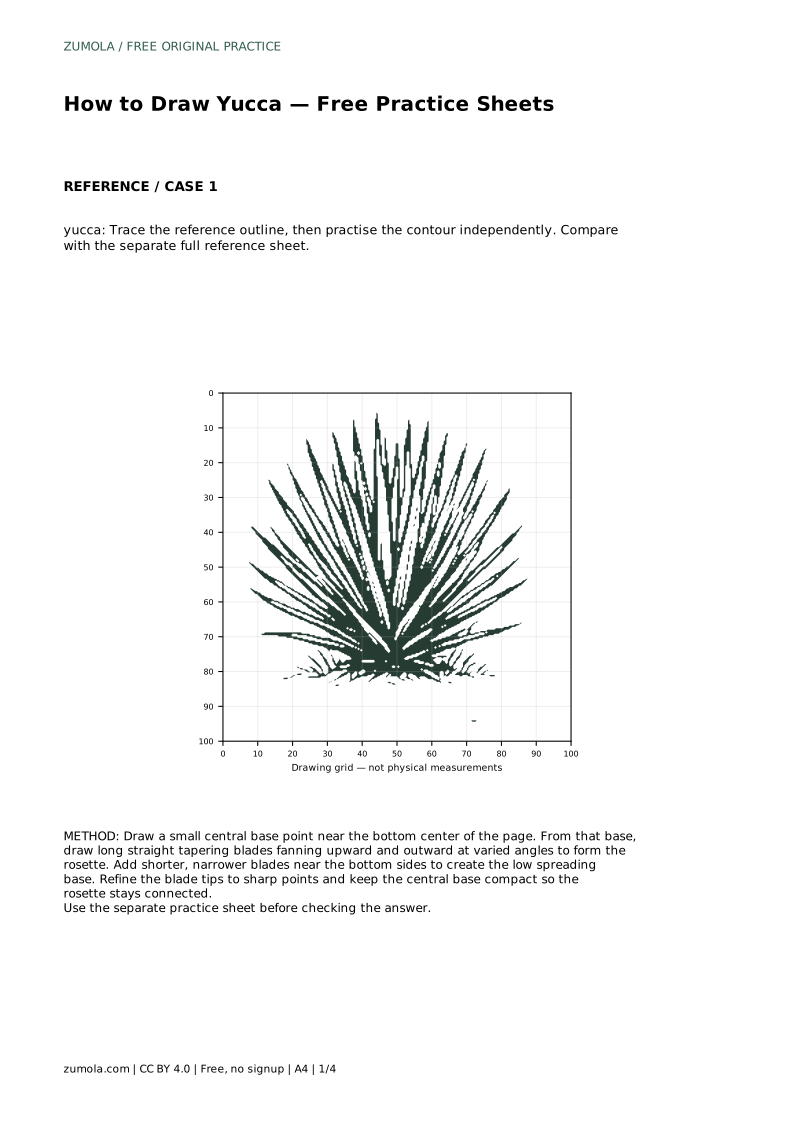
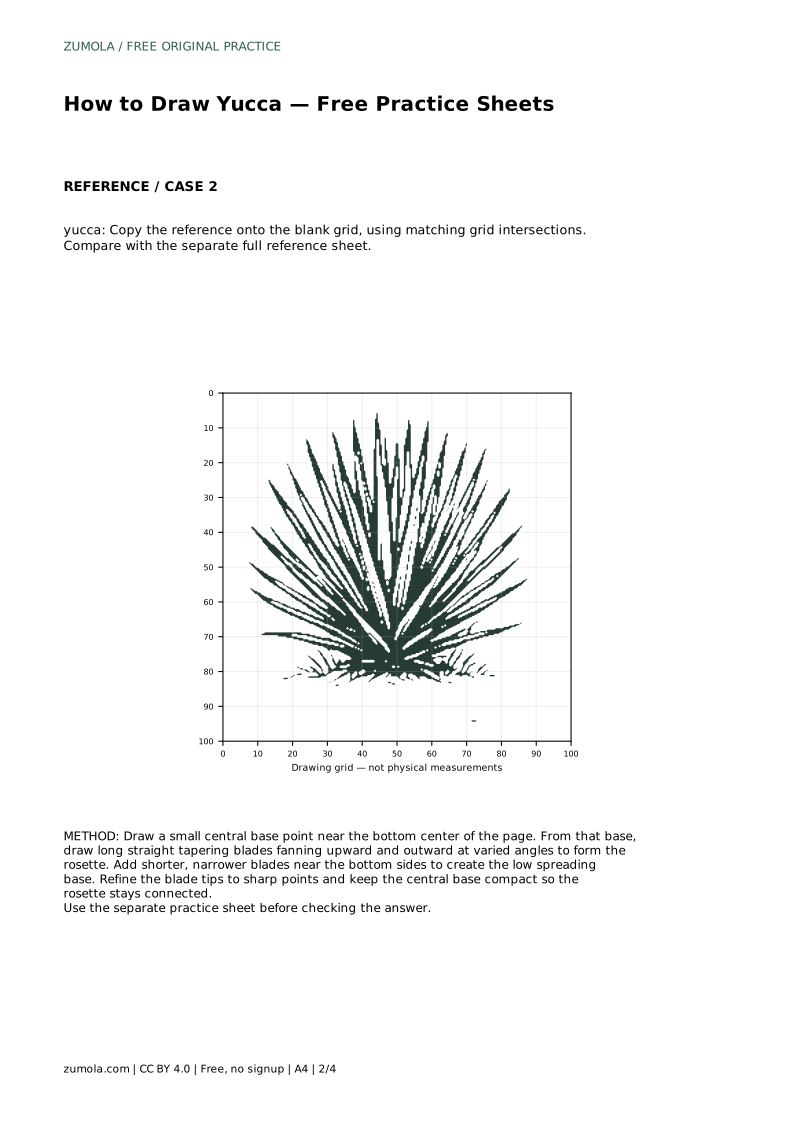
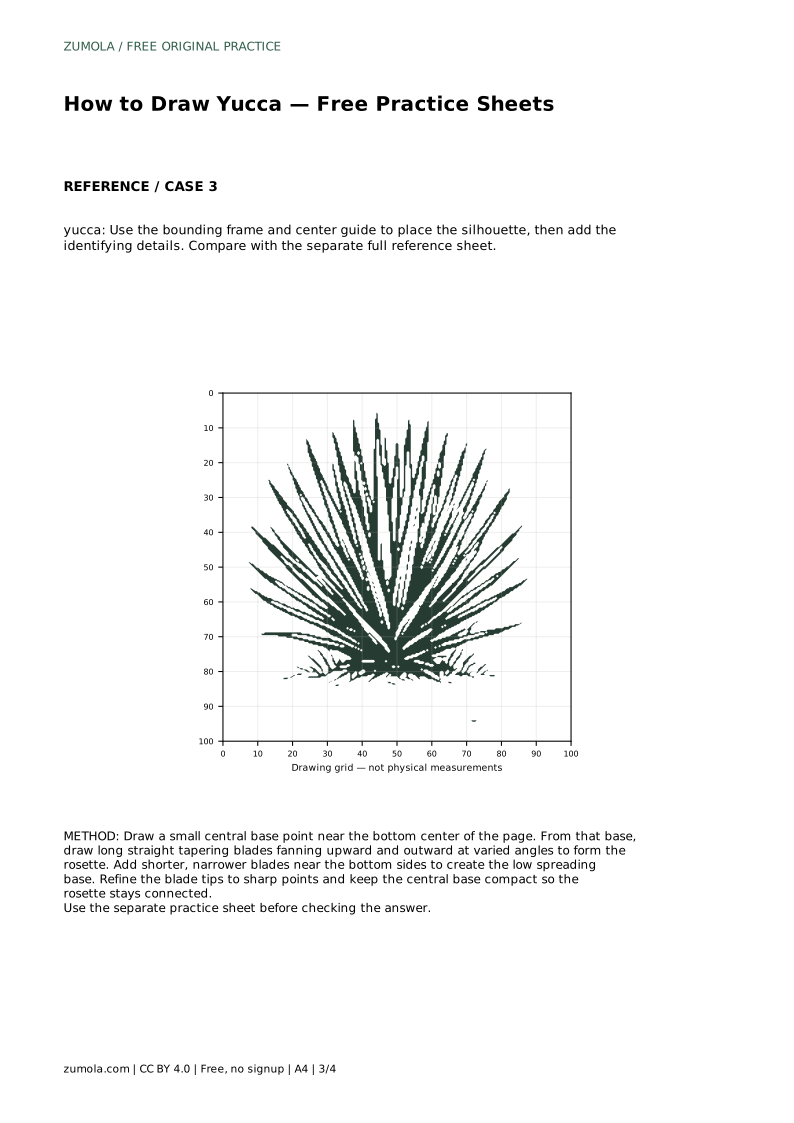
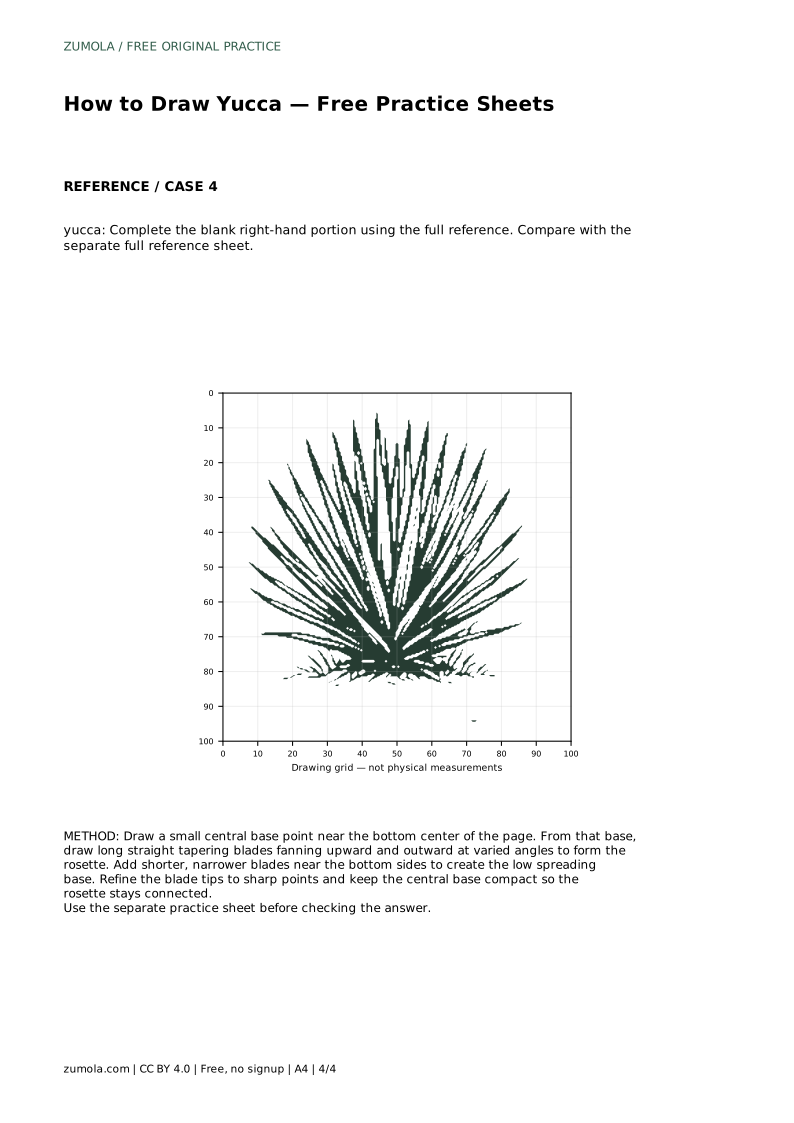
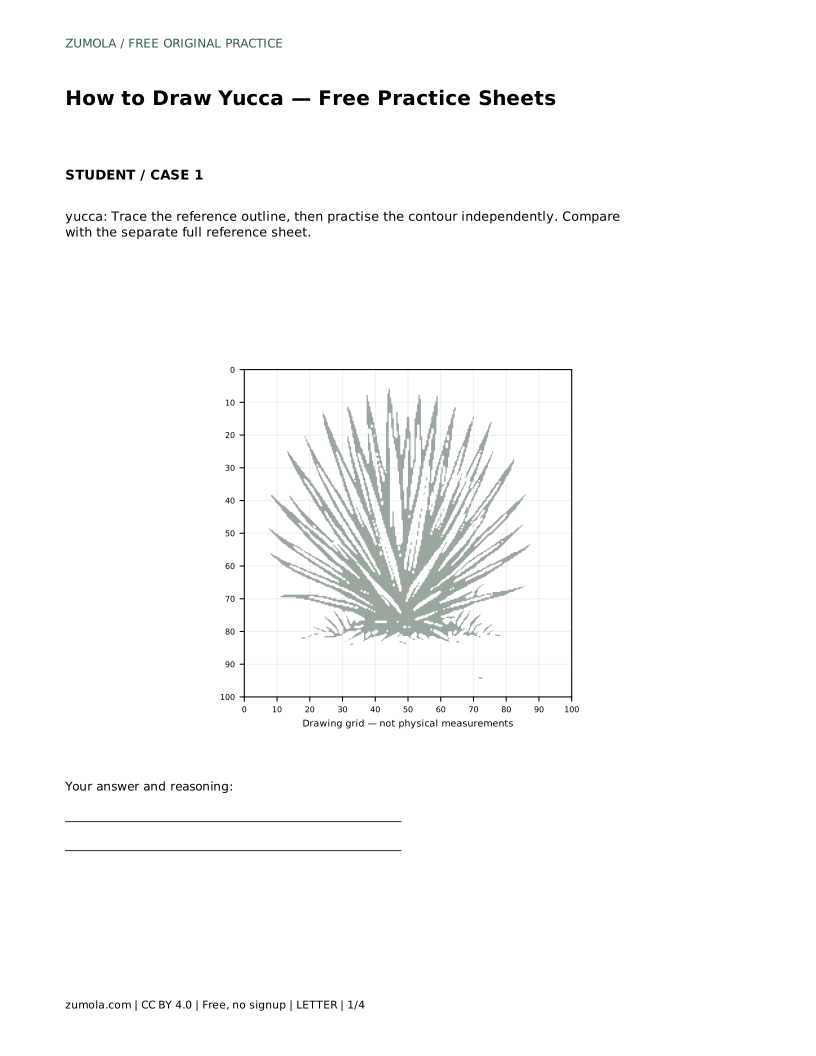
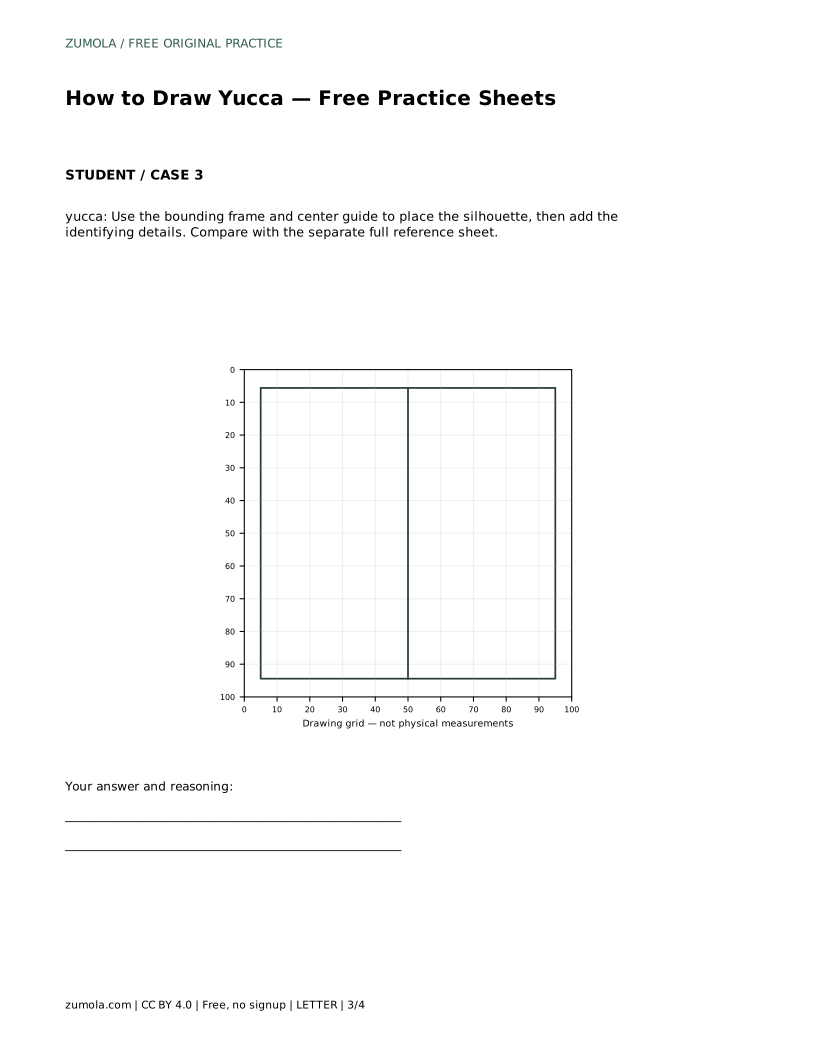
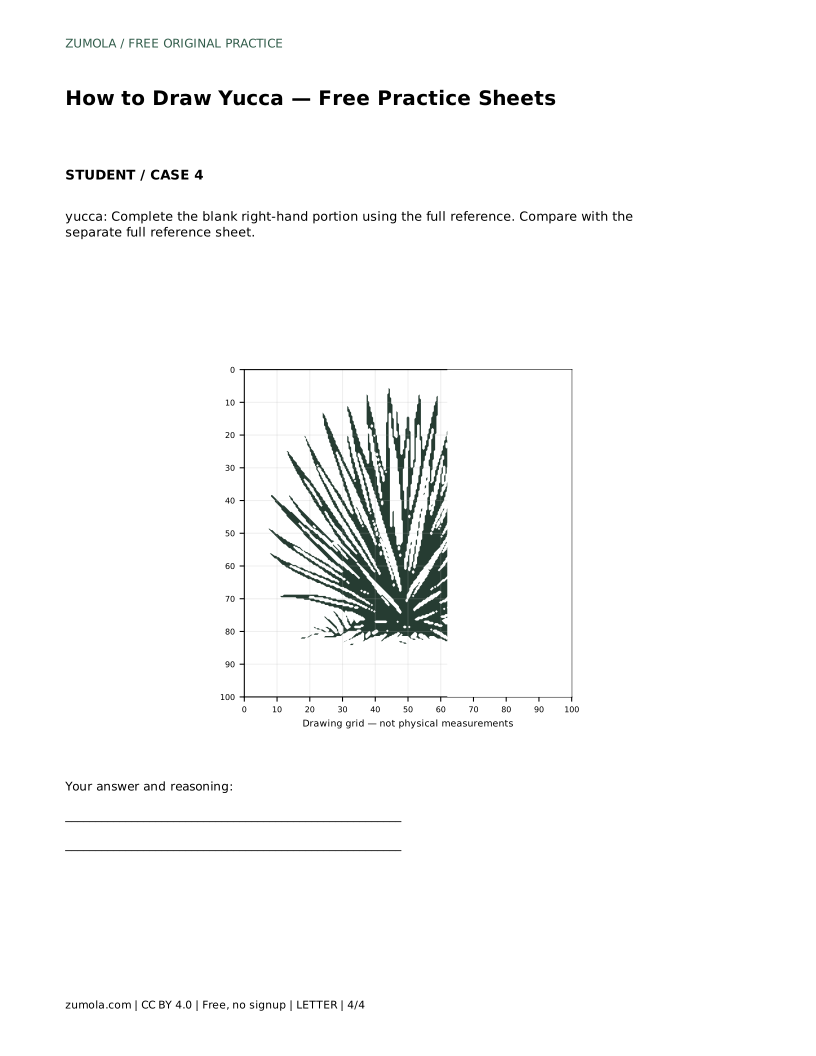
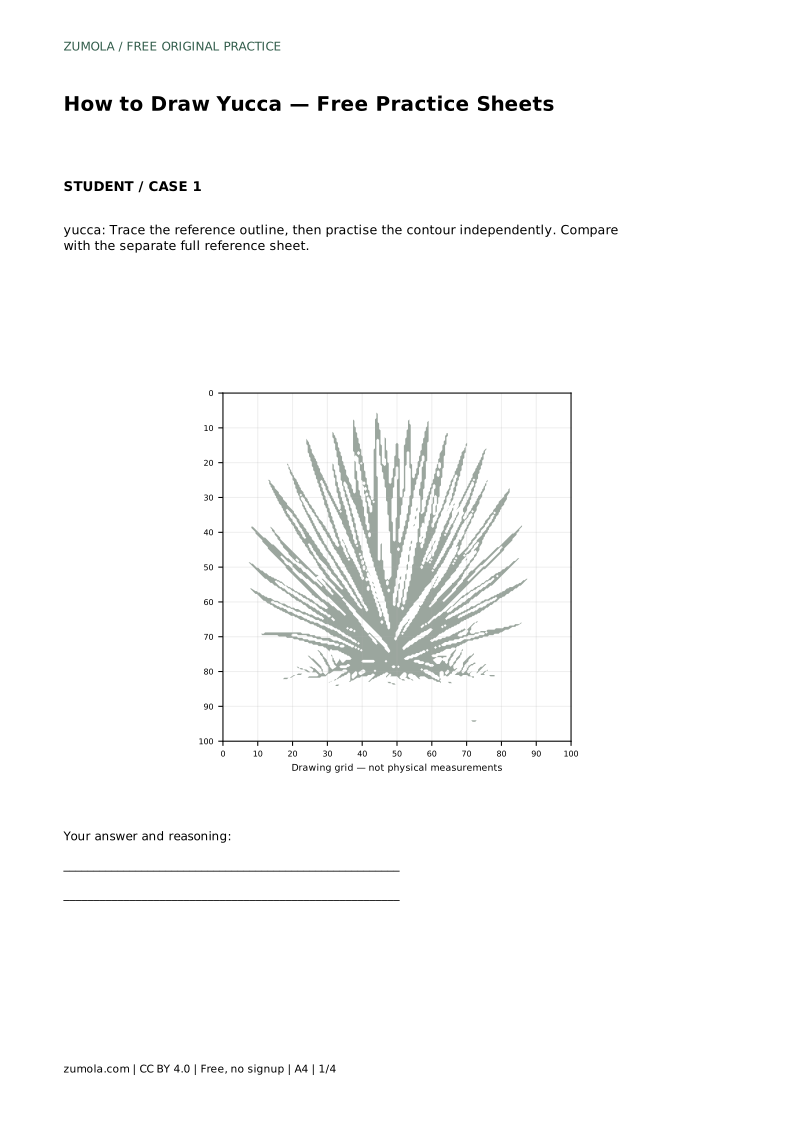
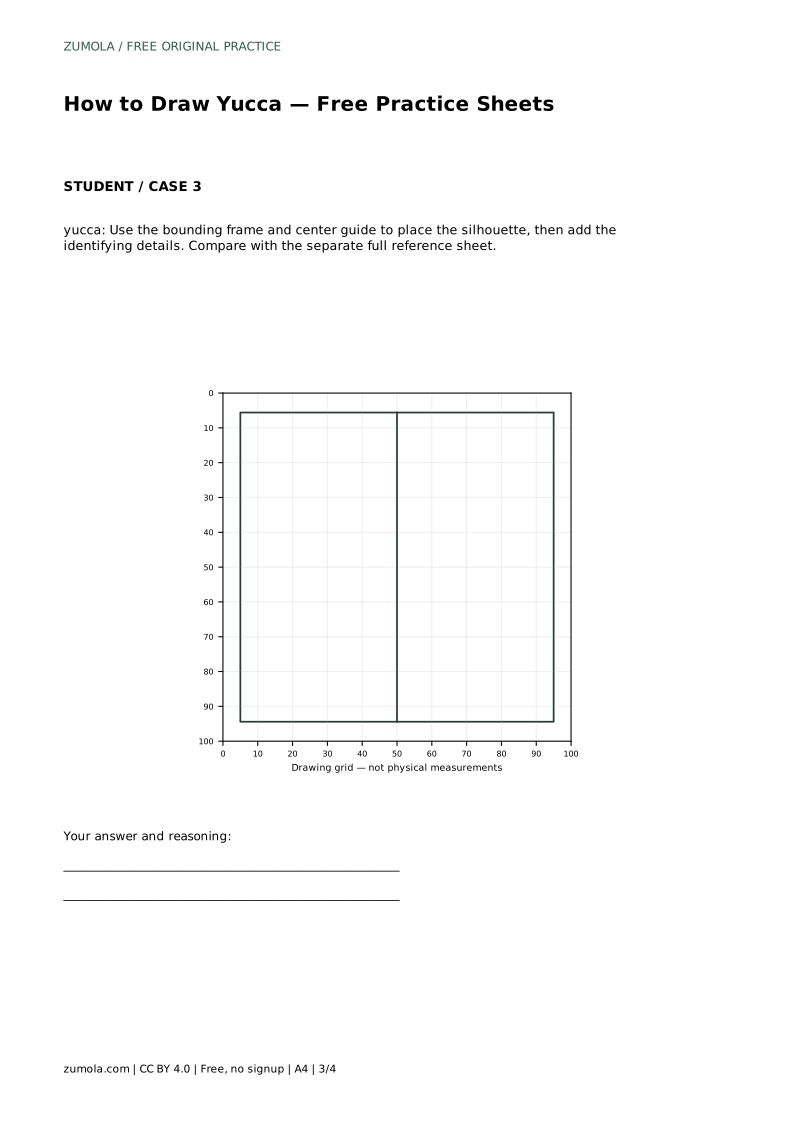
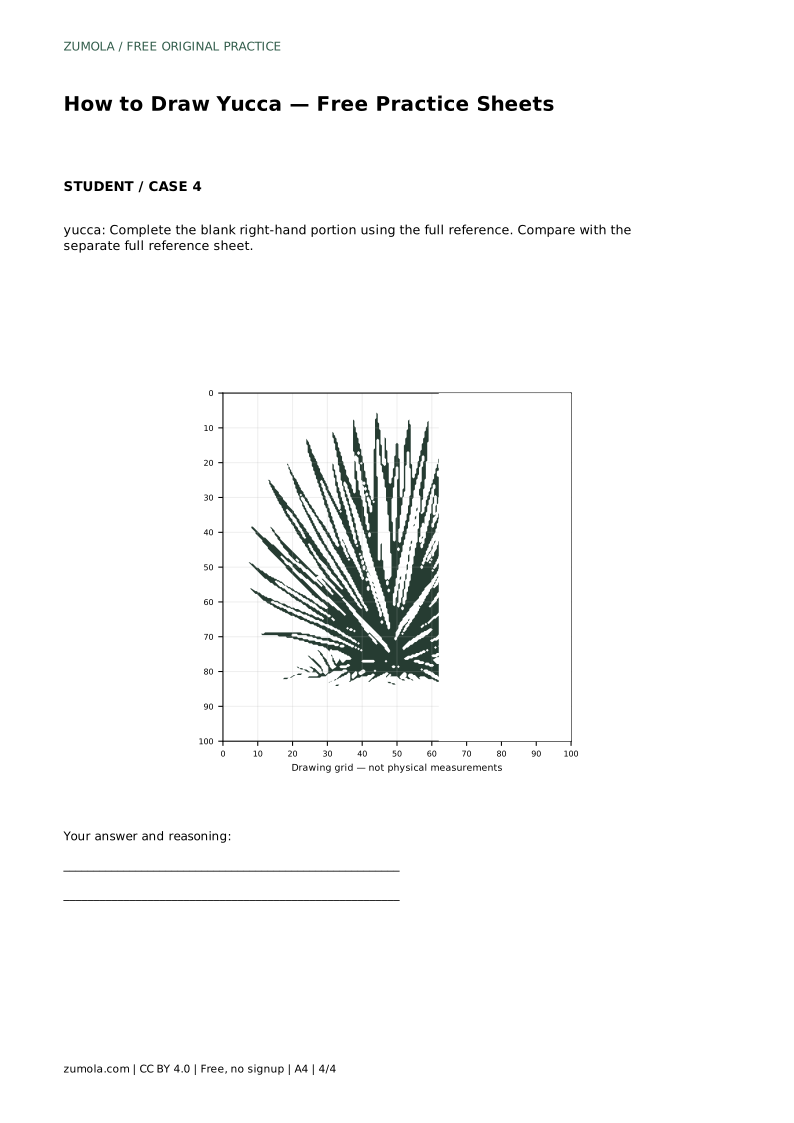
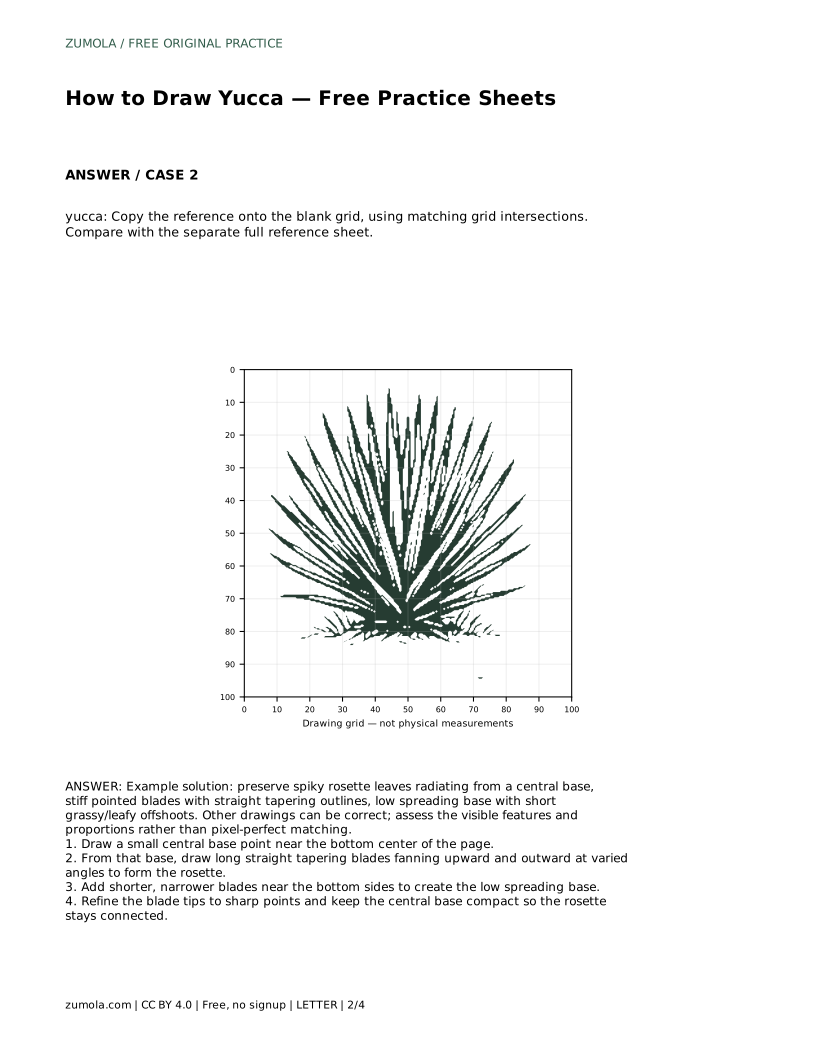
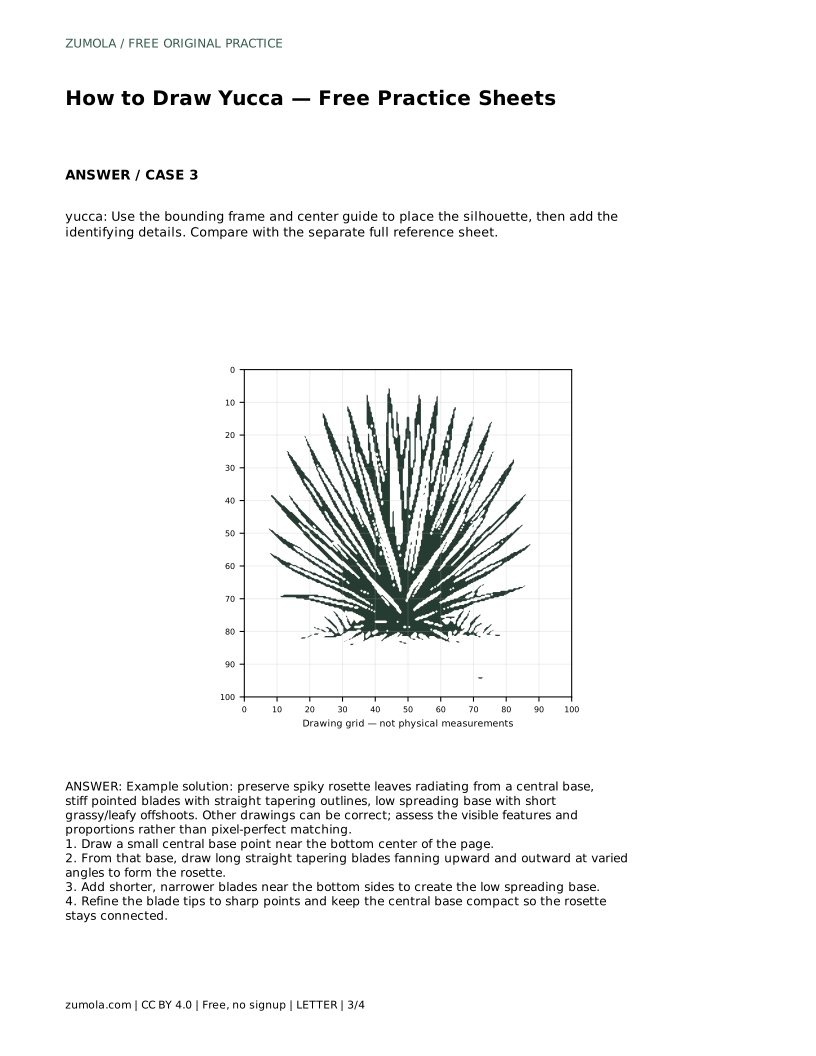
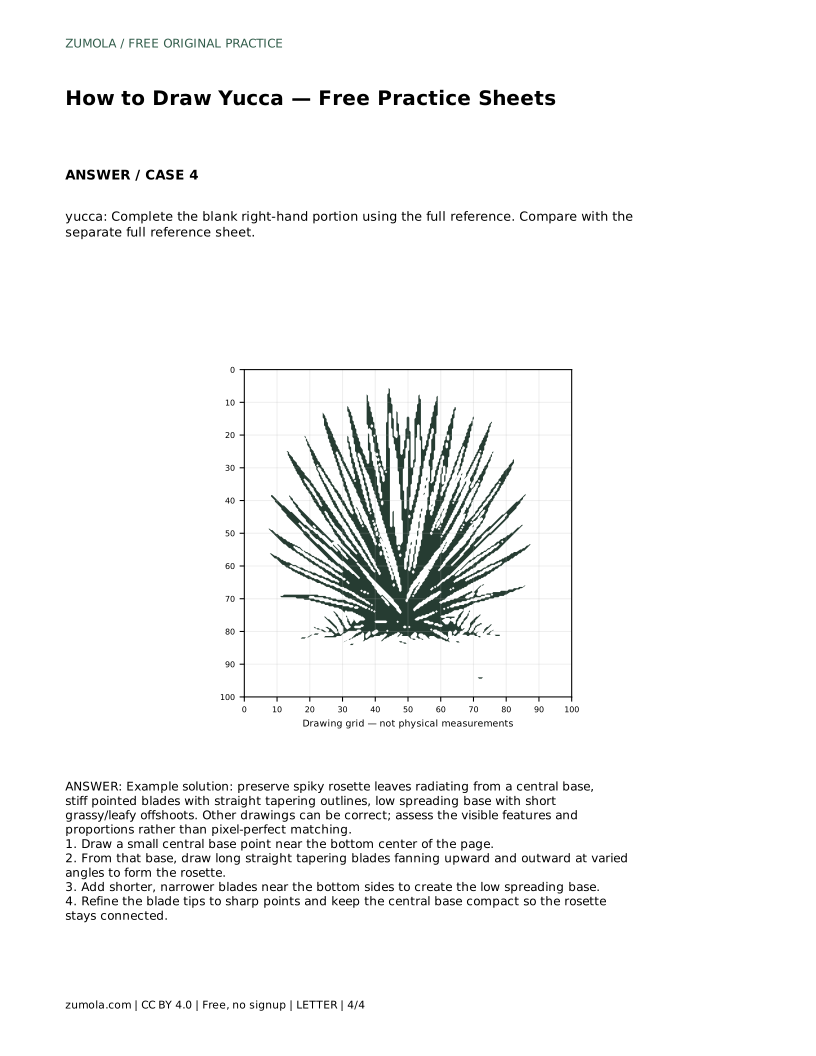
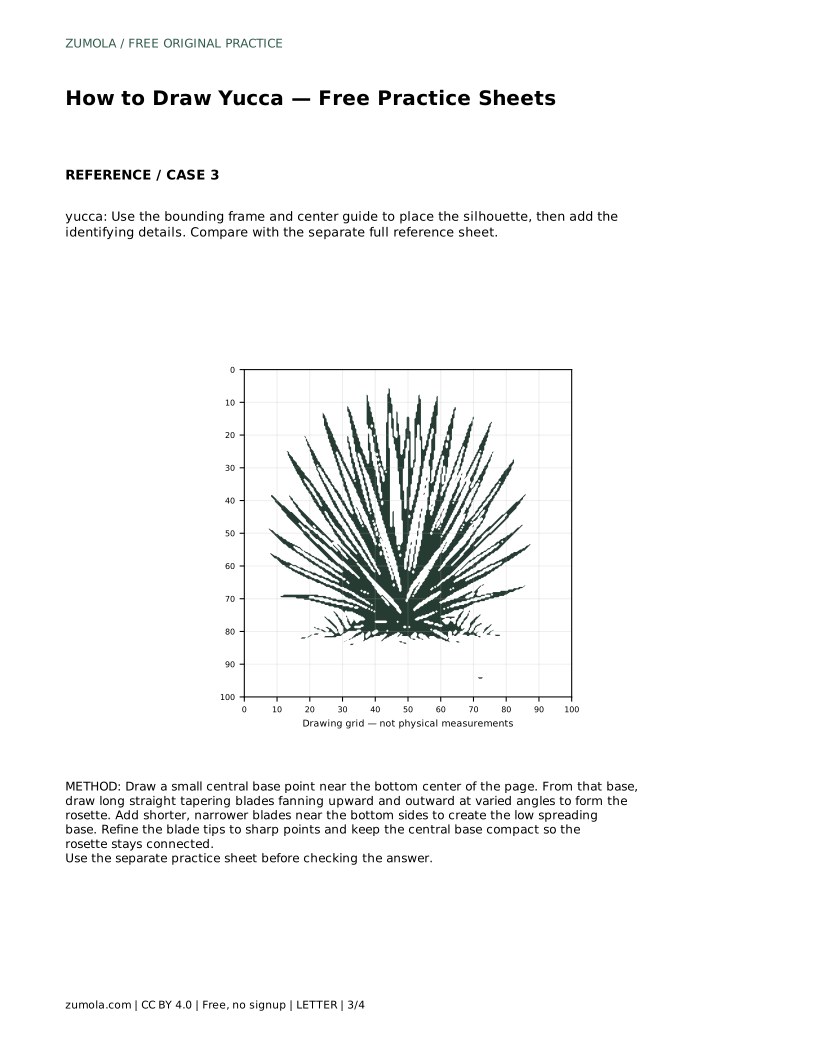
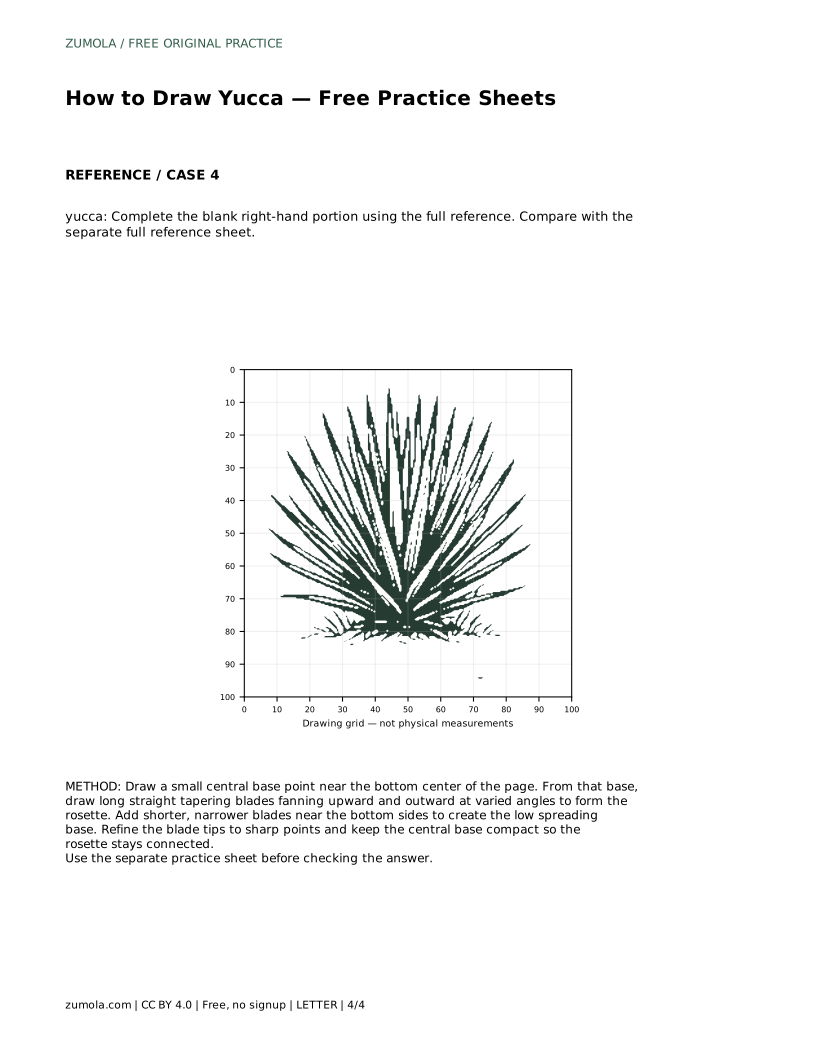
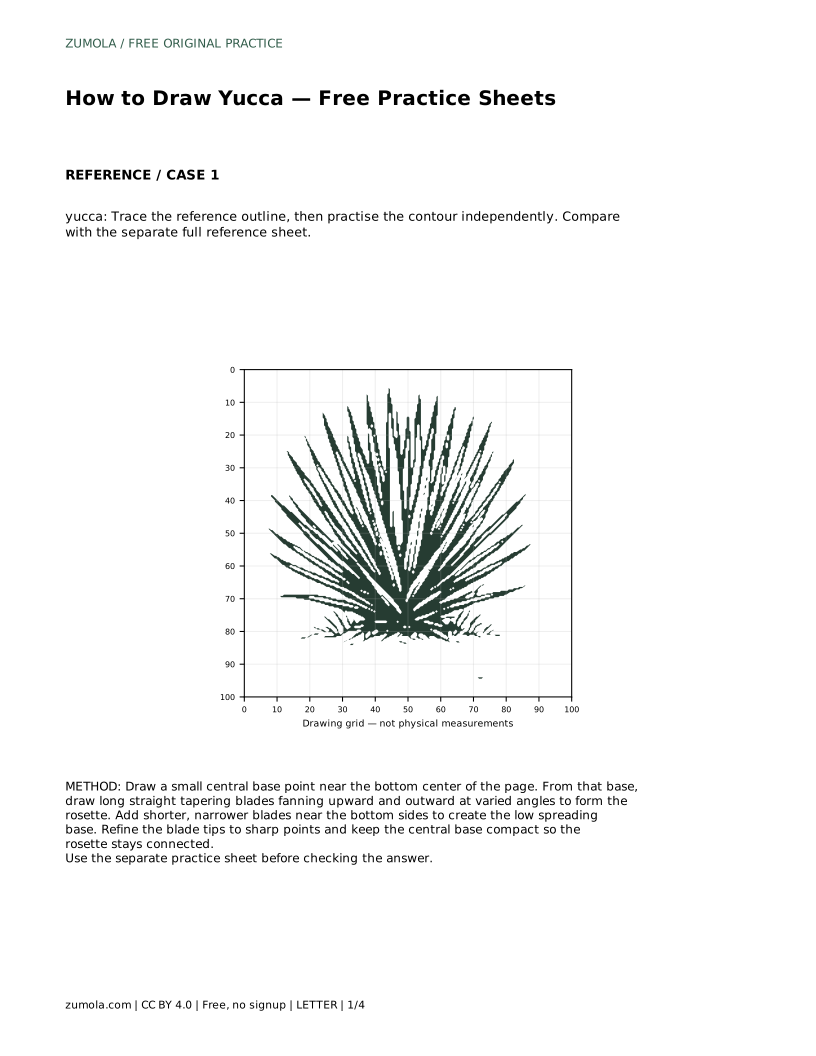
The trace sheet asks you to follow the reference outline, then practise the contour independently. The grid sheet asks you to copy the reference onto a blank grid using matching intersections. The bounding frame and center guide help you place the silhouette before adding details. The partial sheet asks you to complete the blank right-hand portion from the full reference.
Each variant trains a different skill: contour control, proportional placement, silhouette planning, and completing a structure from partial information. Compare your finished drawing with the separate full reference sheet.
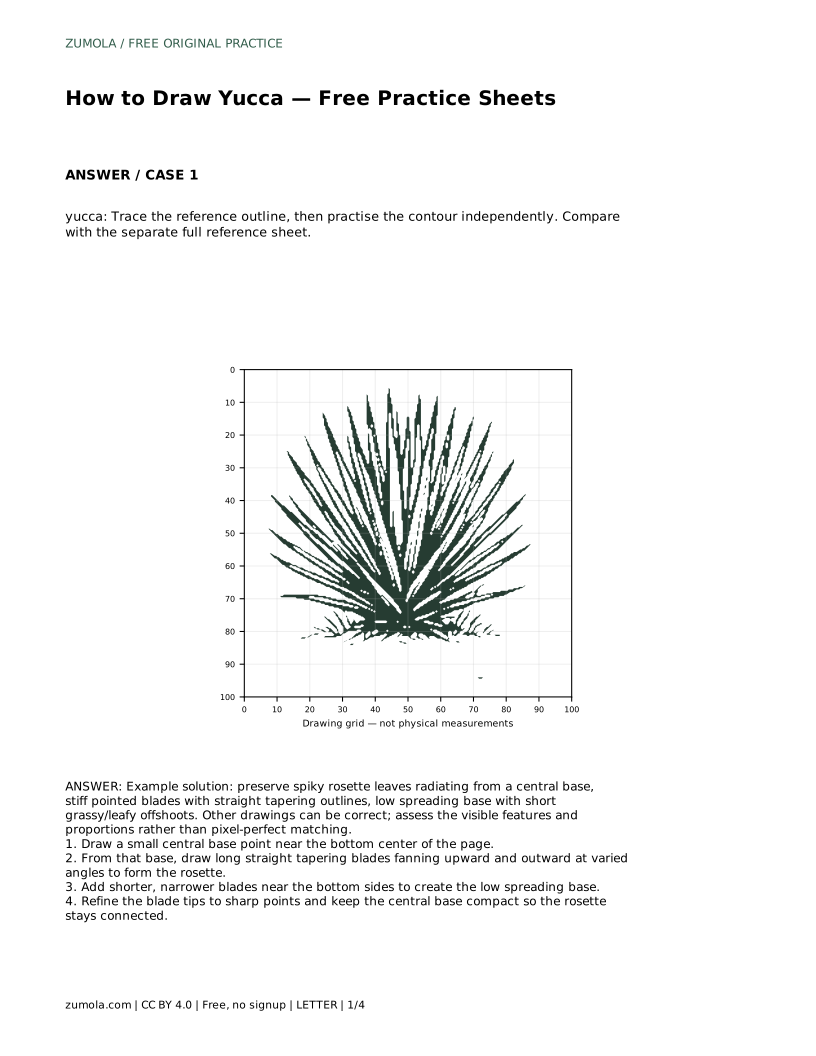
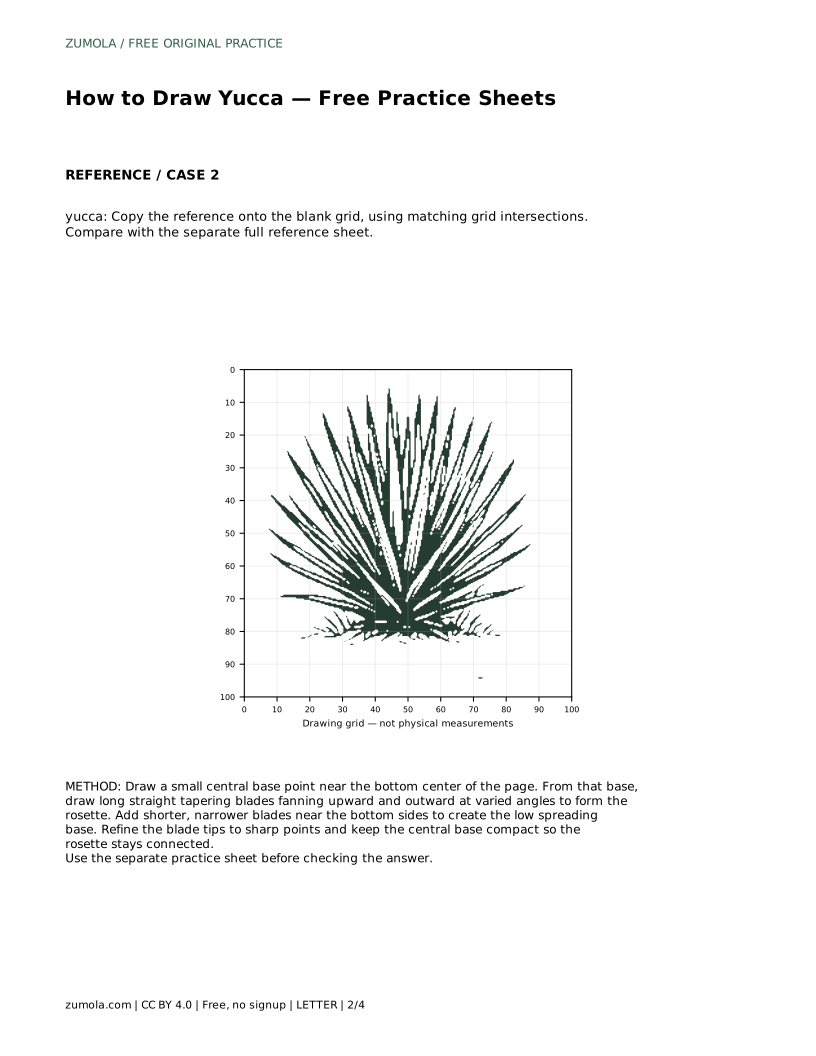
yucca: Trace the reference outline, then practise the contour independently. Compare with the separate full reference sheet.
Example solution: preserve spiky rosette leaves radiating from a central base, stiff pointed blades with straight tapering outlines, low spreading base with short grassy/leafy offshoots. Other drawings can be correct; assess the visible features and proportions rather than pixel-perfect matching. Draw a small central base point near the bottom center of the page. From that base, draw long straight tapering blades fanning upward and outward at varied angles to form the rosette. Add shorter, narrower blades near the bottom sides to create the low spreading base. Refine the blade tips to sharp points and keep the central base compact so the rosette stays connected.
There is no fixed count. Aim for a clear rosette with several long radiating blades and a few shorter base leaves; exact numbers can vary and still be correct.
Keep them mostly straight and tapering. Yucca blades are stiff, so slight curves are fine but loose, floppy curves weaken the plant's character.
Check the visible features: a compact central base, long pointed blades radiating at varied angles, and a low spreading base of shorter leaves. Compare proportions with the reference rather than expecting an exact match.
All drawing practice · Free coordinate paper
Original resources · CC BY 4.0 · Free for personal and classroom use with attribution.