Reference diagrams
LETTER · Download PDF
A4 · Download PDF
Free original resources
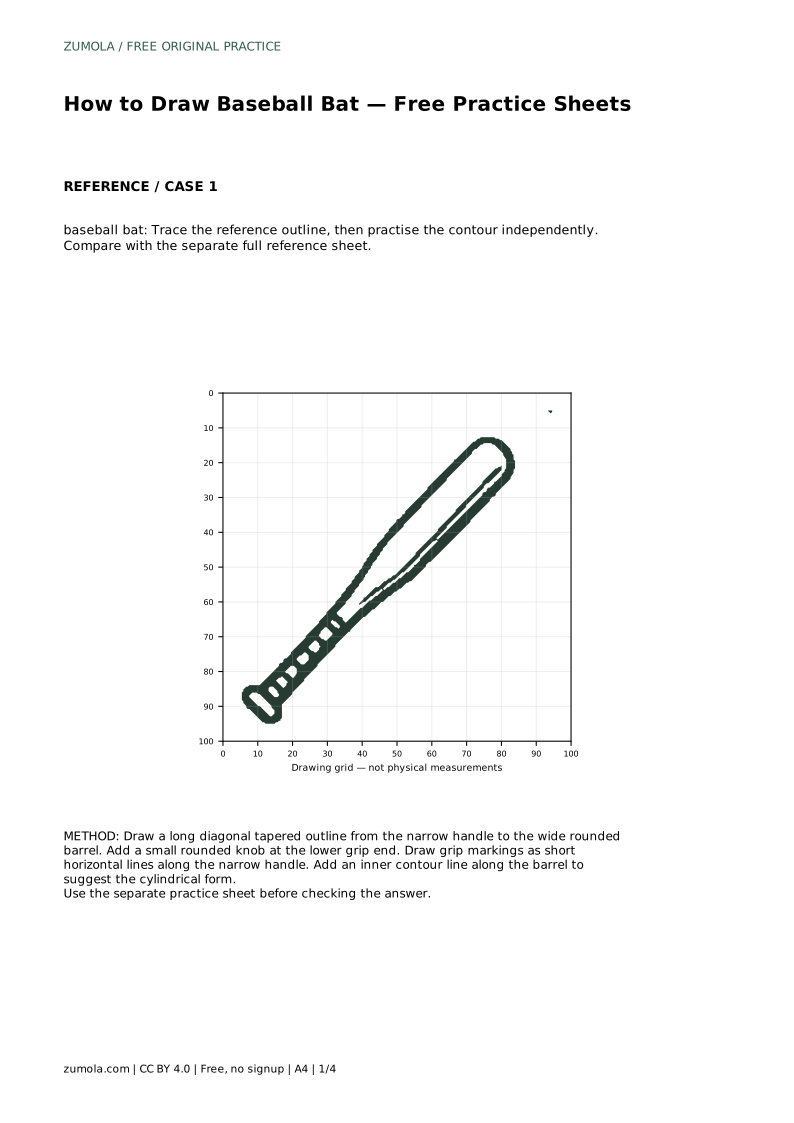
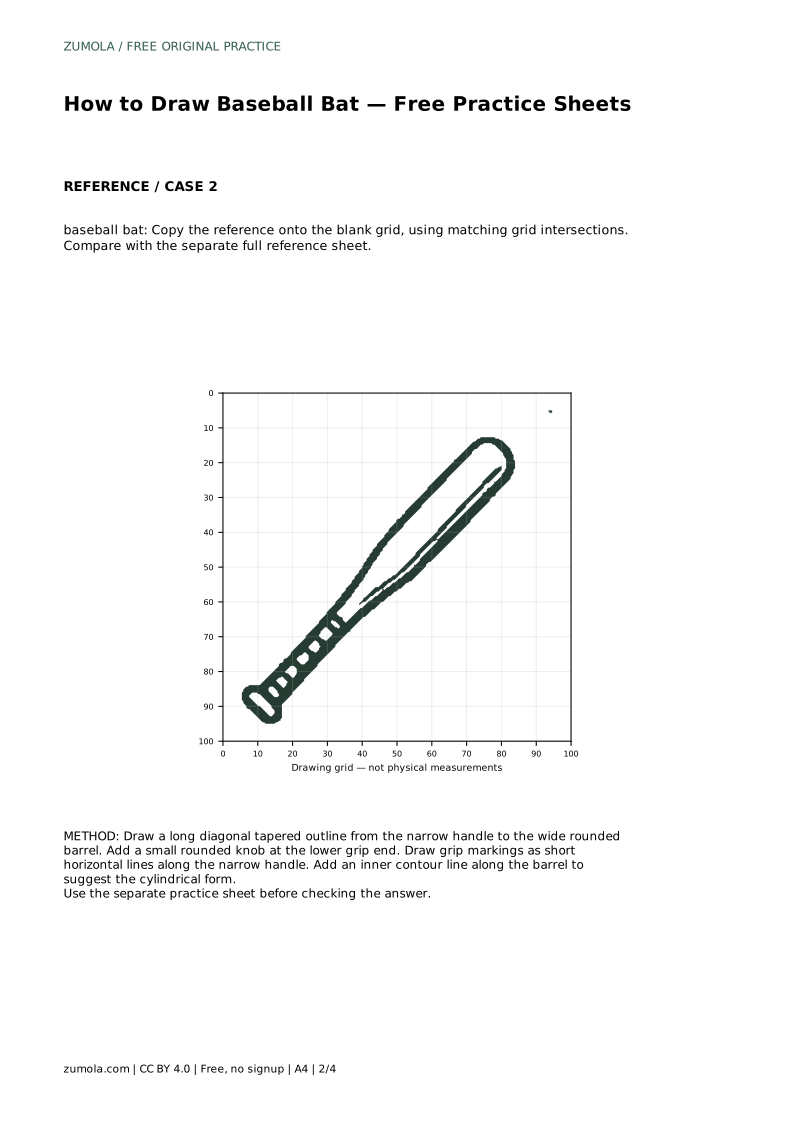
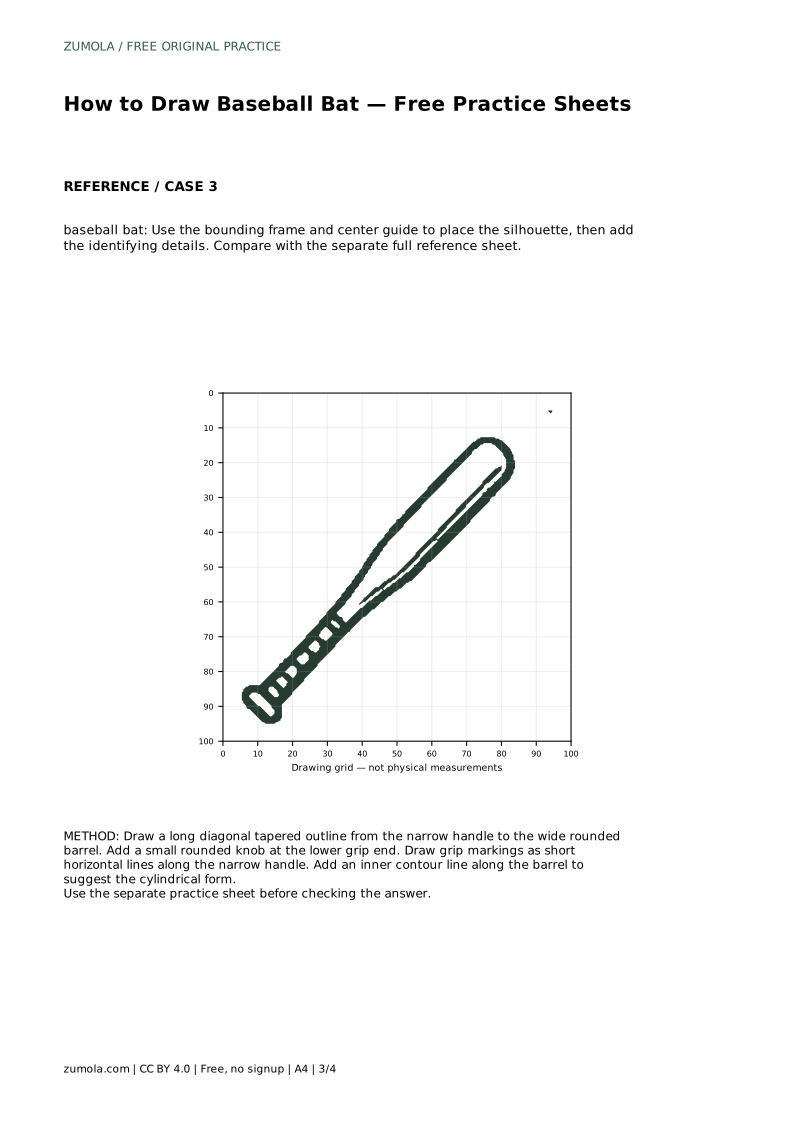
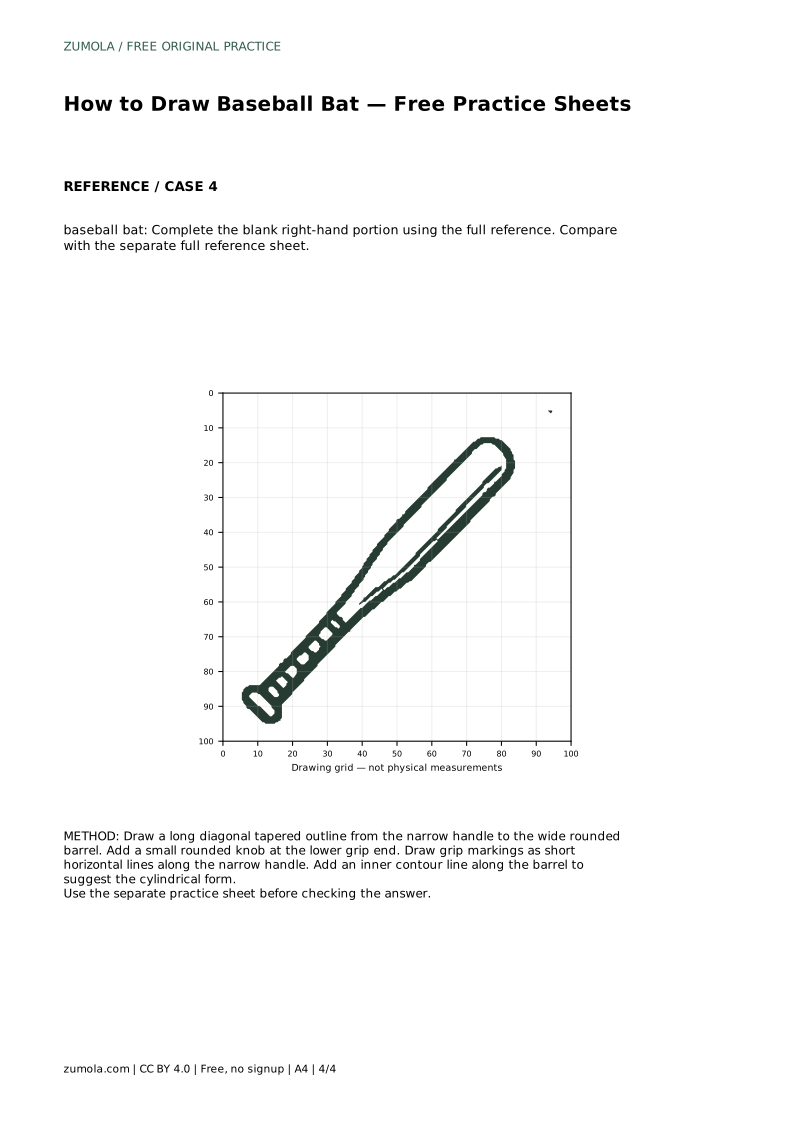
Learn to draw a baseball bat by building a tapered silhouette, adding a knob and grip lines, and using an inner contour to show cylindrical form.
Four original cases, with reference diagrams, practice sheets and worked answers. Everything is free; no signup required.
LETTER · Download PDF
A4 · Download PDF
LETTER · Download PDF
A4 · Download PDF
LETTER · Download PDF
A4 · Download PDF
Use A4 or US Letter to match your printer. Use the stated values and conditions to solve each exercise; diagrams are not physical measuring rulers.
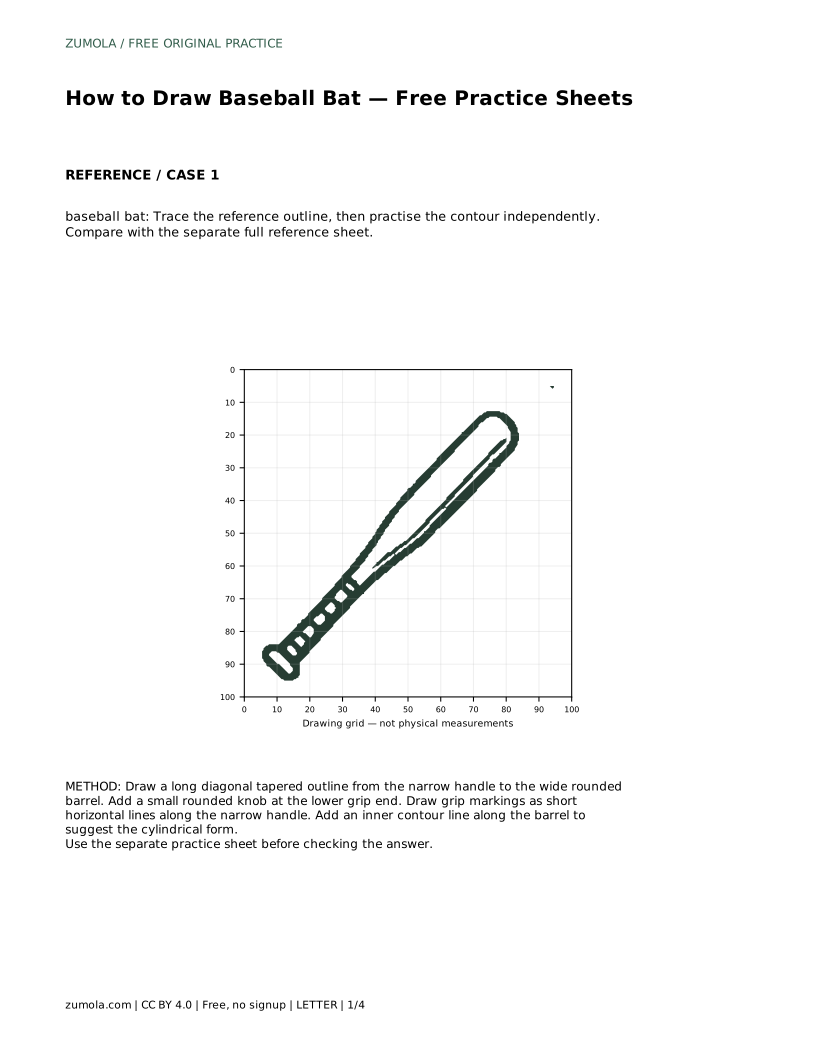
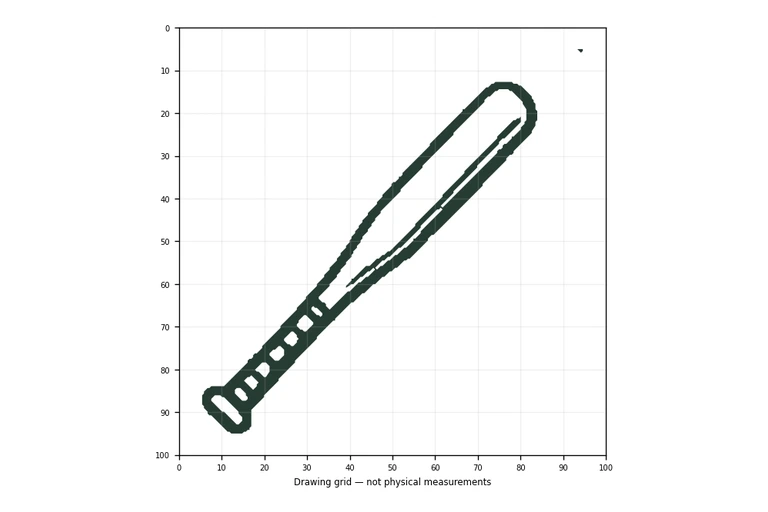
A baseball bat is a simple shape with one demanding feature: the taper. The barrel is wide and rounded, the handle is narrow, and the transition between them must look gradual rather than stepped. This page walks through drawing that silhouette on a diagonal, then adding the knob, grip markings, and an inner contour line that suggests a cylinder. Practice sheets let you trace, copy onto a grid, or complete a partial drawing, but the goal is the same: understand the form well enough to draw it independently.
Place the bat on a diagonal so the handle sits low and the barrel rises toward the upper end. Begin with one long outer edge running from the narrow handle to the wide barrel, then mirror it on the other side. The barrel should widen gradually toward its rounded top; avoid a sudden jump in width where the handle meets the barrel. Keep both edges smooth and continuous, because a bat is one piece of turned material, not stacked segments.
Check the proportions before adding detail. The handle is noticeably thinner than the barrel, and the barrel occupies a good share of the total length. If the handle looks too thick, the bat will read as a club rather than a bat.
The knob is a small rounded shape at the very end of the handle, slightly wider than the handle itself. It should sit centered on the handle's end, not off to one side. Grip markings are short horizontal lines running across the narrow handle; space them evenly and keep them perpendicular to the handle's direction so they follow the surface rather than cutting across it at random angles.
These details identify the object. A tapered shape alone could be many things, but a knob plus grip lines plus a wide barrel reads clearly as a bat.
A bat is a cylinder that changes diameter along its length. One inner contour line running along the barrel, offset from the outer edge, suggests that curved surface without shading. Place it closer to one edge than the other, and let it follow the taper. This single line does more for the sense of roundness than many small marks.
When you compare your drawing with a reference sheet, judge the visible features and proportions rather than pixel-perfect matching. Different line weights, angles, and barrel lengths can all be correct.
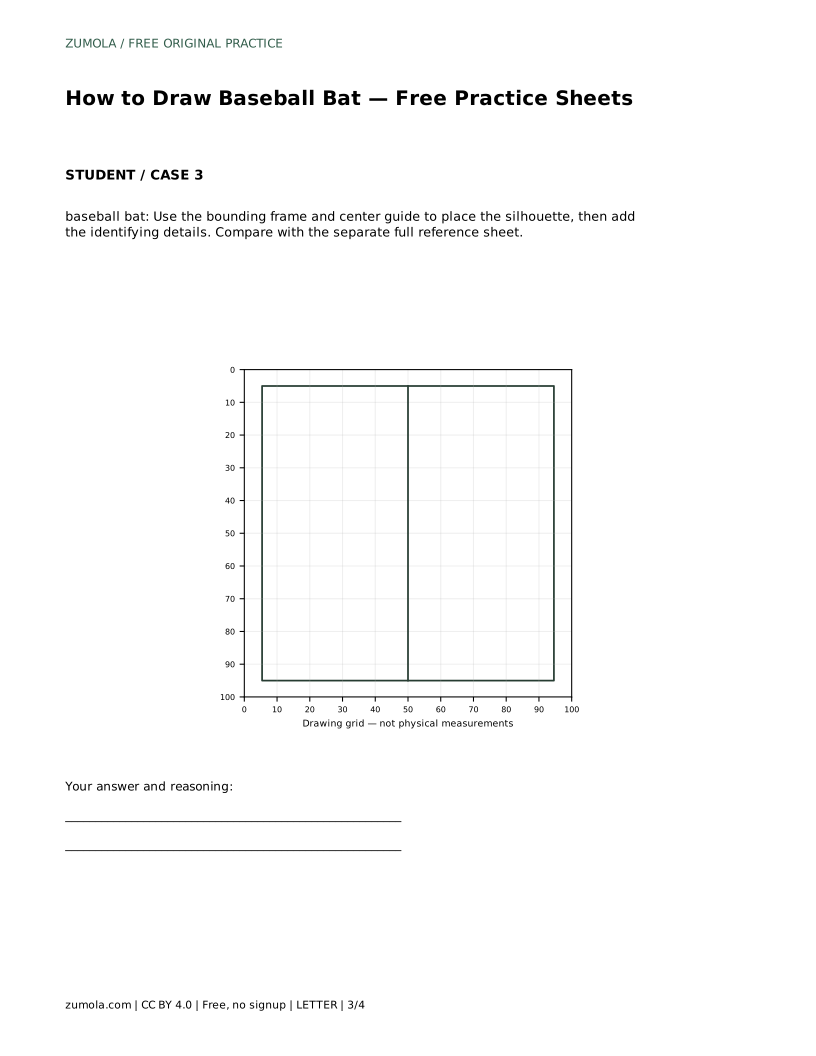
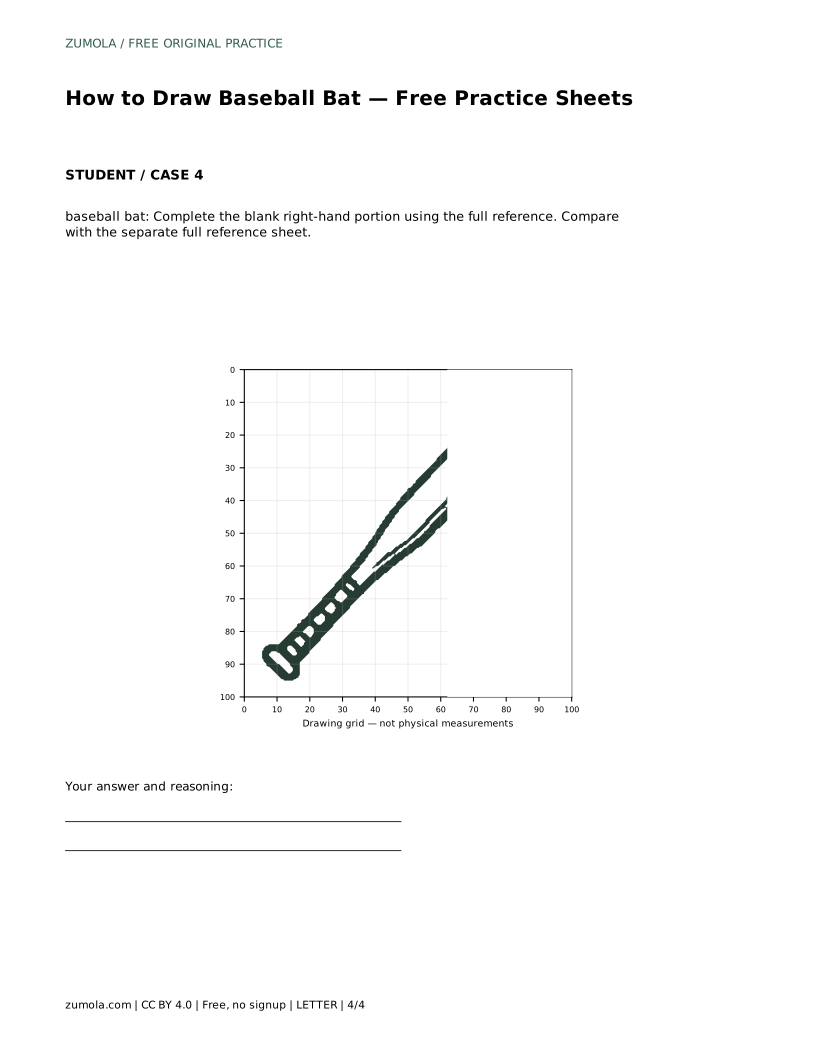
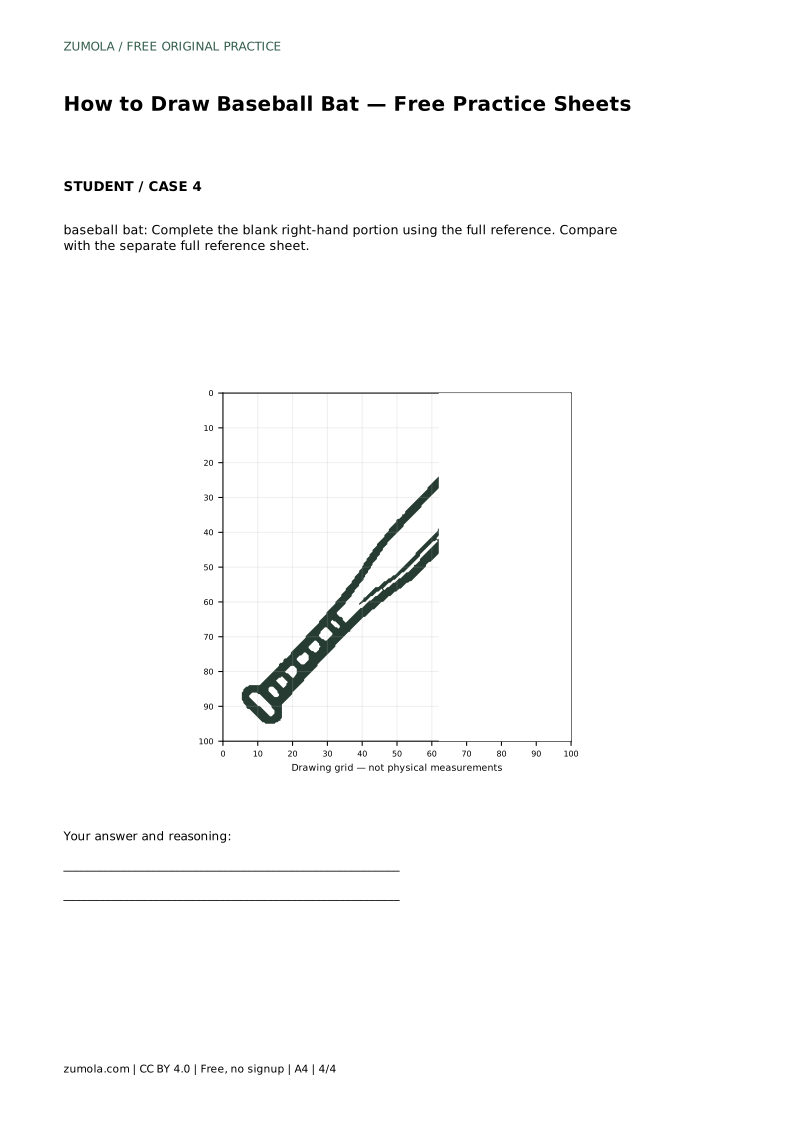
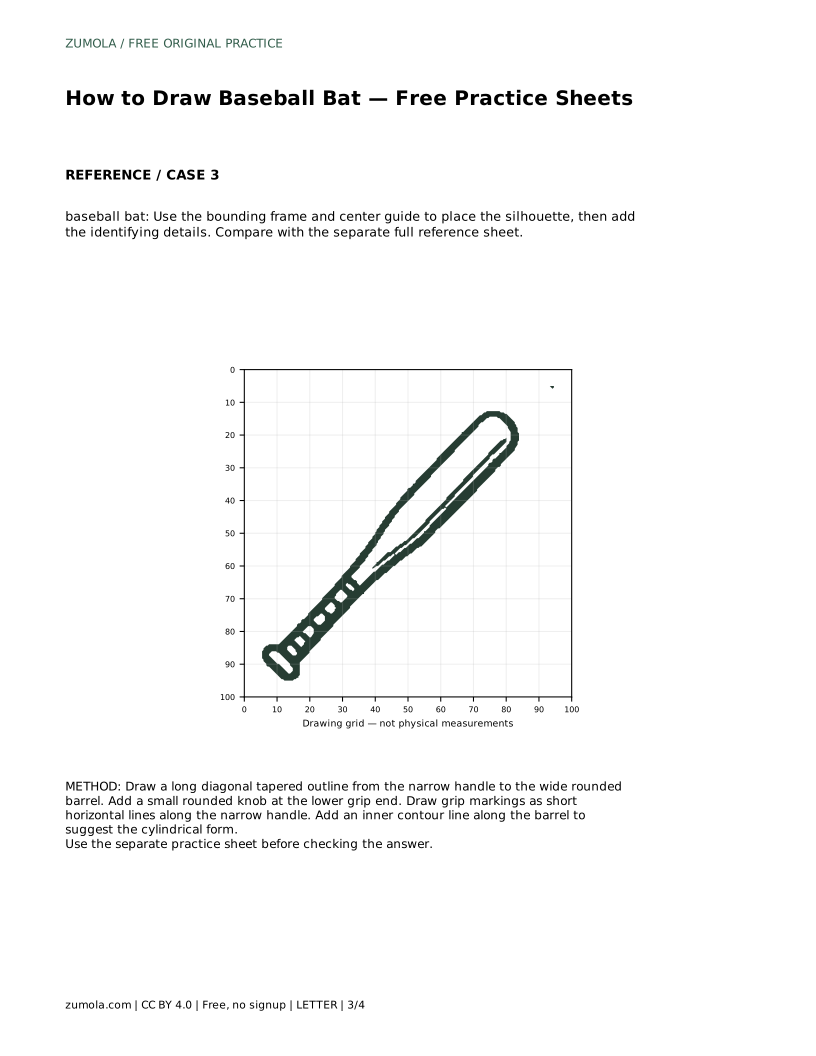
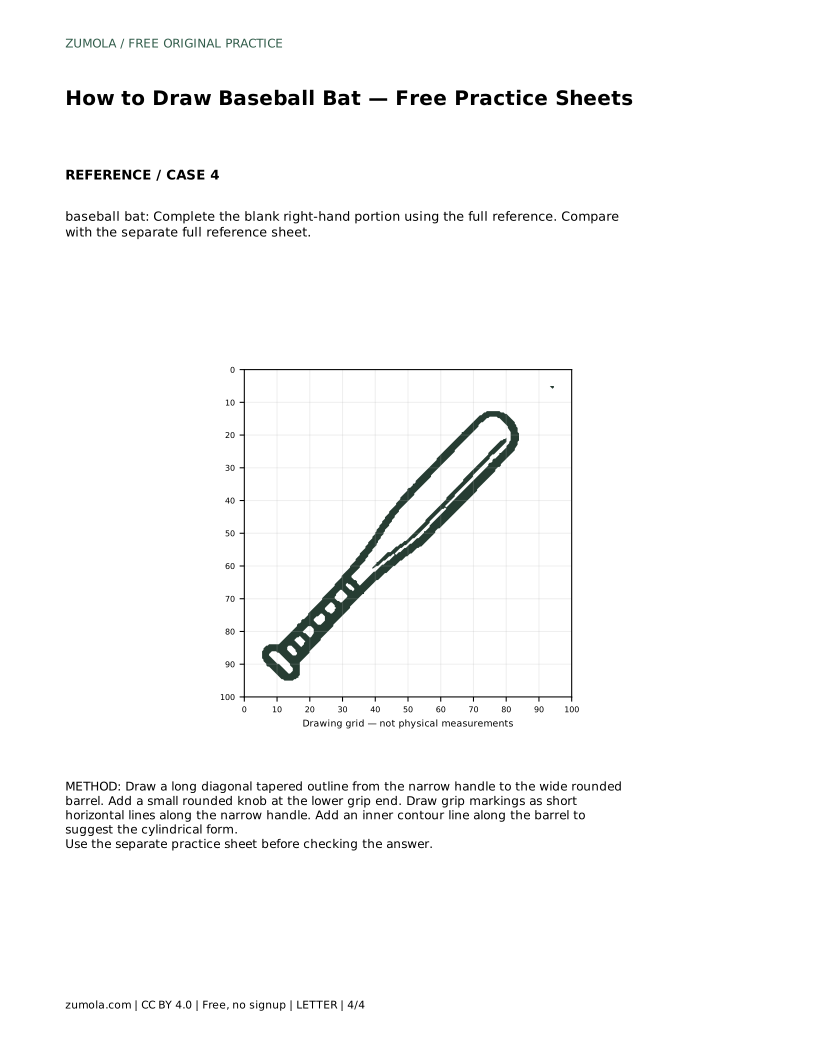
Tracing the reference outline builds familiarity with the taper. Copying onto a blank grid trains placement using matching intersections. Using a bounding frame and center guide helps position the silhouette before details. Completing a blank portion tests whether you can continue the form from partial information. In each case, compare with the separate full reference sheet afterward.
Art has multiple valid outcomes. Assess whether the taper is gradual, the knob is centered, the grip lines follow the handle, and the inner contour supports the cylindrical reading.
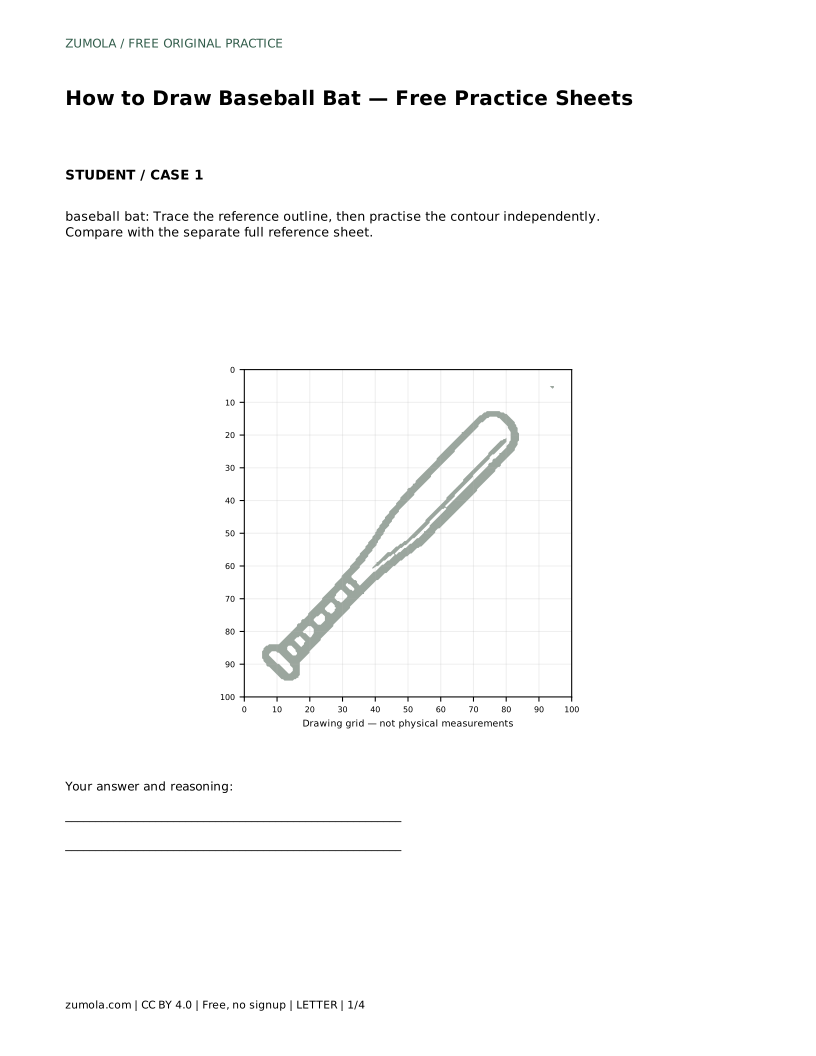
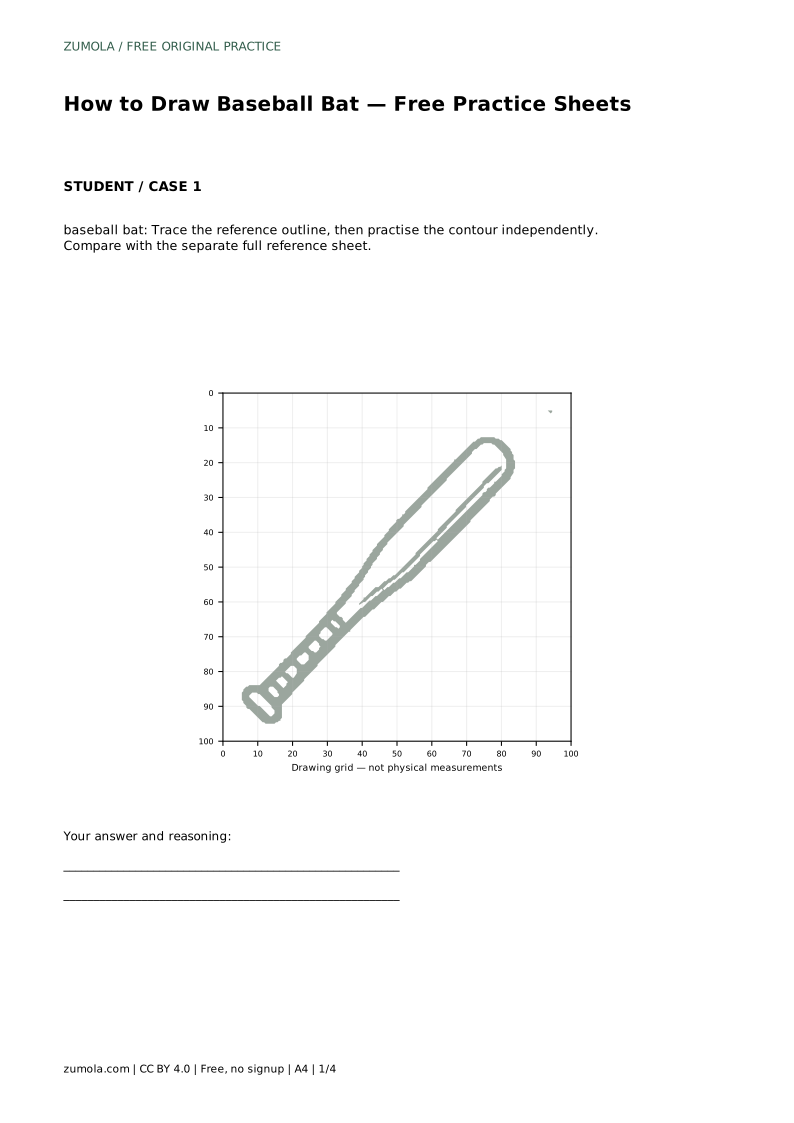
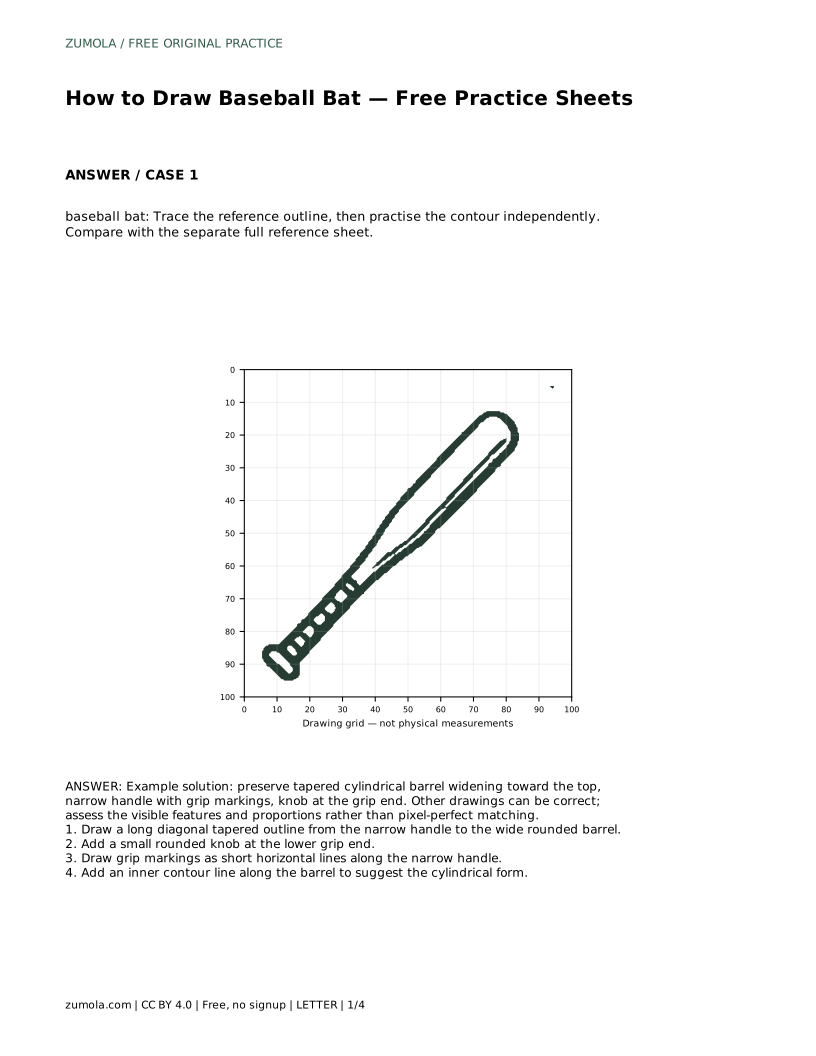
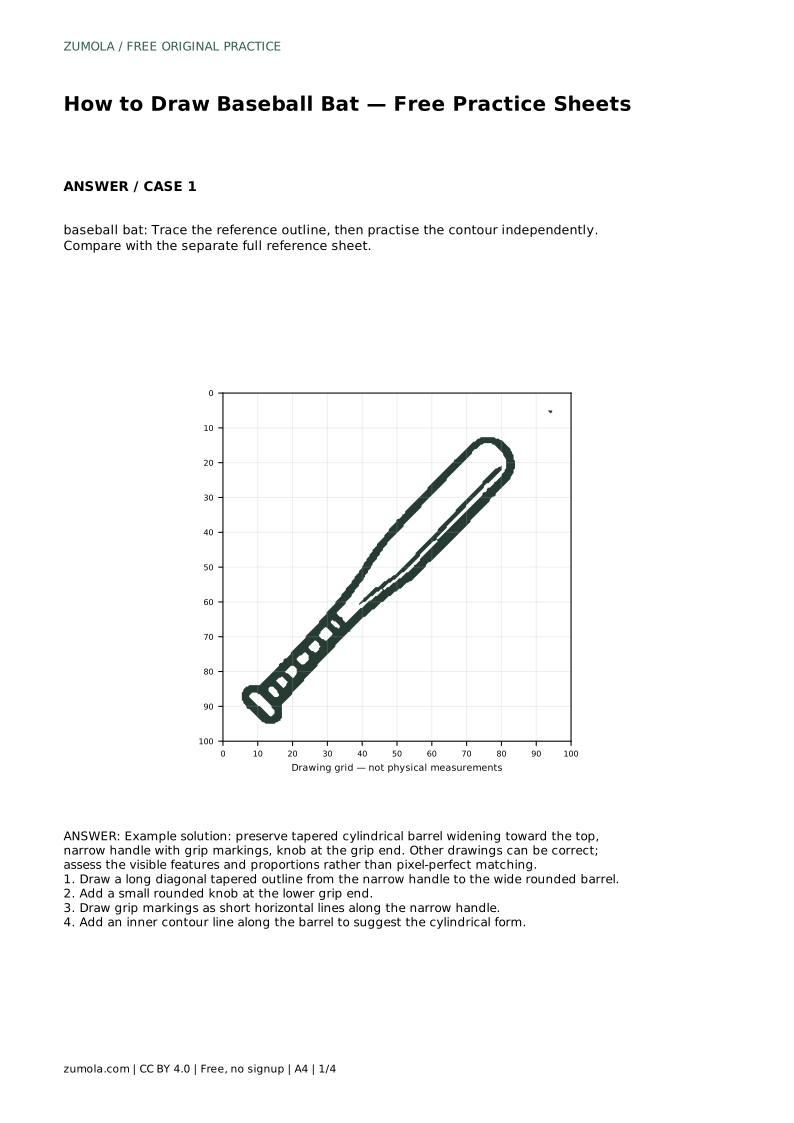
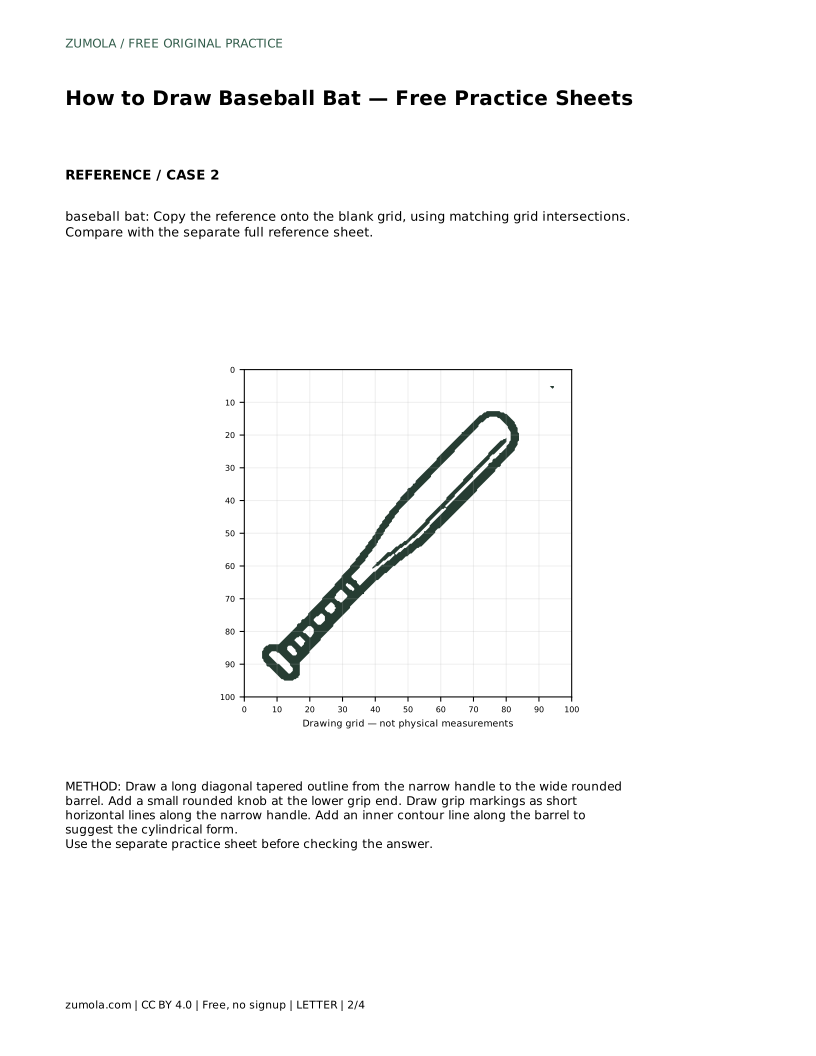
baseball bat: Trace the reference outline, then practise the contour independently. Compare with the separate full reference sheet.
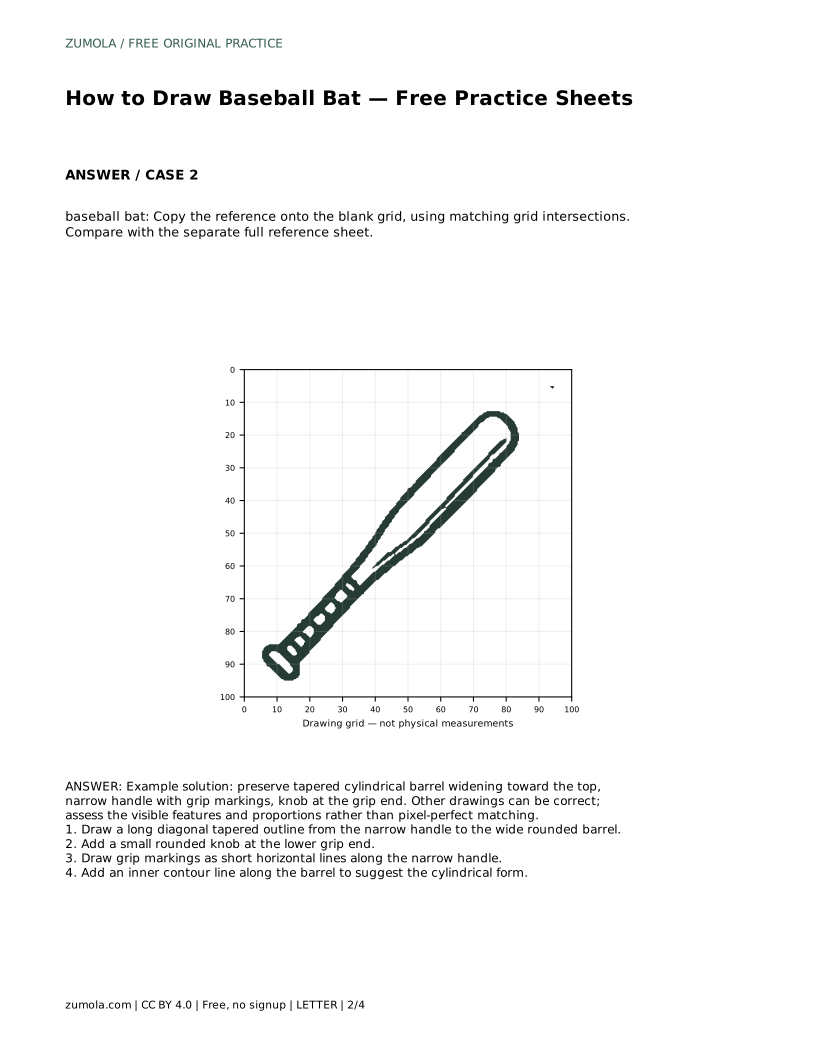
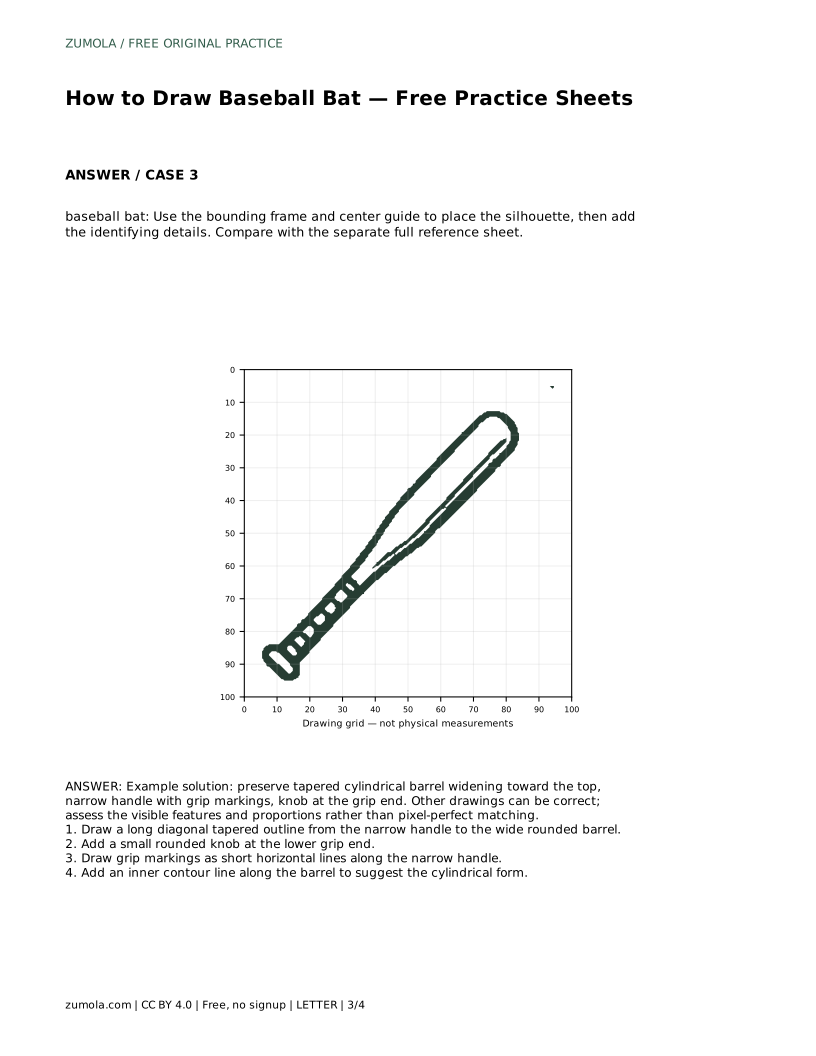
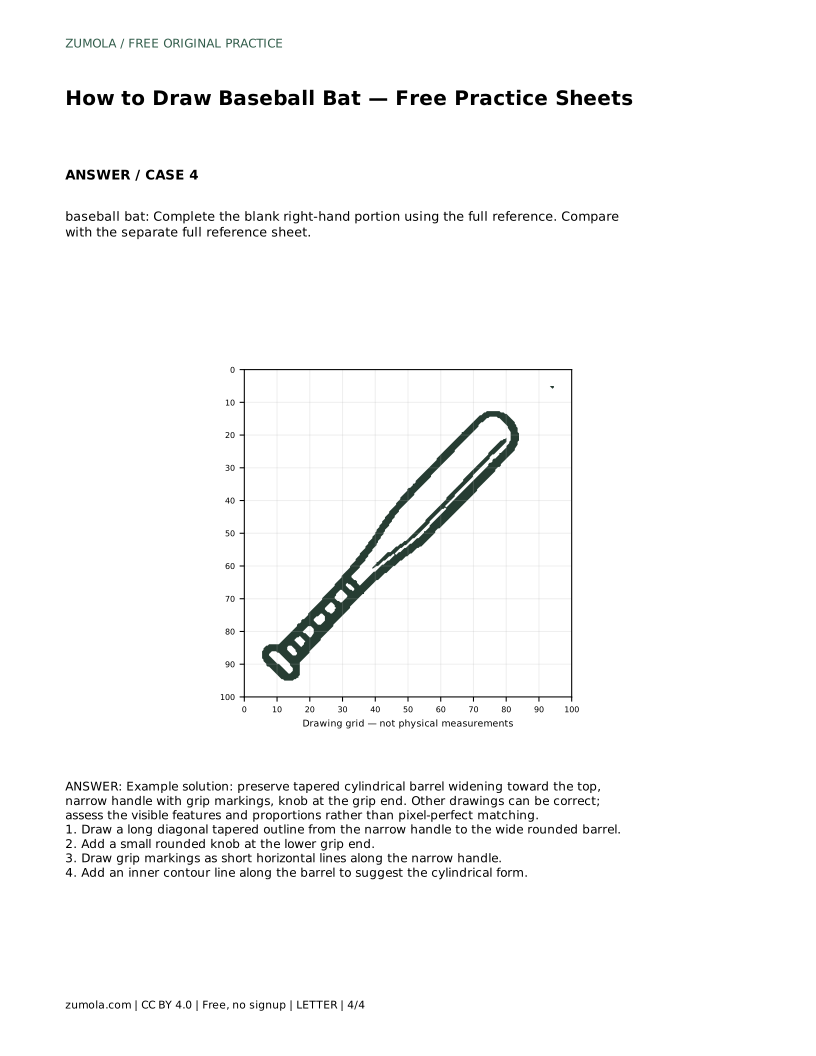
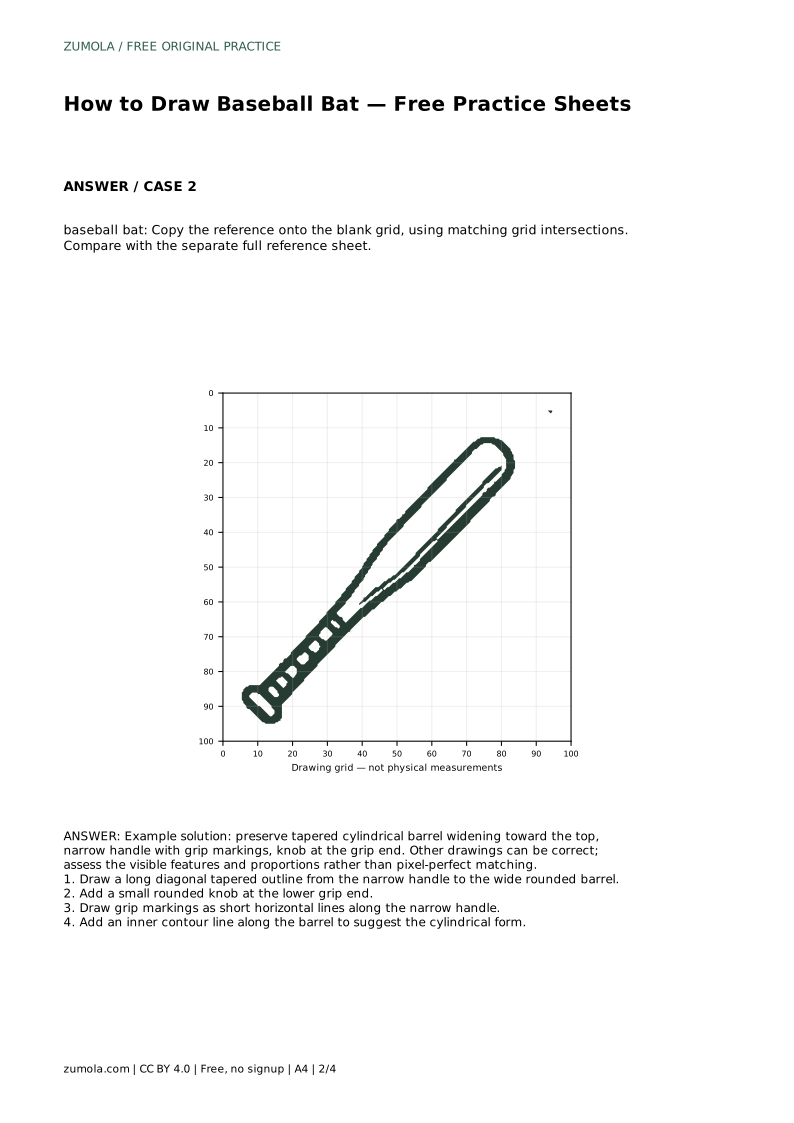
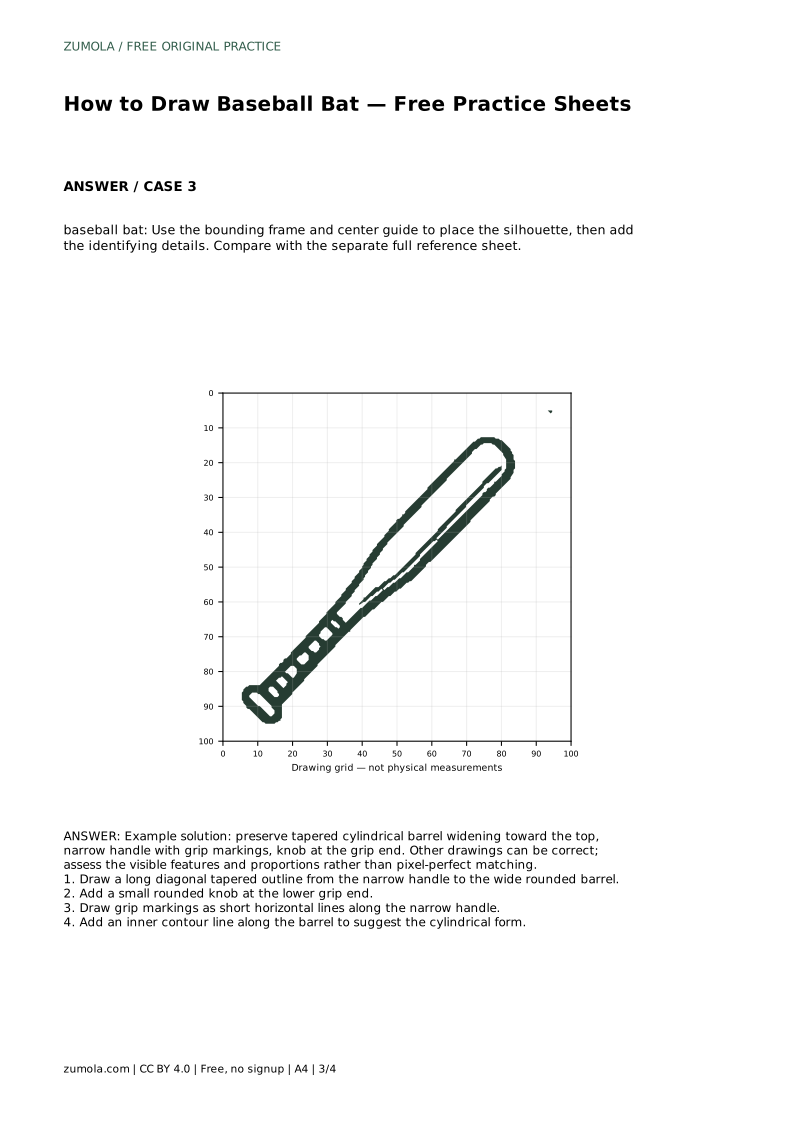
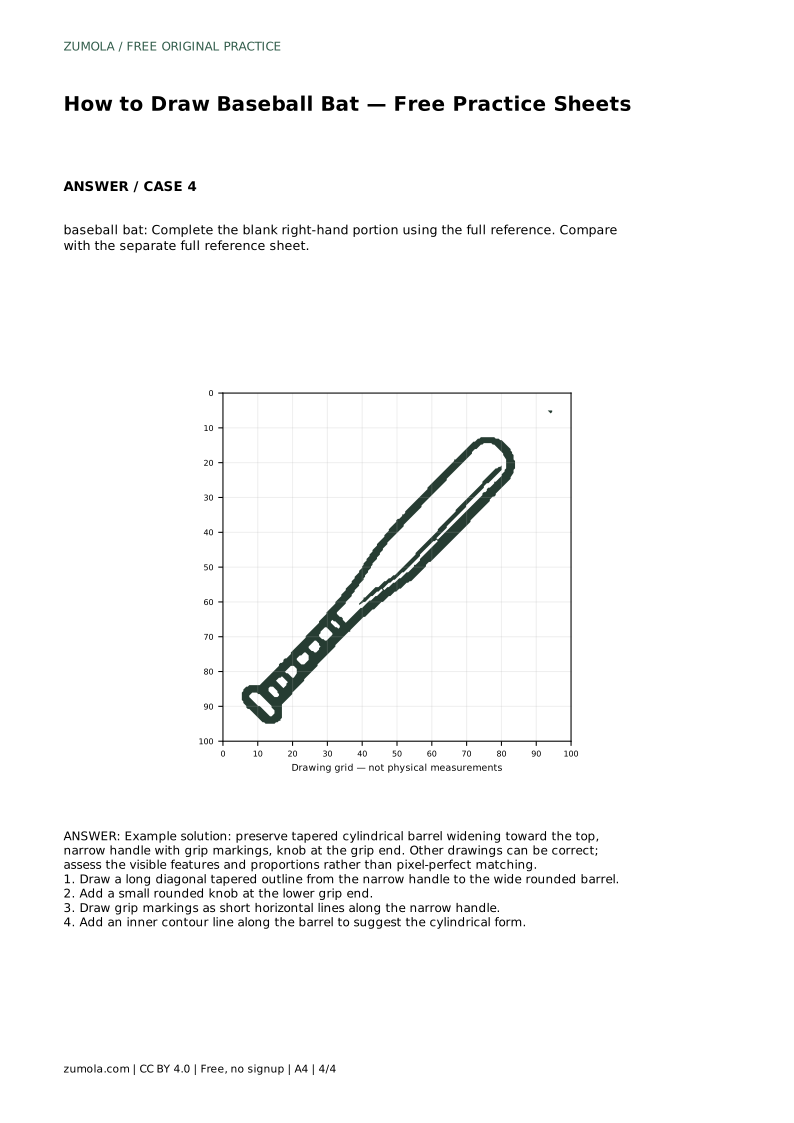
Example solution: preserve tapered cylindrical barrel widening toward the top, narrow handle with grip markings, knob at the grip end. Other drawings can be correct; assess the visible features and proportions rather than pixel-perfect matching. Draw a long diagonal tapered outline from the narrow handle to the wide rounded barrel. Add a small rounded knob at the lower grip end. Draw grip markings as short horizontal lines along the narrow handle. Add an inner contour line along the barrel to suggest the cylindrical form.
Either works. A diagonal placement makes the taper easier to see and gives the drawing more energy.
There is no fixed number. A few evenly spaced lines are enough to suggest grip texture without cluttering the handle.
Missing the inner contour line. Adding one line along the barrel that follows the taper suggests the curved cylindrical surface.
All drawing practice · Free coordinate paper
Original resources · CC BY 4.0 · Free for personal and classroom use with attribution.