Reference diagrams
LETTER · Download PDF
A4 · Download PDF
Free original resources
Learn to draw a ghost with a rounded dome head, outward arms, wavy hem, and simple face. Trace, grid, and complete-the-drawing practice sheets support the same core shapes.
Four original cases, with reference diagrams, practice sheets and worked answers. Everything is free; no signup required.
LETTER · Download PDF
A4 · Download PDF
LETTER · Download PDF
A4 · Download PDF
LETTER · Download PDF
A4 · Download PDF
Use A4 or US Letter to match your printer. Use the stated values and conditions to solve each exercise; diagrams are not physical measuring rulers.
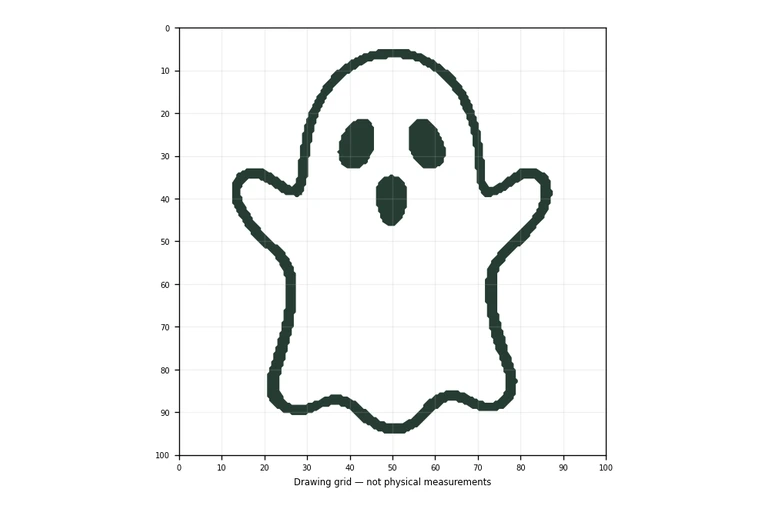
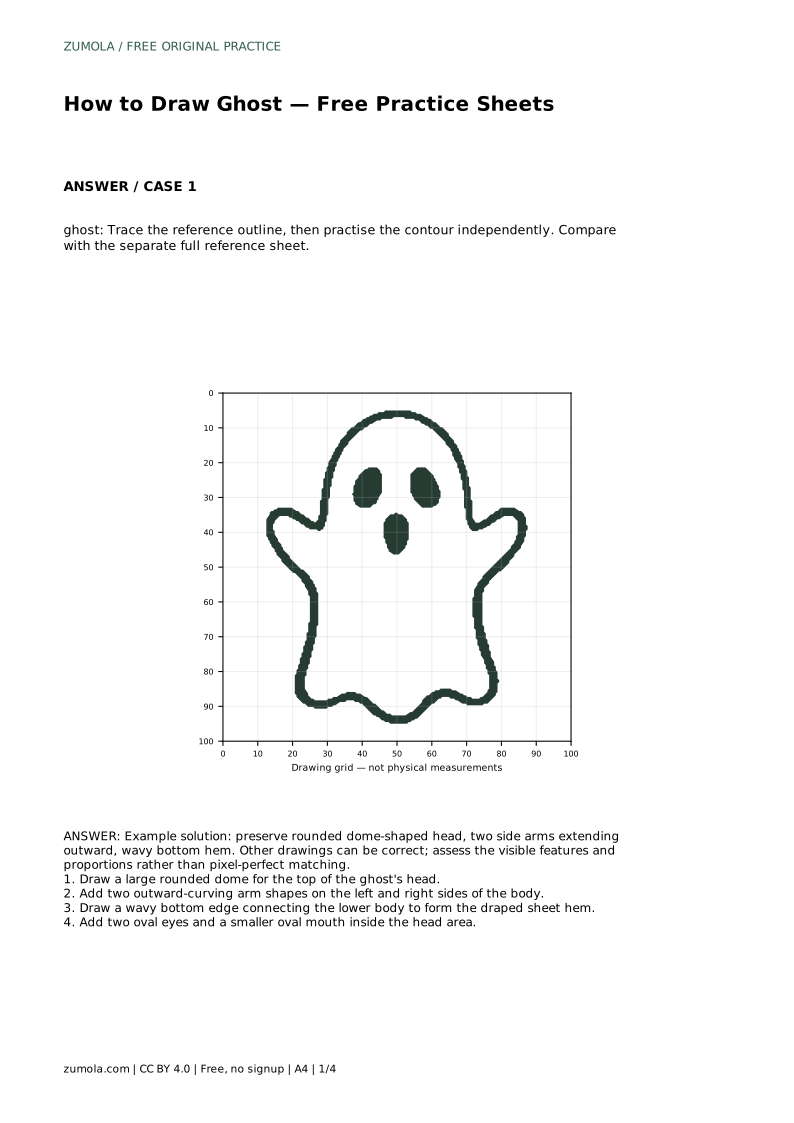
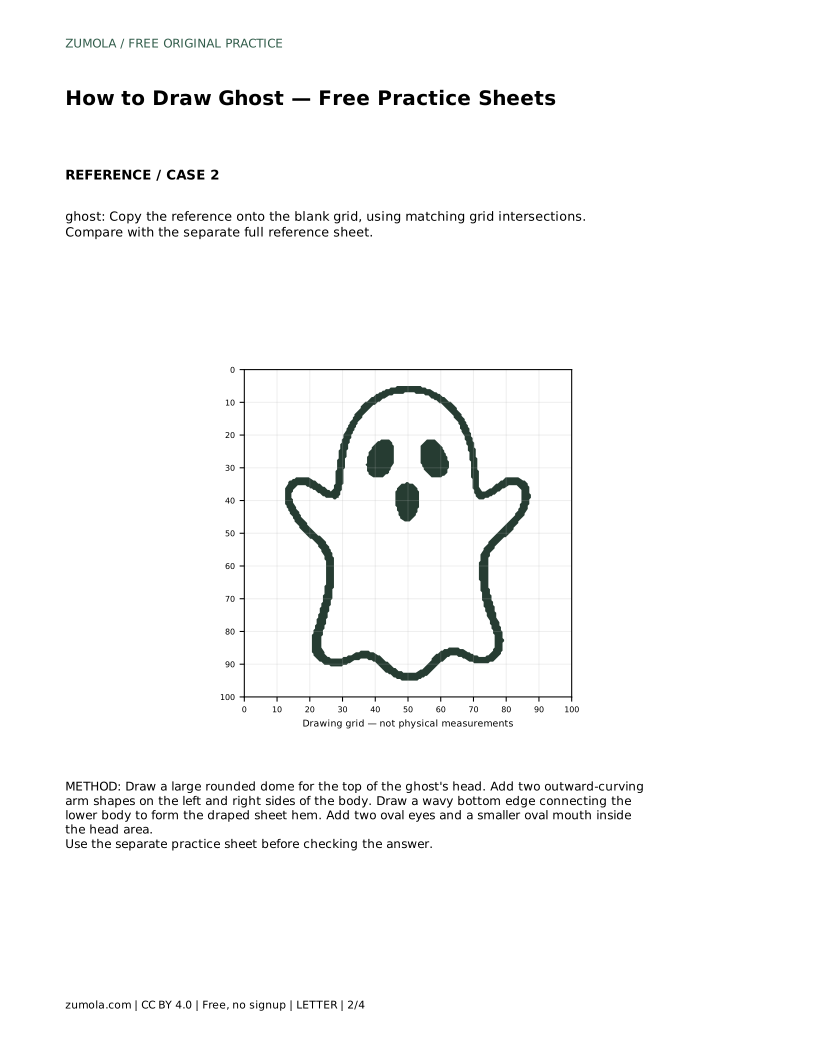
A ghost is a friendly drawing subject because its silhouette is built from a few clear shapes: a rounded dome, two arms that curve outward, and a wavy hem like draped cloth. The practice sheets on this page let you trace the outline first, then try the contour independently. You can also copy the reference onto a blank grid, use a bounding frame and center guide, or complete a partially drawn version. Each method trains the same skill: placing the large shapes before adding the face.
Before drawing eyes or a mouth, establish the ghost's overall outline. Think of the body as a soft dome sitting above a draped sheet. The dome should be wide and rounded rather than pointed, and the sides should flow into the arms without sharp corners. The arms extend outward from the body, curving gently rather than sticking out at rigid right angles. The bottom hem is a series of soft waves that suggest fabric.
A useful order is top, sides, bottom, then face. Draw the dome first, add the two outward-curving arms, connect the lower body with a wavy hem, and only then place the facial features inside the head area. Keeping the face small relative to the dome helps the ghost read clearly as a sheet-like figure rather than a round character with a large face.
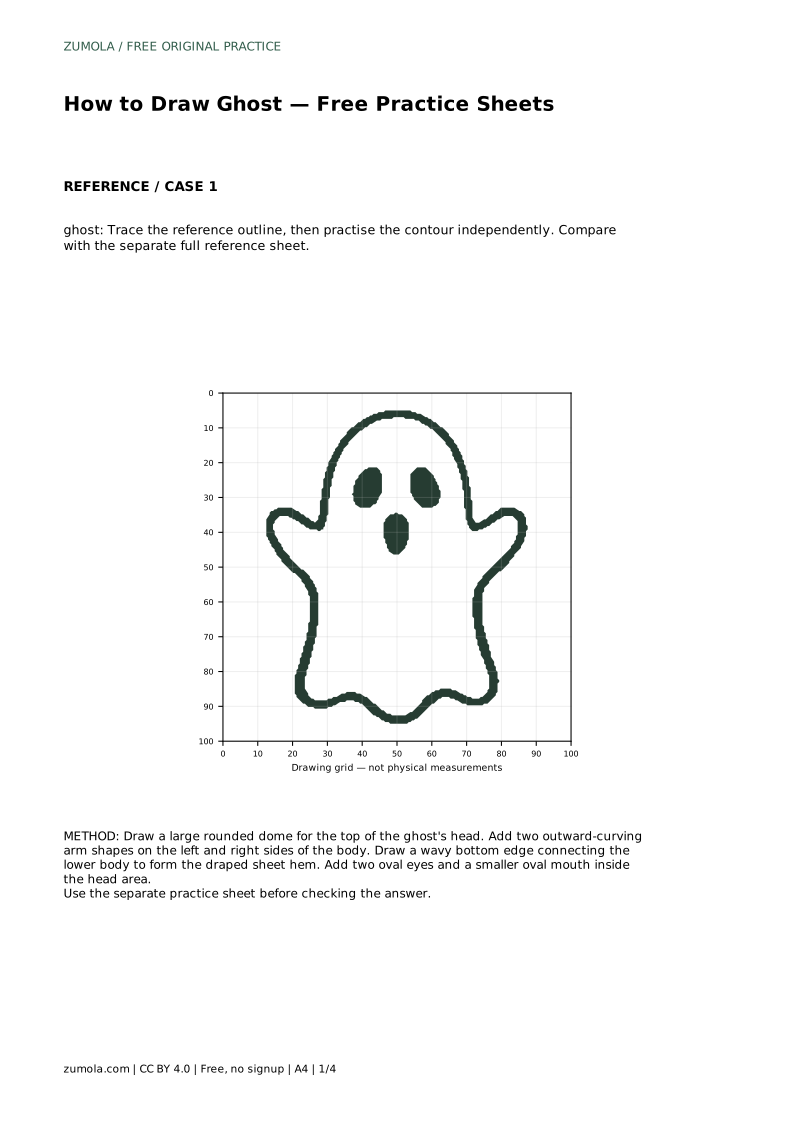
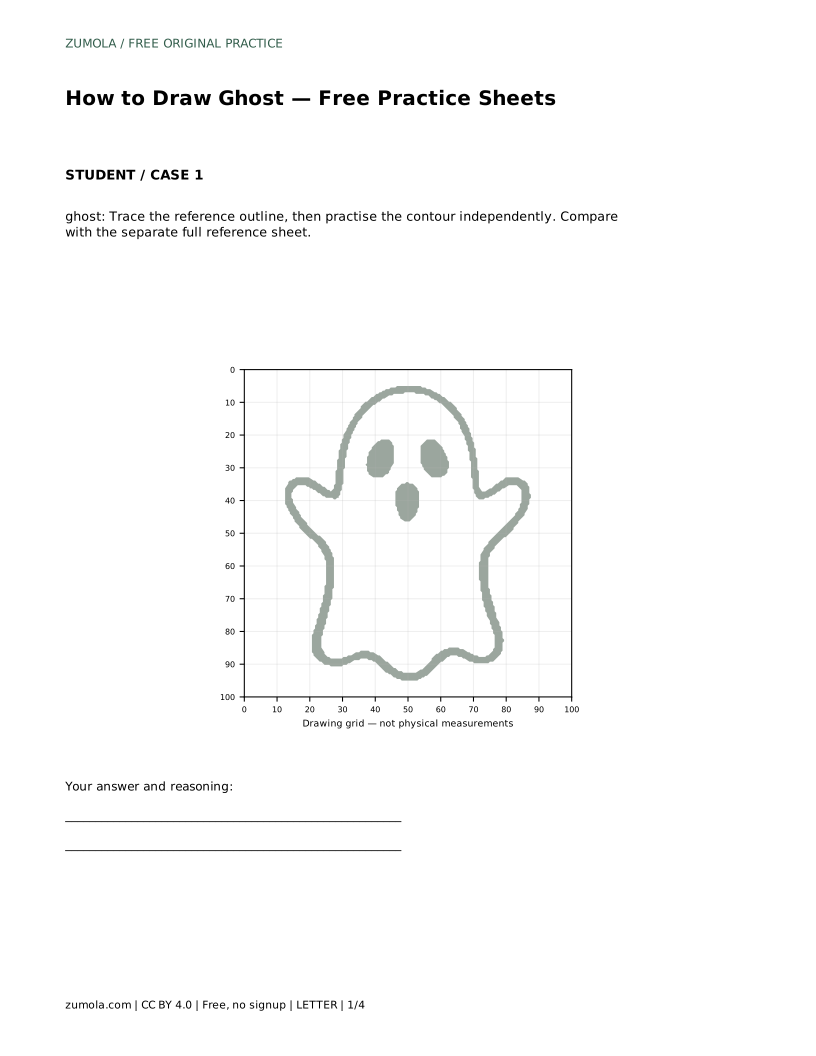
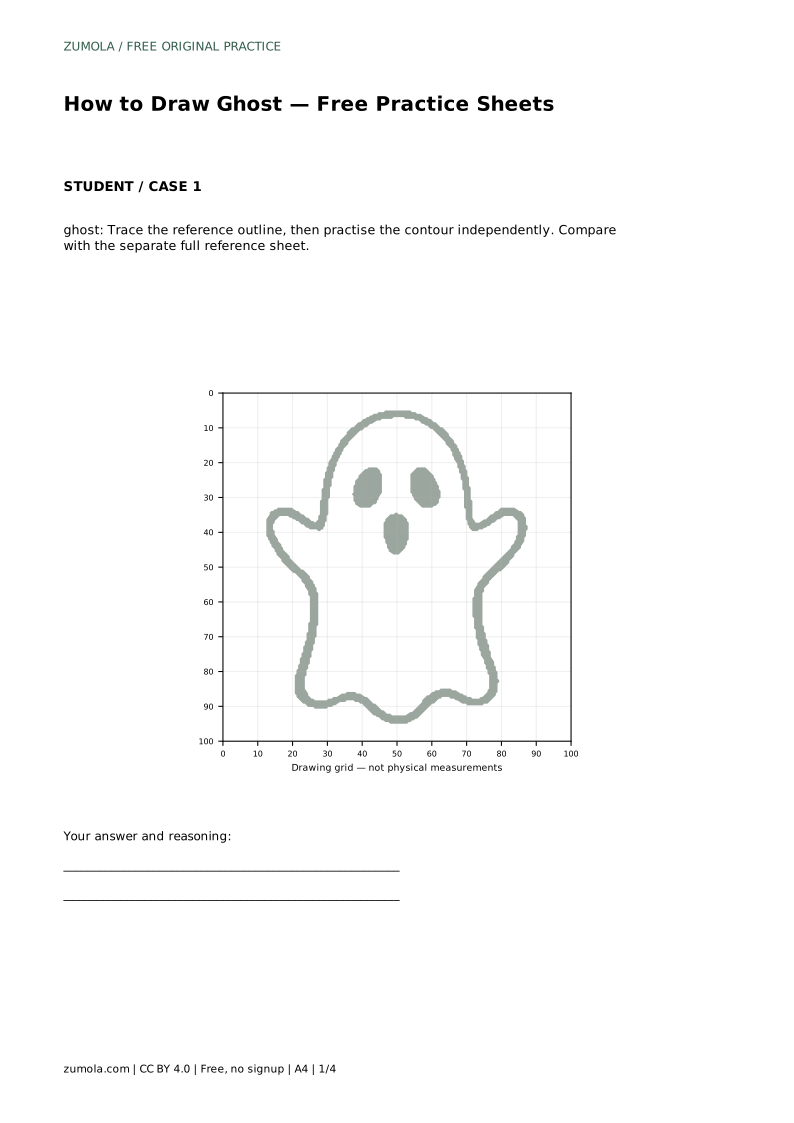
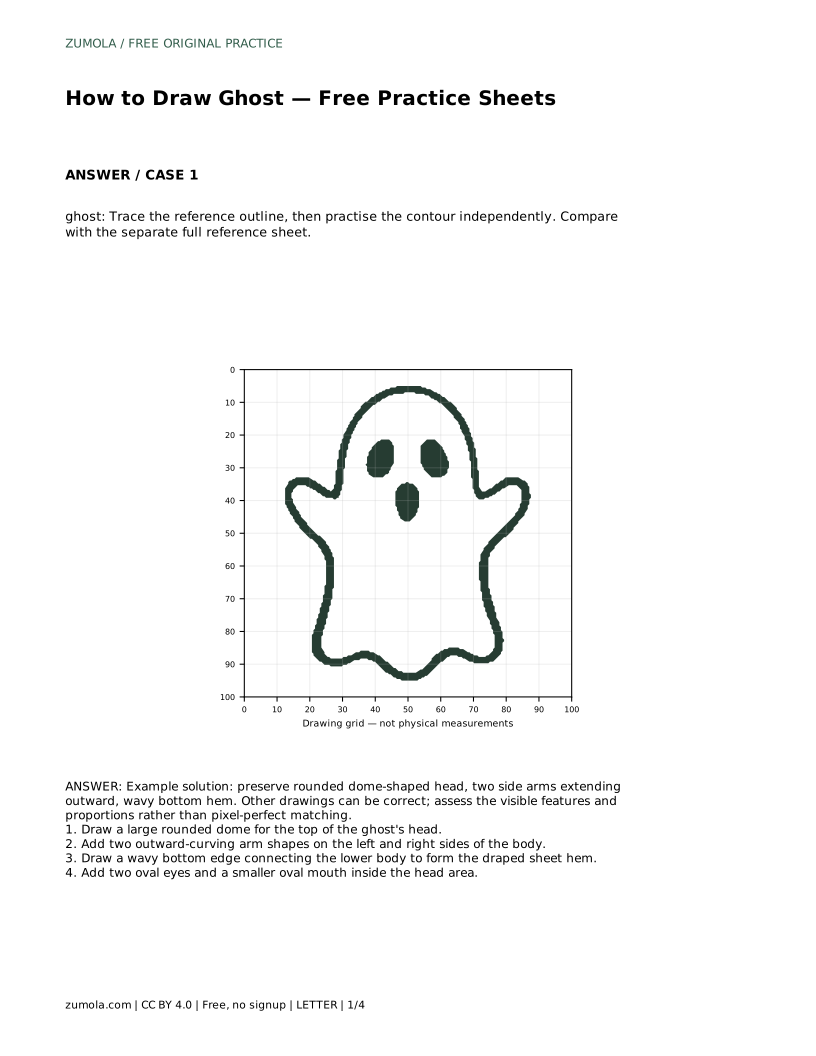
The trace sheet asks you to follow the reference outline, then practise the contour independently on the same page. Tracing builds muscle memory for the dome and hem; the independent attempt shows whether you can reproduce those shapes without guidance. Compare your freehand contour with the separate full reference sheet rather than with your traced line, so you notice where the proportions drifted.
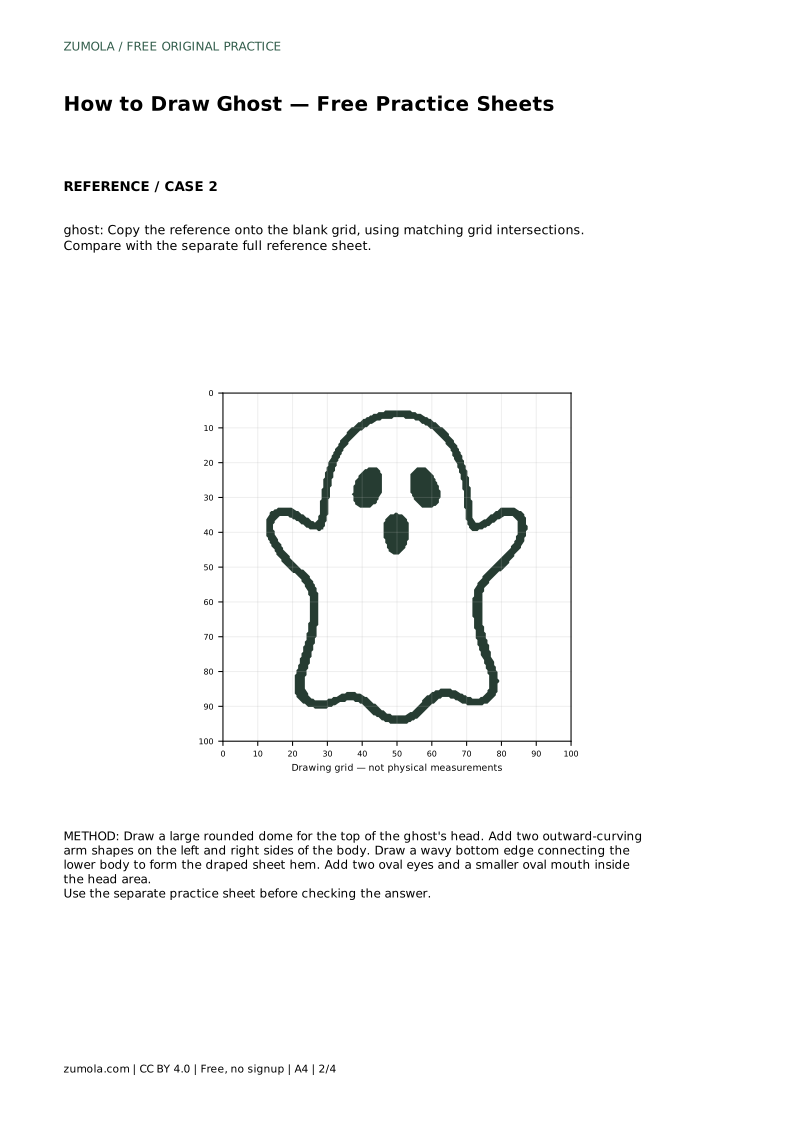
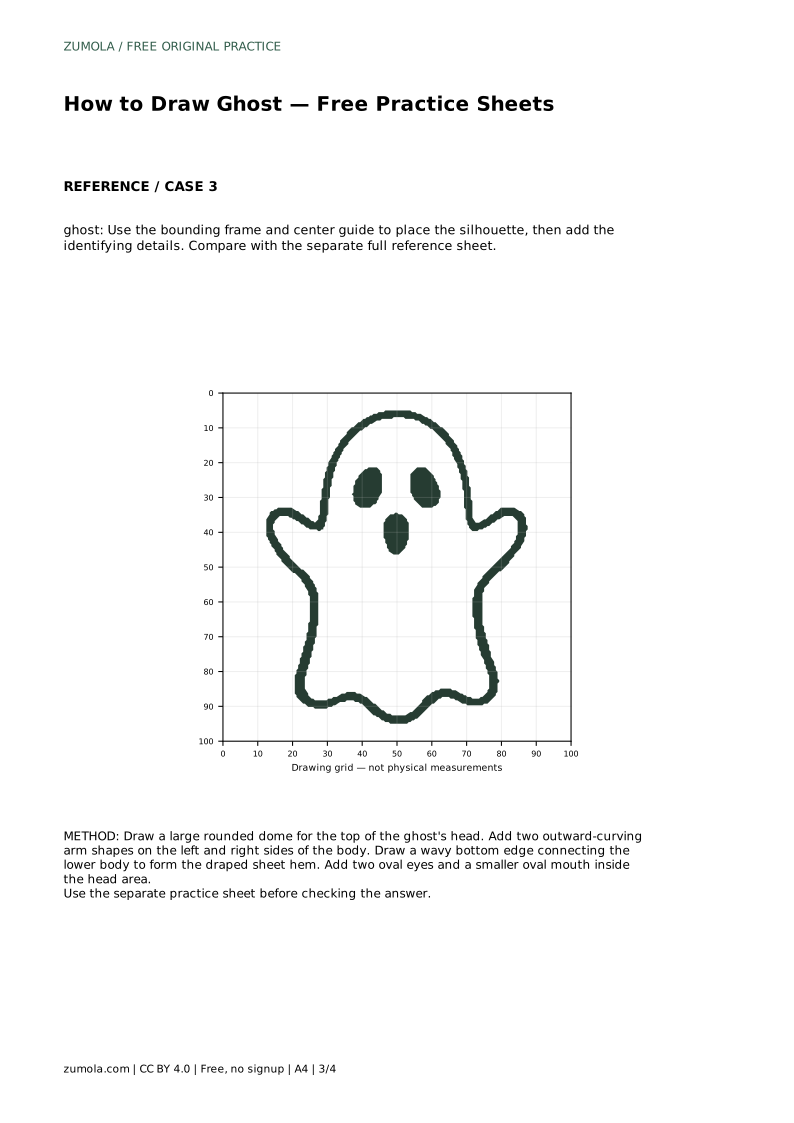
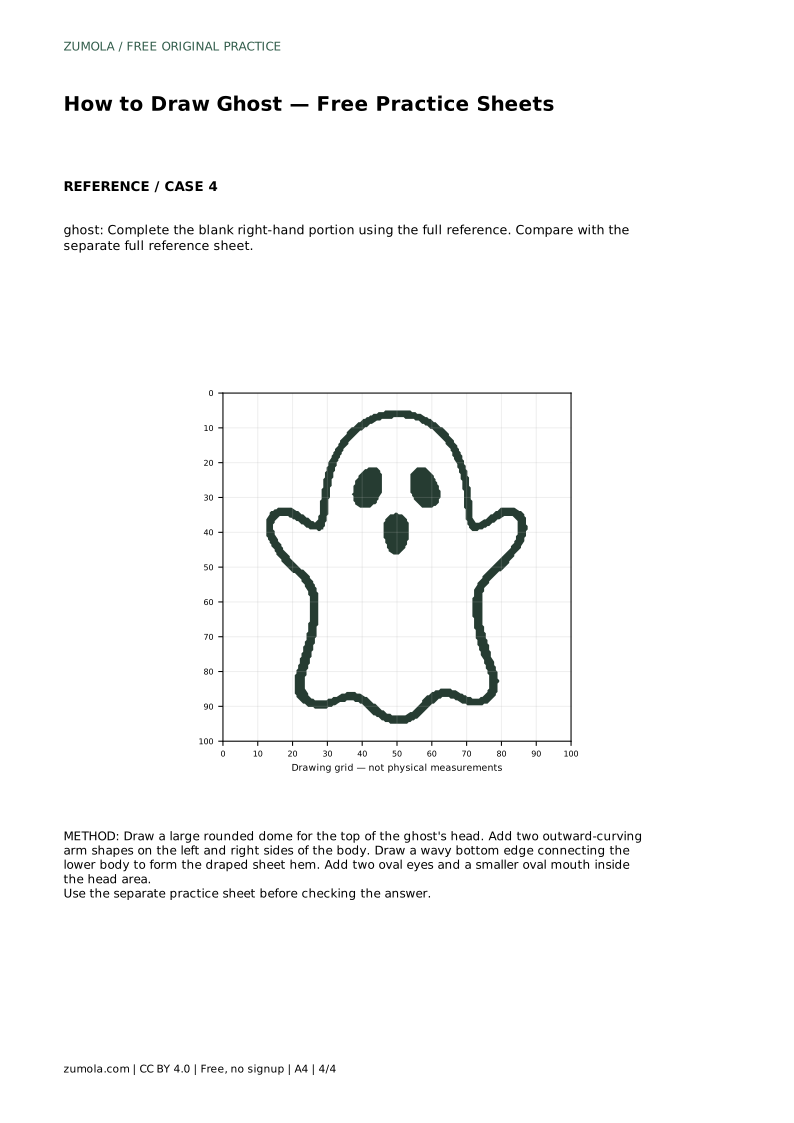
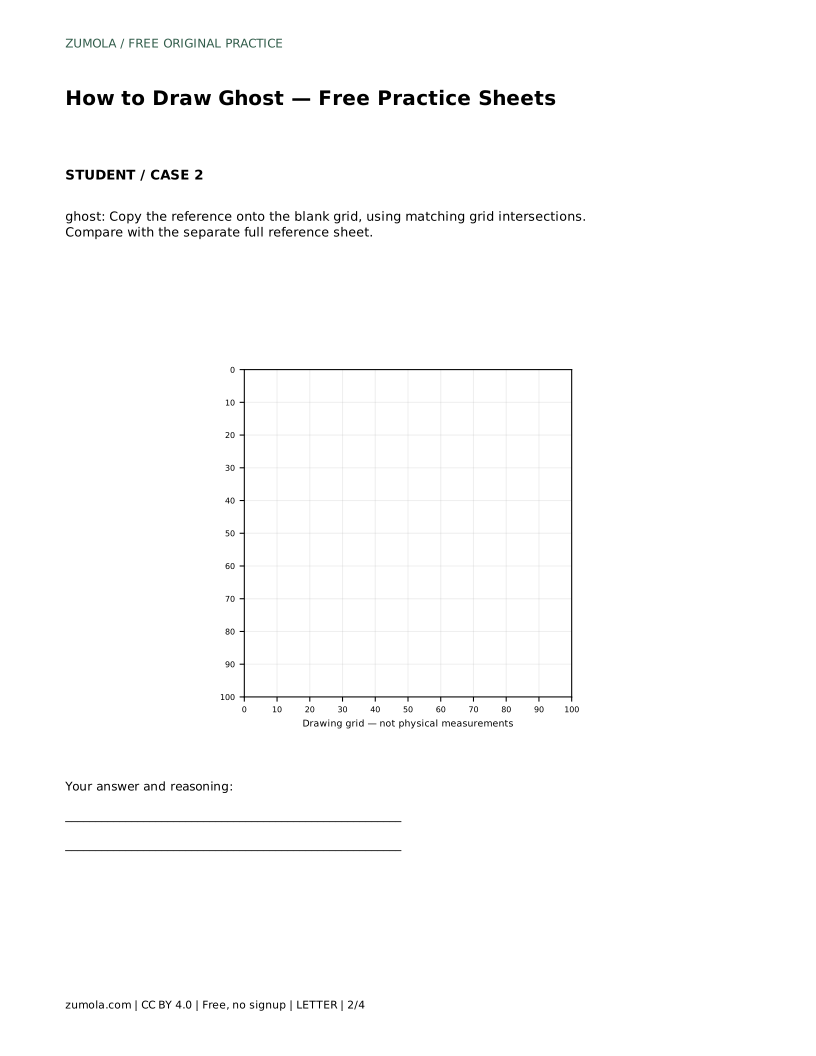
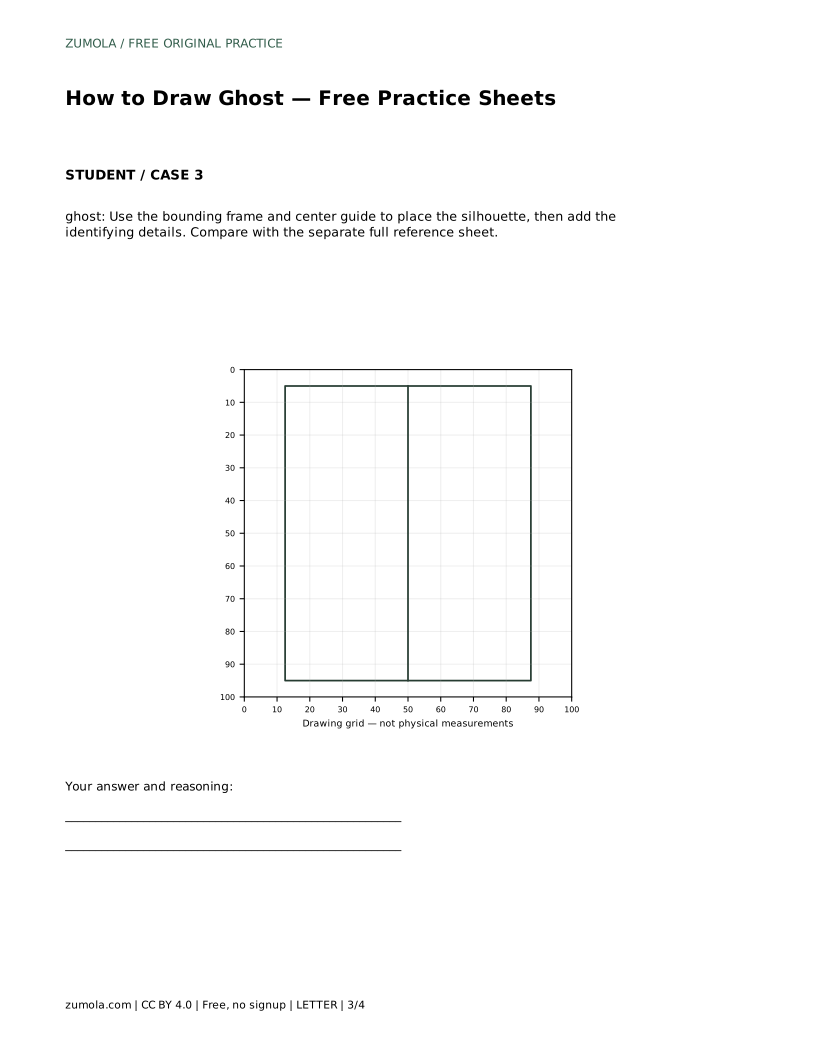
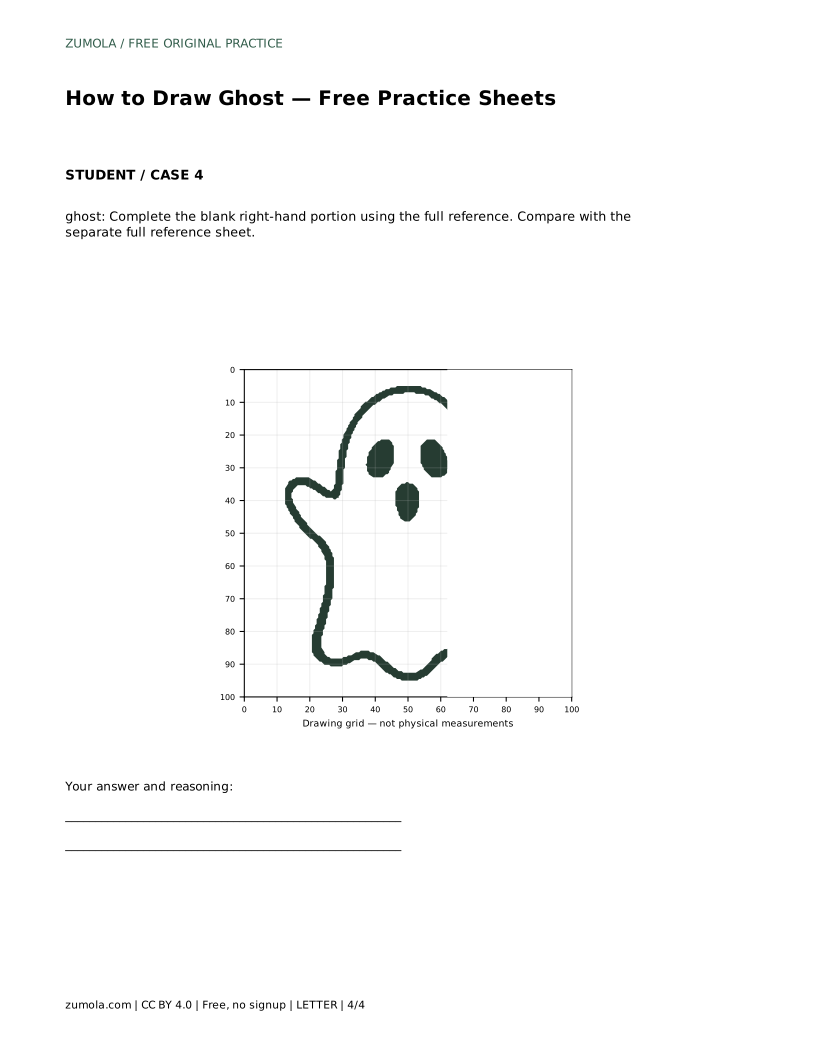
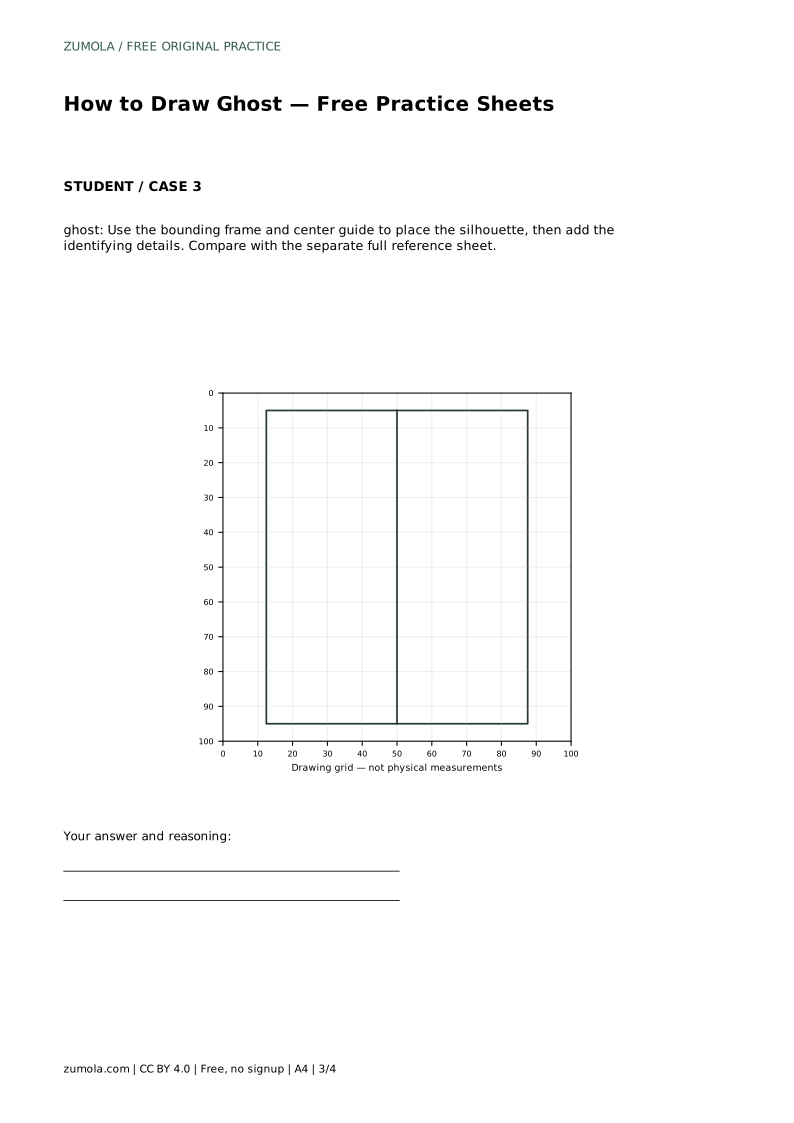
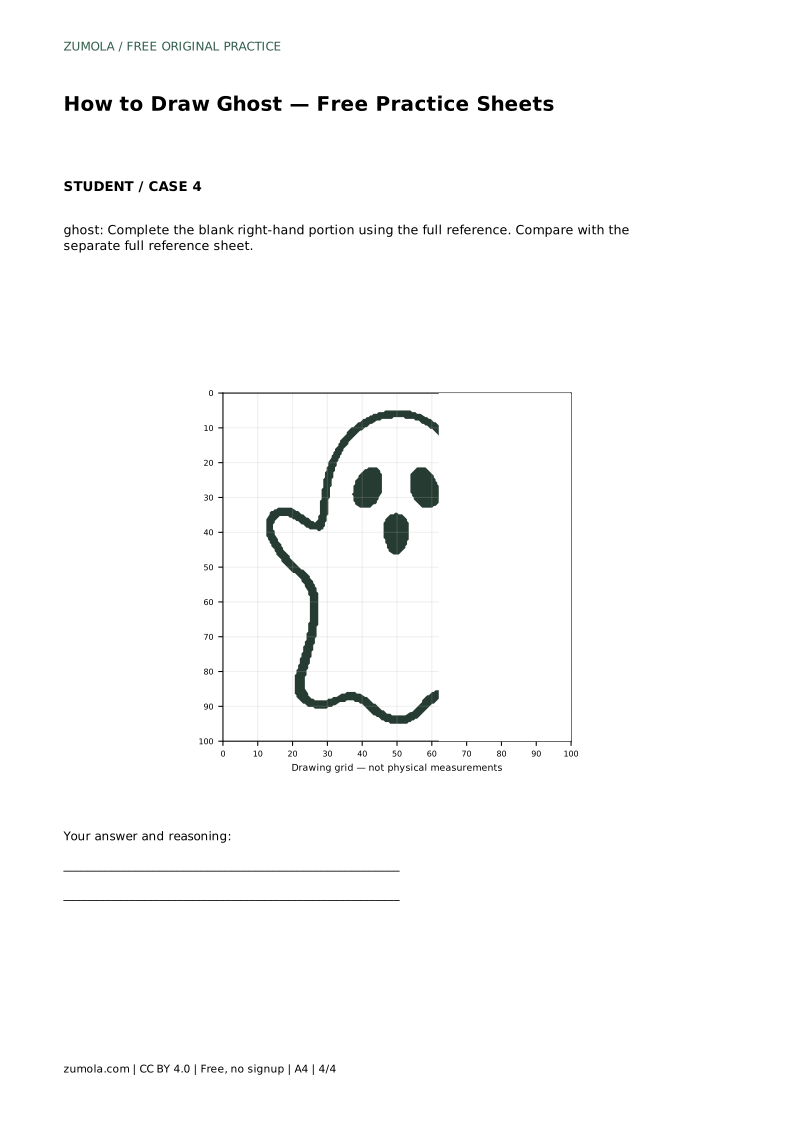
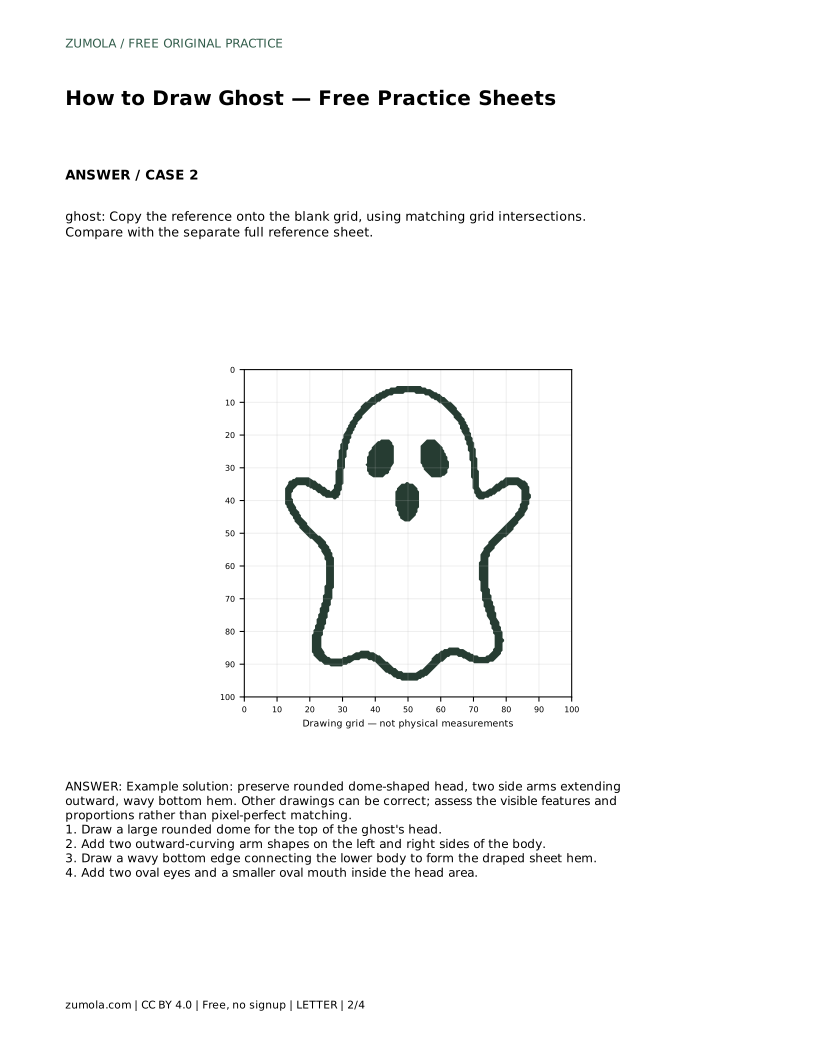
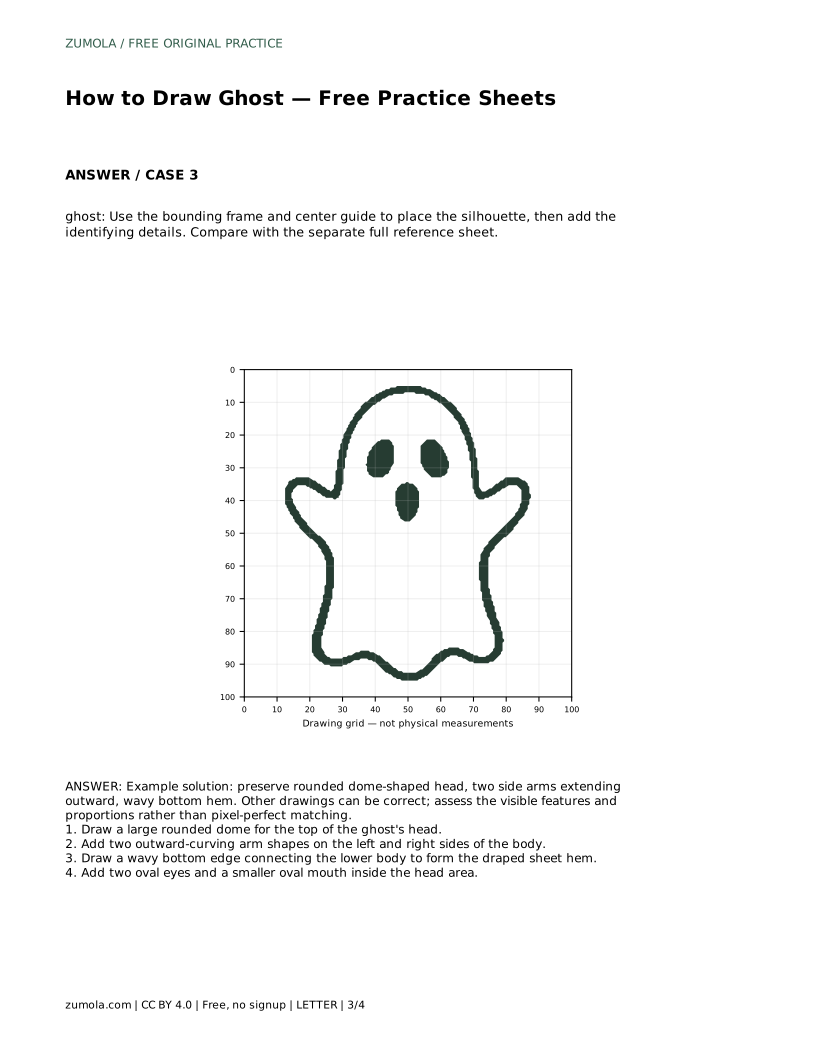
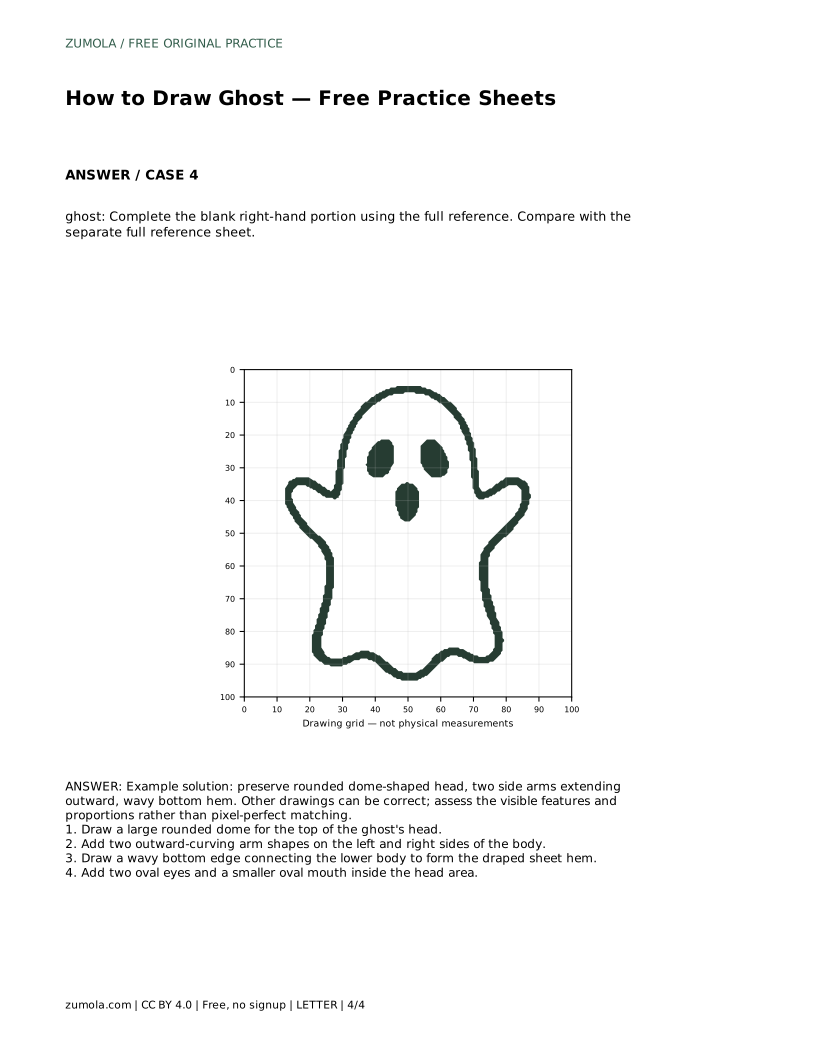
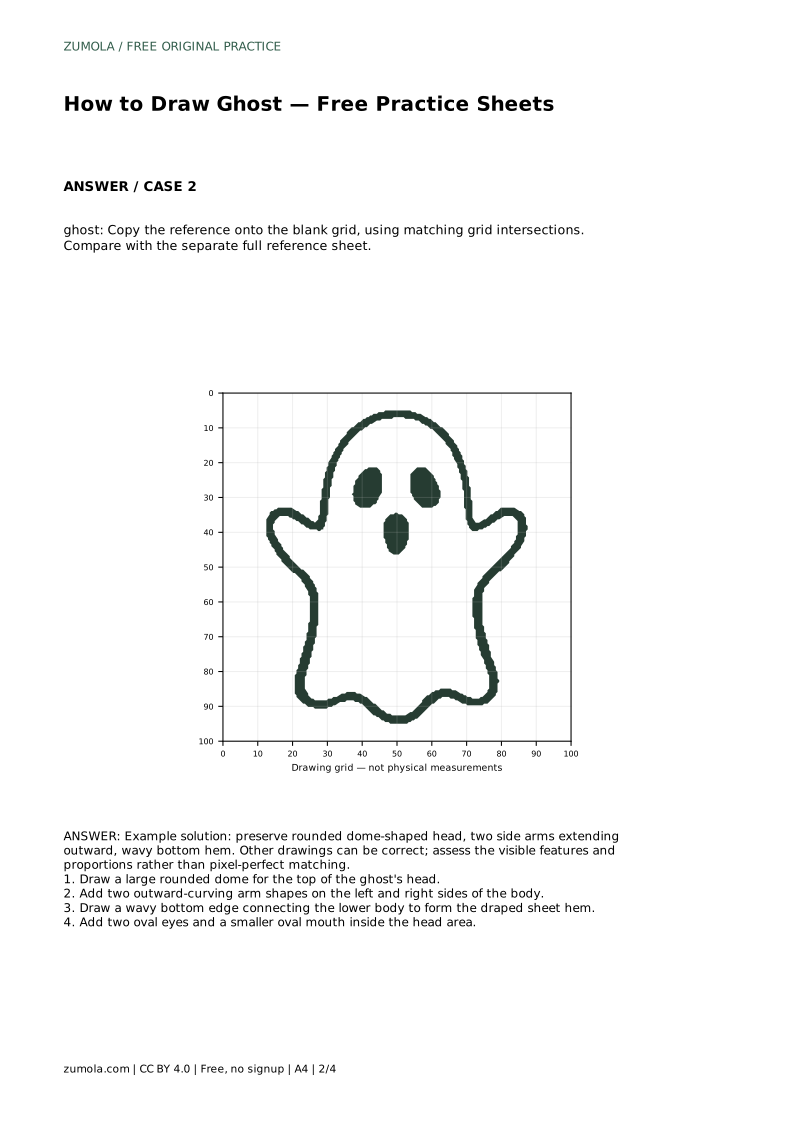
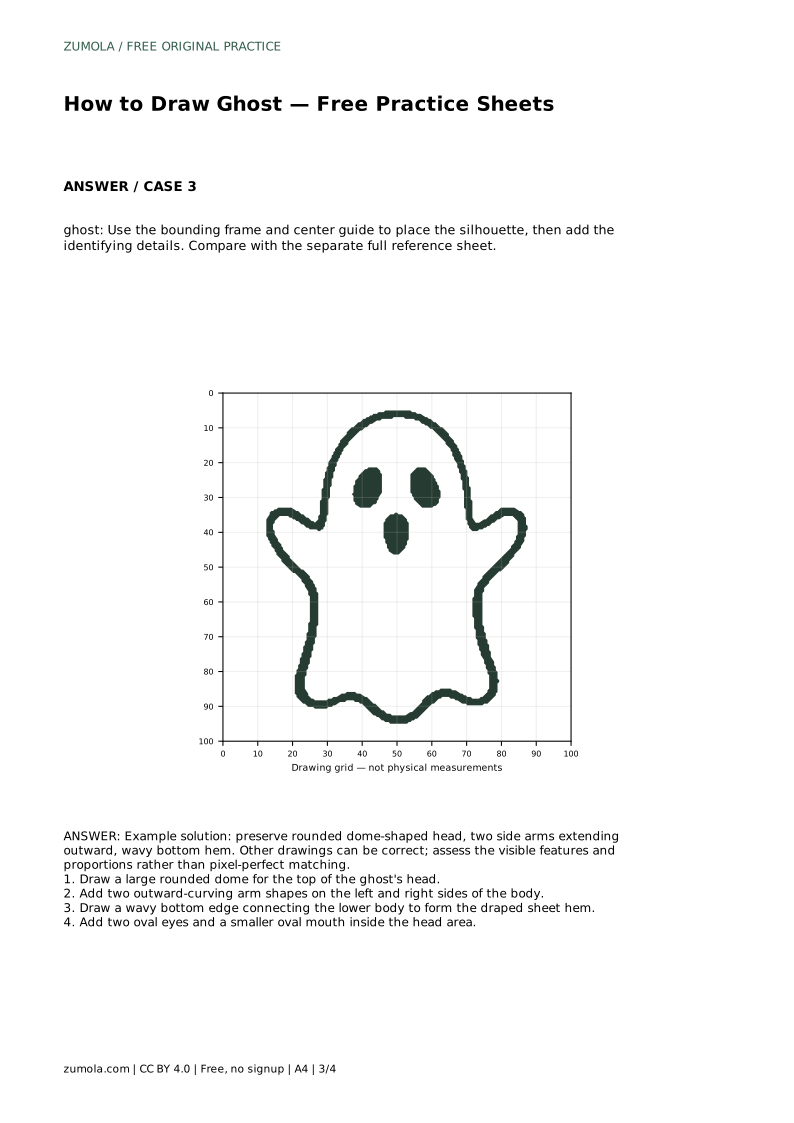
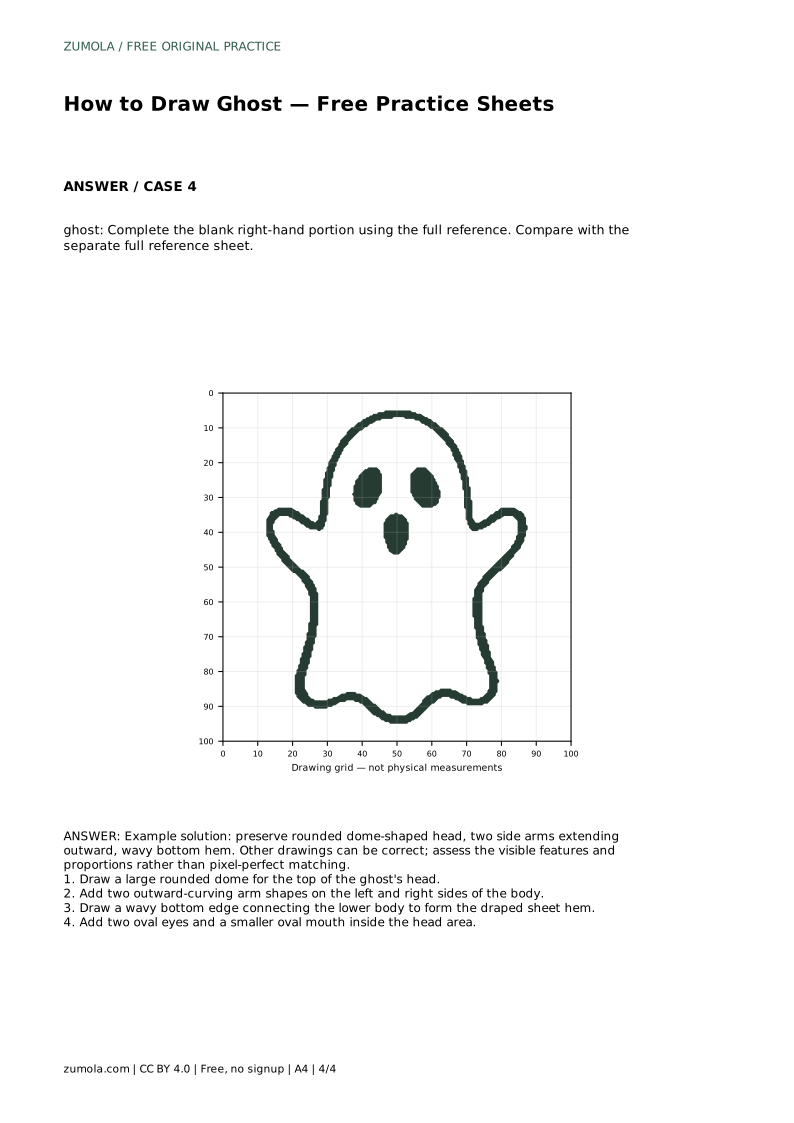
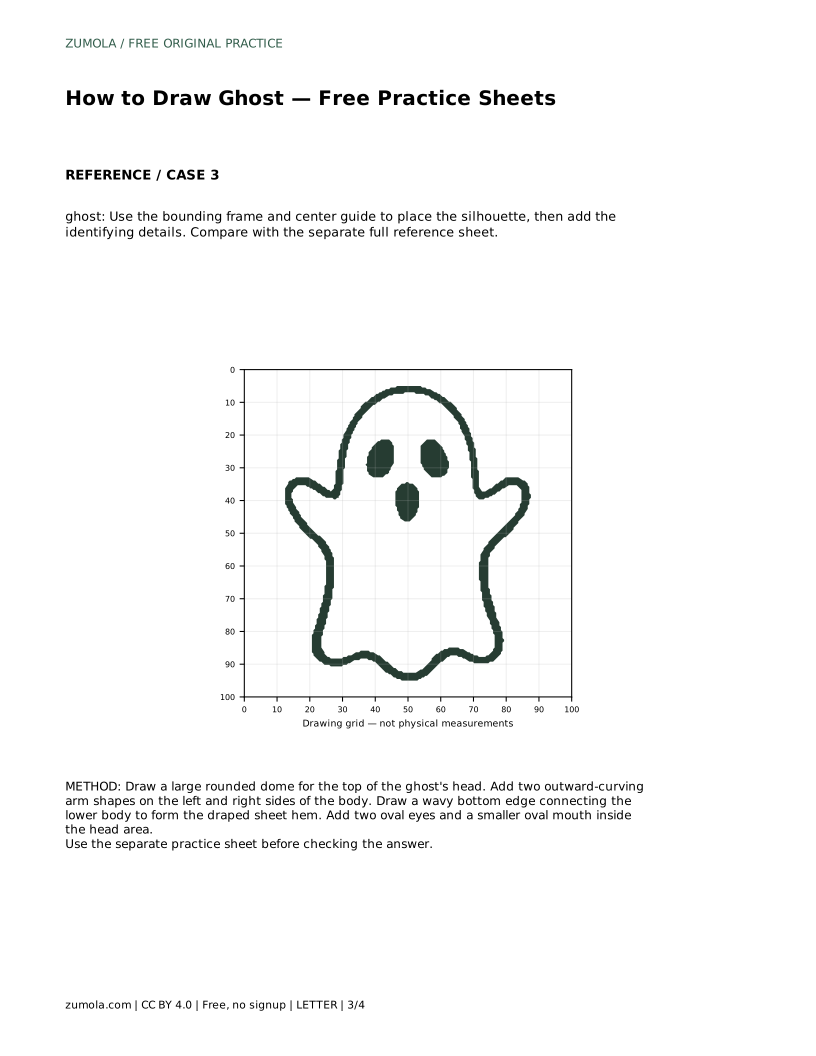
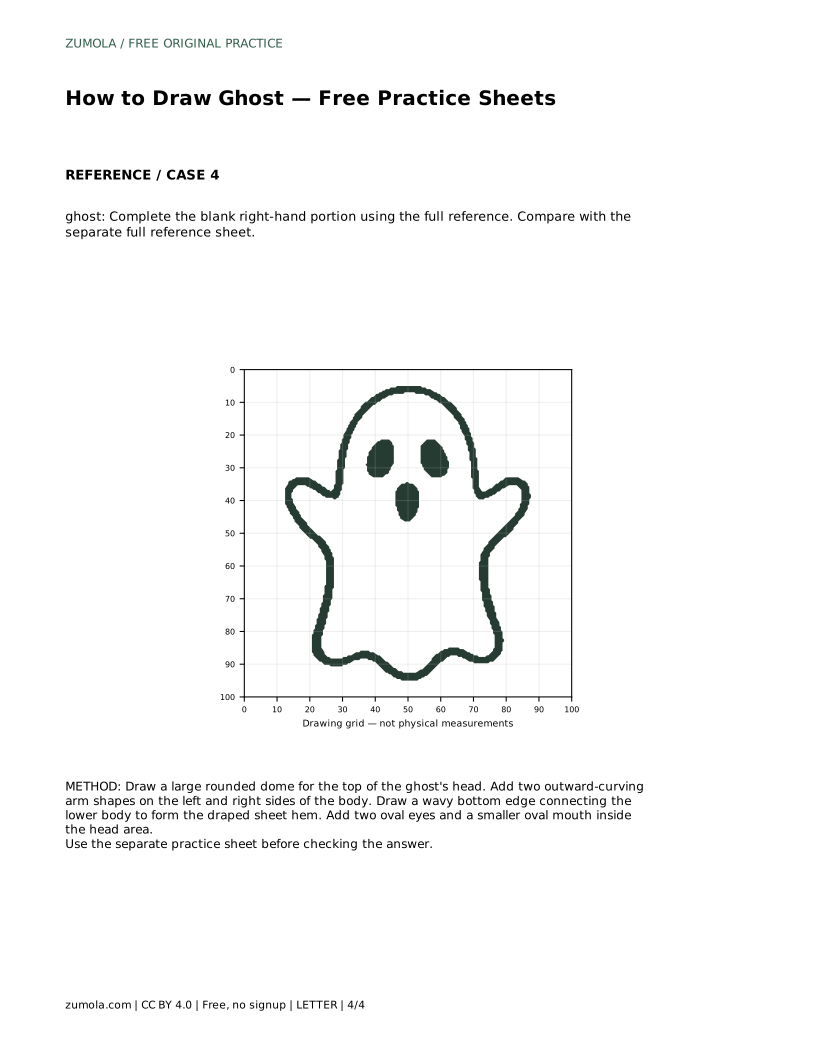
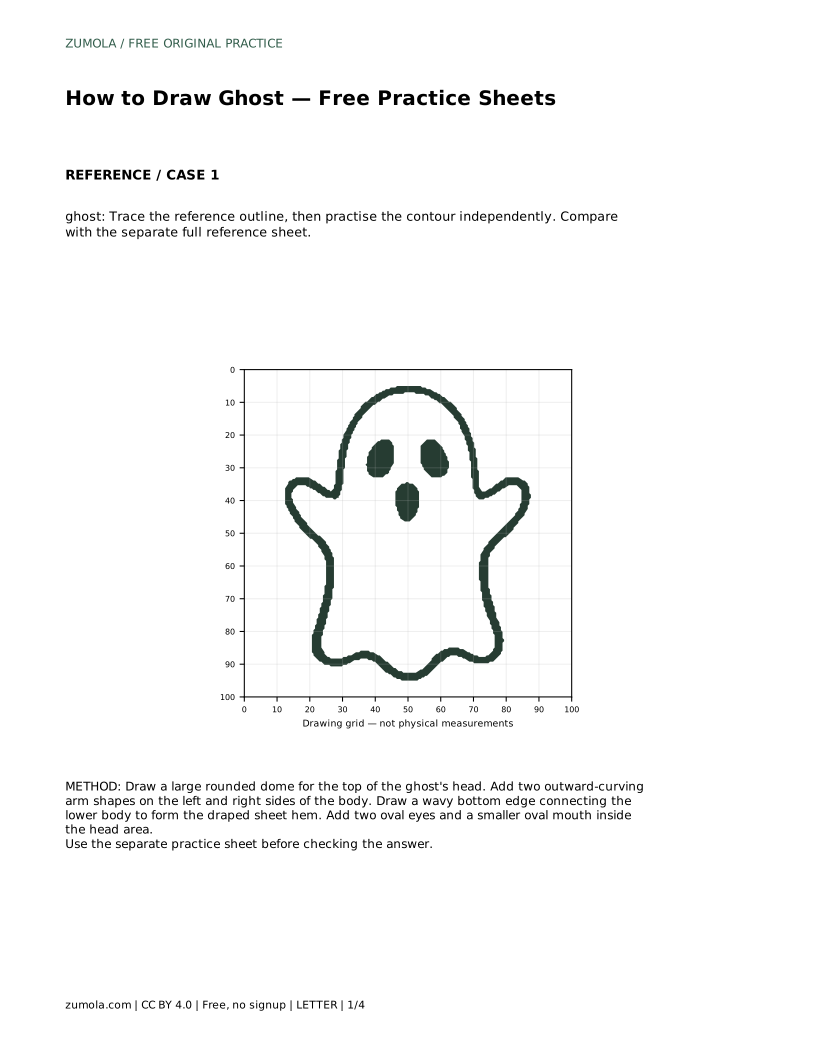
The grid sheet asks you to copy the reference onto a blank grid using matching grid intersections. Instead of judging distances by eye alone, you can note where the dome top, arm tips, and hem waves fall relative to grid lines. The bounding-frame sheet gives you an outer frame and a center guide to place the silhouette before adding details. The complete-the-drawing sheet provides the left portion and asks you to finish the right side using the full reference, which tests whether you can continue shapes accurately across the page.
Ghost drawings have many valid outcomes. A slightly wider dome, rounder arms, or a different number of hem waves can still be correct. Assess the visible features and proportions instead of aiming for pixel-perfect matching. Ask whether the head reads as a rounded dome, whether both arms extend outward, whether the hem looks wavy and draped, and whether the eyes and mouth sit inside the head area at a sensible size.
If something looks off, compare the large shapes first. A common problem is making the dome too narrow or pointed, which makes the figure look like a balloon. Another is drawing arms that hang downward instead of extending outward. A third is placing the face too low or too large, which crowds the dome. Adjust the silhouette before refining small details, because small fixes cannot correct a misplaced overall shape.
Repeat the same ghost across formats to isolate one skill at a time. Tracing helps you feel the contour; the grid helps you judge placement; the frame helps you balance the silhouette; completing a partial drawing helps you continue shapes accurately. Keep your first attempts light so you can adjust the dome or hem without erasing heavily.
When you move to a blank page, sketch the dome and hem lightly, then darken the lines you keep. This keeps the drawing flexible while you decide on arm angle and hem wave count. The goal is a clear, recognizable ghost with balanced proportions, not an identical copy of the reference.
ghost: Trace the reference outline, then practise the contour independently. Compare with the separate full reference sheet.
Example solution: preserve rounded dome-shaped head, two side arms extending outward, wavy bottom hem. Other drawings can be correct; assess the visible features and proportions rather than pixel-perfect matching. Draw a large rounded dome for the top of the ghost's head. Add two outward-curving arm shapes on the left and right sides of the body. Draw a wavy bottom edge connecting the lower body to form the draped sheet hem. Add two oval eyes and a smaller oval mouth inside the head area.
No. Ghost drawings have multiple valid outcomes. Preserve the rounded dome head, outward arms, wavy hem, and simple face, then assess proportions rather than exact line placement.
Start with the trace sheet to learn the contour, then try the grid or frame sheet to practise placement without tracing. Use the complete-the-drawing sheet once the large shapes feel familiar.
Check the silhouette: dome roundness, outward arm curves, and wavy hem. Fix those large shapes before adjusting the eyes and mouth.
All drawing practice · Free coordinate paper
Original resources · CC BY 4.0 · Free for personal and classroom use with attribution.