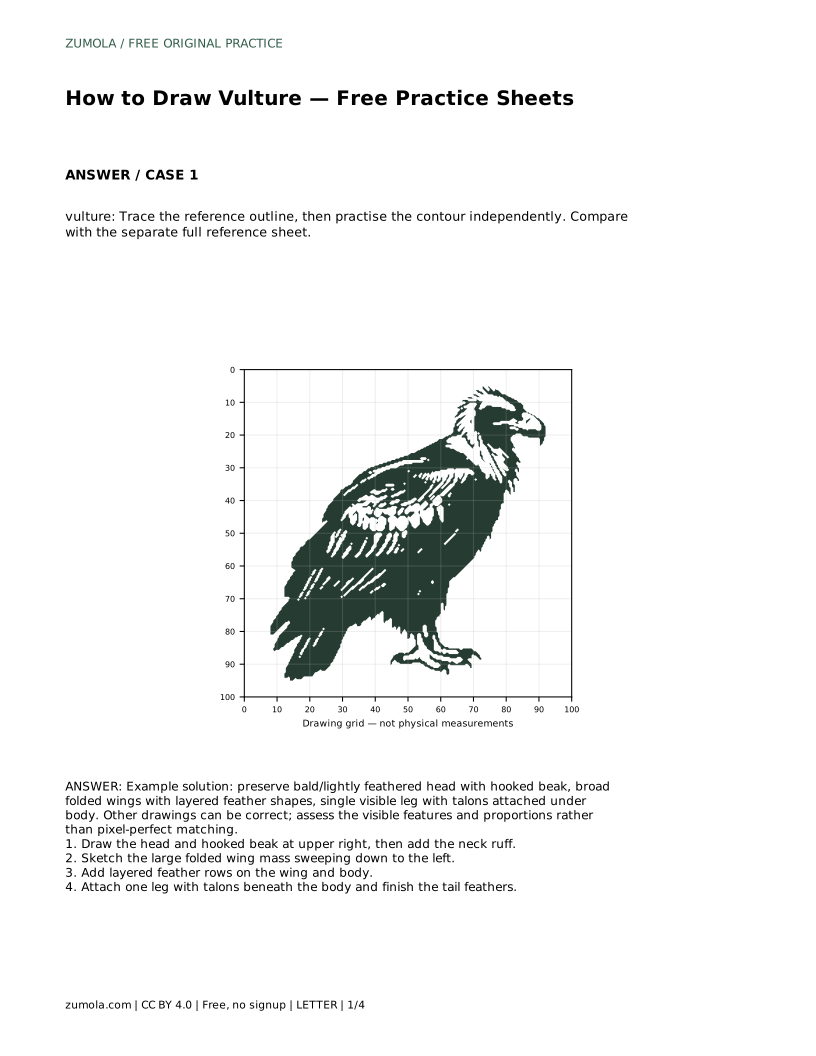
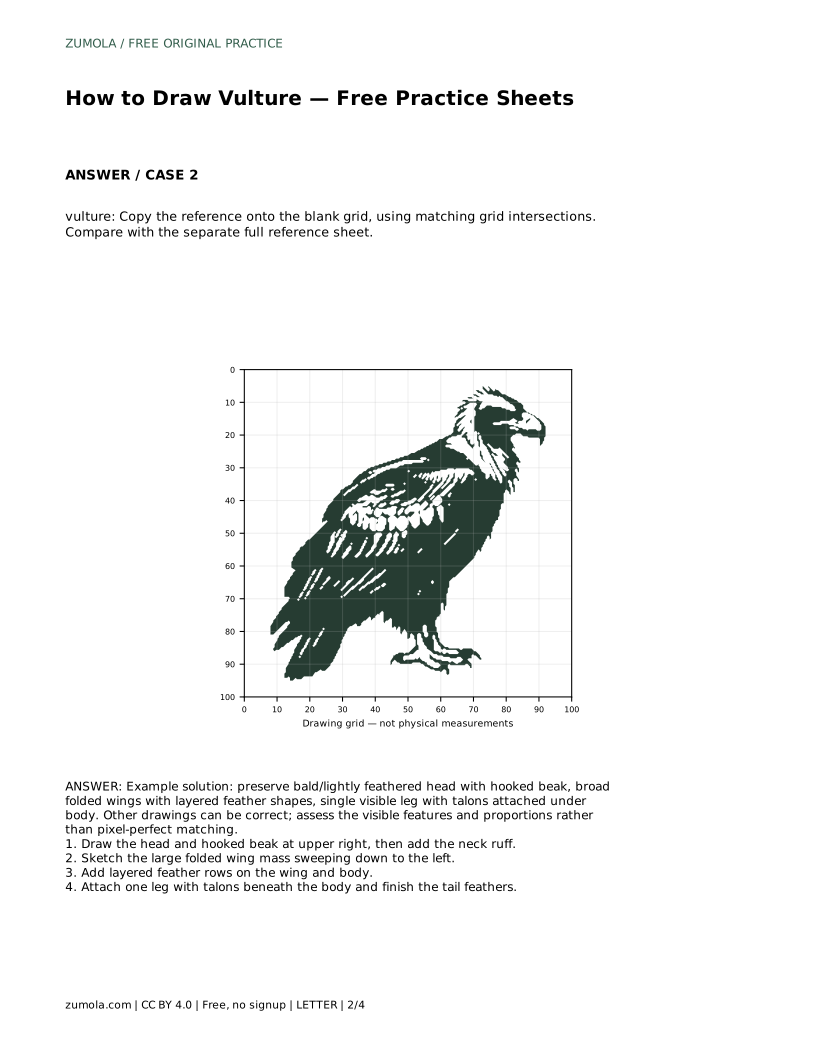
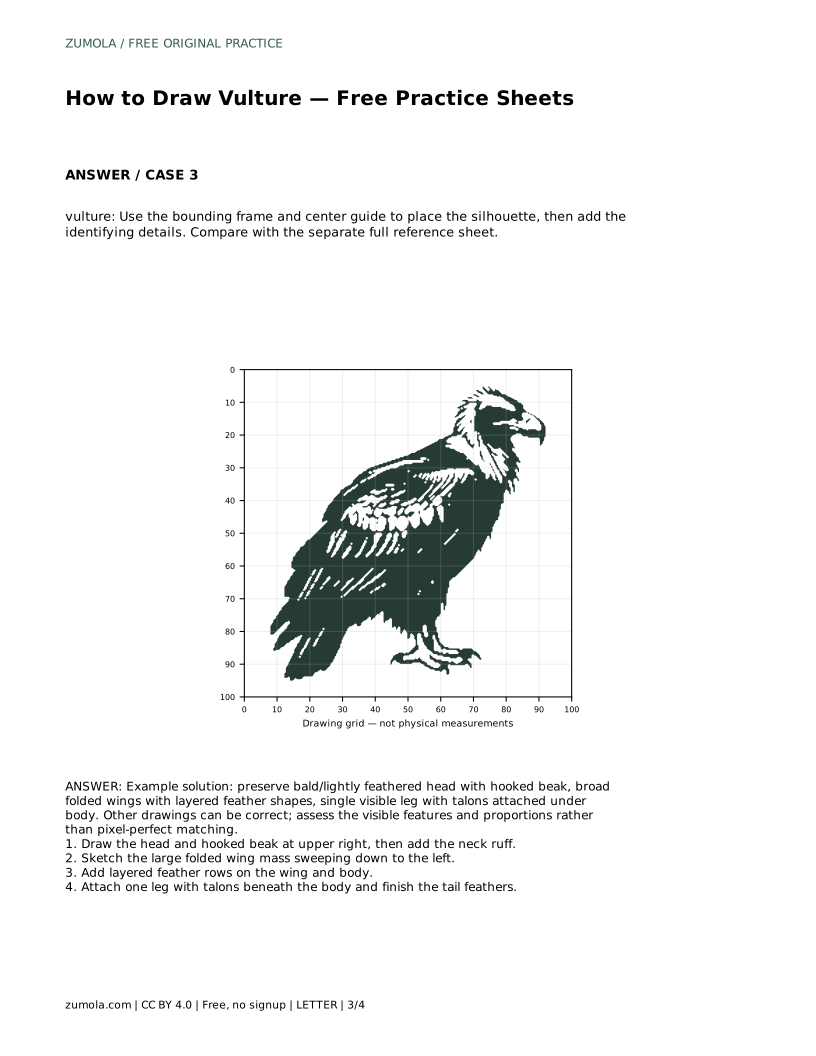
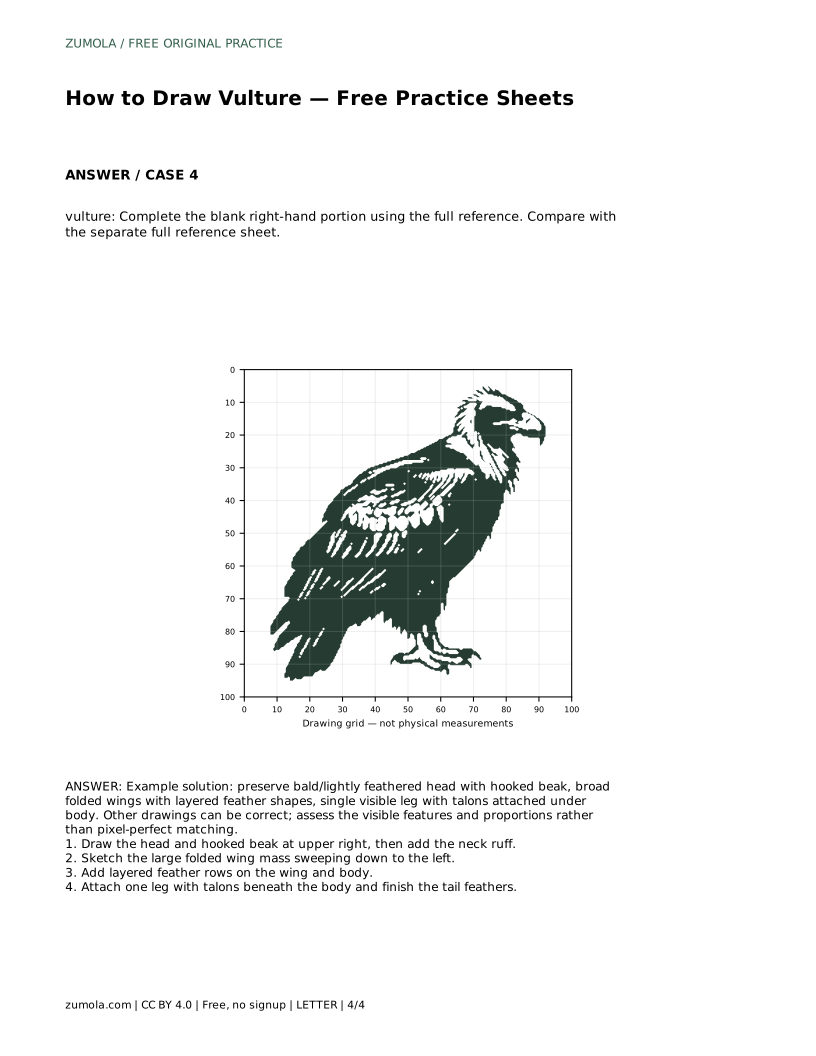
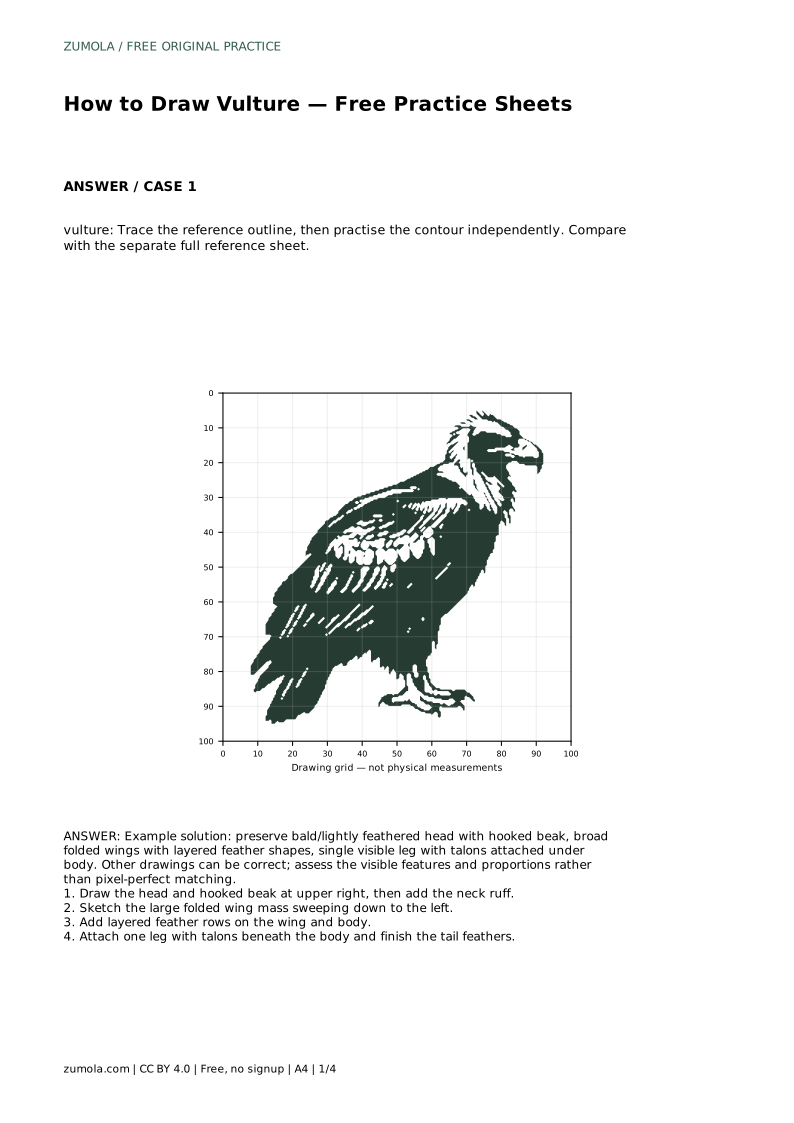
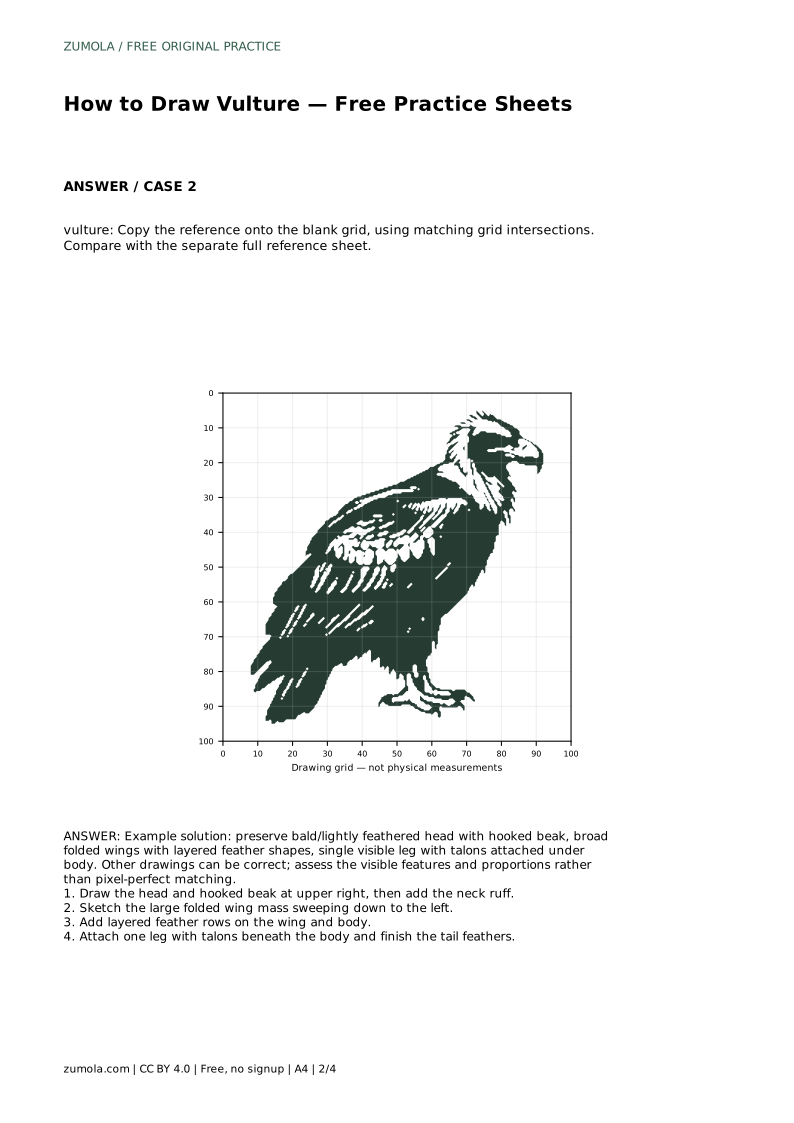
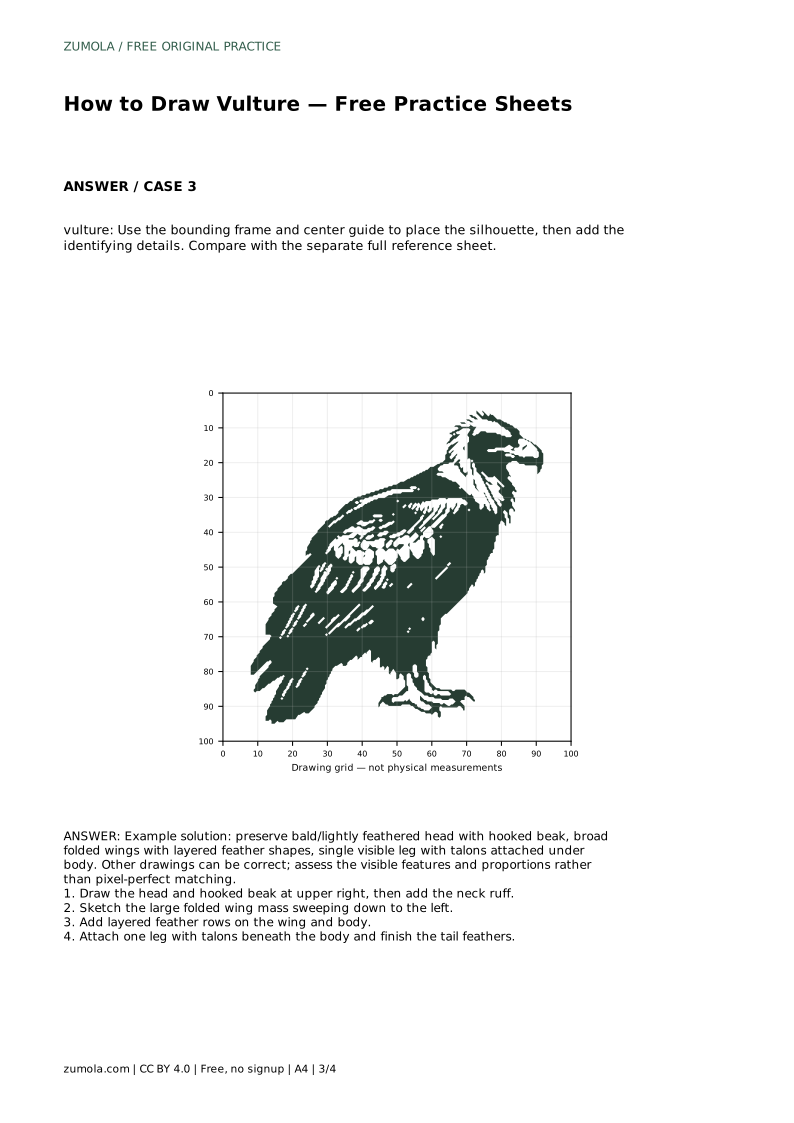
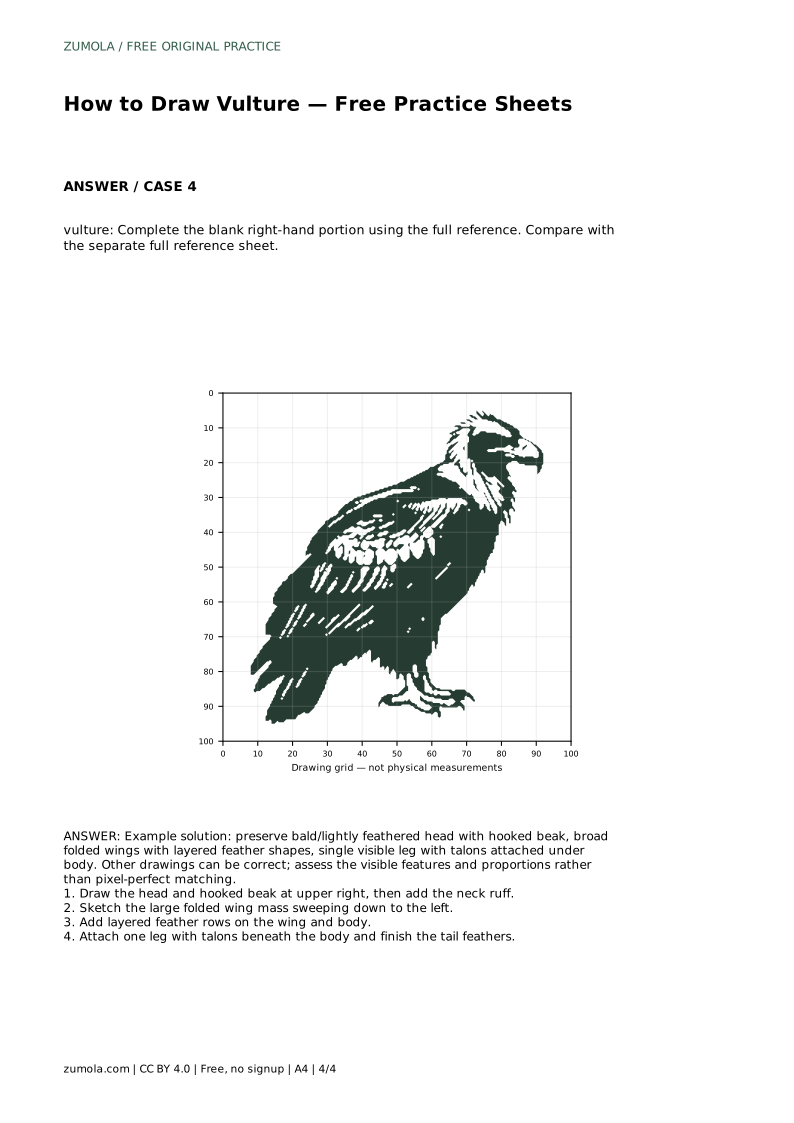
Reference diagrams
LETTER · Download PDF
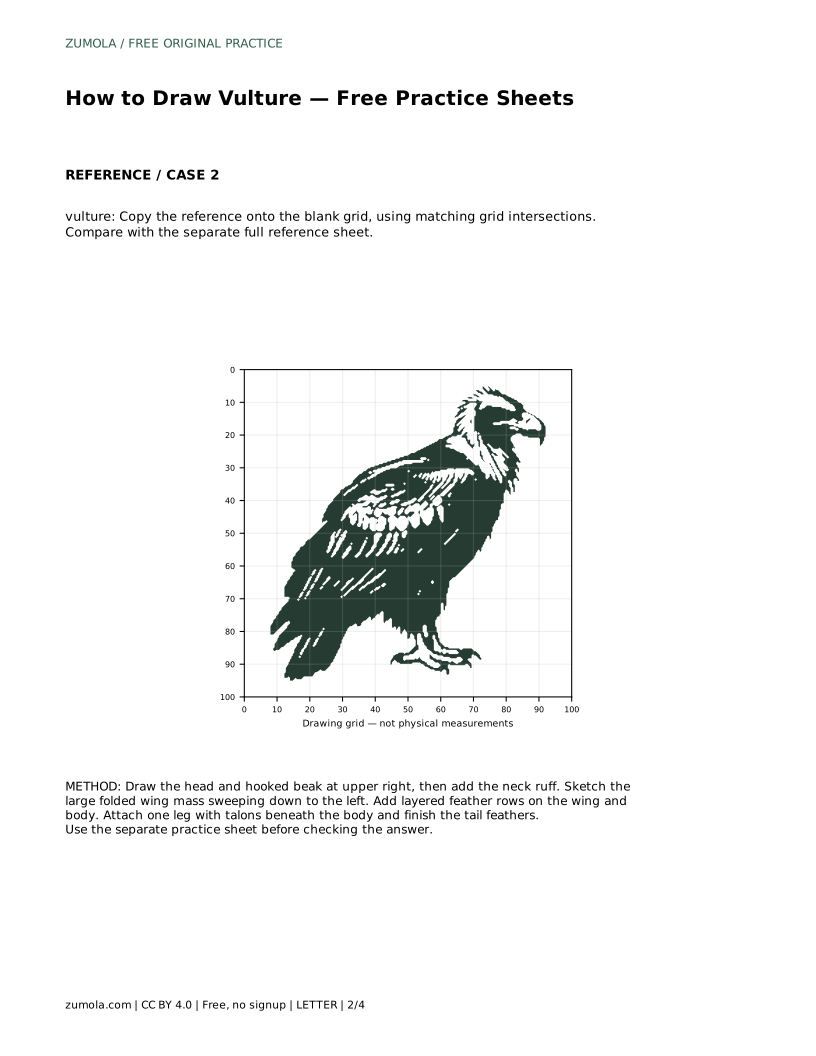
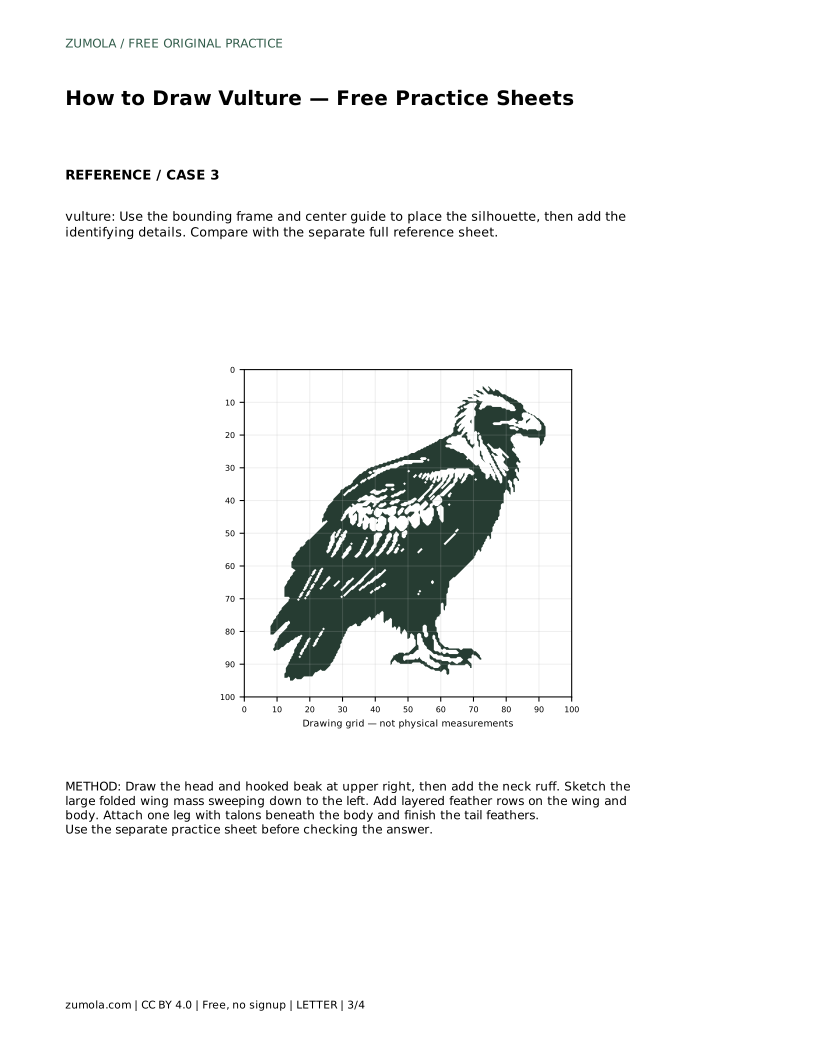
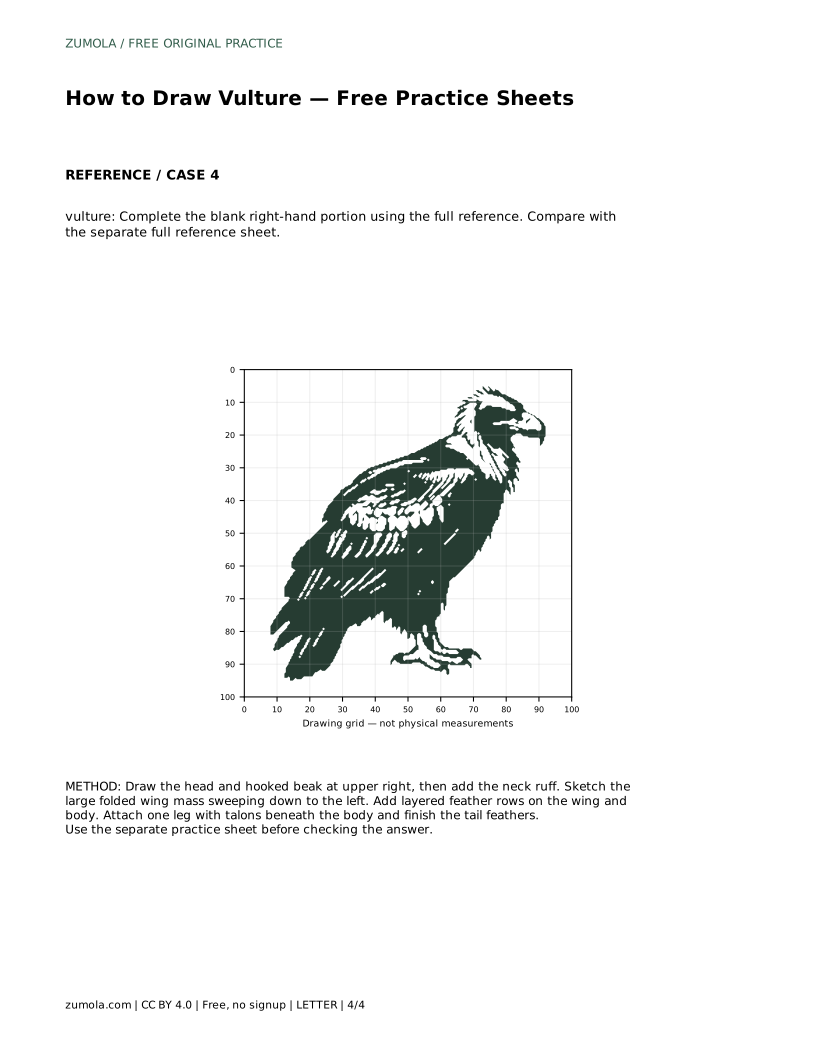
A4 · Download PDF
Free original resources
Learn an easy vulture drawing method: place the hooked beak and bald head, build the folded wing mass, layer feathers, and add one taloned leg beneath the body.
Four original cases, with reference diagrams, practice sheets and worked answers. Everything is free; no signup required.
LETTER · Download PDF
A4 · Download PDF
LETTER · Download PDF
A4 · Download PDF
LETTER · Download PDF
A4 · Download PDF
Use A4 or US Letter to match your printer. Use the stated values and conditions to solve each exercise; diagrams are not physical measuring rulers.
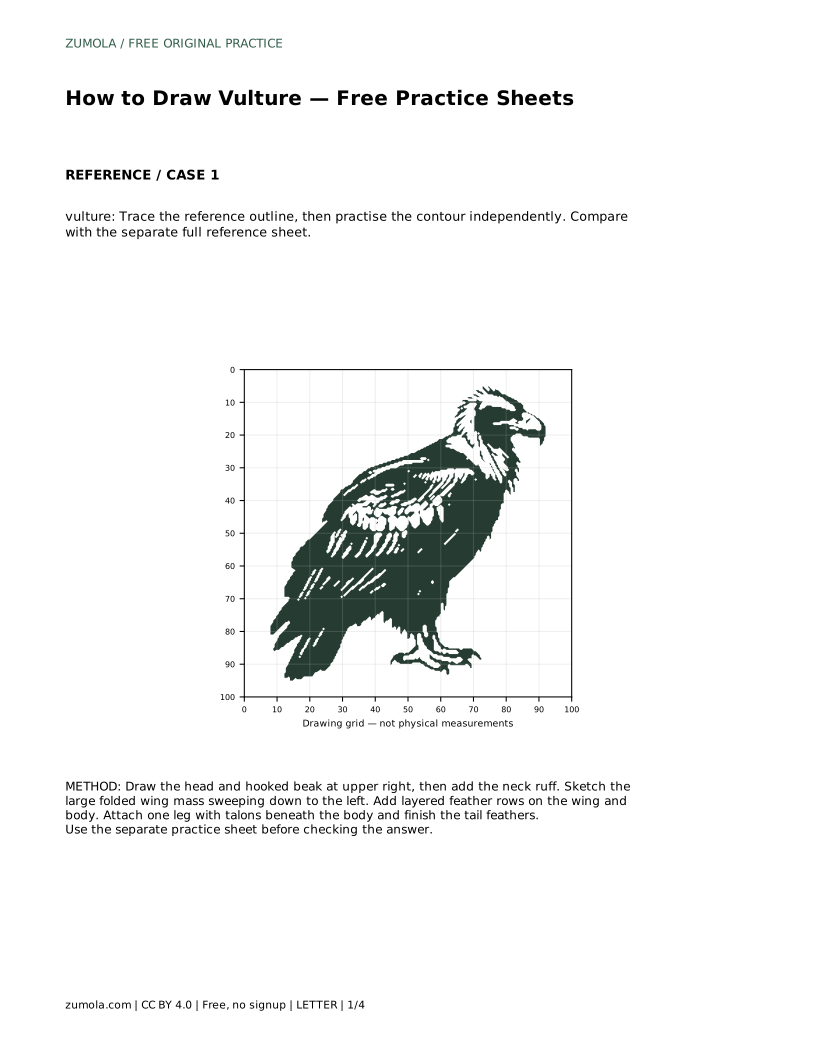
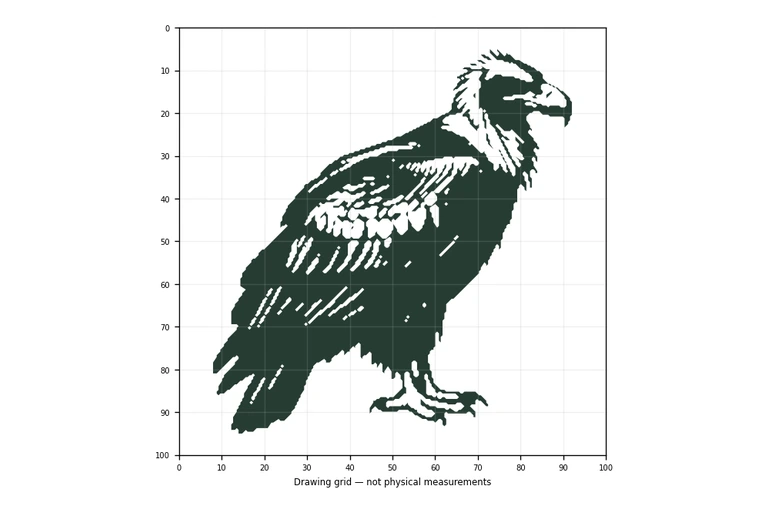
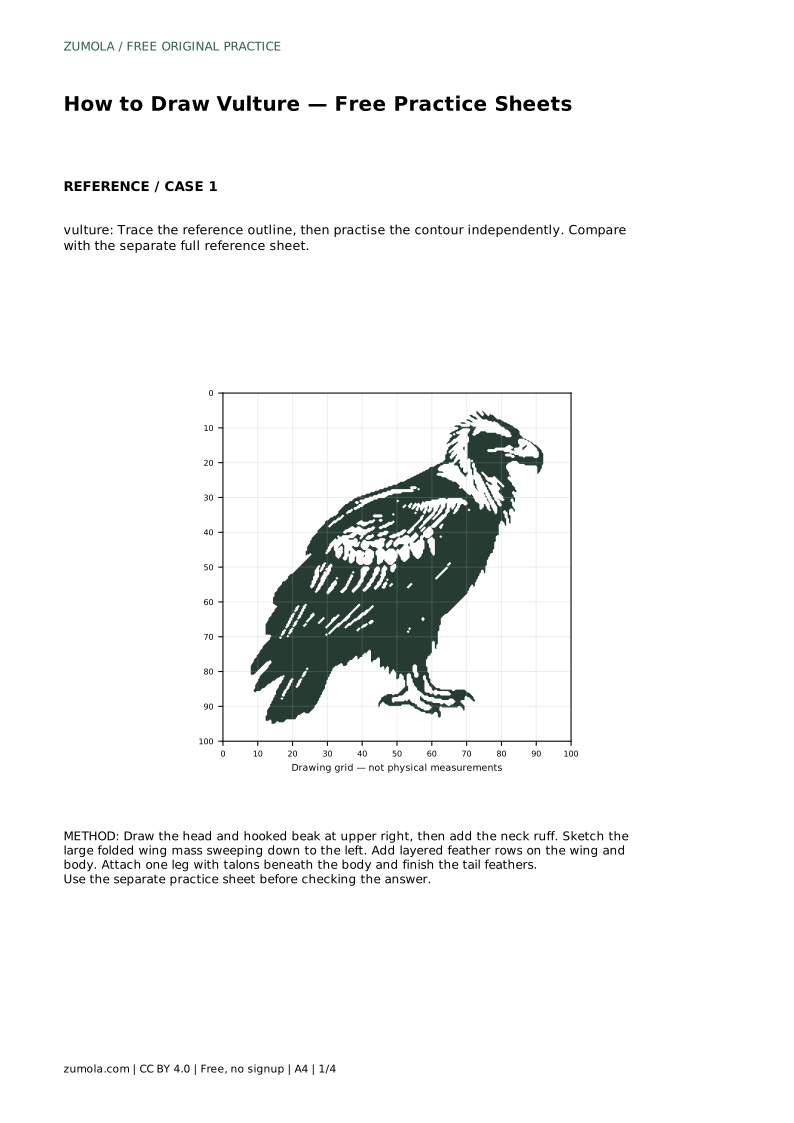
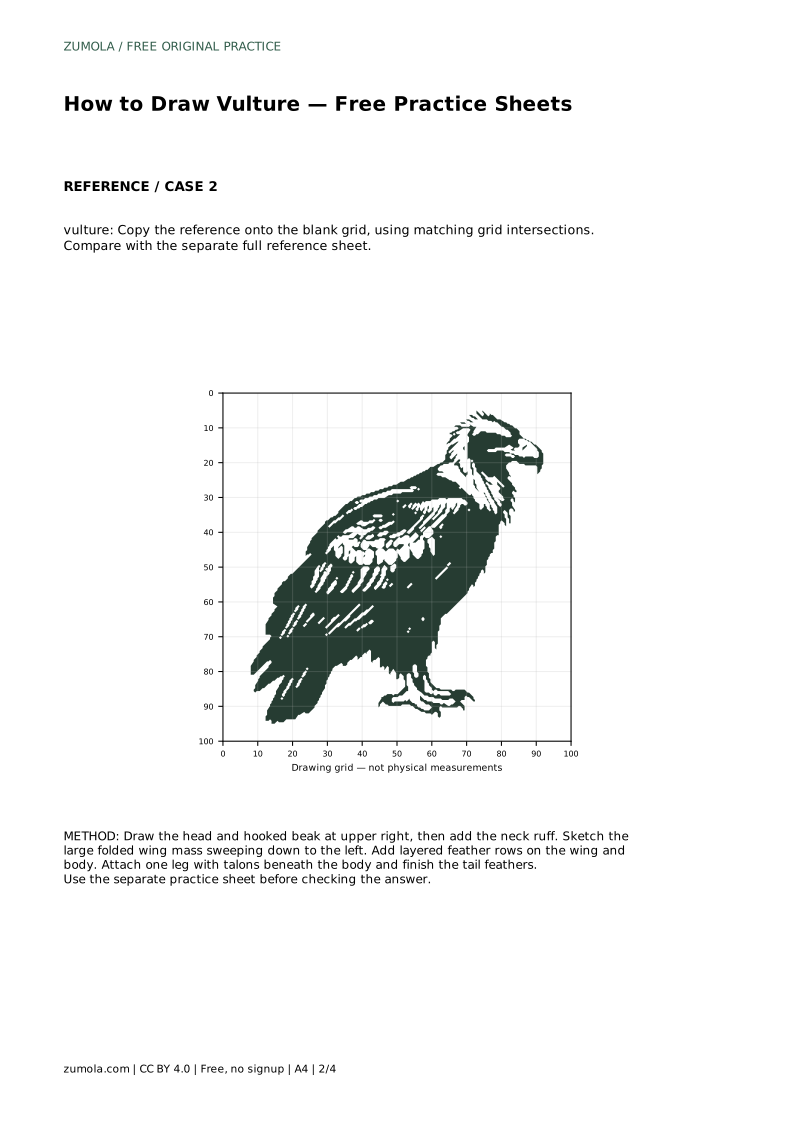
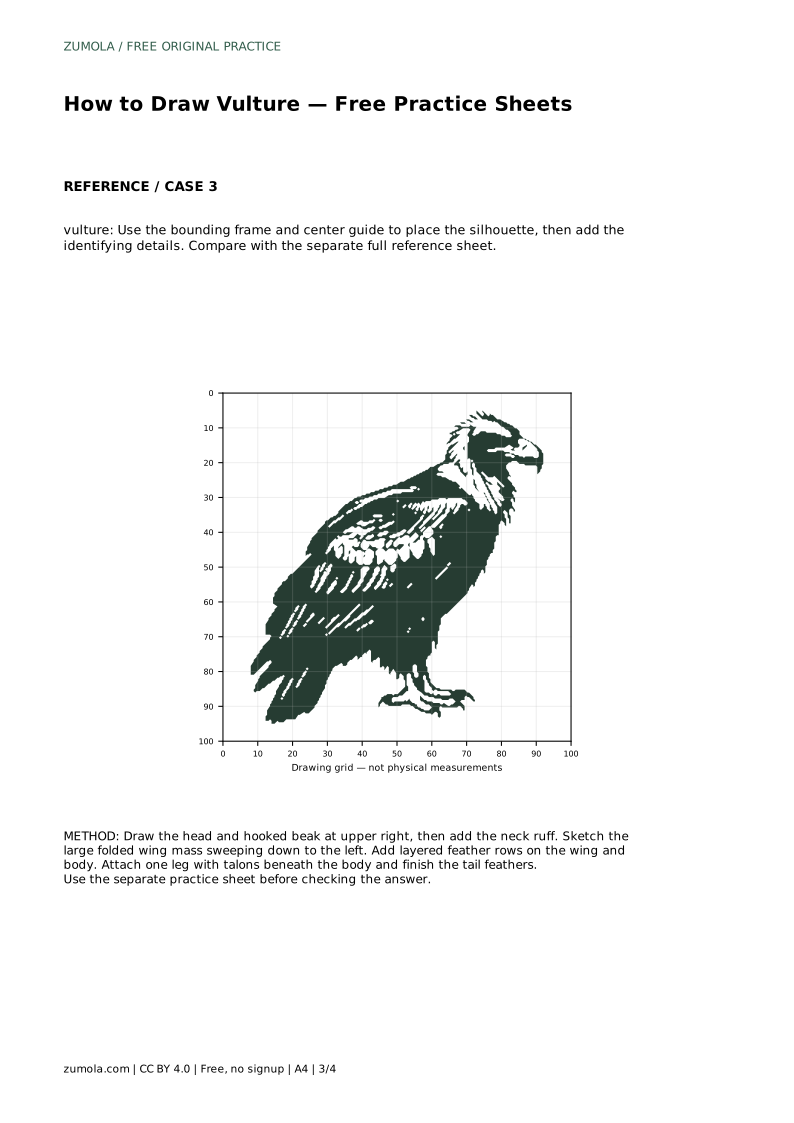
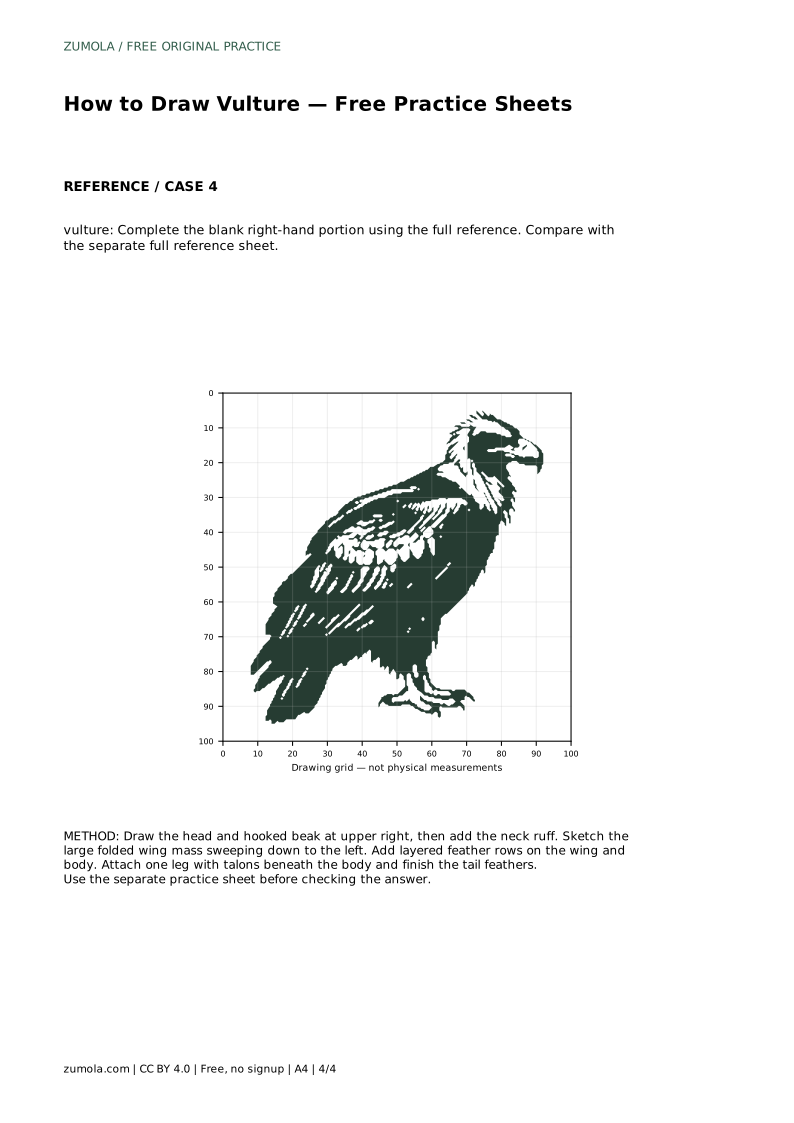
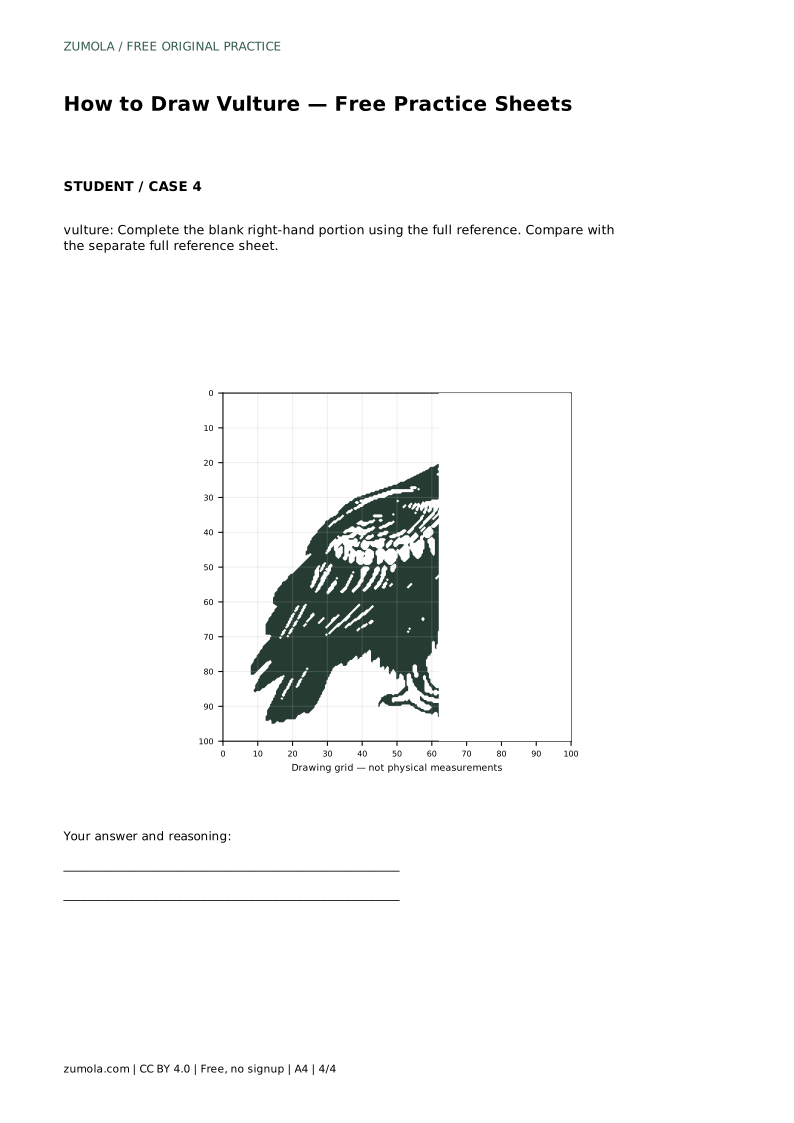
A vulture is recognizable before you finish its feathers: the bare head, heavy hooked beak, and broad folded wings do most of the work. This guide teaches a simple order for drawing one, starting with the head at the upper right and sweeping the wing mass down to the left. The practice sheets let you trace an outline, copy onto a grid, use a bounding frame and center guide, or complete a blank half. Each route trains the same structural decisions, so your finished bird reads clearly even when proportions differ from the reference.
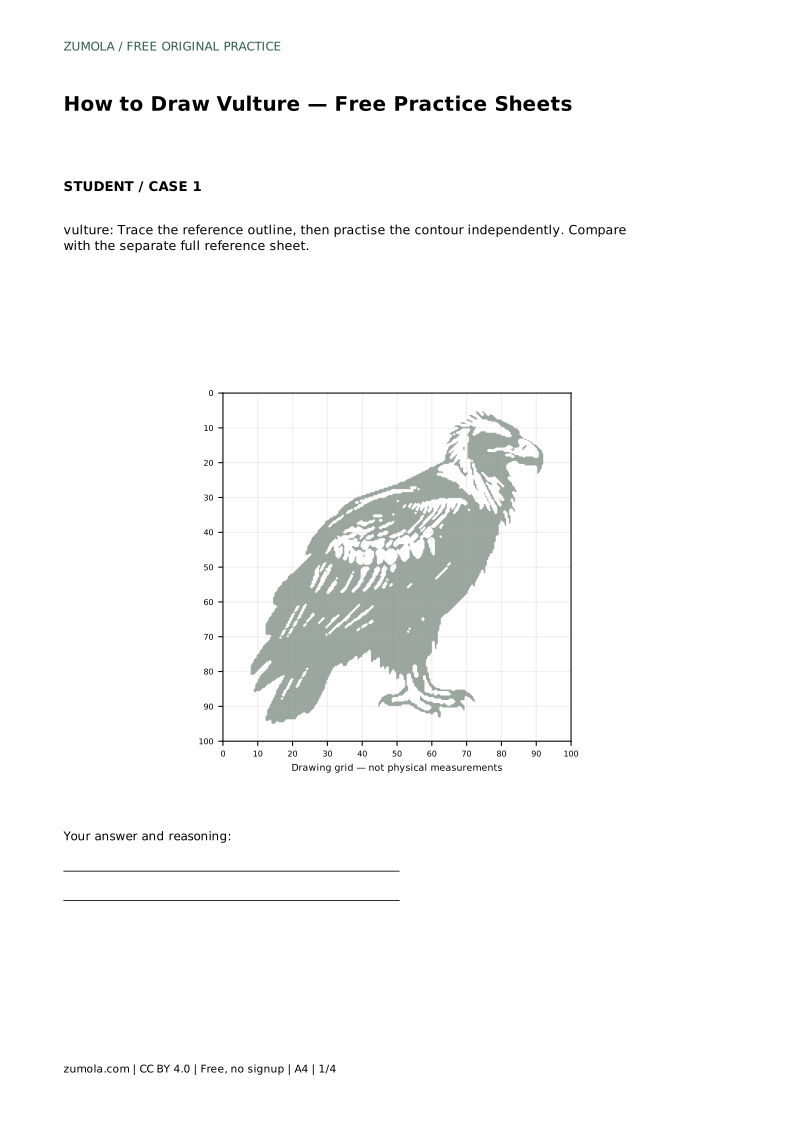
Place the head in the upper right of your page. Draw a small rounded skull, then extend a hooked beak that curves downward at the tip. The hook should feel heavy rather than pointed like a songbird's. Keep the head mostly bare, with only a light suggestion of short feathers near the crown and nape.
Below the head, add the neck ruff: a loose collar of longer feathers where the bare neck meets the body. This ruff is a useful landmark because it separates the small head from the large wing mass and keeps the silhouette from looking like a generic bird.
From the neck ruff, sketch a large folded wing sweeping down and to the left. Treat it as one broad shape first, not as individual feathers. The wing should be wider at the shoulder and taper toward the lower left, giving the bird a hunched, heavy posture.
Once the outer shape feels balanced, divide it into layered rows. Feathers on a folded wing overlap from the shoulder downward, so draw rows that follow the wing's direction rather than scattering marks randomly. Keep the rows progressively shorter toward the wingtip.
Attach a single visible leg beneath the body, positioned under the center of the mass rather than at the edge. The leg should be sturdy, with talons gripping forward. In a folded-wing pose, one leg is often enough to suggest the stance without cluttering the drawing.
Finish with tail feathers extending behind the body, roughly opposite the head. Keep the tail short and squared or slightly rounded. Compare your drawing with the full reference sheet to check the overall balance of head, wing, leg, and tail.
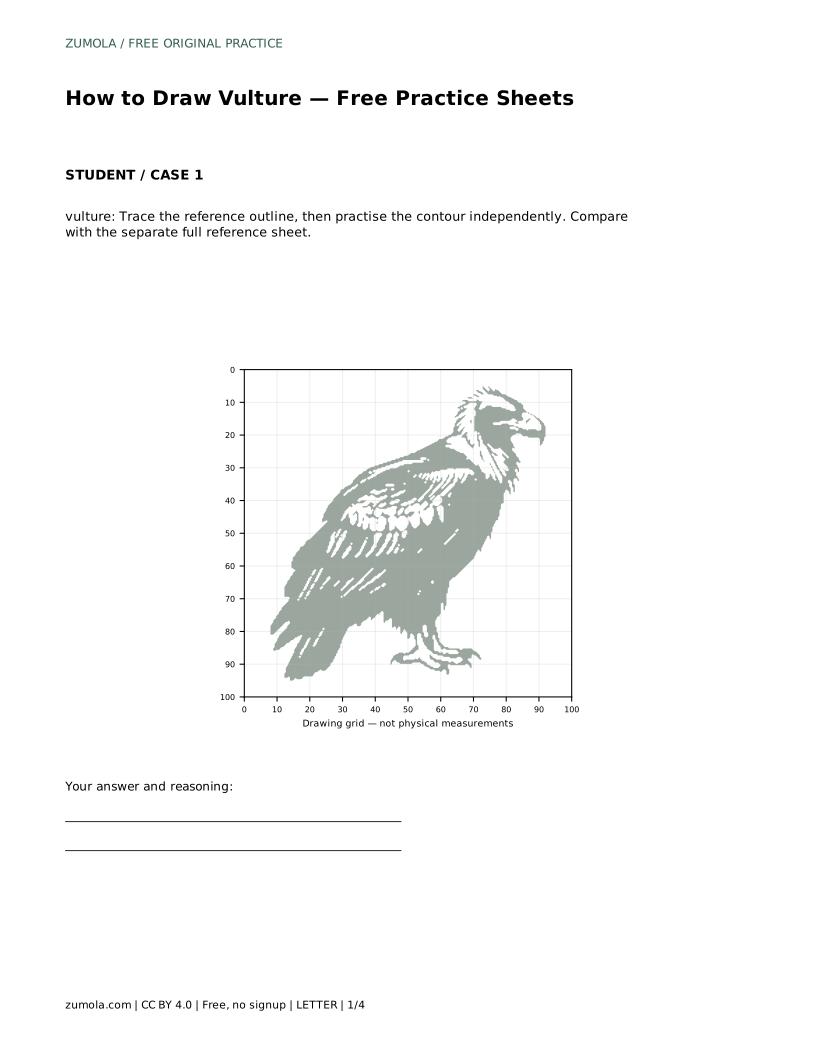
vulture: Trace the reference outline, then practise the contour independently. Compare with the separate full reference sheet.
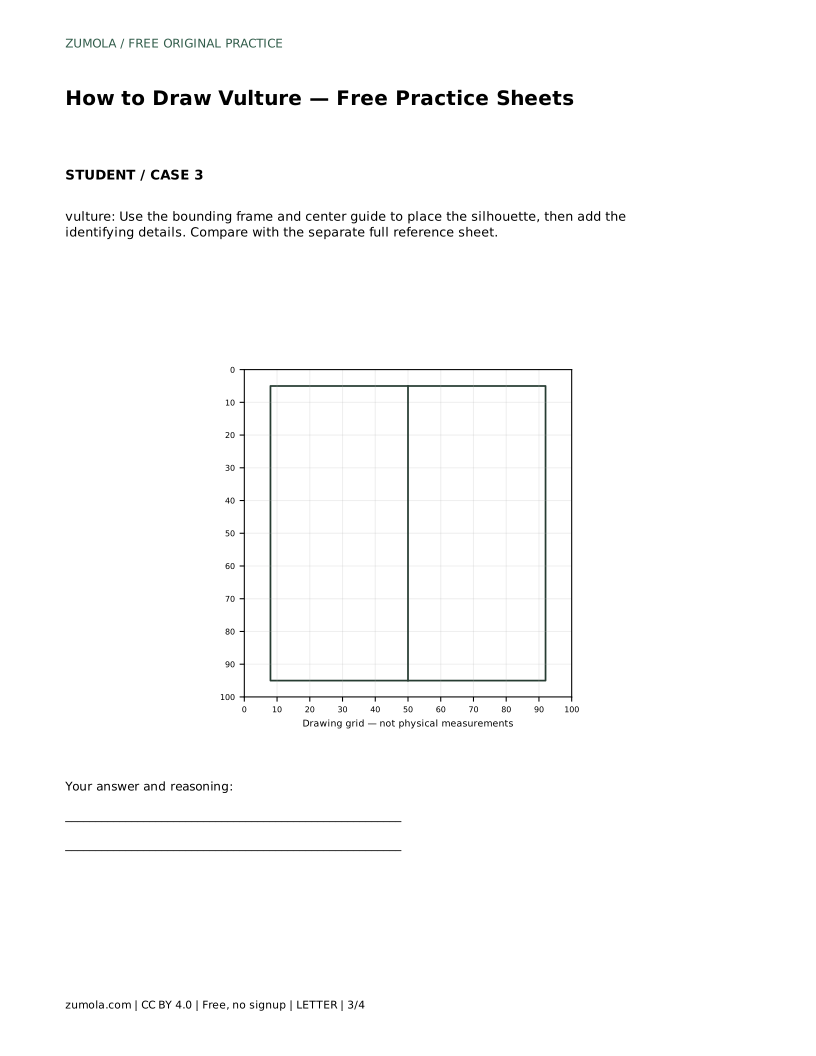
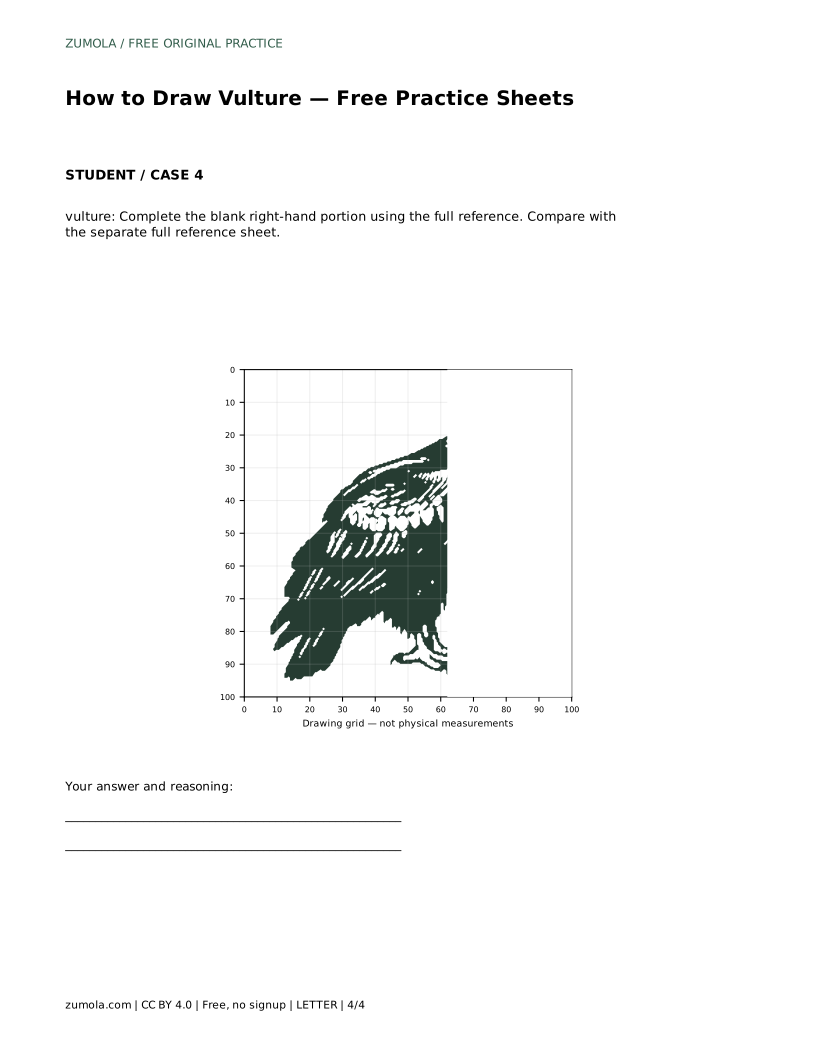
Example solution: preserve bald/lightly feathered head with hooked beak, broad folded wings with layered feather shapes, single visible leg with talons attached under body. Other drawings can be correct; assess the visible features and proportions rather than pixel-perfect matching. Draw the head and hooked beak at upper right, then add the neck ruff. Sketch the large folded wing mass sweeping down to the left. Add layered feather rows on the wing and body. Attach one leg with talons beneath the body and finish the tail feathers.
No. Layered rows suggest plumage; a few clear rows read better than many random marks.
Yes. Mirror the head, wing sweep, leg, and tail together so the structure stays consistent.
Compare visible features and proportions with the full reference sheet, then adjust the head size, wing sweep, and leg placement.
All drawing practice · Free coordinate paper
Original resources · CC BY 4.0 · Free for personal and classroom use with attribution.