Reference diagrams
LETTER · Download PDF
A4 · Download PDF
Free original resources
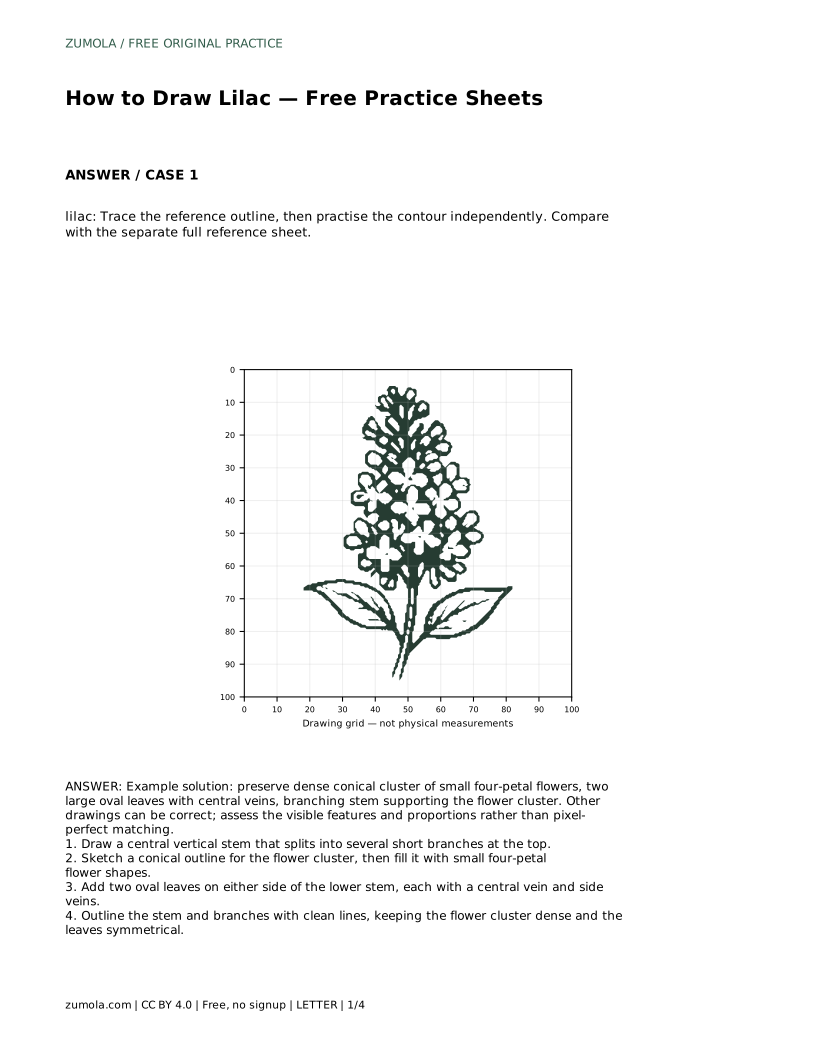
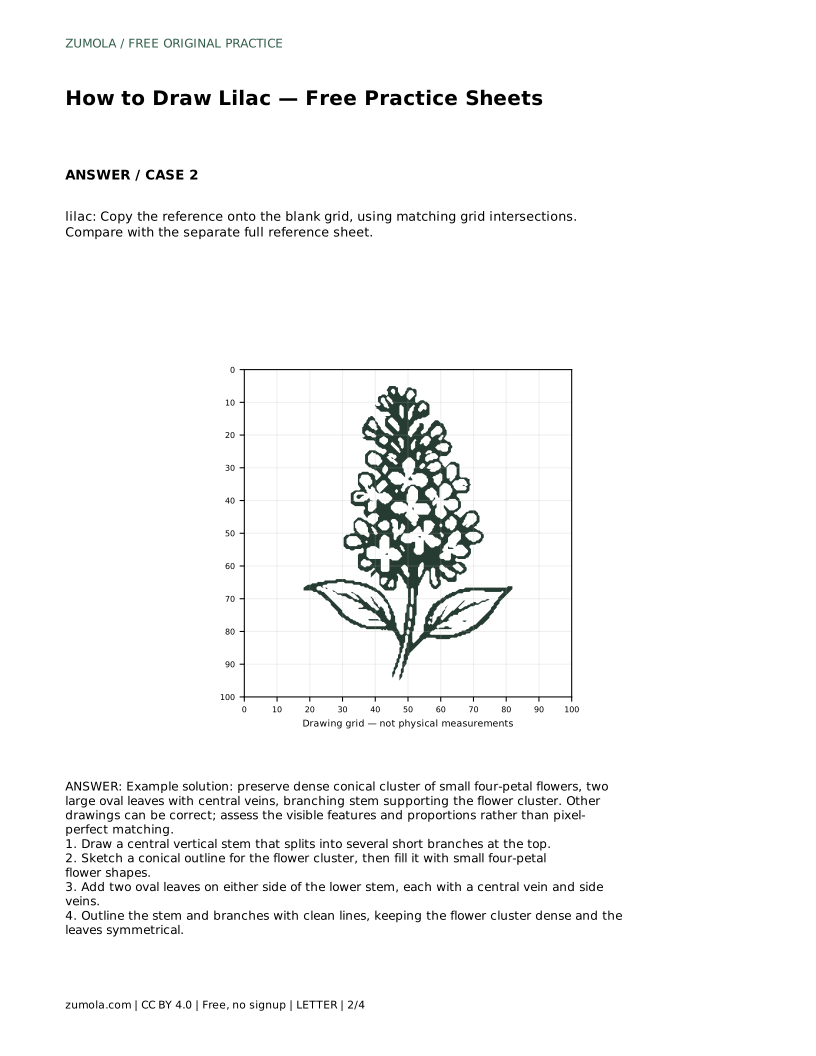
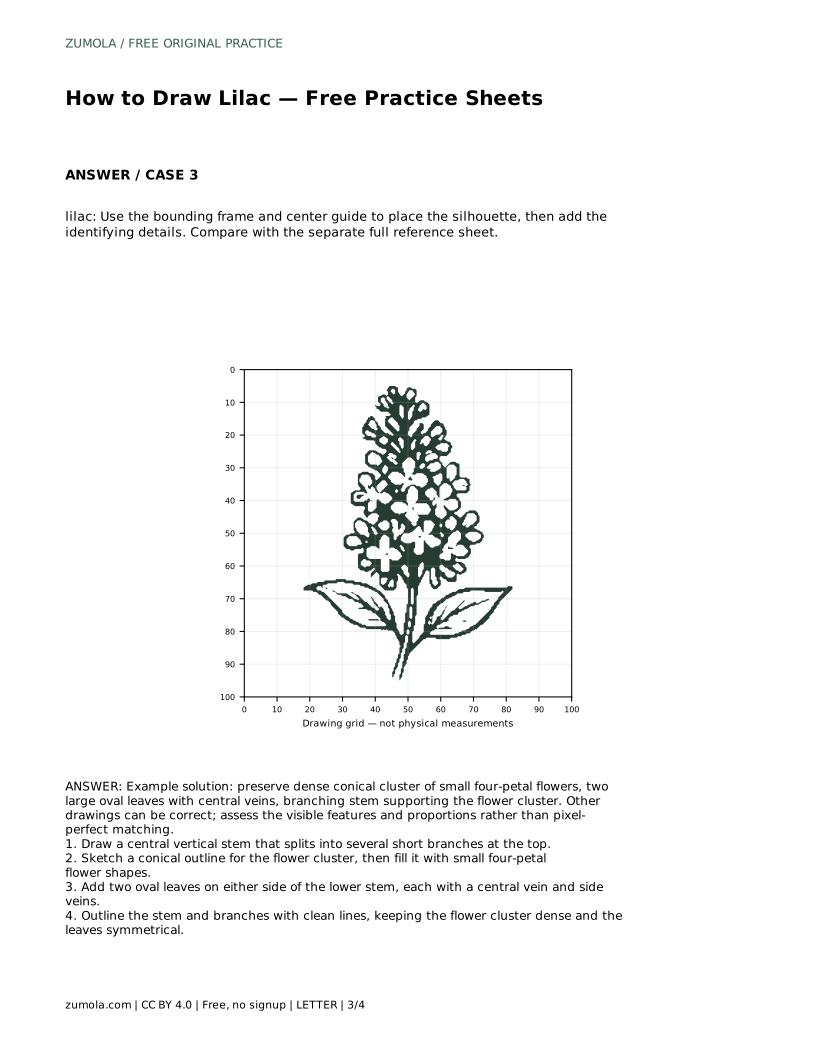
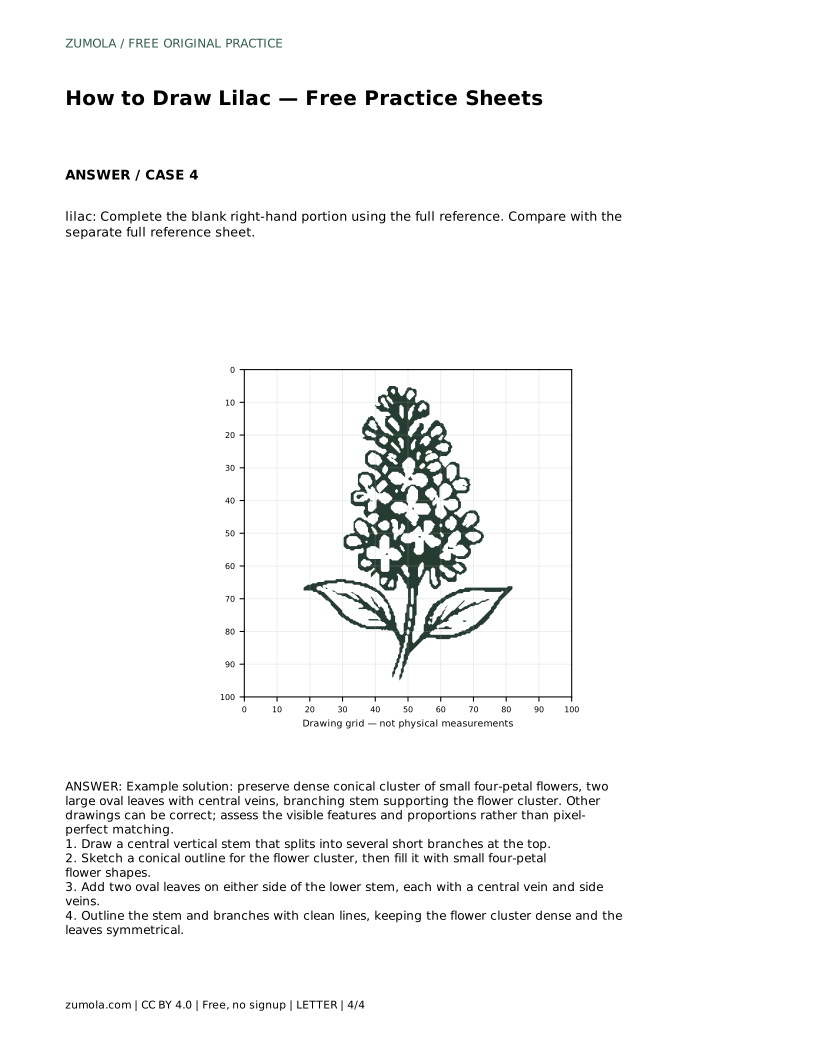
Learn to draw a lilac with a conical flower cluster, four-petal blossoms, oval veined leaves, and a branching stem. Free practice sheets support tracing, grids, and completion.
Four original cases, with reference diagrams, practice sheets and worked answers. Everything is free; no signup required.
LETTER · Download PDF
A4 · Download PDF
LETTER · Download PDF
A4 · Download PDF
LETTER · Download PDF
A4 · Download PDF
Use A4 or US Letter to match your printer. Use the stated values and conditions to solve each exercise; diagrams are not physical measuring rulers.
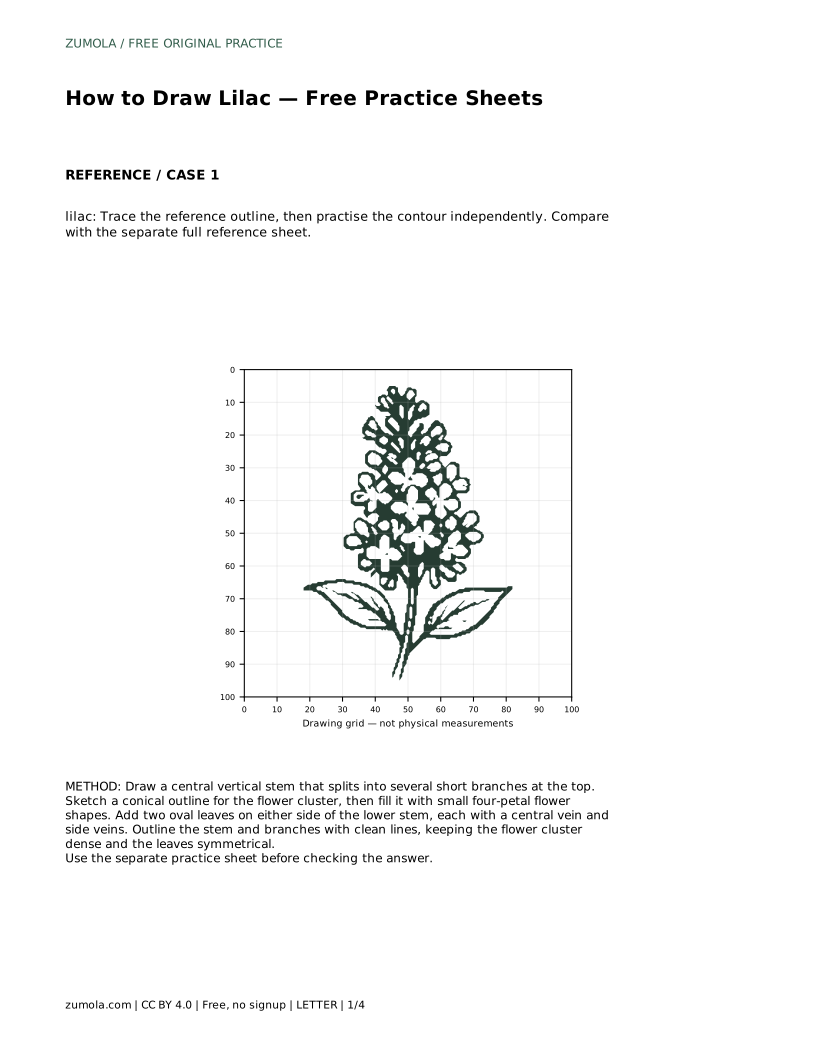
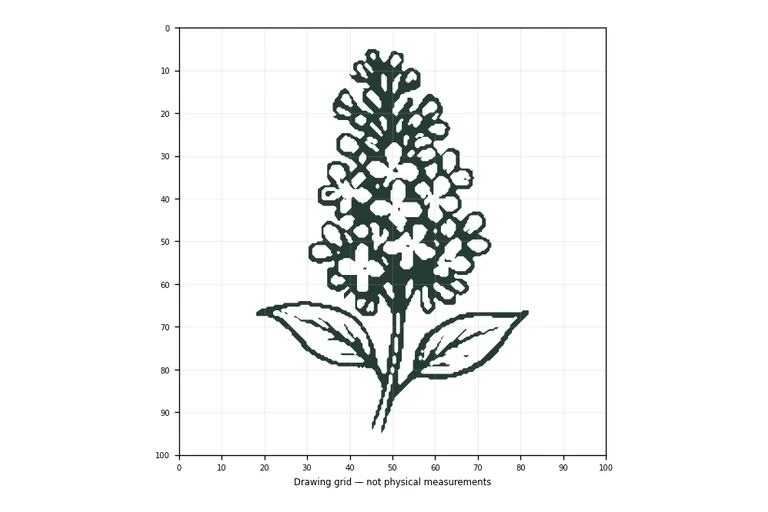
Drawing a lilac is mostly a problem of organizing small repeated shapes inside a clear overall silhouette. The flower head is a dense cone made of tiny four-petal blossoms, and the leaves are large ovals with visible veins. This guide explains how to build the plant from stem to cluster, then refine the details. The free practice sheets let you trace, copy on a grid, place the silhouette with guides, or complete a partial drawing.
Begin with a single central vertical stem. Near the top, let it split into several short branches that fan outward and upward. These branches support the flower cluster, so keep them light and slightly curved rather than rigid. The lower stem stays mostly straight and carries the leaves.
Think of the stem as the spine of the drawing. If it leans too far to one side, the heavy flower cluster will look unbalanced. A gentle vertical line with small branching forks gives you a reliable frame for everything that follows.
Sketch a cone-shaped outline for the flower head, wider at the top and tapering toward the branch point. This outline is a container, not a final line. Inside it, place many small four-petal flower shapes, overlapping slightly so the cluster looks dense.
Work from the outer edge inward. The cone should read as a solid mass of tiny blossoms rather than a loose scatter. Vary the size of the small flowers slightly, but keep each one clearly four-petaled so the lilac identity stays readable.
Place two large oval leaves on either side of the lower stem. Each leaf should have a central vein running from base to tip, with side veins branching outward. Keep the pair roughly symmetrical so the plant looks balanced.
The leaves are much larger than the individual blossoms, which creates a useful contrast in scale. Draw the leaf outline first, then the central vein, then a few side veins. Avoid filling every vein; a few clear lines suggest the pattern without clutter.
Once the main parts are placed, outline the stem and branches with clean lines. Keep the flower cluster dense and the leaves symmetrical. Step back and compare the height of the cluster to the length of the stem; the cone should sit clearly above the leaves.
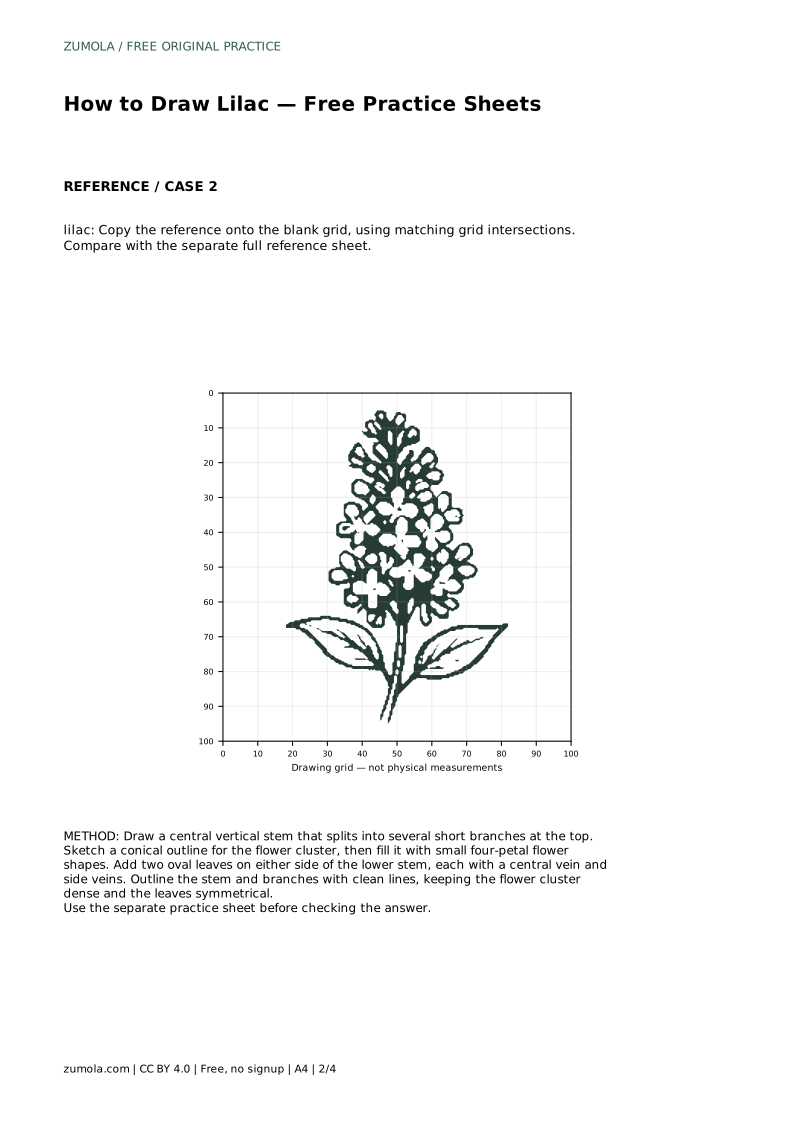
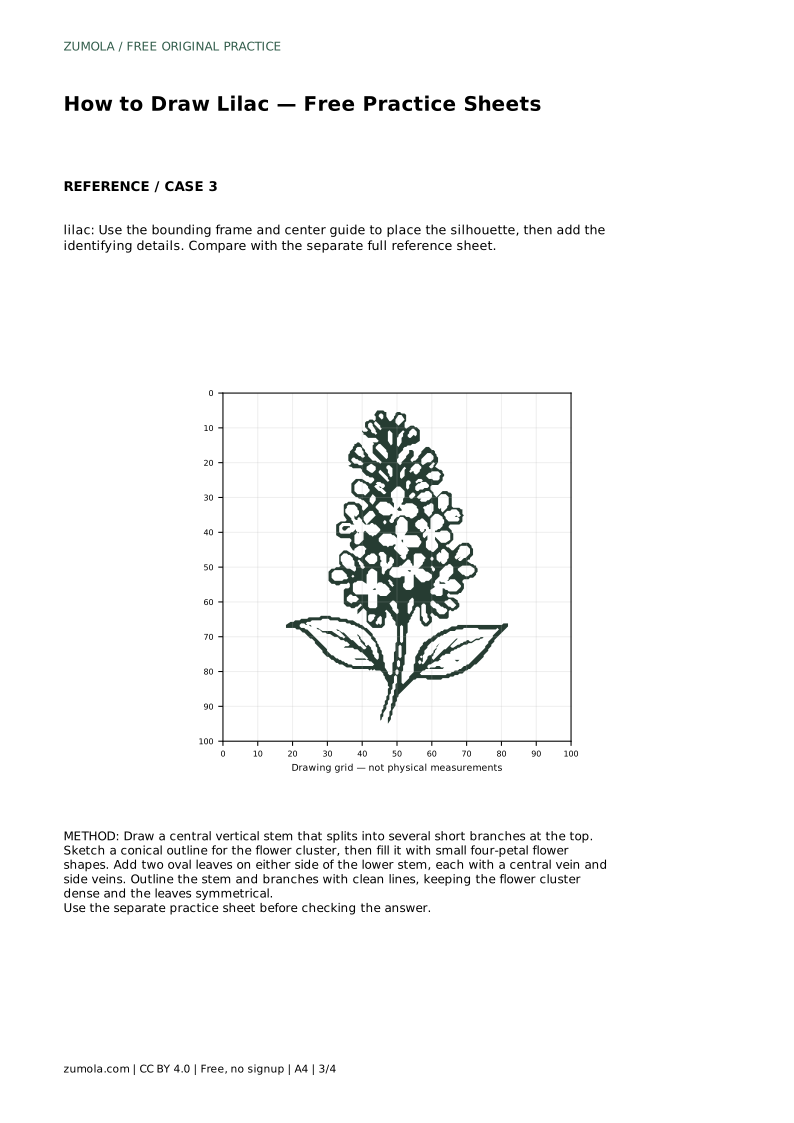
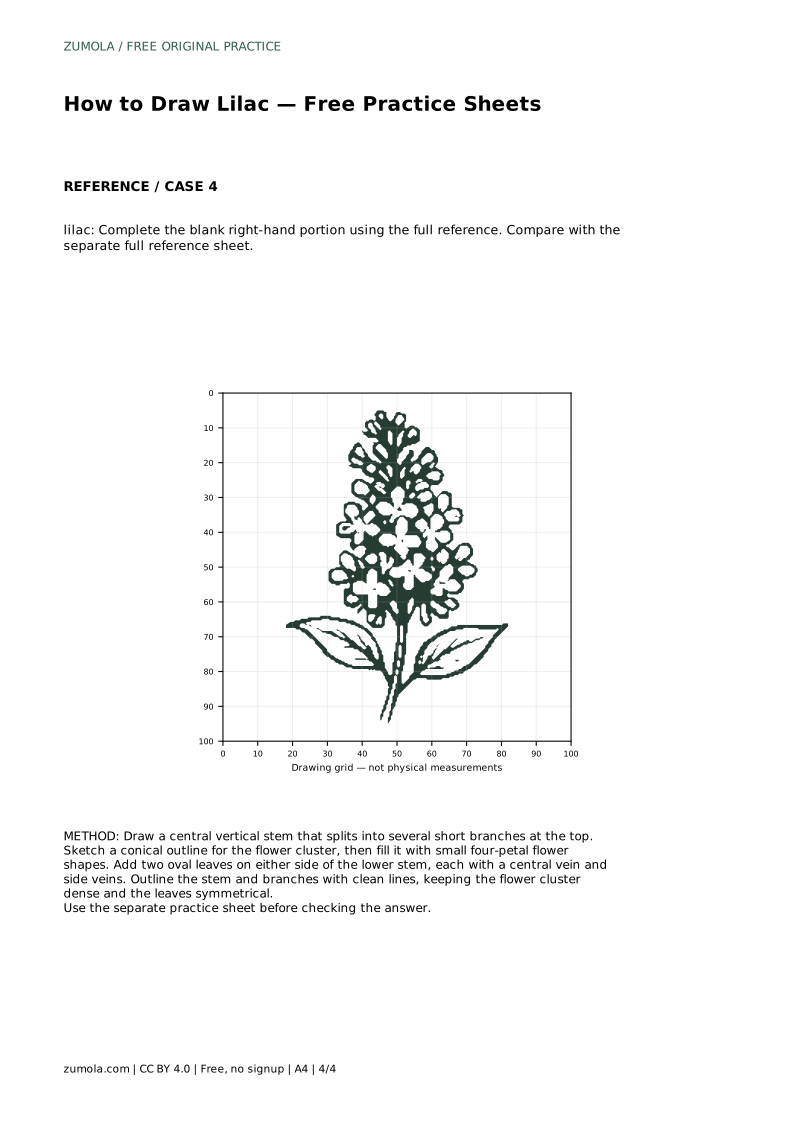
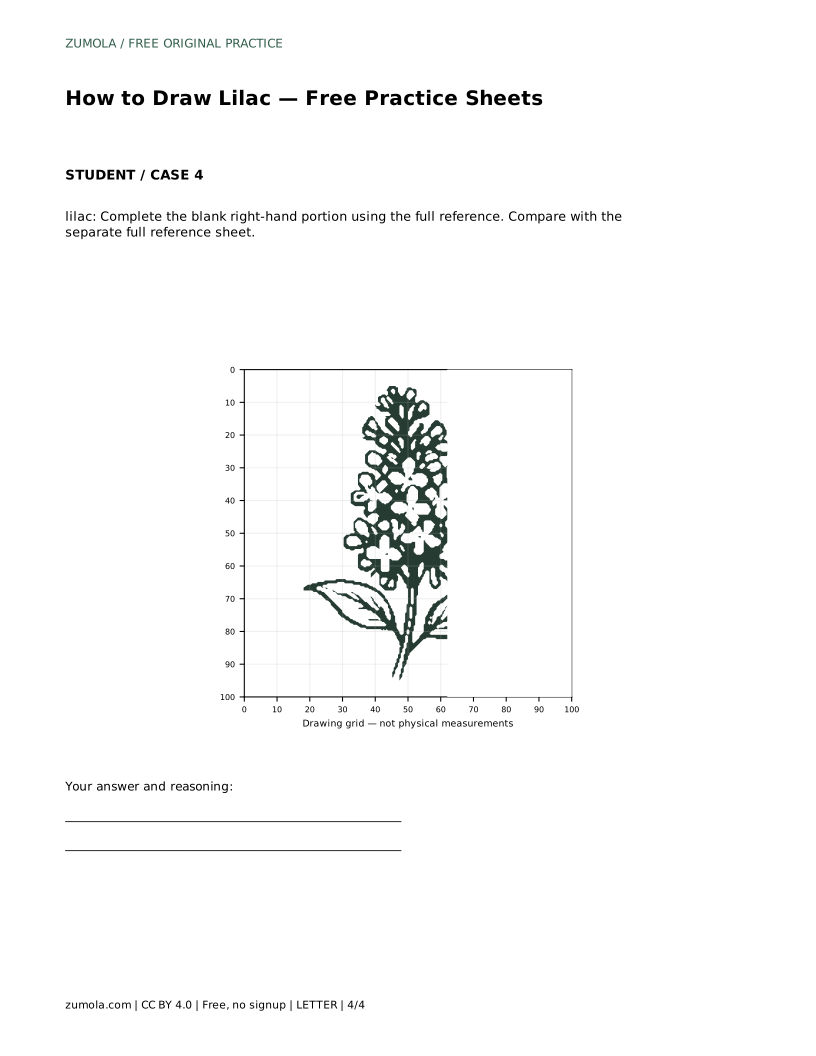
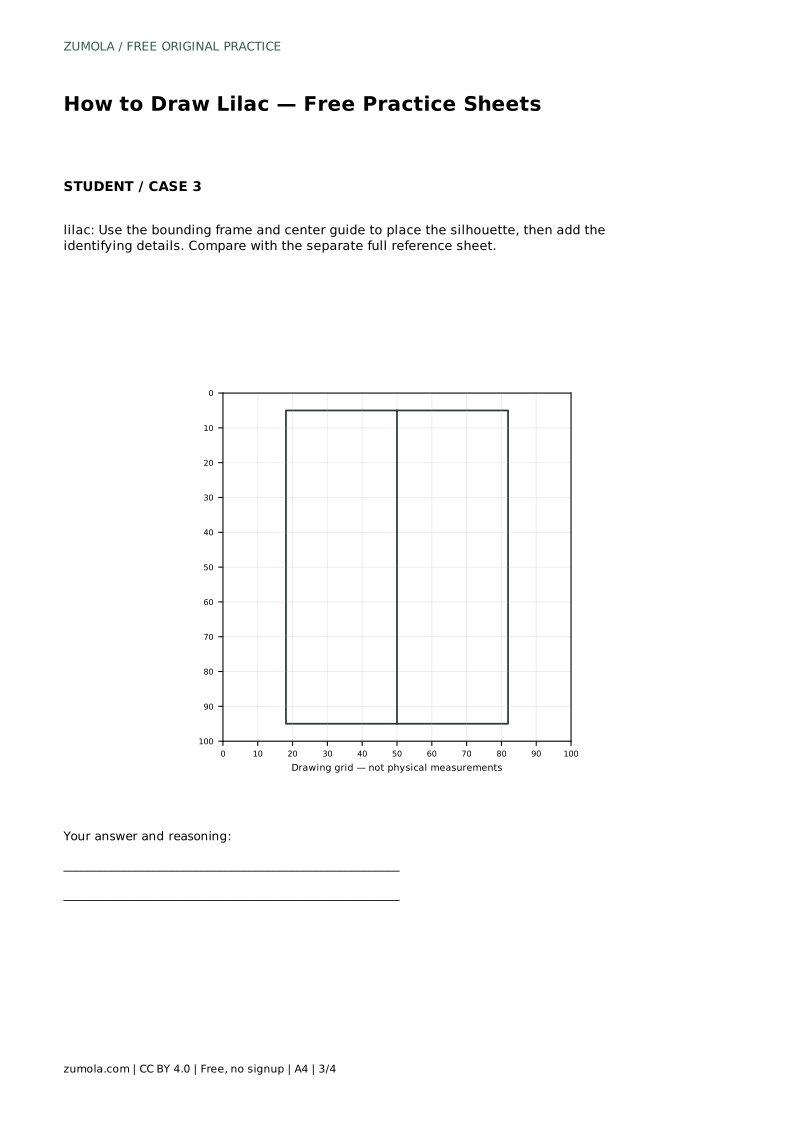
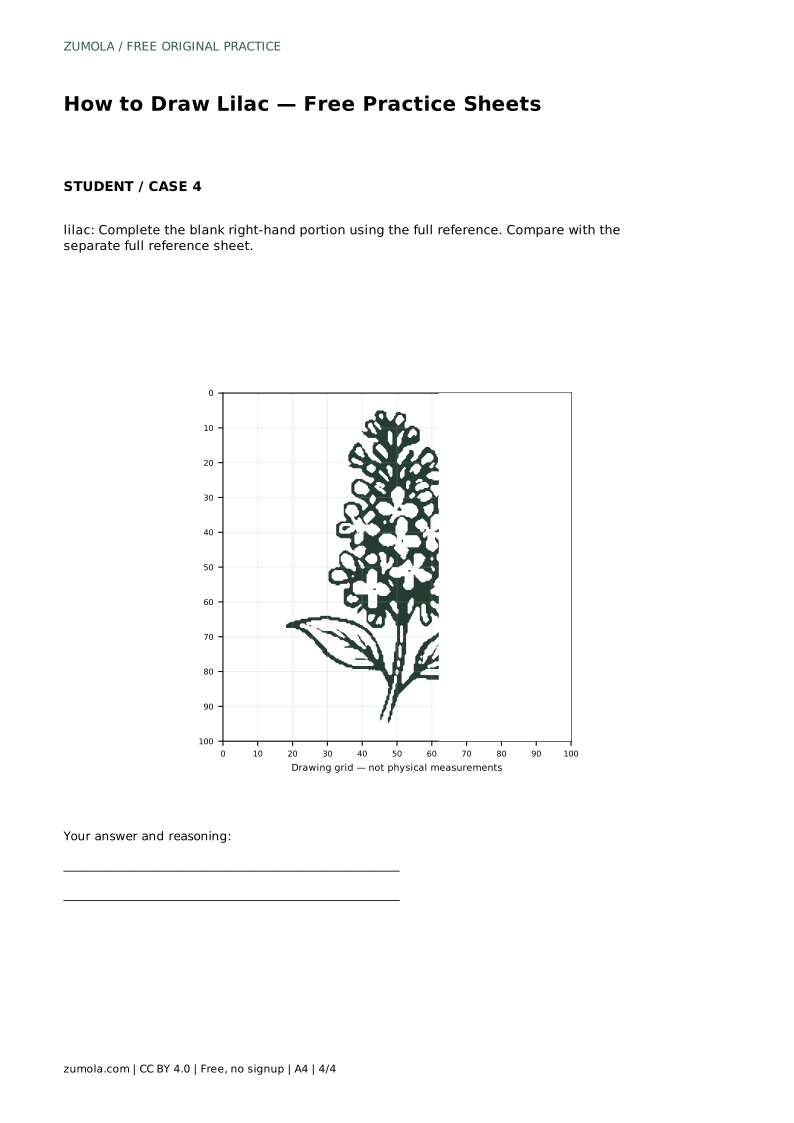
Use the practice sheets to compare your drawing with the separate full reference. Tracing builds familiarity with the contour, the grid version trains placement, and the completion version tests whether you can carry the structure across a blank area.
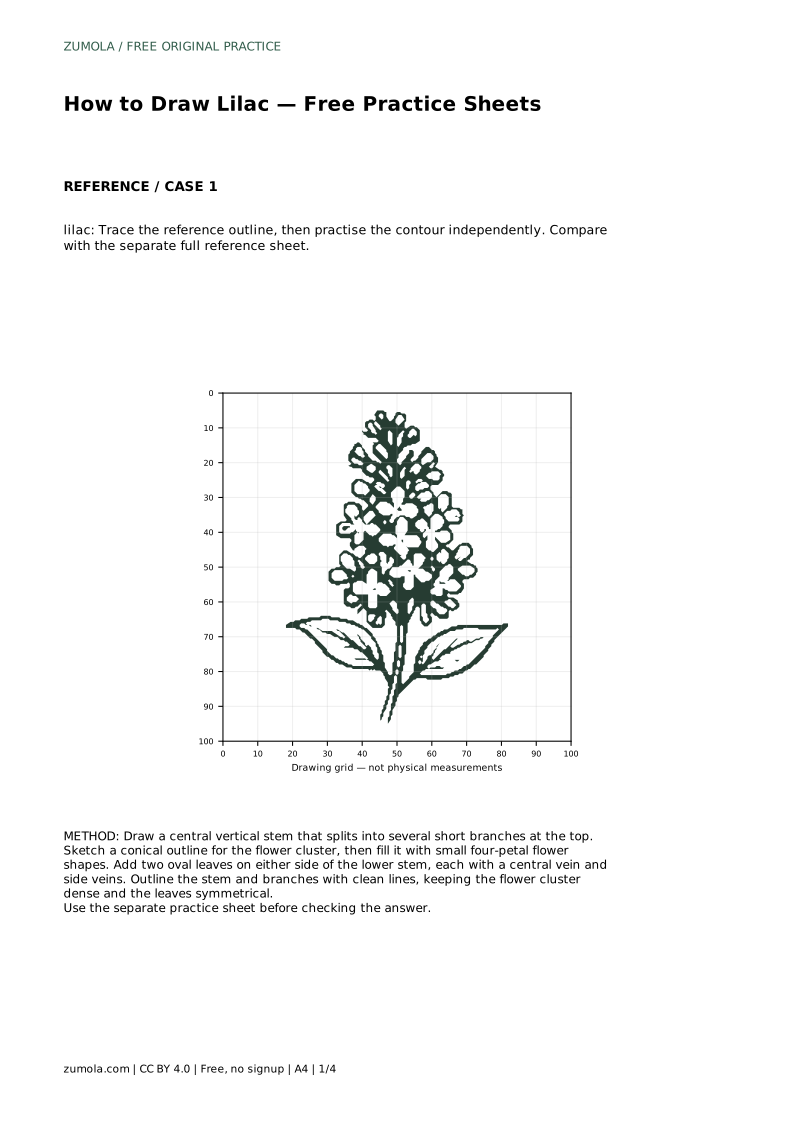
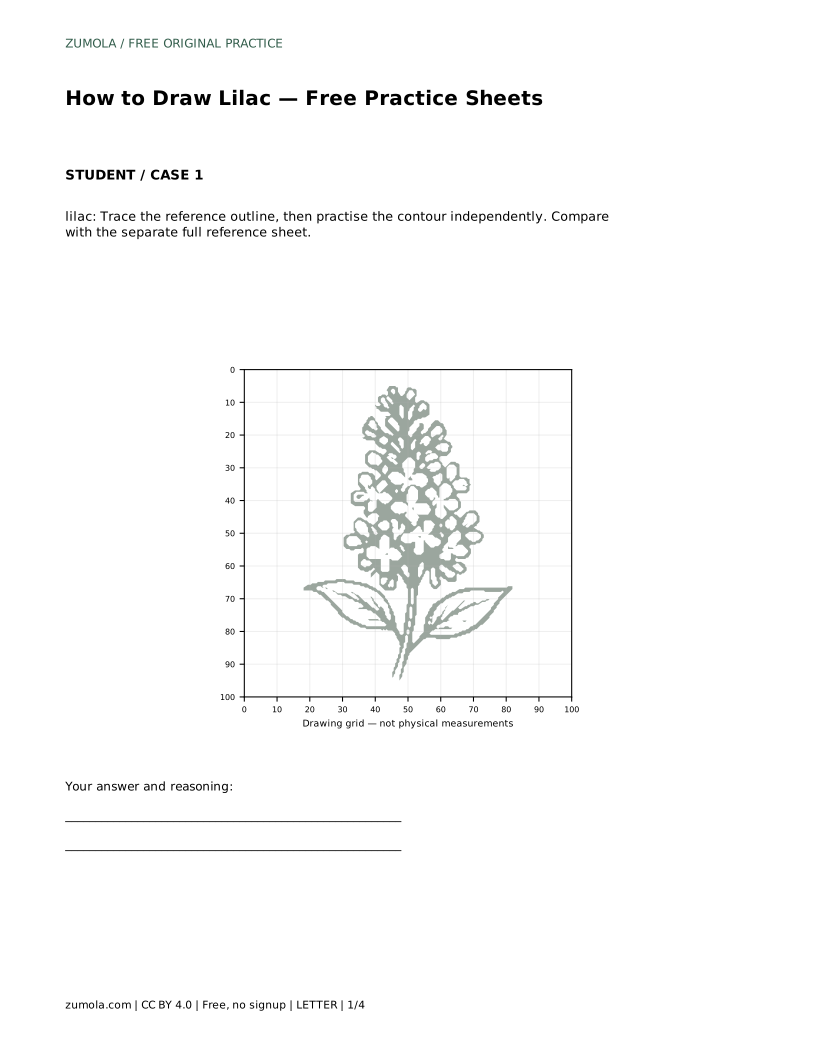
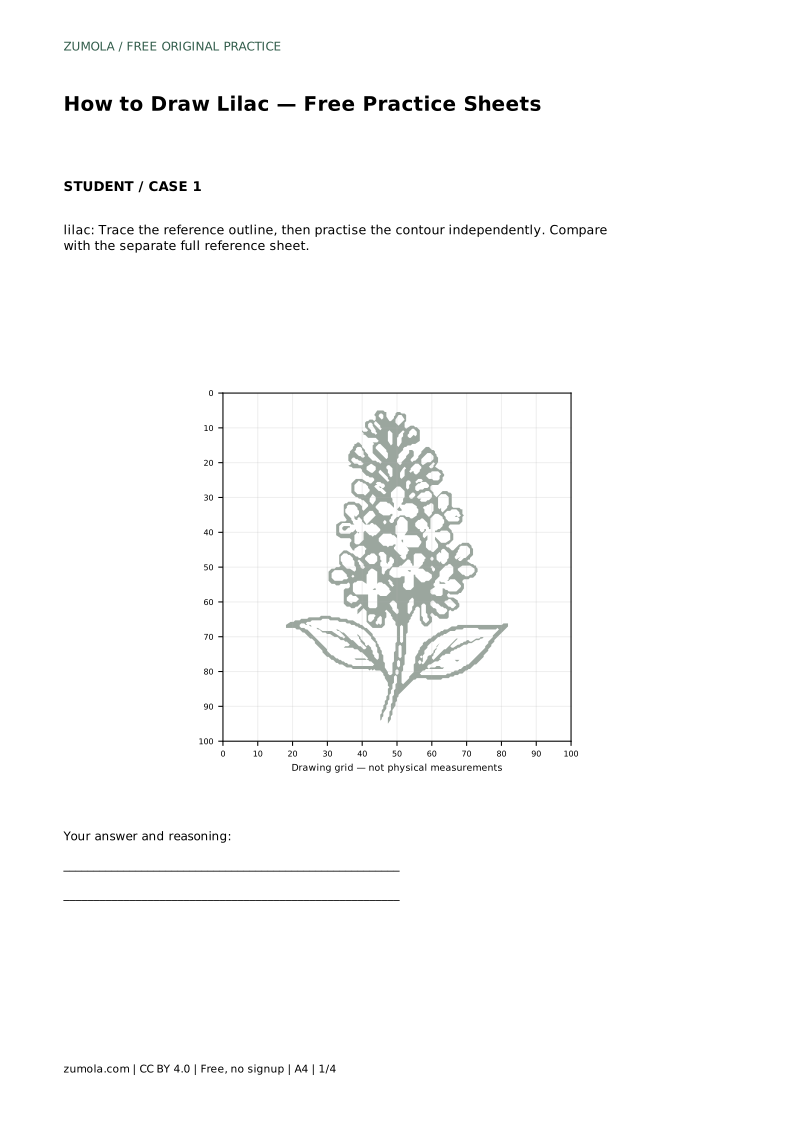
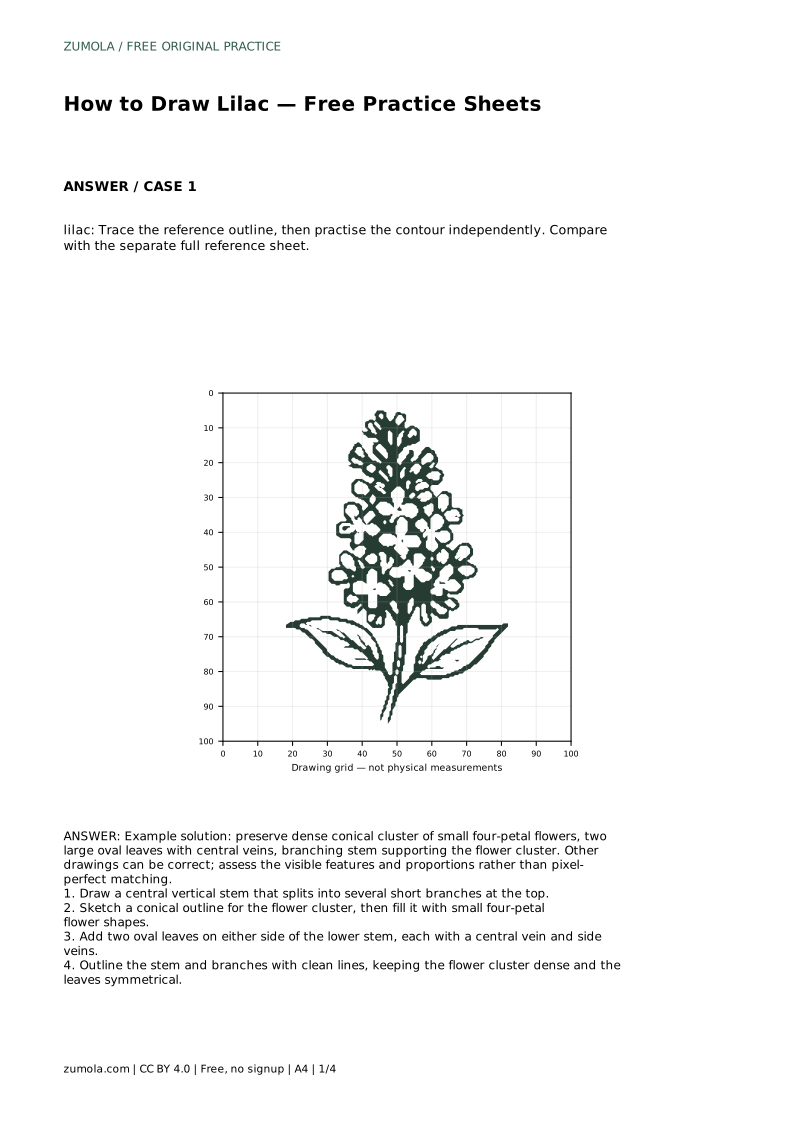
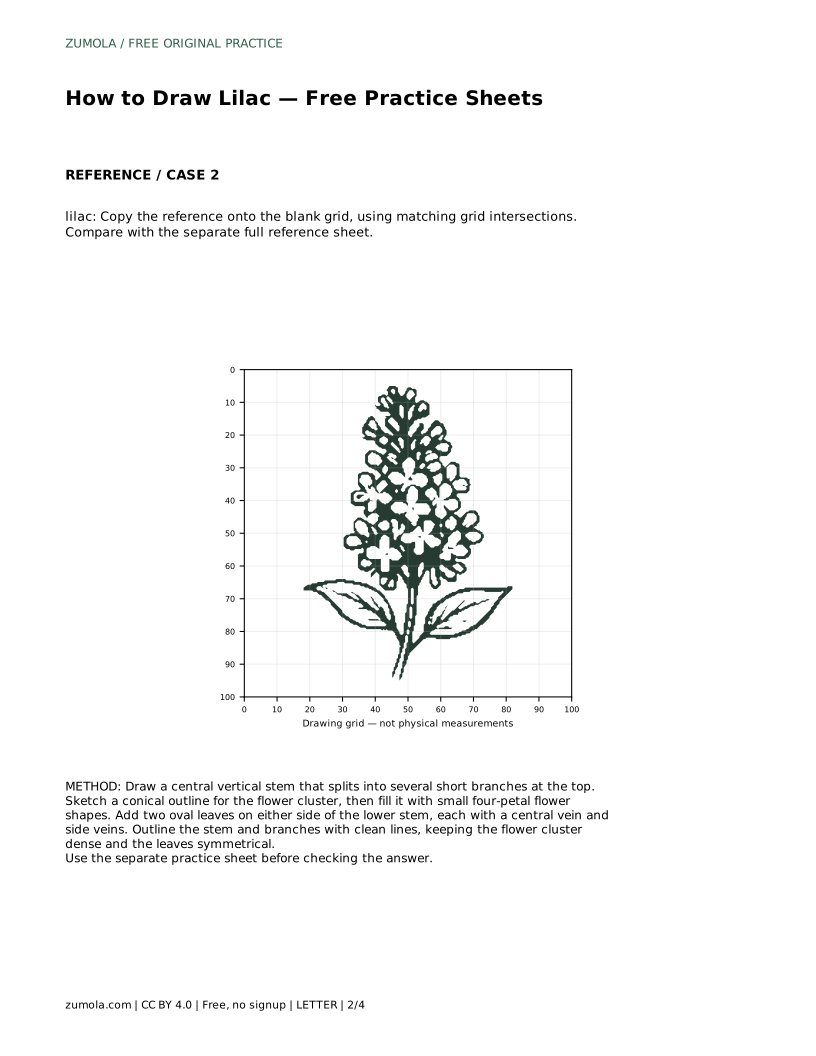
lilac: Trace the reference outline, then practise the contour independently. Compare with the separate full reference sheet.
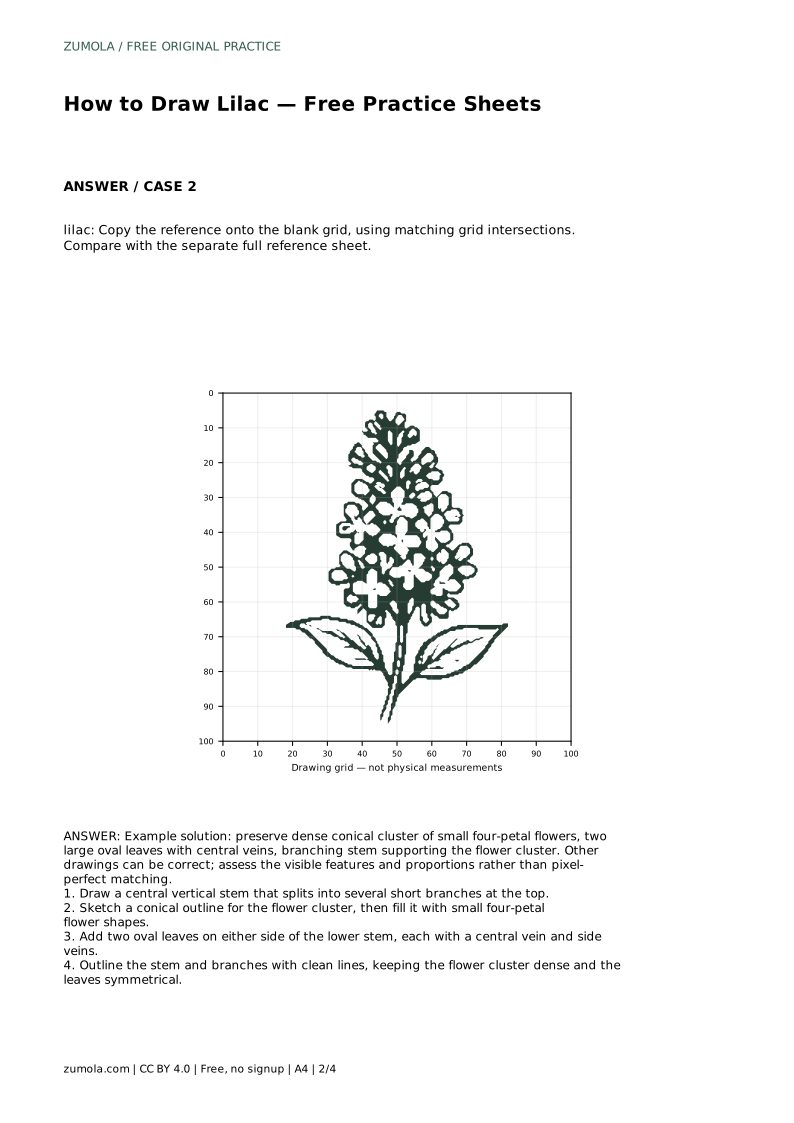
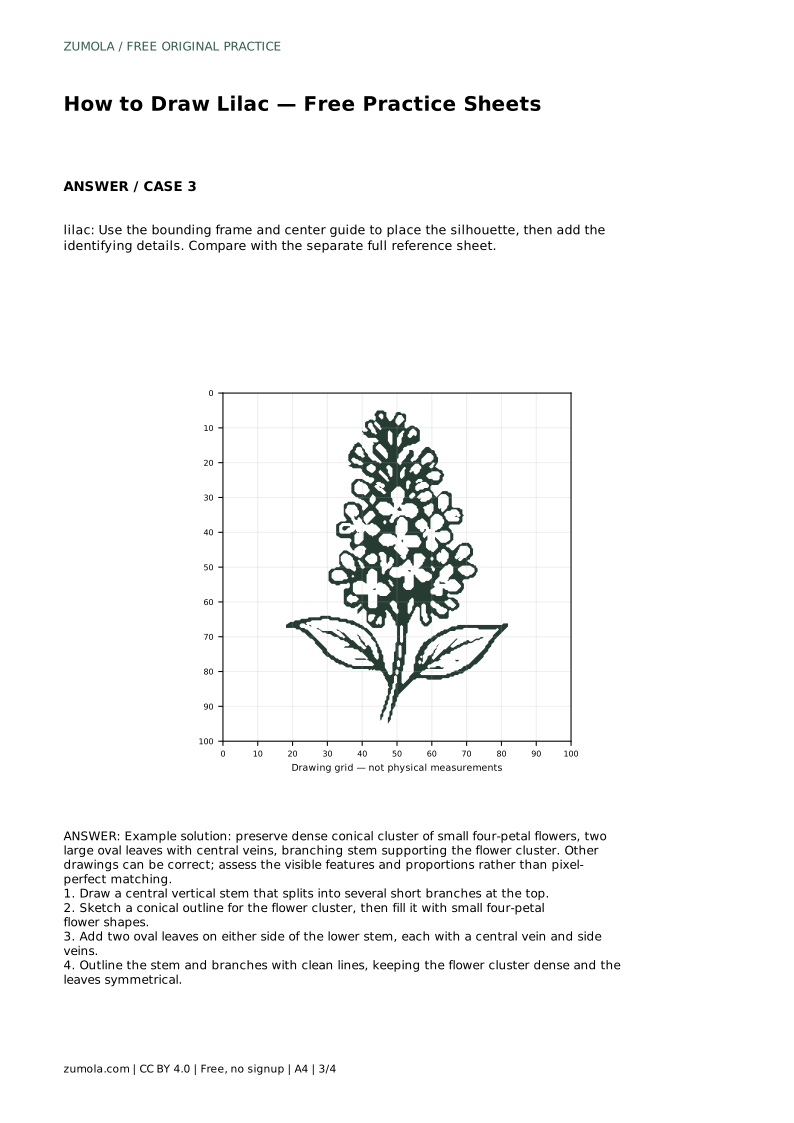
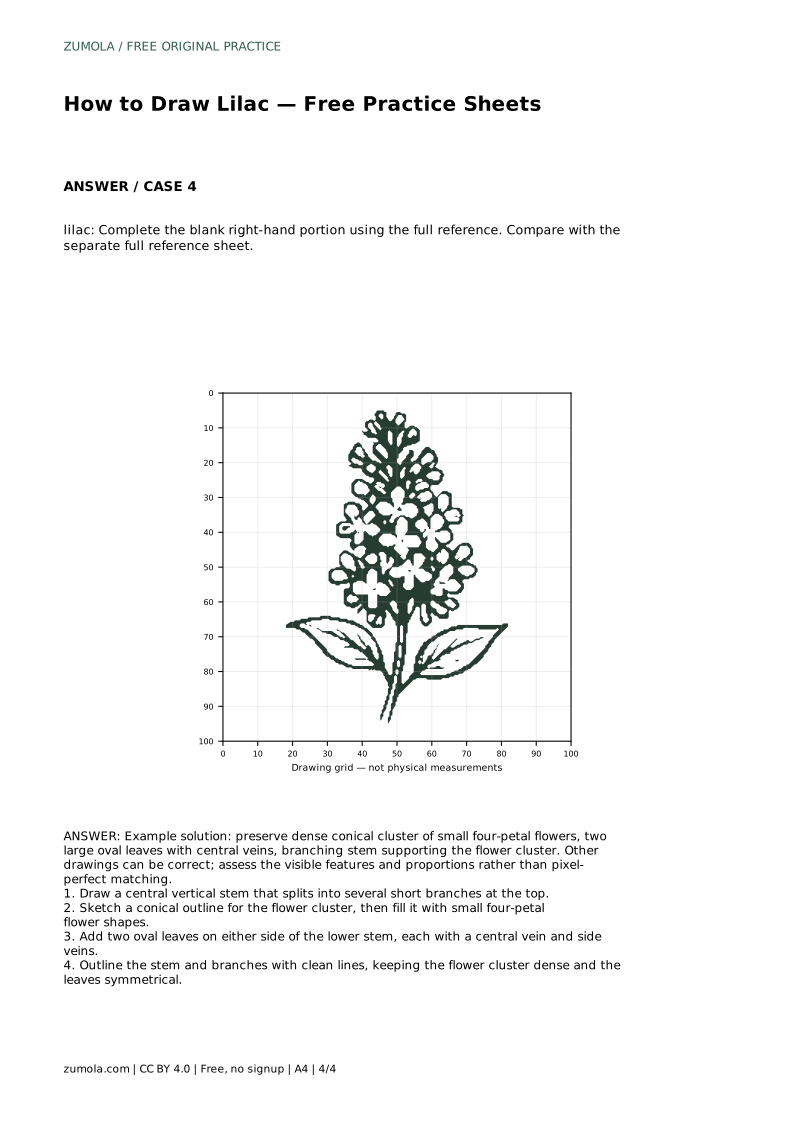
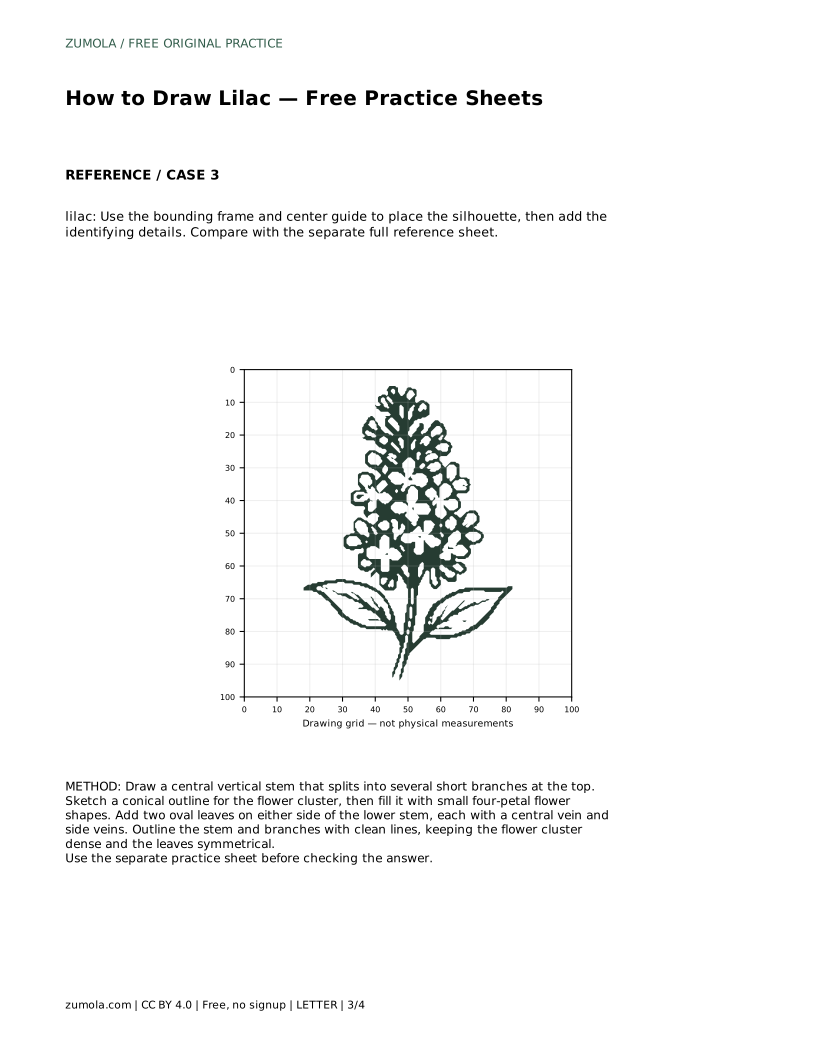
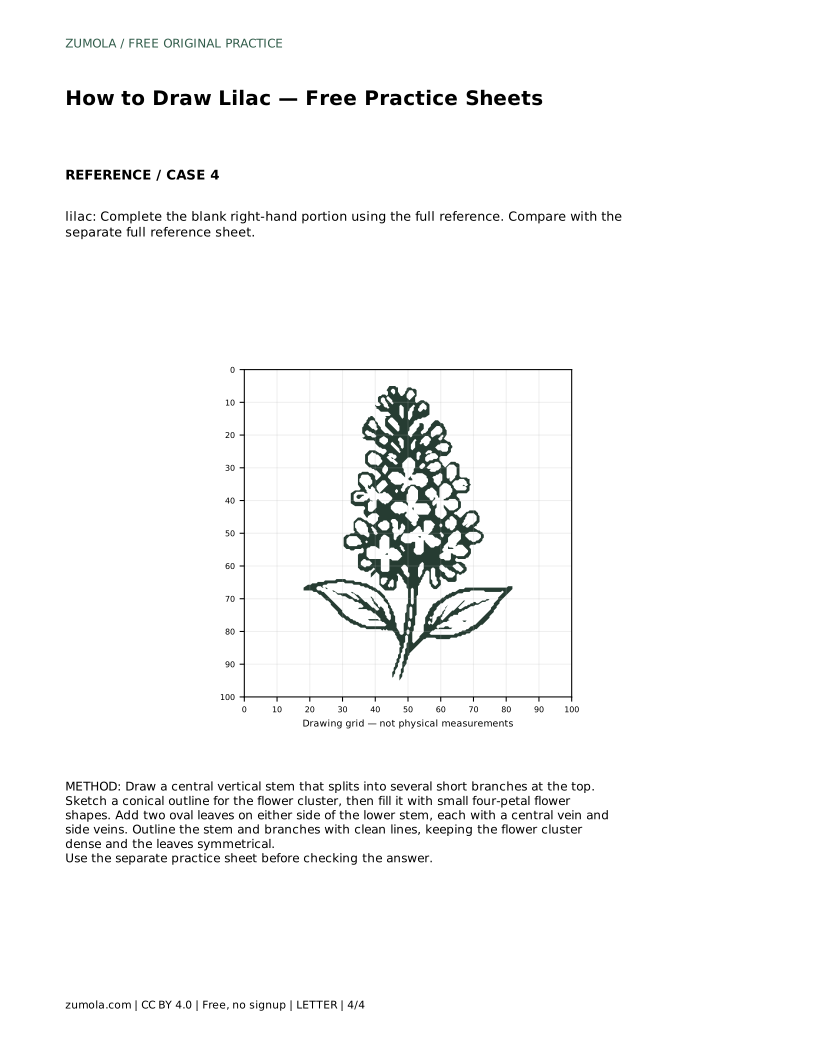
Example solution: preserve dense conical cluster of small four-petal flowers, two large oval leaves with central veins, branching stem supporting the flower cluster. Other drawings can be correct; assess the visible features and proportions rather than pixel-perfect matching. Draw a central vertical stem that splits into several short branches at the top. Sketch a conical outline for the flower cluster, then fill it with small four-petal flower shapes. Add two oval leaves on either side of the lower stem, each with a central vein and side veins. Outline the stem and branches with clean lines, keeping the flower cluster dense and the leaves symmetrical.
Four. Keeping each tiny blossom four-petaled makes the cluster read as lilac rather than a generic bunch of dots.
Aim for roughly symmetrical ovals. Small differences are fine, but matched size and placement keep the plant balanced.
Yes, but the stem-first order makes it easier to keep the cluster centered and supported by the branches.
All drawing practice · Free coordinate paper
Original resources · CC BY 4.0 · Free for personal and classroom use with attribution.