Reference diagrams
LETTER · Download PDF
A4 · Download PDF
Free original resources
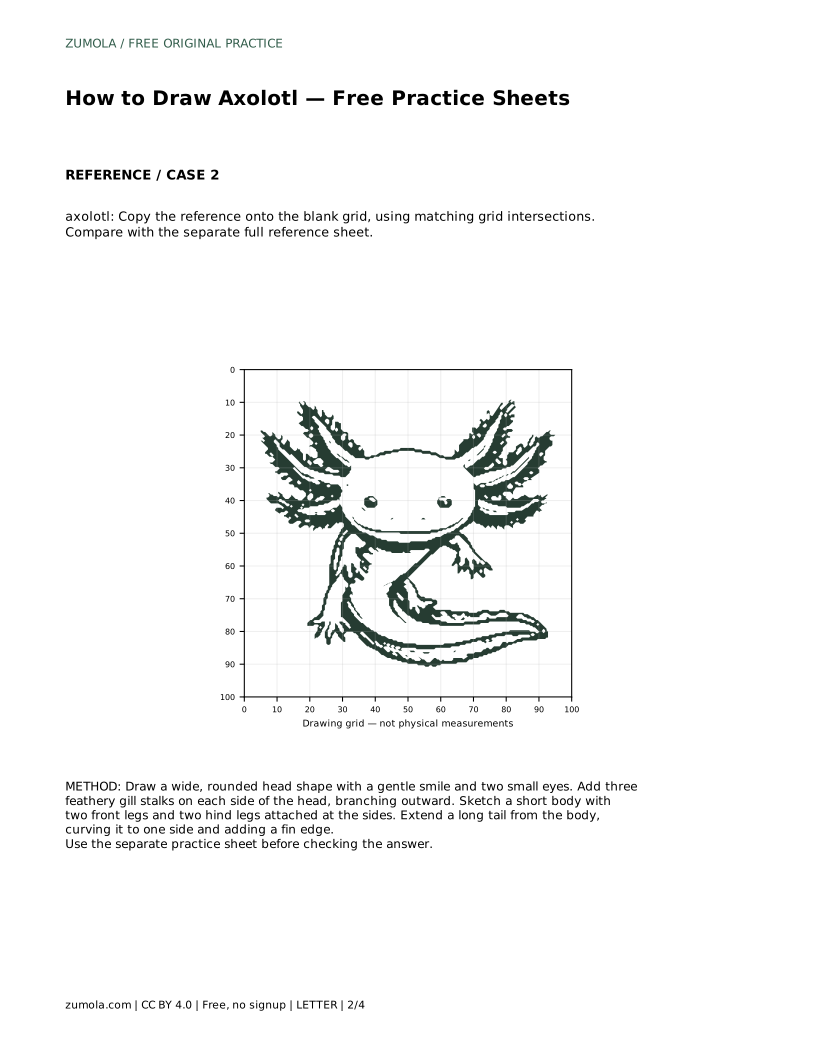
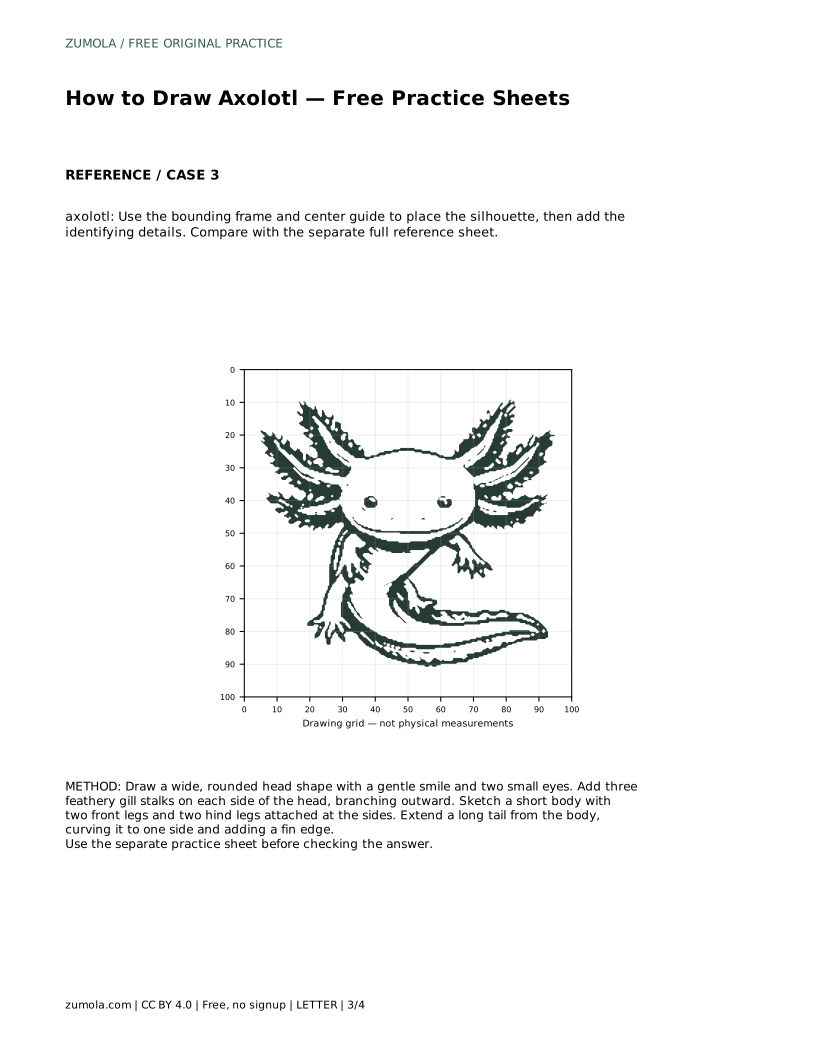
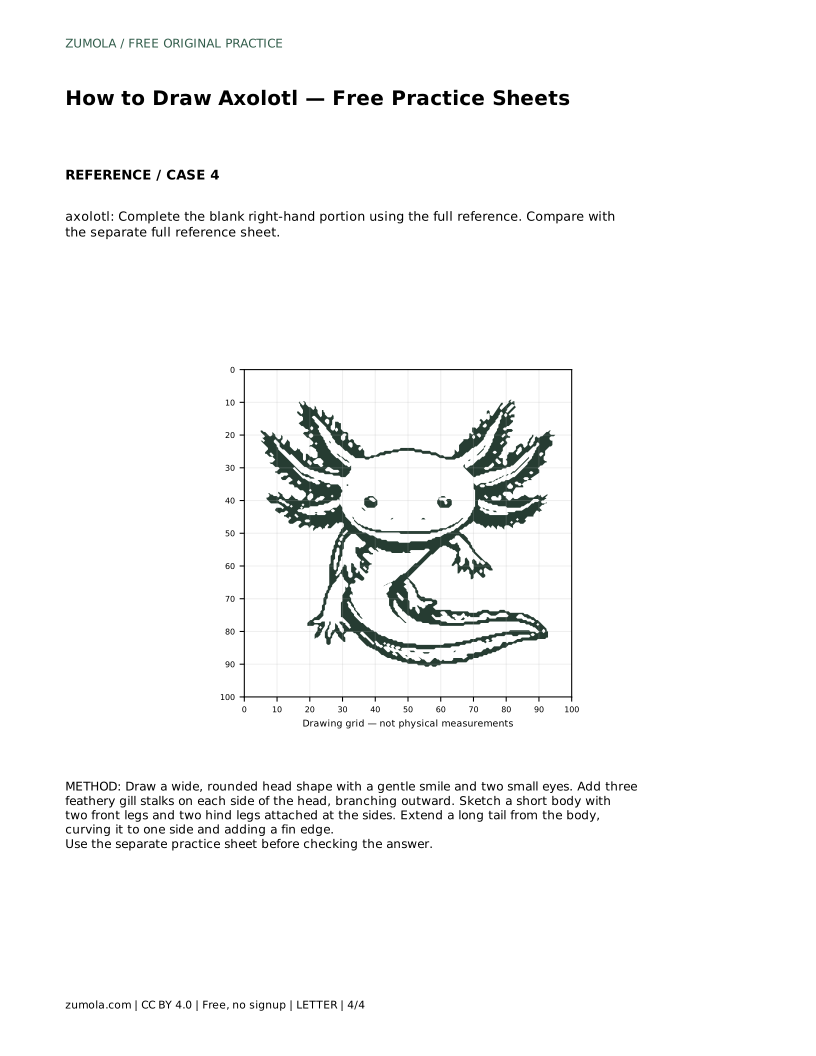
Learn to draw a cute axolotl by building the wide head, feathery gills, short body, and tapering tail, then practise with tracing, grid, and frame sheets.
Four original cases, with reference diagrams, practice sheets and worked answers. Everything is free; no signup required.
LETTER · Download PDF
A4 · Download PDF
LETTER · Download PDF
A4 · Download PDF
LETTER · Download PDF
A4 · Download PDF
Use A4 or US Letter to match your printer. Use the stated values and conditions to solve each exercise; diagrams are not physical measuring rulers.
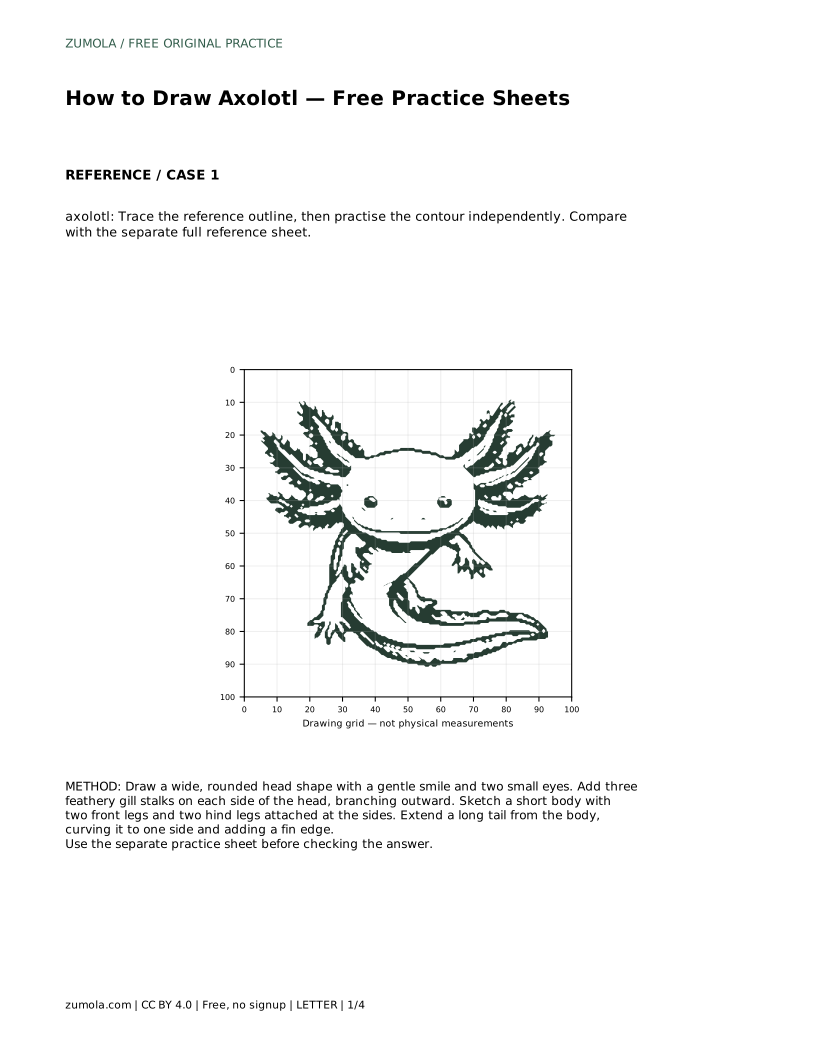
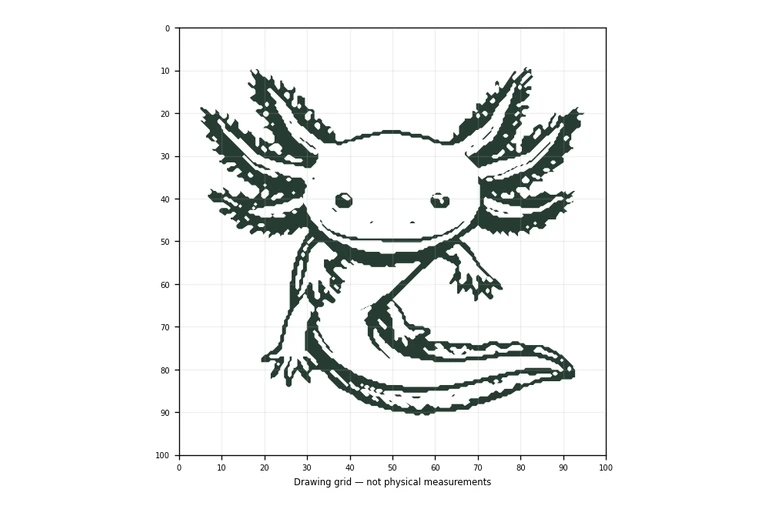
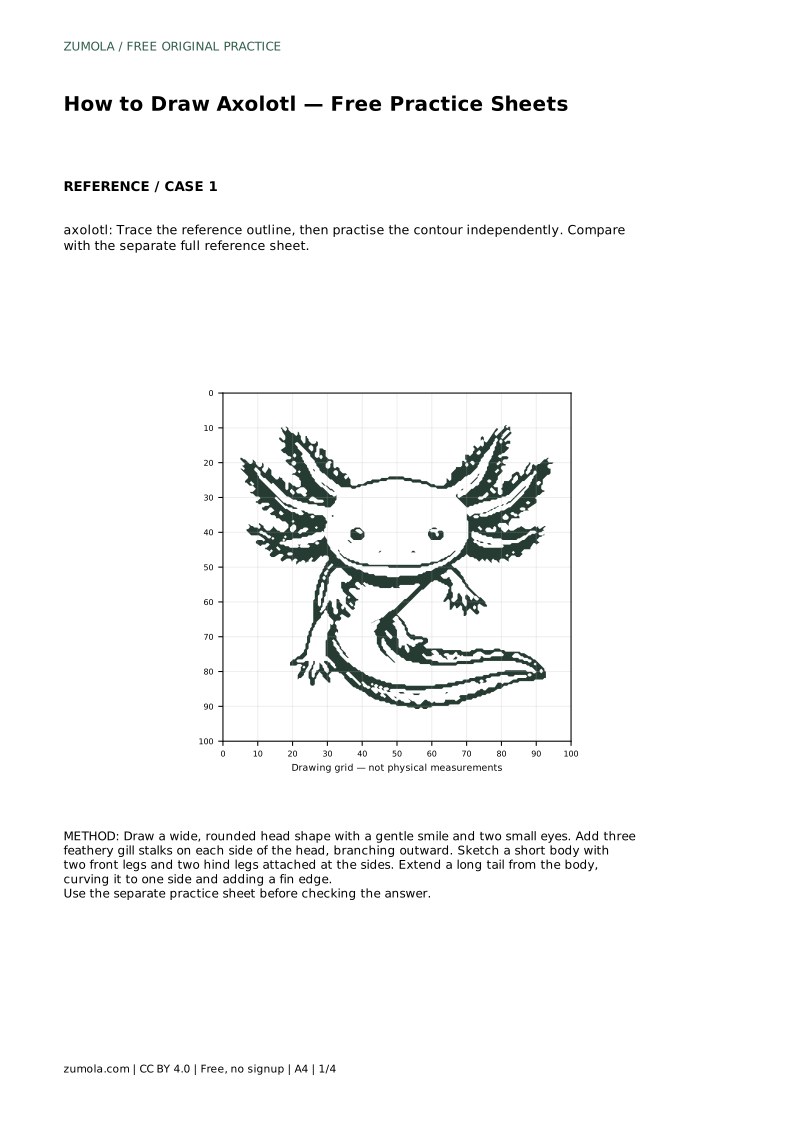
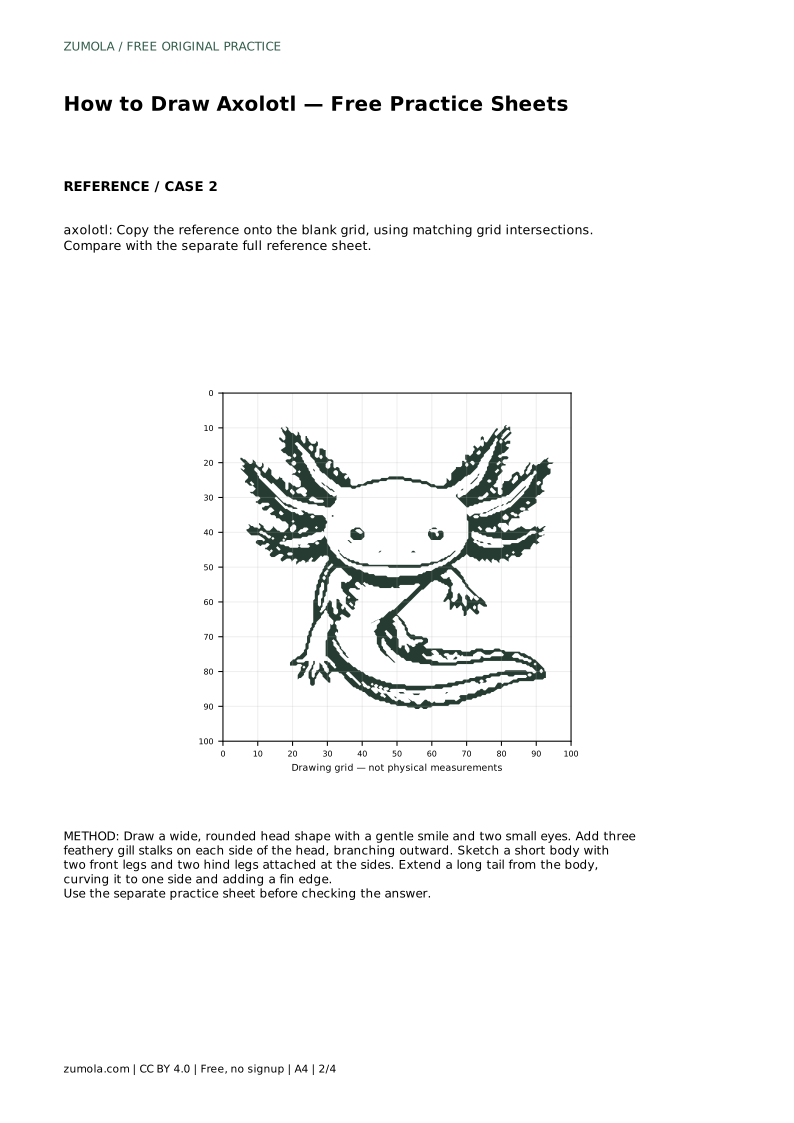
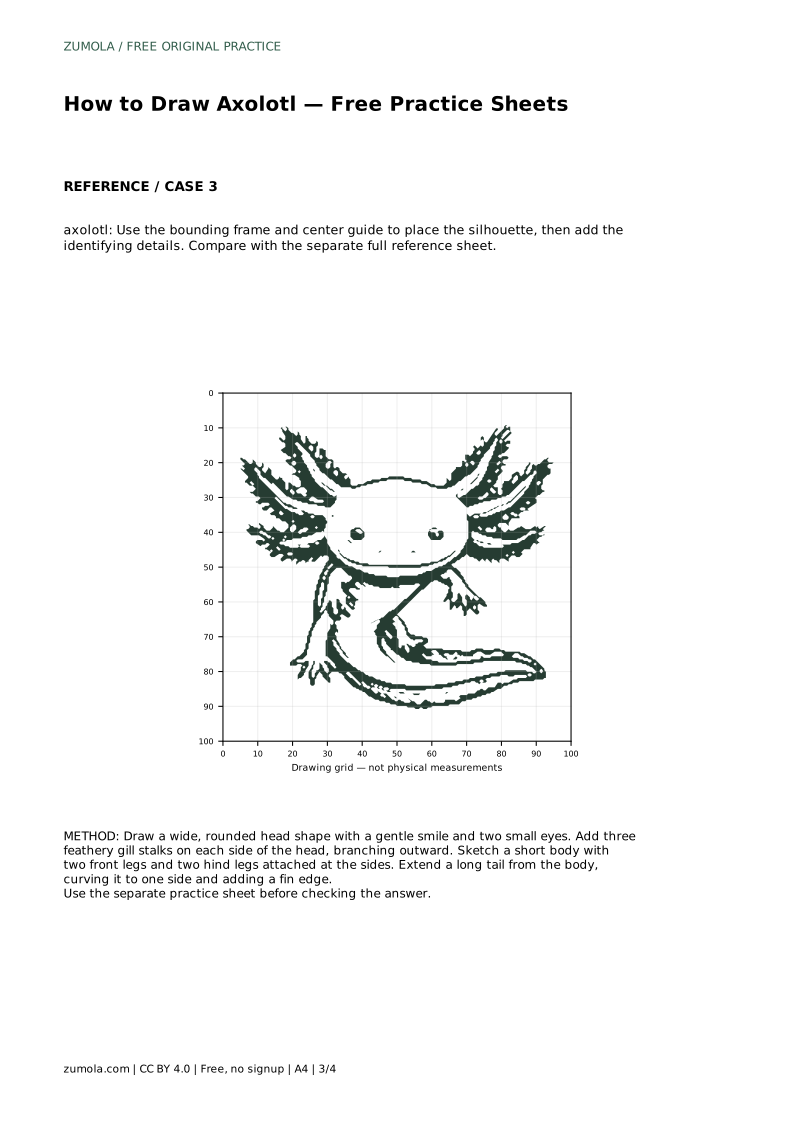
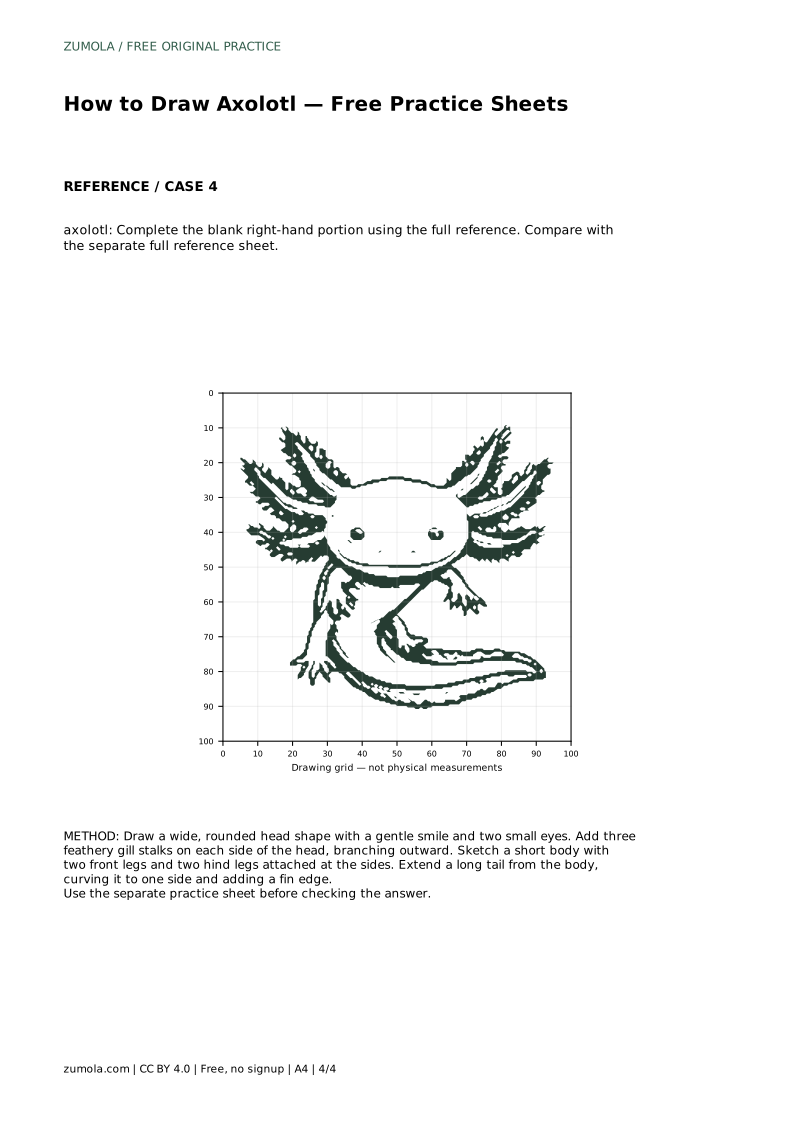
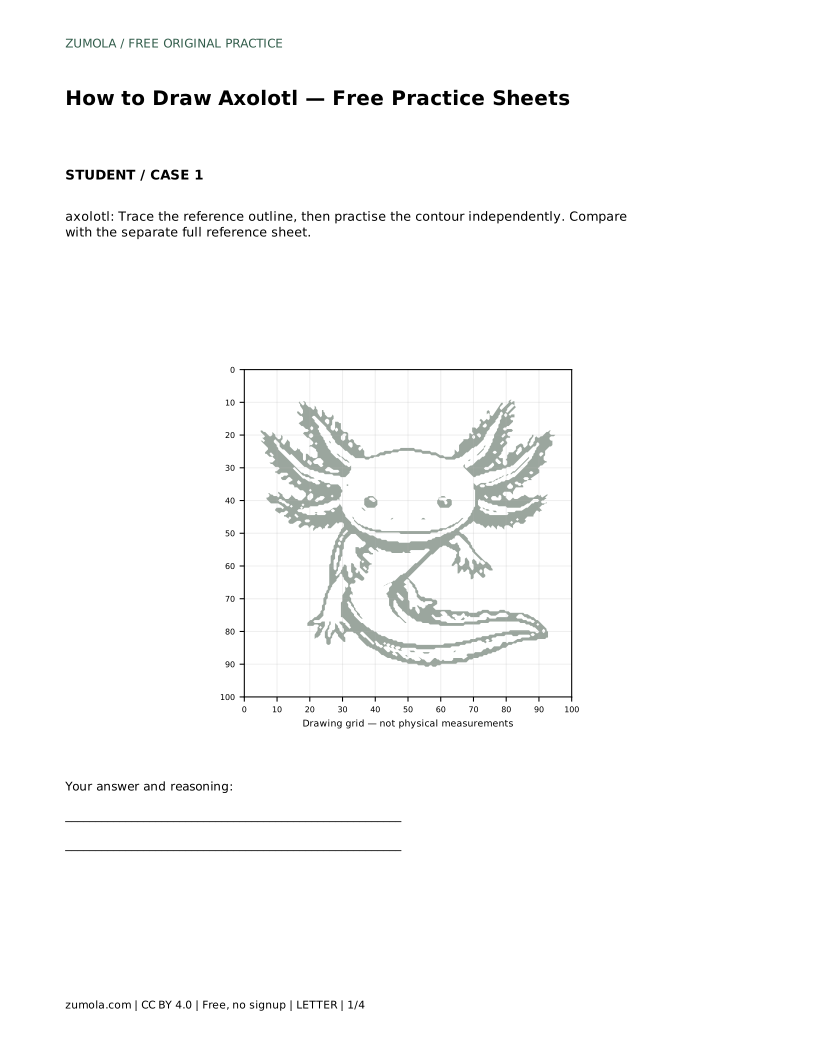
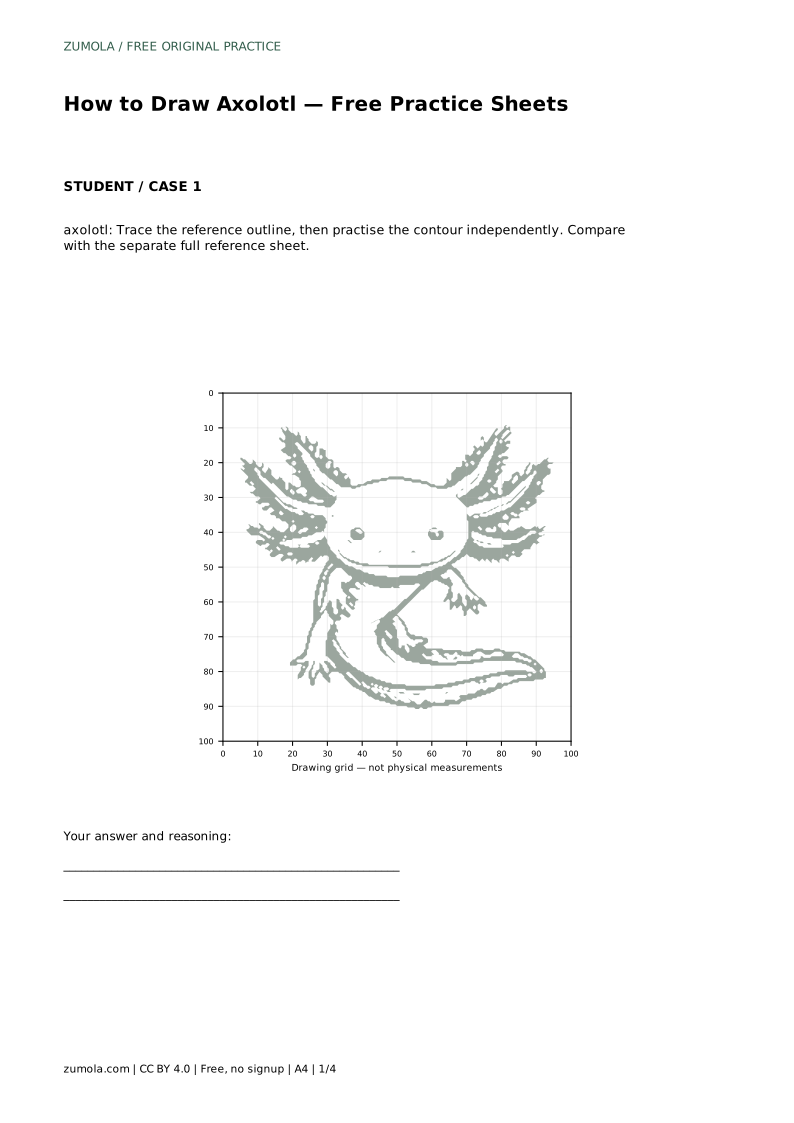
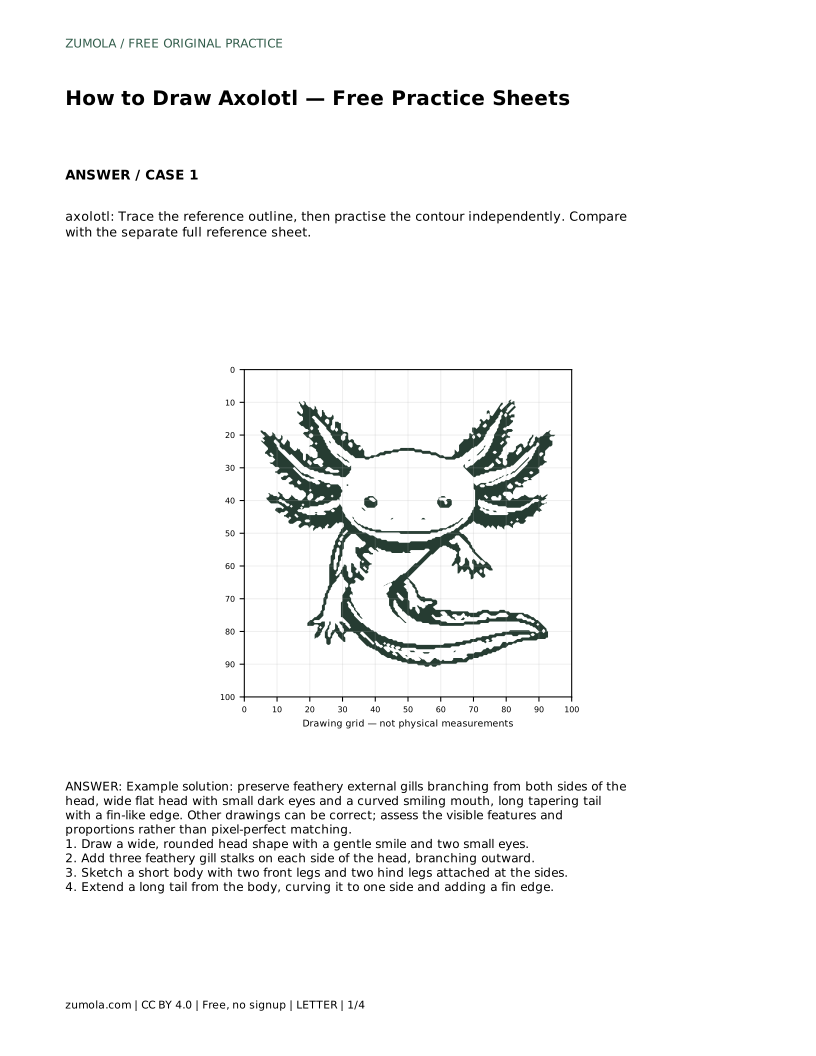
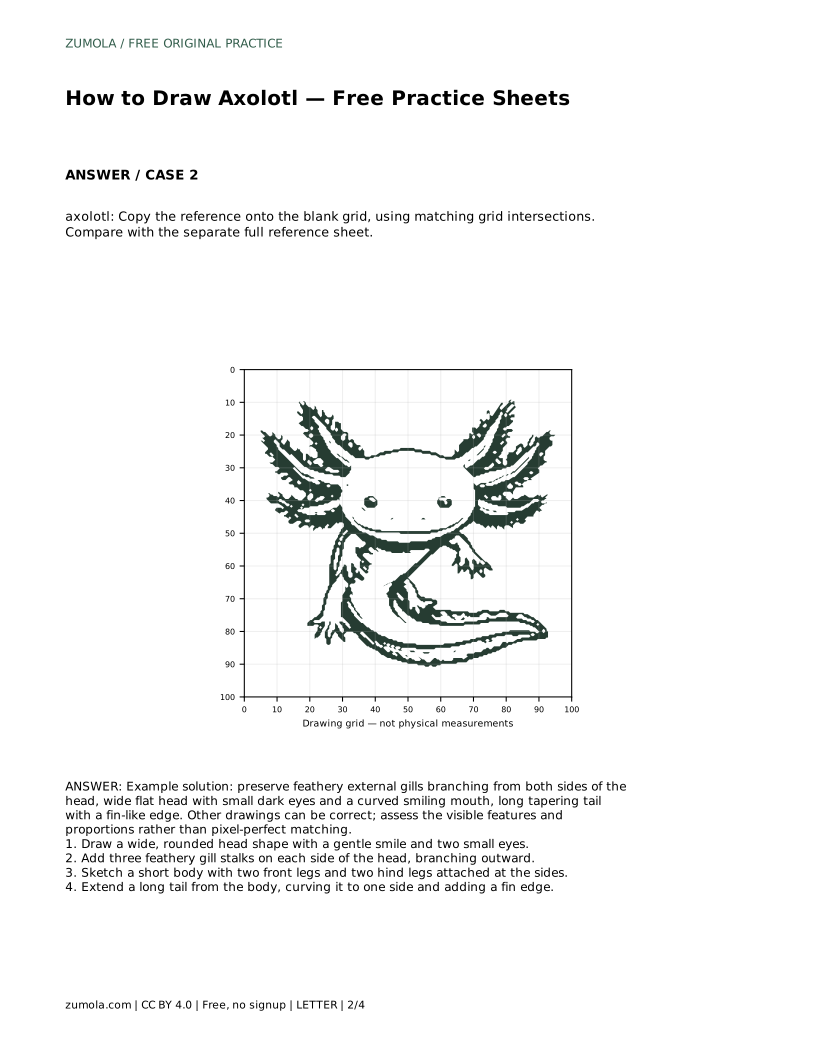
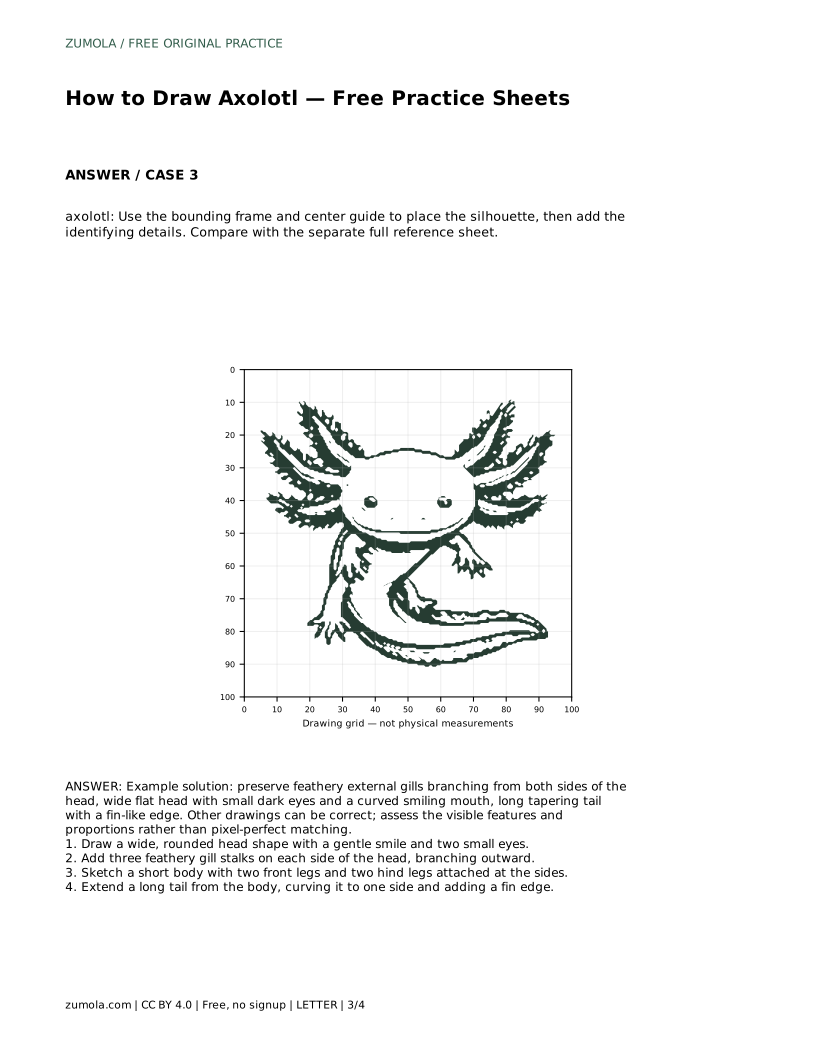
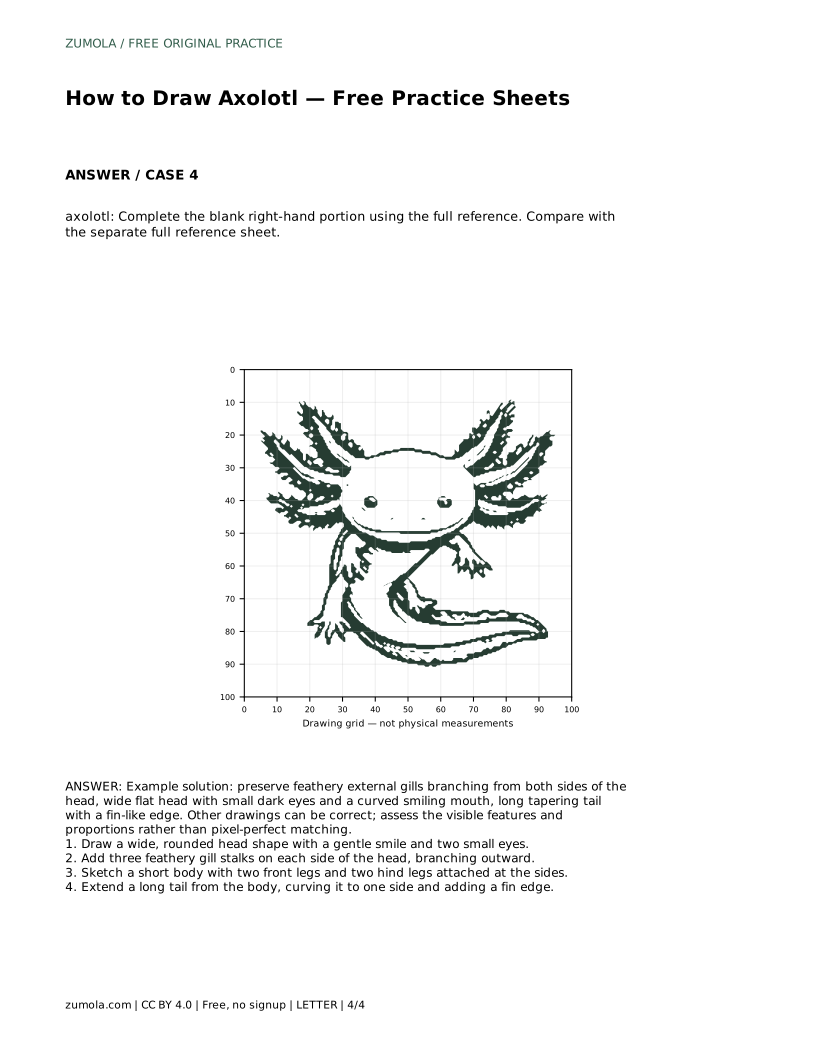
An axolotl is easy to recognise once you know its key features: a wide, flat head, small dark eyes, a gentle smile, feathery gill stalks branching from both sides, four short legs, and a long tail with a fin-like edge. This guide breaks the drawing into simple shapes you can build in order. Use the practice sheets to trace, copy, or complete the drawing, then compare your work with the full reference sheet.
Begin with the head because it carries most of the axolotl's character. Draw a wide, rounded shape that is broader than it is tall. Keep the outline smooth and slightly flattened at the top. Place two small dark eyes fairly far apart, then add a curved smiling mouth below and between them. The face should feel open and friendly rather than crowded.
Check the proportions before adding details. The head should look wide relative to the short body, and the eyes should sit roughly level with each other. If the head looks too narrow, widen it before continuing; adjusting early is easier than correcting a finished outline.
The external gills are the axolotl's most distinctive feature. Draw three feathery stalks on each side of the head, branching outward from behind the cheeks. Keep the stalks roughly balanced on both sides, though small differences are natural. Each stalk can split into a few soft branches rather than a single straight line.
Think of the gills as branching shapes, not solid blobs. Leave small gaps between branches so the feathery structure stays visible. If one side looks heavier than the other, thin the branches rather than erasing the whole stalk.
Sketch a short body beneath the head, then attach two front legs and two hind legs at the sides. Keep the legs simple and slightly rounded. From the back of the body, extend a long tail that tapers toward the tip. Curve the tail to one side and add a fin-like edge along it.
The tail should feel longer than the body without becoming thin and stringy. A gentle curve gives the drawing movement. When the outline is complete, compare it with the full reference sheet and adjust any feature that looks unclear.
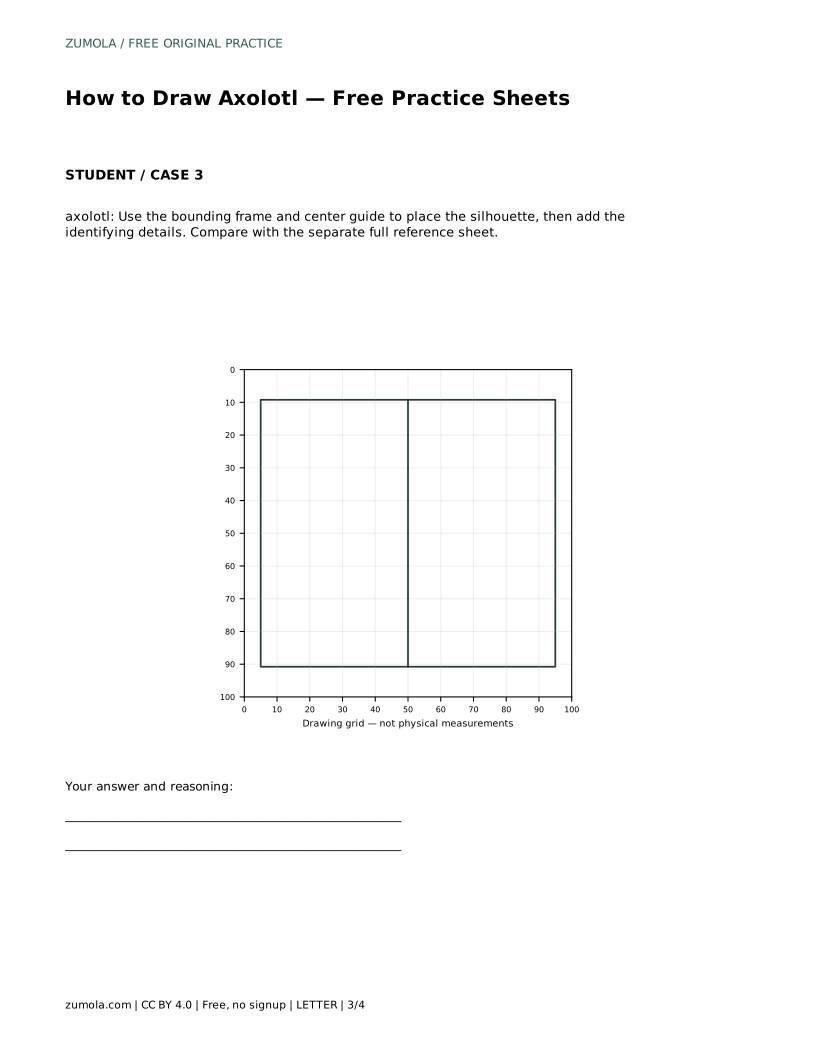
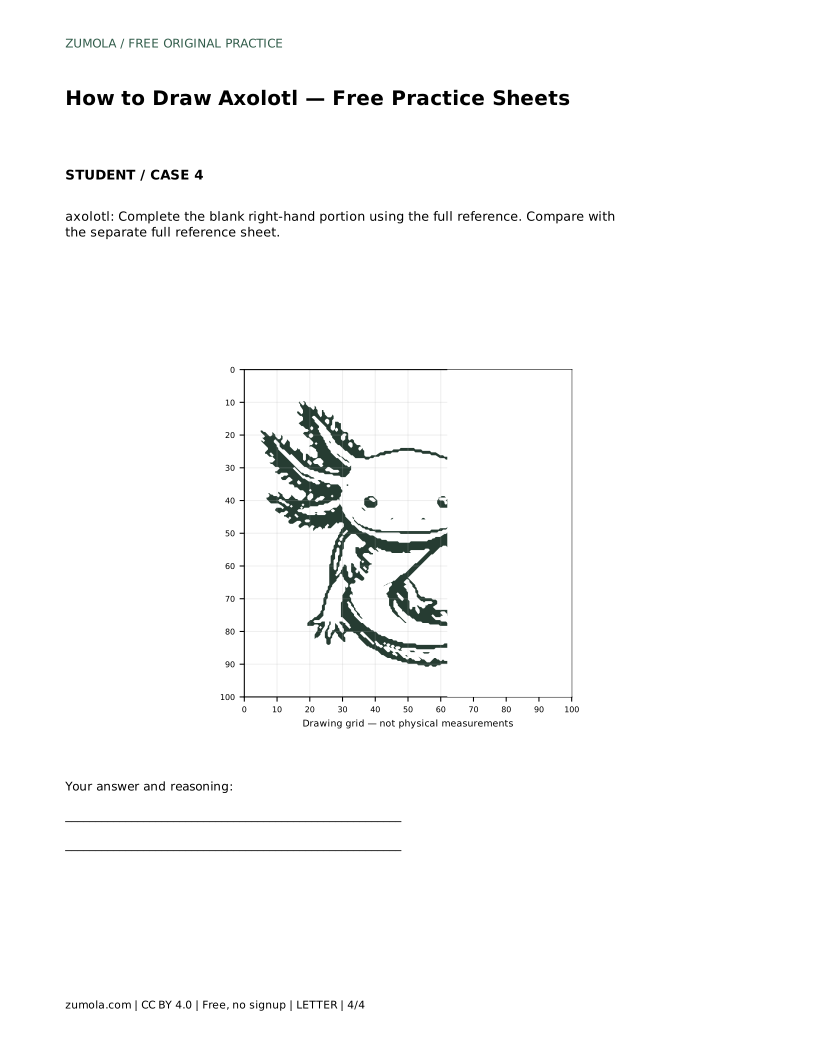
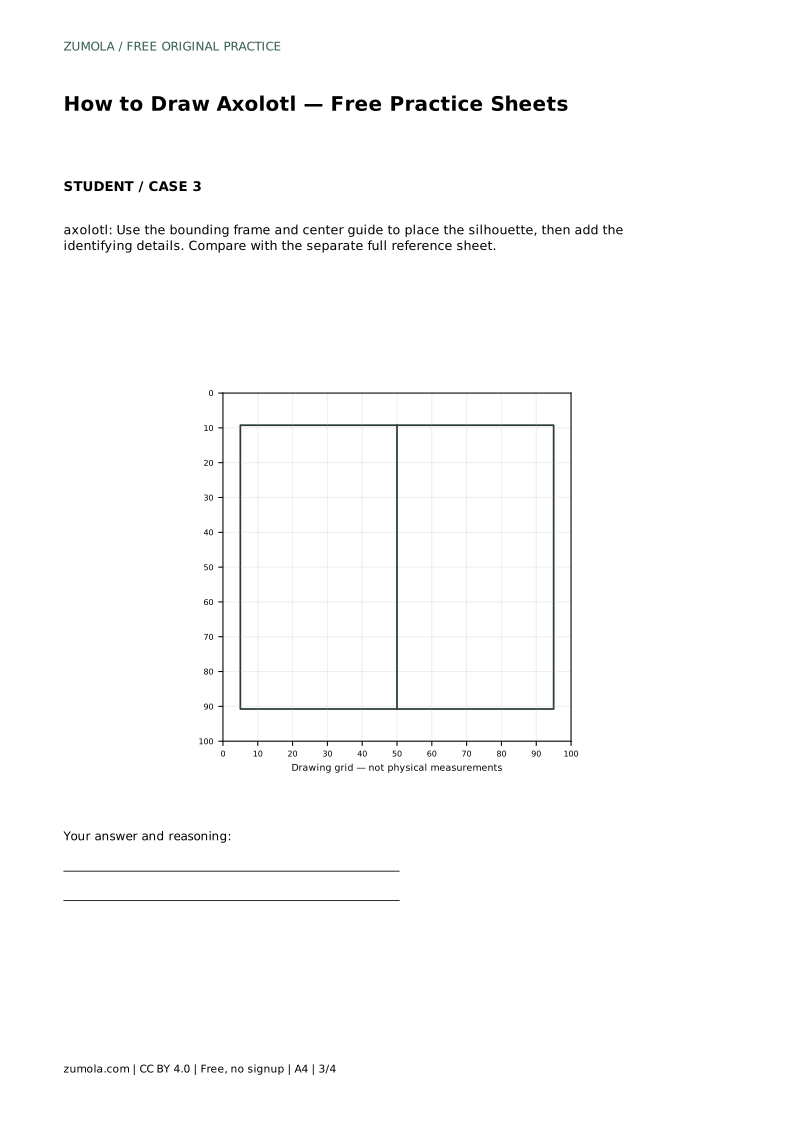
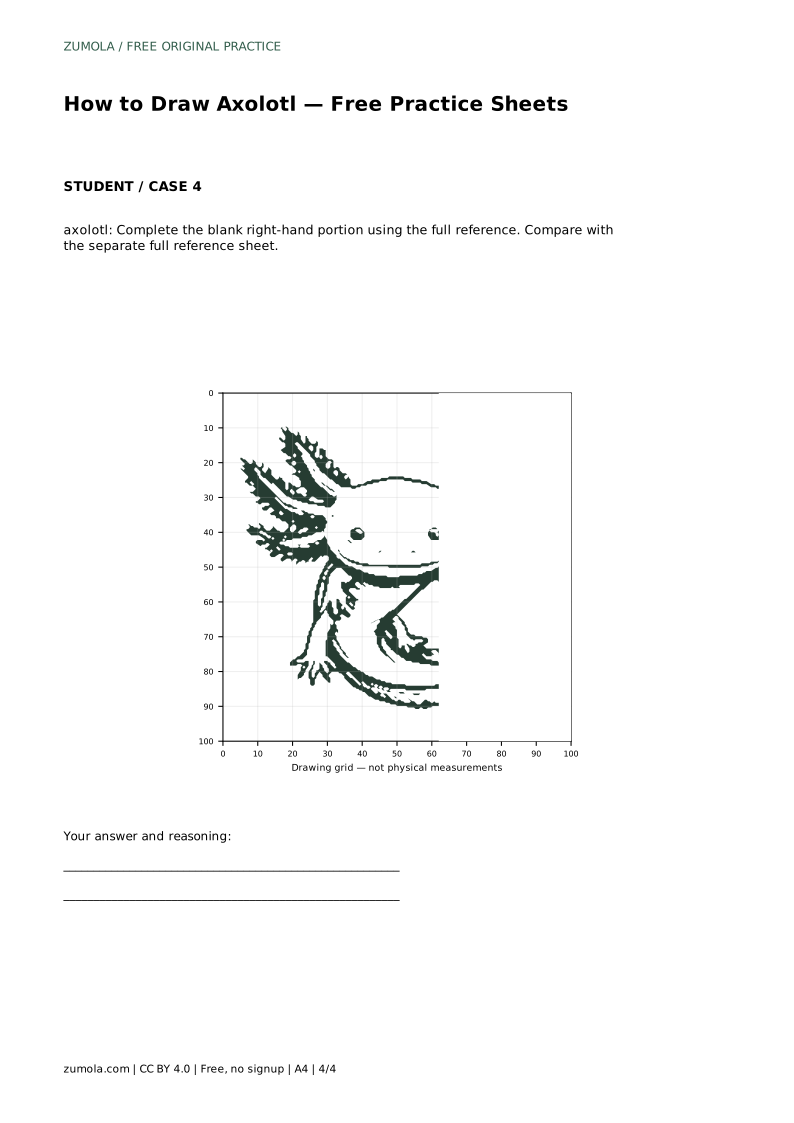
Each sheet practises a different skill. Tracing builds familiarity with the outline. Copying onto a blank grid trains you to judge position using matching grid intersections. The bounding frame and center guide help you place the silhouette before adding details. The half-completed sheet asks you to finish the blank right-hand portion using the full reference.
After each attempt, compare your drawing with the separate full reference sheet. Look for the wide head, small eyes, curved smile, three gill stalks on each side, four legs, and a tapering tail with a fin edge. Different drawings can all be correct, so judge the visible features and proportions rather than expecting a pixel-perfect match.
Most problems come from rushing the gills or ignoring proportions. Slow down at the head and gills, and check the whole drawing against the reference before adding final details.
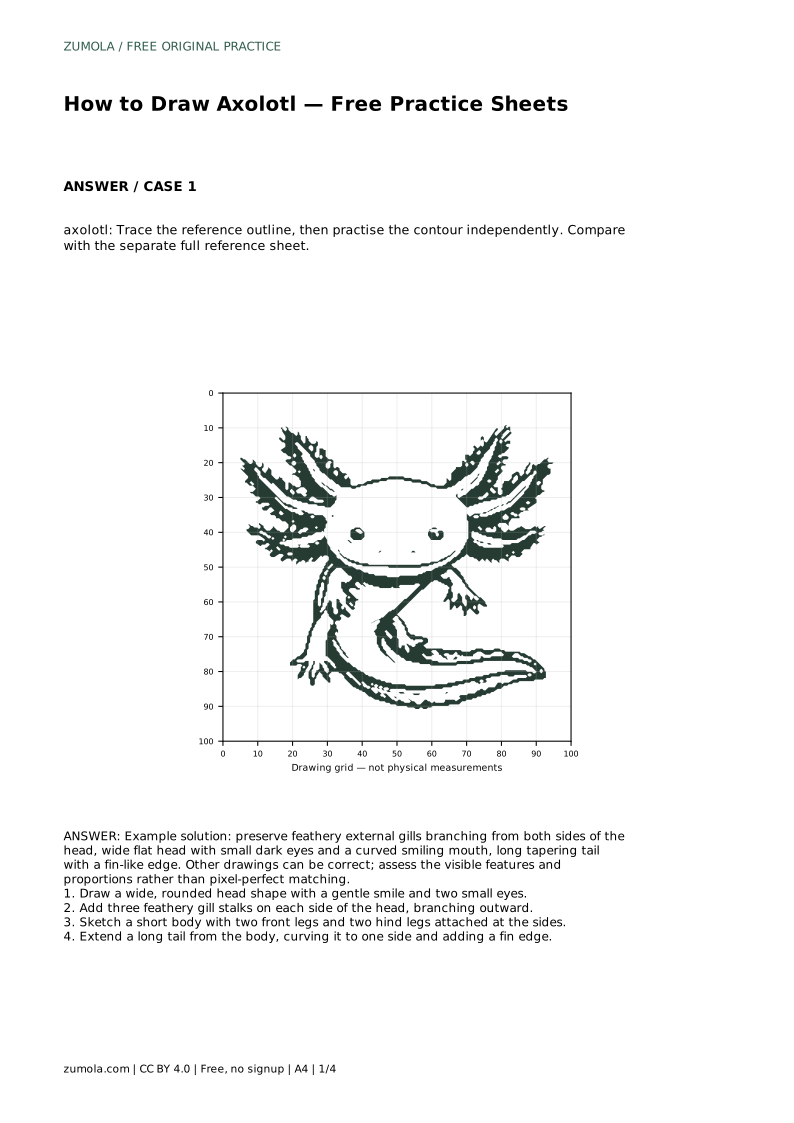
axolotl: Trace the reference outline, then practise the contour independently. Compare with the separate full reference sheet.
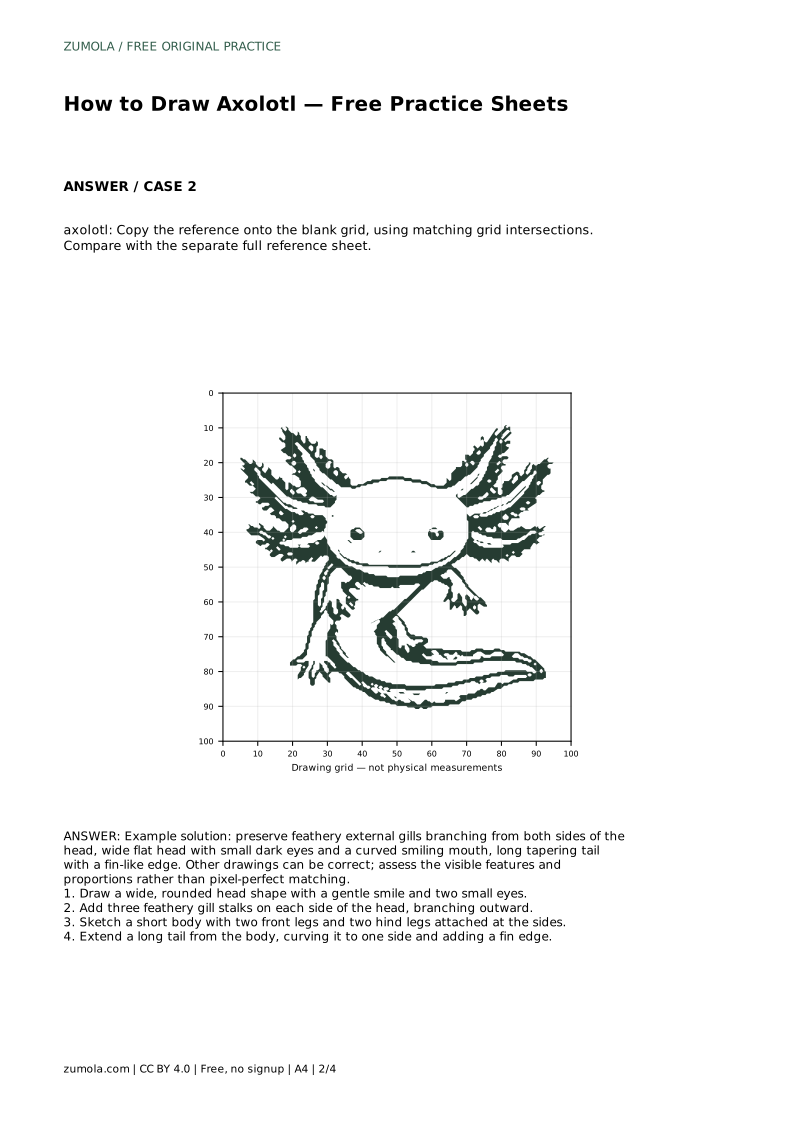
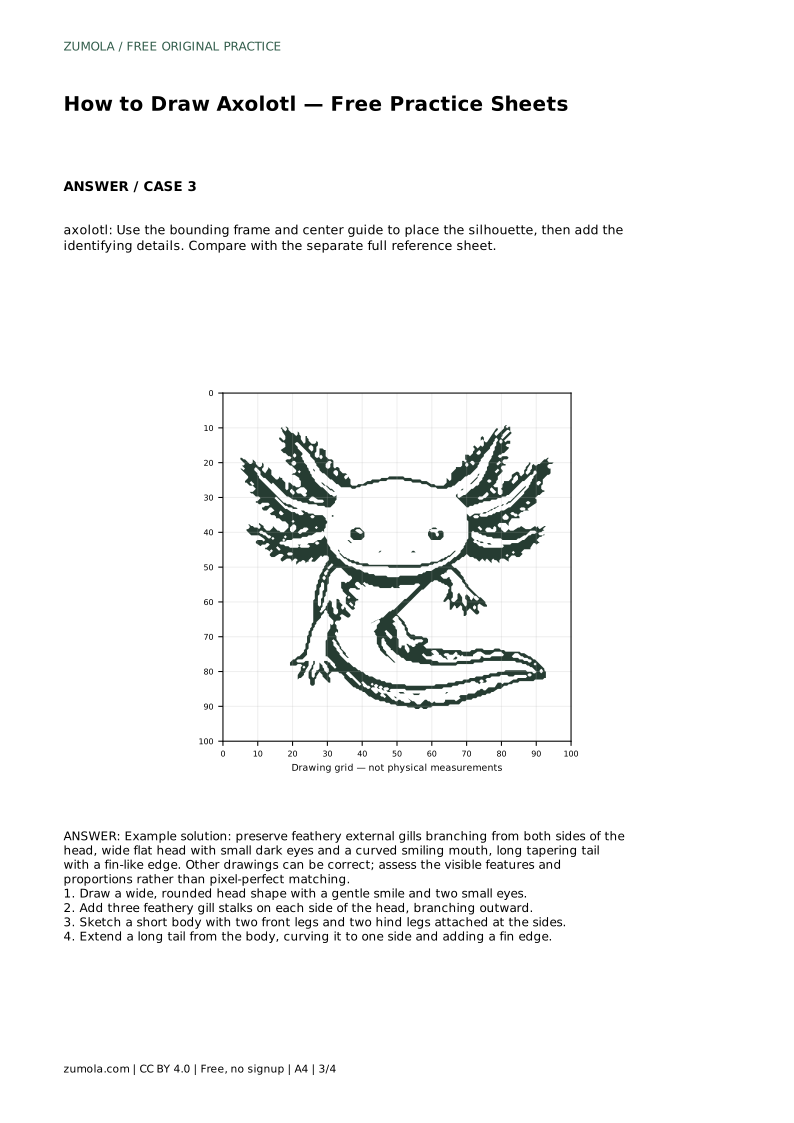
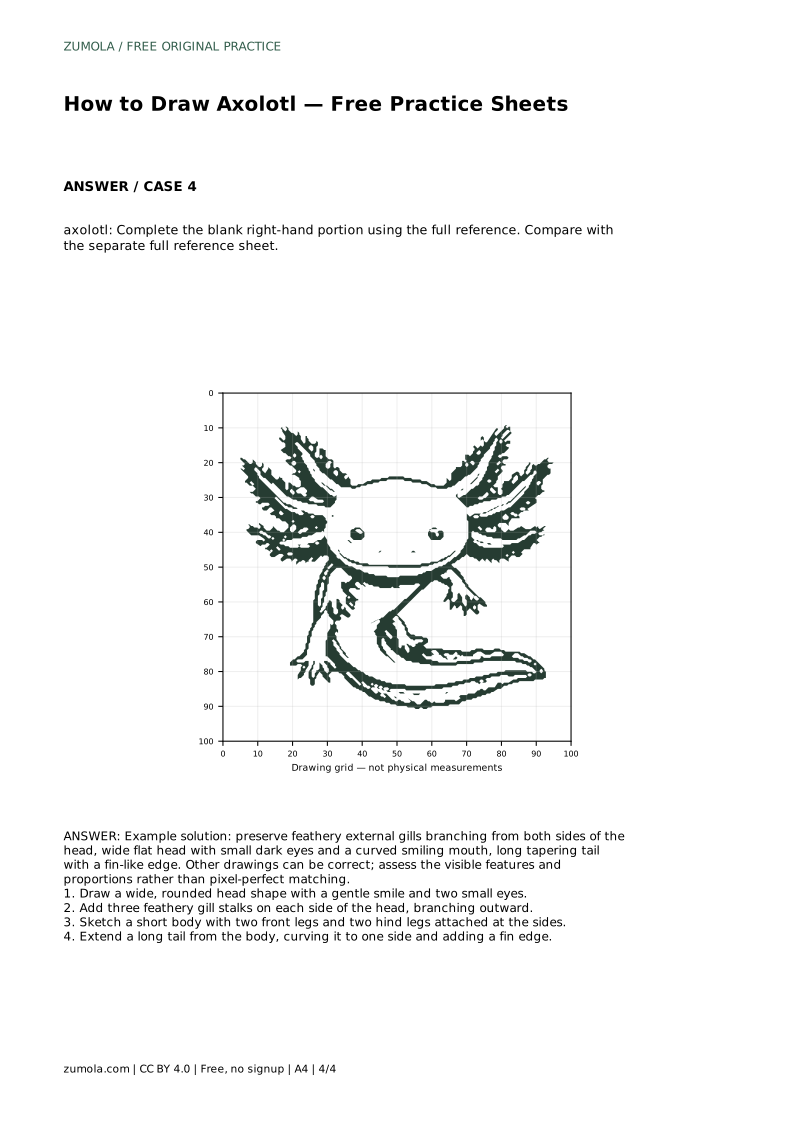
Example solution: preserve feathery external gills branching from both sides of the head, wide flat head with small dark eyes and a curved smiling mouth, long tapering tail with a fin-like edge. Other drawings can be correct; assess the visible features and proportions rather than pixel-perfect matching. Draw a wide, rounded head shape with a gentle smile and two small eyes. Add three feathery gill stalks on each side of the head, branching outward. Sketch a short body with two front legs and two hind legs attached at the sides. Extend a long tail from the body, curving it to one side and adding a fin edge.
Draw three feathery stalks on each side of the head, branching outward from behind the cheeks.
No. Other drawings can be correct. Assess the visible features and proportions rather than pixel-perfect matching.
Compare with the full reference sheet and check the wide head, small eyes, curved smile, gills, four legs, and tapering tail with a fin edge.
All drawing practice · Free coordinate paper
Original resources · CC BY 4.0 · Free for personal and classroom use with attribution.