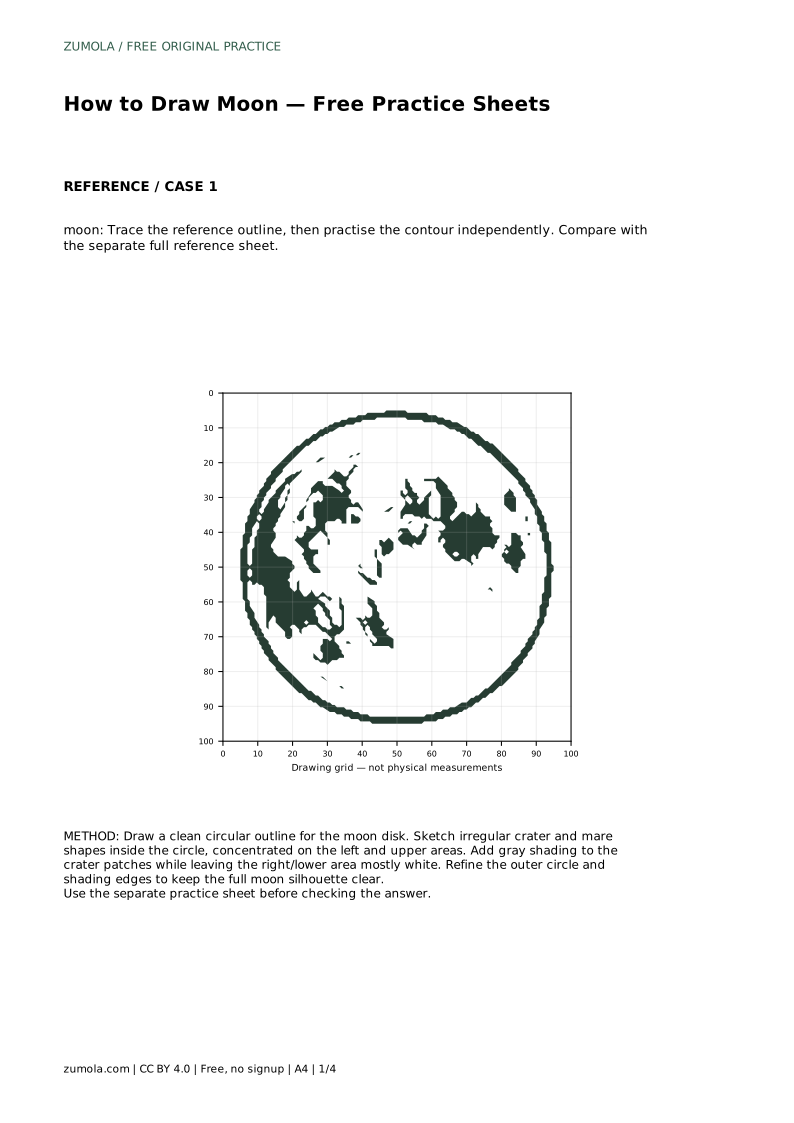
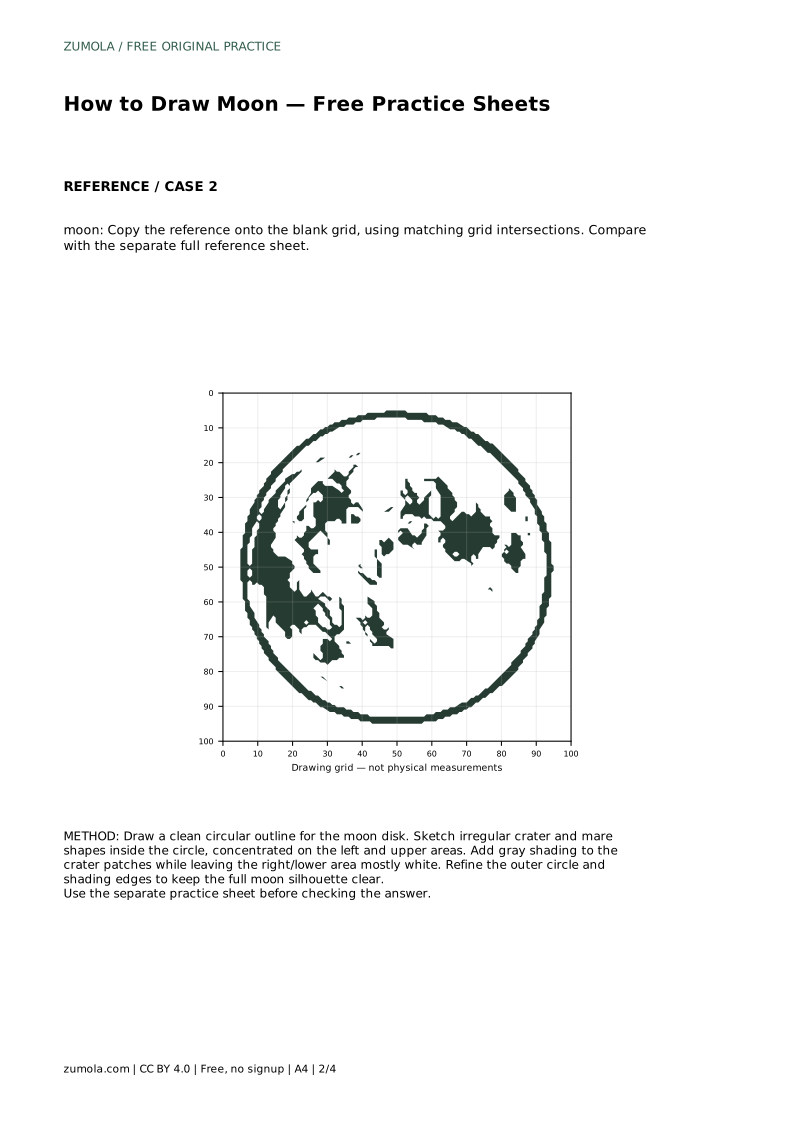
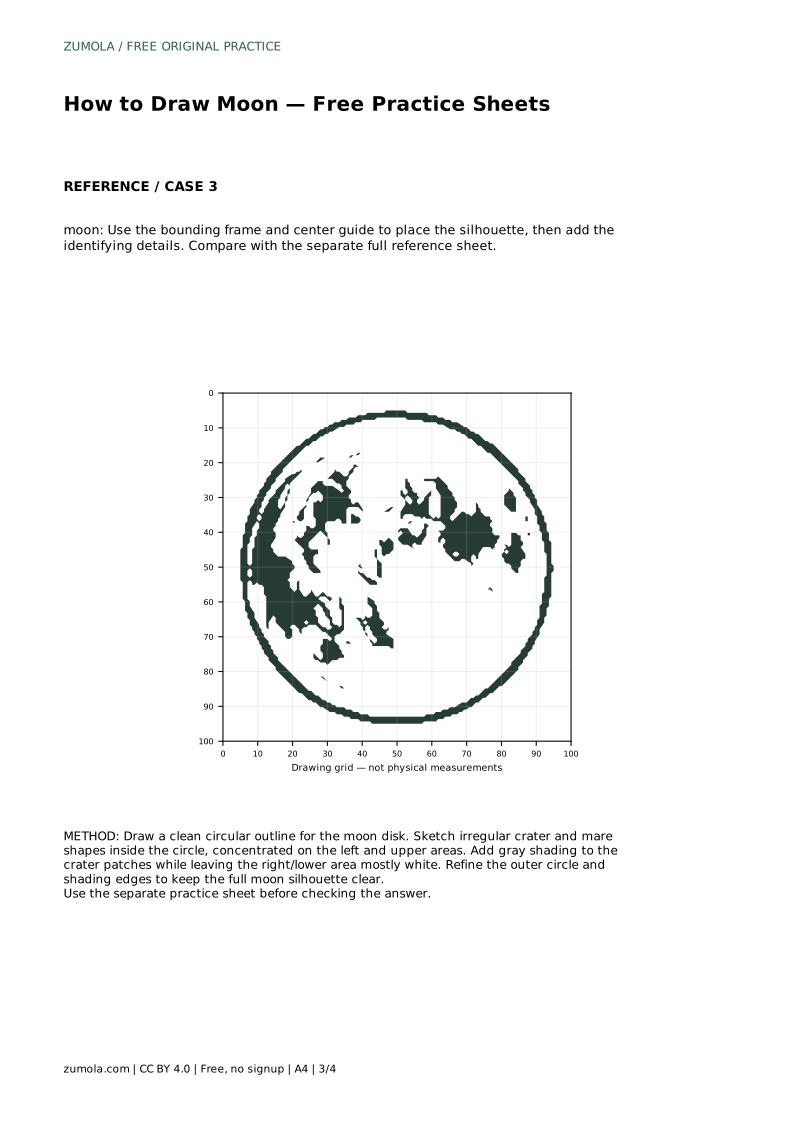
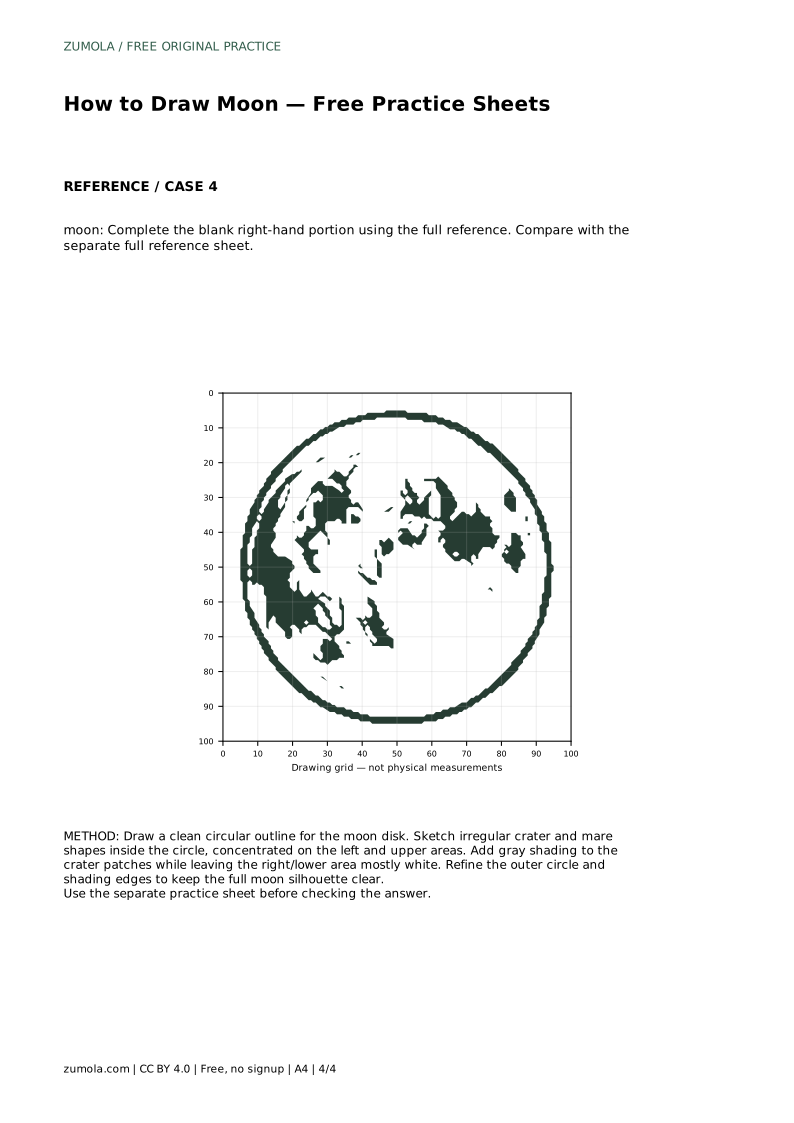
Reference diagrams
LETTER · Download PDF
A4 · Download PDF
Free original resources
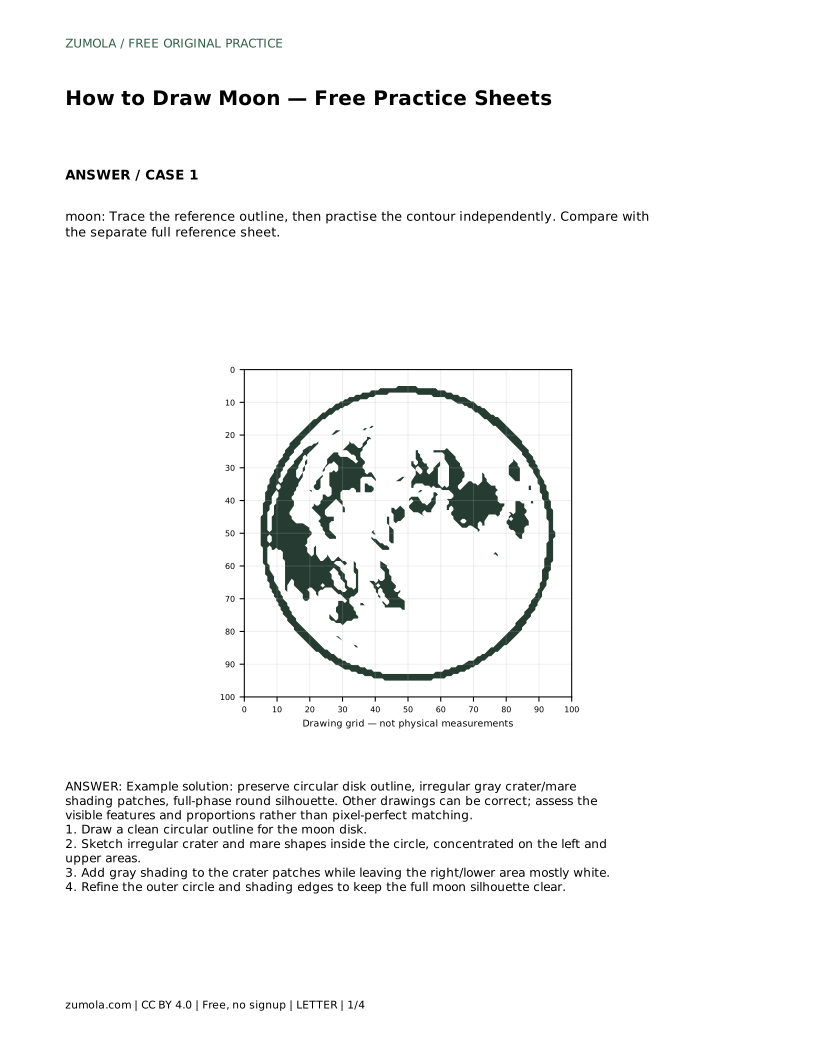
Learn to draw a full moon with a clear circular disk, irregular crater and mare patches, and balanced gray shading. Free printable practice sheets support tracing, grids, and completion tasks.
Four original cases, with reference diagrams, practice sheets and worked answers. Everything is free; no signup required.
LETTER · Download PDF
A4 · Download PDF
LETTER · Download PDF
A4 · Download PDF
LETTER · Download PDF
A4 · Download PDF
Use A4 or US Letter to match your printer. Use the stated values and conditions to solve each exercise; diagrams are not physical measuring rulers.
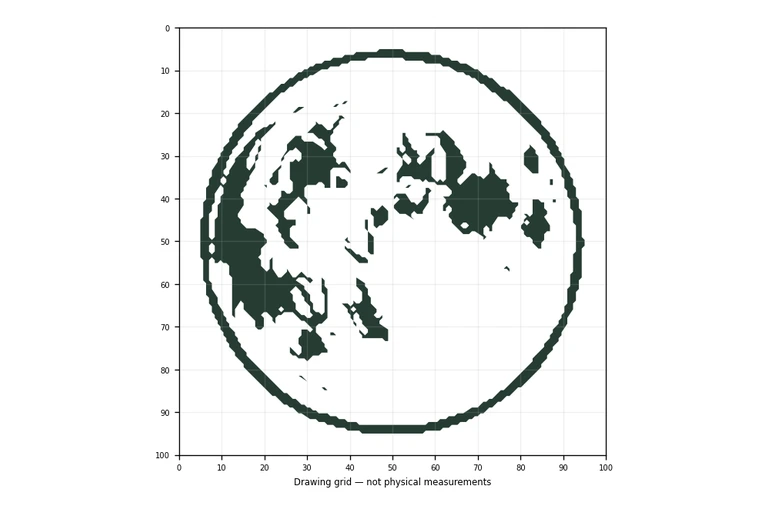
Drawing a moon is mostly a problem of shape and placement: keep the outer disk round, then place irregular darker patches inside it without letting them overwhelm the white surface. This page explains a reliable order for drawing a full-phase moon and how to use the printable practice sheets. The sheets offer different levels of support, from tracing to completing a blank portion, so you can choose the amount of guidance that suits you.
A full moon is a circle in silhouette. Before adding any surface features, draw the outer edge as cleanly as you can. A light construction circle helps: sketch it softly, check that the width and height match, then darken the final outline. If the circle is noticeably oval, the moon will read as a different phase or as a planet-like disk.
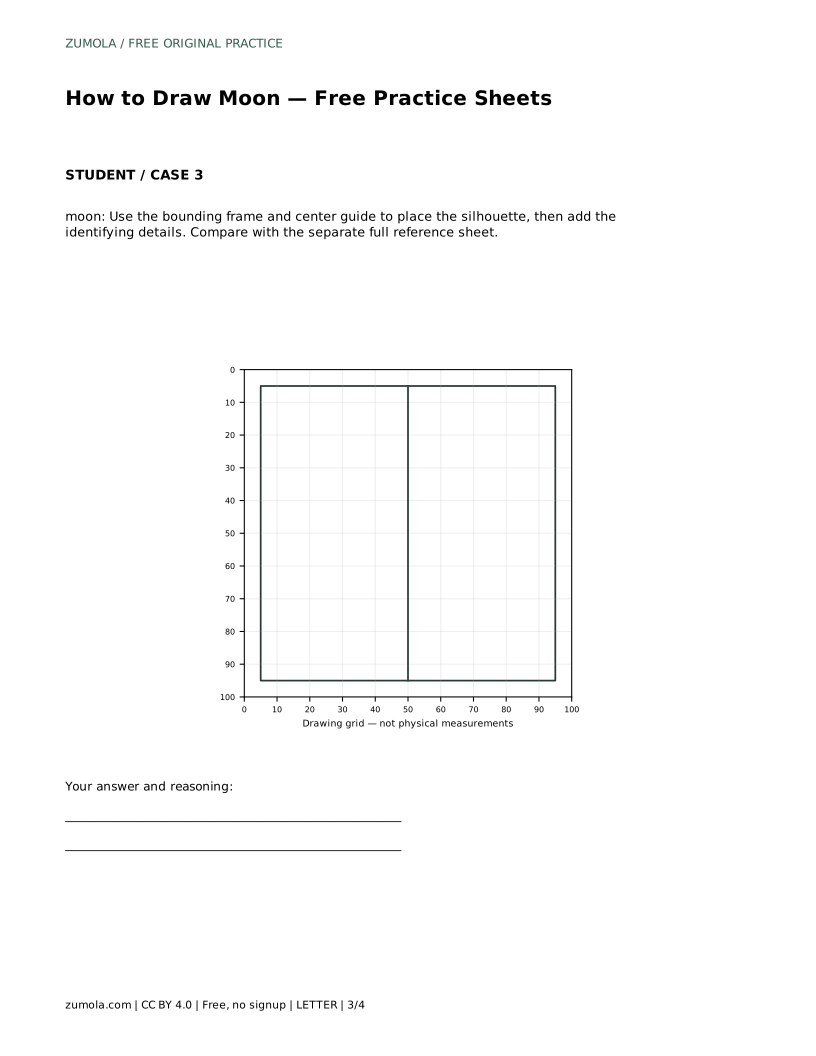
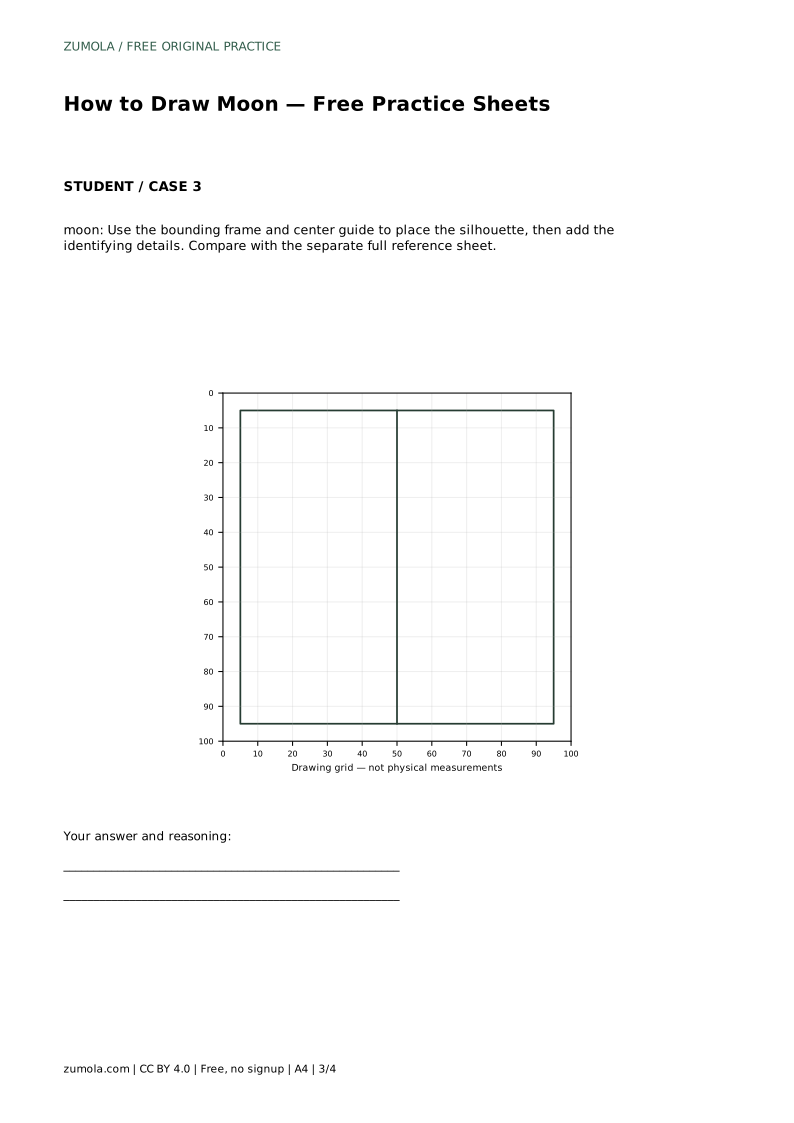
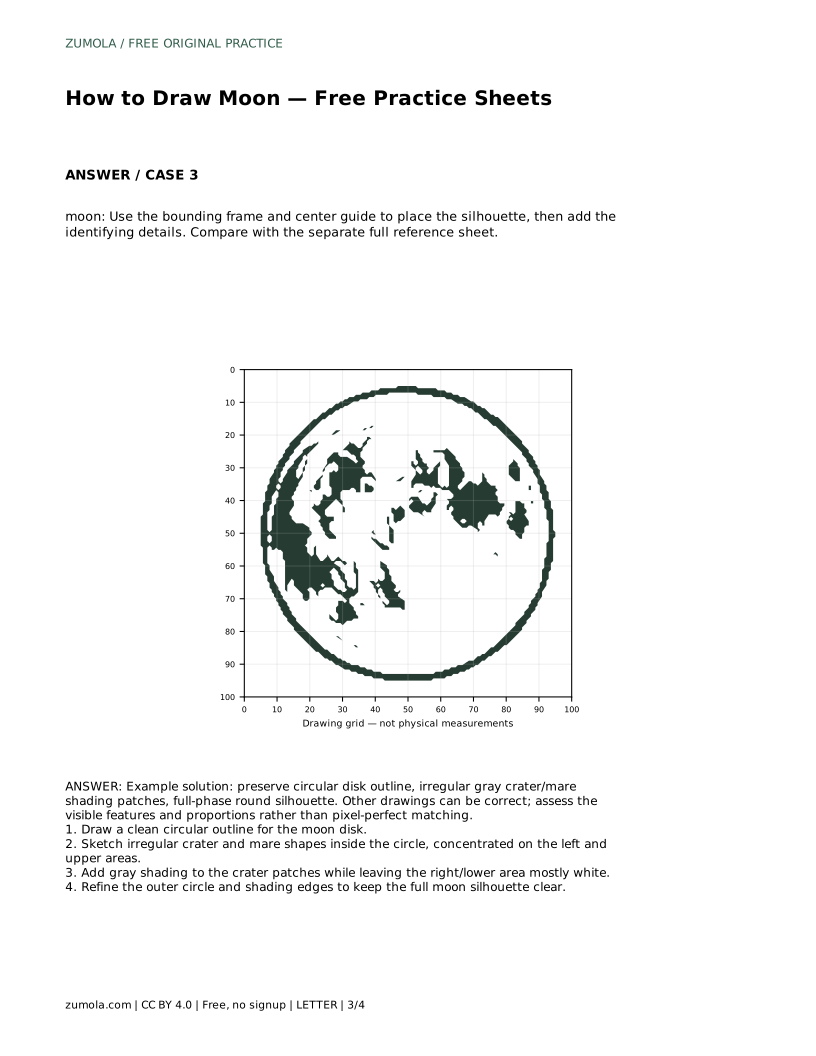
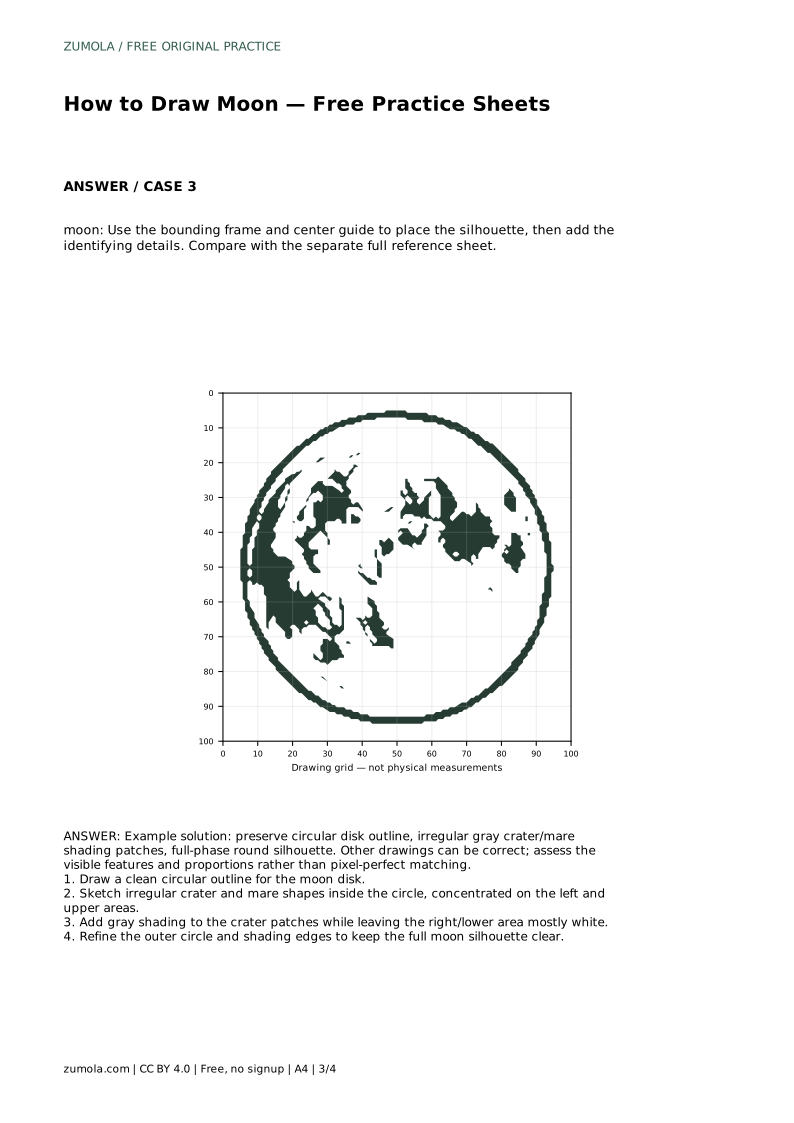
Keep the disk large enough that interior shapes have room. Small circles force cramped craters and make shading hard to control. On the practice sheets, the bounding frame and center guide show where the silhouette belongs; use them to position the circle before committing to a firm outline.
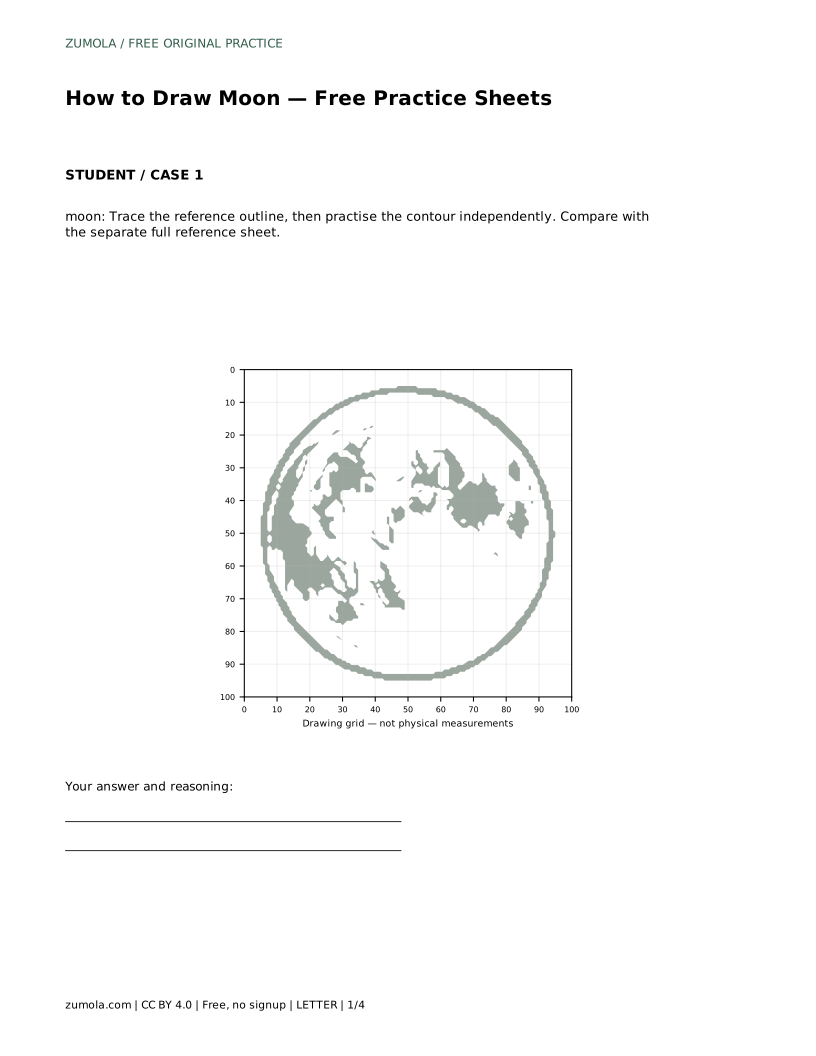
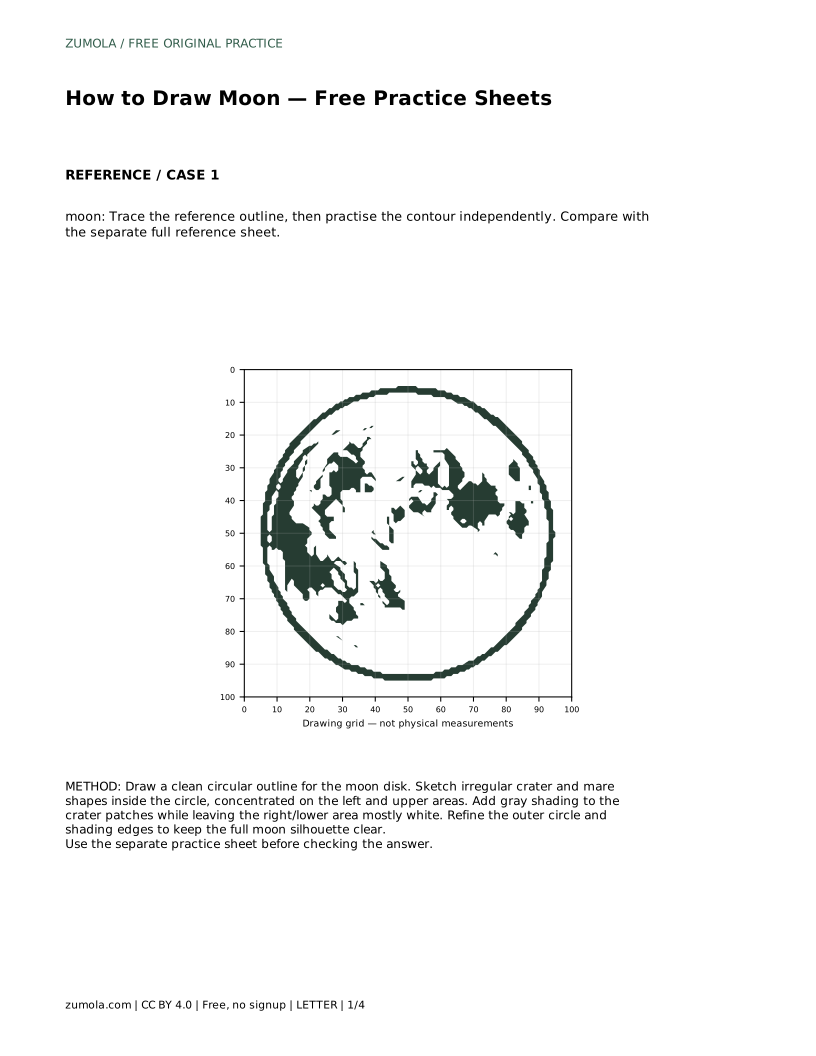
The darker areas on a full moon are not neat circles. They are irregular patches, and in the reference they are concentrated on the left and upper areas. Draw them as closed, uneven shapes rather than perfect rings. Vary their size: a few larger patches with smaller ones nearby look more natural than evenly spaced dots.
Leave the right and lower area mostly white. This contrast is what makes the moon read as a lit full disk rather than a gray ball. If you fill the whole circle with patches, the silhouette stays round but the surface becomes busy and flat.
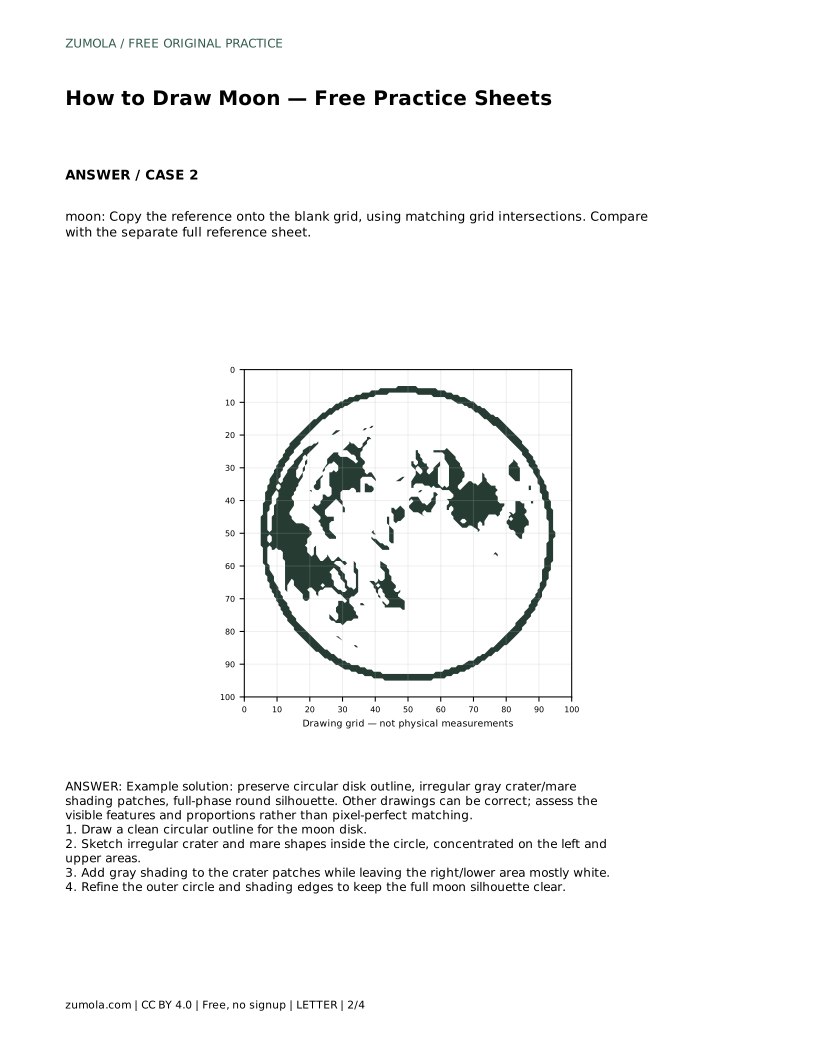
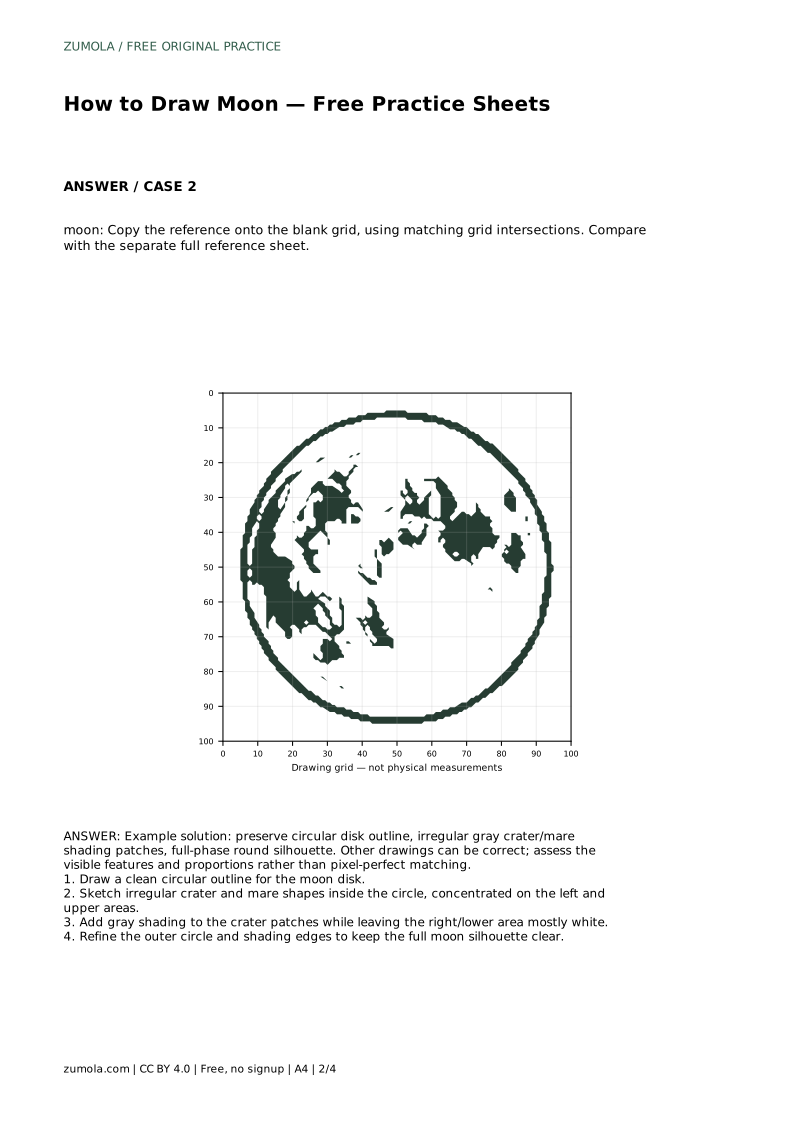
When copying onto a grid, use matching intersections to place the largest patches first. Smaller details can follow once the main shapes are in the right region.
Add gray shading to the crater patches, building tone gradually rather than pressing hard at once. Keep the shading inside each patch so the white surface between them stays clean. A slightly darker edge on a patch can suggest depth, but avoid turning every patch into a heavy black spot.
Finally, refine the outer circle and the shading edges. Erase stray marks outside the disk and smooth any wobbles in the outline. The full moon silhouette should remain clear even after the surface detail is added.
Art has multiple valid outcomes. A drawing can differ from the reference and still be correct if the round silhouette, irregular patch placement, and mostly white right and lower area are preserved.
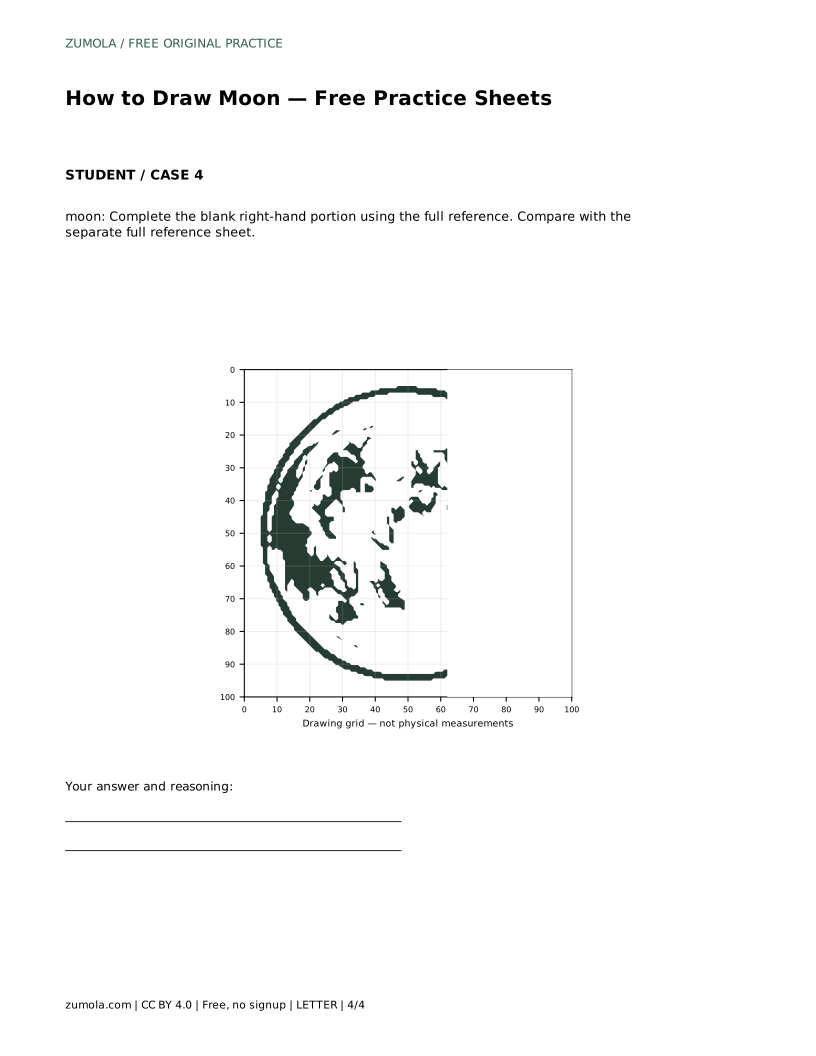
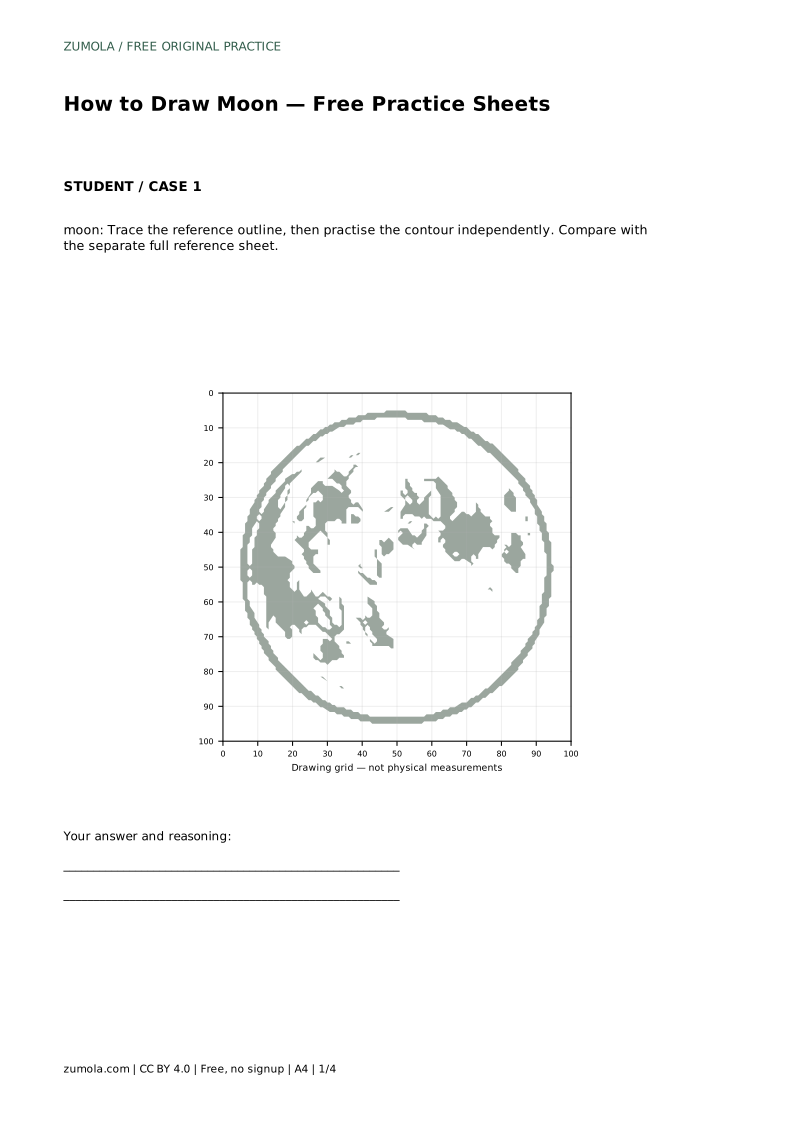
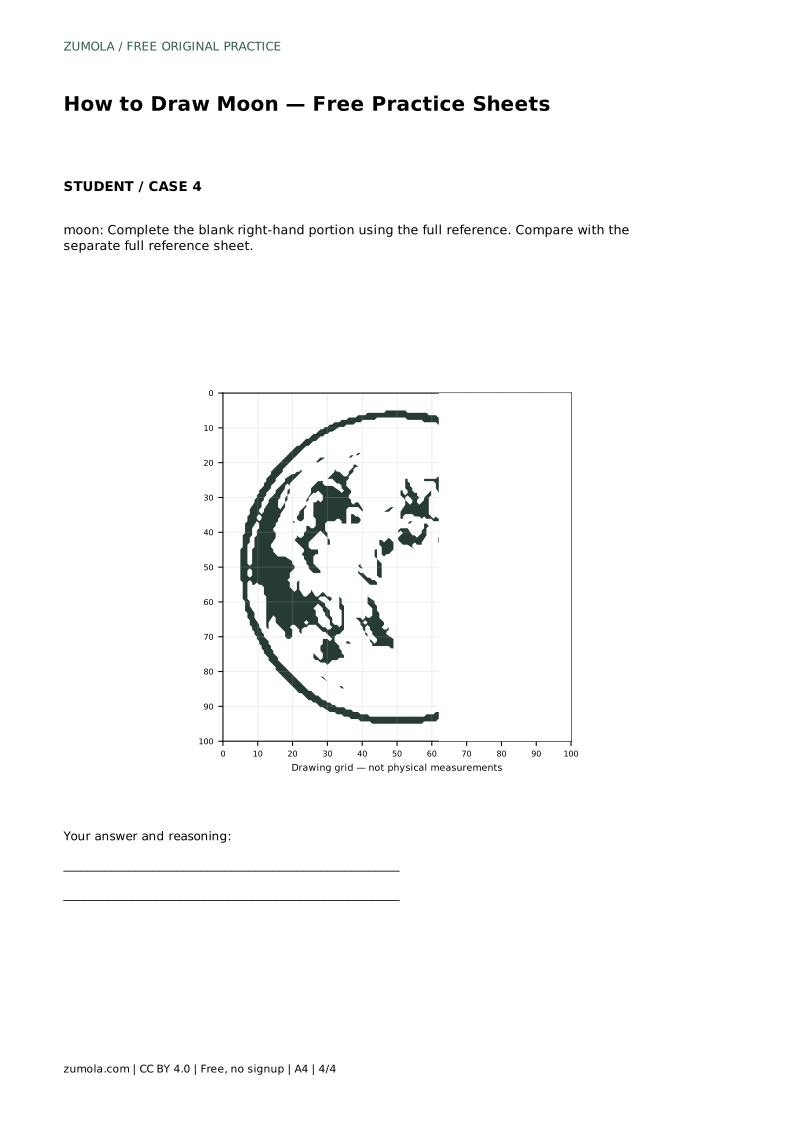
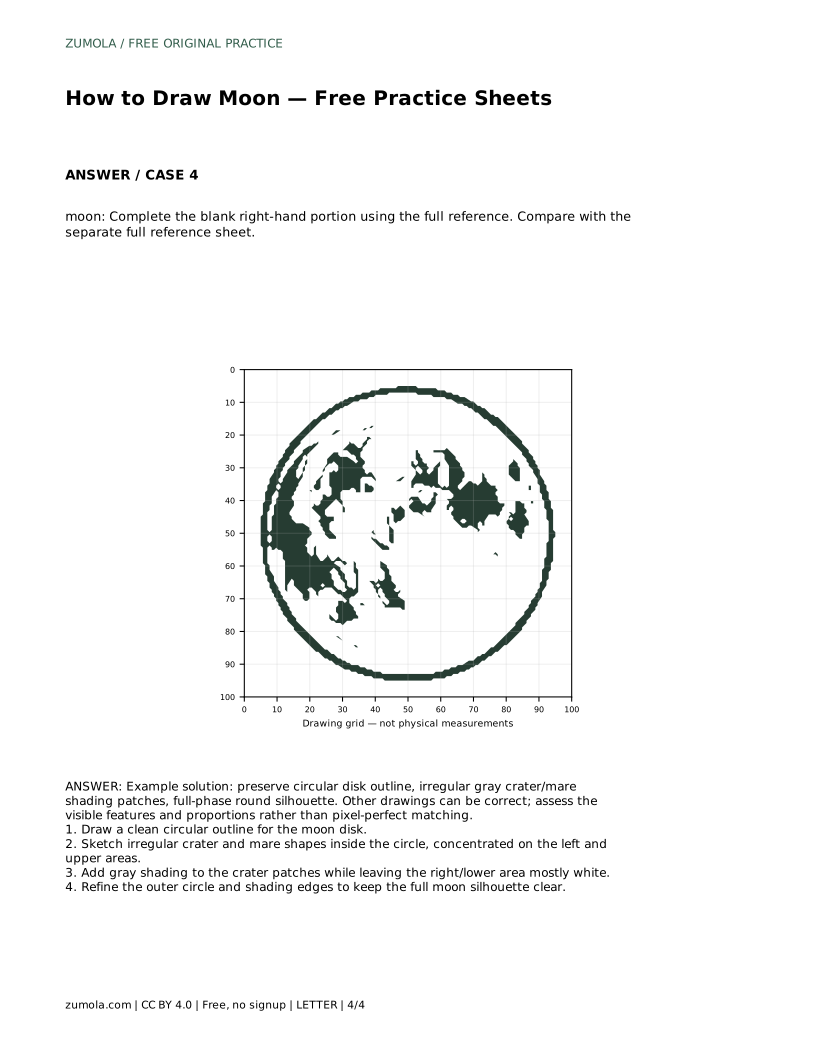
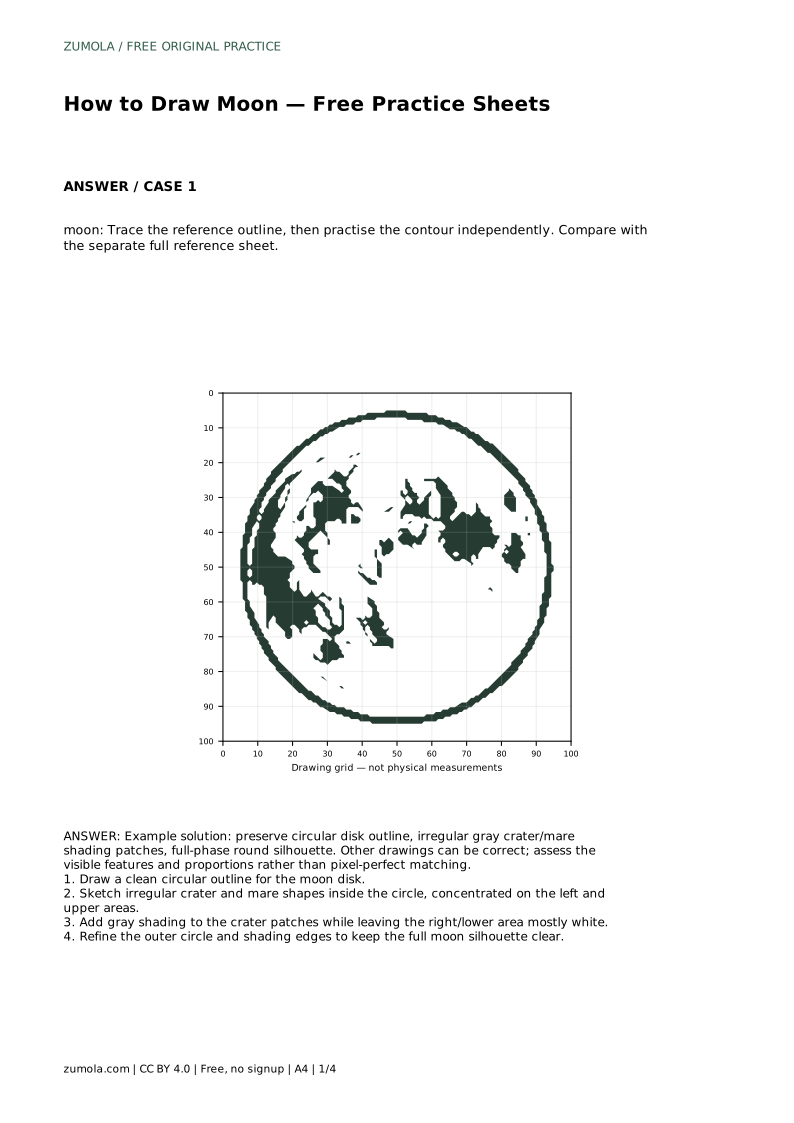
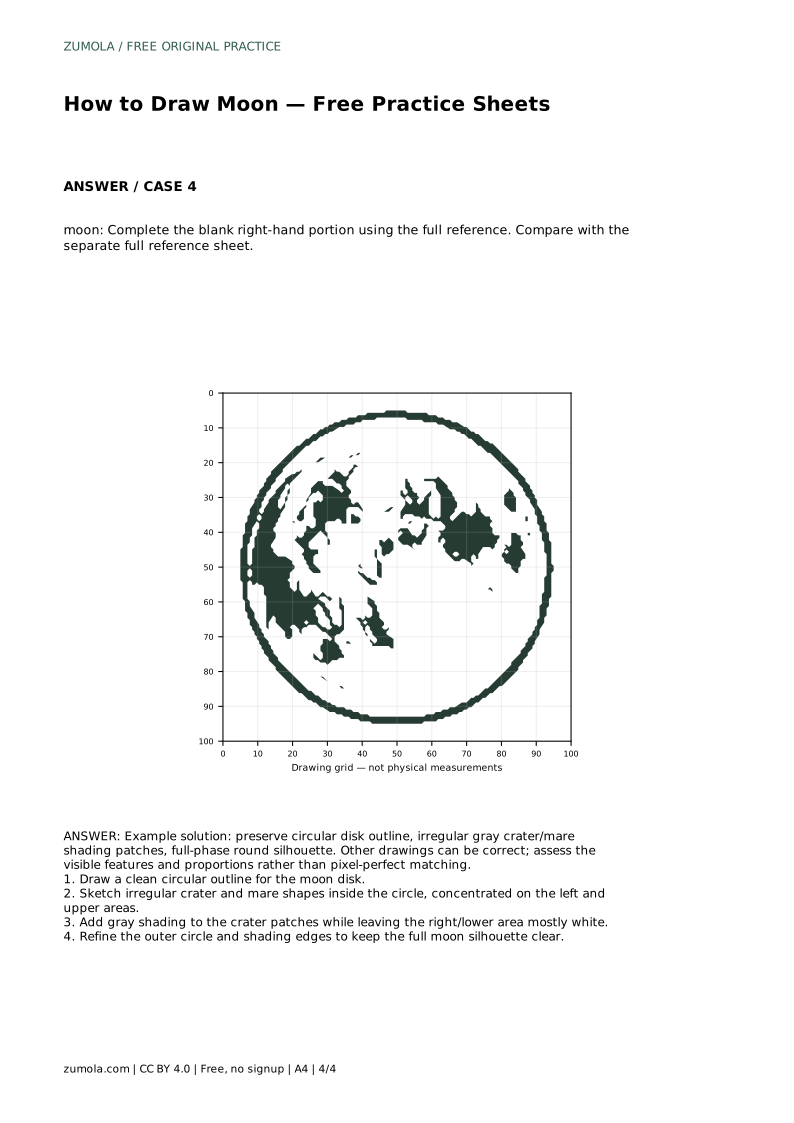
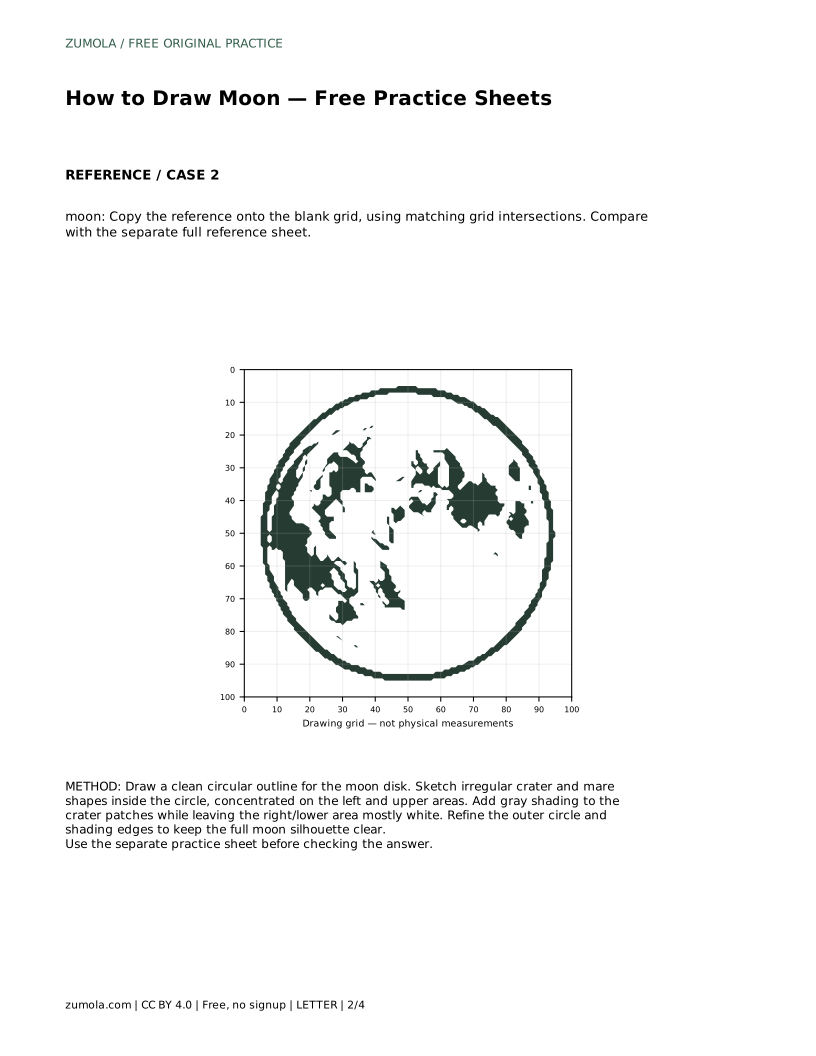
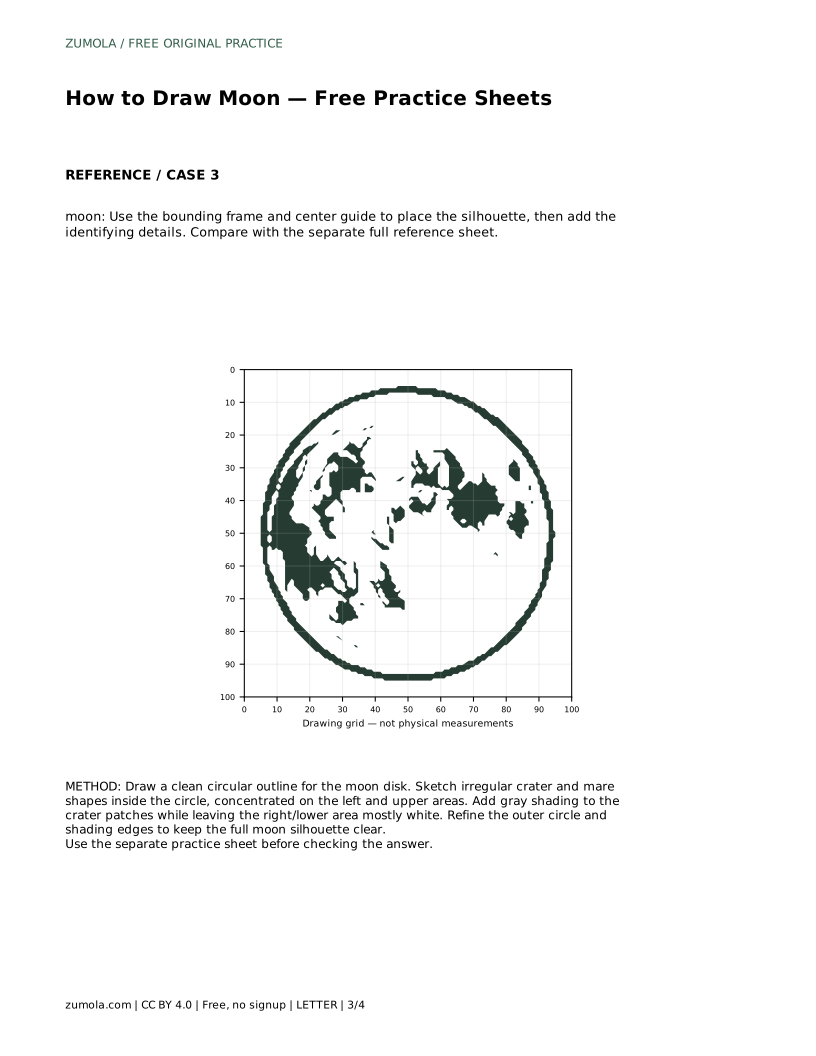
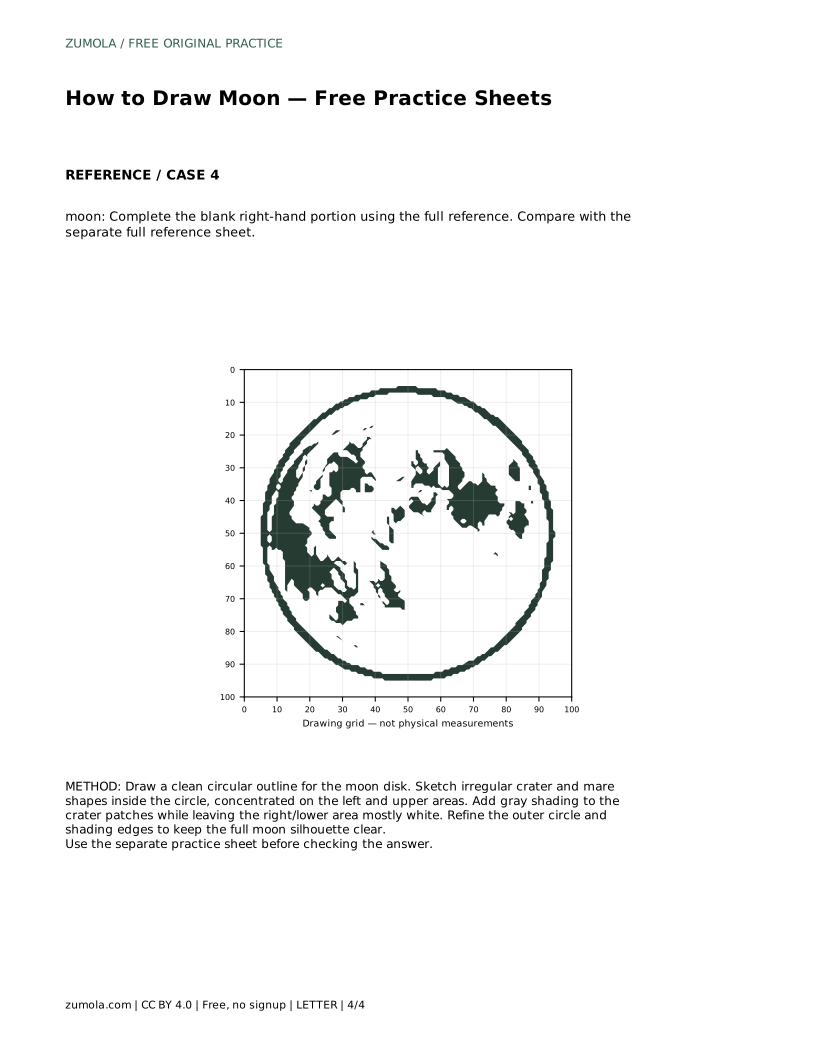
The tracing sheet asks you to follow the reference outline, then practise the contour independently. The grid sheet asks you to copy the reference onto the blank grid using matching intersections. The bounding-frame sheet uses the frame and center guide to place the silhouette before adding details. The completion sheet gives you the full reference and asks you to finish the blank right-hand portion.
Each variant trains a different part of the same skill. Tracing builds familiarity with the contour; the grid builds proportional placement; the frame builds positioning; completion builds inference from a partial view. Compare your result with the separate full reference sheet rather than expecting a pixel-perfect match.
moon: Trace the reference outline, then practise the contour independently. Compare with the separate full reference sheet.
Example solution: preserve circular disk outline, irregular gray crater/mare shading patches, full-phase round silhouette. Other drawings can be correct; assess the visible features and proportions rather than pixel-perfect matching. Draw a clean circular outline for the moon disk. Sketch irregular crater and mare shapes inside the circle, concentrated on the left and upper areas. Add gray shading to the crater patches while leaving the right/lower area mostly white. Refine the outer circle and shading edges to keep the full moon silhouette clear.
A full moon reads best as a clean circular disk. Small imperfections are fine, but a clearly oval outline changes how the shape is perceived.
In the reference they are concentrated on the left and upper areas, with the right and lower area mostly white. Follow that balance when copying.
Yes. Art has multiple valid outcomes. Assess the round silhouette, irregular patch shapes, placement, and the mostly white right and lower area rather than exact matching.
All drawing practice · Free coordinate paper
Original resources · CC BY 4.0 · Free for personal and classroom use with attribution.